




- Nutraceuticals & Functional Foods
- Copaiba Essential Oil Market
Copaiba Essential Oil Market Size, Trends, Share, Growth, and Regional Forecast, 2026 to 2033
Copaiba Essential Oil Market by Nature (Organic, Conventional), by End Use (Aromatherapy & Personal Care, Pharmaceutical & Nutraceutical, Cosmetics Industry, Food & Beverage, Industrial Applications), by Distribution Channel (B2B, B2C), and Regional Analysis from 2026 to 2033

Copaiba Essential Oil Market Share and Trends Analysis
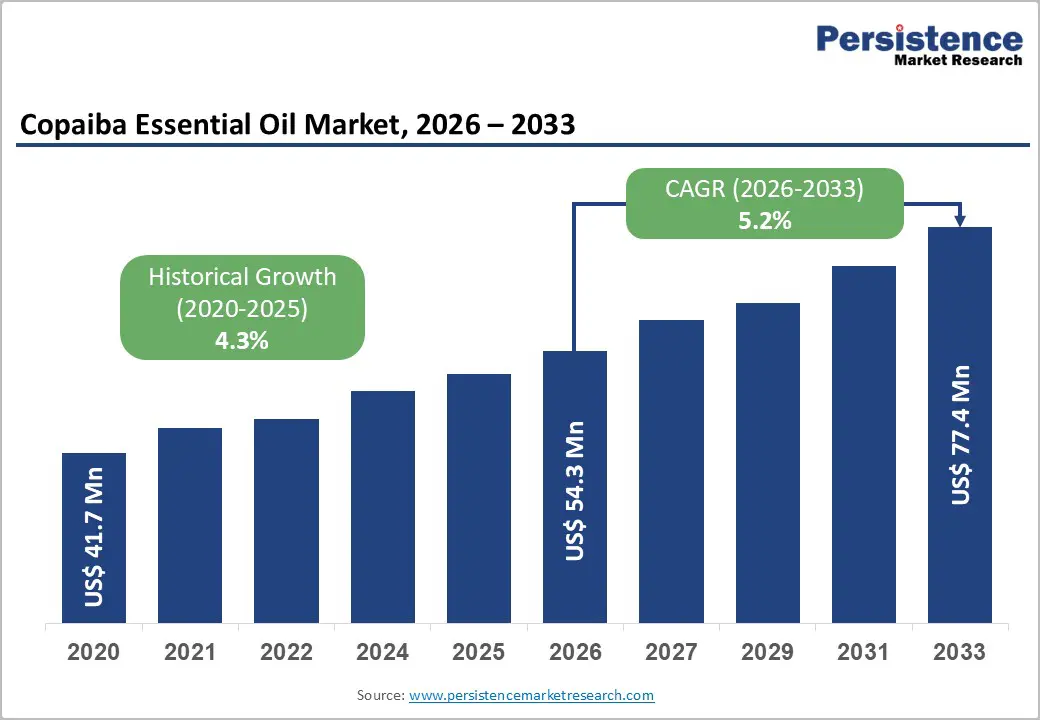
The global copaiba essential oil market size is likely to be valued at US$ 54.3 million in 2026 to US$ 77.4 million by 2033. The market is projected to record a CAGR of 5.2% during the forecast period from 2026 to 2033.
Copaiba essential oil is carving a prominent place in the global wellness and aromatherapy landscape, driven by increasing consumer preference for natural, plant-based self-care solutions. Its versatility in aromatherapy, personal care, and skincare is attracting both wellness enthusiasts and mainstream consumers, making it a key ingredient in modern holistic routines.
Key Industry Highlights:
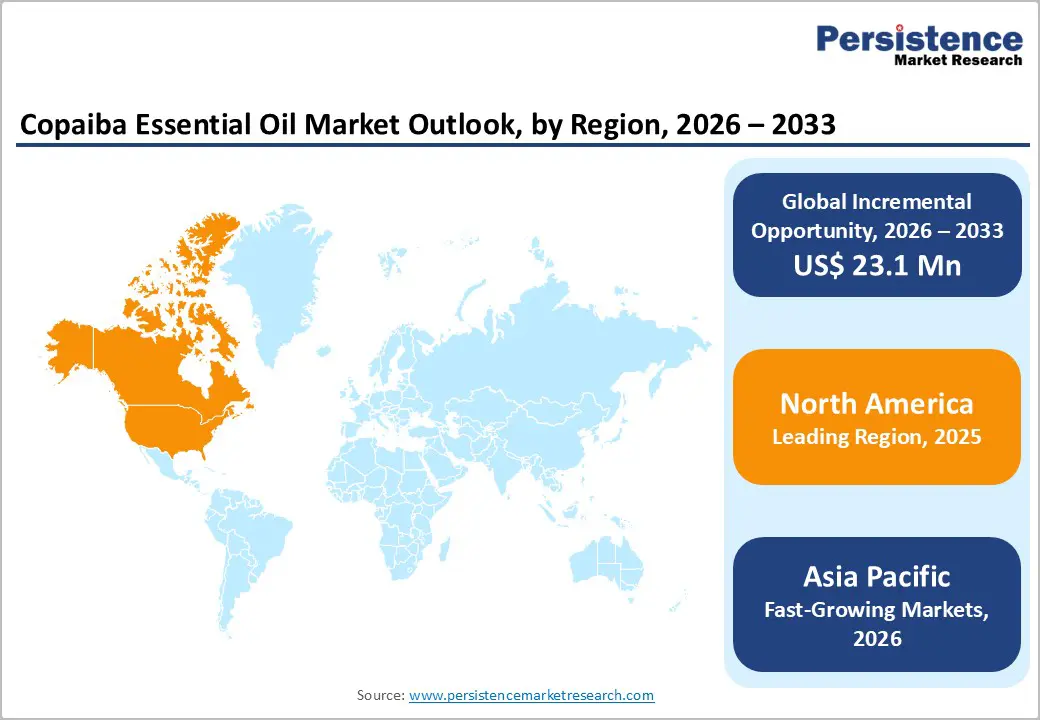
- Leading Region: North America, holding 42% market share, driven by rising adoption of natural wellness products, organic certifications, and consumer awareness of anti-inflammatory and calming benefits.
- Fastest-Growing Region: Asia Pacific, fueled by growing interest in aromatherapy, Ayurvedic-inspired personal care, luxury skincare, and e-commerce accessibility in India, China, Japan, and South Korea.
- Fastest-Growing Product Type Segment: Aromatherapy & Personal Care, driven by demand for massage oils, diffusers, and clean-label botanical formulations appealing to health-conscious and younger consumers.
- Market Drivers: Rising use in aromatherapy and personal care, fueled by stress relief, holistic wellness, and clean-label trends across global markets.
- Opportunities: Standardized, traceable copaiba oil grades for cosmetics and wellness brands, supporting premium positioning, ethical sourcing, and new product innovations.
- Key Developments: In February 2025, doTERRA received 19 awards for its products and sustainability initiatives; in December 2024, AlchemiteLabs launched a facial oil featuring copaiba in London’s Notting Hill.
| Key Insights | Details |
|---|---|
| Copaiba Essential Oil Market Size (2026E) | US$ 54.3 Mn |
| Market Value Forecast (2033F) | US$ 77.4 Mn |
| Projected Growth (CAGR 2026 to 2033) | 5.2% |
| Historical Market Growth (CAGR 2020 to 2025) | 4.3% |
Market Dynamics
Driver - Growing use of essential oils in aromatherapy and personal care
Soft woody aromas are finding a permanent place in daily wellness rituals. Growing use of essential oils in aromatherapy and personal care is driving demand for copaiba essential oil, valued for its calming scent and skin-soothing properties. Consumers increasingly seek natural solutions for stress relief, relaxation, and emotional balance, positioning copaiba as a preferred oil in diffusers, massage blends, and mindfulness routines. Its gentle profile appeals to both experienced aromatherapy users and first-time consumers exploring plant-based wellness.
This momentum extends into personal care formulations. Copaiba essential oil is gaining traction in skincare, haircare, and natural cosmetics due to its perceived anti-inflammatory and conditioning benefits. Clean-label trends, preference for botanical ingredients, and rising interest in holistic self-care are encouraging brands to incorporate copaiba into balms, serums, and wellness-focused beauty products, strengthening its role as a functional, multi-application essential oil.
Restraints - Quality variability and adulteration concerns
Hidden inconsistencies are challenging consumer trust in the copaiba essential oil market. Quality variability and adulteration concerns arise from differences in extraction methods, plant source regions, and storage conditions, resulting in oils with fluctuating potency, aroma, and therapeutic properties. Some products may be diluted with cheaper carrier oils or synthetic additives, compromising efficacy and misleading buyers seeking authentic, natural benefits.
These issues directly affect market growth by reducing consumer confidence and limiting repeat purchases. Retailers and wellness brands face increased scrutiny to ensure product purity and consistency. Regulatory gaps in labeling and testing further complicate verification. As a result, companies must invest in traceability, rigorous quality control, and transparent sourcing to maintain credibility and safeguard long-term market adoption.
Opportunity - Developing standardized, traceable copaiba oil grades to meet growing demand from cosmetics and wellness brands
Consistency and authenticity are becoming the new benchmarks for success in the copaiba essential oil market. Developing standardized, traceable copaiba oil grades presents a significant opportunity for key players and new startups to cater to the rising demand from cosmetics, personal care, and wellness brands. By establishing clear quality specifications and implementing robust traceability systems, companies can ensure consistent therapeutic properties, aroma, and potency across batches, enhancing brand trust and reliability.
Such standardization enables premium positioning, supports clean-label claims, and facilitates partnerships with high-end skincare and wellness manufacturers. Startups can leverage certification, sustainable sourcing, and transparent supply chains to differentiate themselves, while established players can expand into new markets, secure long-term contracts, and meet evolving consumer expectations for safe, high-quality, and ethically sourced copaiba oil.
Category-wise Analysis
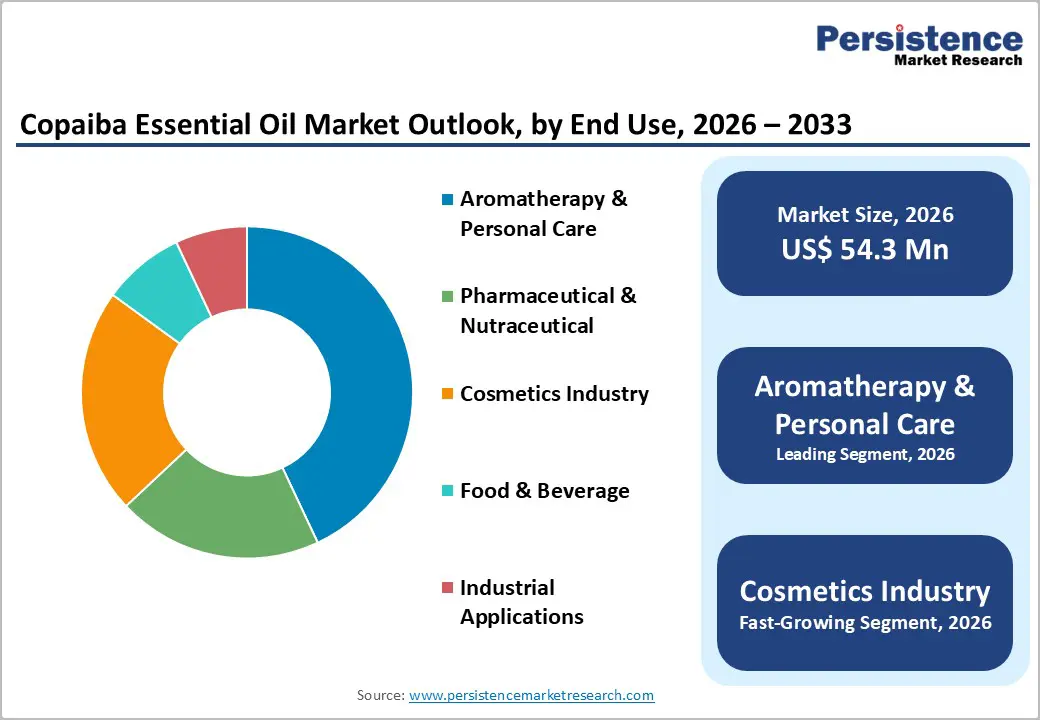
By End-user, Aromatherapy & Personal Care dominate the global market
Aromatherapy & Personal Care holds approximately 43% share in the global Copaiba Essential Oil market as of 2025, reflecting strong consumer preference for natural, holistic wellness solutions. Its calming, anti-inflammatory, and skin-soothing properties make it highly sought after for massage oils, diffusers, bath products, and topical formulations. Rising awareness of plant-based, clean-label ingredients further fuels demand in spas, wellness centers, and at-home self-care routines.
Pharmaceutical & Nutraceutical applications leverage copaiba oil for its therapeutic benefits, including joint support and immune wellness, while the cosmetics industry incorporates it in creams, serums, and balms for skin nourishment. Food & Beverage and Industrial Applications use it in flavoring, fragrances, and eco-friendly formulations. The dominance of aromatherapy and personal care highlights the oil’s versatility and central role in modern wellness trends.
Organic Copaiba Essential Oil is anticipated to register strong growth during the forecast period
Organic Copaiba Essential Oil is projected to grow at a CAGR of 8.7% during the forecast period in the global Copaiba Essential Oil market, driven by rising consumer preference for natural, sustainably sourced, and chemical-free wellness solutions. Shoppers increasingly associate organic oils with superior purity, efficacy, and environmental responsibility, making them a preferred choice in aromatherapy, personal care, and therapeutic applications. The appeal of traceable, ethically harvested copaiba resin further enhances confidence among wellness-conscious consumers.
Producers are responding by expanding certified organic cultivation, implementing transparent supply chains, and highlighting fair-trade practices. Brands leverage organic claims to differentiate products, justify premium pricing, and meet growing demand from eco-aware consumers. The convergence of health, wellness, and sustainability trends is accelerating the global adoption of organic copaiba essential oil.
Regional Insights
North America Copaiba Essential Oil Market Trends
North America holds approximately 42% market share in the global copaiba essential oil market, reflecting strong consumer adoption of natural wellness and aromatherapy products. In the U.S., demand is expanding across the personal care, spa, and holistic health segments, driven by greater awareness of the oil’s anti-inflammatory and soothing properties. Organic and sustainably sourced variants are gaining preference, with retailers emphasizing traceable supply chains and clean-label certifications. Wellness enthusiasts are integrating copaiba into essential oil blends, diffusers, massage oils, and skincare routines, enhancing daily self-care rituals and boosting market visibility.
In Canada, premium and certified organic copaiba oils are witnessing growing traction among holistic health practitioners and eco-conscious consumers. E-commerce platforms and specialty wellness stores are driving accessibility, while product innovation in blends and aromatherapy sets is attracting younger demographics. Rising interest in plant-based and natural remedies further accelerates regional market growth.
Asia Pacific Copaiba Essential Oil Market Trends
Asia Pacific copaiba essential oil market is expected to grow at a CAGR of 9.1%, driven by rising consumer awareness of natural wellness solutions and holistic health practices. In India, the oil is increasingly incorporated into aromatherapy, massage oils, and Ayurvedic-inspired personal care products, reflecting the growing demand for plant-based remedies. China sees expanding usage in luxury skincare, spa treatments, and premium wellness blends, with consumers favoring traceable and sustainably sourced oils.
Japan and South Korea are witnessing adoption in high-end cosmetics and aromatherapy sets, with a focus on anti-inflammatory and calming benefits. E-commerce and specialty wellness retailers are making products more accessible, while product innovation in blends, diffusers, and spa kits is capturing younger, health-conscious consumers. Regional trends highlight the convergence of tradition, innovation, and sustainability in driving market growth.
Market Competitive Landscape
The global copaiba essential oil market is moderately fragmented, with established suppliers competing alongside agile startups targeting niche wellness and aromatherapy segments. Leading companies are focusing on sustainable sourcing, clean-label certifications, and advanced distillation methods to ensure consistent quality and potent bioactive content. Startups are driving product innovation through blended oils, aromatherapy kits, and personal care formulations that highlight natural, plant-based benefits. Consumer awareness campaigns emphasize traceability, purity, and holistic wellness, while collaborations with spas, cosmetic brands, and wellness retailers are increasing visibility and credibility.
Production expansion in key sourcing regions, adherence to government regulations on organic certification and export standards, and exploring emerging markets in the Asia Pacific, Latin America, and the Middle East are creating new growth avenues. Enhanced packaging, marketing strategies, and educational initiatives are reinforcing brand differentiation and adoption among health-conscious consumers.
Key Developments:
- In February 2025, doTERRA announced that it received 19 awards in 2024, highlighting its strong product portfolio, people-driven culture, and sustainability initiatives that continue to position the company as a leading force in the global health and wellness industry.
- In December 2024, London-based clean beauty brand AlchemiteLabs launched its skincare line in Notting Hill, featuring copaiba as a key ingredient in its "Melt Into Me Facial Oil," which combines Apricot Kernel, Baobab, Organic Thistle, Frankincense, and Copaiba to hydrate and nourish the skin.
Companies Covered in Copaiba Essential Oil Market
- doTERRA International
- Young Living Essential Oils
- IFF
- Robertet Group
- Berjé Inc
- Wildflower Essentials
- Rocky Mountain Oils, LLC
- Mountain Rose Herbs
- Edens Garden
- SVA Organics
- Others
Frequently Asked Questions
The global copaiba essential oil market is projected to be valued at US$ 54.3 Mn in 2026.
Growing use of essential oils in aromatherapy and personal care is driving the demand in the global Copaiba Essential Oil market.
The global Copaiba Essential Oil market is poised to witness a CAGR of 5.2% between 2026 and 2033.
Developing standardized, traceable copaiba oil grades to meet growing demand from cosmetics and wellness brands is the key opportunity.
Major players in the global Copaiba Essential Oil market include doTERRA International, Young Living Essential Oils, IFF, Robertet Group, Berjé Inc, and others.


