




- Processed Food
- Bouillon Stock Cubes Market
Bouillon Stock Cubes Market Size, Share, Growth, and Regional Forecast, 2025 - 2032
Bouillon Stock Cubes Market by Product Type (Vegetable, Fish, Meat, Poultry, Beef, Others), by Nature (Organic, Conventional), by Distribution Channel, and Regional Analysis from 2025 - 2032

Bouillion Stock Cubes Market Share and Trends Analysis
The global bouillon stock cubes market size is likely to value US$ 7.9 billion in 2025 and is projected to reach US$ 10.9 billion by 2032, growing at a CAGR of 4.7% during the forecast period from 2025 to 2032. The global bouillon stock cubes market is witnessing consistent growth driven by increasing demand for convenient, time-saving cooking solutions. Growing health awareness has encouraged manufacturers to introduce low-sodium, organic, and additive-free variants. The rising popularity of global cuisines and home cooking further supports market expansion. Innovation in flavors, clean-label ingredients, and sustainable packaging continues to shape the competitive landscape and attract diverse consumer groups worldwide.
Key Industry Highlights:
- Leading Region: North America dominates the global bouillon stock cubes market, driven by high consumption of convenience foods, strong retail penetration, and growing demand for flavorful meal solutions.
- Fastest Growing Region: Asia-Pacific is the fastest-growing market, supported by rising urbanization, increasing disposable incomes, and greater adoption of ready-to-cook and convenient culinary products.
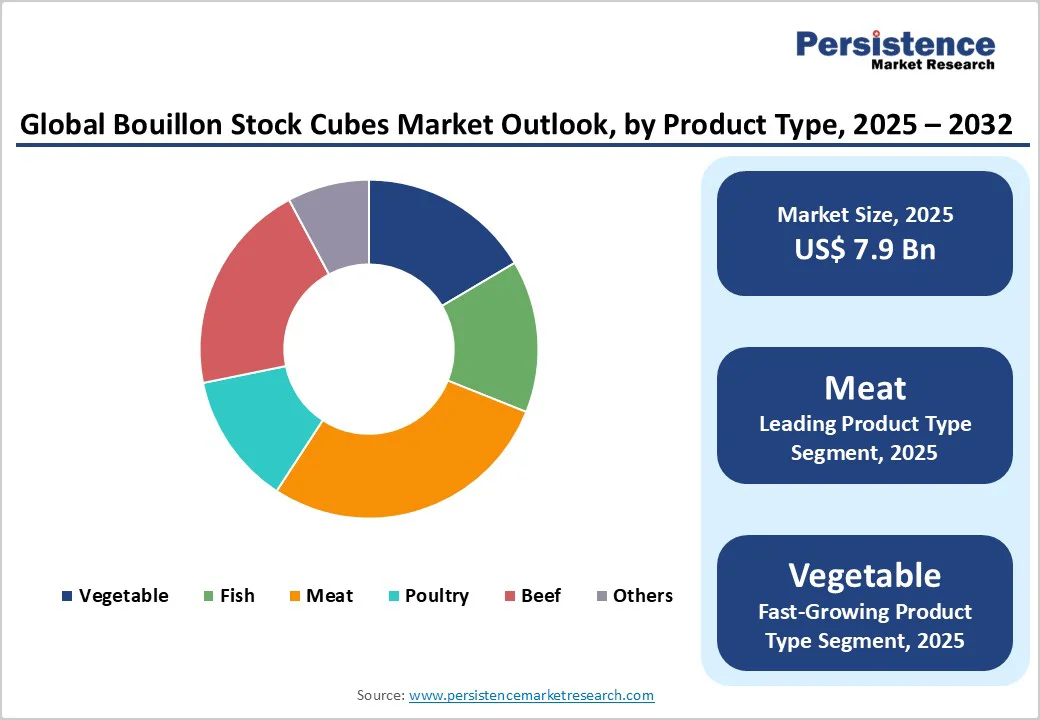
- Dominant Segment: Meat-flavored bouillon cubes hold the largest share, owing to their widespread popularity, versatility in recipes, and strong presence in both household kitchens and the food service sector.
- Fastest Growing Segment: Vegetable-flavored bouillon cubes are the fastest-growing category, fueled by increasing health consciousness, the rise of vegetarian and vegan diets, and demand for natural and clean-label ingredients.
| Key Insights | Details |
|---|---|
|
Bouillon Stock Cubes Market Size (2025E) |
US$ 7.9 Bn |
|
Market Value Forecast (2032F) |
US$ 10.9 Bn |
|
Projected Growth (CAGR 2025 to 2032) |
4.7% |
|
Historical Market Growth (CAGR 2019 to 2024) |
4.2% |

Market Dynamics
Driver - Increasing Demand for Convenient and Flavored Cooking Solutions
A major factor driving the global bouillon stock cubes market is the rising consumer demand for convenient, ready-to-use cooking solutions that save time while enhancing flavor. Modern lifestyles, especially in urban areas, are creating a preference for products that simplify meal preparation without compromising taste. Bouillon stock cubes offer a quick and easy way to add rich, savory flavors to soups, stews, sauces, and other dishes. The growing trend of home-cooked meals with restaurant-style taste, coupled with increasing adoption of foodservice and ready-to-eat meal segments, is further boosting demand. Markets in developed countries such as the U.S., Canada, and Germany, as well as fast-growing regions like India and Indonesia, are witnessing significant growth in bouillon cube consumption due to convenience and flavor innovation.
Restraints - Health Concerns Related to High Sodium Content
High sodium content in traditional bouillon stock cubes has emerged as a key challenge for market growth. Excessive sodium intake is associated with hypertension, cardiovascular diseases, and kidney problems, leading health-conscious consumers to limit consumption. Governments and health organizations are increasingly recommending reduced-sodium diets, prompting scrutiny of processed foods including bouillon cubes. Manufacturers face pressure to reformulate products with lower salt content without compromising taste, which can increase production costs. Regions like North America and Europe are particularly sensitive to sodium-related regulations and labeling requirements, potentially restricting market expansion in these areas.
Opportunity - Growth of Organic, Vegan, and Clean-Label Products
The rising consumer focus on health, sustainability, and clean-label ingredients presents a significant opportunity for the bouillon stock cubes market. Organic, vegan, and plant-based cubes are gaining popularity among health-conscious, vegetarian, and environmentally aware consumers. This trend is particularly strong in North America, Europe, and urban Asia-Pacific, where demand for natural, additive-free products is growing rapidly. Manufacturers can capitalize on this shift by introducing innovative, plant-based flavors and clean-label options, which not only appeal to modern dietary preferences but also support brand differentiation. Expanding organic and vegan product lines offer avenues for premium pricing and long-term market growth.
Category-wise Analysis
By Product Type, Meat Dominate the Bouillon Stock Cubes Market
In the global bouillon stock cubes market, the meat segment is projected to hold the largest share in 2025, surpassing other product types such as vegetable, fish, poultry, beef, and others. Meat bouillon cubes, including chicken, beef, and mixed meat variants, are highly preferred for their rich flavor, convenience, and versatility in cooking. They are commonly used in soups, sauces, stews, and ready-to-eat meals, making them a staple in households and the foodservice industry alike.
Among meat subtypes, poultry, particularly chicken, dominates due to its mild taste, affordability, and wide consumer acceptance. Beef cubes also contribute significantly, especially in Western cuisines. The growing trend of convenience foods and instant meal solutions further fuels demand for meat-based bouillon cubes.
Although vegetables, fish, and other alternatives are gaining popularity among health-conscious and vegetarian consumers, meat cubes continue to lead the market, driven by established consumer trust, widespread availability, and consistent demand, ensuring their dominance in the product-type category.
By Nature, Conventional Leads the Market
Conventional stock cubes are the dominant segment in the global bouillon stock cubes market, accounting for an estimated 82% share in 2025. Their widespread availability, cost-effectiveness, and long-standing consumer trust make them the preferred choice in households worldwide. These cubes are produced using traditional ingredients and processes, offering consistent flavor and convenience, which strengthens their appeal among regular users.
At the same time, organic bouillon stock cubes are witnessing growing popularity, driven by increasing consumer awareness about health, clean-label products, and plant-based diets. organic cubes attract consumers seeking natural and minimally processed ingredients. Although these alternatives are often priced higher than conventional options, their demand continues to rise in urban and health-conscious markets. Overall, while conventional stock cubes remain the market leader and organic products represent emerging opportunities for growth and innovation in the bouillon segment.
Region-wise Insights
North America Bouillon Stock Cubes Market Trends
The North American bouillon stock cubes market is witnessing steady growth driven by rising consumer demand for convenient and flavorful meal solutions. With busy lifestyles and a growing preference for ready-to-use ingredients, bouillon cubes have become a kitchen essential for both home cooks and foodservice professionals. The trend toward healthier eating is also influencing product innovation, with manufacturers introducing low-sodium, organic, and additive-free varieties. Plant-based and clean-label formulations are gaining momentum as consumers increasingly seek sustainable and transparent food products. Moreover, ethnic and global cuisines are fueling the use of diverse flavor profiles, including Latin, Asian, and Mediterranean blends. The market is further supported by the expansion of online grocery platforms and the popularity of home cooking post-pandemic. Leading brands are focusing on innovative packaging, flavor fortification, and marketing campaigns that emphasize authenticity, convenience, and nutritional benefits to strengthen their presence across the U.S. and Canada.
Asia and Pacific Bouillon Stock Cubes Market Trends
The Asia-Pacific bouillon stock cubes market is experiencing rapid growth due to changing dietary patterns, urbanization, and the increasing adoption of convenient cooking solutions. Rising disposable incomes and the growing influence of Western-style cuisine are encouraging consumers to experiment with bouillon cubes for soups, sauces, and stir-fries. Local flavor adaptation remains a key trend, with brands offering region-specific variants such as chicken, seafood, and spicy blends to suit diverse palates across China, India, Japan, and Southeast Asia. Health-conscious consumers are driving demand for MSG-free, natural, and fortified options, while plant-based cubes are emerging as a fast-growing category.
E-commerce and modern retail channels are enhancing accessibility and visibility for both global and local brands. Additionally, the expansion of the foodservice industry and home meal replacement (HMR) products boosts demand. Manufacturers are investing in sustainable sourcing and eco-friendly packaging to align with the region’s growing environmental awareness and consumer expectations.

Competitive Landscape
The global bouillon stock cubes market is made up of both large international companies and strong local brands. The market is moderately concentrated, with Nestlé S.A., Kraft Heinz, GBfoods Group, and Hormel Foods Corporation holding significant shares. Companies compete by introducing new flavors, improving packaging, and expanding organic or conventional options. They also focus on partnerships, acquisitions, and distribution networks to reach more consumers in different regions.
Current market trends include eco-friendly production, reducing salt content, launching plant-based and clean-label products, and using digital marketing and social media to connect with customers. Overall, companies are focusing on innovation, sustainability, and expanding their reach to stay competitive in the growing bouillon stock cubes market.
Key Industry Developments:
- In October 2024, Freja, the UK’s leading bone broth brand, introduced a natural, nourishing stock cube alternative. In contrast to the ultra-processed stock cubes that dominated the market, Freja’s innovative Instant Bone Broth featured an all-natural, simple ingredients list and was packed with the benefits of bone broth.
- In August 2024, Knorr, Unilever’s second-largest power brand, achieved a major milestone by surpassing €5 billion in sales. Knorr’s bouillon products are available in more than 90 countries, and its professional range continues to record steady growth across over 65 markets.
Companies Covered in Bouillon Stock Cubes Market
- Nestlé S.A
- The Kraft Heinz Company
- Kallo Foods Ltd.
- CALDOS DEL NORTE SL
- Goya Foods, Inc.
- Promasidor
- Doyin Group
- GBfoods Group
- PREMIER FOODS
- Hormel Foods Corporation
- Others
Frequently Asked Questions
The global bouillon stock cubes market is projected to be valued at US$ 7.9 Bn in 2025.
Market growth is driven by rising demand for convenience foods, time-saving meal solutions, and health-oriented, clean-label bouillon products.
The global market for bouillon stock cubes is poised to witness a CAGR of 4.7% between 2025 and 2032.
Rapid growth in the organic and plant-based bouillon segment, as consumers prioritize sustainability, transparency, and nutrition.
Companies such as Nestlé S.A., Kraft Heinz, Kallo Foods, CALDOS DEL NORTE, Goya Foods, Promasidor, and others are some of the major players operating in the global bouillon stock cubes market.


