




- Food Ingredients & Additives
- Basil Leaves Market
Basil Leaves Market Size, Trends, Share, and Growth Forecast 2026 - 2033
Basil Leaves Market by Form (Fresh Basil Leaves, Dried Basil Leaves, Basil Powder, Others), by Product Type (Sweet Basil, Thai Basil, Holy Basil (Tulsi), Lemon Basil, Others), by Application (Food & Beverages, Pharmaceuticals / Nutraceuticals, Cosmetics & Personal Care), by Distribution Channel (Supermarkets / Hypermarkets, Convenience Stores, Online Retail, Others), by Regional Analysis, 2026 - 2033

Basil Leaves Market Share and Trends Analysis
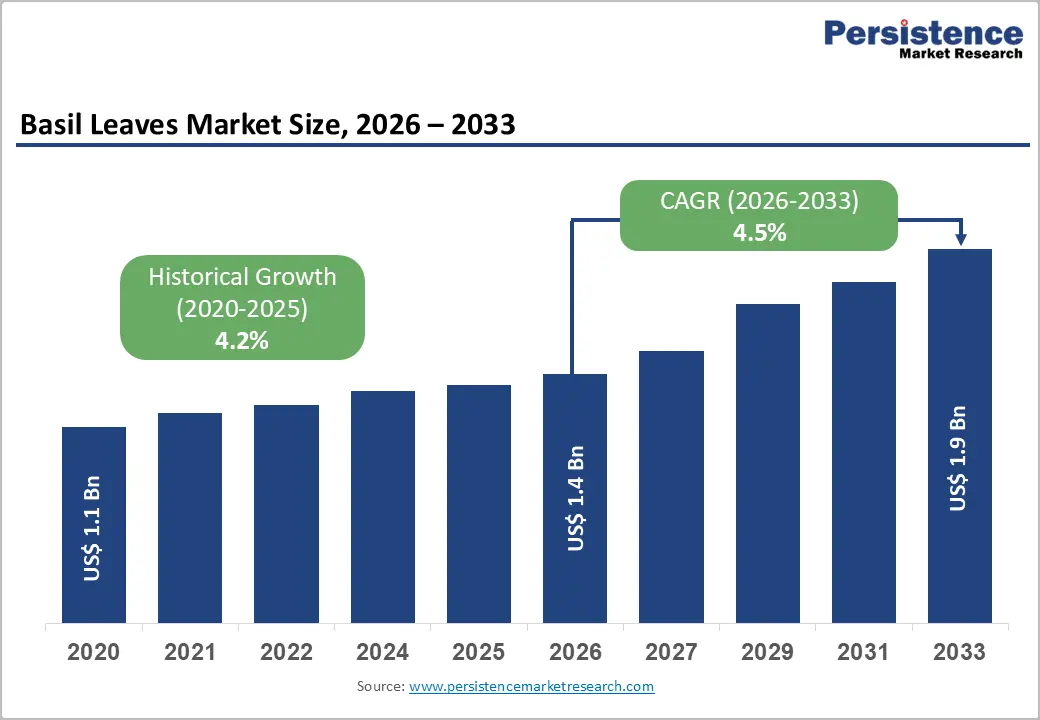
The global basil leaves market size is expected to be valued at US$ 1.4 billion in 2026 and projected to reach US$ 1.9 billion by 2033, growing at a CAGR of 4.5% between 2026 and 2033.
This trajectory reflects steady expansion from an estimated US$1.1 billion in 2020, underpinned by rising culinary herb consumption, the premiumization of fresh produce, and the growing use of basil-derived ingredients in health-focused formulations. Demand is further reinforced by consumer shifts toward clean-label foods, Mediterranean and Asian cuisines, and plant-based diets, all of which rely heavily on basil as a core flavoring and functional herb.
The market growth outlook for basil leaves is strengthened by increasing cultivation in leading producer countries in Asia and Africa, alongside the expansion of controlled-environment agriculture in North America and Europe to ensure year-round supply. At the same time, international trade in herbs and spices has increased in both volume and value over the past decade, with basil prominently featured in fresh and dried herb assortments. These dynamics position the basil leaves market as one of the more resilient and opportunity-rich segments within the broader culinary herbs and spices industry, particularly as food manufacturers and nutraceutical brands innovate with basil-based sauces, teas, supplements, and personal care formulations.
Key Industry Highlights:
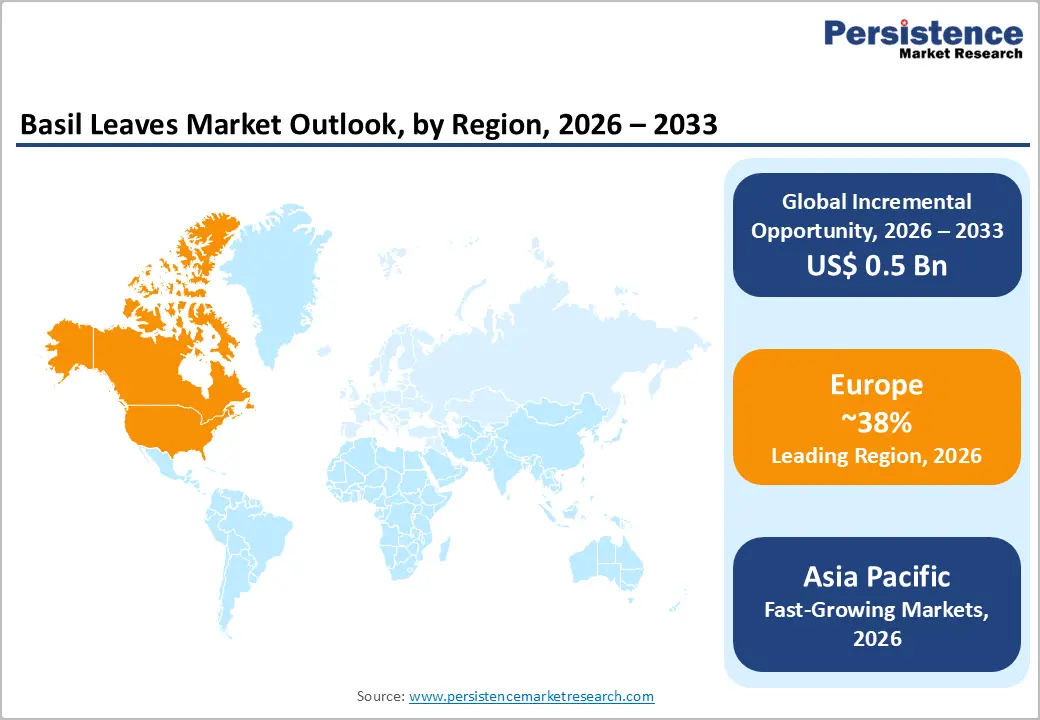
- North America remains a leading region in the basil leaves market, supported by high per-capita consumption of fresh herbs, a sophisticated foodservice ecosystem, and stringent food safety regulations that favor suppliers with strong quality assurance, certification, and traceability systems.
- Asia-Pacific is the fastest-growing basil leaves market, driven by large-scale production in countries such as India, Thailand, and Vietnam, growing exports, and rising domestic demand for basil-rich traditional cuisines, packaged foods, and herbal wellness products.
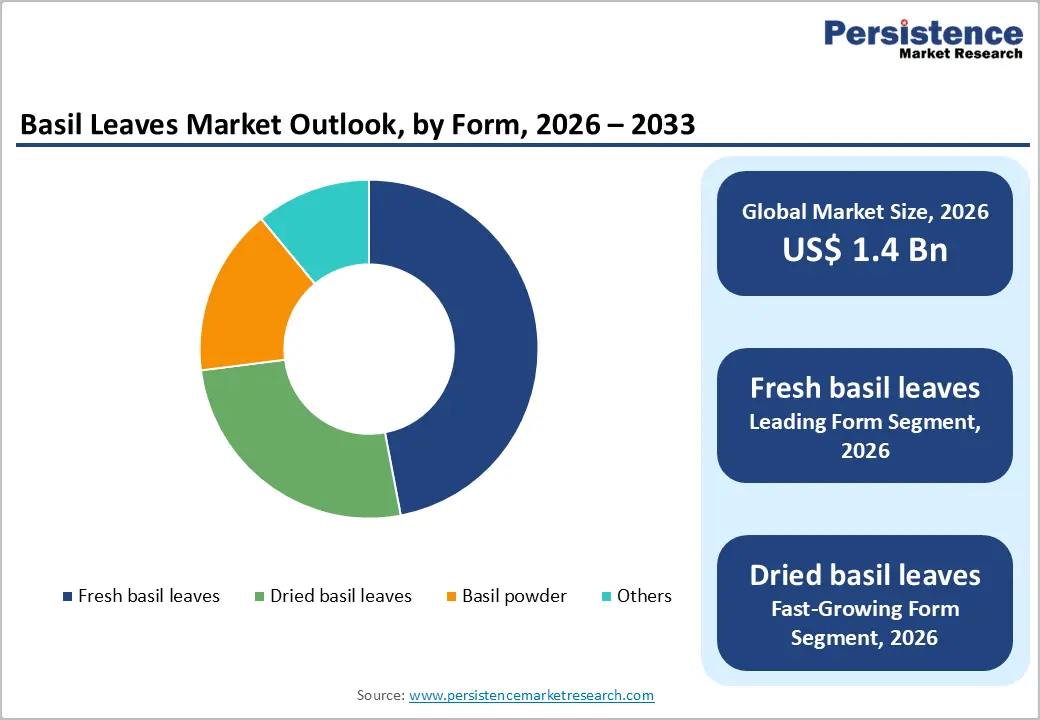
- Fresh basil leaves constitute the dominant segment of the basil leaves market by form, reflecting consumer preference for aromatic, visually appealing herbs in home cooking and foodservice, whereas dried basil leaves and basil powder are rapidly gaining relevance in processed and packaged food applications.
- Within product types, sweet basil leads the basil leaves market due to its extensive use in Italian and Mediterranean dishes worldwide, whereas holy basil (Tulsi) and other functional varieties are among the fastest-growing in value terms, powered by nutraceutical, herbal tea, and wellness applications.
- Key market opportunities in the basil leaves market center on organic and sustainability-certified sourcing, development of high-value dried and powdered basil formats, and investment in food safety, controlled-environment cultivation, and innovative basil-based formulations for health-conscious and convenience-seeking consumers.
| Key Insights | Details |
|---|---|
| Basil Leaves Market Size (2026E) | US$ 1.4 billion |
| Market Value Forecast (2033F) | US$ 1.9 billion |
| Projected Growth CAGR (2026 - 2033) | 4.5% |
| Historical Market Growth (2020 - 2025) | 4.2% CAGR |
Market Dynamics
Drivers - Rising Global Demand for Fresh and Culinary Herbs
A key growth driver for the basil leaves market is the rising worldwide demand for fresh and culinary herbs across household and foodservice channels. Consumers are increasingly prioritizing fresh, aromatic ingredients to enhance flavor while supporting healthier home cooking and out-of-home dining. In North America and Europe, official agricultural and trade statistics show sustained growth in imports and domestic production of fresh herbs, reflecting structural changes in diets toward Mediterranean, Italian, and Asian cuisines where basil is a cornerstone ingredient. Modern grocery retailers now dedicate more space to packaged bunches and potted basil plants, while foodservice operators use basil extensively in pizzas, pastas, salads, soups, and ready meals. This broad-based adoption of basil leaves, together with rising disposable incomes in emerging markets and the expansion of organized retail and e-commerce, continues to grow demand for both fresh and dried basil products.
Expanding Evidence for Health and Functional Benefits
Another important driver of the basil leaves market is the growing scientific and clinical evidence supporting basil’s health and functional benefits, particularly for holy basil (Tulsi) and related Ocimum species. Peer-reviewed human studies and systematic reviews indicate that Tulsi preparations can support metabolic health, with benefits for blood glucose control, lipid profiles, stress response, and immune modulation. These findings validate long-standing uses in Ayurvedic and traditional medicine, encouraging their translation into modern formulations. As a result, pharmaceutical and nutraceutical companies are increasingly incorporating basil extracts into herbal teas, capsules, tinctures, and functional foods aimed at lifestyle-related conditions and general wellness. At the same time, consumer interest in natural remedies and botanical ingredients is rising, especially after the global focus on immunity and resilience. This convergence of culinary appeal and functional value significantly strengthens demand for basil leaves and basil-derived ingredients across food, health, and wellness applications.
Restraints - Food Safety Incidents and Microbiological Risks in Fresh Basil
Despite positive demand trends, recurring food safety concerns associated with fresh basil are restraining the basil leaves market. Surveillance programs by agencies such as the U.S. Food and Drug Administration (FDA) have shown that fresh herbs, including basil, can serve as vehicles for pathogens like Salmonella and Cyclospora cayetanensis when good agricultural and handling practices are not consistently followed. In recent years, a multistate foodborne illness outbreak in the United States was traced to fresh organic basil, prompting nationwide recalls and extensive media coverage. Such incidents can temporarily dampen consumer confidence, prompt regulators to impose stricter controls, and prompt retailers to tighten supplier approval and testing protocols. For producers and exporters, especially small and medium-sized farms in developing regions, these heightened food safety expectations translate into additional costs for hygiene, water quality management, worker training, and traceability systems.
Opportunity - Value Creation in Dried Basil, Basil Powder, and Processed Formats
A major opportunity in the basil leaves market lies in accelerating the development of value-added formats, notably dried basil leaves, basil powder, and blended seasonings. While fresh basil dominates home and restaurant usage due to its aroma and visual appeal, dried and powdered formats offer longer shelf life, easier storage, and excellent suitability for large-scale manufacturing and international trade. Global spice and herb trade statistics indicate robust growth in demand for dried herbs used in prepared meals, sauces, snacks, and ready-to-eat products. Food manufacturers increasingly rely on standardized dried basil and basil powder to deliver consistent flavor profiles in pasta sauces, frozen pizzas, bakery items, packaged soups, dips, and convenience seasonings. As consumers everywhere turn to convenient, shelf-stable foods- often purchased online-suppliers capable of providing high-quality, safe, and traceable dried basil stand to capture stronger margins and longer-term contracts with industrial buyers. This makes dried basil one of the fastest-growing areas within the broader basil leaves market.
Category-wise Analysis
Form Insights
Fresh basil leaves constitute the leading form segment in the basil leaves market, supported by their central role in home cooking, foodservice, and chilled value-added products. Fresh basil leaves are estimated to account for approximately 47% of the global basil market in 2025, reflecting their dominance in salads, pestos, garnishes, and refrigerated ready meals. Retailers in North America and Europe prominently display fresh basil in clamshell packs, sleeves, and potted herb units, addressing consumer preferences for vibrant, minimally processed ingredients. Concurrently, investment in greenhouse and controlled-environment agriculture enables consistent year-round production, improving availability and quality. Even as dried basil leaves are the fastest-growing segment due to their suitability for packaged foods and exports, fresh basil’s sensory appeal and versatility ensure that it remains the anchor of the basil leaves market over the forecast horizon.
Product Type Insights
Within product types, sweet basil is the dominant segment of the basil leaves market, largely because it is the standard variety in Italian, Mediterranean, and Western cuisines. Sweet basil (including classic Genovese types) is widely used in tomato sauces, pasta dishes, pizzas, bruschetta, salads, and sandwiches, making it the default choice for both retail shoppers and foodservice kitchens. Agricultural and culinary references consistently describe sweet basil as the most widely cultivated and traded basil variant worldwide, with significant acreage in producer countries across Asia, Europe, and the Americas. By contrast, Thai basil, holy basil (Tulsi), lemon basil, and other specialty types are used in more specific regional or gourmet applications, such as Southeast Asian curries and herbal teas. Although holy basil is gaining traction in nutraceuticals and functional beverages, sweet basil’s ubiquity in everyday cooking, coupled with its compatibility with global flavor trends, is expected to keep it as the leading product type throughout the forecast period.
Distribution Channel Insights
Supermarkets and hypermarkets are the leading distribution channels in the basil leaves market, particularly in developed regions where modern grocery retail formats are well established. These stores offer a wide range of basil products, including fresh leaves in produce sections, potted plants, dried basil jars, frozen pesto cubes, and branded basil-based sauces and dressings. Their scale, frequent shopper traffic, and ability to run in-store promotions make them powerful platforms for driving basil sales. Convenience stores play a complementary role by offering smaller packs of fresh or dried basil for quick purchases, particularly in urban areas. Online retail, although still smaller in absolute terms, is among the fastest-growing channels for basil leaves, enabling direct-to-consumer fresh-herb subscriptions and bulk purchases of dried basil and organic variants. Nonetheless, due to high visibility, consistent availability, and strong merchandising capabilities, supermarkets and hypermarkets are expected to retain their leadership in distribution for the basil leaves market.
Regional Insights
North America Basil Leaves Market Trends and Insights
North America is a leading region in the basil leaves market, driven by the high penetration of fresh herbs in household cooking and a dynamic restaurant and foodservice landscape. In the United States, basil features prominently on Italian and Mediterranean menus, as well as in contemporary fusion cuisine, boosting demand across pizzerias, casual dining, and premium fast-casual concepts. Retailers stock an expanding assortment of fresh basil, organic options, and added-value basil products such as refrigerated pesto, salad kits, and meal kits, reinforcing basil’s presence in everyday consumption. Domestic greenhouse operations and controlled-environment agriculture projects, supported by agencies such as USDA and USDA NIFA, are helping to improve yield, reduce seasonality, and ensure a reliable supply of high-quality basil leaves.
Asia Pacific Basil Leaves Market Trends and Insights
Asia-Pacific is the fastest-growing region in the basil leaves market and serves as a key production base and an expanding consumption hub. Countries such as India, Thailand, Vietnam, and China are among the major producers of basil, benefiting from favorable climatic conditions, established agricultural traditions, and competitive labor costs. Basil plays a central role in numerous traditional dishes, ranging from Thai curries and Vietnamese stir-fries to Indian chutneys and herbal preparations, resulting in strong domestic consumption and export volumes. The region also supplies fresh and dried basil to markets in Europe, North America, and the Middle East as part of larger spice and herb export portfolios.
Competitive Landscape
The global basil leaves market features a moderately fragmented competitive landscape comprising global spice brands, agribusiness suppliers, ingredient specialists, and regional herb producers. Companies compete on product freshness, organic certification, supply chain reliability, and value-added offerings such as dried, powdered, and processed basil formats. Strategic priorities include expanding sourcing networks in key cultivation regions, investing in controlled-environment farming, and strengthening distribution across retail and foodservice channels. Product differentiation through premium quality, clean-label positioning, and sustainable farming practices is increasingly important, while partnerships with growers and food manufacturers help firms secure volumes and broaden end-use applications.
Key Developments:
- In February 2026, AirAsia once again elevated the travel experience by announcing a major collaboration with the legendary “Chaixi Bameekiao.” The partnership introduced the exclusive “Basil Noodles with Grilled Duck,” a fusion dish that reimagined familiar Thai street food flavors with a premium twist.
Companies Covered in Basil Leaves Market
- Market Forecast and Trends
- Competitive Intelligence & Share Analysis
- Growth Factors and Challenges
- Strategic Growth Initiatives
- Pricing Analysis
- Future Opportunities and Revenue Pockets
- Market Analysis Tools
Frequently Asked Questions
The global basil leaves market size is expected to reach around US$ 1.4 billion in 2026, driven by rising consumption of fresh and dried culinary herbs, expansion of modern retail and e-commerce, and increasing use of basil in sauces, meal kits, and value-added food products.
The basil leaves market is primarily driven by growing consumer preference for fresh, natural, and clean-label ingredients; the global popularity of Mediterranean and Asian cuisines; steady growth in home cooking and foodservice usage of basil; and expanding scientific support for basil’s health and functional benefits, especially in herbal and nutraceutical applications.
North America is among the leading regions in the global basil leaves market, supported by high per-capita fresh herb consumption, a mature retail and foodservice infrastructure, widespread use of basil in Italian and fusion cuisines, and strong regulatory emphasis on food safety and quality standards.
A major opportunity in the basil leaves market lies in developing premium, sustainably sourced, and certified basil products including organic and Fairtrade lines and expanding value-added dried basil, basil powder, herbal teas, and wellness formulations that address consumer trends toward health, convenience, and ethical consumption.


