




- Pharmaceuticals
- ASEAN Dysphagia Diet Thickening Agents Market
ASEAN Dysphagia Diet Thickening Agents Market Size, Share, Growth, and Regional Forecast, 2026 to 2033
ASEAN Dysphagia Diet Thickening Agents Market by Form (Gel Type Thickeners, Powder Thickeners), Distribution Channel, and Regional Analysis from 2026 to 2033

ASEAN Dysphagia Diet Thickening Agents Market Share and Trends Analysis
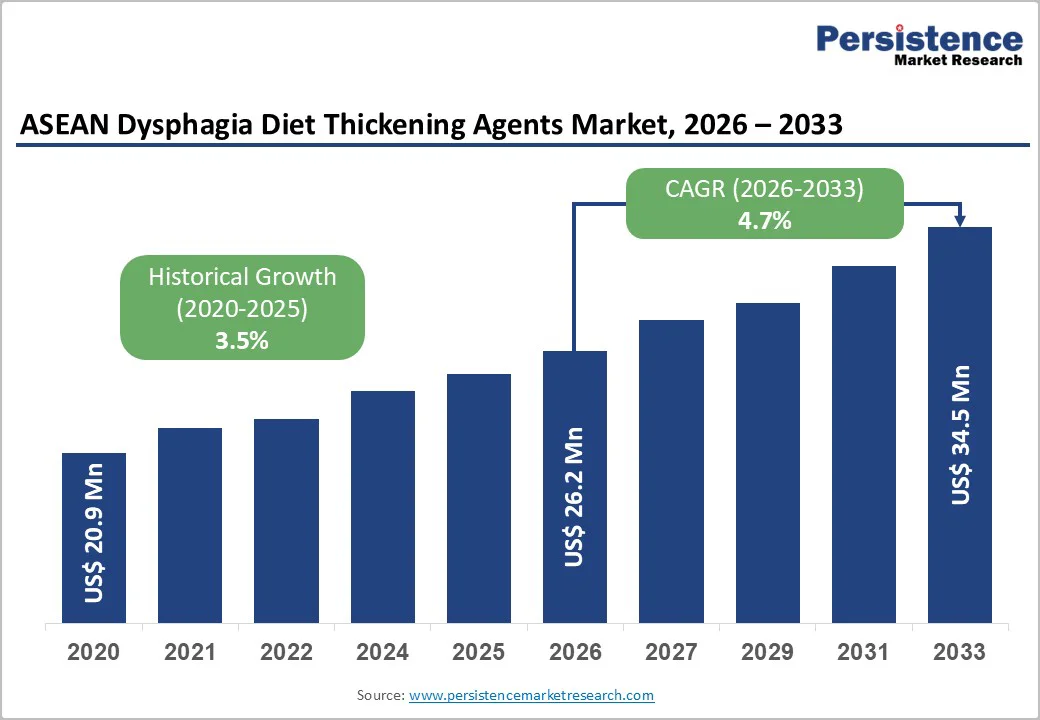
The ASEAN dysphagia diet thickening agents market size is estimated to grow from US$26.2 million in 2026 and reach US$34.5 million by 2033, growing at a CAGR of 7.5% during the forecast period from 2026 to 2033.
The ASEAN dysphagia diet thickening agents market is experiencing steady growth, driven by a rising elderly population and increasing prevalence of dysphagia due to strokes, Parkinson’s disease, and head and neck cancers.
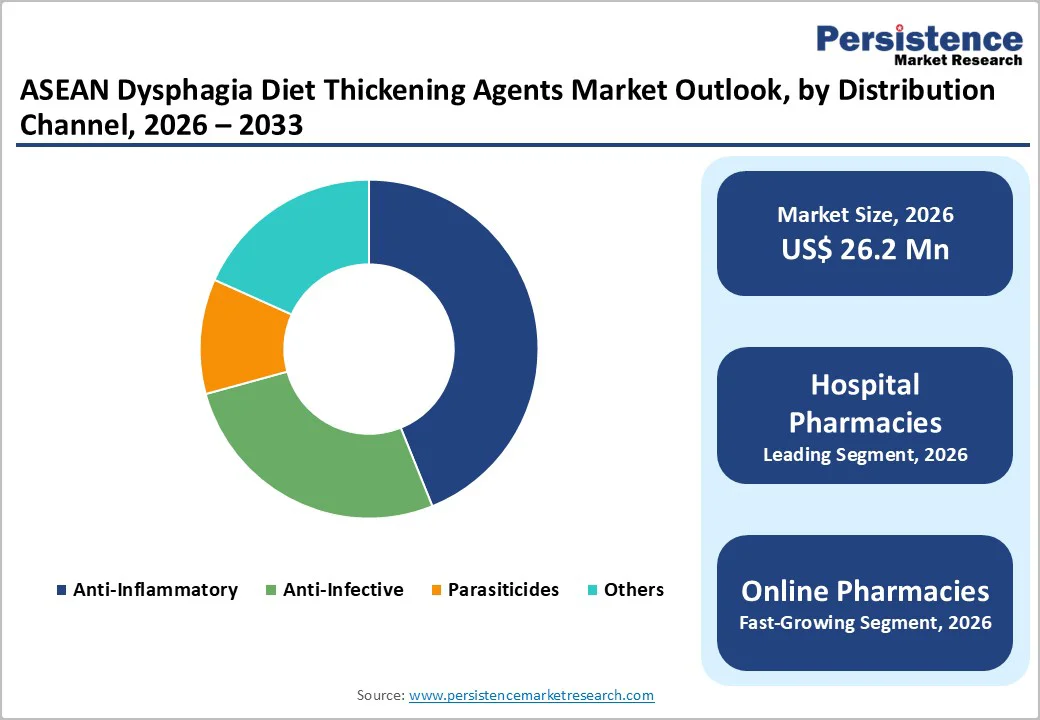
Powder-based thickeners dominate because of their convenience and cost-effectiveness, while hospital pharmacies remain the primary distribution channel. However, retail and online pharmacy channels are gaining traction.
Despite growth opportunities, challenges such as limited dysphagia diagnostic infrastructure and cultural preferences for traditional remedies over commercial products continue to impact market expansion, making targeted awareness and accessibility crucial for future development.
Key Industry Highlights:
- The growing elderly population and increasing neurological disorders, such as stroke and Parkinson’s disease, are major factors driving demand for thickening agents in the region.
- High smoking prevalence, particularly among men, contributes to a higher incidence of head and neck cancers, indirectly boosting the demand for dysphagia diet thickening agents.
- Market growth is constrained by limited access to standardized and affordable dysphagia diagnostics, such as video-fluoroscopy and endoscopic evaluations, in many ASEAN countries.
- Powder thickeners can be easily measured, mixed into liquids, and adjusted to achieve the desired viscosity, making them convenient for both caregivers and healthcare professionals.
| Key Insights | Details |
|---|---|
| ASEAN Dysphagia Diet Thickening Agents Market Size (2026E) | US$26.2 Mn |
| Market Value Forecast (2033F) | US$34.5 Mn |
| Projected Growth (CAGR 2026 to 2033) | 4.7% |
| Historical Market Growth (CAGR 2020 to 2024) | 3.5% |
Market Dynamics
Driver - High Incidences of Stroke
Stroke is one of the leading causes of dysphagia, a condition that significantly impairs swallowing and increases the risk of malnutrition, dehydration, and aspiration pneumonia. In the ASEAN region, the prevalence of stroke is rising due to aging populations, urban lifestyle changes, and increased incidence of risk factors like hypertension and diabetes.
As a result, more patients experience swallowing difficulties that require dietary modifications, including the use of specialized thickening agents. These products help adjust the consistency of liquids and semi-solids, making them safer to consume.
Restraints - Absence of Diagnostic Testing & High Preference for Home Remedies
Lack of standard diagnostic tests to diagnose dysphagia conditions and increasing preference for home remedies and alternative therapies are key factors restraining the growth of the ASEAN dysphagia diet thickening agents market. Dysphagia is diagnosed by using X-ray, flexible endoscopy, and video-fluoroscopy procedures. However, these are not feasible to conduct every time in dysphagia patients.
For instance, video-fluoroscopy only detects a portion of the mouth from the pharynx to the upper part of the chest. It will not detect irregularities in the oesophagus. To detect such abnormalities, the barium swallow exam is conducted. Due to the lack of standard diagnostic testing procedures for dysphagia diagnosis, the consumption of dysphagia diet thickening agents is experiencing a restraint.
Home remedies and other alternative therapies are preferred over marketed products by consumers for providing relief from dysphagia in the ASEAN region, which is also restraining market growth.
In Asia, post-stroke dysphagia conditions are most commonly treated with acupuncture techniques and Chinese herbal medicines over available branded thickener products present in the market. Furthermore, in low-income countries of Southeast Asia, home-based therapies, such as Ayurveda and homeopathy, are commonly used to manage dysphagia conditions.
Opportunity - High Demand for Dysphagia Management in Children
The forecast period is set to witness many lucrative opportunities for manufacturers of dysphagia diet thickening agents within the ASEAN region. Research proposes that around 1% of children in the general population will suffer from swallowing difficulties, although the occurrence rate is much higher in some clinical populations (e.g. children with airway malformations, traumatic brain injury, and cerebral palsy). This number indicates high demand for dysphagia management in children.
Moreover, the need for dysphagia treatment in children generates huge opportunities for market players to introduce paediatric-specific dysphagia diet products. Presently, several dysphagia treatment products are available in the market. Only a few products are focusing on paediatric dysphagia conditions.
Most thickening products target the adult population. Introduction of paediatric-focused thickening agents for swallowing disorders can generate significant opportunities for players in the market.
Category-wise Analysis
By Form Insights
Powder thickeners dominate the ASEAN dysphagia diet thickening agents market due to their unmatched convenience, versatility, and cost-effectiveness. They can be easily measured and mixed into various liquids water, juices, soups, or milk, allowing caregivers and healthcare professionals to tailor viscosity according to individual patient needs.
Unlike gel-type thickeners, powders offer longer shelf life, easier storage, and bulk preparation for hospitals and care facilities. Their affordability makes them accessible in price-sensitive ASEAN markets, while consistent performance ensures patient safety and compliance.
By Distribution Channel Insights
Hospital pharmacies hold the highest share in the ASEAN dysphagia diet thickening agents market due to their central role in patient care and clinical management. Hospitals treat the majority of dysphagia patients, especially those with stroke, neurological disorders, or post-surgical complications, where precise dosing and professional supervision are critical.
Bulk procurement allows cost efficiency, while trained staff ensure correct preparation and administration, enhancing patient safety. Additionally, hospital pharmacies serve as a trusted source for both inpatients and discharged patients, often guiding home care.
Country-wise Insights
Indonesia Equine Veterinary Therapeutics Trends
Indonesia leads the ASEAN dysphagia diet thickening agents market due to a combination of high disease prevalence, large population, and expanding healthcare infrastructure. The country experiences a significant burden of stroke and neurological disorders, which are major causes of dysphagia, driving demand for specialized nutrition solutions.
Rapid improvements in hospitals, rehabilitation centers, and geriatric care facilities have increased accessibility to thickening agents. Rising awareness among healthcare professionals and caregivers, along with growing adoption of standardized dysphagia management protocols, further supports market growth.
Market Competitive Landscape
The ASEAN dysphagia diet thickening agents market is moderately competitive, featuring a mix of regional and international players striving to capture market share through product innovation and distribution expansion.
Key companies focus on developing powder and gel formulations with improved taste, texture, and IDDSI-compliant standards to enhance patient compliance. Hospital pharmacies remain the primary channel, prompting manufacturers to establish strong institutional relationships. Additionally, companies are leveraging online and retail pharmacy networks to reach home-care patients.
Key Industry Developments
- In April 2024, Nestlé India and Dr. Reddy formed a joint venture to bring their health science nutraceutical portfolio to consumers across India and other agreed territories.
Companies Covered in ASEAN Dysphagia Diet Thickening Agents Market
- Brenntag Sdn. Bhd.
- Deosen Biochemical (Ordos) Ltd.
- Abbott
- Nestlé Health Science (Nestlé)
- Danone S.A.
- Hormel Foods Corporation
- Flavour Creations
- Ingredion Incorporated
- Other
Frequently Asked Questions
The ASEAN Dysphagia Diet Thickening Agents market is projected to be valued at US$26.2 Mn in 2026.
Growing awareness among healthcare professionals and caregivers promotes early diagnosis and adoption of thickening agents.
The ASEAN Dysphagia Diet Thickening Agents market is poised to witness a CAGR of 4.7% between 2026 and 2033.
Expansion through online and retail pharmacy channels offers access to home-care patients, while partnerships with hospitals and rehabilitation centers can strengthen institutional presence.
Brenntag Sdn. Bhd., Deosen Biochemical (Ordos) Ltd., Abbott, Nestlé Health Science (Nestlé), and others.


