




- Medical Devices
- Amniotic Membranes Market
Amniotic Membranes Market Size, Share, Growth, and Regional Forecast, 2026 to 2033
Amniotic Membranes Market by Product (Cryopreserved Amniotic Membrane and Dehydrated Amniotic Membrane), Application (Surgical Wounds, Ophthalmology, Stem Cell Biology, Regenerative Medicine, Prenatal Diagnosis, Orthopedics, and Others), End-user (Hospitals, Ambulatory Surgical Centers (ASCs), Specialty Clinics, Research and Academic Institutes, and Others), and Regional Analysis from 2026 to 2033

Amniotic Membranes Market Share and Trend Analysis
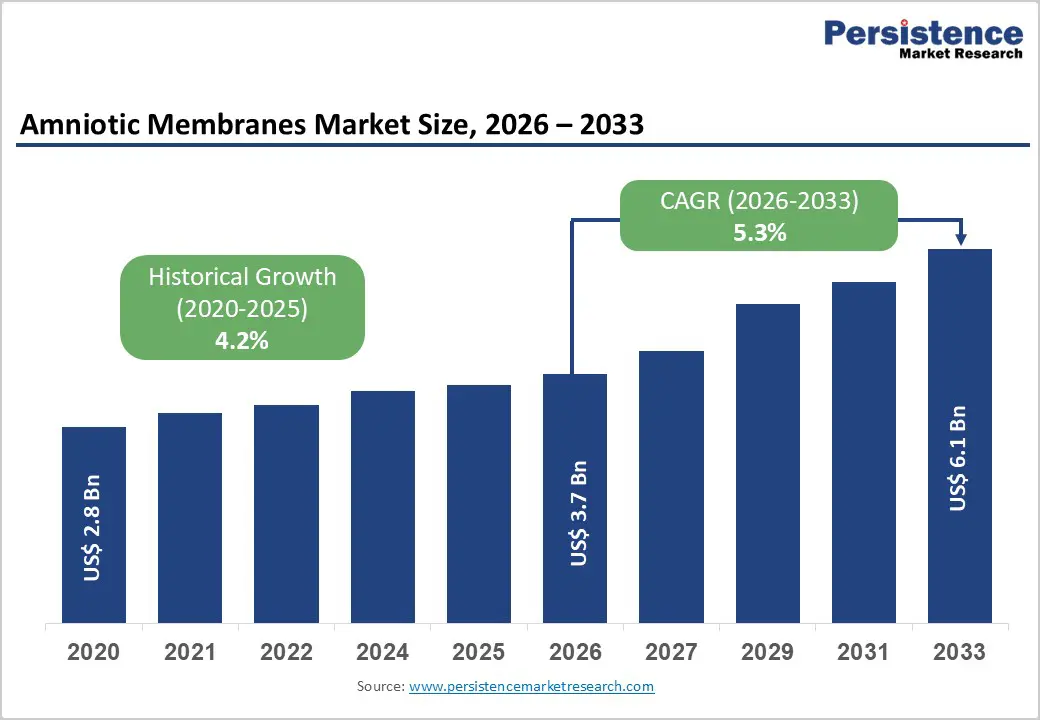
The global amniotic membranes market size is estimated to grow from US$ 3.7 billion in 2026 to US$ 6.1 billion by 2033. The market is projected to record a CAGR of 5.3% during the forecast period from 2026 to 2033. The Global utilization of amniotic membrane-based therapies is expanding steadily as healthcare systems increasingly adopt regenerative biologics for improved tissue repair and surgical outcomes.
The rising incidence of chronic wounds, diabetic ulcers, burns, and ocular surface disorders is creating sustained clinical demand for advanced healing materials capable of reducing inflammation and accelerating recovery. Growth in aging populations and metabolic diseases continues to increase the number of patients requiring long-term wound management interventions. Clinicians are progressively favoring biologic grafts that promote natural regeneration while minimizing scarring and infection risk.
Key Industry Highlights
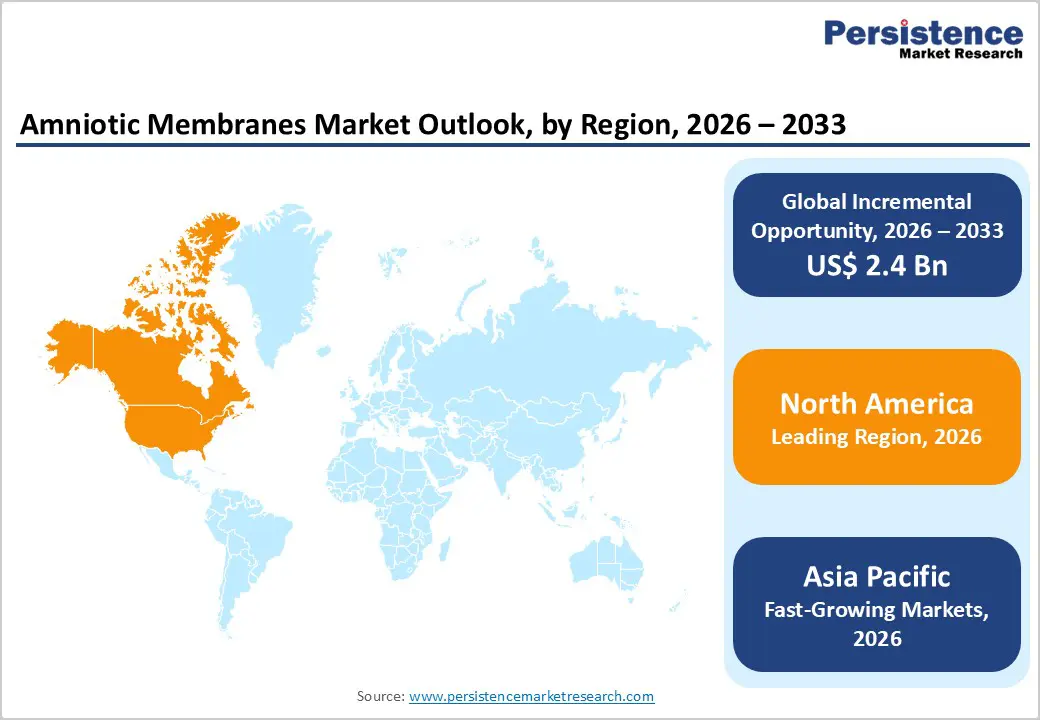
- Leading Region: North America accounts for 47.3%, supported by advanced surgical infrastructure, favorable reimbursement coverage, strong clinical awareness of biologic wound care, and the presence of established tissue processing organizations.
- Fastest-Growing Region: Asia Pacific is witnessing the fastest expansion due to improving healthcare infrastructure, rising surgical volumes, increasing diabetes prevalence, expanding private healthcare networks, and growing adoption of regenerative treatment approaches.
- Leading Product Segment: Cryopreserved amniotic membrane holds a share of 64.8%, driven by preservation of biological activity, superior healing performance, and strong physician preference in complex wound care and ophthalmic procedures.
- Fastest-Growing Product Segment: Dehydrated amniotic membrane is expanding rapidly as demand increases for shelf-stable, cost-efficient products that simplify storage and enable wider use in outpatient and resource-limited settings.
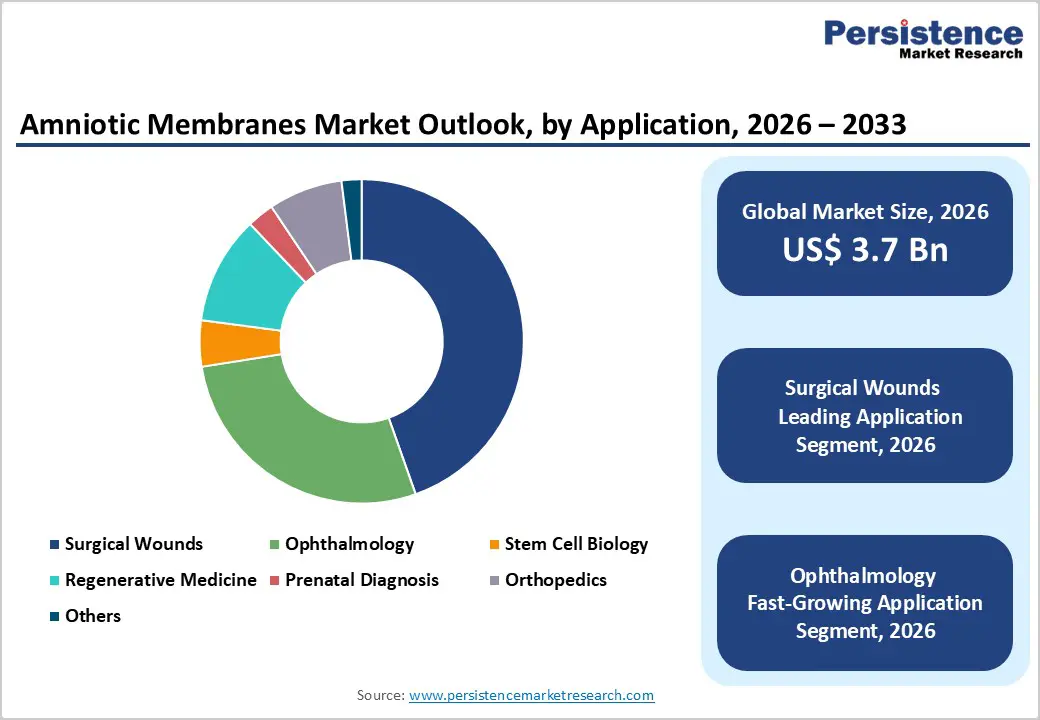
- Leading Application Segment: Surgical wounds lead with 44.6%, supported by widespread use in chronic ulcer treatment, trauma care, and post-operative healing, where regenerative support improves recovery outcomes.
- Fastest-Growing Application Segment: Ophthalmology is advancing quickly due to increasing corneal repair procedures, rising ocular surface disease incidence, and growing adoption of biologic grafts in eye surgery and reconstruction.
| Key Insights | Details |
|---|---|
| Amniotic Membranes Market Size (2026E) | US$ 3.7 Bn |
| Market Value Forecast (2033F) | US$ 6.1 Bn |
| Projected Growth (CAGR 2026 to 2033) | 5.3% |
| Historical Market Growth (CAGR 2020 to 2025) | 4.2% |
Market Dynamics
Driver - Increasing Adoption of Regenerative Therapies and Rising Burden of Chronic Wounds
Growing clinical reliance on biologically active grafts for tissue repair is a major factor accelerating demand for amniotic membrane-based products. The global increase in chronic wounds, including diabetic foot ulcers, venous leg ulcers, pressure injuries, and post-surgical complications, has created a strong need for advanced healing solutions capable of reducing recovery time and minimizing infection risk. Aging populations and the rising prevalence of diabetes and vascular disorders are significantly expanding the patient pool requiring long-term wound management. Amniotic membranes offer anti-inflammatory, anti-scarring, and antimicrobial properties, making them highly effective compared with traditional dressings or synthetic substitutes.
Surgeons and wound care specialists increasingly prefer biologic materials that support natural tissue regeneration while lowering repeat procedures and hospitalization duration. In ophthalmology, these membranes are widely used for corneal surface reconstruction and treatment of ocular injuries, further strengthening clinical demand. Continuous improvements in preservation technologies, sterility assurance, and processing standards have enhanced product consistency and physician confidence. Expanding awareness of regenerative medicine among healthcare providers, combined with favorable clinical outcomes and growing integration into treatment protocols, continues to drive adoption across hospitals, specialty clinics, and ambulatory surgical settings worldwide.
Restraints - Regulatory Complexity, Tissue Processing Costs, and Limited Reimbursement Coverage
Despite strong clinical potential, several operational and economic challenges continue to restrict wider adoption. Products derived from human tissue are subject to stringent regulatory oversight related to donor screening, traceability, processing validation, and storage requirements. Compliance with evolving regulatory frameworks increases manufacturing complexity and extends approval timelines, particularly for companies expanding into new geographic markets. Additionally, specialized preservation techniques such as cryopreservation require controlled logistics infrastructure and cold-chain management, contributing to higher production and distribution costs. Variability in reimbursement policies across countries further limits accessibility, as advanced biologic grafts may not always receive adequate coverage under standard healthcare plans.
Healthcare providers in cost-sensitive environments may therefore rely on conventional wound care alternatives despite clinical advantages offered by amniotic membranes. Limited awareness among general practitioners and smaller healthcare facilities also slows adoption outside specialized centers. Ethical considerations related to tissue sourcing and the need for strict quality assurance can create additional operational burdens. Together, pricing pressures, reimbursement uncertainty, and regulatory barriers continue to moderate market penetration, particularly in emerging healthcare systems with constrained budgets and infrastructure limitations.
Opportunity - Expansion into Orthopedics, Ophthalmology, and Emerging Healthcare Markets
Significant growth opportunities are emerging as applications of biologic membranes expand beyond traditional wound care into broader regenerative medicine fields. Increasing research supporting the use of amniotic tissues in orthopedic procedures, including tendon repair, ligament injuries, and inflammation management, is opening new clinical pathways. Similarly, rising incidence of ocular surface disorders and growing adoption of minimally invasive ophthalmic surgeries are strengthening demand within eye care specialties. Rapid healthcare infrastructure development in Asia Pacific, Latin America, and parts of the Middle East presents additional untapped potential, supported by improving surgical capacity and rising healthcare expenditure. Growing physician education programs and clinical training initiatives are enhancing awareness of regenerative treatment options in these regions. Manufacturers are also exploring dehydrated and room-temperature-stable formats that simplify storage and expand use in outpatient environments. Strategic collaborations between tissue banks, biotechnology firms, and healthcare providers are accelerating product innovation and distribution reach. As healthcare systems increasingly prioritize faster healing outcomes, reduced complications, and shorter hospital stays, amniotic membrane technologies are positioned to benefit from expanding therapeutic indications and broader global accessibility.
Category-wise Analysis
By Product Insights
Cryopreserved amniotic membranes are projected to dominate the global amniotic membranes market in 2026, accounting for 64.8% of total revenue, primarily supported by their ability to retain native extracellular matrix structure, viable growth factors, and anti-inflammatory proteins essential for tissue regeneration. These membranes demonstrate strong clinical performance in wound healing, ophthalmic surface reconstruction, and surgical repair procedures where biological activity is critical. Physicians often prefer cryopreserved formats because they closely mimic natural tissue characteristics, promoting faster epithelialization and reduced scar formation. Increasing adoption across advanced wound care centers and ophthalmology practices further reinforces demand. Improvements in controlled preservation technologies and cold-chain logistics have enhanced product reliability and shelf stability. Moreover, growing clinical evidence validating improved patient outcomes continues to strengthen surgeon confidence, enabling sustained revenue leadership for this segment across both hospital and specialty care environments.
By Application Insights
The surgical wounds segment is expected to account for 44.6% of the global amniotic membranes market in 2026, supported by rising incidence of chronic ulcers, burns, trauma injuries, and post-surgical complications requiring advanced biologic dressings. Amniotic membranes provide anti-microbial protection, moisture retention, and cytokine-mediated healing support, making them highly effective alternatives to conventional wound management approaches. Increasing prevalence of diabetes and vascular disorders worldwide has significantly expanded the patient pool requiring long-term wound care solutions. Healthcare providers are increasingly incorporating biologic grafts into treatment protocols to accelerate healing timelines and reduce hospitalization duration. Growing preference for regenerative therapies that minimize pain and lower infection risk further supports adoption. Continuous clinical validation and favorable procedural outcomes have positioned surgical wound management as the primary application area driving overall market demand.
By End-user Insights
Hospitals are projected to hold the largest share of 54.9% in the global amniotic membranes market in 2026, driven by higher procedural volumes and access to specialized surgical expertise. Complex wound management, ophthalmic surgeries, orthopedic interventions, and reconstructive procedures are predominantly performed in hospital settings, creating consistent demand for biologic graft materials. Availability of multidisciplinary care teams and established tissue handling protocols further supports utilization. Hospitals also benefit from reimbursement coverage for advanced wound care therapies, encouraging adoption of premium regenerative products. Increasing investments in surgical infrastructure and expansion of tertiary care centers worldwide are strengthening procurement levels. Additionally, hospitals serve as primary centers for clinical trials and physician training, accelerating familiarity with amniotic membrane applications. These factors collectively reinforce hospitals as the dominant end-user segment globally.
Regional Insights
North America Amniotic Membranes Market Trends
North America is expected to lead the global amniotic membranes market with a value share of 47.3% in 2026, largely supported by the United States’ advanced healthcare ecosystem and strong adoption of regenerative medicine technologies. The region benefits from high awareness among clinicians regarding biologic wound care solutions and widespread integration of amniotic grafts into treatment guidelines for diabetic foot ulcers, ocular surface disorders, and surgical reconstruction. A growing elderly population and increasing prevalence of chronic conditions such as diabetes and obesity continue to expand demand for advanced healing solutions. Favorable reimbursement policies for wound care procedures significantly improve accessibility and encourage hospital adoption.
The presence of established tissue banks, stringent quality standards, and well-defined regulatory pathways ensures product reliability and clinician confidence. Continuous innovation by leading manufacturers, combined with strong clinical research activity, further accelerates commercialization of next-generation amniotic products. Increasing focus on reducing hospital stays and improving patient recovery outcomes continues to strengthen North America’s dominant market position.
Europe Amniotic Membranes Market Trends
The Europe amniotic membranes market is anticipated to demonstrate steady expansion, supported by well-established healthcare systems and increasing acceptance of regenerative treatment approaches across major economies including Germany, the U.K., France, Italy, and Spain. Rising incidence of chronic wounds associated with aging populations and vascular diseases is encouraging healthcare providers to adopt biologic graft solutions that enhance healing efficiency. European clinicians increasingly emphasize evidence-based therapies, and growing clinical validation studies have strengthened confidence in amniotic membrane applications, particularly in ophthalmology and reconstructive surgery. Regulatory frameworks emphasizing safety, traceability, and tissue processing quality contribute to high product standards across the region. Public healthcare coverage in several countries facilitates patient access to advanced wound management therapies.
Expansion of specialized wound care centers and ophthalmic surgical facilities further supports market penetration. Additionally, collaborative research initiatives between academic institutions and biotechnology companies are accelerating innovation, ensuring sustained adoption and long-term growth throughout the European market landscape.
Asia Pacific Amniotic Membranes Market Trends
The Asia Pacific amniotic membranes market is projected to register the fastest growth, with a CAGR of approximately 7.1% between 2026 and 2033, driven by rapid healthcare infrastructure development and increasing awareness of regenerative medicine solutions. Countries such as China, India, Japan, South Korea, and Australia are witnessing rising rates of diabetes, trauma injuries, and surgical procedures, creating significant demand for advanced wound healing materials. Expansion of private hospitals and specialty clinics is improving access to modern biologic therapies, while growing physician education initiatives are enhancing clinical adoption.
Government investments aimed at strengthening healthcare capacity and promoting domestic biotechnology manufacturing are also supporting market expansion. Improving reimbursement scenarios and rising disposable incomes are enabling broader patient access to innovative treatments. Additionally, local production capabilities and strategic collaborations between global and regional companies are helping reduce product costs, improving affordability and accelerating penetration across both urban and semi-urban healthcare settings.
Competitive Landscape
The global amniotic membranes market is highly competitive, with strong participation from companies such as Amnio Technology, LLC, Applied Biologics, LLC, BioTissue Holdings Inc., Celularity Inc., Corza Medical Inc., and Integra LifeSciences Holdings Corporation. These players leverage strong clinical portfolios, established distribution networks, and advanced biologic processing capabilities to address rising demand for regenerative therapies and wound healing solutions.
Their offerings emphasize tissue preservation technologies, sterility assurance, improved handling characteristics, and regulatory compliance, supporting adoption across hospitals, surgical centers, and specialty clinics worldwide. Continuous product innovation and quality standard adherence remain critical for sustaining competitive positioning.
Key Industry Developments:
- In September 2025, Precision Biologics Manufacturing, a subsidiary of New Horizon Medical Solutions (NHMS), announced the groundbreaking of a new manufacturing facility aimed at advancing biologics production capabilities and strengthening the regional MedTech ecosystem in Southern Nevada. The facility is expected to expand domestic biologics manufacturing capacity and generate approximately 200-300 healthcare-focused jobs in the Las Vegas Valley, with operations anticipated to begin in the second half of 2026.
- In September 2023, MiMedx Group, Inc. introduced EPIEFFECT™, expanding its advanced wound care (AWC) portfolio with a new solution designed for managing acute and chronic hard-to-heal wounds, including diabetic foot ulcers (DFUs) and venous leg ulcers (VLUs). The product features a thick tri-layer amniotic membrane configuration that enables secure fixation using sutures, improving graft stability during treatment. Its enhanced structural properties and user-friendly handling make it particularly suitable for deep or tunneling wounds, supporting improved clinical outcomes in complex wound management settings.
Companies Covered in Amniotic Membranes Market
- Amnio Technology, LLC
- Applied Biologics, LLC
- BioTissue Holdings Inc.
- Celularity Inc.
- Corza Medical Inc.
- Integra LifeSciences Holdings Corporation
- MiMedx Group, Inc.
- Organogenesis Holdings Inc.
- Skye Biologics Holdings LLC
- Smith + Nephew
- VIVEX Biologics, Inc.
- Amniox Medical, Inc.
- Surgenex, LLC
- NuVision Biotherapies Limited
- Elutia Inc. (formerly Aziyo Biologics)
- Others
Frequently Asked Questions
The global amniotic membranes market is projected to be valued at US$ 3.7 Bn in 2026.
Rising demand for advanced wound care and ophthalmic surgeries, increasing chronic disease and trauma cases, and technological advancements in tissue preservation and regenerative therapies are driving the global amniotic membranes market growth.
The global amniotic membranes market is poised to witness a CAGR of 5.3% between 2026 and 2033.
Expansion of regenerative medicine applications, growing adoption in emerging healthcare markets, and improving reimbursement support for biologic grafts create major growth opportunities in the global amniotic membranes market.
Amnio Technology, LLC, Applied Biologics, LLC, BioTissue Holdings Inc., Celularity Inc., Corza Medical Inc., and Integra LifeSciences Holdings Corporation. are some of the key players in the amniotic membranes market.


