




- Biotechnology
- Anti-Inflammatory Cytokine Market
Anti-Inflammatory Cytokine Market Size, Share, and Growth Forecast, 2026 - 2033
Anti-inflammatory Cytokine Market by Drug Type (Interleukin-1 receptor antagonist, Interleukin-4, Others), Route of Administration (Oral, Intravenous, Others), Indication (Graft-vs-host disease, Others), Distribution Channel, and Regional Analysis for 2026 - 2033

Anti-Inflammatory Cytokine Market Size and Trends Analysis
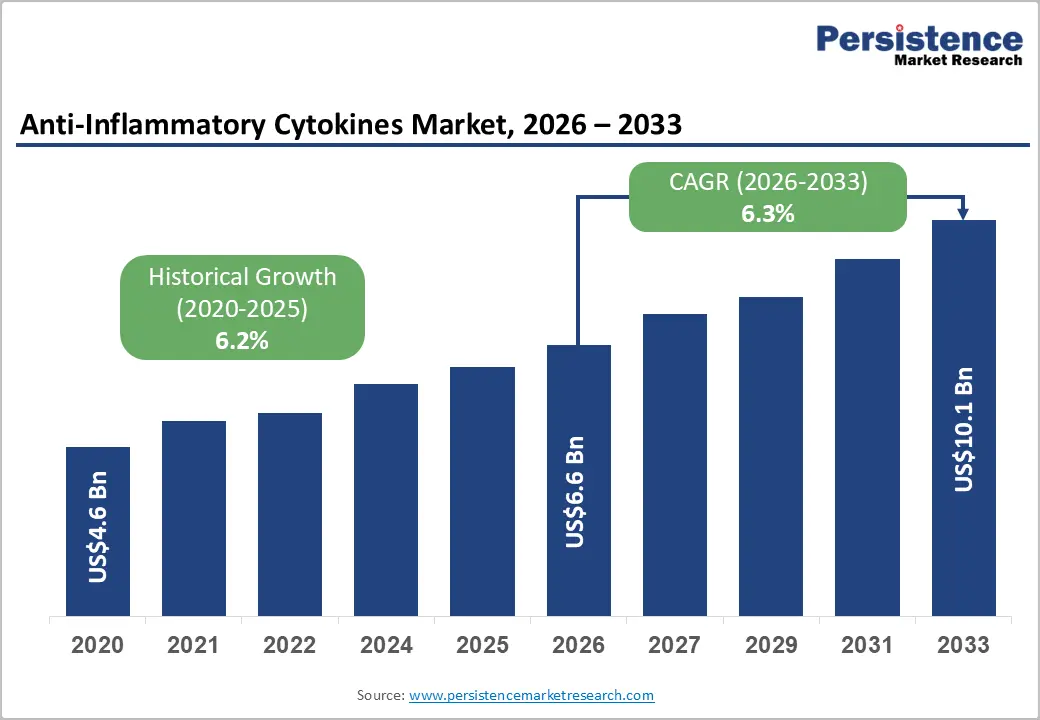
The global anti-inflammatory cytokine market size is likely to be valued at US$6.6 billion in 2026, and is expected to reach US$10.1 billion by 2033, growing at a CAGR of 6.3% during the forecast period from 2026 to 2033, driven by the increasing prevalence of chronic inflammatory diseases such as rheumatoid arthritis, cancer, and cardiovascular disorders, rising demand for biologic therapies targeting specific cytokines, and growing focus on personalized medicine and immunotherapy in oncology and autoimmune conditions.
Growing demand for interleukin-10 and interleukin-6 inhibitors, especially via intravenous administration for cancer and infectious diseases, is accelerating adoption across hospitals and specialty clinics. Increasing recognition of anti-inflammatory cytokine therapies as critical for modulating immune responses, improving patient outcomes, and managing cytokine storms in emerging infectious disease and oncology markets remains a major driver of market growth.
Key Industry Highlights:
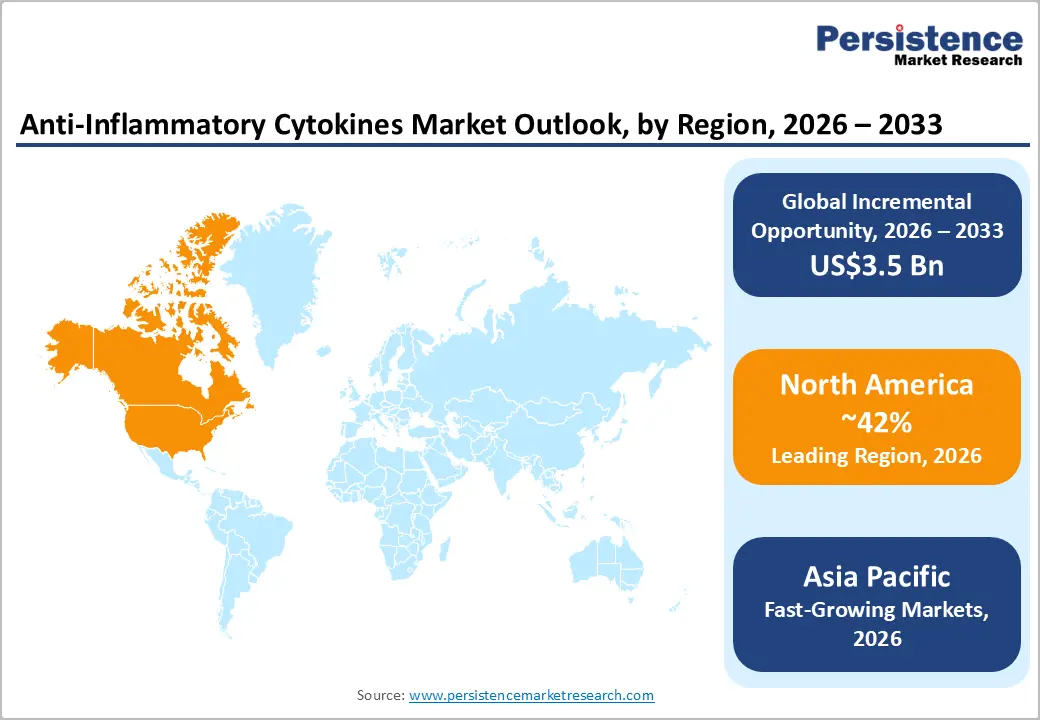
- Leading Region: North America, anticipated to account for a 42% market share in 2026, driven by high R&D investment, advanced biologic approvals, and strong demand in the U.S.
- Fastest-growing Region: Asia Pacific, fueled by rising chronic disease burden, expanding biopharma manufacturing, and increasing clinical trials in China and India.
- Dominant Drug Type: Interleukin-6, to hold approximately 35% of the market share, as it remains a key target in RA and cytokine storm management.
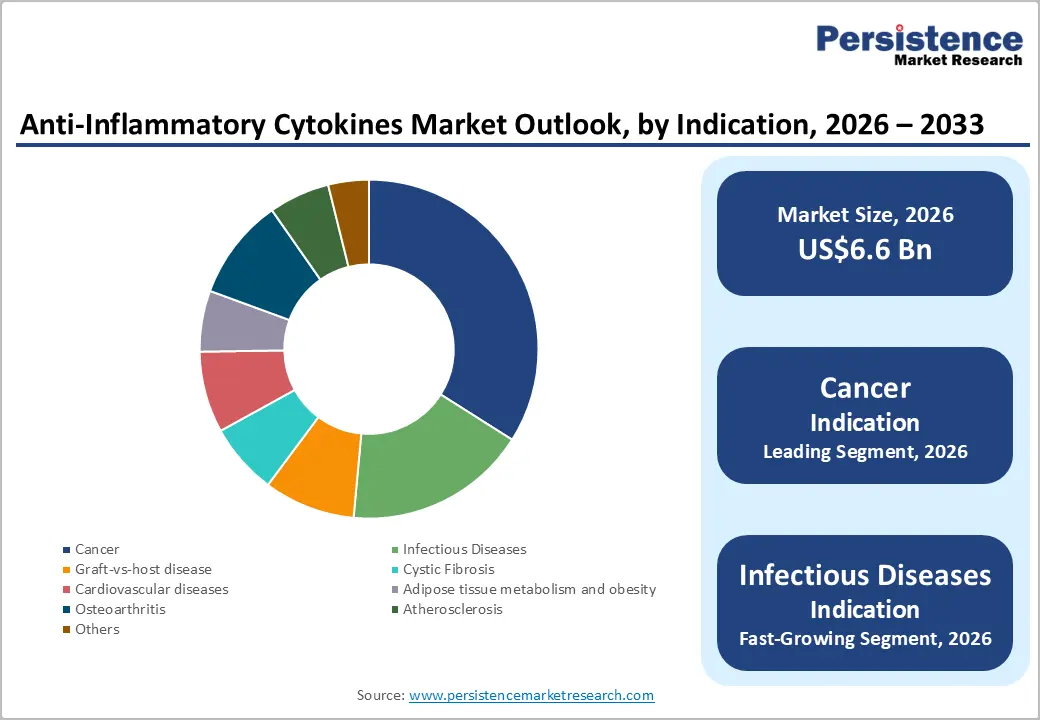
- Leading Indication: Cancer, accounting for over 32% of the market revenue, due to immunotherapy growth.
| Key Insights | Details |
|---|---|
| Anti-Inflammatory Cytokine Market Size (2026E) | US$6.6 Bn |
| Market Value Forecast (2033F) | US$10.1 Bn |
| Projected Growth CAGR (2026 - 2033) | 6.3% |
| Historical Market Growth (2020 - 2025) | 6.2% |
Market Factors - Growth, Barriers, and Opportunity Analysis
Growth Analysis - Increasing Chronic Inflammatory Diseases and Biologic Therapies
The growing prevalence of chronic inflammatory diseases such as inflammatory bowel disease (IBD), rheumatoid arthritis, and other immune-mediated conditions is expanding the demand for targeted therapies, driving growth in the anti-inflammatory cytokines segment. Data from the U.S. Centers for Disease Control and Prevention (CDC) shows that an estimated 2.4-3.1 million U.S. adults are living with IBD, with the prevalence rising over time. In specific demographic groups such as adults aged 45 years and older, IBD prevalence is particularly higher, contributing significantly to the chronic inflammatory disease burden. A separate CDC report indicates that self-reported IBD affected about 1.3% of U.S. adults, reflecting increasing disease incidence and sustained healthcare demand.
Biologic therapies that target specific components of the immune response have transformed the management of these conditions, improving clinical outcomes where traditional therapies fall short. Although U.S. government sources do not routinely publish comprehensive adoption rates for all biologics across inflammatory diseases, CDC data note that rising use of biologic medications contributes to increasing healthcare utilization and costs among IBD patients, implying greater reliance on these advanced therapies compared with older medications. As clinicians embrace biologics that modulate key cytokines and immune pathways, their integration into treatment paradigms underscores the importance of anti-inflammatory cytokines as therapeutic drivers in managing chronic inflammatory disease states.
Advancements in Immunotherapy and Personalized Medicine
Advancements in immunotherapy and personalized medicine are significant drivers of demand within the anti-inflammatory cytokines market, as these approaches enhance treatment specificity and therapeutic effectiveness across chronic inflammatory and immune-mediated diseases. Personalized immunotherapy techniques deliberately harness a patient’s own immune system to target disease, which often involves modulation of cytokine pathways that control inflammation. For example, in a clinical trial led by the U.S. National Cancer Institute, a personalized cellular immunotherapy shrank tumors in 3 out of 7 patients with metastatic colorectal cancer by tailoring T-cell receptors to each patient’s tumor profile, demonstrating how individualized immune modulation can yield measurable clinical responses.
Government-supported research at the National Institutes of Health has also produced predictive AI tools that analyze clinical data from 2,881 patients treated with immune checkpoint inhibitors to forecast who is most likely to benefit from these therapies, underscoring the role of personalized approaches in expanding immunotherapy effectiveness and guiding cytokine-involved treatment strategies. These types of innovations support broader use of cytokine-based agents that regulate inflammatory responses, as tailoring treatment regimens increases both the precision and value of therapies that target inflammation. The integration of personalized medicine and immunotherapy thus underpins growth in anti-inflammatory cytokine applications as clinicians seek therapies that align immune modulation with individual patient biology.
Barrier Analysis - Limited Long-Term Clinical Evidence in Some Indications
Limited long-term clinical evidence in some indications restrains the adoption of anti-inflammatory cytokine therapies across chronic and progressive conditions. Many cytokine-based treatments show promising short-term efficacy in controlled trials, yet extended follow-up data on the durability of response, relapse rates, and cumulative safety remain scarce for several autoimmune and inflammatory disorders. Payers and regulators expect multi-year outcomes to confirm sustained disease control and acceptable risk profiles, especially where lifelong therapy is likely.
Gaps in long-term evidence increase uncertainty around real-world effectiveness, dose optimization, and sequencing with other biologics. Clinicians hesitate to escalate or maintain cytokine modulation when risks such as infection susceptibility, immune suppression, and secondary immune complications may emerge over time. Health systems also face challenges in justifying reimbursement without mature comparative outcomes against established standards of care.
Safety Concerns and Biosimilar Competition
Safety concerns and biosimilar competition restrain the growth of anti-inflammatory cytokine therapies by shaping prescriber confidence and pricing dynamics. Cytokine modulation can alter immune balance, raising risks of serious infections, malignancy signals, infusion reactions, and immune dysregulation in susceptible patients. These safety considerations increase monitoring burden, limit use in comorbid populations, and slow guideline expansion into broader indications. Risk management programs and post-marketing surveillance add operational costs for manufacturers and providers.
Biosimilars targeting similar inflammatory pathways intensify price pressure and shift purchasing toward lower-cost alternatives with established comparability. Hospital formularies and public payers prioritize cost-effective options, reducing margins for originator cytokine products and constraining premium pricing for new launches. Competitive tendering accelerates substitution once biosimilars gain acceptance, narrowing market share for branded therapies.
Opportunity Analysis - Developments in IL-10 and Biosimilar Anti-Inflammatory Cytokines
Ongoing research around interleukin-10 (IL-10) offers an important opportunity for the anti-inflammatory cytokines market through the development of novel biologics that harness its potent regulatory effects on immune-driven inflammation. IL-10 is known to down-regulate pro-inflammatory signaling and promote tissue homeostasis in chronic inflammatory diseases, suggesting potential applications across conditions such as inflammatory bowel disease and rheumatoid arthritis. The U.S. Food and Drug Administration (FDA) has expanded approvals of biosimilar biological products, providing more treatment options and potentially lowering healthcare costs via increased competition; in 2024 alone, the FDA approved 18 new biosimilars for 8 reference products, helping surpass 60 total biosimilar approvals since the first in 2015. This growing regulatory acceptance of biosimilars, including those for inflammatory disease targets, creates room for therapeutic innovations that leverage cytokine biology.
The expanding biosimilar landscape gives manufacturers the chance to develop cost-competitive anti-inflammatory cytokines and related biologics that can reach broader patient populations. Availability of interchangeable biosimilars that can be substituted at the pharmacy level (e.g., inflammatory disease indications such as plaque psoriasis and inflammatory bowel disease) demonstrates regulatory momentum toward more accessible biologic care. Novel IL-10-based therapies combined with increasing biosimilar uptake could reshape treatment paradigms, enhance access, and stimulate further investment into targeted cytokine modulation strategies.
Advances in Targeted Cytokine Therapeutics
Targeted cytokine therapeutics represent a major opportunity for the anti-inflammatory cytokines market by enabling more precise modulation of immune responses in chronic inflammatory and autoimmune diseases. Regulatory guidance from the U.S. Food and Drug Administration (FDA) highlights that therapeutic proteins, which include cytokines and cytokine modulators, accounted for over 40% of novel drug approvals by the FDA’s Center for Drug Evaluation and Research (CDER) in 2022, indicating substantial regulatory support for biologic therapies that act via specific immune pathways, such as cytokine targeting. This reflects a broader trend toward approval of biologics designed to interact with defined molecular targets, which can reduce off-target effects and improve clinical outcomes for patients with conditions such as rheumatoid arthritis, inflammatory bowel disease, and other immune-mediated disorders.
National scientific initiatives underscore intensive focus on cytokine biology and targeted immune modulation, such as collaborative efforts involving NIH and FDA scientists to exchange ideas on cytokines in human disease and therapeutic approaches. These government-linked research activities support the discovery and clinical translation of next-generation cytokine therapeutics equipped to precisely neutralize pro-inflammatory signals or enhance anti-inflammatory pathways. Expanding pipelines of targeted cytokine agents, informed by regulatory acceptance of biologic innovation and enriched by public research insights, can drive market growth by offering differentiated, high-value treatment options that meet evolving clinical needs.
Category-wise Analysis
Drug Type Insights
Interleukin-6 is anticipated to dominate the market, accounting for approximately 35% of the market share in 2026. Its dominance is driven by its central role in regulating inflammatory signaling across multiple chronic diseases. IL-6 drives key immune pathways involved in rheumatoid arthritis, inflammatory bowel disease, and systemic inflammatory disorders, making it a high-value therapeutic target. A broad clinical footprint across hospital and specialty care settings supports sustained demand for IL-6-targeted therapies as part of long-term disease management.
Established clinical protocols, strong physician familiarity, and wide inclusion in treatment algorithms reinforce uptake. Tocilizumab, an IL-6 receptor antagonist developed by F. Hoffmann-La Roche Ltd and Genentech Inc., targets the interleukin-6 receptor to block IL-6 signaling, helping reduce inflammation in conditions such as rheumatoid arthritis, juvenile idiopathic arthritis, giant cell arteritis, and cytokine release syndrome.
Interleukin-10 represents the fastest-growing drug type, due to its unique immunoregulatory properties that suppress overactive inflammation while supporting tissue repair. IL-10’s mechanism of action makes it a promising candidate for new therapeutic development across a range of immune-mediated conditions where balancing pro- and anti-inflammatory signals is critical. Advances in molecular engineering and delivery technologies have enabled enhanced stability and targeted delivery of IL-10-based treatments, broadening their clinical appeal.
Dekavil (F8-IL10), developed through a collaboration between Philogen S.p.A. and Pfizer Inc., is an investigational IL-10-based immunocytokine designed to deliver the anti-inflammatory cytokine directly to inflamed joint tissue in patients with rheumatoid arthritis, aiming to enhance therapeutic effectiveness while reducing systemic exposure.
Indication Insights
The cancer segment is expected to dominate the market, contributing nearly 32% of revenue in 2026, fueled by the central role of cytokine modulation in oncology care. Inflammatory signaling shapes tumor growth, immune evasion, and response to immunotherapies, which increases demand for cytokine-targeted agents across solid tumors and hematologic malignancies. Cytokines support the management of treatment-related inflammatory toxicities and immune-mediated adverse events in patients receiving checkpoint inhibitors and cellular therapies.
High treatment intensity, longer therapy durations, and care delivered in specialty oncology centers drive higher per-patient biologic use. Proleukin (aldesleukin), developed by Novartis Pharmaceuticals, is a recombinant IL-2 cytokine therapy approved by the U.S. Food and Drug Administration (FDA) for treating metastatic melanoma and metastatic renal cell carcinoma.
Infectious diseases represent the fastest-growing indication, increasing recognition of the role of immune regulation in pathogen-driven inflammation and tissue damage. Cytokine therapies can help rebalance immune responses during severe infections, reducing harmful hyperinflammation without compromising pathogen clearance. With global public health focus on emerging and re-emerging infections, clinicians and researchers are exploring cytokine modulation to manage complications such as sepsis and post-infection immune dysfunction.
Infectious diseases are anakinra, a recombinant interleukin-1 receptor antagonist developed by Swedish Orphan Biovitrum AB (Sobi). Anakinra modulates the IL-1 pathway to limit excessive inflammation and has been investigated in severe COVID-19 cases characterized by hyperinflammatory responses.
Regional Insights
North America Anti-Inflammatory Cytokine Market Trends
North America is projected to dominate, accounting for nearly 42% revenue in 2026, driven by the region’s high biologic expenditure, strong oncology immunotherapy adoption, and high public awareness of cytokine therapies' benefits. Distribution systems in the U.S. and Canada provide extensive support for anti-inflammatory cytokine programs, ensuring wide accessibility across IL-6, intravenous, and hospital populations. Increasing demand for targeted, convenient, and easy-to-administer forms is further accelerating adoption, as these formats improve outcomes and reduce barriers associated with conventional therapies.
Innovation in anti-inflammatory cytokine technology, including stable biosimilars, improved IL-10 delivery, and targeted cancer enhancement, is attracting significant investment from both public and private sectors. Government initiatives and FDA campaigns continue to promote use against inflammatory risks, remission concerns, and emerging immunotherapy threats, creating sustained market demand. The growing focus on infectious diseases and specialty uses, particularly for cancer and others, is expanding the target applications for anti-inflammatory cytokines.
Europe Anti-Inflammatory Cytokine Market Trends
Europe is fueled by increasing awareness of biologic benefits, strong regulatory systems, and government-led immunotherapy programs. Countries, including Germany, the U.K., France, and Italy, have well-established healthcare frameworks that support routine anti-inflammatory cytokine use and encourage adoption of innovative biosimilar delivery methods. These high-efficacy formulations are particularly appealing for cancer populations, regulation-conscious hospitals, and research users, improving remission and coverage rates.
Technological advancements in anti-inflammatory cytokine development, such as enhanced IL-10 modulators, application-targeted delivery, and improved biosimilar grades, are further boosting market potential. European authorities are increasingly supporting research and trials for cytokines against both routine and specialized needs, strengthening market confidence. The growing emphasis on convenient, targeted options is aligned with the region’s focus on preventive immune dysregulation and oncology precision.
Public awareness campaigns and promotion drives are expanding reach in both hospital and specialty clinic segments, while suppliers are investing in biosimilars and novel variants to increase efficacy.
Asia Pacific Anti-Inflammatory Cytokine Market Trends
Asia Pacific is likely to be the fastest-growing market for anti-inflammatory cytokines in 2026, driven by rising chronic disease awareness, increasing government initiatives, and expanding application programs across the region. Countries such as China, India, Japan, and South Korea are actively promoting cytokine campaigns to address oncology growth and emerging immunology needs. Anti-inflammatory cytokines are particularly attractive in these regions due to their scalable administration, ease of adoption, and suitability for large-scale cancer and hospital drives in both urban and semi-urban populations.
Technological advancements are supporting the development of stable, effective, and easy-to-administer anti-inflammatory cytokines, which can withstand challenging patient profiles and minimize side-effect dependence. These innovations are critical for reaching domestic hospitals and improving overall immunotherapy coverage. Growing demand for IL-6, intravenous, and cancer applications is contributing to market expansion. Public-private partnerships, increased oncology expenditure, and rising investment in cytokine research and production capacity are further accelerating growth.
The convenience of cytokine delivery, combined with improved remission and reduced risk of progression, positions it as a preferred choice.
Competitive Landscape
The global anti-inflammatory cytokine market shows active competition between established biopharma leaders and emerging biosimilar specialists, shaping innovation, pricing, and access. In North America and Europe, F. Hoffmann-La Roche and Novartis AG maintain leadership through strong R&D investment, deep clinical pipelines, and close integration with oncology care pathways. Their IL-6 and IL-10 programs strengthen disease control across chronic inflammatory and immune-mediated conditions, supporting protocol-driven adoption in specialty care. In Asia Pacific, regional manufacturers advance cost-competitive biologics that expand access across public health systems and private providers.
Improved IL-6 delivery supports consistent inflammation control, lowers flare risks, and enables broader integration into combination regimens across care settings. Strategic partnerships, collaborations, and acquisitions help pool scientific expertise, expand portfolios, and accelerate regulatory pathways, shortening time to market. Parallel growth of biosimilar formulations addresses affordability constraints, supports faster formulary uptake, and improves penetration in emerging markets where budget impact and supply reliability shape procurement decisions.
Key Industry Developments
- In September 2025, Tiziana Life Sciences, Ltd. announced that it advanced its second asset, a fully human anti-IL-6 receptor (IL-6R) monoclonal antibody, TZLS-501. The company reported heightened industry activity in the IL-6 pathway space, highlighted by Novartis AG’s recent acquisition of Tourmaline Bio for approximately US$1.4 billion. Tiziana stated that it pursued non-dilutive funding strategies to support the development of TZLS-501 while it continued to advance intranasal foralumab as its lead program.
Companies Covered in Anti-Inflammatory Cytokine Market
- Merck KGaA
- Eli Lilly and Company
- Pfizer Inc.
- Sanofi S.A.
- Novartis AG
- Hoffmann-La Roche Ltd.
- Lonza Group Ltd.
- Thermo Fisher Scientific
- Meridian Bioscience Inc.
- General Electric Company
- Abcam PLC
- GenScript Biotech Corp
- Applied Biological Materials Inc.
- Randox Laboratories
Frequently Asked Questions
The global anti-inflammatory cytokine market is projected to reach US$6.6 billion in 2026.
Broader use of immune-modulating therapies in oncology and immune disorders drives uptake of cytokine pathway modulators across protocols.
The anti-inflammatory cytokine market is poised to witness a CAGR of 6.3% from 2026 to 2033.
Patient stratification enables optimized cytokine therapy selection, improving outcomes and supporting premium positioning for differentiated products.
F. Hoffmann-La Roche Ltd., Novartis AG, Merck KGaA, Pfizer Inc., and Sanofi S.A. are the key players.


