




- Food Ingredients & Additives
- U.S. Protein Market
U.S. Protein Market Size, Share, Growth, and Regional Forecast, 2026 to 2033
U.S. Protein Market By Source (Animal-Based Protein, Plant-Based Protein, Insect Protein), Nature (Organic, Conventional), End-user (Food & Beverages, Dietary Supplements & Sports Nutrition, Infant Nutrition, Animal Feed, Personal Care & Cosmetics), Distribution Channel (B2B, B2C), by Country wise analysis, 2026 - 2033

U.S. Protein Market Share and Trends Analysis
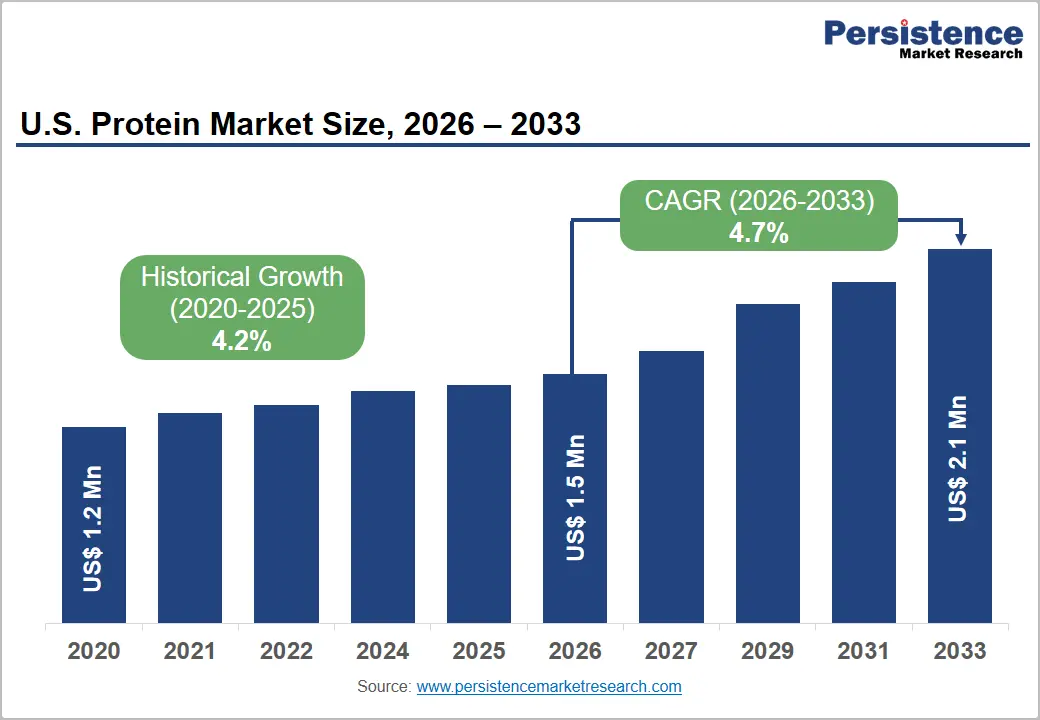
U.S. Protein market is estimated to grow from US$ 1.5 billion in 2026 to US$ 2.1 billion projected to record a CAGR of 4.7% during the forecast period from 2026 to 2033.
Fueled by performance nutrition trends, clean-label innovation, and next-generation protein technologies, the U.S. protein market is undergoing rapid transformation across food, beverage, and supplement categories. Consumers are increasingly prioritizing muscle health, active lifestyles, personalized nutrition, and sustainable protein sourcing in daily dietary choices.
Strong investment activity in plant-based proteins, precision fermentation, and insect-derived nutrition ingredients is reshaping long-term industry expansion. Functional protein beverages, ready-to-drink supplements, and protein-rich convenience snacks continue gaining strong traction among younger and health-conscious consumers. Digital wellness culture, fitness-focused lifestyles, and premium nutrition positioning are further accelerating demand across retail and online distribution channels.
Key Industry Highlights:
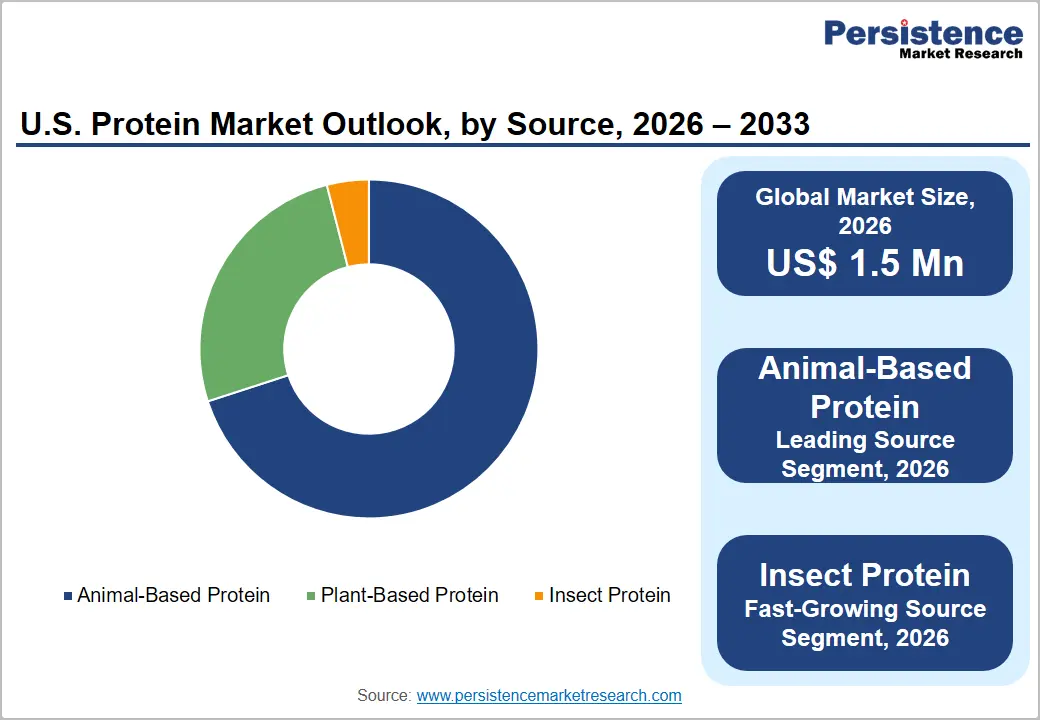
- Leading Source Segment: Animal-Based Protein holding 69% market share, driven by strong consumer trust in whey, collagen, milk, and egg proteins for sports nutrition, muscle recovery, and functional health applications.
- Fastest-Growing End-user: Dietary supplements & sports nutrition is projected to reach a CAGR of 7.8%, supported by rising fitness participation, preventive wellness trends, and growing demand for convenient high-protein nutrition products.
- Growth Indicators: Rising sports nutrition consumption among active lifestyle consumers is strengthening demand for protein-enriched beverages, supplements, ready-to-drink shakes, and functional snack products across the U.S.
- Opportunities: Sustainable insect protein applications for animal feed, aquaculture nutrition, pet food, and advanced dietary formulations are creating major growth opportunities across alternative protein sectors.
- Consumer Trends: Consumers are increasingly seeking clean-label, organic, allergen-free, and personalized protein products aligned with fitness goals, digestive wellness, and sustainable nutrition preferences.
- Key Developments: In March 2025, Vivici launched Vivitein™ BLG in the U.S. market under its precision-fermented protein platform. In January 2026, Lactalis USA introduced the Pronativ® Native Whey Protein line through Amazon Prime distribution.
Market Dynamics
Driver: Rising Sports Nutrition Consumption Among Active Lifestyle Consumers
A powerful fitness culture transformation is accelerating protein consumption across the U.S. nutrition industry. Consumers increasingly prioritize active lifestyles, muscle recovery, endurance improvement, and balanced nutrition, driving stronger demand for protein-enriched foods, beverages, and supplements. Gym-goers, athletes, working professionals, and younger consumers are actively incorporating whey protein, plant-based blends, ready-to-drink shakes, and high-protein snacks into daily routines. Rising participation in strength training, recreational sports, and wellness-focused activities is further expanding demand for convenient protein solutions across urban households.
Digital fitness influencers, social media wellness trends, and personalized nutrition awareness are also strengthening consumer engagement with performance-focused dietary products. Food manufacturers are continuously introducing clean-label formulations, functional protein blends, and innovative flavored nutrition products tailored toward evolving health and fitness preferences across multiple consumer demographics in the U.S.
Restraint: Regulatory Scrutiny Surrounding Novel Protein Ingredient Approvals
A rapidly evolving protein innovation landscape is creating regulatory complexities across the U.S. Protein industry. Novel ingredients derived from precision fermentation, cultivated sources, algae, insects, and advanced plant technologies often require extensive safety evaluations, labeling approvals, and compliance verification before commercial launch. Regulatory uncertainty surrounding ingredient classification, allergen declarations, and long-term consumption studies can delay product commercialization and increase operational costs for manufacturers.
Smaller companies and emerging startups frequently face financial and technical barriers while navigating complex approval procedures for next-generation protein products. Shifting regulatory expectations regarding sustainability claims, nutritional labeling, and processing transparency are also intensifying compliance requirements across the industry. Lengthy approval timelines may restrict innovation speed, limit product portfolio expansion, and reduce competitive flexibility for companies investing heavily in advanced protein technologies and alternative nutrition development.
Opportunity: Sustainable Insect Protein Applications for Feed and Nutrition Sectors
A new generation of sustainable nutrition solutions is opening promising commercial opportunities across the U.S. Protein industry. Insect-derived proteins are gaining stronger attention due to their high amino acid content, efficient feed conversion rates, and lower environmental impact compared to conventional livestock proteins.
Protein ingredients sourced from crickets, black soldier flies, and mealworms are increasingly being explored for animal feed, aquaculture nutrition, pet food, and specialized dietary applications. Growing pressure to reduce agricultural emissions and improve resource efficiency is encouraging manufacturers to invest in scalable insect protein production technologies.
Food technology companies and feed manufacturers are actively developing advanced insect protein formulations tailored for functional nutrition and sustainable feed applications. Rising interest in circular economy models, waste reduction systems, and alternative protein diversification is further strengthening industry momentum. Strategic partnerships, automated farming technologies, and regulatory advancements are also supporting commercialization opportunities across the evolving U.S. sustainable protein sector.
Category-wise Analysis
By Source Insight
Animal-Based Protein is likely to dominate with 69% market share as of 2026, reflecting their long-established role in sports nutrition, clinical health products, functional foods, and mainstream dietary consumption across the U.S. Consumers continue to prefer whey, casein, egg, collagen, and milk proteins due to their complete amino acid profiles, superior digestibility, and strong association with muscle recovery and performance nutrition. Rising participation in fitness activities, strength training, and protein-focused meal planning is further strengthening demand for animal-derived protein ingredients across beverages, snacks, supplements, and ready-to-drink formulations.
Major food and nutrition companies are expanding their portfolios of premium whey isolates, collagen peptides, and high-protein dairy products to meet changing consumer health preferences. Strong supply chains, well-established dairy processing, and wide availability across retail and sports nutrition channels continue to reinforce this segment’s leadership in the U.S. protein market.
By End-user, Dietary Supplements & Sports Nutrition Is Expected to Grow Strongly
Dietary supplements & sports nutrition is expected to reach a CAGR 7.8% during forecast period, fueled by rising consumer focus on fitness performance, muscle recovery, and preventive wellness nutrition across the U.S. Active lifestyle consumers increasingly prefer protein powders, ready-to-drink shakes, amino acid blends, and functional supplements designed to support strength training, endurance, and weight management goals.
Growing gym memberships, sports participation, and digital fitness engagement are further strengthening demand for convenient high-protein nutrition products among younger demographics and working professionals. Expanding awareness regarding healthy aging and daily protein intake is also encouraging broader supplement adoption.
Nutrition companies are actively launching clean-label formulations, plant-based protein blends, and personalized supplement products tailored toward evolving consumer health preferences. Innovation in flavors, digestive wellness ingredients, and portable packaging formats continues to accelerate category expansion across online retail and specialty nutrition channels.
Market Competitive Landscape
The U.S. Protein market is highly competitive, driven by multinational nutrition companies, ingredient innovators, biotechnology firms, and emerging alternative protein startups competing through product innovation, clean-label positioning, and advanced nutrition science. Companies are increasing investments in plant-based protein research, precision fermentation technologies, and insect protein commercialization to diversify sustainable protein portfolios. Strong focus on organic proteins, allergen-free formulations, and minimally processed ingredients is reshaping premium product development across food, beverage, and health supplement categories.
Manufacturers are actively expanding production facilities, strengthening global distribution networks, and launching personalized protein supplements targeting fitness, clinical nutrition, and healthy aging consumers. Compliance with evolving FDA regulations surrounding novel proteins, labeling transparency, and ingredient safety remains a major operational priority. Strategic partnerships, R&D collaborations, and acquisitions of specialty protein brands are further accelerating innovation and competitive expansion across the U.S. protein industry.
Key Industry Developments:
- In January 2026, Lactalis USA launched its Pronativ® Native Whey Protein line in the U.S., offering four variants including Mellow Chocolate, French Vanilla, Silky Strawberry, and Unflavored through Amazon Prime distribution channels.
- In December 2025, Abbott expanded its Ensure Max Protein portfolio with the launch of Ensure Max Protein 42g and Ensure Max Protein 2 in 1 Muscle Support shakes, targeting consumers focused on muscle health and advanced nutritional support.
- In March 2025, Vivici launched Vivitein™ BLG in the U.S. market, introducing its flagship precision-fermented whey protein ingredient under the Vivitein™ protein platform to support innovative B2B protein product development.
Companies Covered in U.S. Protein Market
- Ingredion
- ADM
- Glanbia PLC
- Hormel Foods
- Cargill, Incorporated
- AMCO Proteins
- IFF
- Danone S.A.
- Kerry Group plc
- Abbott Laboratories
- Bunge
- NOW Foods
- Others
Frequently Asked Questions
The U.S. Protein market is projected to be valued at US$ 1.5 Bn in 2026.
Rising sports nutrition consumption among active lifestyle consumers is driving the U.S. Protein market.
The U.S. Protein market is poised to witness a CAGR of 4.7% between 2026 and 2033.
Sustainable insect protein applications across animal feed and advanced nutrition sectors are creating significant growth opportunities in the U.S. Protein Market.
Ingredion, ADM, Glanbia PLC, Cargill, Incorporated, IFF, Danone S.A., Kerry Group plc, and Abbott Laboratories


