




- Nutraceuticals & Functional Foods
- Tribulus Terrestris Extract Market
Tribulus Terrestris Extract Market Size, Share, and Growth Forecast, 2026 - 2033
Tribulus Terrestris Extract Market by Product Type (Powder, Liquid, Capsule), Application (Dietary Supplements, Pharmaceutical, Cosmetics, Foods & Beverages), Source (Organic, Conventional), and Regional Analysis for 2026-2033

Tribulus Terrestris Extract Market Share and Trends Analysis
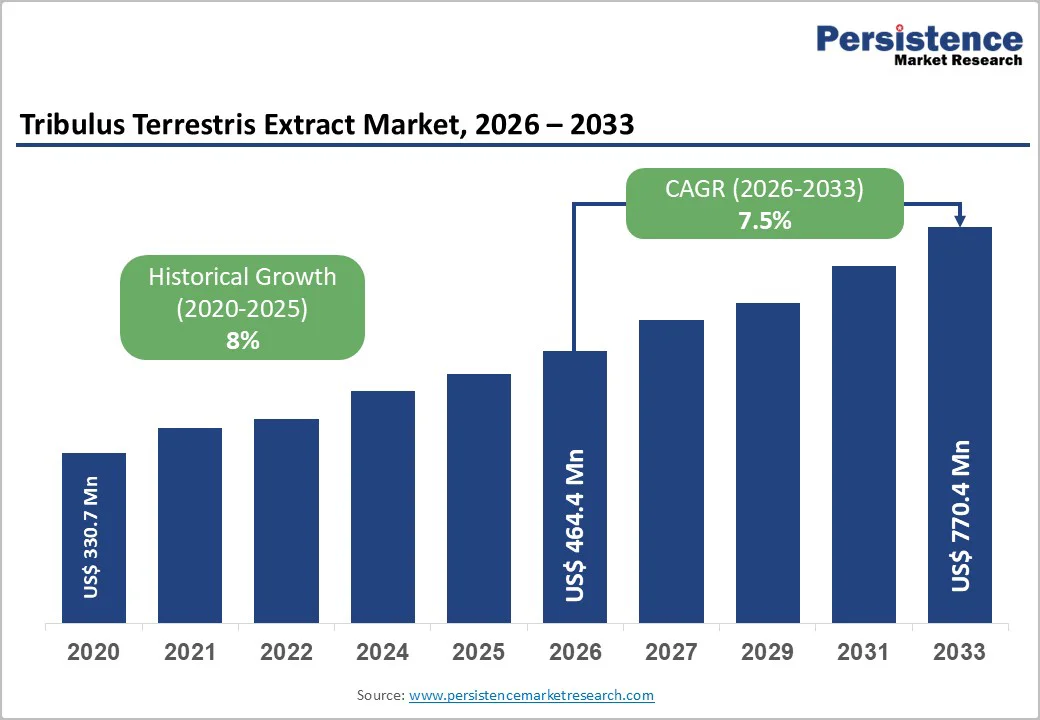
The global Tribulus terrestris extract market size is likely to be valued at US$ 464.4 million in 2026 and is estimated to reach US$ 770.4 million by 2033, growing at a CAGR of 7.5% during the forecast period 2026−2033. A key factor driving the growth of the market is the strong shift in consumer preference toward natural and herbal supplements. As awareness of the potential side effects and long-term risks associated with synthetic drugs increases, a growing share of consumers is opting for plant-based alternatives perceived as safer and more holistic. This trend is reinforced by rising demand for natural products that support overall wellness, including vitality, performance, and metabolic health, which directly supports higher sales of Tribulus terrestris extract across supplement formats.
Key Industry Highlights
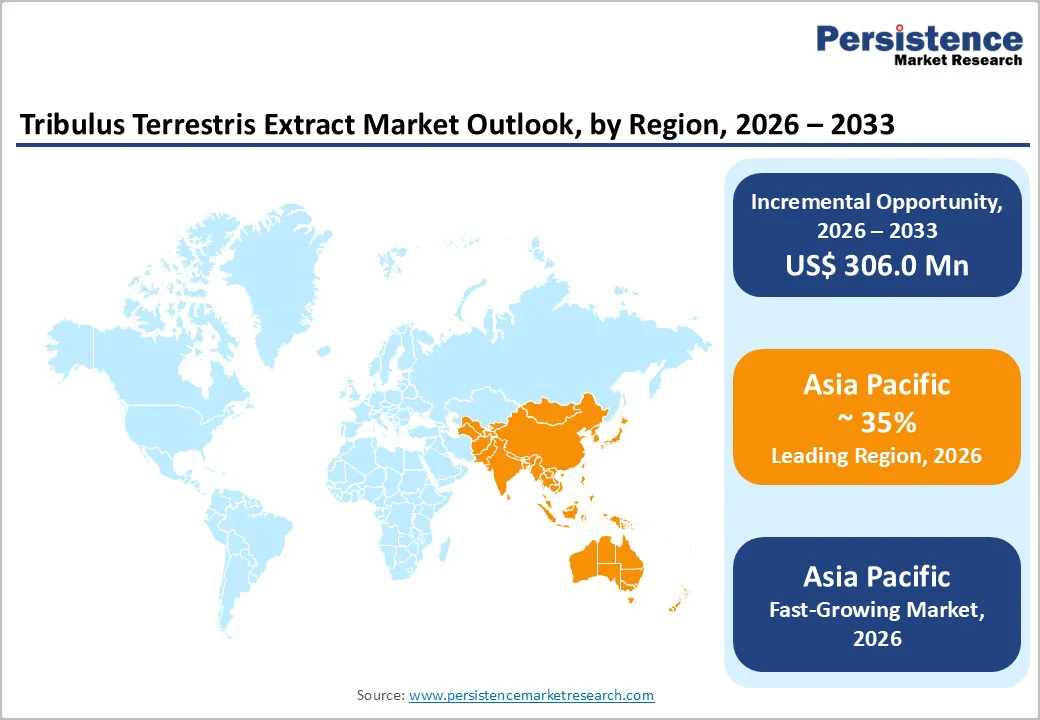
- Dominant Region: Asia Pacific is expected to command about 35% market share in 2026, supported by its deep-rooted traditional medical systems.
- Fastest-growing Market: Asia Pacific is slated to be the fastest-growing market through 2033, due to the traditional use of Tribulus terrestris in Ayurvedic and Chinese medicine.
- Leading & Fastest-growing Product Types: Powder is likely to lead with an approximate 40% share revenue in 2026, with liquid likely growing the fastest during the 2026-2033 forecast period.
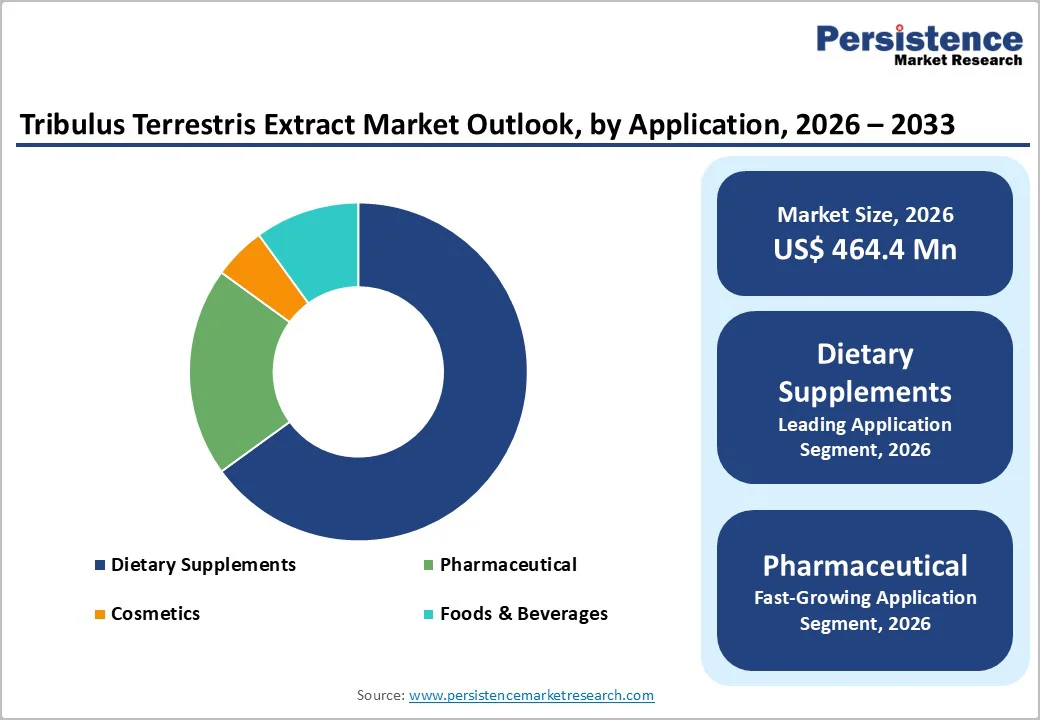
- Application Dominance: The dietary supplements segment is set to dominate with about 65% share in 2026, while pharmaceutical is expected to be the fastest-growing between 2026 and 2032.
- Market Drivers: Rising health consciousness, distrust of synthetic drugs, and preference for clean-label, plant-based remedies drive herbal supplement uptake.
|
Key Insights |
Details |
|
Tribulus Terrestris Extract Market Size (2026E) |
US$ 464.4 Mn |
|
Market Value Forecast (2033F) |
US$ 770.4 Mn |
|
Projected Growth (CAGR 2026 to 2033) |
7.5% |
|
Historical Market Growth (CAGR 2019 to 2025) |
8% |
Market Factors – Growth, Barriers, and Opportunity Analysis
Increasing Consumer Inclination towards Natural and Herbal Supplements
One of the main forces supporting the Tribulus terrestris extract market growth is the strong shift toward natural and herbal supplements as part of everyday health routines. Many adults now incorporate dietary supplements to support general wellness, and a growing share of these users deliberately choose plant-based products over synthetic alternatives because they associate botanicals with more holistic and long-term health support. This broader movement toward natural health solutions creates a favorable environment for ingredients such as Tribulus terrestris, which fit well within herbal and traditional medicine traditions.
Tribulus terrestris has also gained recognition in segments linked to male vitality, energy, and performance. Experimental and clinical research has explored its potential influence on hormonal balance, libido, and perceived energy, and these possible benefits are frequently highlighted in product positioning for fitness enthusiasts and individuals seeking support for active lifestyles. As more consumers look for herbal options that align with their interest in exercise, recovery, and sexual wellness, Tribulus-based formulations become more visible on retail shelves and online platforms, reinforcing both market acceptance and repeat demand.
Lack of Standardized Quality and Purity of the Extract
A key challenge for the Tribulus terrestris extract market is the inconsistent quality and purity of the extract. Different suppliers may rely on different plant parts, extraction techniques, and standardization approaches, leading to wide variation in the levels of bioactive compounds from one batch to another. This variability directly influences both the perceived effectiveness and the safety profile of finished supplements, making it harder for healthcare professionals and consumers to rely on product claims over time. As users encounter uneven or disappointing results, skepticism about the ingredient and the brands that use it tends to increase, which ultimately reduces repeat purchases and slows overall market expansion.
The regulatory environment for herbal supplements adds a further layer of complexity for the tribulus terrestris extract market. Regulatory approaches to botanicals vary widely between countries, with some authorities classifying tribulus as a standard dietary supplement ingredient and others placing it under more stringent medicinal or novel food frameworks. As a result, companies seeking to operate across multiple regions must deal with differing expectations for documentation, safety evaluations, labeling rules, and allowable marketing claims, all of which raise compliance costs and extend development timelines.
Surging Demand for Personalized Nutrition
The Tribulus terrestris extract market has strong potential for expansion, especially through focused product innovation and more precisely defined formulations. Consumers are increasingly moving away from generic supplements and toward personalized nutrition that supports specific goals such as male vitality, hormonal balance, endurance, or post-exercise recovery. This shift creates an opportunity to reposition Tribulus from a broad herbal ingredient into a more strategic component of science-backed, condition-specific solutions that align with how modern consumers evaluate efficacy and relevance.
Brands can strengthen their positioning by combining Tribulus with complementary botanicals, vitamins, or minerals that directly address these targeted needs. For example, formulations focused on male reproductive health can pair Tribulus with zinc, ashwagandha, and selenium, while sports performance blends can integrate it with adaptogens, electrolytes, and amino acids. These tailored combinations help differentiate products in a crowded market, improve perceived value, and support premium pricing. From a strategic standpoint, success will depend on clear communication of benefits, robust quality control, and alignment with consumer expectations for transparency and clinical plausibility.
Category-wise Analysis
Product Insights
Powder is likely to remain the leading product type, with around 40% of the Tribulus terrestris market revenue share in 2026, as it fits easily into a wide range of finished formats such as capsules, tablets, sachets, and powdered drink mixes. Its ability to disperse smoothly into dietary supplements and emerging functional food and beverage concepts allows formulators to increase active load without creating noticeable changes in taste or texture for consumers. From an operations perspective, powdered extract simplifies handling, storage, and dosing, which improves line efficiency and supports cost-effective scaling. Brands can use this flexibility to tailor potency levels, create line extensions, and co-formulate with other actives while keeping manufacturing workflows straightforward.
Liquid extract is set to be the fastest-growing format over 2026–2033 as demand expands in cosmetics, pharmaceutical, and targeted wellness applications. In topical skincare, liquid Tribulus terrestris extract can integrate into serums, lotions, and emulsions that aim to deliver actives to specific skin concerns, giving developers more freedom to fine-tune sensory profiles and absorption characteristics. In oral health and wellness ranges, liquid presentations such as tinctures and syrups support precise dosing and rapid-onset positioning, which appeals to consumers seeking targeted benefits rather than generic supplementation. Companies that build differentiated liquid portfolios, supported by stability data and clear usage instructions, can open higher-value channels in dermocosmetics, clinical nutrition, and practitioner-focused product lines.
Application Insights
Dietary supplements are projected to command approximately 65% of market revenue in 2026, establishing clear dominance across applications. This segment thrives on consumer demand for products that target athletic performance, libido enhancement, and overall vitality. Fitness enthusiasts and bodybuilders increasingly integrate tribulus-based formulas into daily regimens as part of comprehensive training and recovery protocols. Manufacturers benefit from straightforward formulation pathways that allow consistent dosing and easy scalability, positioning dietary supplements as the cornerstone for broad market penetration and repeat purchase cycles.
Pharmaceutical applications are poised for the fastest growth from 2026 through 2033, reflecting rising interest in tribulus as a natural active for managing conditions such as sexual dysfunction, hypertension, and blood sugar irregularities. Pharmaceutical companies actively incorporate the extract into evidence-supported formulations that align with the shift toward botanical therapeutics. This momentum stems from growing clinical validation of tribulus benefits and regulatory openness to plant-derived ingredients with demonstrated efficacy. Suppliers can capitalize by prioritizing standardization, bioavailability enhancement, and partnership with developers to secure premium positioning in this high-value, innovation-driven segment.
Source Insights
The conventional segment is expected to account for around 55% of market share in 2026, as growers and processors use standard agricultural practices without pursuing formal organic certification. This route typically delivers lower production costs, reliable supply, and competitive pricing, which makes it the preferred option for high-volume dietary supplements and sports nutrition products where cost per dose is critical. Contract manufacturers and mainstream brands favor conventionally sourced Tribulus when they prioritize scale, consistent specifications, and straightforward procurement, provided suppliers adhere to defined quality, safety, and standardization parameters. In practical terms, maintaining robust supplier qualification and periodic testing helps safeguard product integrity while preserving the cost advantages that underpin this segment’s leadership.
The organic segment is poised to grow fastest over the 2026-2033 forecast horizon as demand strengthens for clean-label and environmentally responsible products. Organically sourced Tribulus terrestris comes from crops grown under certified or sustainably managed systems that avoid synthetic agrochemicals and meet specific standard-setting body requirements. This positioning resonates with consumers and brands that value traceability, reduced chemical inputs, and alignment with broader sustainability narratives, and are willing to pay a premium for those assurances. For manufacturers, building a credible organic or natural line typically requires transparent certification, clear communication of sourcing practices, and a resilient supply base, mirroring how capacity investments and localized production in other chemical categories are used to strengthen supply security and support differentiated market strategies.
Regional Insights
Asia Pacific Tribulus Terrestris Extract Market Trends
Asia Pacific is anticipated to command approximately 35% of the Tribulus terrestris market share in 2026 and the regional market is also expected to deliver the fastest growth through 2033, anchored by the deep integration of the extract into traditional medical systems. In India, practitioners use the herb extensively within Ayurvedic medicine, while Chinese traditional medicine incorporates it into multi-herb formulations that have served consumers for centuries. This long-established cultural acceptance provides a robust foundation of prescribers, consumers, and infrastructure that spans cultivation, processing, and distribution. Local supply chains in these markets are well-developed, enabling producers to scale Tribulus-based products efficiently for both domestic consumption and export to other regions where demand for traditional botanicals is expanding.
Consumer behavior across the region is shifting toward structured wellness and preventive healthcare routines that blend traditional remedies with modern supplement formats such as capsules, tablets, and powders. Rising awareness of Tribulus terrestris benefits, particularly for vitality, men's health, and metabolic support, drives uptake among health-conscious buyers in India, China, Japan, and ASEAN markets. The broader regional preference for natural, botanical, and increasingly organic products amplifies this momentum, creating opportunities for brands that combine traditional positioning with contemporary quality standards and clear product communication. For suppliers and manufacturers, success in Asia Pacific requires alignment with local regulatory frameworks, cultural expectations, and distribution models that prioritize trust, traceability, and value across diverse consumer segments.
Europe Tribulus Terrestris Extract Market Trends
Europe is forecasted to capture display growth in the Tribulus terrestris extract market, driven by rising consumer preference for natural and herbal health products. The region maintains a well-established dietary supplement culture where consumers demonstrate high ingredient awareness and actively seek plant-based options to support preventive health, vitality, and specific wellness needs. The European Union (EU) provides a clearly defined regulatory framework that reinforces this trend through strict standards for product quality, labeling, and safety. These rigorous requirements build confidence in compliant herbal formulations and create a foundation for sustainable market expansion. This combination of informed demand and robust oversight establishes Europe as a strategic growth region for Tribulus terrestris.
Germany, the United Kingdom, and France serve as primary demand centers, supported by mature distribution networks spanning pharmacies, health-food retailers, and online platforms. Consumer interest in these markets extends beyond traditional capsules and tablets toward convenient, lifestyle-oriented delivery systems. Manufacturers increasingly incorporate Tribulus terrestris into functional foods, beverages, and innovative formulations that align with modern consumption patterns. This shift toward diverse product formats, paired with strong regulatory alignment and educated consumer bases, generates a supportive environment for continued market expansion across Europe. Companies can capture value by developing specialized applications that meet regional preferences while maintaining compliance with evolving EU standards.
North America Tribulus Terrestris Extract Market Trends
North America presents a compelling growth landscape for the Tribulus terrestris extract market, supported by its mature dietary supplement ecosystem and consumer preference for natural, plant-based solutions. Residents actively seek formulations that enhance performance, vitality, and overall wellness, with higher disposable incomes fueling investment in premium health and fitness products. This environment particularly favors blends targeting men's health, endurance, and active lifestyles, where Tribulus terrestris integrates seamlessly into performance-oriented regimens.
The United States and Canada function as primary demand centers, driven by surging interest in fitness, bodybuilding, and sports nutrition. Recognition of Tribulus terrestris as a reliable botanical active expands its application across capsules, powders, and multi-ingredient products. Extensive distribution through health and wellness retail chains, specialized sports nutrition stores, and advanced e-commerce platforms ensures broad visibility and accessibility. Manufacturers can leverage this infrastructure to build brand loyalty and scale offerings that align with consumer priorities for efficacy, convenience, and natural sourcing.
Competitive Landscape
The global Tribulus terrestris extract market structure is moderately fragmented, with a few established suppliers capturing roughly half of revenues while many smaller firms compete on niche strengths. Key players include Glanbia Nutritionals, Sabinsa Corporation, The Green Labs LLC, and Nutra Green Biotechnology Co., Ltd., which offer tribulus ingredients within broader botanical portfolios and standardized extracts. Companies differentiate on product quality, saponin standardization, pricing tiers, distribution reach, and brand equity. To sustain share in high?volume channels, leaders should reinforce transparent sourcing, robust specifications, and technical support for contract manufacturers and private?label partners to speed compliant launches. ?
Growth strategies increasingly prioritize R&D, targeted delivery forms, and partnerships across retail, practitioner, and e?commerce networks. Rising demand for natural and herbal solutions continues to attract new entrants, intensifying competition and raising expectations for stability data, clean?label documentation, and regulatory readiness. Vendors can defend margins by building clinically aligned claims, expanding multi?ingredient blends for men’s health and performance, and securing resilient supply through long?term cultivation contracts and dual?sourcing, while using post?launch analytics to refine formulations and strengthen repeat purchase behavior.
Key Industry Developments
- In August 2025, Washington State Department of Agriculture (WSDA) added 19 plant species, including puncturevine (Tribulus terrestris), English ivy, and green alkanet, to its Noxious Weed Seed and Plant Quarantine list, prohibiting their sale to protect agriculture and the environment.
- In June 2025, VitalRize was introduced as a men's health supplement featuring natural ingredients like Ginkgo Biloba, Asian Ginseng, Tribulus Terrestris, Saw Palmetto, Niacin, and Epimedium to support sustained energy, mental clarity, hormone balance, circulation, and vitality without stimulants or crashes.
- In June 2025, CrazyBulk launched legal steroid alternatives using natural ingredients such as beta-hydroxy-beta-methylbutyrate (HMB), D-Aspartic Acid, and Tribulus terrestris to support muscle growth, fat loss, strength gains, and testosterone boosting without health risks or legal issues associated with anabolic steroids.
Companies Covered in Tribulus Terrestris Extract Market
- Glanbia Nutritionals
- Nutra Green Biotechnology Co., Ltd.
- Sabinsa Corporation
- Bio-Botanica Inc.
- The Green Labs LLC
- Xi'an Lyphar Biotech Co., Ltd.
- Herbo Nutra
- Nexira
- Indena S.p.A.
- Arjuna Natural Pvt Ltd
- Himalaya Global Holdings Ltd.
- Naturalin Bio-Resources Co., Ltd.
- JIAHERB, Inc.
Frequently Asked Questions
The global Tribulus terrestris extract market is projected to reach US$ 464.4 million in 2026.
Growing fitness culture, demand for natural performance and libido enhancers, and shift from synthetic hormones toward plant-based men’s health and sports nutrition supplements are driving the market.
The market is poised to witness a CAGR of 7.5% from 2026 to 2033.
Developing standardized, clinically supported tribulus ingredients for premium sports/male vitality SKUs, expansion into functional foods and beverages, and differentiated multi-herb or condition-specific formulations across global e-commerce channels are key market opportunities.
Glanbia Nutritionals, Sabinsa Corporation, The Green Labs LLC, and Nutra Green Biotechnology Co., Ltd. are some of the key players in the market.


