




- Food Ingredients & Additives
- Quince Market
Quince Market Size, Share, and Growth Forecast, 2026 - 2033
Quince Market by Product Type (Fresh Quince, Quince Paste, Quince Jam and Marmalade, Quince Juice, Dried Quince), Application (Food and Beverages, Cosmetics, Pharmaceuticals, Others), and Regional Analysis for 2026 - 2033

Quince Market Size and Trends Analysis
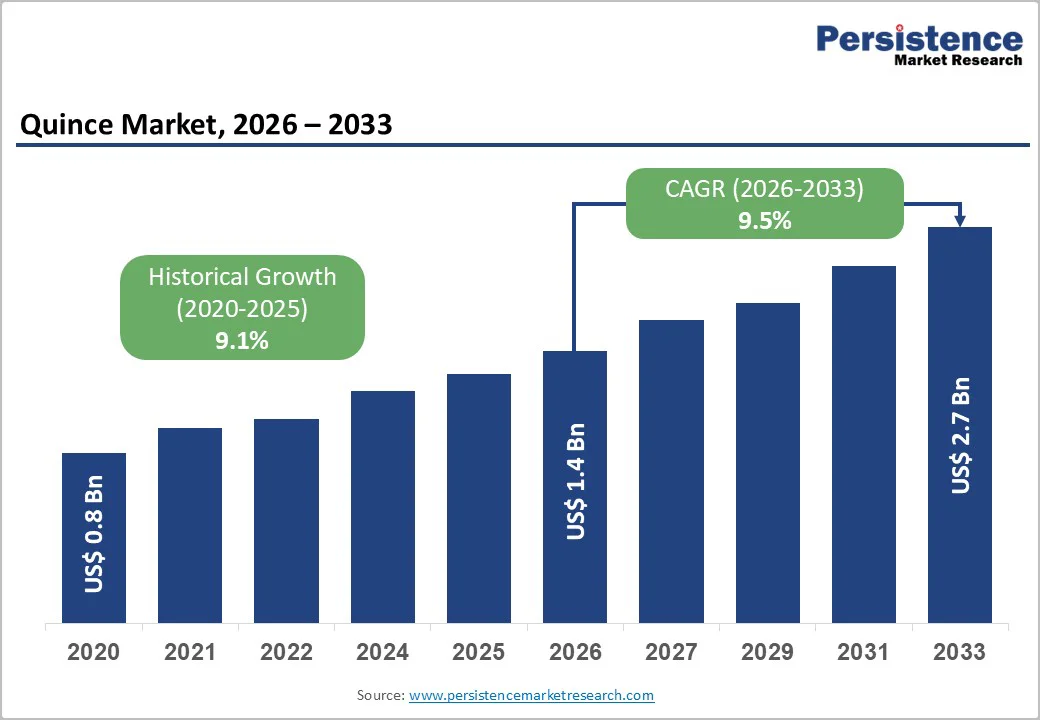
The global quince market size is likely to be valued at US$1.4 billion in 2026 and is expected to reach US$2.7 billion by 2033, growing at a CAGR of 9.5% during the forecast period from 2026 to 2033, driven by rising consumer awareness of quince’s nutritional and health benefits, including high antioxidant content, essential vitamins, and dietary fiber, which are increasingly incorporated into functional foods and beverages.
Cosmetics and pharmaceutical applications are gaining traction, leveraging quince’s anti-inflammatory, skin-soothing, and bioactive properties. Expanding cultivation in key regions, aided by favorable climatic conditions, advanced agricultural practices, and agritech investments, is enhancing both yield and quality.
Key Industry Highlights:
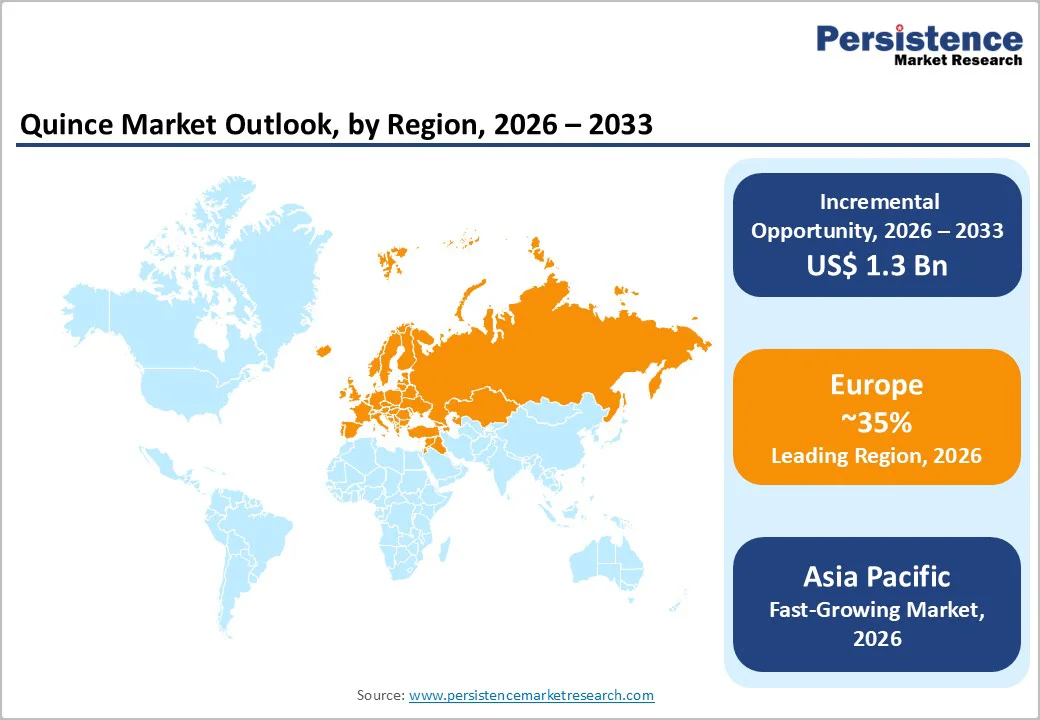
- Leading Region: Europe is anticipated to be the leading region, accounting for a market share of 35% in 2026, driven by traditional consumption, strong exports, EU regulatory support for natural extracts, established artisanal processors, and growth opportunities in sustainable farming and product diversification.
- Fastest-growing Region: Asia Pacific is likely to be the fastest-growing region, driven by urbanization, health awareness, export growth, and supportive agritech regulations, while the Middle East & Rest of World show limited but growing demand, with Turkey leading production and exports.
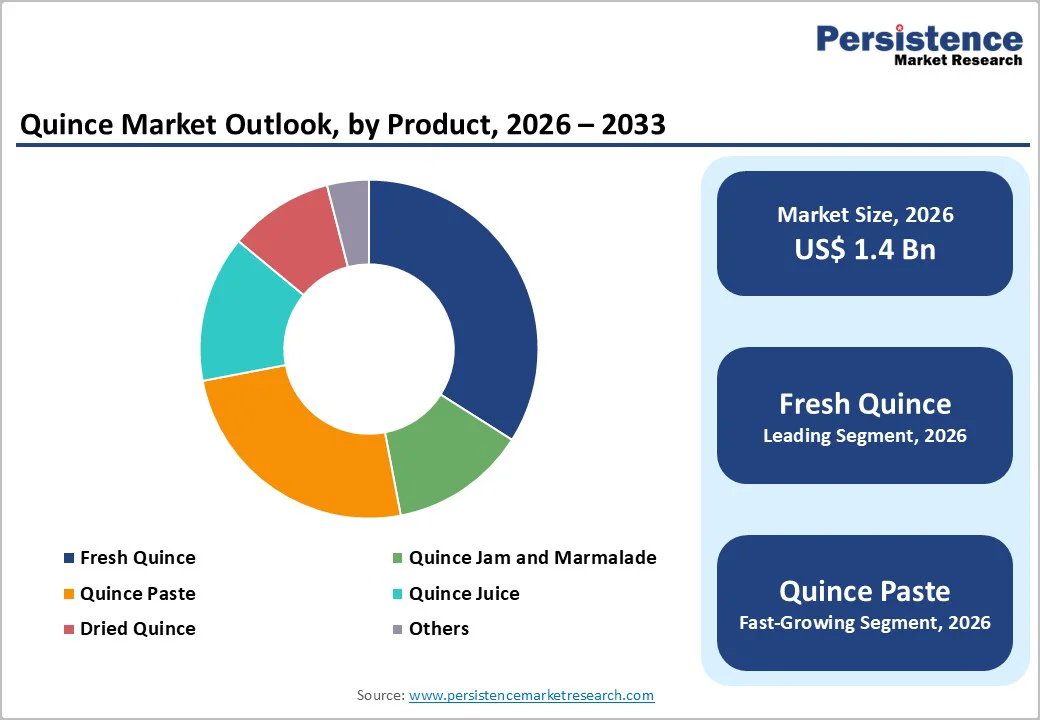
- Leading Product Type: Fresh quince is projected to represent the leading product type in 2026, accounting for 70% of the revenue share, driven by high production volumes, widespread consumption in traditional cuisines, and strong demand in both domestic and export markets.
- Leading Application: Food and beverages are anticipated to be the leading application type, accounting for over 80% of the revenue share in 2026, supported by jams, jellies, and juice consumption.
| Key Insights | Details |
|---|---|
|
Quince Market Size (2026E) |
US$1.4 Bn |
|
Market Value Forecast (2033F) |
US$2.7 Bn |
|
Projected Growth (CAGR 2026 to 2033) |
9.5% |
|
Historical Market Growth (CAGR 2020 to 2025) |
9.1% |
Market Factors - Growth, Barriers, and Opportunity Analysis
Growth Analysis - Rising Health Consciousness and Demand for Nutrient-Dense Fruits
People increasingly seek nutrient-dense and functional foods; quince has gained attention for its rich content of antioxidants, vitamins, dietary fiber, and essential minerals. These nutritional properties support digestive health, boost immunity, and help combat oxidative stress, making quince highly appealing to health-conscious individuals. The growing trend of preventive healthcare and wellness-oriented diets has accelerated demand for natural and minimally processed fruit products, positioning quince as a valuable ingredient in both traditional and modern food applications. Rising disposable incomes and urban lifestyles are encouraging consumers to explore exotic and healthy fruits such as quince, while awareness campaigns and social media influence are increasing its adoption in daily diets.
Quince is seeing increasing use in the cosmetic and pharmaceutical industries. Quince extracts offer anti-inflammatory, skin-soothing, and antimicrobial properties, creating opportunities in natural skincare, personal care products, and nutraceuticals. The rise in clean-label preferences and functional food trends has also promoted the inclusion of quince in juices, jams, and dietary supplements. This dual appeal across food, health, and personal care sectors enables producers to diversify offerings and expand market presence, reinforcing quince’s role as a multifunctional, nutrient-rich fruit. Collaborations between food and cosmetic brands are facilitating product innovation, while growing exports from major producing countries expand quince’s availability in international markets.
Seasonal Availability and Perishability Challenges
Quince is primarily harvested during specific months, which limits year-round availability for both fresh consumption and processing into value-added products such as jams, marmalades, juices, and dried quince. This seasonality leads to fluctuations in supply, impacting pricing stability and making it difficult for producers, distributors, and retailers to plan inventory efficiently. The fruit’s high perishability complicates logistics, as it requires careful handling, rapid transportation, and cold storage to maintain quality and minimize post-harvest losses. These requirements increase operational costs and can reduce profit margins, particularly for small- and medium-scale producers.
The short shelf life of fresh quince affects the development of processed and packaged products, as preservation methods such as freezing or canning may alter taste, texture, or nutritional content, potentially affecting consumer acceptance. To mitigate these challenges, investment in advanced storage facilities, cold chain infrastructure, and efficient logistics systems is critical. Innovations in processing, packaging, and shelf-life extension technologies can also help stabilize supply, reduce wastage. To overcome these challenges, companies are increasingly exploring innovative packaging, modified atmosphere storage, and processing technologies that extend shelf life without compromising quality.
Emerging Applications in Nutraceuticals and Functional Beverages
Quince is rich in antioxidants, vitamins, dietary fiber, and bioactive compounds, making it a highly attractive ingredient for health-focused products. Increasing consumer preference for natural, clean-label, and nutrient-dense ingredients is driving demand for quince-based juices, smoothies, dietary supplements, and fortified drinks. Its antioxidant and anti-inflammatory properties are particularly valued in functional beverages aimed at immunity support, digestive health, and overall wellness. This trend is further fueled by rising health awareness, urban lifestyles, and the growing adoption of preventive healthcare practices.
Nutraceutical applications offer significant market potential, as quince extracts are incorporated into dietary supplements, capsules, and herbal remedies targeting digestive, cardiovascular, and skin health. Food and beverage manufacturers are leveraging quince to develop innovative products that combine taste, nutrition, and health benefits. Collaboration between ingredient suppliers, beverage producers, and nutraceutical companies is expanding product portfolios, while research into bioactive compounds enhances efficacy and consumer trust.
Category-wise Analysis
Product Type Insights
The fresh quince segment is projected to dominate the quince market, accounting for about 70% of total revenue by 2026. This leadership is driven by high production volumes and strong direct consumption, particularly in traditional cuisines across key producing regions. Major producers such as Turkey and China supply fresh quince to both domestic and international markets. Its extensive use in desserts, jams, and savory dishes supports steady year-round demand. Additionally, growing health awareness and a rising preference for nutrient-rich fruits are reinforcing the demand for fresh quince. Other forms, including quince juice and dried quince, also contribute to the market, with companies such as Andros Group offering ready-to-drink quince juice products.
Quince paste is expected to be the fastest-growing segment in 2026, supported by premiumization trends, its popularity in artisanal cheese pairings, and rising demand within gourmet retail channels. Quince jam and marmalade continue to experience steady growth, driven by the integration of ethnic cuisines and increasing consumer preference for clean-label products. The expanding market for both functional and indulgent foods is fostering innovation in quince-based offerings that attract health-focused as well as gourmet consumers. The growth of online gourmet retail platforms is improving accessibility to quince paste and premium preserves, further accelerating sales. For instance, companies such as WILD Flavors are developing innovative quince-based pastes and preserves for health-conscious and gourmet audiences, while quince juice is gaining momentum in the functional beverage segment due to its antioxidant benefits.
Application Insights
The food and beverages segment is expected to dominate the market, accounting for nearly 80% of total revenue in 2026. This leadership is driven by the extensive use of quince in processed products such as jams, jellies, juices, and desserts. Major players, including Goya Foods, Inc., utilize quince in packaged offerings that appeal to both traditional and global consumer bases. The incorporation of quince into ethnic cuisines as well as mainstream grocery products ensures sustained demand across multiple regions, reinforcing its position as the leading application segment. In addition, growing consumer interest in functional and health-oriented foods is supporting the expansion of quince-based food products, while rising export demand from major producing countries continues to strengthen the global market presence.
The cosmetics segment is projected to be the fastest-growing application in 2026, driven by the skin-soothing, anti-aging, and anti-inflammatory properties of quince extracts. These ingredients are increasingly used in natural skincare and personal care products, aligning with consumer preferences for clean-label and plant-based formulations. For example, companies such as Gruenewald Fruchtsaft supply quince extracts for use in lotions, creams, and hair care products. The pharmaceutical segment is also experiencing moderate growth, supported by the use of quince in traditional remedies for digestive and inflammatory conditions. Overall, the rising demand for organic and natural cosmetic products is expanding opportunities for quince-derived ingredients.
Regional Insights
North America Quince Market Trends
North America is anticipated to be a key market for quince in 2026, supported by rising consumer interest in natural, organic, and health-focused food products. The U.S. and Canada represent the primary markets, driven by a diverse consumer base that increasingly values functional ingredients and unique, exotic flavors in everyday diets. Specialty quince products, including artisanal jams, jellies, and quince-infused beverages, are gaining momentum through modern retail formats, health food stores, and online platforms, which are improving accessibility for health-conscious consumers. Clean-label preferences, along with the growing popularity of plant-based and minimally processed foods, are significantly influencing product innovation and purchasing behavior across the region.
Innovative applications, such as quince-based functional beverages and nutraceutical formulations, are attracting younger consumers seeking immune and digestive health benefits. For example, companies such as The Fine Food Company are developing gourmet quince pastes for specialty retail channels. Brands are also leveraging digital engagement strategies and influencer marketing to enhance visibility and reach broader audiences. The continued expansion of e-commerce and specialty retail is facilitating the wider distribution of quince products. Collaborations between ingredient suppliers and food manufacturers are further accelerating innovation, while the increasing demand for clean-label, plant-based products is strengthening market adoption, particularly among urban consumers.
Europe Quince Market Trends
Europe is expected to remain the leading region in the quince market in 2026, supported by strong traditional consumption habits and a well-developed fruit processing industry. Quince is extensively used in jams, jellies, desserts, and specialty food products, particularly in countries such as Spain, Portugal, France, and Germany, where it holds a prominent place in culinary traditions. Demand remains stable across both fresh and processed segments, driven by household consumption as well as gourmet and artisanal food applications. Cross-border trade within the European Union strengthens market leadership through efficient supply chains and harmonized food safety regulations.
The region is also projected to experience steady growth, fueled by increasing demand for organic, natural, and premium fruit products. Innovation in value-added offerings, including artisanal preserves and functional fruit-based products, is gaining traction among urban and health-conscious consumers. For example, Zuegg S.p.A. in Italy continues to expand its premium fruit preserve portfolio, while Bonne Maman sustains strong demand for traditional quince jams across Western Europe. Sustainability-driven farming practices and transparent labeling standards are enhancing consumer confidence, reinforcing Europe’s position as the most mature and dominant market for quince.
Asia Pacific Quince Market Trends
The Asia Pacific region is likely to be the fastest-growing region in the quince market in 2026, driven by expanding consumer demand, favorable agro-climatic conditions, and increasing production capacity, especially in China, which dominates regional output and consumption. China accounts for the vast majority of quince production and consumption in the region, supported by large-scale cultivation areas and improving cold chain infrastructure that enables both domestic use and exports. India is also gaining momentum, with rising quince cultivation in states such as Himachal Pradesh and Jammu & Kashmir, and growing consumer interest in healthy fruit products.
Regional trade dynamics are evolving, with China’s export volumes increasing significantly and markets such as Indonesia and Thailand emerging as important import destinations for quinces and related products. Although overall consumption growth has shown relatively modest trends, the market is benefiting from rising demand for processed and value-added quince products such as jams, juices, and dried formats. Urbanization and increasing health awareness across Asia Pacific are encouraging consumers to adopt nutrient-dense and functional fruit products. Growing participation of regional food processors in export-oriented production is strengthening the long-term growth outlook for the quince market.
Competitive Landscape
The global quince market exhibits a moderately fragmented structure, driven by the presence of both multinational corporations and numerous regional and specialty producers competing for share across fresh produce, processed goods, and value-added offerings. Key leaders in the market focus on product quality, innovation, and distribution expansion to differentiate themselves and capture consumer demand for natural, organic, and functional fruit products. With key leaders including Goya Foods, Inc., Andros Group, Hero Group, Zuegg S.p.A., Tamek, Bonne Maman, and St. Dalfour, these established firms leverage extensive portfolios, strong brand recognition, and robust supply chains to serve diverse markets.
These players compete through innovation, sustainability initiatives, and marketing strategies that enhance product visibility and consumer engagement. Smaller and medium-sized enterprises also play a significant role by offering artisanal, organic, or niche quince products that appeal to specialized segments, particularly in Europe and Asia Pacific. To stay ahead, companies employ tactics such as expanding distribution networks, embracing cold-chain logistics, and developing new packaging formats that extend shelf life and improve convenience.
Key Industry Developments:
- In March 2025, Goya Foods launched a mobile-first redesign of goya.com to strengthen digital engagement and drive product discovery. Developed with Flightpath, the platform features enhanced recipe content, integrated videos, advanced tagging, and a Destini-powered shoppable store locator, enabling seamless online and in-store purchasing.
Companies Covered in Quince Market
- Gruenewald Fruchtsaft
- Kanegrade
- WILD Flavors
- The Fine Food
- Goya Foods, Inc.
- Andros Group
Frequently Asked Questions
The global quince market is projected to reach US$1.4 billion in 2026.
Rising consumer demand for nutrient-dense, functional, and natural fruit products across food, beverage, cosmetic, and pharmaceutical applications.
The quince market is expected to grow at a CAGR of 9.5% from 2026 to 2033.
Key market opportunities include functional beverages, nutraceuticals, natural cosmetic applications, and value-added processed products such as jams, pastes, and juices.
Gruenewald Fruchtsaft, Kanegrade, WILD Flavors, The Fine Food, Goya Foods, Inc., and Andros Group are the leading players.


