




- Home Care & Utilities
- Piping and Fittings Market
Piping and Fittings Market Size, Share, and Growth Forecast, 2025 - 2032
Piping and Fittings Market By Product Type (Steel Pipe, Aluminium Pipe, Copper Pipe, Others), Application, and Regional Analysis for 2025 – 2032

Piping and Fittings Market Size and Trends Analysis
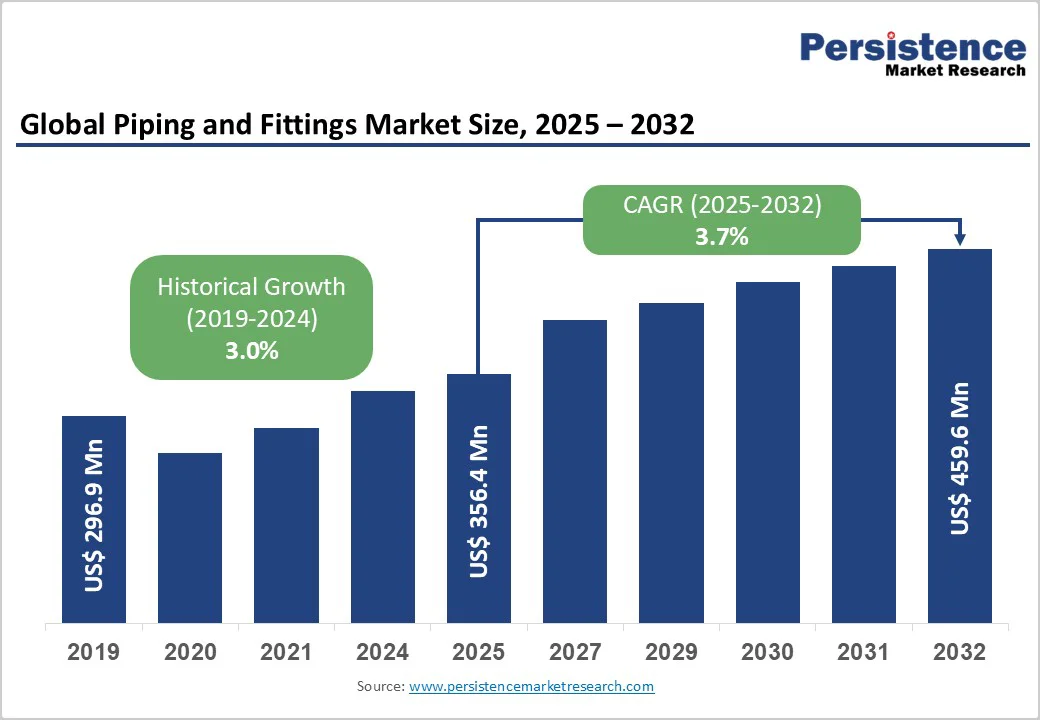
The global piping and fittings market size is likely to be valued US$356.4 Million in 2025, forecasted to reach at US$459.6 Million by 2032 with achieving at a CAGR of 3.7% during the forecast period from 2025 to 2032, driven by increasing urbanization, rising demand for efficient plumbing systems in residential and commercial buildings, and advancements in durable, eco-friendly piping materials. The need for reliable water distribution, drainage, and HVAC systems in construction projects, particularly in emerging economies, has significantly boosted the adoption of piping and fittings across various applications. The market is further propelled by innovations in corrosion-resistant materials such as PVC and aluminium, catering to preferences for sustainable and cost-effective solutions.
Key Industry Highlights:
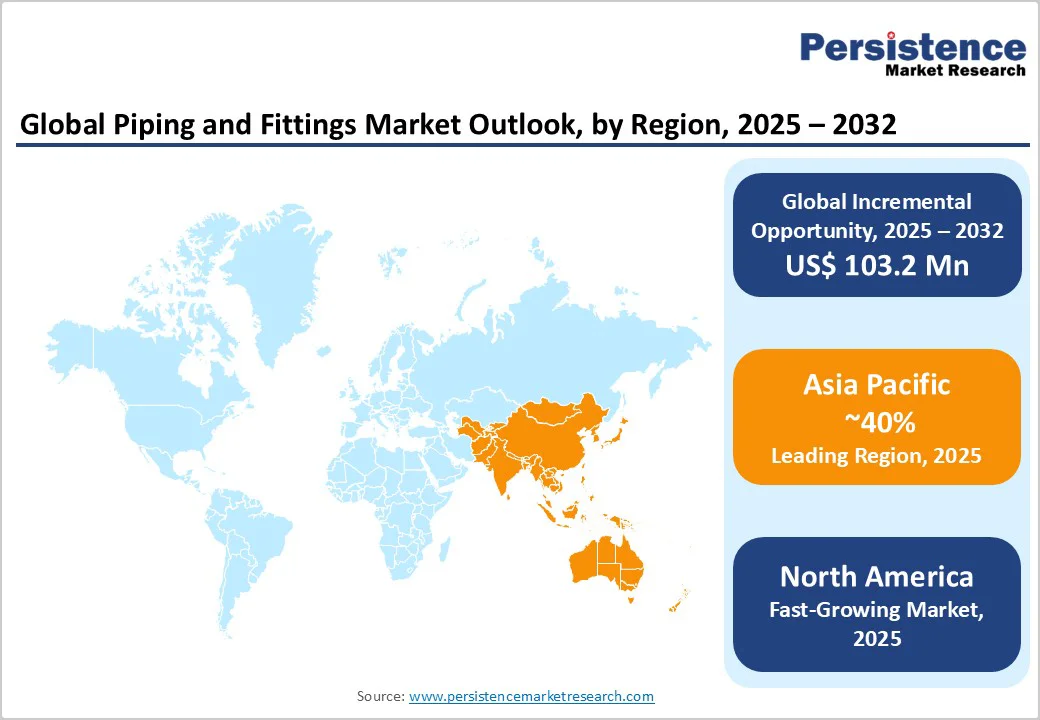
- Leading Region: Asia Pacific, commanding a 40% market share in 2025, driven by rapid urbanization and massive infrastructure investments in countries such as China and India.
- Fastest-growing Region: North America, fueled by stringent building codes, extensive infrastructure upgrades, and growing emphasis on sustainability in construction.
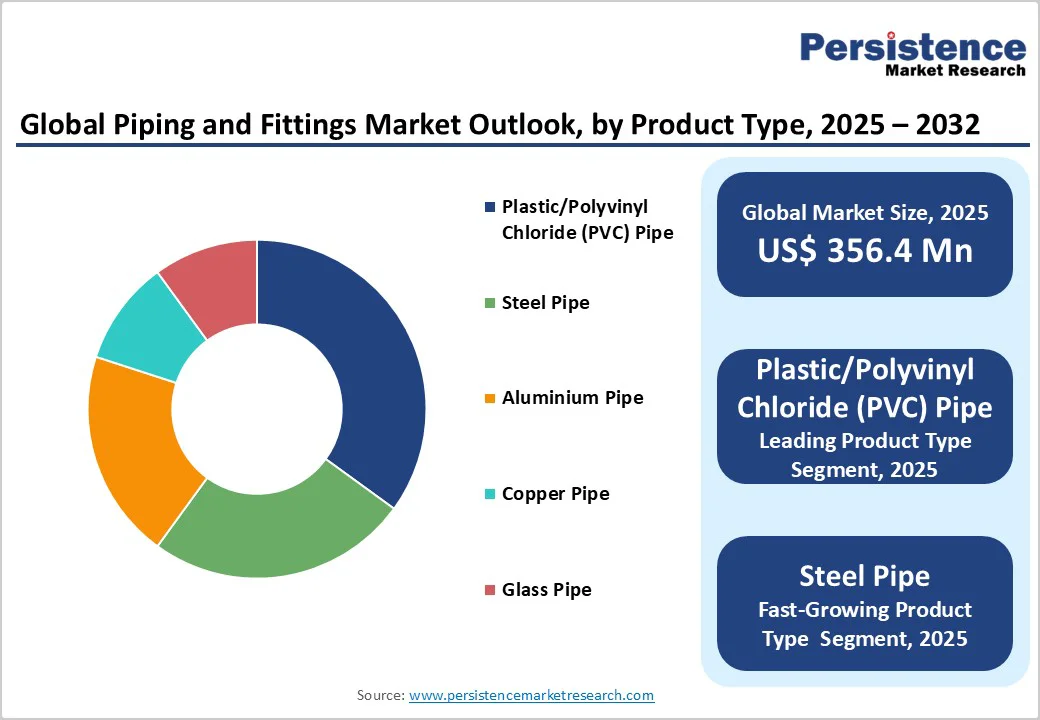
- Dominant Product Type: Plastic/PVC Pipe, holding approximately 50% of the market share, due to its affordability, lightweight nature, and versatility in plumbing applications.
- Leading Application: Residential, accounting for over 35% of market revenue, driven by global housing demand and renovation trends.
- Key Market Driver: The shift toward smart water management, use of eco-friendly materials, and government-backed initiatives promoting green buildings and efficient water systems are further accelerating market growth.
- Growth Opportunity: Advancements in smart piping systems with IoT integration, enabling real-time leak detection and predictive maintenance.
|
Key Insights |
Details |
|
Piping and Fittings Market Size (2025E) |
US$356.4 Mn |
|
Market Value Forecast (2032F) |
US$459.6 Mn |
|
Projected Growth (CAGR 2025 to 2032) |
3.7% |
|
Historical Market Growth (CAGR 2019 to 2024) |
3.0% |
Market Factors – Growth, Barriers, and Opportunity Analysis
Rising Urbanization and Infrastructure Development Demanding Robust Piping Systems
The increasing urbanization and global infrastructure boom are primary drivers of the piping and fittings market. Rapid growth in cities is fueling the construction of resilient residential, commercial, and industrial buildings, as well as efficient water supply and sanitation systems. This expansion creates strong demand for reliable piping and fittings that ensure durability, minimize leaks, and reduce long-term maintenance requirements.
Modern piping solutions, including PVC, aluminum, and composite materials, offer improved corrosion resistance, flow efficiency, and ease of installation, making them suitable for a wide range of applications. The adoption of smart piping systems with leak detection, flow monitoring, and automated controls further enhances water management and operational efficiency. For instance, products from Kohler Company have demonstrated 50% reduction in installation costs in high-rise projects through optimized designs. The demand for sustainable, corrosion-resistant materials, supported by green building certifications like LEED and BREEAM, continues to propel the market forward, particularly in regions with high urban density like Asia Pacific and Europe.
High Initial Costs and Skilled Installation Requirements
The high initial costs and need for skilled labor associated with advanced piping and fittings pose significant restraints on market growth. Premium materials such as copper, stainless steel, and specialized composite fittings increase project expenses, making adoption challenging in cost-sensitive residential and commercial markets. Installation demands certified plumbers and precise workmanship, as errors can compromise system integrity, lead to leaks, and reduce overall efficiency.
Compliance with regulations for eco-friendly and sustainable materials adds another layer of complexity, requiring extensive documentation, testing, and quality assurance. Smaller contractors often face difficulties competing with established players such as Hindware and Aliaxis Group, limiting market penetration in segments where cost-effective or DIY solutions dominate.
Advancements in Eco-Friendly and Smart Piping Technologies
Advancements in eco-friendly materials and smart piping systems present significant growth opportunities for the piping and fittings market. IoT-enabled fittings allow real-time monitoring and early leak detection, extending system lifespan and minimizing water wastage. Such innovations support sustainability initiatives and align with the growing emphasis on green building practices across residential, commercial, and industrial sectors.
Rising urbanization, infrastructure development, and smart city initiatives are further driving the adoption of advanced piping solutions, particularly in regions with high construction activity such as Asia Pacific, North America, and Europe.
Category-wise Analysis
Product Type Insights
Plastic/PVC Pipe dominates, account 50% of the share in 2025, due to their affordability, corrosion resistance, and ease of installation. These properties make them ideal for both residential and commercial plumbing applications, supporting efficient water distribution, low maintenance, and long-term durability. Their versatility and cost-effectiveness reinforce their widespread adoption across various construction projects.
Steel Pipe is the fastest-growing segment, driven by rising demand for high-strength, durable solutions in industrial sectors such as oil and gas, power generation, and chemical processing. Steel pipes offer excellent corrosion resistance, pressure tolerance, and longevity, making them ideal for heavy-duty applications that require reliable performance under extreme conditions.
Application Insights
Residential leads with over 35% share, fueled by the global housing boom and growing renovation activities. Increasing demand for water-efficient systems, durable materials, and easy-to-install solutions drives adoption. Homeowners and developers prioritize sustainable, cost-effective piping networks, making residential applications the largest and most influential segment in the market.
Industrial is the fastest-growing, driven by expanding manufacturing and heavy industries. Sectors such as chemical processing, oil and gas, and power generation demand durable, corrosion-resistant piping capable of withstanding high pressures and extreme conditions. Advanced materials and smart monitoring solutions enhance reliability, efficiency, and safety in these challenging industrial environments.
Regional Insights
Asia Pacific Piping and Fittings Market Trends
Asia Pacific commands around 40% share and is the fastest-growing region, riven by rapid urbanization, extensive construction activities, and government initiatives promoting sustainable infrastructure. Countries such as China and India are experiencing unprecedented growth in residential, commercial, and industrial construction, creating strong demand for reliable, cost-effective piping and fittings solutions. Large-scale infrastructure projects, including smart cities, metro networks, and water management systems, are further fueling the need for advanced piping materials that ensure durability, efficiency, and compliance with environmental standards.
Regional manufacturers, such as Hindware, have capitalized on this growth by offering affordable yet high-quality solutions that cater to both domestic and international markets. The adoption of eco-friendly materials and water-efficient systems is increasing as governments emphasize sustainability and energy efficiency, encouraging the use of innovative technologies in plumbing and drainage systems.
North America Piping and Fittings Market Trends
North America accounts for 25% in 2025, fueled by stringent building codes, extensive infrastructure upgrades, and growing emphasis on sustainability in construction. In the U.S. and Canada, government initiatives and regulatory frameworks encourage the adoption of eco-friendly materials, particularly PVC and other high-performance piping systems designed for water conservation and energy efficiency. These systems help reduce maintenance costs, improve durability, and support compliance with modern building standards, making them increasingly preferred in both residential and commercial developments.
The market is further driven by large-scale infrastructure projects, including urban redevelopment, water treatment facilities, and smart city initiatives, which demand reliable and sustainable piping solutions. In addition, technological advancements, such as corrosion-resistant coatings and modular installation systems, are enhancing efficiency and reducing installation time, aligning with the construction sector’s push for cost-effective and environmentally responsible solutions.
Europe Piping and Fittings Market Trends
Europe holds about 25% market share, led by Germany and France due to stringent EU regulations and a strong emphasis on sustainable construction. Energy efficiency directives and environmental standards across the European Union are encouraging the adoption of eco-friendly and high-performance piping solutions in both residential and commercial projects. These regulations promote the use of durable, low-maintenance materials that minimize water wastage, enhance thermal efficiency, and reduce the environmental footprint of buildings.
Germany, with its advanced construction technology infrastructure, and France, with a strong focus on sustainable urban development, lead in integrating green plumbing solutions into large-scale commercial and industrial projects. Companies in these countries are increasingly investing in research and development to produce innovative, sustainable piping systems, including corrosion-resistant materials, energy-efficient insulation, and modular designs that simplify installation and maintenance.
Competitive Landscape
The global piping and fittings market is highly competitive, driven by the presence of both multinational corporations and regional players. In North America and Europe, established companies such as Kohler Company and Aliaxis Group dominate the market by leveraging advanced research and development in sustainable and high-performance materials. These companies focus on innovation in eco-friendly, durable, and smart piping solutions that meet regulatory standards and evolving industry demands. Their emphasis on sustainability and efficiency enables them to maintain a strong market presence while addressing the growing demand for environmentally responsible construction products.
The Asia Pacific market is shaped largely by regional players such as Hindware, which provide cost-effective and reliable piping and fitting solutions, catering to both residential and commercial construction sectors. Across all regions, the adoption of smart technologies, such as IoT-enabled piping systems and leak-detection solutions, is intensifying competition and driving product differentiation.
Key Developments
- In August 2024, Aliaxis SA, a world leader enabling access to water and energy through innovative fluid management solutions, today announced that it has signed a definitive agreement to acquire the manufacturing assets of the Johnson Controls CPVC pipe and fittings business for residential and light commercial sprinkler systems.
- In May 2024, Kohler Co., a global leader in kitchen and bath products headquartered in Kohler, Wisconsin, officially opened the doors to its new manufacturing facility in Casa Grande, Arizona, with a ceremonial ribbon-cutting event hosted by company leadership. Among those in attendance were Arizona Governor Katie Hobbs, some of the new Kohler associates filling more than 400 full-time administrative and production positions, state and local officials, and Kohler customers.
Companies Covered in Piping and Fittings Market
- Kohler Company
- Hindware
- Aliaxis Group
- Alumasc Building Products
- Aluminum Roofline Products
- Amazon Civils
- Anglian Home Improvements
- Ash and Lacy Building Systems
- Marley Plumbing and Drainage
- Pegler Yorkshire Group
- PF Copeland Rainwater Systems
- Others
Frequently Asked Questions
The global piping and fittings market is projected to reach US$356.4 Million in 2025, driven by surging urbanization and demand for efficient plumbing systems.
The market is driven by rapid pace of urbanization and infrastructure development worldwide. Expanding residential, commercial, and industrial construction projects, especially in emerging economies
The market is poised to witness a CAGR of 3.7% from 2025 to 2032, supported by sustainable material innovations and infrastructure investments.
Advancements in smart piping and eco-friendly materials offer opportunities for leak detection and sustainable infrastructure solutions.
Kohler Company, Hindware, Aliaxis Group, Marley Plumbing and Drainage, and Pegler Yorkshire Group lead through innovations in sustainable piping and fittings.


