




- Food Ingredients & Additives
- Pine Nuts Market
Pine Nuts Market Size, Share, and Growth Forecast, 2026 – 2033
Pine Nuts Market by Product Type (Siberian Pine, Korean Pine, Italian Stone Pine, Others), Form Type (Raw and Processed, Powder and Oil), and Regional Analysis for 2026 – 2033

Pine Nuts Market Size and Trends Analysis
The global pine nuts market size is likely to be valued at US$4.3 billion in 2026 and is expected to reach US$7.4 billion by 2033, growing at a CAGR of 8.1% during the forecast period from 2026 to 2033, driven by growing consumer awareness of the nutritional benefits of pine nuts, which are rich in healthy fats, plant-based proteins, vitamins, and essential minerals.
Their link to heart health, weight management, and other beneficial properties has boosted demand among health-conscious consumers. The growing popularity of plant-based and clean-label diets has driven the incorporation of pine nuts into vegan snacks, protein blends, and functional foods. Culinary demand continues to be a key growth driver, fueled by the extensive use of pine nuts in Mediterranean, the Middle Eastern, and Asian cuisines, especially in sauces, baked goods, salads, and gourmet dishes
Key Industry Highlights:
- Leading Region: North America is anticipated to be the leading region, accounting for a market share of 35% in 2026, driven by strong import reliance, growing health and plant-based food demand, and widespread use in premium snacks and gourmet applications.
- Fastest-growing Region: Asia Pacific is likely to be the fastest-growing region in the pine nuts in 2026, driven by China’s production dominance, rising imports across Japan, India, and ASEAN, and expanding health-focused food consumption.
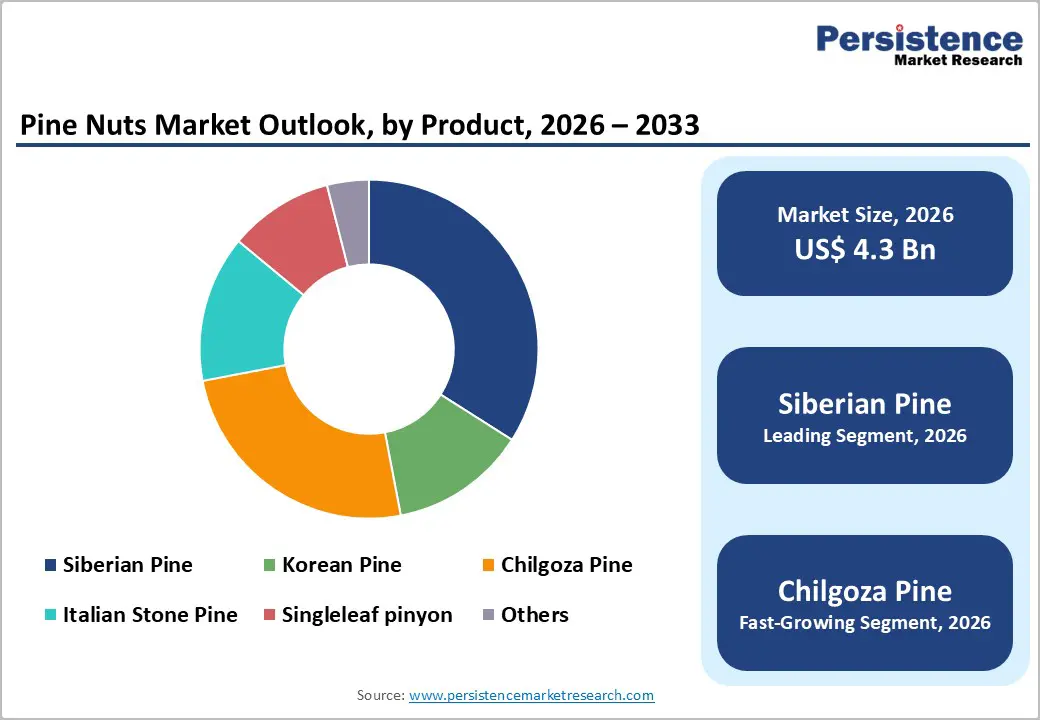
- Leading Product Type: Siberian pine is projected to represent the leading product type in 2026, accounting for 40% of the revenue share, driven by high yields, consistent quality, and favorable growing conditions in Russia and China.
- Leading Form: Raw and processed pine nuts are anticipated to be the leading form type, accounting for over 70% of the revenue share in 2026, supported by their extensive use in direct culinary applications and well-established supply chains.
| Key Insights | Details |
|---|---|
| Pine Nuts Market Size (2026E) | US$4.3 Bn |
| Market Value Forecast (2033F) | US$7.4 Bn |
| Projected Growth (CAGR 2026 to 2033) | 8.1% |
| Historical Market Growth (CAGR 2020 to 2025) | 8.0% |

Market Factors – Growth, Barriers, and Opportunity Analysis
Increasing Health and Wellness Awareness
Pine nuts are rich in heart-healthy monounsaturated fats, plant-based protein, dietary fiber, and essential micronutrients such as magnesium, zinc, and vitamin E. These nutritional attributes align well with rising consumer focus on cardiovascular health, weight management, and energy enhancement. Pine nuts contain bioactive compounds and antioxidants that appeal to consumers looking for functional foods with clean-label and minimally processed characteristics, strengthening their positioning in premium and health-oriented food categories.
This trend is reinforced by the growing adoption of plant-based, vegetarian, and flexitarian diets, where pine nuts serve as a valuable source of healthy fats and proteins. Food manufacturers are increasingly incorporating pine nuts into snacks, bakery products, sauces, and ready-to-eat meals to meet demand for wholesome and natural ingredients. The use of pine nut oil and powder in nutraceuticals and dietary supplements is expanding, supported by consumer interest in immunity, skin health, and anti-inflammatory benefits. As health-conscious purchasing decisions continue to shape food consumption patterns, pine nuts are expected to witness sustained demand across both traditional and emerging applications.
Limited Supply and Harvesting Challenges
Pine nuts are largely sourced from wild or semi-wild pine forests, and only specific pine species produce edible nuts, many of which require 15–25 years to reach full maturity. Harvesting is highly labor-intensive, seasonal, and dependent on manual collection, making large-scale mechanization difficult. Yields are highly sensitive to climatic factors such as temperature fluctuations, droughts, and pest infestations, leading to irregular annual output. Deforestation pressures and limited plantation-scale cultivation restrict the expansion of supply, while regulatory controls on forest harvesting in key producing regions constrain production volumes and increase sourcing complexity.
These supply-side limitations contribute to persistent price volatility and position pine nuts as a high-value, specialty nut rather than a mass-market product. Limited and inconsistent supply encourages producers and traders to focus on premium segments, organic certifications, and traceable sourcing to maximize margins. Food manufacturers are increasingly investing in long-term sourcing agreements and sustainable harvesting practices to ensure supply security. The imbalance between steadily rising demand and restricted production capacity continues to support market growth in value terms, while also driving innovation in processing, storage, and alternative applications to optimize utilization of available raw material.
Innovation in Processed Forms (Oil and Powder)
Pine nut oil, rich in monounsaturated fats, antioxidants, and essential micronutrients, is increasingly used in gourmet cooking, salad dressings, and functional beverages. Its health-promoting properties, including cardiovascular benefits and anti-inflammatory effects, have also driven adoption in nutraceuticals, dietary supplements, and cosmetic formulations, particularly in skincare products where it is valued for moisturizing and antioxidant qualities. Powdered pine nuts, meanwhile, offer versatility for bakery applications, protein blends, plant-based snacks, and functional foods, allowing manufacturers to incorporate nutrient-dense ingredients without altering taste or texture significantly.
Technological advancements, such as cold-press extraction, spray-drying, and microencapsulation, have improved nutrient retention, flavor stability, and shelf life, making processed pine nut products more appealing to both consumers and manufacturers. This trend aligns with the global shift toward health-conscious, clean-label, and plant-based diets, creating opportunities for premium product development. Companies investing in processing infrastructure and product innovation can tap into growing demand in North America, Europe, and Asia Pacific, thereby increasing market penetration and profitability. These innovations allow manufacturers to create value-added products that cater to niche segments, such as vegan protein supplements and functional snacks, while optimizing the use of raw materials and minimizing waste in the supply chain.
Category-wise Analysis
Product Type Insights
Siberian pine is expected to lead the pine nuts market, accounting for approximately 40% of total revenue in 2026. Its leadership is attributed to high yields, superior kernel quality, and consistent supply from optimal climatic regions in Russia and China. Siberian Pine nuts are prized for their mild, buttery flavor, making them highly suitable for both raw consumption and culinary applications, including sauces, bakery products, and gourmet snacks. For example, ALTAIGA Siberian Pine Nuts sources Siberian Pine from Siberian forests, ensuring premium quality that meets export standards and international consumer preferences. The established cultivation and collection infrastructure in Siberia and Northeastern China allows manufacturers and importers to maintain a stable supply, supporting consistent market penetration in North America and Europe.
Chilgoza pine is likely to represent the fastest-growing segment in 2026, driven by strong export demand and premium positioning in key international markets. For example, Pakistan’s Chilgoza pine nuts have been exported in significant volumes to China, where they command premium prices due to their rich taste, high nutrient content, and preference among Chinese consumers for high-quality pine nuts, which are often priced higher than other pine species due to their exotic origin and limited supply. The limited supply stemming from natural forest harvesting, combined with increasing interest in exotic and nutrient-dense ingredients among health-focused and gourmet food segments, supports higher price realization and steady growth projections for Chilgoza Pine relative to other species.
Form Insights
The raw and processed segment is projected to lead the market, capturing around 70% of the total revenue share in 2026, due to its versatility and direct culinary applications. These forms are extensively used in cooking, baking, salads, and snack mixes, making them the most familiar and widely purchased variant. Established supply chains and long-standing trade relationships, particularly in North America and Europe, support consistent availability. For example, Diamond Foods sources and distributes raw and processed pine nuts in bulk to meet the growing demand from food manufacturers and gourmet retailers. The widespread use of these forms is also reinforced by consumer preference for minimally processed, nutrient-rich ingredients. Manufacturers favor raw and processed pine nuts for ease of incorporation into recipes and for maintaining flavor integrity, which helps sustain demand across both commercial and retail segments.
The powdered and oil segment is likely to be the fastest-growing in 2026, driven by technological innovation and expanding applications in nutraceuticals, cosmetics, bakery, and functional foods. Pine nut oil, known for its high antioxidant content and healthy fats, is increasingly used in premium salad dressings, skincare formulations, and dietary supplements. Powdered pine nuts offer convenience and versatility for protein blends, plant-based snacks, and bakery mixes, allowing manufacturers to enhance nutritional profiles without compromising taste or texture. For example, Credé Natural Oils has developed cold-pressed pine nut oil for culinary and cosmetic applications, highlighting both antioxidant benefits and clean-label appeal.
Regional Insights
North America Pine Nuts Market Trends
North America is expected to remain the leading region in 2026, capturing approximately 35% of the market share, driven by strong import demand, rising consumer interest in health-focused and plant-based foods, and the widespread use of pine nuts in gourmet and snack applications. The U.S. continues to be the largest importer of pine nuts, sourcing mainly from China, South Korea, and Brazil to satisfy growing domestic consumption. This reliance on imports, along with the increasing preference for nutrient-dense foods rich in healthy fats, proteins, and antioxidants, has reinforced the premium positioning of pine nuts across both retail and foodservice channels.
Shifts in culinary trends, such as Mediterranean cuisine, clean-label snacks, and plant-based diets, have further boosted the use of pine nuts in products, including pesto, salads, baked goods, and premium meal kits. Leading suppliers, including John B. Sanfilippo & Son, Inc. (JBSS) through its Fisher Nuts brand, import high-quality pine nuts and distribute them across retail and foodservice sectors. The growing adoption of organic and specialty products, coupled with increased demand in health-conscious and gourmet segments, is expected to sustain market growth and maintain North America’s dominant position.
Europe Pine Nuts Market Trends
Europe is expected to be a significant market for pine nuts in 2026, driven by strong consumer demand rooted in longstanding culinary traditions and a premium food culture. Pine nuts are widely incorporated in classic European dishes, most notably pesto in Italy, as well as in gourmet salads, breads, and tapas across the Mediterranean, supporting consistent consumption in countries such as Germany, Italy, the Netherlands, and France. Consumption trends reflect a preference for high-quality, nutrient-dense ingredients that align with health, organic, and natural food movements, sustaining demand across both retail and foodservice channels. Recent import activity highlights this growth, with EU shelled pine nut imports rising over 31% year-on-year, primarily from key suppliers including China and Mongolia, compensating for limited local production.
The market is also influenced by strict food safety regulations and the premium positioning of pine nuts as a specialty ingredient. Distribution spans supermarkets, organic stores, and online channels, increasing consumer access and supporting higher adoption of certified sustainable products. Companies such as Besana Group, a leading Italian processor of nuts and dried fruits, play a key role in the regional value chain by sourcing, processing, and distributing high-quality pine nuts across European markets and export destinations. As health-conscious eating habits continue to grow and Mediterranean cuisine remains popular, consumers are increasingly incorporating pine nuts into their diets.
Asia Pacific Pine Nuts Market Trends
The Asia Pacific region is expected to be the fastest-growing region, driven by rising health awareness, increasing disposable incomes, and changing dietary habits that favor nutritious and premium ingredients. China dominates the region, supported by substantial local production and a growing consumer base that uses pine nuts both as a snack and as an ingredient in traditional and modern dishes. Urbanization and the expansion of retail and e-commerce platforms have improved product accessibility, enabling broader distribution across the region. Other key markets, including India, Japan, and South Korea, are also experiencing significant growth, as consumers increasingly incorporate pine nuts into daily cooking and snack products, influenced by local food cultures as well as global trends in plant-based nutrition and functional foods.
Cross-border trade and regional supplier networks play a critical role in shaping the Asia Pacific market. Companies such as Wangchang Food, a China-based processor of high-quality shelled and in-shell pine nuts certified to FSSC 22000, serve both domestic and export markets, demonstrating how regional players are meeting diverse demand while enhancing quality standards. Investments in processing infrastructure and certification are strengthening the position of Asia Pacific producers in international supply chains and supporting the development of value-added product formats, including roasted and specialty pine nut varieties.

Competitive Landscape
The global pine nuts market exhibits a moderately fragmented structure, driven by the presence of both established multinational suppliers and numerous regional players competing for share across retail, industrial, and gourmet segments. Larger companies leverage extensive sourcing networks, quality assurance programs, and supply chain integration to meet demand in major markets such as North America, Europe, and Asia Pacific. Smaller producers differentiate themselves through organic, region-specific, or sustainably sourced offerings, often targeting health-conscious and specialty food consumers.
With key leaders including John B. Sanfilippo & Son, Inc., Diamond Foods, Inc., Red River Foods, Royal Nut Company, and Bedemco Inc., market participants are focusing on strategic investments in processing facilities, quality certifications, and broader distribution networks to expand their footprint. These players compete through product quality differentiation, sustainable sourcing practices, expanded organic and clean-label product lines, and strong relationships with major retailers and foodservice chains.
Key Industry Developments:
- In April 2025, the VCA4D project launched a call for international and national experts to conduct a value chain analysis of the pine nuts sector in Mongolia. The study, scheduled from May 2025 to February 2026, seeks specialists in economic, social, environmental, and national forestry-related expertise. The objective is to assess the pine nuts value chain, including production, processing, and export dynamics, while supporting sustainable forest management practices. Pine nuts represent a key non-timber forest product in Mongolia, providing income to rural communities and contributing to nutrition with high protein and mineral content.
- In February 2025, Afghanistan’s Ministry of Industry and Commerce (MoIC) announced plans to establish a unified pine nut sector union to support industry development and reduce unhealthy competition among traders. Acting Minister Nooruddin Azizi met with pine nut traders to address core challenges, including the need for increased processing capacity, enhanced export logistics, and better organization of the domestic pine nut market. Discussions highlighted the importance of creating dedicated processing factories and establishing a formal structure to represent producers and exporters.
Companies Covered in Pine Nuts Market
- ALTAIGA SIBERIAN PINE NUTS
- SHILOH FARMS
- Credé Natural Oils
- KENKKO CORPORATION
- J.M. van de Sandt B.V.
- Bardakci Group
- Bedemco Inc.
- Diamond Foods
- Freeworld Trading Ltd.
- Red River Foods
- JOHN B. SANFILIPPO & SON INC.
- RM Curtis & Co. Ltd.
- Sabra Dipping Company
- Dashi International
- Peyman
Frequently Asked Questions
The global pine nuts market is projected to reach US$4.3 billion in 2026.
Rising consumer demand for nutrient-dense, healthy foods and increasing use in culinary, snack, and plant-based products.
The pine nuts market is expected to grow at a CAGR of 8.1% from 2026 to 2033.
Innovation in processed forms (oil and powder), expansion in plant-based and health-focused foods, growth in gourmet and ethnic cuisines, sustainable and organic sourcing, and increasing exports to emerging markets in Asia and Europe.
ALTAIGA Siberian Pine Nuts, SHILOH FARMS, Credé Natural Oils, BardakciGroup, and Bedemco Inc. are the leading players.


