




- Food Ingredients & Additives
- Nutmeg Butter Market
Nutmeg Butter Market Size, Share, and Growth Forecast 2026 - 2033
Nutmeg Butter Market by Nature (Organic, Conventional), by End Use (Skincare, Hair Care, Aromatherapy & Massage, Food & Beverage, Others), by Sales Channel (B2B, B2C), by Regional Analysis, 2026-2033

Nutmeg Butter Market Size and Trends Analysis
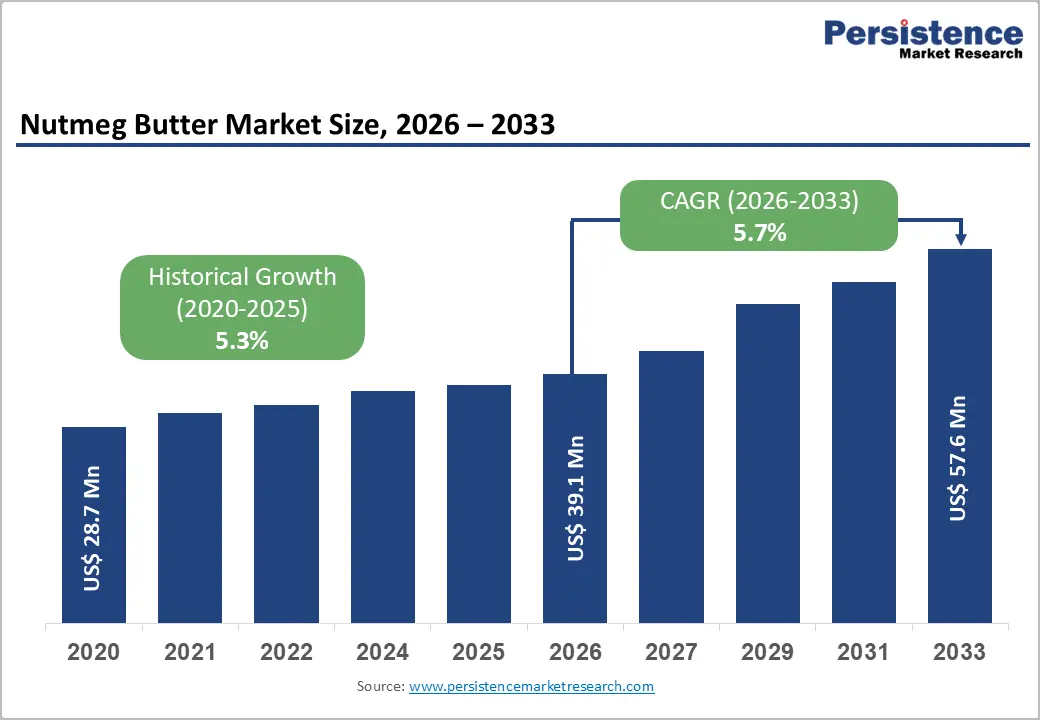
The global nutmeg butter market size is expected to be valued at US$ 39.1 million in 2026 and projected to reach US$ 57.6 million by 2033, growing at a CAGR of 5.7% between 2026 and 2033.
The expansion of the global nutmeg butter market is primarily driven by the escalating consumer shift toward plant-based and high-efficacy natural ingredients in personal care. As health consciousness permeates the beauty industry, manufacturers are increasingly replacing synthetic emollients with botanical fats that offer multi-functional benefits, such as anti-inflammatory and antioxidant properties. Furthermore, the burgeoning demand for niche Aromatherapy & Massage products in North America and Europe is providing a steady tailwind for market growth. This trend is bolstered by the rising penetration of premium organic certifications, which enhance consumer trust and drive value-added sales in the B2C segment.
Key Industry Highlights
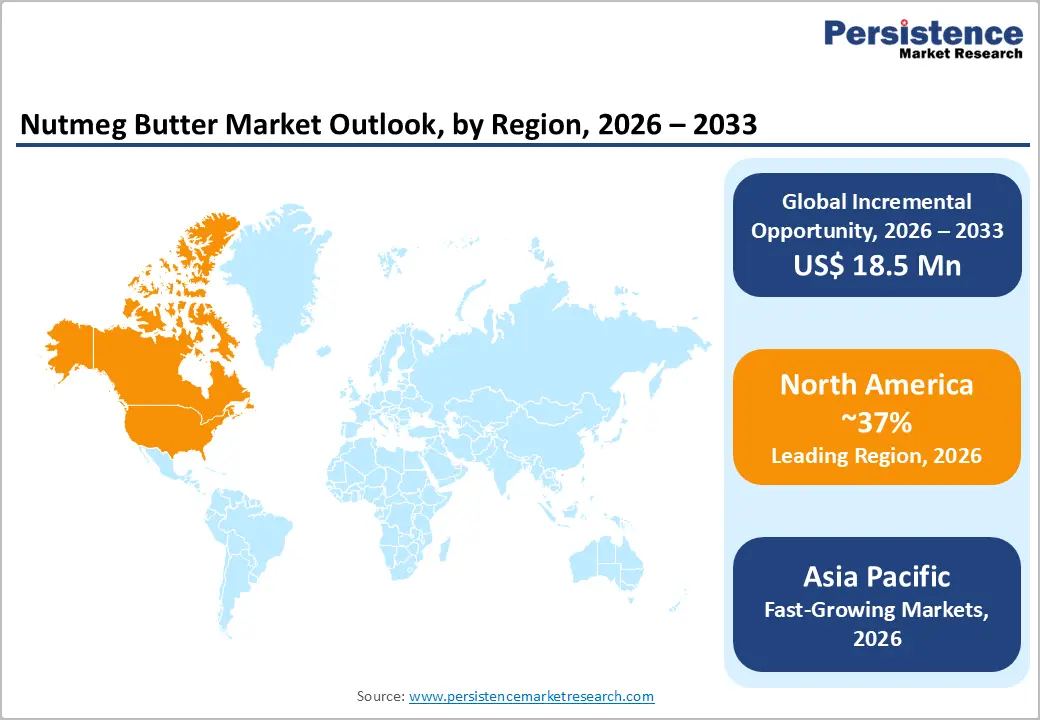
- North America remains the dominant region, holding a 37% market share in 2025, driven by a mature personal care market and a strong consumer preference for innovative, plant-based beauty solutions.
- Asia Pacific is identified as the fastest-growing region, leveraging its position as the primary producer of nutmeg and a rapidly expanding consumer base for premium cosmetics in China and India.
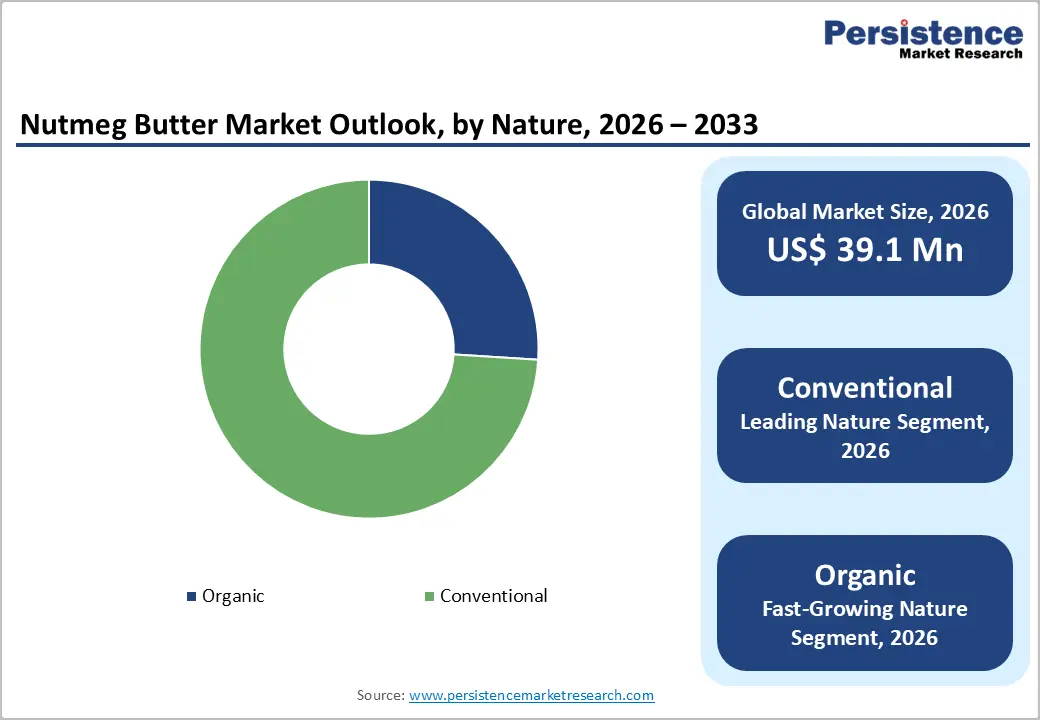
- The Conventional segment currently leads the market with a 74% share, but the Organic segment is poised for the highest growth rate as certification becomes a key purchase driver.
- Skincare is the leading end-use segment, where Nutmeg Butter is valued for its brightening and anti-aging properties, while the Aromatherapy segment is emerging as a critical growth pocket.
- A major market opportunity lies in developing Nutricosmetics, combining nutmeg's nutritional and cosmetic benefits into innovative, edible beauty products for global health-conscious consumers.
| Key Insights | Details |
|---|---|
| Nutmeg Butter Market Size (2026E) | US$ 39.1 Mn |
| Market Value Forecast (2033F) | US$ 57.6 Mn |
| Projected Growth (CAGR 2026 to 2033) | 5.7% |
| Historical Market Growth (CAGR 2020 to 2025) | 5.3% |
Market Dynamics
Driver – Rising Adoption of Clean Label and Sustainable Personal Care Ingredients
The significant driver propelling the Nutmeg Butter Market is the global movement toward "Clean Beauty" and sustainable sourcing. Modern consumers are increasingly scrutinizing ingredient lists for harmful chemicals, leading to a surge in demand for natural fats like Nutmeg Butter, which is derived from the seeds of the Myristica fragrans tree. According to the Organic Trade Association (OTA), the demand for organic personal care products has seen consistent year-over-year growth, as users seek products that are both environmentally friendly and gentle on the skin. Nutmeg Butter, rich in myristic acid, provides an excellent semi-solid base for creams and lotions without the need for synthetic stabilizers. This alignment with plant-based ingredient market trends is encouraging leading cosmetic brands to reformulate their product lines, thereby expanding industrial consumption of this specialty fat.
Restraints – High Raw Material Price Volatility and Supply Chain Concentration
The primary barriers to the growth of the Nutmeg Butter Market are extreme volatility in nutmeg spice prices and the high geographic concentration of its production. Nearly 70% to 80% of the world's nutmeg is produced in Indonesia and Grenada, regions that are highly susceptible to climate change and extreme weather events. According to the Food and Agriculture Organization (FAO) of the United Nations, fluctuations in crop yields due to unpredictable monsoon patterns or tropical storms can lead to sudden spikes in raw material costs. For small and medium-sized enterprises (SMEs) in the butter processing sector, these unpredictable input costs make it challenging to maintain stable pricing for long-term B2B contracts. This instability often forces manufacturers to look for cheaper synthetic or blended alternatives, thereby hindering the pure Nutmeg Butter segment.
Opportunity – Development of High-Growth Nutricosmetics and Edible Beauty Products
A burgeoning opportunity in the Nutmeg Butter Market lies at the intersection of nutrition and cosmetics, commonly known as the Nutricosmetics Market. Consumers are increasingly seeking "beauty from within" solutions, in which edible fats with skin-enhancing properties are incorporated into supplements or functional foods. Nutmeg Butter, a rich source of antioxidants and healthy fatty acids, is well-positioned for this trend. Companies can capitalize on this by developing pharmaceutical-grade Nutmeg Butter for use in the formulation of oral beauty supplements or specialized confectionery. Recent research published in the Journal of Cosmetic Dermatology suggests that certain botanical butters can support skin barrier function when ingested in controlled amounts, opening up a whole new revenue stream for manufacturers who can provide high-purity, food-grade organic products.
Category-wise Analysis
Nature Analysis
The Conventional nutmeg butter segment is the dominant force in the market, holding a substantial 74% market share in 2025. This dominance is primarily attributed to the widespread availability and lower price points of conventional nutmeg compared to its organic counterparts. Large-scale industrial users in the Food Processing and mass-market Skincare sectors prefer conventional butter due to the consistent supply chains and established quality standards. However, the Organic segment is identified as the fastest-growing category. As certifications like USDA Organic and ECOCERT become more sought after, premium brands are transitioning their formulations to organic to meet the demands of the Organic Personal Care Market. The growth in the organic segment is further supported by government initiatives in producing countries like India to promote chemical-free spice cultivation through the National Mission on Natural Farming.
End Use Analysis
The Skincare segment is the leading end-use category for Nutmeg Butter, accounting for the largest revenue share in 2025. Its popularity is driven by the butter's exceptional ability to act as a natural skin brightener and its effective anti-aging properties. Nutmeg Butter is frequently used in the formulation of heavy night creams, lip balms, and specialized hyperpigmentation treatments. According to data from the Personal Care Products Council (PCPC), there has been a notable increase in the inclusion of "exotic butters" in luxury skincare lines. While skincare leads, the Aromatherapy & Massage segment is experiencing rapid growth, fueled by the global expansion of medical tourism and the rising prevalence of stress-related ailments. The warm, comforting scent of nutmeg makes it an ideal ingredient for relaxing body butters, which are becoming a staple in both professional spas and home-care wellness kits.
Region-wise Insights
North America Nutmeg Butter Market Trends and Insights
North America is the leading region in the global nutmeg butter market, holding a 37% market share in 2025. The region's dominance is underpinned by a highly sophisticated innovation ecosystem and a high concentration of global beauty giants in the United States. Consumers in the U.S. and Canada are among the highest spenders globally on premium and natural personal care products. The presence of stringent regulatory frameworks, such as the Modernization of Cosmetics Regulation Act (MoCRA) in the U.S., has pushed companies to adopt transparent and safe ingredient sourcing practices.
Key trends in this region include the rapid adoption of Nutmeg Butter by "indie" beauty brands focused on specialized skin concerns such as eczema and sensitive skin. Furthermore, the region's well-established Aromatherapy culture, supported by organizations like the National Association for Holistic Aromatherapy (NAHA), continues to drive demand for nutmeg-infused wellness products. The growth is also bolstered by a robust logistics and distribution network that facilitates the efficient import of raw materials from Southeast Asia and the Caribbean.
Asia Pacific Nutmeg Butter Market Trends and Insights
The Asia Pacific region is the fastest-growing market for Nutmeg Butter, driven by its dual advantage as a major production hub and an emerging consumption powerhouse. Countries like Indonesia, India, and Sri Lanka are the primary sources of global nutmeg, providing a massive manufacturing advantage due to the proximity to raw material supplies. The rise of large middle-class populations in China and India, with increasing disposable incomes, is fueling demand for locally produced premium cosmetics.
In China, the "C-Beauty" movement—the rise of Chinese beauty brands—is increasingly incorporating traditional herbal ingredients, such as nutmeg, into modern formulations to appeal to domestic consumers. The ASEAN growth dynamics also play a crucial role, as trade agreements like the Regional Comprehensive Economic Partnership (RCEP) facilitate easier cross-border movement of agricultural goods. As digital penetration grows in the region, the B2C segment is seeing explosive growth, with domestic brands leveraging local e-commerce giants like Tmall and Lazada to market the unique benefits of Nutmeg Butter to a tech-savvy generation.
Market Competitive Landscape
The nutmeg butter market is highly fragmented, comprising a multitude of small-scale, specialized producers, ethical cooperatives, and a few large-scale chemical and ingredient suppliers. Key differentiators in this market include extraction method (e.g., Cold-Pressed vs. CO2 Extraction), final product purity, and the ability to offer certified organic options. Market leaders focus on extensive product portfolios that cater to both the B2B and B2C segments.
A significant trend among competitive players is the shift toward direct sourcing, where companies partner with farming cooperatives in Indonesia to ensure traceability and fair trade practices. This strategy not only secures the supply chain against market volatility but also serves as a powerful marketing tool in the Clean Beauty space. Emerging business models also include "white-label" services, where butter producers provide ready-made formulations for boutique skincare brands looking to enter the market quickly with natural products.
Companies Covered in Nutmeg Butter Market
- De La Enzie Essentials Limited
- Flavones Extracts Pvt. Ltd
- Organic Pure Oil
- Akoma Skincare
- newdirectionsaromatics
- The Seasoned Pioneers.
- Cocojojo
- Others
Frequently Asked Questions
The global Nutmeg Butter Market is expected to reach a value of US$ 39.1 million in 2026, driven by the increasing integration of botanical fats in the personal care and wellness industries.
The growth is primarily fueled by the rising consumer demand for natural and clean-label ingredients, the therapeutic benefits of nutmeg in Aromatherapy, and the expansion of the Organic Cosmetics Market.
North America is the leading region, accounting for an estimated 37% market share in 2025, supported by high consumer spending on premium skincare and a robust innovation ecosystem.
A major opportunity lies in the Nutricosmetics segment, where Nutmeg Butter can be developed as a functional ingredient for edible beauty supplements and health-focused food products.
Leading companies include De La Enzie Essentials Limited, Organic Pure Oil, newdirectionsaromatics, and Akoma Skincare, alongside specialized extractors like Flavones Extracts Pvt. Ltd.


