




- Beauty & Personal Care
- Men’s Post-Shave Market
Men’s Post-Shave Market Size, Share, and Growth Forecast, 2026- 2033
Men's Post-Shave Market by Nature (Natural, Conventional), Product Type (Oil, Cream, Gel, Soap), Application (Electric Razors, Power Sticks, Regular Shaves, By End User, Retail, Commercial), Distribution Channel (Online, Hypermarkets/Supermarkets, Specialty Stores, Independent Stores, Others), and Regional Analysis for 2026 - 2033

Men’s Post-Shave Market Size and Trends Analysis
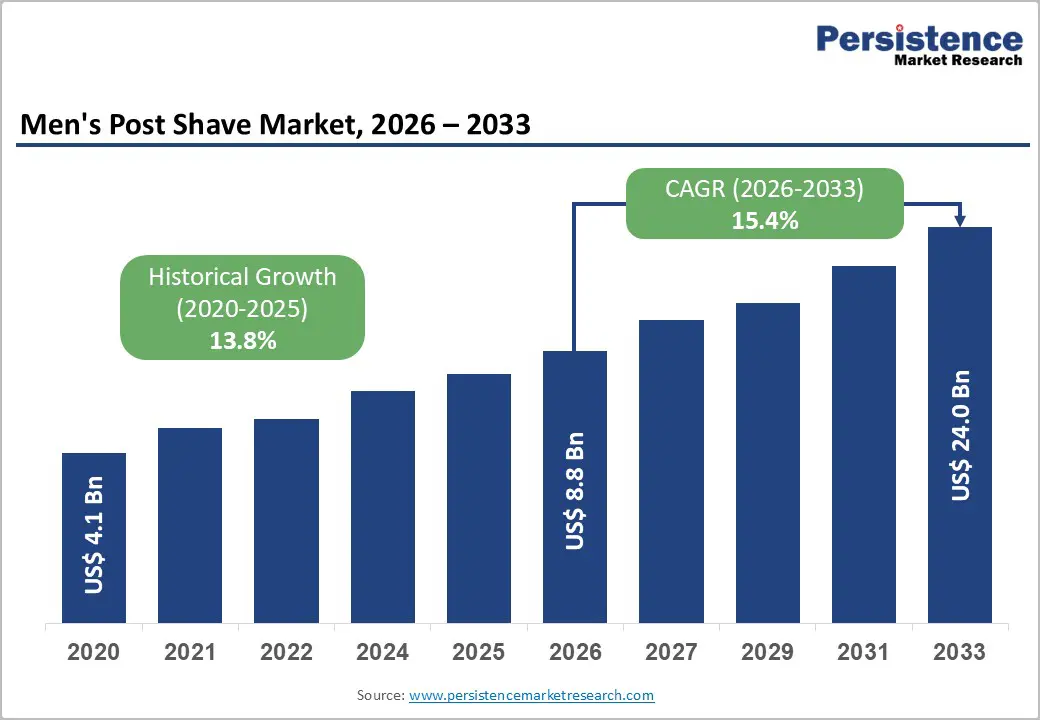
The global men's post-shave market size is supposed to be valued at US$ 8.8 Bn in 2026 and is projected to reach US$ 24.0 Bn by 2033, growing at a CAGR of 15.4% between 2026 and 2033.
This robust expansion is primarily driven by an accelerating shift in male grooming culture, where post-shave skincare has transcended its traditional functional role to become an integral part of men's holistic wellness routines. Rising disposable incomes, particularly among Millennial and Gen Z demographics, are enabling greater spending on premium and multifunctional post-shave formulations. Furthermore, the surge in e-commerce penetration and the influence of social media grooming influencers are dramatically amplifying product visibility and consumer adoption worldwide, supporting sustained double-digit growth through the forecast period.
Key Industry Highlights:
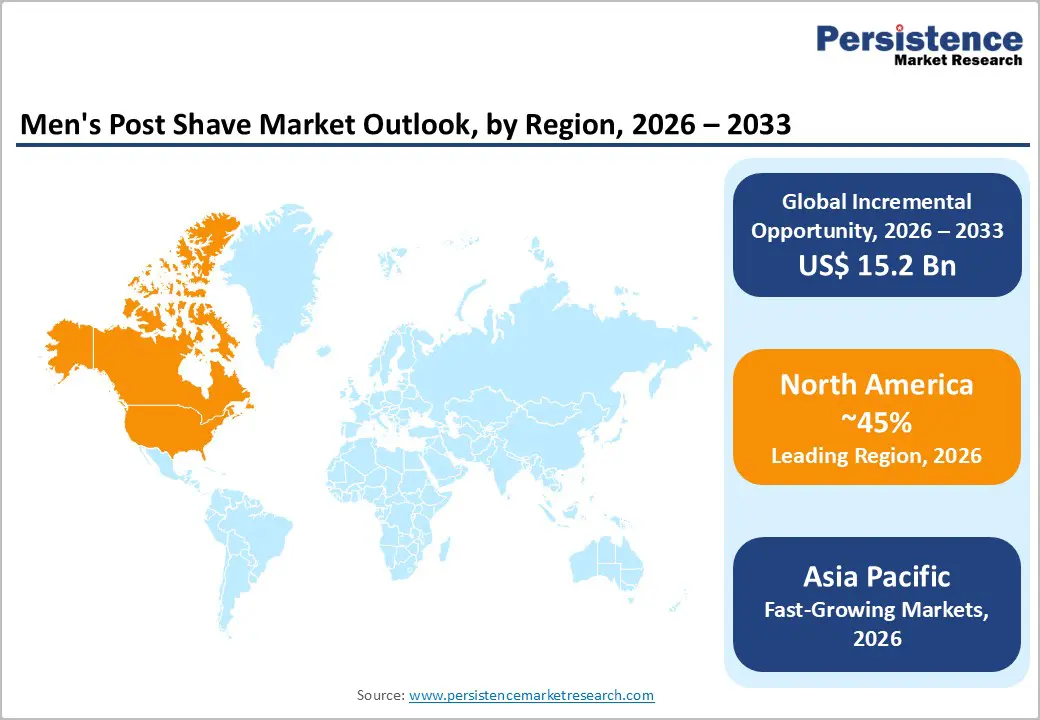
- Leading Region: North America leads the global men's post-shave market, driven by the U.S.'s high grooming product adoption, strong brand presence of companies like Procter & Gamble and Beiersdorf, mature e-commerce infrastructure, and consumers' strong willingness to spend on premium formulations.
- Fastest Growing Region: Asia Pacific is the fastest-growing region, propelled by rapid urbanization, rising disposable incomes, the cultural influence of K-beauty and J-beauty grooming standards, expanding e-commerce, and surging domestic brand launches in China, India, and ASEAN markets.
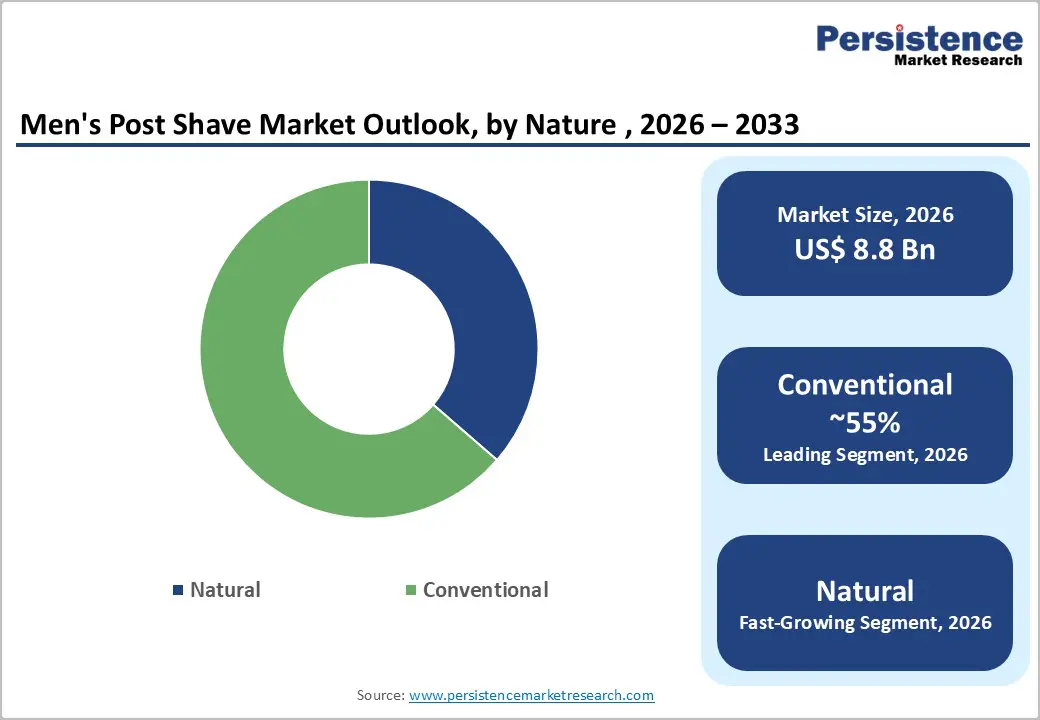
- Dominant Nature Segment: The Conventional Nature segment dominates with ~55% share, owing to affordable pricing, strong brand familiarity, widespread retail availability through hypermarkets and online channels, and deep consumer loyalty to established brands globally.
- Fastest Growing Segment: The Natural post-shave segment is the fastest growing, accelerated by rising consumer preference for chemical-free, vegan, cruelty-free, and eco-certified grooming formulations, especially among health-conscious Millennial and Gen Z consumers.
- Key Opportunity: AI-enabled personalization and multifunctional product innovation represent the most significant untapped opportunity, enabling brands to develop customized post-shave solutions using real-time skin analysis, driving premiumization and consumer retention globally.
| Key Insights | Details |
|---|---|
| Men's Post-Shave Market Size (2026E) | US$ 8.8 Bn |
| Market Value Forecast (2033F) | US$ 24.0 Bn |
| Projected Growth CAGR (2026 - 2033) | 15.4% |
| Historical Market Growth (2020 - 2025) | 13.8% |
Market Dynamics
Key Growth Drivers - Rising Male Grooming Awareness and the Premiumization Trend
The global cultural re-definition of masculinity has emerged as the single most potent driver of the men's post-shave market. According to industry surveys, 68% of Gen Z men aged 18-27 in the United States now report regular use of facial skincare products, a dramatic increase from 42% in 2022, as reported by O&3 (2025). Furthermore, 70% of men globally now prefer grooming formulations made with natural or organic ingredients. Men are increasingly upgrading from basic, alcohol-based aftershaves to sophisticated balms, gels, and oils infused with skin-restorative botanicals such as aloe vera, witch hazel, and chamomile. The desire for a premium, sensorial grooming ritual is driving brands to premiumize their post-shave portfolios, contributing significantly to market revenue growth and expanding average selling prices across the category.
E-Commerce Expansion and Direct-to-Consumer Brand Growth
The rapid proliferation of digital commerce channels is fundamentally reshaping the distribution architecture of the men's post-shave market. According to a 2022 survey published in Global Cosmetic Industry Magazine, 61% of men in the U.S. source personal grooming products through Amazon. E-commerce channels now contribute an estimated 43% of total male grooming sales globally, representing a 22% increase from 2023. Digital-first brands such as Harry's and Dollar Shave Club have disrupted traditional retail models by leveraging subscription-based services and direct consumer engagement. This shift is lowering entry barriers for niche brands focused on natural post-shave solutions, intensifying overall category innovation and broadening the consumer base globally.
Restraints - High Price Points Limiting Penetration in Price-Sensitive Markets
Premium men's grooming brands often charge up to 38% higher prices compared to equivalent female skincare lines. Approximately 41% of men globally cite high pricing and limited product differentiation as key purchasing barriers. In emerging and developing markets, 52% of retail outlets carry limited men's grooming ranges. Furthermore, the rising cost of organic and natural raw materials has increased manufacturing expenses by an estimated 27%, compressing manufacturer margins and constraining retail price accessibility. These factors collectively slow market penetration among budget-sensitive consumers despite growing awareness.
Low Awareness in Rural Regions and Evolving Cultural Attitudes
A persistent challenge restraining market growth is the uneven distribution of male grooming awareness, particularly across rural geographies in Asia, Africa, and Latin America. Social phenomena such as the global "No-Shave November" movement, which has gained significant traction on social media platforms, temporarily suppresses demand for shaving and post-shave products each year. Cultural stereotypes associating extensive male grooming with non-masculinity continue to reduce adoption rates in several traditional markets. These demand-side barriers constrain the addressable market for post-shave products and pose a medium-term challenge for brand marketers seeking to expand household penetration globally.
Opportunities - Surge in Demand for Natural, Organic, and Clean-Label Post-Shave Formulations
The clean beauty movement presents a transformative growth opportunity for men's post-shave market participants. According to Bundesanstalt für Landwirtschaft und Ernährung (Germany's Federal Office for Agriculture and Food), as of December 2024, over 109,567 products in Germany carried certified organic labels reflecting the broader European consumer shift toward sustainable and natural personal care. Globally, 64% of male consumers now prefer natural-ingredient products, and sustainable grooming product launches grew by 56% between 2022 and 2024. Brands such as Bulldog Skincare, Brickell Men's Products, and Ursa Major are driving the vegan and cruelty-free segment, signaling an immense white space for new product development centered on botanical actives, biodegradable packaging, and ingredient transparency.
AI-Enabled Personalization and Multifunctional Product Innovation
The integration of artificial intelligence and advanced biotechnology into post-shave product development represents a high-value frontier opportunity. Major players such as Unilever are already leveraging AI to mine consumer data and cut product development cycles by up to 30%. Emerging applications include AI-assisted skin scanning that delivers customized post-shave treatment recommendations based on real-time skin analysis. Biotech-driven innovations incorporating skin-resurfacing peptides, probiotics, and anti-aging actives are broadening the product functionality well beyond traditional soothing and antiseptic roles. In September 2024, Maneuver launched a luxury grooming line including premium pre- and post-shave products that combine hydration, skin barrier protection, and anti-irritation actives epitomizing the multifunctional trend that is set to dominate the forecast period.
Category-wise Analysis
Nature Insight
The conventional post-shave products segment currently leads the Nature category, commanding approximately 55% of the market share, owing to their widespread availability, affordability, and deeply entrenched brand loyalty among consumers. Conventional formulations typically incorporating synthetic fragrances, alcohol, and preservatives benefit from a well-established retail presence across hypermarkets and supermarkets globally. They cater to the large consumer segment that associates post-shave with a familiar astringent sensation delivered by alcohol-based splashes. Brands such as Gillette (Procter & Gamble) and Nivea Men (Beiersdorf AG) dominate this segment. However, the natural segment is rapidly gaining momentum, currently holding approximately 45% and growing at the fastest pace, driven by heightened consumer awareness of skin sensitivities and a global push toward chemical-free, eco-conscious grooming.
Product Type Insights
The Post-Shave Cream segment holds the dominant position in the Product Type category, accounting for approximately 38% of total market share. Creams are favored for their superior moisturizing properties, ease of application, and suitability across diverse skin types including sensitive and dry skin. Their thick consistency ensures prolonged skin contact, facilitating deeper nourishment and enhanced irritation relief compared to lighter gel or oil formats.
Persistence Market Research corroborates that creams are expected to maintain the largest product-type share due to their adaptability and broad consumer appeal. Post-shave oils are the fastest-growing sub-segment, fueled by the clean beauty trend and growing consumer preference for intensive hydration using natural botanical oils such as argan, jojoba, and rosehip, particularly among men with coarse or curly hair prone to razor bump irritation.
Application Insights
Within the Application category, the Regular Shaves segment accounts for the largest share of approximately 42%, reflecting the fact that traditional wet shaving with cartridge or safety razors remains the most widely practiced shaving method globally. Regular shaving using manual razors inherently produces greater skin abrasion compared to electric alternatives, creating a consistent and high-frequency need for soothing, hydrating post-shave care. The segment's dominance is reinforced by the significant market penetration of wet shaving brands in both developed and emerging markets.
Meanwhile, Electric Razor applications are growing at the fastest pace, as adoption of electric shavers accelerates among urban professional demographics in Asia Pacific and North America, creating complementary demand for specialized post-electric-shave balms and serums formulated without traditional astringents.
Distribution Channel Insights
The Online distribution channel has emerged as the dominant and fastest-growing segment within the Distribution Channel category, currently holding approximately 36% of the market and expanding at a notably higher CAGR than offline channels. Consumers increasingly prefer e-commerce for its price-comparison capability, product review access, and the convenience of subscription-based delivery models offered by direct-to-consumer brands. The U.S. online men's grooming products market is projected to grow at a 12.8% CAGR from 2024 to 2030.
Hypermarkets/Supermarkets retain the second-largest share with approximately 27%, benefitting from impulse purchases and broad product accessibility. Specialty stores are gaining traction as destinations for premium and natural post-shave products, particularly in European markets.
Regional Insights and Trends
North America Dominates Mature Men's, Post-Shave Market
North America remains the largest and most mature regional market for men's post-shave products, supported by high grooming awareness, strong disposable incomes, and a deeply entrenched personal care retail infrastructure. The U.S. accounts for a dominant share of regional revenues, with the U.S. men's grooming products market estimated at USD 46.54 billion in 2023 and projected to grow at 8.3% CAGR through 2030. The American Society of Plastic Surgeons has noted a rise in male cosmetic procedures, underscoring a broader cultural acceptance of male grooming rituals.
Innovation is a key differentiator in North America, with brands like Procter & Gamble's Gillette reporting high single-digit organic sales growth in fiscal 2024, as stated in their Annual Report 2024. The region's regulatory framework, governed by the U.S. Food and Drug Administration (FDA), enforces product safety standards that encourage formulation quality, supporting consumer trust in both conventional and emerging natural post-shave segments.
Europe Premiumization Driving Post-Shave Market Expansion
Europe holds a leading regional position, accounting for approximately 35% of the global aftershave lotions and creams market. Key markets include the United Kingdom, Germany, and France, where men increasingly invest in premium skincare formulations. Germany is expected to register a strong 11.3% CAGR in its post-shave care segment through 2034, as reported by Persistence Market Research, driven by brand loyalty and quality-conscious consumer behavior.
European regulatory harmonization under EU Cosmetics Regulation (EC) No 1223/2009 mandates strict ingredient safety and labeling requirements, compelling brands to reformulate toward cleaner, eco-certified compositions. The EU's Packaging and Packaging Waste Regulation (PPWR) is further incentivizing sustainable packaging innovation across the men's post-shave sector. The rise of specialty retail channels and premiumization across Spain and France is expanding market depth beyond the traditional mass segment.
Asia Pacific Fastest-Growing Men's Grooming Market
Asia Pacific is the fastest-growing regional market, underpinned by a young, increasingly affluent male population and the growing cultural embrace of male grooming. Digital platforms are particularly influential across Asia, where 68% of consumers in the region engage with subscription-based grooming kits and online-exclusive brands, according to industry estimates. China and India represent the largest volume growth markets, supported by rapid urbanization and rising middle-class disposable income. In India, Piramal Pharma Limited launched its men's grooming brand Bohem in April 2024, marking the country's growing domestic grooming market sophistication.
Japan and South Korea serve as innovation hubs, with the Hot Pepper Beauty Academy (2023) survey revealing that 49% of Japanese men purchased at least one face wash product in the prior year. K-beauty and J-beauty influence continues to shape post-shave routines across ASEAN markets, driving demand for multi-step post-shave skincare rituals. The region's manufacturing advantages in South and East Asia are also enabling cost-competitive production of natural post-shave formulations, supporting both export growth and domestic market expansion.
Competitive Landscape
The men’s post shave market is highly competitive with moderate concentration. A few global giants share significant market influence, but many smaller and regional players are also active. Major corporations such as Procter & Gamble, Unilever, L’Oréal, Beiersdorf, and Estee Lauder dominate many segments
These firms leverage extensive R&D, strong branding, and broad distribution networks. For example, P&G (Gillette, Old Spice) and Unilever (Dove Men+Care, Axe) invest in constant product innovation and global marketing. At the same time, the market has ample room for niche specialists and D2C startups (e.g. Bombay Shaving Company in India) that target grooming subsegments (organic, luxury, etc.). Key competitive strategies include developing premium/functional formulations, expanding product lines (e.g. introducing new balms, beard-care combos), and digital marketing through influencers. Emerging business models, such as subscription shaving kits and online-only brands, are challenging traditional retail. Private labels and small local brands also compete on price and cultural relevance. Overall, leaders focus on differentiation - through clean formulas, tech-enabled products, or brand storytelling - to maintain their market share in this evolving landscape
Key Developments:
- March 2026: Beiersdorf’s strong financials. German firm Beiersdorf (owner of NIVEA Men) reported FY 2025 sales of €9.9 billion (US$10.8 Bn), driven by skincare innovations despite market challenges. NIVEA Men growth (0.9% organically) was supported by late-year new products, underscoring healthy demand in men’s skin and shave care.
- June 2025: Unilever acquires Dr. Squatch. Unilever announced it will acquire Dr. Squatch, a US men’s personal care brand known for natural soaps and grooming products. This move expands Unilever’s portfolio into premium natural men’s grooming.
- November 2025: Bombay Shaving Company secures funding. India’s Bombay Shaving Company raised US$16.3 million in funding to fuel expansion and prepare for a public listing. The startup has built a diversified grooming range (shave kits, skincare) and will use the capital for growth in both D2C and retail.
Companies Covered in Men’s Post-Shave Market
- Mountaineer Brand Products
- The Procter & Gamble Company (Gillette, Old Spice)
- Pré de Provence
- Montblanc International GmbH
- Lacoste Inc.
- Combe Incorporated
- The Real Shaving Co.
- MÄURER & WIRTZ GmbH & Co. KG.
- eShave, LLC.
- Naveh Pharma Ltd.
- Other Market Players
Frequently Asked Questions
The global Men's Post-Shave market is projected to reach US$ 24.0 Bn by 2033, expanding from US$ 8.8 Bn in 2026 at a forecast CAGR of 15.4% during 2026 - 2033.
Key demand drivers include the accelerating cultural shift among Millennial and Gen Z men embracing holistic skincare routines, rising disposable incomes enabling premiumization, expansion of e-commerce and direct-to-consumer platforms, and growing preference for natural and organic formulations.
The Post-Shave Cream segment leads the product type category with an estimated 38% market share, owing to its superior moisturizing efficacy, ease of application, and versatility across sensitive and dry skin types.
North America is the leading region in the global Men's Post-Shave market, underpinned by the U.S.'s large male consumer base with high grooming awareness, strong premium product adoption, and a robust e-commerce and retail distribution infrastructure.
The most compelling opportunity lies in AI-driven personalization combined with natural and multifunctional product innovation. Brands that can deploy AI-based skin diagnostics to offer personalized post-shave regimens, while simultaneously developing clean-label, biotech-enhanced formulations, stand to capture substantial premium market share.
The global Men's Post-Shave market is led by Procter & Gamble Co. (Gillette), Beiersdorf AG (Nivea Men), L'Oréal S.A. (Men Expert, Garnier Men), Unilever PLC (Dove Men+Care), and Edgewell Personal Care Company. These incumbents collectively hold nearly half of global market revenues.


