




- Baby Care & Accessories
- Kids Shampoo Market
Kids Shampoo Market Size, Share, and Growth Forecast, 2026 – 2033
Kids Shampoo Market by Product Type (Medicated, Non-Medicated Shampoo), Distribution Channel (Hypermarkets/Supermarkets, Convenience Stores, Specialty Stores, E-commerce), and Regional Analysis for 2026 – 2033

Kids Shampoo Market Size and Trends Analysis
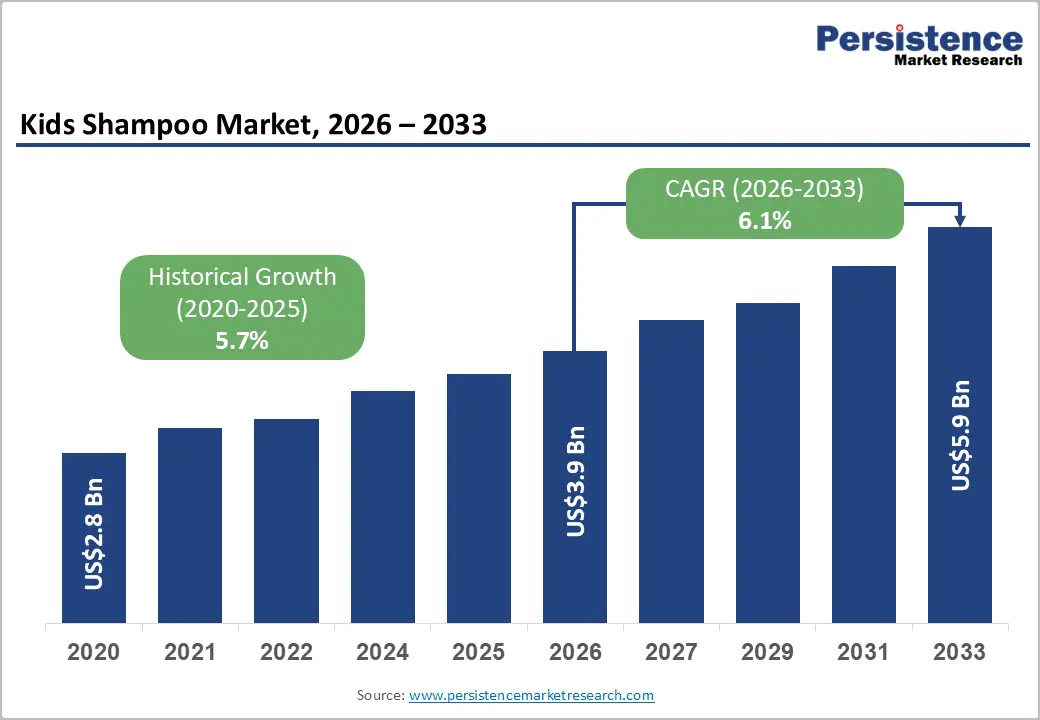
The global kids shampoo market size is likely to be valued at US$3.9 billion in 2026 and is expected to reach US$5.9 billion by 2033, growing at a CAGR of 6.1% during the forecast period from 2026 to 2033, driven by increasing parental focus on child-specific hygiene and grooming products. Rising awareness regarding scalp sensitivity and the need for tear-free, dermatologically tested, and hypoallergenic formulations has significantly influenced purchasing decisions. Parents are increasingly opting for products made with mild surfactants and natural ingredients, avoiding harsh chemicals such as sulfates, parabens, and synthetic fragrances. The market is supported by improving living standards, growing urbanization, and higher spending capacity in emerging economies, where child-focused personal care products are gaining rapid acceptance. Product innovation in the form of organic variants, medicated solutions for scalp conditions, and multi-functional formulations is enhancing brand differentiation.
Key Industry Highlights:
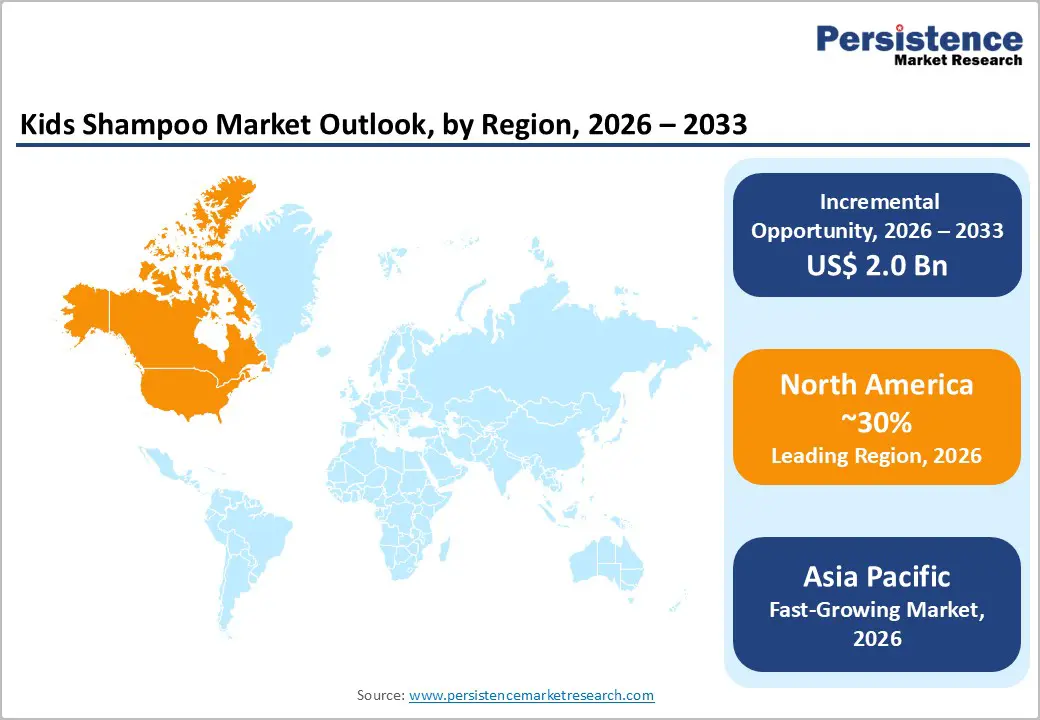
- Leading Region: North America, accounting for a market share of 30% in 2026, driven by strong consumer spending, high safety standards, and growing demand for premium and organic formulations.
- Fastest-growing Region: Asia Pacific, supported by large child populations, rising disposable incomes, and strong demand for safe and herbal-based formulations.
- Leading Product Type: Non-medicated shampoo, accounting for 64% of the revenue share, driven by strong parental preference for mild, tear-free formulations suitable for daily use and broad availability across retail channels.
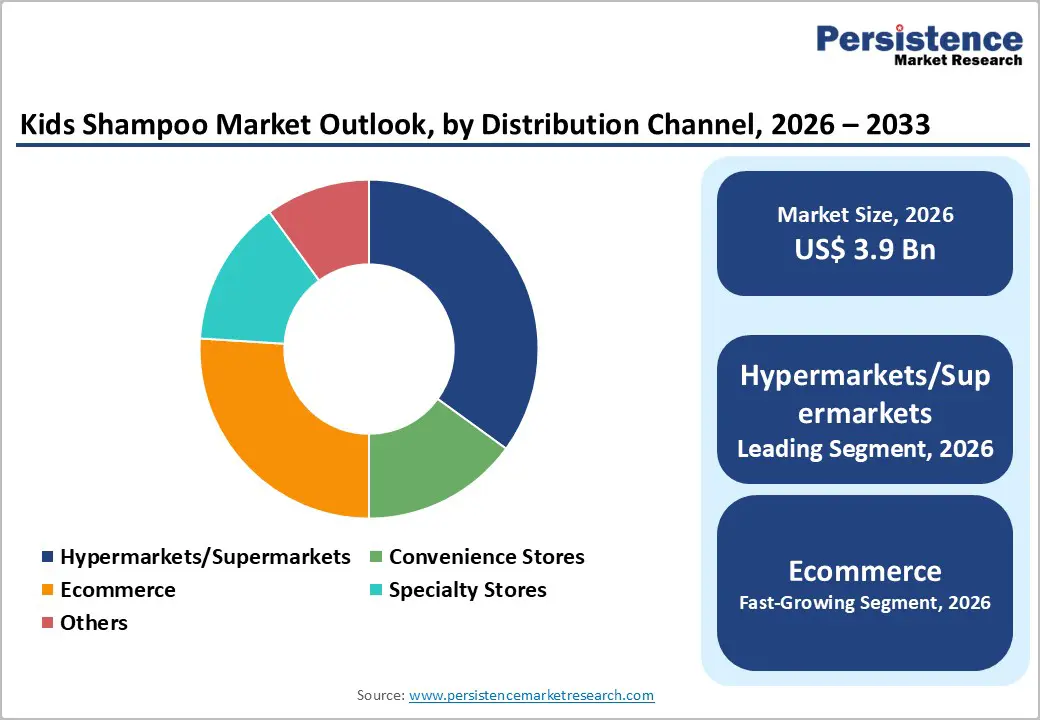
- Leading Distribution Channel: Hypermarkets/Supermarkets, accounting for over 41% of the revenue share in 2026, supported by strong consumer trust and high product visibility.
|
Kids Shampoo Market Size (2026E) |
US$3.9 Bn |
|
Market Value Forecast (2033F) |
US$5.9 Bn |
|
Projected Growth (CAGR 2026 to 2033) |
6.1% |
|
Historical Market Growth (CAGR 2020 to 2025) |
5.7% |
Market Factors – Growth, Barriers, and Opportunity Analysis
Growth Analysis- Rising Parental Awareness of Child Health and Safety
Parents today are increasingly conscious about the ingredients used in children’s personal care products, particularly shampoos that come in direct contact with the sensitive scalp and eyes. Growing awareness regarding allergies, skin sensitivities, and long-term health effects of harsh chemicals has shifted demand toward mild, tear-free, dermatologically tested formulations. Educational campaigns, pediatric recommendations, and social media discussions have strengthened informed purchasing behavior. Brands emphasizing transparency, safety certifications, and hypoallergenic claims are gaining trust. This awareness trend is especially strong among urban households, where access to product information and standards has significantly influenced buying decisions.
Heightened concern about synthetic additives such as sulfates, parabens, artificial fragrances, and dyes is encouraging parents to scrutinize product labels more carefully. Clean-label positioning and clinically validated claims are becoming decisive purchase factors. Companies are responding by reformulating products with plant-based ingredients and conducting safety testing to reinforce credibility. Word-of-mouth marketing and online parenting communities also amplify awareness, accelerating product shifts toward safer alternatives.
Expansion of E-commerce and Modern Retail Channels
Online marketplaces enable parents to compare ingredients, read reviews, and evaluate safety certifications before making purchases. Subscription models and doorstep delivery enhance convenience, particularly for repeat purchases. Digital advertising and influencer marketing targeting young parents have strengthened brand visibility and engagement. Modern retail formats such as supermarkets and hypermarkets also contribute by offering organized displays and diverse product choices, making it easier for consumers to explore specialized children’s haircare solutions.
The integration of digital payment systems and improved logistics networks has increased market penetration in emerging economies. Brands benefit from data analytics provided by online platforms, allowing personalized marketing strategies and targeted promotions. E-commerce reduces entry barriers for niche organic and pediatric-focused brands, intensifying competition and product diversity. Modern retail stores complement this growth by providing physical assurance of packaging quality and authenticity.
Barrier Analysis - Stringent Regulatory and Safety Compliance Requirements
Authorities impose rigorous standards related to ingredient approval, labeling transparency, and product testing, which manufacturers must strictly follow. Compliance often requires extensive dermatological testing, safety assessments, and documentation processes. While these regulations enhance consumer trust, they also increase product development timelines and operational complexity. Smaller manufacturers may face challenges in meeting evolving standards, particularly when entering new geographic markets with different regulatory frameworks, thereby limiting rapid expansion and innovation flexibility.
Frequent updates in cosmetic regulations require continuous reformulation and re-certification of products, increasing overall production costs. Companies must invest significantly in research, quality control, and legal compliance to maintain market presence. Non-compliance risks product recalls, reputational damage, and financial penalties. For international brands, navigating multiple regulatory systems across regions adds complexity. Although these regulations ultimately strengthen market credibility, they act as a restraint by raising barriers to entry and increasing operational burdens, particularly for emerging or smaller players in the competitive kids' shampoo landscape.
Supply Chain Vulnerabilities for Natural Ingredients
The growing demand for organic and plant-based kid’s shampoos has increased reliance on natural ingredients such as aloe vera, chamomile, coconut oil, and herbal extracts. Sourcing these materials consistently can be challenging due to seasonal variations, climate impacts, and agricultural uncertainties. Fluctuations in raw material availability lead to price volatility and production delays. As consumer demand for clean-label products rises, supply chain disruptions can significantly affect inventory planning and profitability for manufacturers heavily dependent on botanical components.
Ensuring the authenticity and quality of natural ingredients requires stringent supplier verification and quality assurance processes. Geographic concentration of certain raw materials increases exposure to regional risks, including transportation disruptions or trade restrictions. Sustainable sourcing commitments add to procurement complexities and costs. These vulnerabilities may limit scalability for smaller brands and create pricing pressures in competitive markets. While natural formulations offer strong consumer appeal, supply chain instability remains a key operational challenge within the kids' shampoo industry.
Opportunity Analysis - Innovation in Organic, Personalized, and Sustainable Products
Innovation in organic and personalized kids' shampoo formulations presents significant growth opportunities. Parents increasingly prefer products tailored to specific hair types, scalp conditions, and age groups, encouraging brands to diversify their offerings. Organic certifications, biodegradable ingredients, and chemical-free claims enhance market differentiation. Companies are also developing customized solutions addressing concerns such as dryness, frizz, or sensitive scalp conditions. Such targeted innovation allows brands to command premium positioning while meeting evolving consumer preferences centered on safety and effectiveness.
Sustainability initiatives strengthen growth potential within this segment. Eco-friendly packaging, refill systems, and reduced plastic usage resonate strongly with environmentally conscious parents. Brands integrating recyclable materials and carbon-conscious production processes gain a competitive advantage. Technological advancements in formulation science enable the development of high-performance plant-based shampoos without compromising safety standards. Personalized digital recommendations and subscription-based delivery models enhance customer loyalty.
Policy Support for Child Wellness and Digital Engagement
Public campaigns emphasizing personal hygiene and wellness indirectly support demand for child-specific grooming products. Educational institutions and healthcare providers increasingly advocate safe hygiene practices, reinforcing product adoption among parents. Supportive policies encouraging domestic manufacturing and digital infrastructure development also enhance market accessibility. Such initiatives help improve consumer confidence and broaden product reach, particularly in developing economies.
Digital engagement strategies offer additional growth potential. Brands leveraging social media, parenting forums, and educational content can build strong community relationships. Interactive marketing campaigns and influencer partnerships enable deeper consumer connection and brand loyalty. Data-driven insights from online platforms allow companies to refine product offerings and communication strategies. Integration of augmented reality packaging or digital storytelling enhances brand experience for children and parents alike. These evolving engagement channels create sustained opportunities for differentiation and expansion in the competitive kids shampoo market.
Category-wise Analysis
Product Type Insights
Non-medicated shampoos are projected to dominate the kids shampoo market, accounting for approximately 64% of revenue in 2026. Their popularity is driven by widespread parental preference for gentle, everyday haircare solutions. Designed to be mild, tear-free, and suitable for daily use, these shampoos are highly trusted by caregivers. Broad availability across supermarkets, pharmacies, and online platforms further reinforces their market leadership. For instance, Johnson & Johnson’s No More Tears baby shampoo is well-regarded for its gentle cleansing and safety, contributing to strong market penetration. Parents favor non-medicated options for routine use, viewing them as safe and versatile for various hair types, including fine or sensitive hair.
Medicated shampoos are expected to be the fastest-growing segment in 2026, fueled by rising awareness among parents of pediatric scalp concerns such as cradle cap, mild dandruff, and sensitive scalp conditions. These products contain active ingredients specifically targeting dermatological needs, allowing brands to emphasize clinical benefits. For example, Dr. Eddie's Happy Cappy Medicated Shampoo, featuring the FDA-approved active ingredient pyrithione zinc, provides relief for cradle cap (seborrheic dermatitis). Increasing recommendations from dermatologists and pediatricians support adoption, while marketing campaigns highlighting clinical efficacy and distribution through specialty stores and e-commerce platforms further boost visibility.
Distribution Channel Insights
Hypermarkets and supermarkets are expected to dominate the market in 2026, accounting for approximately 41% of revenue. Their extensive product assortments, along with the opportunity for parents to physically examine packaging, labels, and claims before purchase, drive this growth. The convenience of fulfilling multiple shopping needs in a single trip encourages consumers to stick with trusted brands, supporting steady sales expansion. For instance, Walmart in the U.S. offers a wide variety of local kids’ shampoo brands, including non-medicated and premium options. Organized shelving, promotional displays, and competitive pricing further enhance product visibility and encourage repeat purchases.
E-commerce is projected to be the fastest-growing channel, fueled by convenience, personalized marketing, and higher consumer engagement. Parents can easily compare products, read reviews, and benefit from recommendations from other caregivers, enabling informed purchasing decisions. Subscription services and doorstep delivery also promote repeat buying. For example, Amazon’s online platform provides an extensive selection of kids’ shampoos, from organic and medicated to premium options, giving parents access to niche products that may not be available locally. The post-pandemic surge in digital adoption, coupled with improved logistics and payment systems, has significantly broadened reach in urban and semi-urban markets.
Regional Insights
North America Kids Shampoo Market Trends
North America is anticipated to be the leading region, accounting for a market share of 30% in 2026, driven by high consumer awareness, strong purchasing power, and an emphasis on product safety and quality. Parents in the region prioritize mild, tear-free formulations that are dermatologically tested and free from harsh chemicals such as sulfates and parabens. The market is characterized by a growing demand for organic and natural products, reflecting the increasing focus on child wellness and environmentally friendly formulations. Canada also shows steady growth, supported by strong regulatory alignment and public awareness campaigns on child health.
Key players invest in R&D and product innovation to cater to evolving parental preferences, including age-specific, medicated, and multifunctional shampoos. For example, California Baby is a U.S.-based brand specializing in organic and plant-based kids' shampoos. Their products are formulated without harsh chemicals, synthetic fragrances, or common allergens, catering to health-conscious parents. California Baby has successfully leveraged e-commerce and specialty retail channels to reach urban and suburban families, emphasizing sustainability, safety, and gentle care.
Europe Kids Shampoo Market Trends
Europe is likely to be a significant market, due to high parental awareness, strong purchasing power, and increasing preference for safe and natural formulations. Consumers in countries such as Germany, France, and the U.K. prioritize products that are free from harsh chemicals such as sulfates, parabens, and artificial fragrances, reflecting a focus on child health and dermatological safety. Organic and plant-based formulations are particularly popular, with parents seeking mild, tear-free shampoos suitable for daily use. The market is supported by well-established regulatory frameworks, including the European Cosmetics Regulation, which ensures stringent safety and labeling standards.
European parents are increasingly drawn to multifunctional products that combine cleansing with conditioning or scalp care, providing brands with opportunities to stand out through specialized formulations and child-friendly packaging. A notable example is Weleda, a European brand known for its natural and organic children’s shampoos. Weleda highlights plant-based ingredients and environmentally sustainable production methods, appealing to health-conscious parents. Its gentle, tear-free products, such as the Calendula Baby Shampoo & Body Wash, are designed for infants and young children with sensitive skin, while fully complying with European safety standards.
Asia Pacific Kids Shampoo Market Trends
The Asia Pacific region is likely to be the fastest-growing region in the kids shampoo market in 2026, driven by rising disposable incomes, increasing urbanization, and a growing middle-class population. Parents in the region increasingly prefer mild, tear-free, and safe formulations, along with organic and herbal ingredients, reflecting heightened awareness of child health and safety. Cultural emphasis on grooming and wellness, combined with rising awareness of pediatric dermatological needs, encourages the adoption of premium and specialized shampoos.
Regulatory standards are evolving to ensure safety, while governments are promoting child hygiene awareness, indirectly supporting market growth. For example, the Himalaya Drug Company, an Indian brand widely recognized for its herbal and natural kids shampoos. Himalaya leverages botanical ingredients such as chickpea and hibiscus in gentle, tear-free formulations, targeting infants and young children with sensitive scalps. The company’s presence across both e-commerce platforms and traditional retail channels enables wide distribution, while its focus on safety, herbal efficacy, and affordability resonates with parents seeking trustworthy and natural options.
Competitive Landscape
The global kids shampoo market exhibits a moderately fragmented structure, driven by competition between long?established multinational corporations and a growing number of niche and regional brands offering specialized, organic, and natural formulations. Leading players leverage their extensive research and development capabilities, wide distribution networks, and strong brand recognition to maintain market share, while smaller brands focus on innovation and differentiation to capture niche segments.
With key leaders including Procter & Gamble, known for its diverse children’s hair care portfolio and wide reach, and Mustela, a French premium brand emphasizing dermatologist?tested, sensitive?skin formulations, competition spans from mass?market volume plays to high?end, specialty segments catering to health?conscious parents. These players compete through continuous product innovation, strategic pricing, expansive retail and e?commerce presence, sustainability initiatives, and targeted advertising to build brand loyalty and expand consumer bases across regions.
Key Industry Developments:
- In February 2026, Splash launched its new “big kid” bath care range, targeting children aged four to ten who have outgrown baby products but are not yet ready for adult body care. Developed by the makers of Tree Hut and Baby Magic, the collection includes a two-in-one Shampoo + Body Wash, Bubble Bath, and Body Lotion. All products are dermatologist- and pediatrician-tested, hypoallergenic, vegan, and free from sulfates, parabens, phthalates, gluten, and endocrine disruptors. With colorful packaging and engaging scents, Splash aims to make bath time fun while providing skin-safe, age-appropriate solutions for children, bridging the gap between baby and adult personal care products.
- In May 2025, SEEN expanded its pediatric product line with the launch of SEEN Baby 2-in-1 Fragrance-Free Shampoo and Body Wash. The ultra-gentle formula, designed for infants and young children with sensitive or eczema-prone skin, is free from sulfates, fragrances, dyes, parabens, phthalates, silicones, formaldehyde-releasing preservatives, gluten, and cocamidopropyl betaine. Clinically tested as tear-free and non-irritating, the product has received the National Eczema Association (NEA) Seal of Acceptance and the SkinSAFE Trusted Choice designation. This launch strengthens SEEN’s focus on safe, allergen-free solutions for delicate skin and hair, making it suitable for daily use.
Companies Covered in Kids Shampoo Market
- Unilever
- Johnson & Johnson
- L’Oreal
- Beiersdorf
- California Baby
- Earth Mama Angel Baby
- The Himalaya Drug Company
- Mothercare
- MONAT GLOBAL CORP
- Weleda
Frequently Asked Questions
The global kids shampoo market is projected to reach US$3.9 billion in 2026.
The kids shampoo market is driven by rising parental awareness of child health and safety, along with growing demand for mild, tear-free, and natural formulations.
The kids shampoo market is expected to grow at a CAGR of 6.1% from 2026 to 2033.
Key market opportunities lie in innovation in organic, personalized, and sustainable kids shampoo products, along with expanding e-commerce and digital engagement channels.
Unilever, Johnson & Johnson, L’Oréal, Beiersdorf, California Baby, and Earth Mama Angel Baby are the leading players.


