




- Specialty & Fine Chemicals
- Jesmonite Market
Jesmonite Market Size, Share, and Growth Forecast, 2026 - 2033
Jesmonite Market by Product Type (AC100, AC200, AC300, AC630, AC730, AC830, AC930, Others), Application (Construction, Arts and Crafts, Furniture, Interior Design, Restoration), and Regional Analysis for 2026 - 2033

Jesmonite Market Size and Trends Analysis
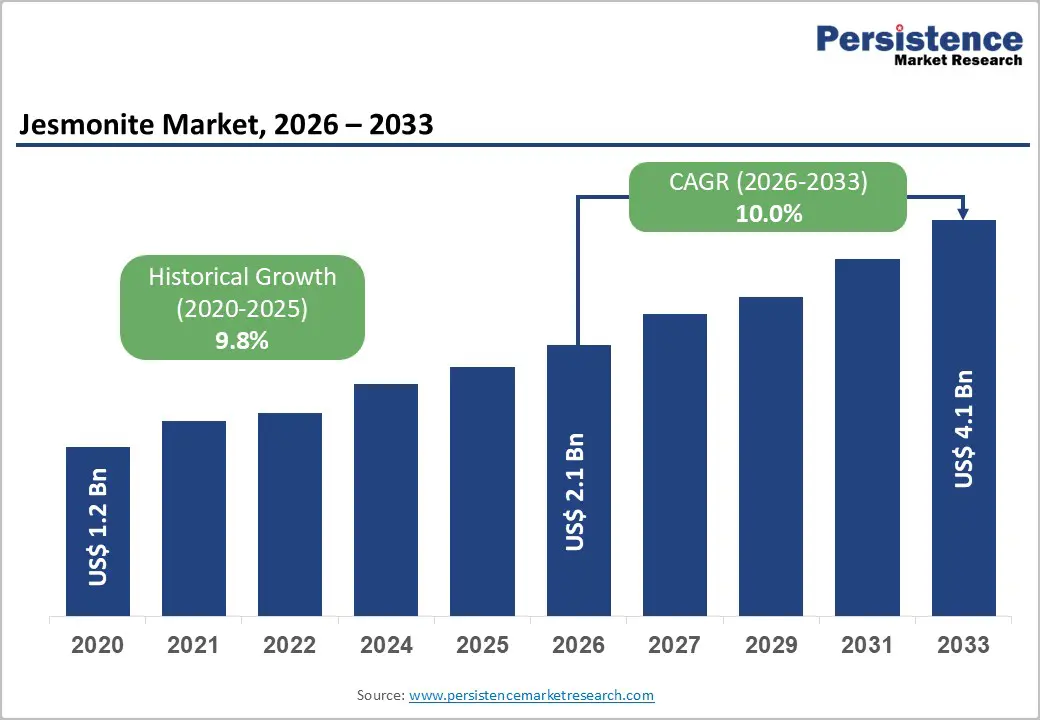
The global jesmonite market size is likely to be valued at US$2.1 billion in 2026, and is expected to reach US$4.1 billion by 2033, growing at a CAGR of 10.0% during the forecast period from 2026 to 2033, driven by the increasing prevalence of eco-friendly composite materials in construction, rising demand for versatile jesmonite in arts and crafts, and advancements in water-based acrylic-modified gypsum formulations.
Growing demand for durable, lightweight jesmonite, especially AC730 and AC830 variants, is accelerating adoption across applications. Advances in weather-resistant and fire-retardant jesmonite are further boosting uptake by offering sustainable, high-performance options. Increasing recognition of jesmonite as critical for custom molding and restoration in emerging design markets remains a major driver of market growth.
Key Industry Highlights:
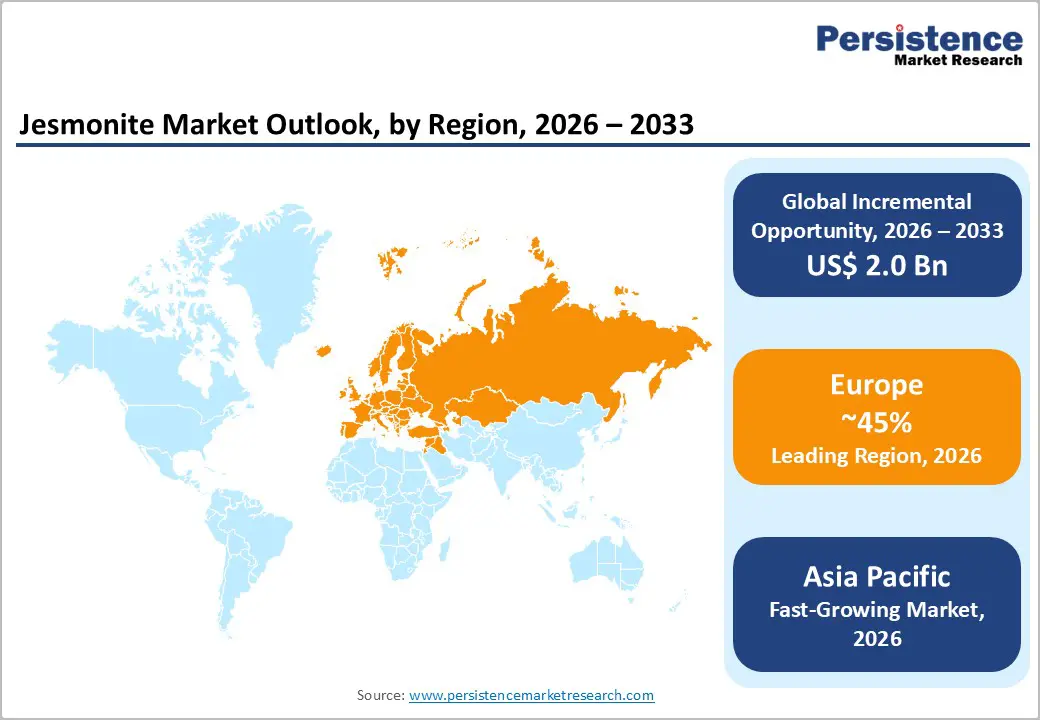
- Leading Region: Europe, anticipated to account for a 45% market share in 2026, driven by strong architectural heritage, high demand for restoration materials, and eco-friendly building regulations in the U.K. and Germany.
- Fastest-growing Region: Asia Pacific, fueled by rapid urbanization, expanding interior design sector, and growing investments in sustainable composites in China and India.
- Dominant Product Type: AC730, to hold approximately 35% of the market share, as it provides superior strength for construction and furniture applications.
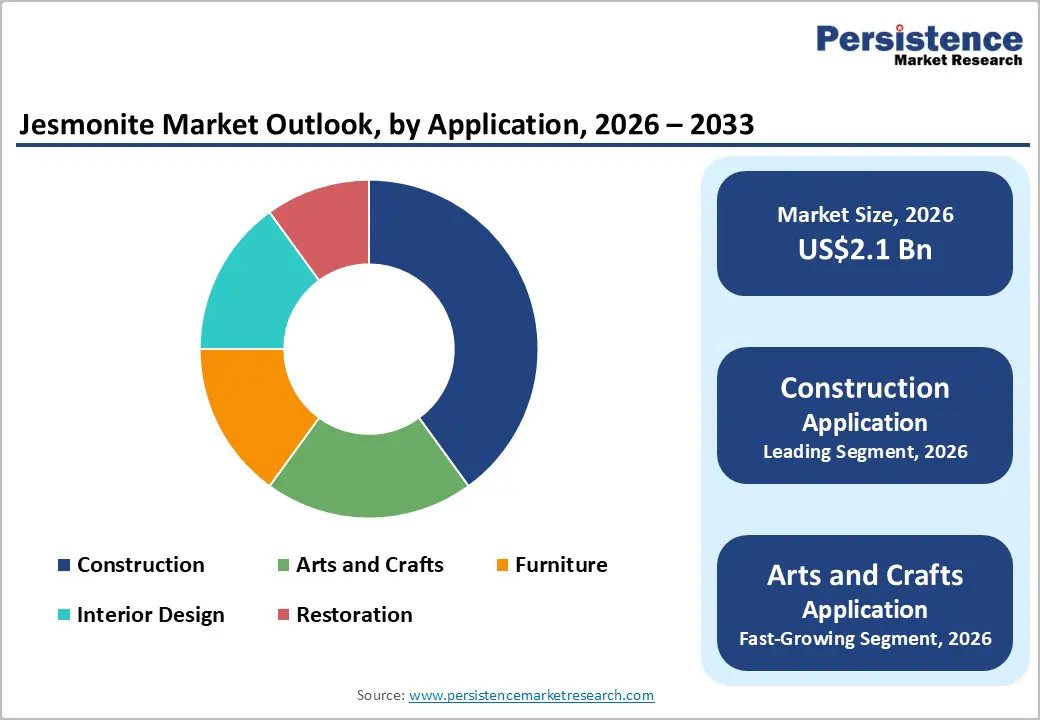
- Leading Application: The construction segment is anticipated to account for over 40% of the market revenue, due to jesmonite's use in cladding and decorative panels.
| Key Insights | Details |
|---|---|
| Jesmonite Market Size (2026E) | US$2.1 Bn |
| Market Value Forecast (2033F) | US$4.1 Bn |
| Projected Growth (CAGR 2026 to 2033) | 10.0% |
| Historical Market Growth (CAGR 2020 to 2025) | 9.8% |
Market Factors - Growth, Barriers, and Opportunity Analysis
Increasing Demand for Eco-Friendly Composite Materials and Versatile Jesmonite
The growing focus on sustainability across construction, design, and manufacturing is driving strong demand for eco-friendly composite materials. Industries are actively shifting away from traditional resin-based composites that rely heavily on petrochemicals, due to rising environmental regulations and increased consumer awareness around carbon footprints. Eco-friendly composites, which often incorporate water-based binders, mineral fillers, or recycled content, offer reduced VOC emissions, lower energy consumption during production, and safer handling for workers. These materials align well with green building certifications and circular economy goals, making them increasingly attractive for architects, designers, and manufacturers seeking responsible material solutions.
Jesmonite has emerged as a prominent example of this transition due to its versatile and environmentally considerate composition. As a water-based composite material, Jesmonite delivers high strength, durability, and excellent surface finish without the use of solvents. Its adaptability allows it to be molded, cast, laminated, or sprayed into complex forms, enabling use across interior décor, architectural elements, art installations, and furniture. Jesmonite readily integrates with natural fibers, recycled aggregates, and pigments, supporting both aesthetic flexibility and sustainability objectives.
Higher Initial Costs Compared to Traditional Materials
Higher initial costs when compared with conventional materials such as cement, plaster, or standard resin-based composites. Jesmonite is a proprietary composite system that combines a water-based acrylic resin with mineral fillers, and its specialized formulation contributes to elevated raw material and production expenses. Unlike widely available traditional materials that benefit from mass-scale manufacturing and localized sourcing, Jesmonite often relies on controlled supply chains and branded systems, which increases procurement costs for manufacturers and end users.
For small workshops, artists, or cost-sensitive construction projects, this higher upfront investment can limit adoption, even when long-term benefits such as durability, lower VOC emissions, and design flexibility are recognized. The cost of training labor to handle mixing ratios, curing processes, and finishing techniques further adds to initial expenses. In large-scale applications, where material volumes are high and margins are tightly managed, decision-makers may prioritize lower-cost alternatives despite Jesmonite’s sustainability and performance advantages.
Innovations in Fire-Retardant and Lightweight Delivery Platforms
Innovations in fire-retardant and lightweight jesmonite delivery platforms are transforming the global composite landscape by addressing two major challenges, safety barriers and weight concerns. Fire-retardant platforms are engineered to achieve Class 0 ratings, reducing reliance on additives and enabling safer use in interiors. Innovations, such as halogen-free modifiers, intumescent coatings, mineral fillers, and hybrid resins, significantly improve compliance and reduce smoke, lowering regulatory costs for construction and furniture campaigns.
Progress in lightweight platforms, including foam-core AC200, aerated AC100, thin-shell molding, and carbon-fiber reinforcement, supports more efficient designs by minimizing density, the material’s first line of defense against transport limits. These formats eliminate heavy casts, enhance strength-to-weight, and allow versatile use without structural overdesign, making them highly suitable for mass restoration programs. New technologies such as bio-adhesive resins, VLP-based curing, and 3D-printed molds further enhance versatility and response.
Category-wise Analysis
Product Type Insights
The segment AC730 is anticipated to dominate the market, accounting for approximately 35% of the market share in 2026. Its dominance is driven by superior strength, weather resistance, and versatility, making it preferred for construction. AC730 provides durable molding, ensures longevity, and contributes to performance, making it suitable for large-scale building campaigns. The Project Light development at Canada Water in London, Jesmonite AC730, was chosen for approximately 9,000 m² of external cladding panels on retail and commercial buildings as it offers lightweight, weather-durable performance while still achieving high-quality finishes similar to those of heavy concrete systems.
AC930 is likely to be the fastest-growing segment, due to its fire-retardant properties and expanding use in interiors. Its safety profile makes it ideal for targeted compliance, reducing fire risks. Continuous innovations in formulation are further strengthening its appeal, driving rapid adoption across Europe and North America, where demand for regulated materials is accelerating. Design & Visual Concepts Ltd, a specialist architectural materials manufacturer in the U.K., regularly uses Jesmonite composites, including fire-rated formulations, for interior architectural features such as ceiling moldings, cornices, column cladding, feature walls, and decorative panels. While AC730 is frequently cited in their work, the same fire-resistance performance that AC930 delivers (meeting EN-13501-1 standards) underpins why these materials are chosen over traditional plaster or resin options in interior spaces where safety compliance is critical.
Application Insights
The construction segment is expected to lead the market, holding approximately 40% of the share in 2026, driven by cladding needs, large building programs, and strong global demand for sustainable materials. Their dominance continues as infrastructure expands. Rising adoption of arts and crafts and expanded furniture campaigns highlight the growing focus on creative benefits. Design & Visual Concepts Ltd highlights Jesmonite AC730’s use in GRC stone cladding panels for architectural façades, such as at 200 Hammersmith Road in the U.K. The company manufactured bespoke Jesmonite wall panels that mimic stone texture and finish, demonstrating the material’s flexibility in meeting both structural and design requirements for commercial building exteriors.
The arts and crafts segment is the fastest-growing segment, due to strong momentum in DIY molding and expanding inclusion in creative projects. The growing shift toward hobby platforms, along with better ease, accelerates the adoption. Advancements in color blending and continued progress of moldable entering consumer trials drive market growth. Jesmonite Ltd has actively expanded into the creative and hobby market with starter kits and community engagement, helping fuel Jesmonite’s adoption among crafters and independent makers worldwide. The company introduced Jesmonite® starter kits tailored for hobbyists and creatives and has since cultivated a thriving “Jesmonite Creates” community where makers exchange ideas, techniques, and completed works.
Regional Insights
North America Jesmonite Market Trends
North America is driven by the region’s advanced design infrastructure, strong research and development capabilities, and high public awareness of sustainable benefits. Processing systems in the U.S. and Canada provide extensive support for molding programs, ensuring wide accessibility of jesmonite across construction, arts and crafts, and furniture populations. Increasing demand for lightweight, convenient, and easy-to-use forms is further accelerating adoption, as these formats improve efficiency and reduce barriers associated with traditional materials.
Advances in Jesmonite technology, such as stable fire-retardant formulations, enhanced lightweight systems, and targeted restoration improvements, are drawing substantial public and private investment. Government programs and green-building initiatives continue to encourage adoption to address environmental concerns, durability challenges, and evolving design requirements, supporting steady market demand. At the same time, increased emphasis on AC930 grades and specialized applications, especially for interior and niche uses, is broadening the range of Jesmonite applications.
Europe Jesmonite Market Trends
Europe is expected to lead with a market share of 45% in 2026, driven by increasing awareness of eco benefits, strong architectural systems, and government-led green programs. Countries such as Germany, France, and the U.K. have well-established design frameworks that support routine molding and encourage the adoption of innovative jesmonite delivery methods, including jesmonite. These sustainable formulations are particularly appealing for construction populations, regulation-conscious operators, and art users, improving durability and coverage rates.
Technological advancements in jesmonite development, such as enhanced fire-retardant, application-targeted delivery, and improved lightweight grades, are further boosting market potential. European authorities are increasingly supporting research and trials for jesmonite against both routine and specialized needs, strengthening market confidence. The growing emphasis on convenient, eco-friendly options is aligned with the region’s focus on preventive sustainability and reducing waste. Public awareness campaigns and promotion drives are expanding reach in both urban and rural areas, while suppliers are investing in resins and novel variants to increase efficacy.
Asia Pacific Jesmonite Market Trends
Asia Pacific is likely to be the fastest-growing market for jesmonite in 2026, driven by rising design awareness, increasing government initiatives, and expanding application programs across the region. Countries such as India, China, Japan, and Southeast Asian nations are actively promoting jesmonite campaigns to address infrastructure growth and emerging art’s needs. Jesmonite is particularly attractive in these regions due to its scalable administration, ease of molding, and suitability for large-scale construction drives in both urban and rural populations.
Technological advancements are supporting the development of stable, effective, and easy-to-use jesmonite, which can withstand challenging climatic conditions and minimize waste dependence. These innovations are critical for reaching remote facilities and improving overall design coverage. Growing demand for construction, arts and crafts, and furniture applications is contributing to market expansion. Public-private partnerships, increased design expenditure, and rising investment in composite research and manufacturing capacity are further accelerating growth. The convenience of jesmonite delivery, combined with improved strength and reduced risk of cracking, positions jesmonite as a preferred choice.
Competitive Landscape
The global jesmonite market features competition between established composite leaders and emerging specialty suppliers. In North America and Europe, Bohriali and Globalchimica S.R.L. lead through strong R&D, distribution networks, and industry ties, bolstered by innovative AC730 and AC930 programs. In Asia Pacific, Lindberg & Lund AS advances with localized solutions, enhancing accessibility. Lightweight delivery boosts efficiency, cuts weight risks, and enables mass integrations across regions. Strategic partnerships, collaborations, and acquisitions merge expertise, expand portfolios, and speed commercialization. Fire-retardant formulations solve safety issues, aiding penetration in regulated areas.
Key Industry Developments
- In December 2025, Sika AG (Switzerland) announced the acquisition of a local Jesmonite manufacturer to bolster its product offerings and enhance its market share in Europe. This strategic move is likely to strengthen Sika's position in the region, allowing for greater access to innovative Jesmonite solutions and improved distribution channels. The acquisition underscores Sika's commitment to expanding its footprint in the Jesmonite sector, particularly in response to increasing demand for sustainable construction materials.
Companies Covered in Jesmonite Market
- Bohriali
- Globalchimica S.R.L.
- Coast Fiber-Tek Products Ltd
- Allscot Ltd
- Epoxy S.R.O.
- Resineco - Green Composites
- Lindberg & Lund AS
- Industrial Plasters
- Polysil Ltd.
- Mb Fibreglass Ltd.
- Kaster
Frequently Asked Questions
The global jesmonite market is projected to reach US$2.1 billion in 2026.
The rising prevalence of eco-friendly composite materials and demand for versatile jesmonite are the key drivers.
The jesmonite market is poised to witness a CAGR of 10.0% from 2026 to 2033.
Advancements in fire-retardant and lightweight delivery platforms are the key opportunities.
Bohriali, Globalchimica S.R.L., Coast Fiber-Tek Products Ltd, Allscot Ltd, and Epoxy S.R.O. are the key players.


