




- Clothing, Footwear, & Accessories
- Hosiery Market
Hosiery Market Size, Trends, Share, and Growth Forecast, 2026 – 2033
Hosiery Market by Product Type (Socks, Tights, Pantyhose, Leggings, Stockings, Knee-highs & Thigh-highs), Material (Cotton, Nylon, Wool, Polyester, Blended Fabrics), Gender (Men, Women, Children, Unisex), and Regional Analysis for 2026-2033

Hosiery Market Share and Trends Analysis
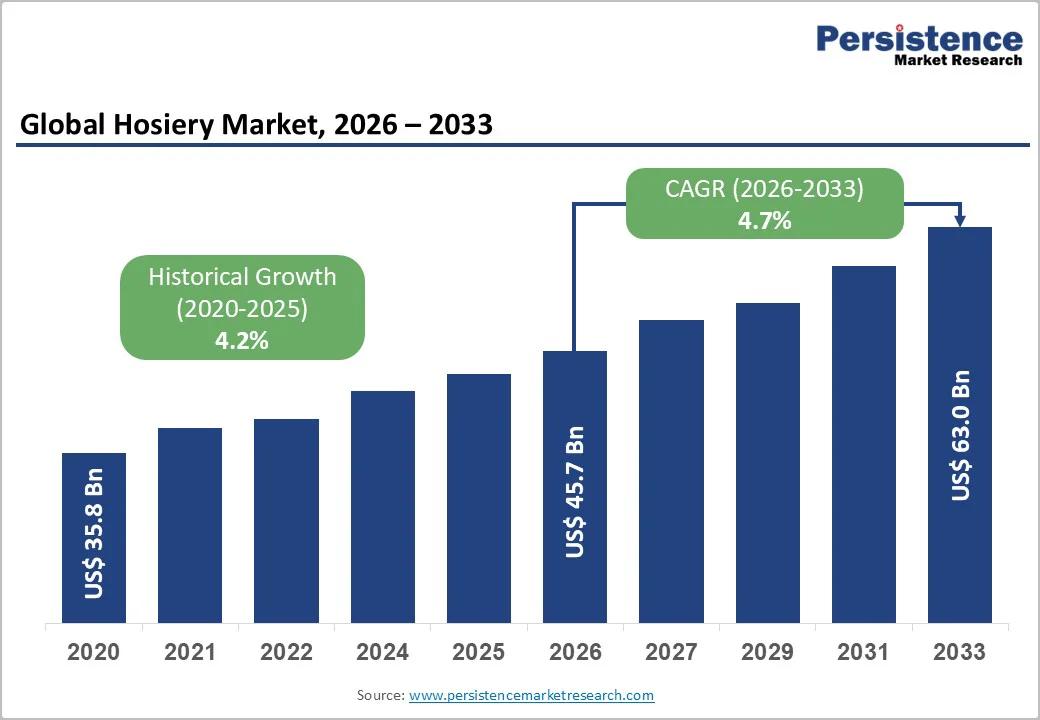
The global hosiery market size is likely to be valued at US$ 45.7 billion in 2026 and is estimated to reach US$ 63.0 billion by 2033, growing at a CAGR of 4.7% during the forecast period 2026−2033. This expansion is driven by rising consumer preference for comfort and athleisure, the accelerated shift to e-commerce, and product innovation in developing sustainable fibers, inclusive sizing, and performance hosiery. Urbanization and higher discretionary spend in Asia Pacific markets are the primary demand engines, while premiumization and fashion reinvigoration of tights and stockings sustain value growth across established Western markets.
Key Industry Highlights
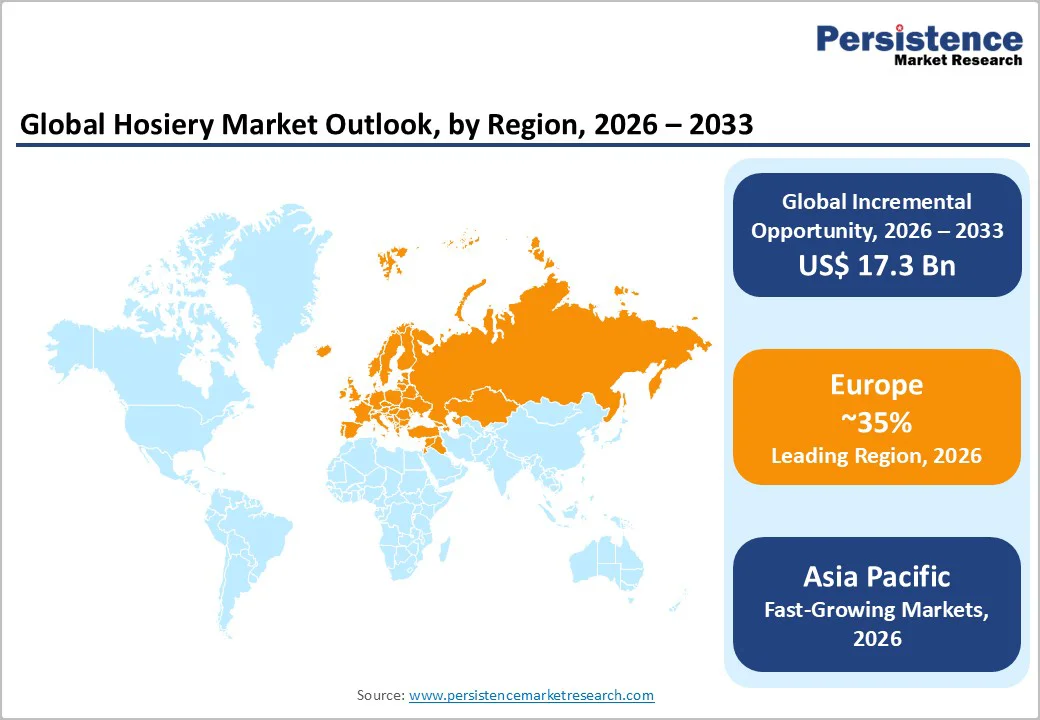
- Dominant Region: Europe is projected to hold a 35% share in 2026, led by high-income consumers, strong brands, and premium-focused retail.
- Fastest-growing Regional Market: Asia Pacific is likely to be the fastest-growing hosiery market from 2026 to 2033, driven by efficient local manufacturing and tech-enabled product customization.
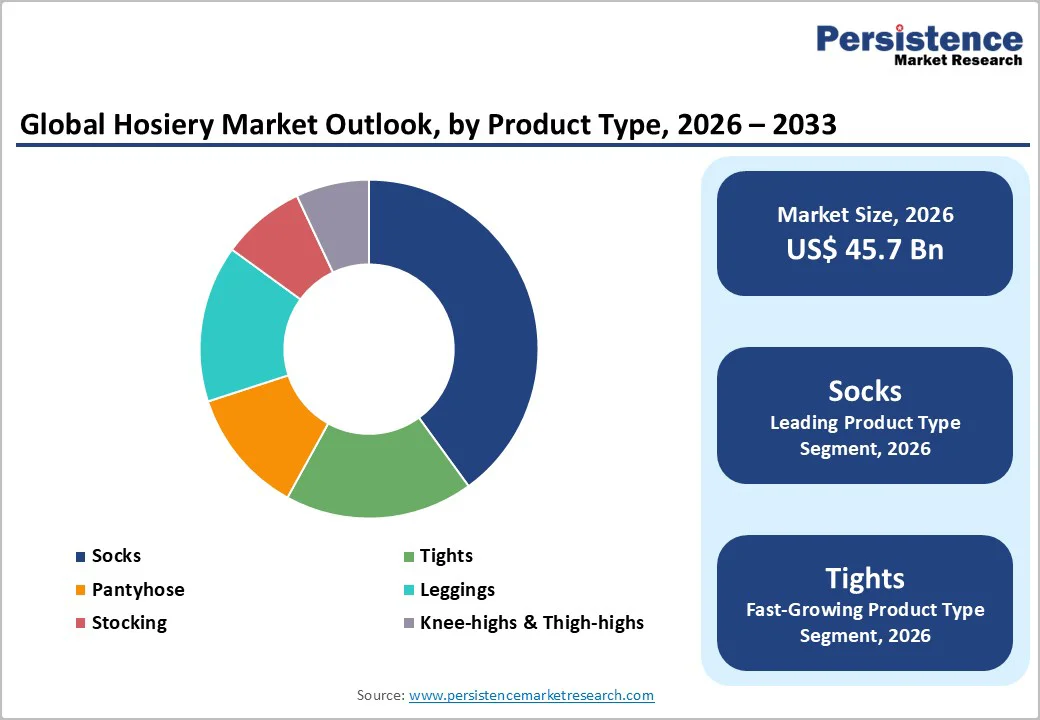
- Leading Product Type: Socks are projected to hold a 40% market share in 2026, mainly owing to their broad usage across sports, casual, and formal wear.
- Fastest-growing Product Type: Tights are set to be the fastest-growing segment through 2033, fueled by athleisure trends, fashion innovation, and a high demand for performance fabrics.
- December 2025: Oroblu, in partnership with LYCRA, unveiled a next-generation bio-derived sneaker tights line that replaces fossil-based elastomers with corn-based LYCRA EcoMade fiber.
| Key Insights | Details |
|---|---|
| Hosiery Market Size (2026E) | US$ 45.7 Bn |
| Market Value Forecast (2033F) | US$ 63.0 Bn |
| Projected Growth (CAGR 2026 to 2033) | 4.7% |
| Historical Market Growth (CAGR 2020 to 2024) | 4.2% |
Market Factors – Growth, Barriers, and Opportunity Analysis
Enhanced Fashion Consciousness and Athleisure Trends
Rising fashion consciousness strengthens demand as consumers increasingly seek versatile garments that elevate everyday dressing through intentional style choices. Hosiery items align with evolving preferences by offering seasonal color palettes, premium textures, and designs that complement both formal and casual wardrobes, creating a foundation for coordinated outfits. This enhanced focus on personal presentation encourages shoppers to prioritize products delivering refinement, comfort, and a more polished silhouette, positioning hosiery as a strategic wardrobe investment. Brands respond by developing trend-led collections, limited-edition releases, and coordinated assortments that foster consistent consumer engagement and encourage repeat purchases.
The athleisure movement further amplifies growth momentum as lifestyles increasingly emphasize wellness, movement, and hybrid work-leisure routines that blur traditional boundaries between professional and recreational settings. Hosiery products, such as performance socks, compression leggings, and advanced textile lines, now directly address consumer expectations for superior stretch, breathability, and moisture management capabilities. Contemporary consumers actively seek apparel that transitions seamlessly from professional work environments to fitness activities, driving substantial interest in multi-functional designs that eliminate the need for multiple purchases. Ongoing innovation in fabric technology, ergonomic construction, and specialized cushioning systems elevates perceived value and meaningfully expands usage occasions throughout the day.
Fluctuating Raw Material Costs
Volatile input prices disrupt cost planning and reduce margin stability for manufacturers heavily reliant on natural fibers such as cotton and wool, as well as synthetics including nylon and elastane (spandex). Seasonal variability in cotton harvests, energy-linked pricing dynamics for synthetic materials, and currency fluctuations generate unpredictable swings in procurement expenses that challenge operational forecasting. These factors complicate inventory management strategies and compel producers to modify production schedules, which undermines supply consistency and restricts commitments to stable long-term pricing agreements with distributors. From a consultative perspective, forward-looking firms can mitigate these risks through diversified sourcing networks and strategic supplier partnerships, fostering greater resilience in volatile commodity markets. This approach not only stabilizes cash flows but also enables sustained collaboration across the value chain.
Frequent raw material cost shifts pressure brands to either revise retail prices upward or absorb financial losses internally, eroding competitiveness within a high-volume, narrow-margin segment where pricing agility proves essential. Such instability discourages investment in product development initiatives, as companies prioritize immediate cost containment measures over long-term innovation efforts that could differentiate their offerings. Small and mid-sized enterprises (SMEs) face amplified challenges due to limited access to sophisticated hedging instruments, resulting in fragmented pricing structures across distribution channels and diminished consumer trust in overall price fairness.
Emergence of Sustainable and Eco-Friendly Hosiery in Developing Markets
The growing demand for sustainable and environmentally responsible hosiery in developing regions represents a significant opportunity for both established and emerging manufacturers. Consumer awareness of the ecological impact of fast fashion and the use of synthetic fibers is reshaping purchasing decisions, driving preference for products made from natural, biodegradable, or recycled materials. As sustainability becomes a key differentiator, many consumers are willing to pay premium prices for apparel that reflects their ethical and environmental values. This shift is fostering the rise of a higher-margin segment where brands can build deeper emotional connections, enhance loyalty, and reinforce their positioning through responsible sourcing and transparent business practices.
Urbanization and rising disposable incomes across developing economies are further accelerating the adoption of innovative hosiery solutions that combine comfort, durability, and sustainability. Local manufacturers and regional brands are increasingly investing in eco-friendly production approaches, such as water-efficient dyeing processes and the use of organic cotton and bamboo-based yarns. These strategies not only reduce resource consumption but also improve operational efficiency and brand perception. Companies that integrate sustainability into their core product development and supply chain strategies are well-positioned to establish early market leadership, attract environmentally conscious consumers, and scale responsibly as both awareness and purchasing power continue to expand.
Category-wise Analysis
Product Type Insights
Socks are expected to retain the largest share at approximately 40% of the hosiery market revenue share in 2026. Their widespread usage across segments such as sportswear, casual attire, and formal wear ensures stable and recurring demand. Strong adoption among men and children, combined with high replacement cycles, contributes to consistent revenue performance. The growing popularity of athletic and performance-oriented socks, featuring moisture-wicking fibers, compression support, and antimicrobial technologies, further consolidates their dominance, as both functionality and comfort continue to shape consumer purchasing behaviour globally.
Tights are poised to emerge as the fastest-growing product during 2026-2033, supported by rising athleisure trends and ongoing innovation in fabric technology. Consumers increasingly prioritize versatility, seeking products that combine comfort, elasticity, and visual appeal through layering options and bold, statement colours. This evolution is not only lifting average selling prices but also accelerating unit volumes. Greater acceptance of tights as both casual and professional attire, paired with strategic marketing campaigns and expanding retail availability, is set to fuel rapid growth through 2033.
Material Insights
Nylon is projected to remain the leading material in the global market by 2026, capturing an estimated 43% revenue share. Its unique combination of strength, elasticity, and smooth texture continues to make it a preferred choice across both everyday wear and fashion-focused applications. The material’s versatility enables large-scale production that balances performance with affordability, allowing manufacturers to meet diverse consumer preferences for comfort, durability, and consistent fit. Advances in fiber technology, including improved breathability and softness, are further reinforcing nylon’s role as a market mainstay across multiple product categories.
Blended fabrics are rapidly gaining traction as sustainability becomes a greater priority among consumers and regulators. Combinations of recycled polyester, regenerated nylon, and certified organic cotton are increasingly used to deliver both environmental and performance advantages. These blends not only reduce reliance on virgin synthetics but also enhance moisture management and wearability. As environmentally conscious consumers demonstrate a willingness to pay premiums for responsible products, brands adopting sustainable material strategies are improving brand equity, meeting emerging compliance standards, and positioning themselves for strong growth momentum through 2026.
Gender Insights
Women are projected to remain the dominant consumers in 2026, accounting for an estimated 68% of the hosiery market revenue. This leadership is supported by the wide variety of fashion-forward and functional hosiery products designed to meet women’s evolving lifestyle needs. Rising interest in athleisure wear, fashion tights, and performance-oriented hosiery continues to shape innovation pipelines for manufacturers. Brands are prioritizing design diversity across casual, professional, and specialty wear categories to capture women’s growing demand for both style and utility. As fashion cycles shorten and comfort becomes integral to wardrobe choices, women’s hosiery remains central to growth strategies focused on personalization and trend responsiveness.
Men represent the fastest-growing consumer segment for the 2026-2033 period, reflecting a notable shift in attitudes toward comfort and style. The rising popularity of performance socks, compression wear, and athleisure-inspired designs underscores men’s increasing engagement with hosiery as a lifestyle product rather than a necessity. Demand for premium materials and enhanced comfort features, such as cushioning, breathability, and odor control, is supporting higher average selling prices and brand differentiation. Male consumers are also becoming more brand-aware and opening up to apparel experimentation, paving the path of sustained growth of this segment across sports, casual, and business categories.
Regional Insights
North America Hosiery Market Trends
North America is projected to sustain its strong market position in 2026, underpinned by high consumer awareness and demand for hosiery that combines fashion, comfort, and performance attributes. Strong brand loyalty and a preference for premium, value-added products continue to drive consistent revenue growth. Retail innovation plays a crucial role, with curated in-store experiences, data-driven personalization, and integrated omnichannel strategies enhancing consumer engagement and product discovery. These developments enable brands to maintain visibility and relevance in an increasingly competitive landscape where convenience, experience, and quality are key differentiators.
The region’s competitive advantage is further strengthened by advanced research and development in textile engineering, which supports the creation of high-performance fabrics such as moisture-wicking, anti-odor, and temperature-regulating hosiery. Growing health and wellness awareness is boosting demand for compression, orthopedic, and therapeutic hosiery designed to improve circulation and comfort. Collaborations between apparel brands, lifestyle influencers, and sportswear companies are further expanding product appeal among diverse consumer groups. Sustainability has become a defining industry theme, with greater adoption of recycled and eco-certified fibers aligning with evolving environmental expectations.
Europe Hosiery Market Trends
Europe is forecasted to lead with an estimated 35% of the hosiery market share in 2026, underscoring its well-established consumer base and mature fashion ecosystem. This strong position is supported by high disposable incomes, a dense concentration of premium brands, and an advanced retail network that caters to both mainstream and luxury segments. Consumers across the region emphasize quality, innovation, and style, prompting manufacturers to consistently introduce new designs, advanced fibers, and high-performance hosiery lines. Well-developed logistics and distribution systems ensure efficient product availability across urban and semi-urban markets, enabling steady sales momentum and repeat purchases.
Europe’s leadership is also deeply rooted in its rich fashion heritage, which fosters rapid product adoption and openness to evolving hosiery trends. Continuous investment in research and development for enhanced comfort, longevity, and eco-friendly materials helps brands maintain a competitive edge. The widespread integration of e-commerce and omnichannel retail strategies further strengthens accessibility and consumer interaction. Moreover, growing regulatory emphasis on sustainable production and strong awareness of quality standards are reinforcing the preference for branded, ethically produced hosiery.
Asia Pacific Hosiery Market Trends
The Asia Pacific market is anticipated to experience rapid growth through 2033, bolstered by the emergence of key regional manufacturing hubs that lower production costs and improve supply chain efficiency. Local manufacturers are increasingly adopting advanced technologies to deliver product customization, addressing diverse consumer preferences related to size inclusivity, climate-specific performance, and regional fashion trends. Expanding retail infrastructure, including modern shopping malls, department stores, and multi-brand outlets, is enhancing product accessibility beyond metropolitan centers, allowing brands to reach wider, untapped customer bases across tier-two and tier-three cities.
Evolving consumer behavior is another major growth catalyst, as younger demographics such as millennials and Generation Z prioritize hosiery products that combine comfort, performance, and functionality. Demand is rising for features such as compression support, breathable fabrics, and temperature-adaptive designs suited to varying regional climates. Collaborations between regional designers and international fashion houses are introducing global style influences at affordable price points, driving interest among aspirational consumers. Furthermore, government-led initiatives promoting textile innovation, export competitiveness, and sustainable manufacturing are fostering a favorable ecosystem for domestic and international brands alike.
Competitive Landscape
The global hosiery market structure remains moderately fragmented, characterized by the presence of major multinational corporations alongside a wide array of regional and niche manufacturers. Leading global players such as Hanesbrands Incorporated, Gildan Activewear Incorporated, and Calzedonia S.p.A. maintain strong positions across both mainstream and value-oriented segments. These companies leverage large-scale manufacturing capabilities, robust distribution networks, and well-established brand equity to sustain consistent market visibility and sales performance. Their integrated operations enable them to offer an extensive product portfolio, ranging from everyday essentials to specialized performance wear, while remaining competitive in pricing and accessibility.
At the premium and luxury end of the market, brands such as Wolford Aktiengesellschaft and Falke dominate high-average-selling-price categories by emphasizing innovation, material excellence, and brand heritage. These players differentiate through craftsmanship, advanced fiber technologies, and distinctive design aesthetics that appeal to fashion-conscious consumers. Collectively, the top five companies account for a relatively modest market share, leaving substantial room for regional brands and private-label producers that cater to local tastes and budgets.
Key Industry Developments
- In December 2025, HARPAH unveiled a new collection combining cutting-edge fabric technology with minimalist design to offer versatile, performance-driven clothing for modern, goal-oriented consumers. The brand emphasizes durability, style, and functionality, aiming to empower individuals through clothing that supports both their active lifestyles and professional endeavors.
- In November 2025, Taiwan-based DANKEN Enterprise teamed up with Changhua manufacturers to develop low-carbon functional socks using one-piece integrated knitting, reducing production waste by 19.4%, packaging carbon footprint by 85%, and emissions by 25% per pair. The company invests in recycled yarns, green packaging, and environment, social, & governance (ESG) initiatives.
- In September 2025, Calzedonia launched the Life Re-Tights program to recycle stockings by separating nylon and elastane for reuse, aiming to eliminate hosiery waste within three years. The initiative includes consumer collection points and benefits from European Union (EU) funding, with recycled nylon reintegrated into production at the company's vertically integrated factories.
Companies Covered in Hosiery Market
- Hanesbrands Inc.
- Gildan Activewear
- Calzedonia Group
- Golden Lady Company S.p.A.
- Wolford AG
- Falke KGaA
- Spanx, Inc.
- Jockey International
- GUNZE Ltd.
- Renfro Brands
- Bombas
- Heist Studios
- SKIMS
- Lindex
Frequently Asked Questions
The global hosiery market is projected to reach US$ 45.7 billion in 2026.
Increasing consumer preference for comfort, fashion, performance fabrics, and higher disposable incomes are driving the market.
The market is poised to witness a CAGR of 4.7% from 2026 to 2033.
Rising demand for sustainable materials, athleisure trends, e-commerce growth, and performance-focused innovations present key growth opportunities.
Some of the key market players include Hanesbrands Inc., Gildan Activewear, Calzedonia Group, Golden Lady Company S.p.A., and Wolford AG.


