




- Nutraceuticals & Functional Foods
- Helichrysum Essential Oil Market
Helichrysum Essential Oil Market Size, Share, and Growth Forecast, 2026 - 2033
Helichrysum Essential Oil Market by Product Type (Helichrysum Italicum, Helichrysum Angustifolium, Helichrysum gymnocephalum), Application (Aromatherapy, Others), Distribution Channel (Direct, Retail, Online), and Regional Analysis for 2026 - 2033

Helichrysum Essential Oil Market Size and Trends Analysis
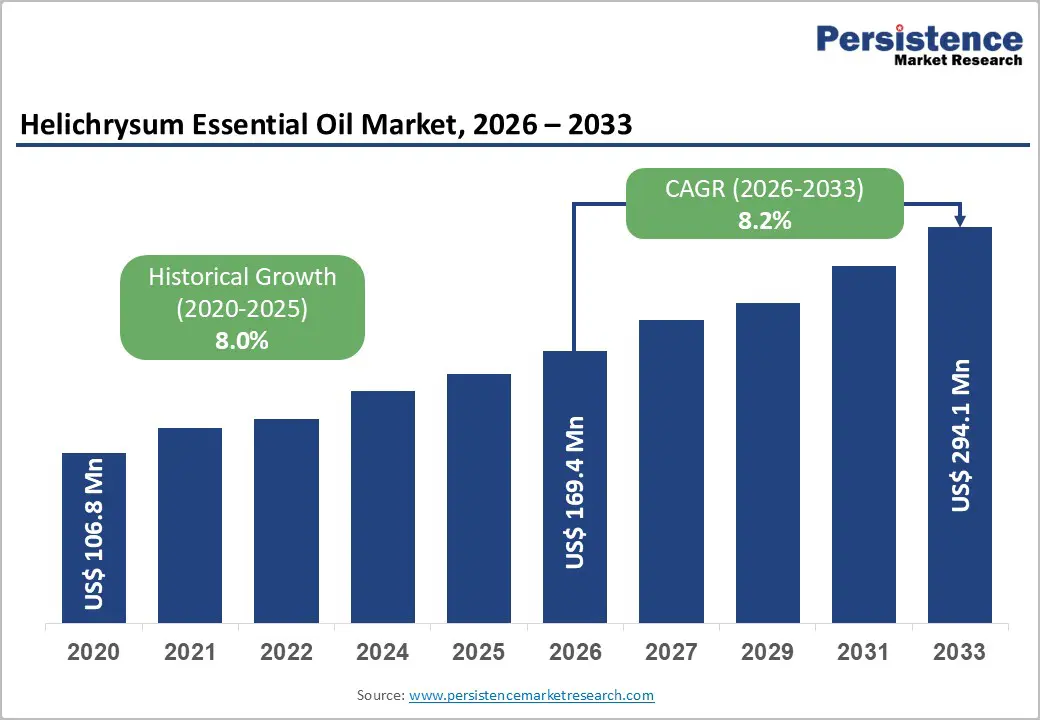
The global helichrysum essential oil market size is likely to be valued at US$169.4 million in 2026, and is expected to reach US$294.1 million by 2033, growing at a CAGR of 8.2% during the forecast period from 2026 to 2033, driven by the increasing prevalence of natural anti-inflammatory ingredients in cosmetics, rising demand for therapeutic aromatherapy, and advancements in high-purity distillation techniques.
Growing demand for premium, regenerative helichrysum essential oil, especially in cosmetics & personal care and aromatherapy, is accelerating adoption across various product applications. Advances in Helichrysum italicum and organic variants are further boosting uptake by offering more potent, skin-repairing options. Increasing recognition of helichrysum essential oil as critical for scar reduction and anti-aging in emerging beauty markets remains a major driver of market growth.
Key Industry Highlights:
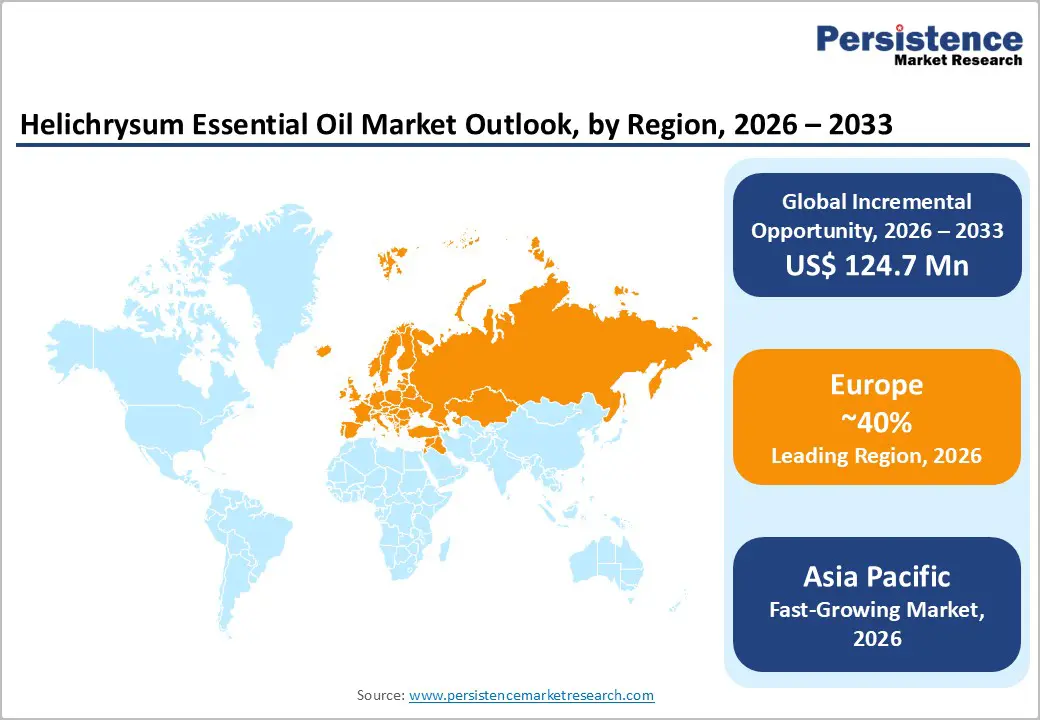
- Leading Region: Europe, anticipated to account for a 40% market share in 2026, driven by Mediterranean sourcing, strong aromatherapy demand, and premium cosmetic trends in France and Italy.
- Fastest-growing Region: Asia Pacific, fueled by rising beauty awareness, increasing government initiatives, and expanding application programs across the region.
- Dominant Product Type: Helichrysum Italicum, which holds approximately 65% of the market share, as it offers the highest neryl acetate content, providing superior therapeutic properties.
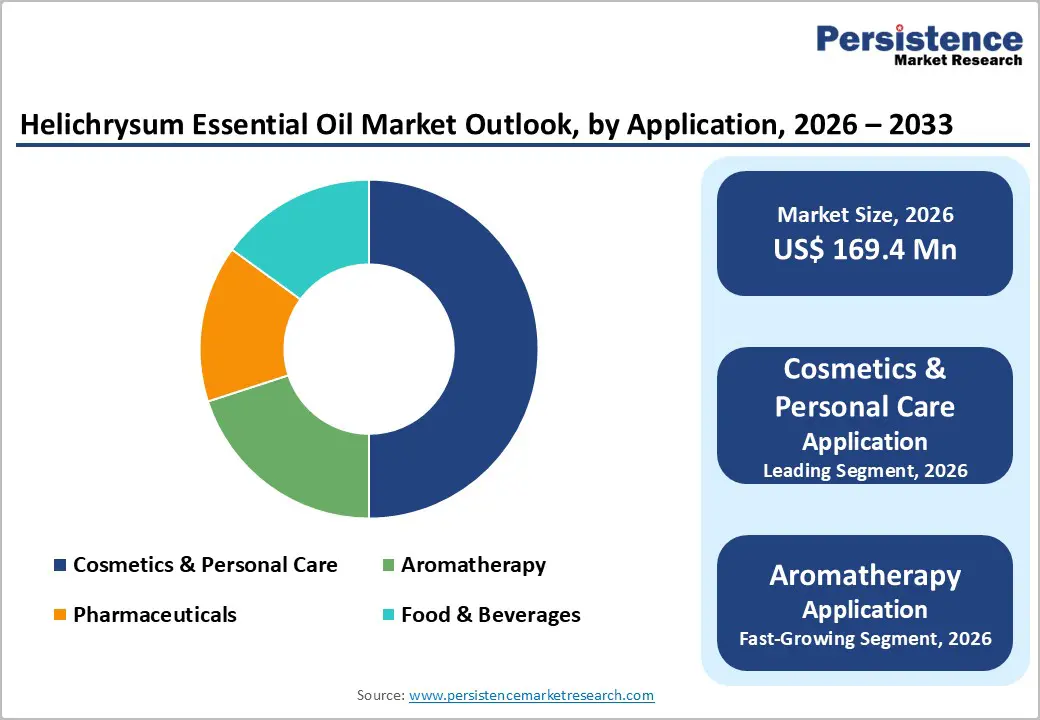
- Leading Application: Cosmetics & personal care accounts for over 50% of market revenue, driven by its proven anti-aging and skin-healing benefits.
- Leading Distribution Channel: Online, contributing nearly 40% of the market revenue, due to convenience, wide variety, and rising e-commerce penetration.
| Key Insights | Details |
|---|---|
| Helichrysum Essential Oil Market Size (2026E) | US$169.4 Mn |
| Market Value Forecast (2033F) | US$294.1 Mn |
| Projected Growth (CAGR 2026 to 2033) | 8.2% |
| Historical Market Growth (CAGR 2020 to 2025) | 8.0% |
Market Factors - Growth, Barriers, and Opportunity Analysis
Increasing demand for Natural Anti-Inflammatory Ingredients and Demand for Therapeutic Aromatherapy
The increasing demand for natural anti-inflammatory ingredients and therapeutic aromatherapy is strongly driven by shifting consumer preferences toward holistic, plant-based wellness solutions. As awareness grows around the long-term side effects of synthetic drugs and chemical-based formulations, consumers are actively seeking natural alternatives that support inflammation management and overall well-being. Botanical ingredients with proven soothing, calming, and restorative properties are gaining traction across pharmaceuticals, cosmetics, and personal care products. Their natural origin, skin compatibility, and multifunctional benefits make them especially attractive for chronic pain relief, joint care, and sensitive-skin applications.
Therapeutic aromatherapy is witnessing accelerated adoption as stress, anxiety, sleep disorders, and lifestyle-related health concerns rise globally. Aromatherapy is increasingly integrated into wellness routines, spas, clinical support therapies, and home-care environments due to its ability to promote relaxation, emotional balance, and physiological comfort. Essential oils known for their anti-inflammatory and calming properties are widely used in massage therapies, inhalation practices, and topical applications, enhancing both physical and mental recovery.
High Development and Purity Costs
High development and purity costs present a significant barrier for companies advancing next-generation helichrysum essential oil and novel extraction systems. Developing innovative grades such as ultra-pure italicum oil, high-neryl acetate variants, or standardized capsules requires extensive research, specialized steam distillation, and advanced chromatography technologies that are far more expensive than basic oils. Purity is an even greater challenge; many refined variants, terpene-enriched lots, and contaminant-free products are sensitive to oxidation, microbial growth, and light, requiring rigorous optimization to ensure they remain potent throughout storage and use. Achieving long-term stability often involves costly GC-MS trials, sophisticated stability testing, and the use of high-grade flowers, which significantly increase R&D expenditures.
Meeting stringent regulatory expectations for heavy metal limits, microbial counts, and batch consistency requires multiple validation studies under various conditions and across several harvest batches. This adds both time and financial burden to development timelines. Scaling up manufacturing requires controlled stills, specialized packaging lines, and quality-assurance systems, further driving up overall costs. For smaller distillers, these challenges can limit premium diversification or delay commercialization.
Developments in High-Purity and Regenerative Delivery Platforms
Developments in high-purity and regenerative helichrysum essential oil delivery platforms are transforming the global wellness landscape by addressing two major challenges: potency variability and application barriers. High-purity platforms are engineered to achieve 98% active retention, reducing reliance on crude oil and enabling reliable dosing in cosmetics. Innovations, such as supercritical CO2 extraction, fractional distillation, nano-emulsification, and liposomal encapsulation, significantly improve bioavailability and reduce degradation, lowering formulation costs for brands and consumer campaigns.
Progress in regenerative platforms, including anti-aging creams, wound-healing gels, aromatherapy blends, and supplement capsules, supports more targeted skin repair by stimulating collagen synthesis, the oil’s first line of defense against aging and scarring. These formats eliminate irritation, enhance absorption, and allow versatile use without carriers, making them highly suitable for mass cosmetic programs. New technologies such as phase-change emulsions, bio-adhesive gels, and VLP-based carriers further enhance efficacy and shelf response.
Category-wise Analysis
Product Type Insights
Helichrysum italicum is anticipated to dominate the market, accounting for approximately 65% of the market share in 2026. Its dominance is driven by the highest neryl acetate content, superior regenerative properties, and consumer preference for premium oil. Helichrysum italicum offers anti-inflammatory benefits, enhances efficacy, and contributes to luxury appeal, making it suitable for large-scale beauty campaigns. The doTERRA Helichrysum Essential Oil, a high-end essential oil product, uses Helichrysum italicum for its regenerative and anti-inflammatory benefits, and is marketed specifically for reducing the appearance of blemishes and promoting a glowing, youthful complexion in luxury topical applications. This positioning aligns with its reputation for superior bioactive content, particularly neryl acetate, which contributes to its anti-inflammatory and skin-soothing properties that premium formulations seek to harness.
Helichrysum gymnocephalum is expected to be the fastest-growing segment, driven by its cost-effectiveness and expanding adoption in emerging markets. Its distinctive functional profile positions it as a practical option for cost-effective formulations, helping brands reduce reliance on higher-priced premium oils. Ongoing innovations in extraction technologies are further improving quality and acceptance, supporting rapid uptake across Asia Pacific and Europe, where demand for value-oriented, regenerative essential oils is rising. For instance, Eden’s Garden Helichrysum Gymnocephalum Essential Oil is positioned at a moderate price point within the essential oil market, making it accessible to formulators targeting mid-tier wellness and aromatherapy products. It is commonly used for its respiratory-supporting, soothing, and anti-inflammatory properties, which are valued in aromatherapy, topical applications, and cost-conscious skincare or massage blends rather than ultra-premium formulations.
Application Insights
The cosmetics & personal care segment is expected to lead the market, holding approximately 50% of the market share in 2026, driven by anti-aging and scar-healing needs, large-scale skincare programs, and strong global demand for natural actives. Their dominance continues as brands expand premium lines. Rising adoption of aromatherapy blends and expanded pharmaceutical campaigns highlight the growing focus on multi-functional benefits. Juicy Chemistry Helichrysum and Rosehip Facial Oil combines Helichrysum with rosehip and other botanicals to support skin repair, reduce the appearance of scars and fine lines, and promote a youthful glow, positioning it as a natural, multifunctional beauty product in high-demand segments such as anti-aging and regenerative skincare. This kind of formulation reflects how brands are expanding premium cosmetic lines that leverage natural active ingredients to meet consumer demand for effective, plant-based personal care solutions.
Aromatherapy is likely to be the fastest-growing segment, driven by strong momentum in wellness and the expanding inclusion of diffusers and blends. The growing shift toward calming, therapeutic platforms, along with better scent retention, accelerates the adoption. Advancements in oil blends and the continued progress of therapeutic kits entering consumer trials drive market growth. Diffuser and blend kits such as the Aromafume India 7 Chakra Essential Oil Diffuser Blends Set and Aromatherapy Set of 5 Essential Oils Gift Set for Diffuser are designed for therapeutic home wellness with curated essential oils that support calming, mood enhancement, and relaxation.
Distribution Channel Insights
The online segment is expected to dominate the market, accounting for nearly 40% of revenue in 2026, as it remains the primary channel for convenience, broad product assortment, and easy comparison across diverse essential oil offerings. Strong digital visibility, customer review ecosystems, and the ability to support high-volume and bundled purchases contribute to higher sales turnover. Online platforms are also leading direct-to-consumer launches and piloting new retail concepts. As digital adoption continues to grow and brands increasingly prioritize direct-to-consumer strategies, e-commerce is projected to capture a substantial share of sales of essential oil and aromatherapy products.
The retail segment is projected to be the fastest-growing channel, supported by its strong physical presence and growing importance in premium essential oil purchases. Brick-and-mortar stores provide immediate access to products and in-person expert guidance, appealing to consumers who value tactile, sensory shopping experiences. Enhanced in-store engagement programs, experiential retail formats, and broader availability of both everyday and high-end oils are accelerating adoption across urban and semi-urban markets. For example, Saje Natural Wellness, a Canadian specialty retailer, operates 52 stores in Canada and 19 in the U.S., allowing customers to explore products in person, experience scents firsthand, and receive personalized recommendations from trained staff, an approach particularly effective for premium oils where scent quality and authenticity influence purchasing decisions.
Regional Insights
North America Helichrysum Essential Oil Market Trends
North America is driven by the region’s advanced wellness infrastructure, strong research and development capabilities, and high public awareness of regenerative benefits. Distribution systems in the U.S. and Canada provide extensive support for beauty programs, ensuring wide accessibility of helichrysum essential oil across cosmetics, aromatherapy, and pharma populations. Increasing demand for natural, convenient, and easy-to-incorporate forms is further accelerating adoption, as these formats improve efficacy and reduce barriers associated with synthetic alternatives.
Saje Natural Wellness is a Canadian retail brand specializing in natural essential oils, aromatherapy blends, and wellness products with a strong physical retail footprint of 52 stores in Canada and 19 in the U.S., where customers can physically browse oils, smell blends, and receive personalized recommendations from trained staff. This in-store tactile experience attracts many buyers who prefer to engage with products before purchasing, especially for premium oils where scent and quality perception matter.
Innovation in helichrysum essential oil technology, including stable blends, improved distillation delivery, and targeted regenerative enhancement, is attracting significant investment from both public and private sectors. Government initiatives and clean beauty campaigns continue to promote use against aging signs, inflammation, and emerging wellness threats, creating sustained market demand. The growing focus on pharmaceutical-grade and specialty uses, particularly in cosmetics and other applications, is expanding the target applications for helichrysum essential oil.
Europe Helichrysum Essential Oil Market Trends
Europe is projected to lead with a market share of 40% in 2026, driven by increasing awareness of regenerative benefits, strong cosmetic systems, and government-led sustainability programs. Countries such as Germany, France, and Italy have well-established beauty frameworks that support routine incorporation and encourage adoption of innovative oil delivery methods, including helichrysum essential oil. These potent formulations are particularly appealing for cosmetic populations, eco-conscious consumers, and aromatherapy users, improving compliance and coverage rates.
Technological advancements in helichrysum essential oil development, such as enhanced purity, application-targeted delivery, and improved organic grades, are further boosting market potential. European authorities are increasingly supporting research and trials for oils against both routine and specialized needs, strengthening market confidence.
The growing emphasis on convenient, clean-label options aligns with the region’s focus on preventive skincare and on reducing synthetic exposure. Public awareness campaigns and promotion drives are expanding reach in both urban and rural areas, while suppliers are investing in distillation and novel variants to increase efficacy.
Asia Pacific Helichrysum Essential Oil Market Trends
Asia Pacific is likely to be the fastest-growing market for helichrysum essential oil in 2026, driven by rising beauty awareness, increasing government initiatives, and expanding application programs across the region. Countries such as India, China, Japan, and Southeast Asian nations are actively promoting oil campaigns to address skincare growth and emerging aromatherapy needs. Helichrysum essential oil is particularly attractive in these regions due to its imported appeal, ease of processing, and suitability for large-scale cosmetic drives in both urban and rural populations.
Technological advancements are supporting the development of stable, effective, and easy-to-formulate helichrysum essential oil, which can withstand challenging climatic conditions and reduce the risk of degradation. These innovations are critical for reaching remote facilities and improving overall radiance coverage.
Growing demand for cosmetics, pharmaceuticals, and food & beverage applications is contributing to market expansion. Public-private partnerships, increased beauty expenditure, and rising investment in distillation research and manufacturing capacity are further accelerating growth. The convenience of oil delivery, combined with improved efficacy and reduced risk of irritation, positions helichrysum essential oil as a preferred choice.
Competitive Landscape
The global helichrysum essential oil market features competition between established aroma leaders and emerging natural suppliers. In North America and Europe, Ultra International B.V. and Allin Exporters lead through strong R&D, distribution networks, and retail ties, bolstered by innovative grades and skincare programs. In Asia Pacific, Shiva Exports India advances with localized solutions, enhancing accessibility. Regenerative delivery boosts efficacy, cuts irritation risks, and supports large-scale use across regions. Strategic partnerships, collaborations, and acquisitions merge expertise, expand sourcing, and speed commercialization. Organic formulations solve purity issues, aiding penetration in clean-beauty areas.
Key Industry Developments
- In September 2024, Young Living Essential Oils announced a strategic partnership with Corsican cooperative farms to secure a premium helichrysum italicum supply through a five-year exclusive sourcing agreement. The partnership includes sustainability initiatives and fair trade practices, ensuring quality while supporting local farming communities through guaranteed pricing and agricultural technical support.
- In June 2024, doTERRA International launched its Co-Impact Sourcing initiative for Mediterranean essential oils, including helichrysum, investing USD 2.8 million in community development projects in Italy and the Balkans.
Companies Covered in Helichrysum Essential Oil Market
- Ultra International B.V.
- Allin Exporters
- Immortelle Therapy
- Norex Flavours Private Limited
- Shiva Exports India
- Aarnav Global Exports
Frequently Asked Questions
The global helichrysum essential oil market is projected to reach US$169.4 million in 2026.
The rising prevalence of natural anti-inflammatory ingredients and demand for therapeutic aromatherapy are key drivers.
The helichrysum essential oil market is poised to witness a CAGR of 8.2% from 2026 to 2033.
Advancements in high-purity and regenerative delivery platforms are key opportunities.
Ultra International B.V., Allin Exporters, Immortelle Therapy, Norex Flavours Private Limited, and Shiva Exports India are the key players.


