




- Healthcare Services
- Heating Bags Market
Heating Bags Market Size, Share, and Growth Forecast, 2026 – 2033
Heating Bags Market by Product Type (Rubber Hot Water Bags, Electric Heating Bags), Application (Musculoskeletal Disorder, Sports Medicine, Post-Operative Therapy, Chronic Pain Management, Injury), and Regional Analysis for 2026 – 2033

Heating Bags Market Size and Trends Analysis
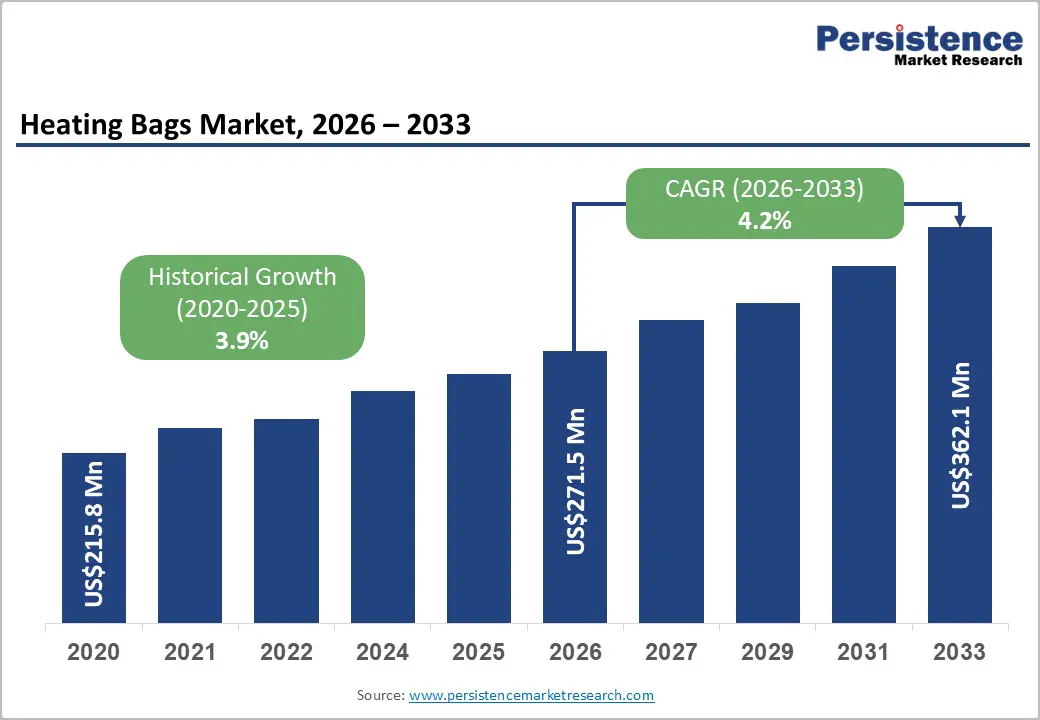
The global heating bags market size is likely to be valued at US$271.5 million in 2026 and is expected to reach US$362.1 million by 2033, growing at a CAGR of 4.2% during the forecast period from 2026 to 2033, driven by rising global burden of musculoskeletal and chronic pain conditions and increasing preference for non-pharmacological therapies. According to the World Health Organization (WHO, 2024), musculoskeletal conditions affect approximately 1.71 billion people globally and are a leading cause of disability, significantly driving demand for heat-based pain relief solutions. WHO also highlights that low back pain remains the single leading cause of disability worldwide, reinforcing the need for accessible home-care therapies. Growing aging populations, especially in regions such as Europe and Asia-Pacific (UN DESA, 2024), increase usage of therapeutic heating devices.
Key Industry Highlights:
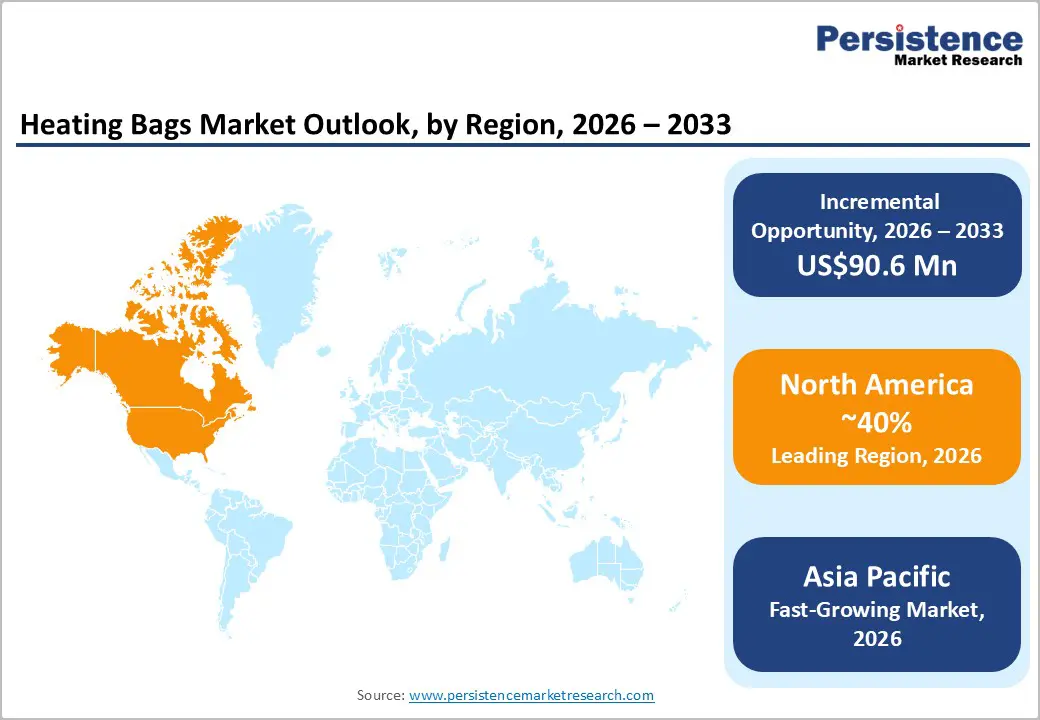
- Leading Region: North America is anticipated to be the leading region, accounting for a market share of 40% in 2026, driven by strong U.S. dominance, advanced healthcare infrastructure, high consumer awareness, and robust regulatory standards supporting product safety and innovation.
- Fastest-growing Region: Asia Pacific is likely to be the fastest-growing region, supported by rapid urbanization, large population base, rising healthcare awareness, strong manufacturing ecosystem, and expanding e-commerce adoption.
- Leading Product Type: Rubber hot water bags are projected to represent the leading product type in 2026, accounting for 55% of the revenue share, for its low cost and widespread traditional use.
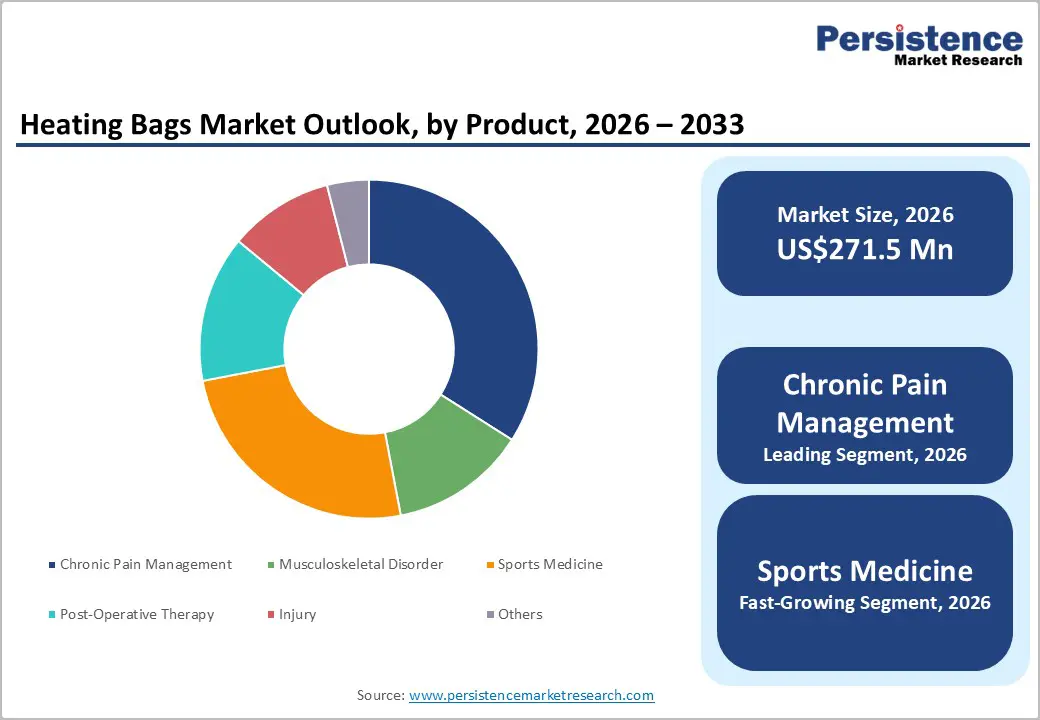
- Leading Application: Chronic pain management is anticipated to be the leading application, accounting for over 34% of the revenue share in 2026, supported by high prevalence of long-term pain conditions.
- Key Opportunity: A key opportunity in the heating bags market lies in the growing integration of smart heat therapy solutions into home healthcare, sports rehabilitation, and wellness ecosystems, supported by rising demand for convenient non-invasive pain management worldwide.
DRO Analysis
Driver - Aging Population and Rising Prevalence of Chronic Pain Conditions
The growing aging population worldwide, which increases the incidence of musculoskeletal disorders, arthritis, and long-term pain conditions. Older adults frequently require non-invasive and affordable pain management solutions, making heating bags a preferred therapeutic option. According to WHO (2024), musculoskeletal conditions affect over 1.7 billion people globally, significantly increasing demand for heat therapy devices.
Rising sedentary lifestyles, obesity, and work-related stress contribute to chronic pain prevalence. This has increased adoption of home-based wellness and physiotherapy solutions, positioning heating bags as an essential supportive care product in both developed and emerging healthcare systems. Increasing awareness of drug-free pain relief methods is encouraging patients and healthcare providers to adopt heat therapy as a complementary treatment.
Heating bags offer accessible, cost-effective relief for conditions such as lower back pain, joint stiffness, and post-injury recovery. Expansion of outpatient care and home healthcare services strengthens demand, as patients prefer self-managed treatment options. Growing healthcare expenditure and improved distribution through pharmacies and e-commerce platforms are enhancing product availability.
Restraint - Seasonal Demand Variations and Supply Chain Constraints
Seasonal demand fluctuations significantly restrain the heating bags market, as usage tends to increase during colder months and decline in warmer seasons. This uneven consumption pattern creates revenue instability for manufacturers and distributors. In regions with mild climates, demand remains inconsistent, limiting year-round sales growth. Heating bags often rely on raw materials such as rubber, polymers, and electronic components, which are subject to price volatility.
Supply chain constraints have become more evident due to geopolitical tensions, transportation bottlenecks, and fluctuating energy costs. Small and medium manufacturers face difficulties maintaining consistent supply levels and cost competitiveness. Import-dependent regions are particularly affected by delays in component availability, especially for electric heating devices. Quality compliance requirements and safety regulations also increase production complexity and time to market.
Opportunity - Diversification into Sports Medicine and Wellness Ecosystems
Increasing participation in fitness activities, professional sports, and rehabilitation programs has created demand for advanced heat therapy solutions. Athletes and physiotherapy patients use heating bags for muscle relaxation, injury recovery, and performance enhancement. Integration of portable, lightweight, and smart-controlled heating devices into sports recovery routines is driving product innovation.
Growing collaboration between healthcare providers, fitness centers, and wellness brands is expanding application scope, making heat therapy an essential part of modern recovery and preventive care practices. Rising focus on holistic wellness and self-care is opening new consumer markets beyond traditional medical usage.
Heating bags are increasingly positioned within lifestyle wellness, yoga, and stress-relief segments. E-commerce expansion and digital health platforms are enabling direct-to-consumer sales, increasing accessibility and product customization. Manufacturers are investing in ergonomic designs, eco-friendly materials, and smart temperature regulation to attract younger consumers.
Category-wise Analysis
Product Type Insights
Rubber hot water bags are expected to lead, accounting for 55% of the revenue share in 2026, due to their long-standing usage, affordability, and simple heat retention mechanism. They remain highly preferred in price-sensitive and rural markets where access to advanced electric devices is limited. For example, in outpatient physiotherapy sessions across rehabilitation centers, rubber hot water bags are commonly applied before manual therapy to relax muscles and improve blood flow, supporting treatment efficiency. Despite technological advancements, this segment maintains strong demand because of its reliability and minimal maintenance requirements.
Electric heating bags are likely to represent the fastest-growing segment, supported by rising demand for safe, controlled, and convenient home-based therapy solutions. These devices offer adjustable temperature settings, quick heating, and automatic shut-off features, making them suitable for repeated use in chronic pain and rehabilitation care. For instance, in modern physiotherapy and sports rehabilitation centers, electric heating bags are increasingly used for post-exercise muscle recovery and post-surgical pain management protocols due to their consistent thermal output. Their adoption is also rising in home healthcare as patients prefer portable, easy-to-use devices instead of traditional boiling-water methods.
Application Insights
Chronic pain management are projected to lead the market, capturing around 34% of the revenue share in 2026, supported by the increasing prevalence of long-term musculoskeletal conditions such as arthritis, back pain, and joint disorders. Heat therapy is widely recommended as a first-line non-drug treatment to improve blood circulation, reduce stiffness, and relax muscles. A notable example includes, in outpatient rehabilitation clinics, patients undergoing treatment for lower back pain frequently use heat application before physiotherapy sessions to reduce muscle tension and enhance therapy outcomes.
Sports medicine is likely to be the fastest-growing application due to rising participation in fitness activities, professional sports, and structured rehabilitation programs. Heating bags are widely used for muscle recovery, injury prevention, and post-training relaxation among athletes. For instance, in sports physiotherapy clinics, electric heating pads are increasingly applied after training sessions to reduce muscle soreness and improve flexibility before physical therapy or rehabilitation exercises. Growing awareness of injury prevention and performance optimization is encouraging adoption among both amateur and professional athletes.
Regional Insights
North America Heating Bags Market Trends
North America is anticipated to be the leading region, accounting for a market share of 40% in 2026, supported by strong adoption of advanced therapeutic devices, rising chronic pain prevalence, and high consumer awareness of non-drug pain management solutions. Growth is supported by the expansion of home healthcare services, increasing sports injuries, and widespread use of physiotherapy-based recovery systems. A notable example includes Carex Health Brands, Inc., which has expanded its therapeutic heating product portfolio, focusing on ergonomic and safety-enhanced electric heating pads widely used in homecare and clinical rehabilitation.
U.S. Heating Bags Market Trends
The U.S. is expected to dominate the regional market, accounting for approximately 80% of the market share in 2026, driven by high healthcare expenditure and advanced physiotherapy infrastructure. Growing cases of chronic back pain and arthritis are increasing demand for electric heating devices. Expansion of sports medicine clinics and rehabilitation centers is driving usage. Recent focus on home-based care solutions and telehealth-supported physiotherapy is increasing adoption.
Canada Heating Bags Market Trends
Canada is likely to be a significant market for heating bags, holding approximately 20% of market share in 2026, supported by a rising elderly population and increasing awareness of musculoskeletal care. Demand for heating bags is increasing in physiotherapy clinics and homecare settings. Government-supported healthcare accessibility programs are improving adoption of non-invasive pain relief solutions. Sports-related injuries from winter activities such as skiing are contributing to seasonal demand spikes.
Europe Heating Bags Market Trends
Europe is likely to be a significant market for heating bags in 2026, due to a rising aging population and increasing preference for non-pharmaceutical pain management therapies. The region shows high adoption of physiotherapy-based recovery solutions and medically recommended heat therapy for chronic pain conditions. For instance, Beurer GmbH is actively developing advanced heating pads and wellness devices widely used across physiotherapy clinics and homecare markets in Europe, strengthening its presence in therapeutic heat applications.
U.K. Heating Bags Market Trends
The U.K. is likely to be a significant market for heating bags, with estimates for 12% of Europe market share in 2026, supported by rising musculoskeletal disorder cases and increasing awareness of home-based pain management. NHS-supported physiotherapy programs are promoting non-invasive treatments, including heat therapy. Demand is increasing in homecare settings among elderly populations. Sports medicine adoption is rising due to football and fitness-related injuries.
Germany Heating Bags Market Trends
Germany is anticipated to dominate the regional market, capturing around 21% of the Europe market share in 2026, due to a high aging population and advanced physiotherapy infrastructure. Chronic back pain and arthritis cases are increasing the adoption of heating therapy devices. Hospitals and rehabilitation centers widely use electric heating pads for recovery treatments. Strong healthcare reimbursement systems support access to therapeutic devices. The growing fitness culture is increasing sports injury-related demand.
Asia Pacific Heating Bags Market Trends
The Asia Pacific region is likely to be the fastest-growing region. Its large population base, rising healthcare awareness, and expanding manufacturing capabilities. Increasing urbanization, growing middle-class income, and rising prevalence of musculoskeletal disorders are key drivers. For example, Omron Healthcare is strengthening its presence in Asia Pacific with advanced therapeutic heating and wellness devices integrated with smart health monitoring solutions.
China Heating Bags Market Trends
China is projected to dominate the regional market, holding around a 25% share of the market in 2026, supported by a large population base and strong manufacturing ecosystem. Demand for heating bags is rising in hospitals and traditional medicine practices. Increasing cases of chronic pain and an aging population are supporting growth. E-commerce platforms such as JD.com and Alibaba are expanding product accessibility. Domestic manufacturers are producing cost-effective electric heating devices.
India Heating Bags Market Trends
India is expected to emerge as a significant market for heating bags, accounting for approximately 15% share in 2026, due to increasing awareness of physiotherapy and homecare treatments. Rising cases of back pain and joint disorders are increasing demand for heating bags. Expanding pharmacy networks and online platforms are improving availability. A growing sports culture is increasing injury-related adoption. Affordable traditional hot water bags remain widely used in rural areas. Urban consumers are shifting toward electric heating devices.
Competitive Landscape
The global heating bags market exhibits a moderately fragmented structure, driven by rising demand for non-pharmaceutical pain management solutions, expanding home healthcare adoption, and increasing prevalence of musculoskeletal disorders worldwide. Growth is supported by continuous product innovation, including electric heating bags with adjustable temperature control, ergonomic designs, and enhanced safety features.
With key leaders including Cardinal Health, Medline Industries Inc., DJO LLC, and Carex Health Brands, Inc., the market demonstrates strong participation from established medical device and healthcare product manufacturers. These players compete through continuous product innovation, brand expansion, and distribution network strengthening across hospitals, pharmacies, and online platforms.
Key Industry Developments:
- In August 2025, Hakugen Earth Co., Ltd. launched the “Relax Yutapon Waist & Abdomen 2-Way Hot Steam Pack,” a reusable microwave-heated warming product designed for muscle relaxation and pain relief.
- In September 2025, Beurer GmbH unveiled new heat therapy products at IFA 2025, including the HK 77 cordless battery-operated heating pad and advanced heated overblankets targeting portable wellness and homecare applications.
Companies Covered in Heating Bags Market
- Dhama Innovations Pvt. Ltd.
- DJO LLC
- Thermo Tek Inc.
- Cardinal Health
- Carex Health Brands, Inc.
- The Mentholatum Company
- Medline Industries Inc.
- Halyard Worldwide, Inc.
- Kobayashi Pharmacutical Co., Ltd.
- TrekProof Inc.
Frequently Asked Questions
The global heating bags market is projected to reach US$271.5 million in 2026.
The heating bags market is driven by rising prevalence of chronic pain and musculoskeletal disorders, growing aging population, and increasing demand for non-drug home-based pain relief solutions.
The heating bags market is expected to grow at a CAGR of 4.2% from 2026 to 2033.
Key market opportunities include expansion into sports rehabilitation, smart electric heating devices, wellness applications, and growing demand across emerging home healthcare markets.
Dhama Innovations Pvt. Ltd., DJO LLC, Thermo Tek Inc., Cardinal Health, and Carex Health Brands, Inc. are the leading players.


