




- Biotechnology
- GMP Cell Banking Service Market
GMP Cell Banking Service Market Size, Share, Growth, and Regional Forecast, 2026 - 2033
GMP Cell Banking Service Market by Cell Type (Mammalian, Microbial, Insect, Yeast, Avian, Stem Cell, Others), End-user (Biopharmaceutical Companies, Contract Manufacturing Organizations), and Regional Analysis from 2026 - 2033

GMP Cell Banking Service Market Share and Trends Analysis
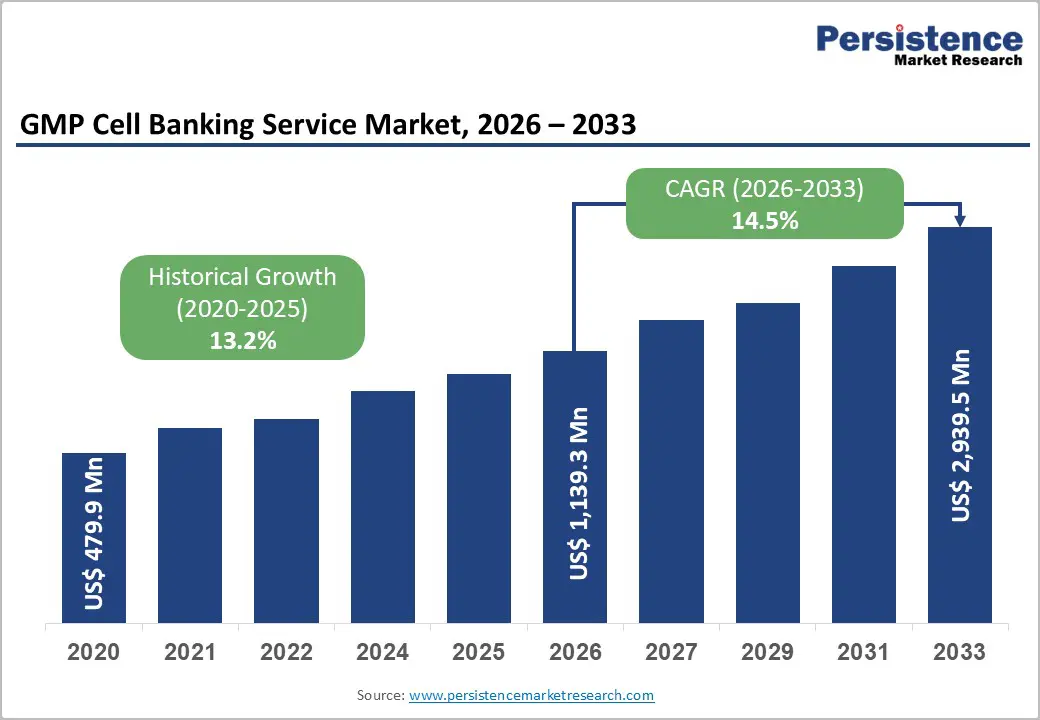
The global GMP cell banking service market size is likely to be valued at US$ 1,139.3 million in 2026 to US$ 2,939.5 million by 2033 growing at a CAGR of 14.5% during the forecast period from 2026 to 2033.
The GMP cell banking service market is growing steadily, driven by rising demand for biologics, cell and gene therapies, and stricter regulatory compliance. North America leads due to advanced biotech infrastructure and strong oversight, while Asia-Pacific is the fastest-growing region, fueled by expanding biopharma investments, emerging contract manufacturing, government support, and increasing adoption of GMP-compliant cell banking services.
Key Industry Highlights:
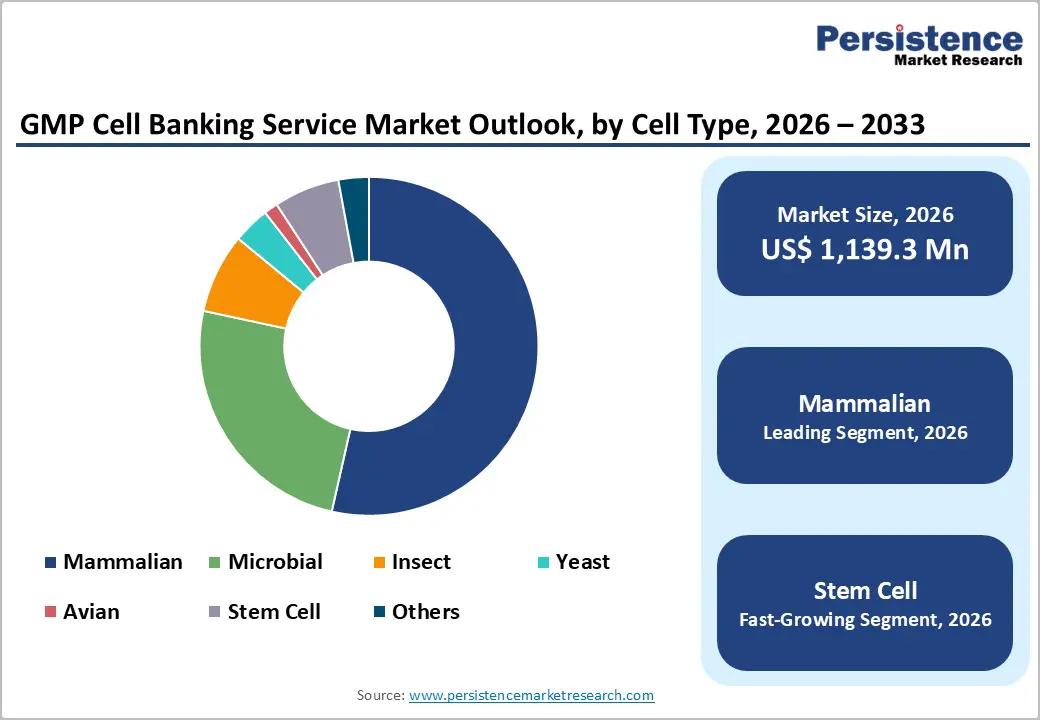
- Dominant Segment: Mammalian cell banking leads with an estimated 53.5% share in 2025, driven by high demand for monoclonal antibodies, vaccines, and advanced cell and gene therapies, along with regulatory preference for mammalian systems in GMP-compliant production.
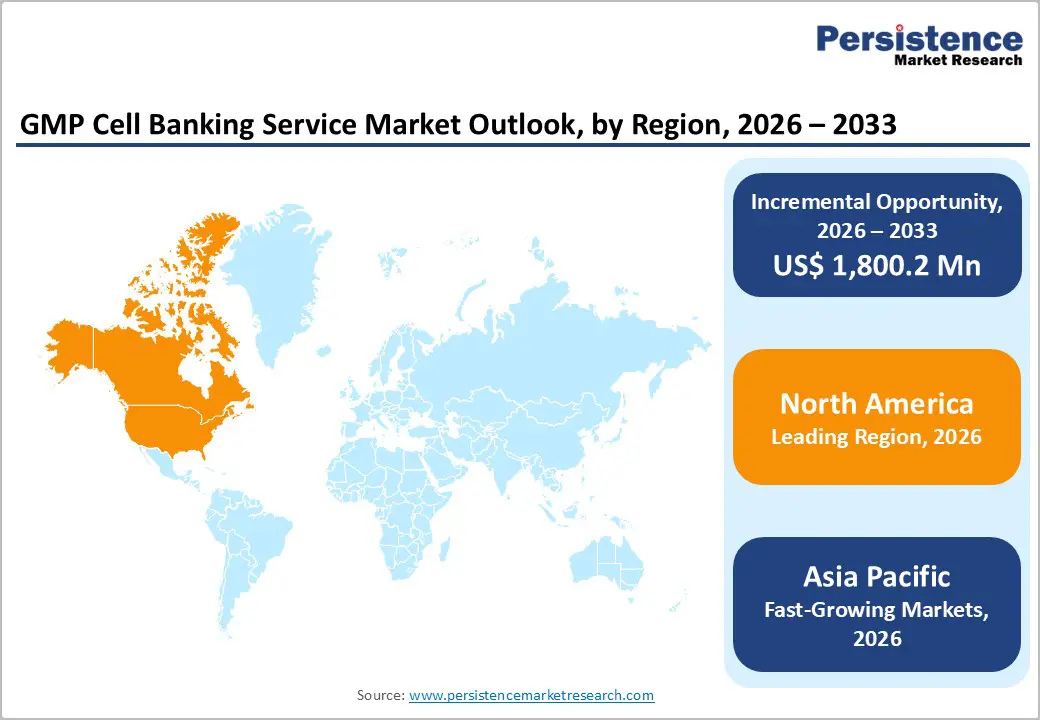
- Dominant Region: North America dominates with 43.8% share, supported by a mature biopharma infrastructure, strong regulatory oversight, and high adoption of outsourced GMP cell banking services. Asia-Pacific is the fastest-growing region due to expanding biopharma investments, growth in contract manufacturing, and an increasing focus on regenerative therapies.
- Market Drivers: Growth is driven by rising biologics production, increasing cell and gene therapy pipelines, stringent GMP compliance requirements, outsourcing trends, and growing demand for reliable master and working cell banks.
- Market Opportunity: Key opportunities include stem cell banking, viral vector banks for gene therapies, AI-enabled cell line management, expansion of GMP facilities in emerging markets, and scalable services for CMOs and biopharmaceutical companies.
| Key Insights | Details |
|---|---|
|
Global GMP Cell Banking Service Market Size (2026E) |
US$ 1,139.3 Mn |
|
Market Value Forecast (2033F) |
US$ 2,939.5 Mn |
|
Projected Growth (CAGR 2026 to 2033 |
14.5% |
|
Historical Market Growth (CAGR 2020 to 2025) |
13.2% |
Market Dynamics
Driver - Rising Demand for Biologics and Cell/Gene Therapies
The global biologics sector, encompassing monoclonal antibodies, vaccines, and advanced cell and gene therapies, is expanding rapidly, reflecting a fundamental shift in therapeutic development toward complex biologics derived from living cells. Biologics accounted for a significant portion of new therapeutic approvals in 2023, with the U.S. FDA approving 18 novel biologics, of which seven were cell and gene therapy products, underscoring robust innovation in this category. These trends demonstrate increasing clinical and regulatory activity in biologics, directly amplifying the need for GMP-compliant cell banks to support manufacturing, quality assurance, and regulatory compliance of living cell-derived products.
Government and international health data further substantiate this demand. The World Health Organization highlights the growing global reliance on biologic medicines to address chronic and life-threatening diseases such as cancer and autoimmune disorders, with biologic therapies now featured prominently on the Essential Medicines List and biosimilars expanding access worldwide. Additionally, broader market analyses report that global biologics markets continue to grow strongly, projected to nearly double over the next decade, driven by rising prevalence of chronic disease and targeted therapeutic innovation. This surge in biologics and cell/gene therapy development creates a proportional increase in demand for GMP cell banking services to ensure stable cell supply chains for clinical and commercial production.
Restraints - High Operational and Setup Costs
Establishing and maintaining GMP-compliant cell banking facilities entails substantial capital and operational expenditures, which can restrict market participation, especially for smaller biopharma firms. Building cleanrooms, controlled environments, and specialized storage for living cells requires advanced HVAC systems, sterile infrastructure, and continuous environmental monitoring, driving up initial costs. In the biopharmaceutical sector, facility upgrades and cleanroom construction alone can cost hundreds of thousands to millions of dollars before any cell banking activities begin. These investments must be maintained to prevent contamination and ensure regulatory compliance, which adds complexity to budgeting and planning for companies expanding into GMP cell banking.
Operating expenses also constitute a significant burden. Case studies from existing stem cell banks show that annual facility operating costs can exceed $2 million, excluding raw materials and external testing, highlighting the high ongoing financial requirement to sustain GMP operations. Additionally, producing and validating a single cell bank line, such as induced pluripotent stem cells, can incur tens of thousands of dollars in direct costs, with additional expenses to meet current GMP standards. These high cost thresholds for setup, validation, and continuous compliance constrain market entry and expansion, particularly for small and medium enterprises that lack deep capital reserves, making cost a key restraint in the GMP cell banking service market.
Opportunity - Stem Cell and Advanced Therapy Banks
The surge in stem cell and advanced therapy development presents a major opportunity for GMP cell banking services, as these therapies require reliable, high-quality cell banks for clinical and commercial manufacturing. As of late 2024, over 115 cell and gene therapy clinical trials were registered in China alone, with stem cell-related studies accounting for a substantial share of this growth, reflecting global momentum in regenerative medicine research. Clinical landscapes show hundreds of pluripotent stem cell products in clinical evaluation, with more than 1,200 patients dosed, indicating rising therapeutic translation and demand. These expanding clinical activities drive the need for certified GMP facilities to supply master and working stem cell banks, underscoring the strategic role of cell banking in supporting advanced therapy pipelines.
At the same time, public and private stem cell repositories are growing rapidly to meet long-term therapeutic requirements. Globally, banks have processed hundreds of thousands of stored units, and long-term inventories exceed millions of stem cell units preserved for future use, showing sustained interest in preserving high-quality cell lines. The growing number of clinical trials for cell-derived products, including mesenchymal stem cells and other advanced therapies, suggests expanded use in treating chronic and degenerative diseases. As advanced therapies move from research into clinical application, demand for GMP-compliant stem cell and advanced therapy banks will grow, offering a compelling opportunity for service providers to expand capacity, improve cryopreservation technologies, and support global therapeutic manufacturing.
Category-wise Analysis
By Cell Type, Mammalian Dominates the GMP Cell Banking Service Market
Mammalian dominates with 53.5% share of the global market in 2025, because it enables real-time data collection, integration, analysis, and reporting that are essential for effective infection prevention and control. Healthcare facilities increasingly rely on software platforms that pull data from electronic health records, laboratory systems, and patient monitoring devices to generate automated alerts and dashboards. This capability improves the speed and accuracy of infection detection, supports compliance with regulatory reporting requirements, and enhances decision-making for clinical teams. In 2023, software accounted for over 60 percent of the overall market share, reflecting its critical role in transforming raw clinical data into actionable insights that help reduce healthcare-associated infections and improve patient outcomes.
By End-user, Biopharmaceutical Companies Dominate due to High Biologics Production, Regulatory Requirements, and Therapy Development
Biopharmaceutical companies dominate the GMP cell banking service market because they are the primary developers and manufacturers of biologics, vaccines, and advanced cell and gene therapies that require GMP-compliant cell banks. In the United States alone, biologics accounted for more than half of all novel therapeutic approvals in recent years, reflecting heavy reliance on mammalian and other complex cell systems that must be banked under strict GMP conditions. Globally, hundreds of cell and gene therapy clinical trials are underway, the vast majority sponsored by biopharmaceutical firms, driving sustained demand for reliable master and working cell banks. Moreover, regulatory authorities require documented, traceable cell sources for products entering clinical and commercial stages, further anchoring biopharma as the largest end-user of GMP cell banking services. This combination of development volume, regulatory necessity, and therapeutic complexity reinforces biopharmaceutical companies’ dominant share.
Regional Insights
North America GMP Cell Banking Service Market Trends
North America dominates the GMP cell banking service market with 43.8% share in 2025, because it is the global hub for biologics, cell, and gene therapy development, which depend on reliable, GMP-compliant cell banks. In 2024, the region represented approximately 44–45% of the global biologics market, reflecting the concentration of therapeutic development, manufacturing, and clinical translation activities requiring secure cell line storage. Advanced research ecosystems, significant R&D investments, and a dense network of biopharmaceutical companies and contract service providers support large-scale GMP operations. Furthermore, strong regulatory oversight and government funding, including billions allocated by the National Institutes of Health for regenerative medicine and cell therapy research, coupled with numerous FDA approvals of cell and gene therapies, drive sustained demand and reinforce North America’s leadership in GMP cell banking globally.
Europe GMP Cell Banking Service Market Trends
Europe is a critical region for the GMP cell banking service market due to its advanced biopharmaceutical and biologics ecosystem, driving demand for GMP-compliant cell banks. The European biologics market exceeded more than 100 billion in recent years, reflecting strong growth in monoclonal antibodies, vaccines, and advanced therapies that require stable cell lines. The European Medicines Agency recommended 77 medicines in 2023, with many novel active substances, and over 1,200 biopharmaceuticals were in clinical development, demonstrating robust pipeline activity. Europe also contributes over 30-percent of the global biologics contract development market, with Germany, the UK, and France as major hubs. Integrated regulatory frameworks, collaborative research networks, and strong manufacturing infrastructure further enhance Europe’s strategic importance in GMP cell banking globally.
Asia Pacific GMP Cell Banking Service Market Trends
Asia Pacific’s rapid growth in GMP cell banking services is driven by a sharp expansion of biopharmaceutical development, clinical research, and biologics production across key countries such as China, India, Japan, and South Korea. In the region, nearly 40,000 clinical trials were conducted from 2020 to mid-2025, reflecting accelerated research activity and increased demand for biologics and advanced therapies that depend on GMP cell banking for stable, regulated cell supplies. Additionally, Asia Pacific’s biologics production infrastructure is expanding significantly, with substantial increases in revenue and capacity in contract manufacturing of monoclonal antibodies and vaccines. China alone accounts for a large share of this regional growth, supported by growing government support and industry investment. These trends create strong demand for GMP-compliant cell banks and related services, making Asia Pacific the fastest-growing regional market segment.
Competitive Landscape
Leading GMP cell banking service providers focus on advanced cryopreservation, quality control, and regulatory compliance, collaborating with biopharmaceutical companies and CMOs. By ensuring reliable master and working cell banks, standardized processes, and traceable documentation, they support biologics and cell therapy production, enhance product safety, and drive adoption, fueling growth in the global GMP cell banking service market.
Key Industry Developments:
- In February 2025, SGH and Charles River Laboratories teamed up to provide comprehensive cGMP cell banking services, aiming to support biopharmaceutical companies with reliable, high-quality cell line storage solutions. The collaboration focused on enhancing manufacturing efficiency, ensuring regulatory compliance, and delivering scalable master and working cell banks for biologics and advanced therapies.
- In May 2024, EBPT Cell Banking received certification from multiple global regulatory agencies, recognizing its compliance with stringent cGMP standards for cell line storage and management. The certification validated EBPT’s robust quality control, traceable documentation, and reliable cryopreservation processes, ensuring the safety and integrity of master and working cell banks used in biologics and advanced therapies.
Companies Covered in GMP Cell Banking Service Market
- WuXi AppTec
- Charles River Laboratories International, Inc.
- Eurofins Scientific
- Merck KGaA
- Lonza Group Ltd
- SGS Ltd
- ViruSure GmbH
- Austrianova
- Goodwin Biotechnology Inc.
- Paragon Bioservices, Inc.
- Others
Frequently Asked Questions
The global GMP Cell banking service market is projected to be valued at US$ 1,139.3 Mn in 2026.
Rising biologics and cell/gene therapy demand, stringent GMP regulations, outsourcing trends, advanced technologies, and expanding clinical and manufacturing activities drive growth.
The global GMP cell banking service market is poised to witness a CAGR of 14.5% between 2026 and 2033.
Opportunities include stem cell and advanced therapy banks, viral vector storage, AI-enabled management, emerging market expansion, and scalable GMP services.
WuXi AppTec, Charles River Laboratories International, Inc., Eurofins Scientific, Merck KGaA, Lonza Group Ltd, SGS Ltd.


