




- Nutraceuticals & Functional Foods
- Ginseng Market
Ginseng Market Size, Share, and Growth Forecast, 2026 – 2033
Ginseng Market by Product Type (Raw, Powdered, Ginseng Extracts, Liquid Extracts, Others), Variety (Korean, American, Chinese, Siberian, Indian), Application (Dietary Supplements, Pharmaceuticals & Healthcare Products, Food & Beverages, Cosmetics & Personal Care, Others), and Regional Analysis for 2026-2033

Ginseng Market Share and Trends Analysis
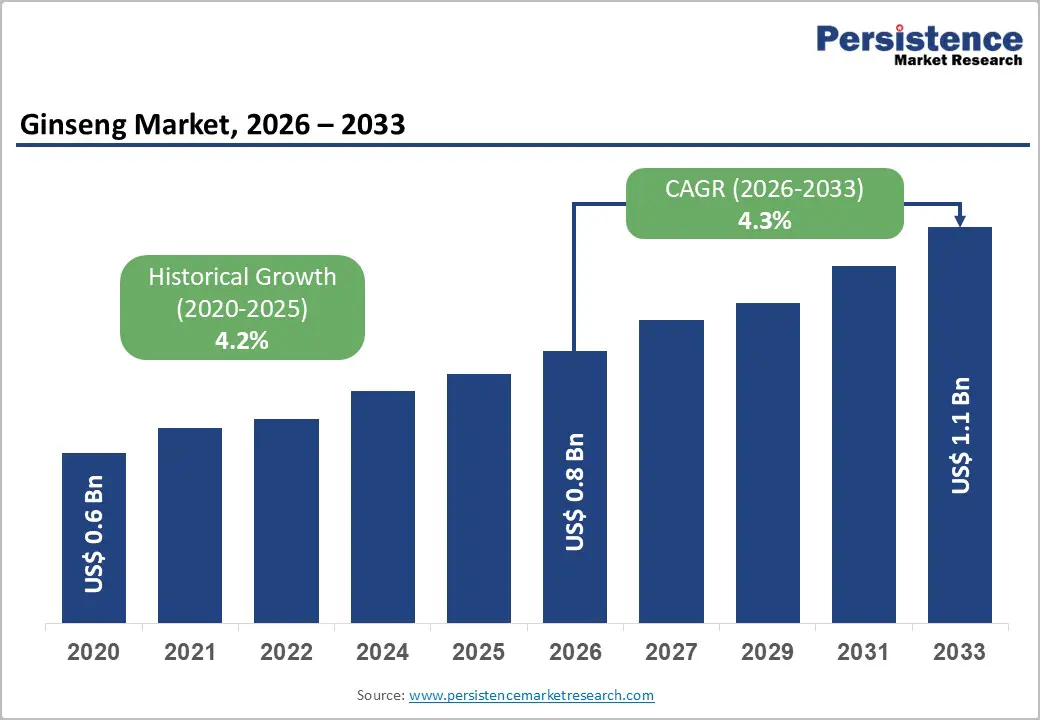
The global ginseng market size is likely to be valued at US$ 0.8 billion in 2026, and is projected to reach US$ 1.1 billion by 2033, growing at a CAGR of 4.3% during the forecast period 2026−2033. This growth is structurally supported by rising demand for plant-based nutraceuticals, increased integration of traditional herbal ingredients into modern healthcare formulations, and sustained consumer focus on immunity, energy, and stress management solutions.
Ginseng consumption is expanding across dietary supplements, pharmaceuticals, and functional foods, driven by favorable demographic trends, including aging populations and a higher prevalence of lifestyle-related disorders. The market continues to benefit from consumer trust in natural wellness products and the ongoing innovation in product formats, ensuring broader accessibility and relevance in diverse health and wellness segments.
Key Industry Highlights
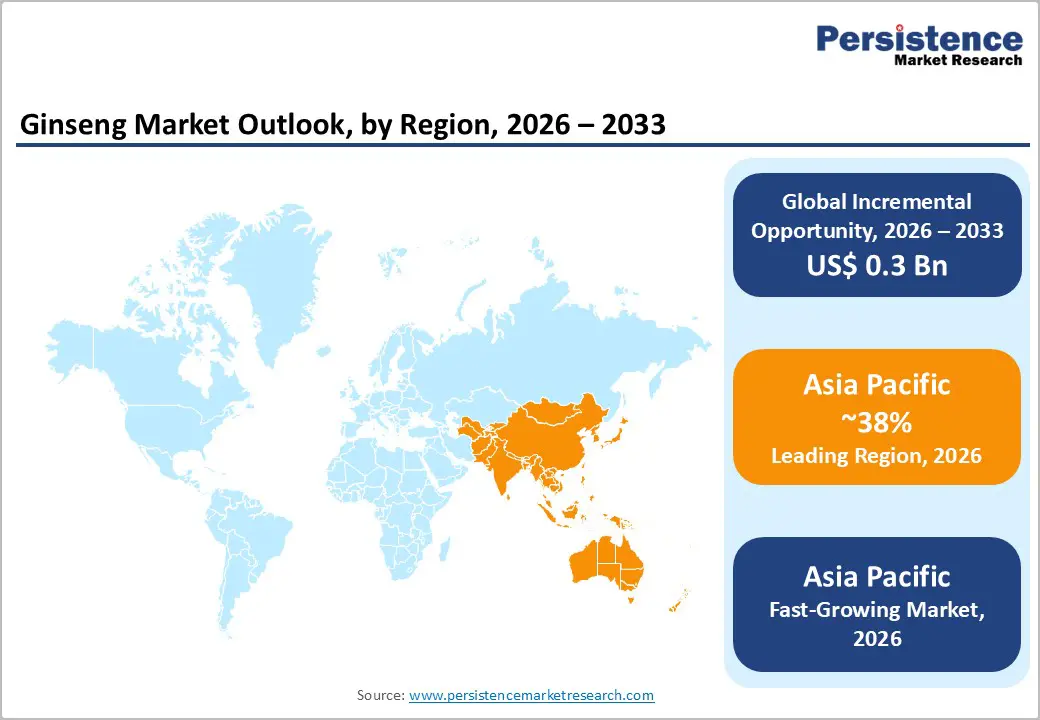
- Dominant Region: Asia Pacific is projected to capture 38% market share by 2026, driven by the widespread use of ginseng in functional and nutraceutical products.
- Fastest-growing Market: Asia Pacific is set to be the fastest-growing market through 2033, fueled by demand for preventive health, functional nutrition, and natural wellness.
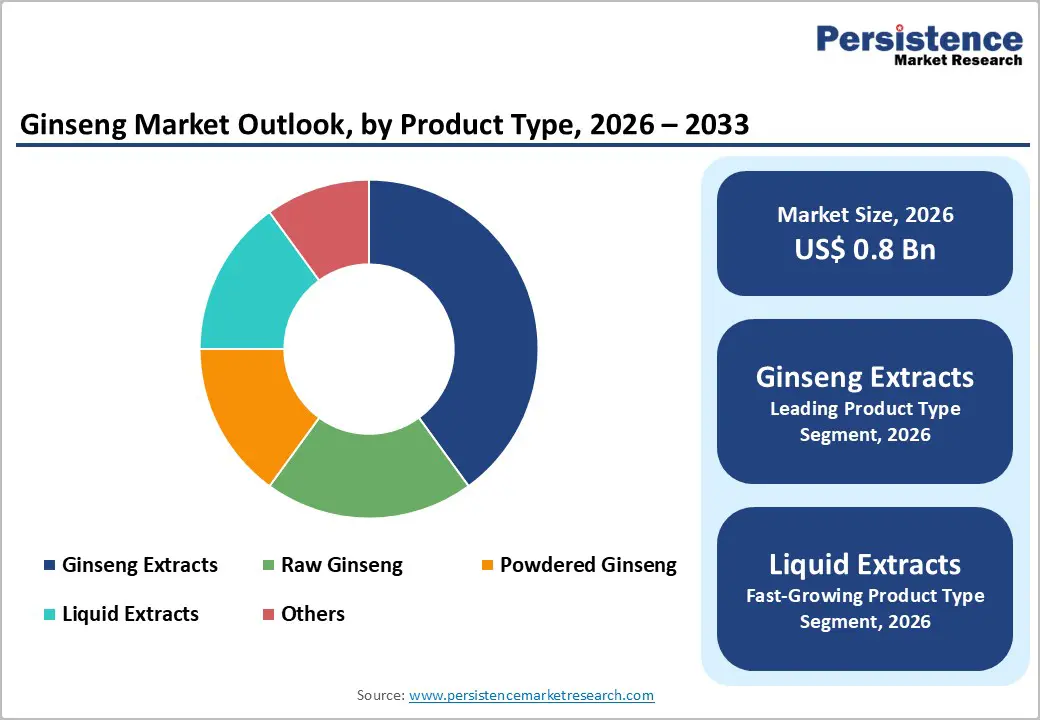
- Leading Product Type: Ginseng extracts are likely to hold a 40% market share by 2026, supported by high bioactive content, standardized dosing, and versatile use in supplements and pharmaceuticals.
- Fastest-growing Product Type: Liquid extracts are expected to grow the fastest through 2033, owing to the expanding adoption of ginseng in functional beverages, fortified drinks, and wellness products.
- August 2025: NutraTea introduced two functional herbal teas – Moringa Leaf and Ashwagandha for stress reduction, sleep, cognition, immunity, and glucose balance.
| Key Insights | Details |
|---|---|
| Ginseng Market Size (2026E) | US$ 0.8 Bn |
| Market Value Forecast (2033F) | US$ 1.1 Bn |
| Projected Growth (CAGR 2026 to 2033) | 4.3% |
| Historical Market Growth (CAGR 2020 to 2025) | 4.2% |
Market Factors – Growth, Barriers, and Opportunity Analysis
Rising Demand for Natural Supplements
Rising demand for natural supplements continues to act as a central growth catalyst for the market, as consumers increasingly align health choices with prevention, balance, and long-term wellness objectives. Modern lifestyles marked by high stress levels, irregular routines, and growing fatigue-related concerns drive interest in plant-based solutions perceived as gentler and more sustainable than synthetic alternatives. Trust in traditional botanical ingredients is growing as consumers seek clean-label formulations, traceable sourcing, and multifunctional benefits in a single product. Natural supplements resonate strongly with individuals prioritizing daily vitality, cognitive alertness, and immune resilience, creating sustained traction across preventive and performance-oriented consumption patterns.
The shift gains reinforcement through expanding scientific validation and broader acceptance of herbal actives within mainstream wellness ecosystems. For example, a study conducted by Korean researchers in February 2025 found that red ginseng may help prevent diabetes, highlighting its ability to improve insulin sensitivity and glucose metabolism through ginsenosides that modulate gut microbiota and inflammatory pathways. Increased incorporation of natural ingredients into functional nutrition, sports supplementation, and clinical wellness programs reflects evolving purchasing criteria focused on efficacy, consistency, and heritage value. Aging populations and working professionals show a preference for solutions supporting stamina, metabolic balance, and stress regulation without long-term dependency risks. Brand positioning centered on authenticity, standardization, and quality assurance encourages repeat consumption and premiumization.
Cultivation and Supply Constraints
Ginseng cultivation faces significant challenges due to its complex agricultural requirements, which limit rapid expansion and consistent supply. The crop demands lengthy growth periods, usually four to six years, before roots reach marketable maturity, resulting in prolonged capital investment and delayed returns for growers. Yield outcomes are highly dependent on precise soil composition, shade management, temperature stability, and moisture balance, making it difficult to scale production across diverse regions. Disease susceptibility, especially to soil-borne pathogens and root rot, further increases the risk of crop failure and discourages growers from rapidly expanding their acreage. These factors collectively limit the ability to reliably meet rising market demand for ginseng.
Supply-side pressures are amplified by labor-intensive harvesting methods and limited opportunities for mechanization, which increase production costs and make operations vulnerable to labor shortages. Climate variability disrupts growth patterns, impacting root quality, the concentration of active compounds, and harvest timing, leading to inconsistent output volumes from year to year. Conservation regulations on wild and semi-wild ginseng varieties restrict legal sourcing, pushing the market toward cultivated alternatives that may face skepticism regarding quality. Additionally, the fragmented nature of the grower base and the absence of standardized agronomic practices hinder predictable sourcing for downstream manufacturers, creating ongoing challenges for the industry’s supply chain.
Innovation in Product Forms and Functional Applications
Innovation in product forms and functional applications represents a key opportunity as consumer expectations continue to shift toward convenience, personalization, and experiential value. Traditional formats face limitations in adoption among younger and urban consumers who favor ready-to-use, portable, and lifestyle-aligned solutions. Advanced delivery formats such as gummies, effervescent tablets, functional beverages, transdermal patches, and combination blends with vitamins or probiotics improve ease of consumption and sensory appeal. These formats enable positioning across daily wellness routines rather than episodic or therapeutic use, expanding usage frequency and average consumption value.
Functional diversification strengthens relevance across multiple end-use categories, including sports nutrition, clinical supplementation, beauty-from-within concepts, and mental wellness solutions. Targeted formulations designed for specific consumer groups such as professionals, aging adults, and fitness-focused users improve perceived efficacy and brand differentiation. Integration into functional foods and beverages enables entry into mass consumption channels such as cafes, retail chains, and digital wellness platforms. Strategic innovation further supports regulatory adaptability by optimizing dosages and delivery systems to align with regional compliance requirements.
Category-wise Analysis
Product Type Insights
Ginseng extracts are emerging as the leading product type, projected to capture approximately 40% of the market revenue by 2026. This dominance is driven by their high concentrations of bioactive compounds, reliable dosing precision, and strong support from clinical validation studies. Standardized ginseng extracts deliver consistent potency and are compatible with pharmaceutical standards, which makes them highly preferred in regulated healthcare environments, premium dietary supplements, and functional wellness formulations. Their ease of integration into capsules, tablets, and blended wellness products enhances formulation flexibility, while established manufacturing practices and strict adherence to quality benchmarks reinforce consumer confidence and trust.
Liquid extracts are expected to experience the fastest growth from 2026 to 2033, as consumers increasingly seek ready-to-use and convenient wellness solutions. Innovations in shelf-stable liquid technologies have enabled their use in functional beverages, fortified drinks, and wellness shots, improving absorption rates and bioavailability. The portability and availability of flavored formulations, as well as their compatibility with blended wellness products, broaden their appeal across lifestyle and health-conscious consumer segments. Growing adoption in immunity, energy, and stress-management applications further positions liquid extracts as a high-potential segment within the food & beverage and nutraceutical markets, signaling strong future prospects for innovation and expansion in these areas.
Variety Insights
Korean ginseng is poised to dominate, with a forecast market share of around 35% in 2026, driven by robust clinical validation, standardized cultivation practices, and strong government-backed quality assurance systems. Recognition under Korean Ministry of Food and Drug Safety standards enhances credibility among global manufacturers and healthcare practitioners. Long-established export infrastructure supports consistent supply, traceability, and potency, enabling premium positioning across pharmaceutical, nutraceutical, and functional food applications. Strong brand equity and international consumer trust further reinforce leadership, supporting sustained demand across mature and emerging wellness markets.
Indian ginseng (Ashwagandha) is projected to be the fastest-growing origin segment from 2026 to 2033, driven by rising global awareness of its adaptogenic health benefits and growing preference for plant-based stress management solutions. At the 2nd WHO Global Traditional Medicine Summit 2025 in Delhi, experts highlighted Ashwagandha's role in stress management, brain health, and immunity, urging rigorous research, standardization, and safety standards for global integration into modern healthcare. Scalable cultivation, cost-efficient sourcing, and wide formulation flexibility enhance competitiveness across dietary supplements and functional products. Institutional backing through Ministry of Ayurveda, Yoga and Naturopathy, Unani, Siddha and Homoeopathy (AYUSH) initiatives strengthens research visibility, standardization, and export promotion. Expanding adoption across mental wellness, lifestyle health, and preventive nutrition categories accelerates international market penetration.
Application Insights
Dietary supplements are projected to account for over 45% of ginseng market revenue share in 2026, reflecting strong consumer reliance on daily preventive health solutions and widespread acceptance of herbal supplementation. Over-the-counter availability supports easy access across pharmacy, wellness, and online retail channels. Standardized formulations aligned with immunity, energy, cognitive health, and stress management needs reinforce consistent usage patterns. Compatibility with multivitamin blends and personalized nutrition routines improves repeat purchase behavior. Expanding health awareness among working professionals and aging populations sustains volume demand, while subscription-based models and digital wellness platforms enhance market reach and long-term consumption stability.
Cosmetics and personal care are expected to be the fastest-growing segment between 2026 and 2033, propelled by the soaring demand for plant-based, functional beauty solutions and rising preference for herbal actives with proven skin benefits. Ginseng-based ingredients support positioning around anti-aging, revitalization, and protection against environmental stressors. Growth in clean-label skincare, premium beauty, and beauty-from-within concepts strengthens adoption across facial care, haircare, and dermocosmetic products. Brand focus on efficacy-driven natural formulations and lifestyle-oriented beauty routines accelerates penetration within high-margin consumer categories.
Regional Insights
North America Ginseng Market Trends
North America has become a dynamic and rapidly evolving market for ginseng, driven by a growing consumer emphasis on preventive health, natural wellness, and functional nutrition. Health-conscious millennials and working professionals are increasingly adopting plant-based adaptogens, which has expanded ginseng’s use beyond traditional supplements into functional beverages, energy shots, and beauty-from-within products. The region benefits from robust e-commerce platforms, specialty health retailers, and pharmacy networks that provide broad accessibility and convenience for consumers. A strong focus on scientific validation and clinical efficacy has built trust in standardized ginseng extracts, positioning them as credible ingredients in both mainstream and premium wellness products.
Innovation in product formats is a major growth driver, with liquid extracts, ready-to-drink beverages, and fortified functional foods gaining popularity among consumers who value convenience and enhanced bioavailability. Rising awareness of stress management, cognitive support, and immune health is accelerating adoption across lifestyle and preventive wellness segments. Strategic partnerships between domestic manufacturers and international suppliers are broadening product variety and availability, while regulatory frameworks that support natural supplements foster market growth. The expanding health and fitness culture further enables rapid expansion of ginseng-based products in North America.
Europe Ginseng Market Trends
Europe is a major market for ginseng, fueled by increasing consumer interest in natural health solutions, preventive wellness, and cognitive support. Demand is strong across dietary supplements, functional foods, and beverages, especially in Germany, France, and the United Kingdom, where aging populations seek adaptogenic products for energy, stress management, and immunity. High disposable incomes and well-developed retail networks, including pharmacies, health stores, and e-commerce platforms, ensure uninterrupted accessibility and regular consumption. Regulatory frameworks such as the European Food Safety Authority (EFSA) standards guarantee product quality and safety, building consumer confidence and supporting the adoption of premium ginseng formulations.
The European ginseng market growth is also gathering momentum on account of innovative ginseng applications, particularly in functional beverages, nutraceuticals, and beauty-from-within products. Expanding awareness of plant-based adaptogens among younger, urban consumers is driving demand for convenient, ready-to-use formats such as liquid extracts, gummies, and fortified drinks. Interest in stress relief, cognitive enhancement, and lifestyle-focused wellness is promoting cross-category adoption. E-commerce and direct-to-consumer channels are accelerating market penetration in both established and emerging European markets. Government support for herbal medicine research, standardization, and safety testing further strengthens market confidence and encourages continued innovation.
Asia Pacific Ginseng Market Trends
Asia Pacific is expected to lead in 2026, capturing an estimated 38% of the ginseng market share, driven by the deep-rooted cultural and medicinal significance of ginseng in countries such as South Korea, China, and Japan. Consumer familiarity with ginseng as a preventive and restorative ingredient sustains robust domestic demand, while government-backed quality certification systems enhance credibility for both local and international markets. Advanced cultivation and processing infrastructure ensures consistent potency and reliable supply, supporting premium pricing. Ginseng’s integration into functional foods, beverages, traditional medicines, and modern nutraceutical formulations strengthens adoption across diverse consumer segments, including aging populations and urban professionals seeking energy, cognitive, and immunity benefits.
Asia Pacific is also set to be the fastest-growing ginseng market from 2026 to 2033, as evolving consumer preferences favor preventive healthcare, natural wellness products, and functional nutrition. Rising urbanization, increasing disposable income, and heightened awareness of mental wellness and immunity-boosting ingredients are driving adoption across dietary supplements, cosmetics, and fortified food products. Investment in research and development, along with modernized cultivation and extraction technologies, enables local manufacturers to improve yield, potency, and product consistency. Expanding retail and e-commerce penetration is making ginseng more accessible, mainstream, and rapidly accelerating market growth across emerging economies.
Competitive Landscape
The global ginseng market structure is moderately fragmented, with the top five companies, including Korea Ginseng Corp., ILHWA, Ningbo Gianon Biotech, Nature's Way Brands, and Herbalife, collectively capturing a substantial share of global revenue. These industry leaders prioritize the development of standardized ginseng extract portfolios to ensure consistent quality, potency, and efficacy for use in dietary supplements, functional foods, beverages, and personal care products.
This moderate market fragmentation creates opportunities for both established firms and emerging manufacturers to innovate and meet diverse consumer needs. Leading companies leverage their expertise in botanical extraction, robust research and development capabilities, and extensive global distribution networks to maintain competitive advantages. Their commitment to quality, innovation, and regulatory compliance enables them to efficiently address evolving demand across multiple end-use sectors.
Key Industry Developments
- In October 2025, China’s Herbal Player launched trendy ginseng-infused formats such as sodas, effervescent drinks, and confectionery to attract Gen-Z consumers by making traditional ginseng benefits more accessible and convenient.
- In July 2025, Bayer launched Supradyn-Naturals-Ginseng, a multivitamin for men with 30% more active ginseng, 12 vitamins, five minerals, and antioxidants, available under the “MorningWala Josh Poore Din” campaign to support all-day energy, stamina, and focus.
- In March 2025, Sulwhasoo launched a reformulated Concentrated Ginseng Rejuvenating Collection, featuring upgraded serums and creams with triple ginseng capsules, Ginsenomics™, and ginseng peptides to target wrinkles, boost firmness, elasticity, and collagen repair for visibly younger skin.
Companies Covered in Ginseng Market
- Korea Ginseng Corp.
- ILHWA CO.LTD.
- Ningbo Gianon Biotech Co.,Ltd.
- Nature's Way Brands, LLC.
- Herbalife Ltd.
- Baoji Herbest Bio-Tech Co.,Ltd
- RFI Ingredients
Frequently Asked Questions
The global ginseng market is projected to reach US$ 0.8 billion in 2026.
The market is driven by the surging demand for plant-based wellness solutions, preventive health, and adaptogenic benefits across diverse consumer segments.
The market is poised to witness a CAGR of 4.3% from 2026 to 2033.
Key market opportunities lie in innovative product formats, functional applications, and expanding adoption across dietary supplements, beverages, and beauty-from-within products.
Some of the key market players include Korea Ginseng Corp., ILHWA CO., LTD., Ningbo Gianon Biotech Co., Ltd., Nature's Way Brands, LLC, and Herbalife Ltd.


