




- Nutraceuticals & Functional Foods
- Ginger Oil Market
Ginger Oil Market Size, Share, and Growth Forecast, 2026 – 2033
Ginger Oil Market by Product Type (Conventional, Organic), Application (Food & Beverage, Pharmaceutical & Nutraceutical, Aromatherapy, Cosmetics & Personal Care), and Regional Analysis for 2026 – 2033

Ginger Oil Market Size and Trends Analysis
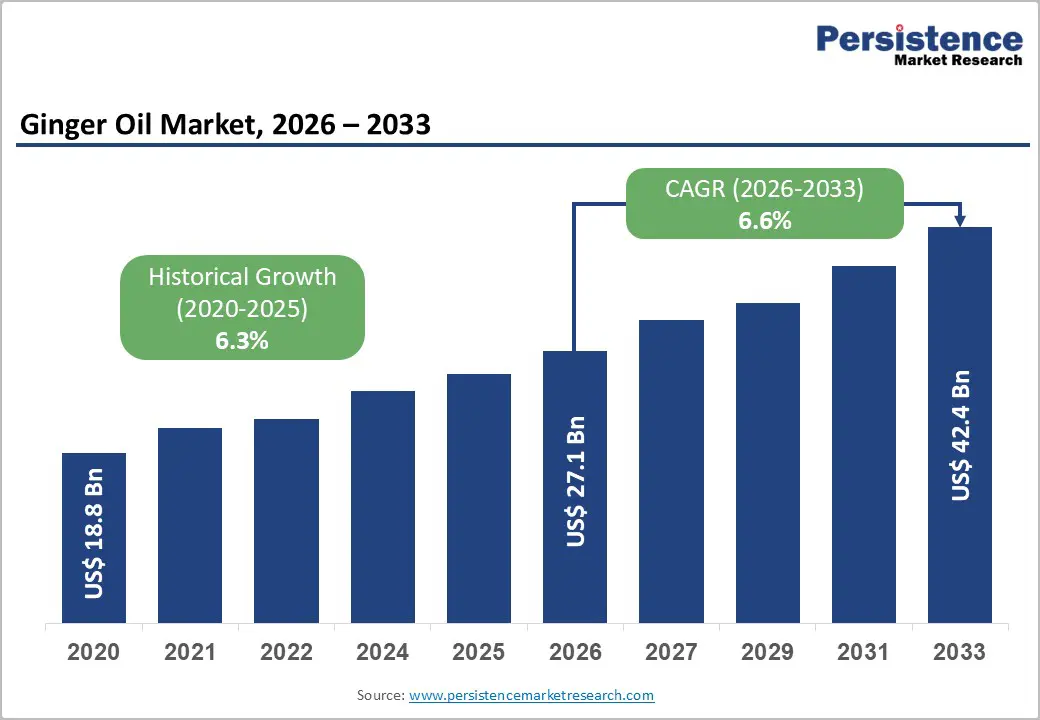
The global ginger oil market size is likely to be valued at US$27.1 billion in 2026 and is expected to reach US$42.4 billion by 2033, growing at a CAGR of 6.6% during the forecast period from 2026 to 2033, driven by the rising consumer demand for natural and clean label ingredients across food & beverage, wellness, and personal care industries, along with ginger oil’s well-recognized anti-inflammatory, digestive, and therapeutic properties.
The expanding use of functional foods, nutraceutical formulations, aromatherapy, and cosmetic applications, coupled with increasing awareness of plant-based and organic alternatives, continues to drive market adoption. Advancements in extraction technologies, improved quality standards, and robust availability of raw materials from key ginger-producing regions, such as the Asia-Pacific, are supporting consistent market expansion.
Key Industry Highlights:
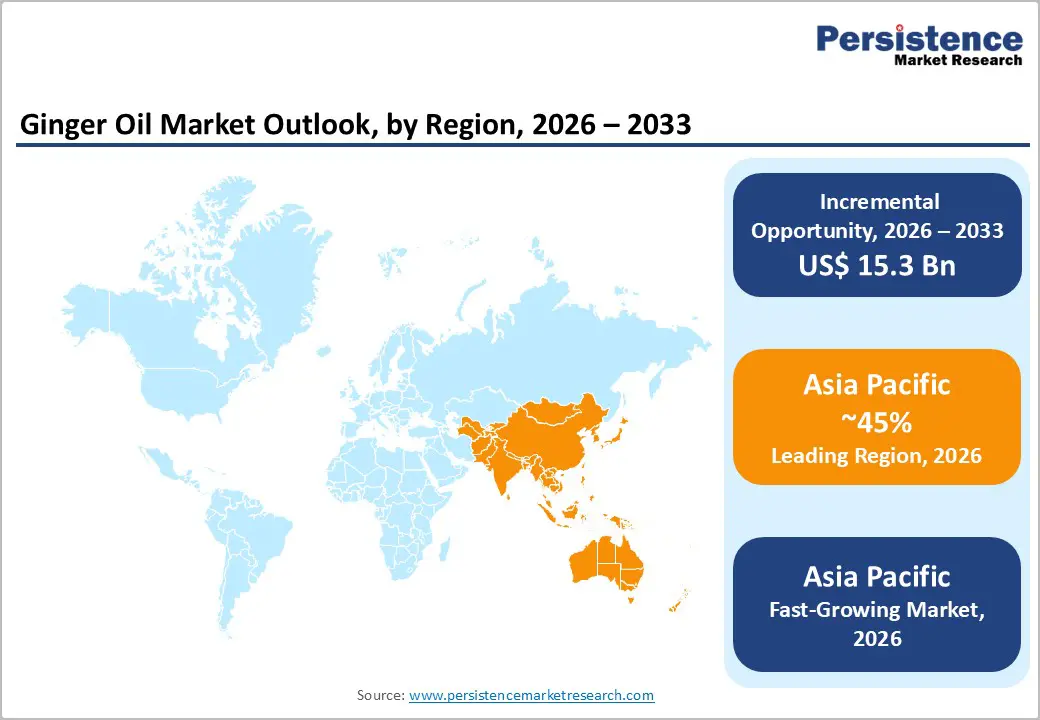
- Leading Region: Asia Pacific is anticipated to be the leading region, accounting for a market share of 45% in 2026, driven by strong production in China, India, Japan, and ASEAN countries, rising domestic demand, export-focused manufacturing, traditional medicinal use, and growing investments in organic and capacity expansion.
- Fastest-growing Region: Asia Pacific is likely to be the fastest-growing region, supported by abundant raw material availability, expanding food and wellness industries, rising consumer preference for natural ingredients, strong export demand, and increasing investments in processing and organic production.
- Leading Product Type: Conventional ginger oil is projected to be the leading product type in 2026, accounting for 70% of revenue, driven by lower production costs and broad industrial availability.
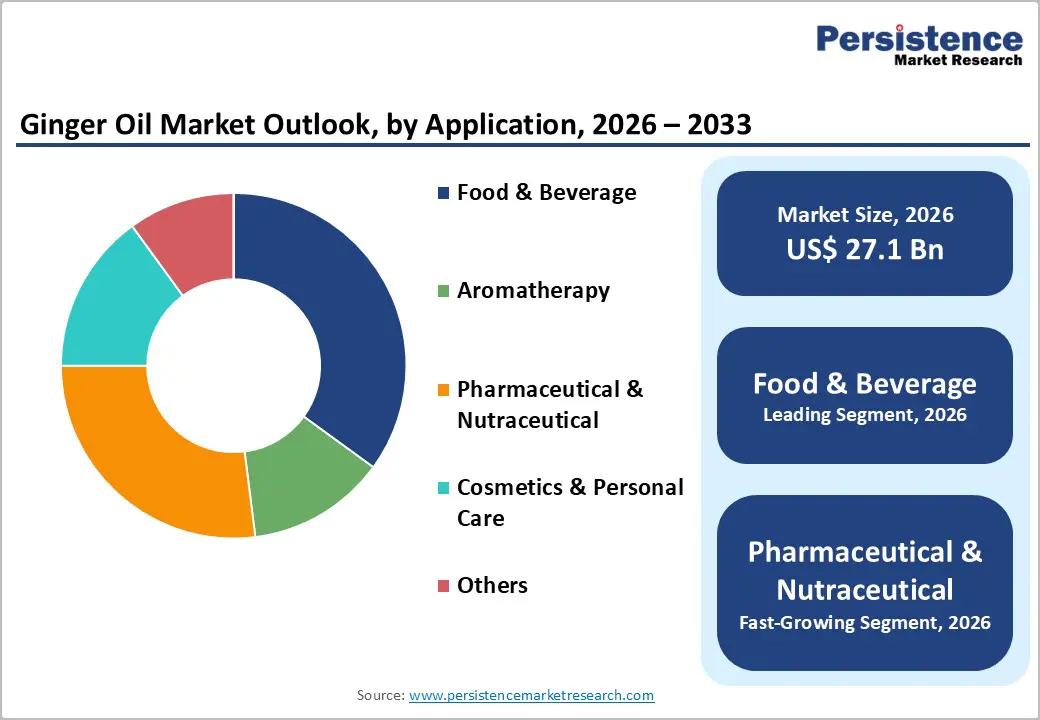
- Leading Application: The food & beverage segment is expected to be the leading application, accounting for over 50% of revenue in 2026, driven by rising demand for natural flavoring in bakery, beverages, sauces, and clean-label products.
| Report Attribute | Details |
|---|---|
|
Ginger Oil Market Size (2026E) |
US$27.1 Bn |
|
Market Value Forecast (2033F) |
US$42.4 Bn |
|
Projected Growth (CAGR 2026 to 2033) |
6.6% |
|
Historical Market Growth (CAGR 2020 to 2025) |
6.3% |
Market Factors – Growth, Barriers, and Opportunity Analysis
Growth Analysis - Rising Demand for Natural and Plant-Based Ingredients in Food & Beverages and Wellness Sectors
Increasing consumer preference for natural and plant-based ingredients in food, beverages, and wellness products. With rising awareness of health and clean label trends, manufacturers are substituting synthetic additives with natural extracts such as ginger oil. Its unique flavor, aroma, and therapeutic properties make it suitable for bakery products, beverages, sauces, and functional foods. Wellness-focused products, including herbal teas, immunity boosters, and natural remedies, are fueling consistent demand. The emphasis on sustainability and plant-derived ingredients also encourages both domestic and international brands to incorporate ginger oil, increasing production and market expansion.
Consumers increasingly favor products with functional benefits, such as digestive support, anti-inflammatory effects, and antioxidant properties, which ginger oil provides. In wellness and personal care sectors, formulations such as herbal balms, aromatherapy oils, and natural supplements highlight ginger oil as a core ingredient. Its versatility across multiple categories enhances adoption, reinforcing the market growth trajectory. Rising disposable incomes, health-conscious lifestyles, and urbanization in developing regions contribute to higher consumption. The trend toward plant-based, chemical-free products ensures that ginger oil remains relevant as a natural, safe, and functional ingredient, thereby strengthening both market penetration and revenue generation.
Growing Applications in Pharmaceuticals, Nutraceuticals, and Aromatherapy
Its bioactive compounds, including gingerols and shogaols, confer anti-inflammatory, digestive, and immune-boosting properties, making it suitable for supplements, herbal remedies, and wellness products. Nutraceutical companies increasingly incorporate ginger oil into capsules, syrups, and functional drinks to meet rising consumer demand for preventive healthcare solutions. Aromatherapy applications benefit from ginger oil's calming aroma and stress-relieving properties, while cosmetic formulations use ginger oil for skin and hair benefits, thereby diversifying its commercial use.
Rising awareness of natural and plant-derived therapeutic alternatives supports higher adoption in both developed and emerging markets. Pharmaceutical and nutraceutical companies are shifting toward herbal formulations due to consumer safety concerns and demand for chemical-free ingredients. Aromatherapy usage is growing among wellness enthusiasts, spas, and holistic healthcare providers, driving demand for high-quality ginger oil. Its dual functionality as both a flavoring and functional ingredient provides manufacturers with flexibility, supporting cross-sector growth. Increased R&D into ginger-based health solutions and wellness-focused marketing increases its commercial potential and penetration across diverse applications.
Barrier Analysis - Regulatory Hurdles and Quality Compliance
Different countries enforce stringent regulations on essential oils used in food, cosmetics, and pharmaceuticals. Compliance with FDA, EFSA, and ISO standards, along with certifications for organic or GMP-grade oils, is mandatory for export and domestic sales. Small producers often face challenges in meeting these standards, thereby limiting their market participation. Adulteration and purity issues create barriers for manufacturers and suppliers. Ensuring batch consistency, testing for contaminants, and documenting traceability require investments in infrastructure and processes, which can constrain market growth despite strong demand across multiple sectors.
Regulatory complexities vary across regions, with import-export restrictions, labeling requirements, and permissible usage limits differing by country. This increases the operational burden for international suppliers and limits market access for new entrants. High compliance costs, especially for smaller manufacturers, can reduce profitability and discourage investment in high-quality production. Inconsistencies in quality verification or certification delays can impact consumer trust and adoption. Manufacturers must maintain robust supply chain protocols, document compliance with safety standards, and continuously monitor evolving regulations to sustain growth, making regulatory challenges a critical constraint on the ginger oil market.
Supply Chain Volatility
Raw ginger cultivation is highly dependent on climate conditions, soil quality, and seasonal availability. Fluctuations in harvest yields due to droughts, pests, or extreme weather directly affect ginger oil production. Geopolitical factors, transportation delays, and rising logistics costs contribute to inconsistent supply and higher prices. Small-scale farmers and fragmented sourcing exacerbate volatility. Disruptions in the supply of high-quality ginger can impact industrial buyers, limiting production in food, pharmaceutical, and wellness sectors and restraining market growth in both domestic and export-oriented markets.
The fragmented nature of ginger cultivation in key producing countries, including India, China, and the ASEAN region, often results in uneven supply distribution, thereby affecting procurement stability. Seasonal harvesting cycles mean manufacturers must manage storage, processing, and quality control efficiently to maintain a year-round supply. Price volatility also affects profit margins, particularly for industrial and organic segments. Supply chain risks can discourage investment in processing infrastructure and large-scale production. To mitigate these issues, companies increasingly explore contract farming, geographic diversification, and technological solutions in logistics and extraction, but supply volatility remains a persistent challenge in stabilizing ginger oil market growth.
Opportunity Analysis - Technological Advancements in Extraction and Product Innovation
Modern methods such as supercritical CO extraction, steam distillation improvements, and cold-pressing techniques increase oil yield, purity, and bioactive retention. These innovations enable manufacturers to produce higher-quality oils suitable for pharmaceuticals, cosmetics, and premium food applications. Product innovation also extends to blends, encapsulated forms, and functional formulations, enhancing versatility and marketability. Improved extraction reduces production costs and environmental impact, enabling companies to scale sustainably.
Innovation also supports the development of value-added products, such as organic certified oils, aroma blends, and nutraceutical supplements. Research into bioactive compound stabilization, controlled-release encapsulation, and integration into functional foods expands market potential. Advanced extraction ensures consistent quality and stronger flavor profiles, meeting consumer expectations in high-end and export markets. Technology-driven improvements also facilitate compliance with international safety and quality standards, enabling access to stringent markets.
Rising Demand for Organic and Premium Ginger Oil Variants
Rising health consciousness, awareness of pesticide-free products, and willingness to pay for natural and sustainable ingredients drive this trend. Organic oils are increasingly used in wellness, cosmetics, and high-end culinary applications, enabling manufacturers to capture premium pricing. The demand is particularly strong in developed markets such as North America and Europe, while emerging markets are showing rapid adoption. Expansion in certified organic production, coupled with consumer education on health benefits.
Premium ginger oils also appeal to the cosmetics, aromatherapy, and nutraceutical segments, where purity, aroma, and therapeutic efficacy are critical. Brands are leveraging organic certification, sustainable sourcing, and traceability to build trust and justify higher pricing. This trend encourages investment in cultivation practices, quality control, and processing technologies. The increased availability of organic and high-quality variants supports innovation in functional foods, supplements, and personal care formulations, thereby increasing adoption.
Category-wise Analysis
Product Type Insights
Conventional ginger oil is expected to lead the ginger oil market, accounting for approximately 70% of revenue in 2026, driven by its cost-effectiveness and wider availability for industrial applications. This segment benefits from established supply chains, large-scale production, and efficient extraction techniques, making it ideal for volume-driven uses in food & beverages, cosmetics, and aromatherapy. For example, major food manufacturers utilize conventional ginger oil as a natural flavoring in sauces, beverages, and baked goods due to its consistent quality and lower cost compared with organic variants. Its affordability and widespread distribution allow conventional ginger oil to maintain dominance in markets where price sensitivity is critical.
Organic ginger is likely to represent the fastest-growing segment in 2026, supported by rising consumer preference for pesticide-free and sustainably sourced ingredients. The wellness, cosmetics, and personal care markets are particularly fueling this growth, as consumers increasingly seek natural, premium, and chemical-free products. For example, brands such as Young Living Essential Oils have seen rapid adoption of organic ginger oil in aromatherapy blends and skincare formulations due to its certified organic status and perceived health benefits. Growth is also supported by premium pricing, health-conscious trends, and certifications such as USDA Organic and ISO, which enhance consumer trust.
Application Insights
The food & beverage segment is projected to lead the market, capturing approximately 50% of the revenue share in 2026, supported by its widespread use as a natural flavoring agent in bakery products, beverages, sauces, and snacks. Its Generally Recognized as Safe (GRAS) status and natural origin make it ideal for clean-label and functional foods, appealing to health-conscious consumers. For example, major beverage companies incorporate ginger oil into ginger-based soft drinks and teas to enhance flavor while delivering functional benefits such as digestive support. Segment dominance is also supported by the scalability of production, cost efficiency, and stable supply chains, which enable manufacturers to consistently meet large-scale demand.
The pharmaceutical & nutraceutical segments are likely to be the fastest-growing applications, driven by ginger oil’s anti-inflammatory, digestive, and immune-boosting properties. Its bioactive compounds, such as gingerol and shogaol, are widely used in dietary supplements, herbal remedies, and functional nutraceutical formulations. For example, companies such as Now Foods have integrated ginger oil into natural supplement capsules targeting digestive health and joint inflammation, responding to the rising consumer preference for plant-based therapeutic solutions. Growth in this segment is fueled by increasing awareness of natural alternatives to synthetic drugs, regulatory support for herbal supplements, and expanding wellness-focused consumption in both developed and emerging markets.
Regional Insights
North America Ginger Oil Market Trends
North America is likely to be a significant market for ginger oil in 2026, driven by rising consumer demand for natural, plant-based, and health-oriented products. Health-conscious consumers in the U.S. and Canada increasingly seek ginger oil for its digestive, anti-inflammatory, and wellness benefits, pushing its adoption in functional foods, beverages, aromatherapy, and personal care products. Retail and e-commerce channels have broadened accessibility, making ginger oil easier to purchase for both household and commercial use.
The region also benefits from strong regulatory frameworks, such as FDA GRAS designation, which reinforce safety and quality for food and nutraceutical applications. Within this dynamic landscape, for example, doTERRA International, LLC stands out as a noteworthy example of market influence, particularly in the aromatherapy and personal care categories. Known for its extensive essential oil portfolio, doTERRA emphasizes product purity, traceability, and direct-to-consumer engagement, which has helped raise consumer awareness and acceptance of ginger oil as a therapeutic and lifestyle product.
Europe Ginger Oil Market Trends
Europe is likely to be a significant market for ginger oil in 2026, due to a strong consumer demand for natural, sustainable, and organic ingredients across food, beverage, wellness, and personal care categories. European consumers increasingly prioritize clean-label products and environmentally responsible sourcing, reinforcing ginger oil’s appeal in flavoring, aromatherapy, and functional formulations. High regulatory standards under EU frameworks ensure product safety and quality, which boosts confidence among manufacturers and consumers alike.
The market also benefits from a well-established import infrastructure, with countries such as Germany, the U.K., and France serving as major hubs for ginger oil distribution and value-added processing. For example, Givaudan S.A. exemplifies strong industry participation in the region. As a leading Swiss flavours and fragrances manufacturer, Givaudan develops customized ginger oil-based ingredients for food & beverage, personal care, and cosmetic product lines, catering to Europe’s sophisticated demand for high-quality natural extracts.
Asia Pacific Ginger Oil Market Trends
The Asia Pacific region is anticipated to be the leading region, accounting for a market share of 45% in 2026, driven by robust production capacity and deep cultural integration of ginger across daily diets, traditional medicine, and wellness practices. The region accounts for the largest share of ginger oil demand due to favorable agricultural conditions in countries such as China, India, Nepal, and Indonesia, which ensure a steady and cost-effective supply of raw ginger for oil extraction. Domestic consumption remains high as ginger oil is widely used in food and beverages for its flavor and functional benefits, as well as in cosmetics and aromatherapy products.
Urbanization, rising disposable incomes, and increasing health awareness are accelerating the adoption of natural, plant-based ingredients in food formulations, personal care products, and wellness supplements. For example, Synthite Industries Ltd. stands out as a key regional example of market development and value addition. As a major Indian processor, Synthite leverages vertically integrated operations that encompass cultivation-linked sourcing, advanced extraction technologies, and distribution networks, enabling it to supply high-quality ginger oil and oleoresins to food, beverage, and flavor and fragrance industries worldwide.
Competitive Landscape
The global ginger oil market exhibits a moderately fragmented structure, driven by the presence of both multinational essential oil manufacturers and numerous regional and niche suppliers competing across food & beverage, pharmaceutical, aromatherapy, and personal care applications. Established companies leverage extensive distribution networks, quality certifications, and brand recognition to secure market share, while smaller firms focus on organic, specialty, and cost-effective solutions to address diverse consumer demands.
With key leaders including Young Living Essential Oils, doTERRA International, Synthite Industries Ltd., and AOS Products Pvt. Ltd., the competitive landscape comprises a mix of players with strong market reach and regional producers that enhance localized offerings. These players compete through product quality enhancement, expansion of organic and premium variants, strategic partnerships, and targeted marketing efforts aimed at health-conscious consumers and industrial buyers.
Key Industry Developments:
- In March 2025, d-TERRA International, LLC won the 2025 SEAL Sustainability Innovation Award for its responsible ginger sourcing efforts in Tanzania. Through its Co-Impact Sourcing® model, d-TERRA partners with small-scale farmers to ensure sustainable production, ethical sourcing, and community empowerment. The initiative promotes regenerative agricultural practices, fair trade relationships, and supply chain transparency, while providing long-term economic benefits to local communities.
- In June 2024, Biolandes SAS, a France-based leading producer of essential oils, launched a new range of organic essential oils certified by Ecocert Greenlife. The popular single-origin varieties included eucalyptus, peppermint, and lavender. They maintain high purity and sustainability through organic production and distillation by steam or cold expression.
Companies Covered in Ginger Oil Market
- AOS Products Pvt. Ltd.
- Aromaaz International
- Bontoux S.A.
- doTERRA International, LLC
- Edens Garden Inc.
- Florihana Distillerie
- Givaudan SA
- Moksha Lifestyle Products
- Mountain Rose Herbs Inc.
- Now Foods
- Plant Therapy, Inc.
- Young Living Essential Oils
Frequently Asked Questions
The global ginger oil market is projected to reach US$27.1 billion in 2026.
The ginger oil market is driven by rising consumer demand for natural, plant-based ingredients in food, beverages, wellness, and personal care products.
The ginger oil market is expected to grow at a CAGR of 6.6% from 2026 to 2033.
Key market opportunities lie in the growing demand for organic and premium ginger oil variants, along with expanding applications in nutraceuticals, aromatherapy, and cosmetics.
AOS Products Pvt. Ltd., Aromaaz International, Bontoux S.A., doTERRA International, LLC, and Edens Garden Inc. are the leading players.


