




- Nutraceuticals & Functional Foods
- Chamomile Extract Market
Chamomile Extract Market Size, Share, and Growth Forecast, 2026 - 2033
Chamomile Extract Market by Source Type (Organic, Conventional), Application (Food & Beverages, Pharmaceuticals, Dietary Supplements, Others), End-user (Tea, Allopathic Medicines, Ayurvedic Medicines, Cosmetics), and Regional Analysis for 2026 – 2033

Chamomile Extract Market Size and Trends Analysis
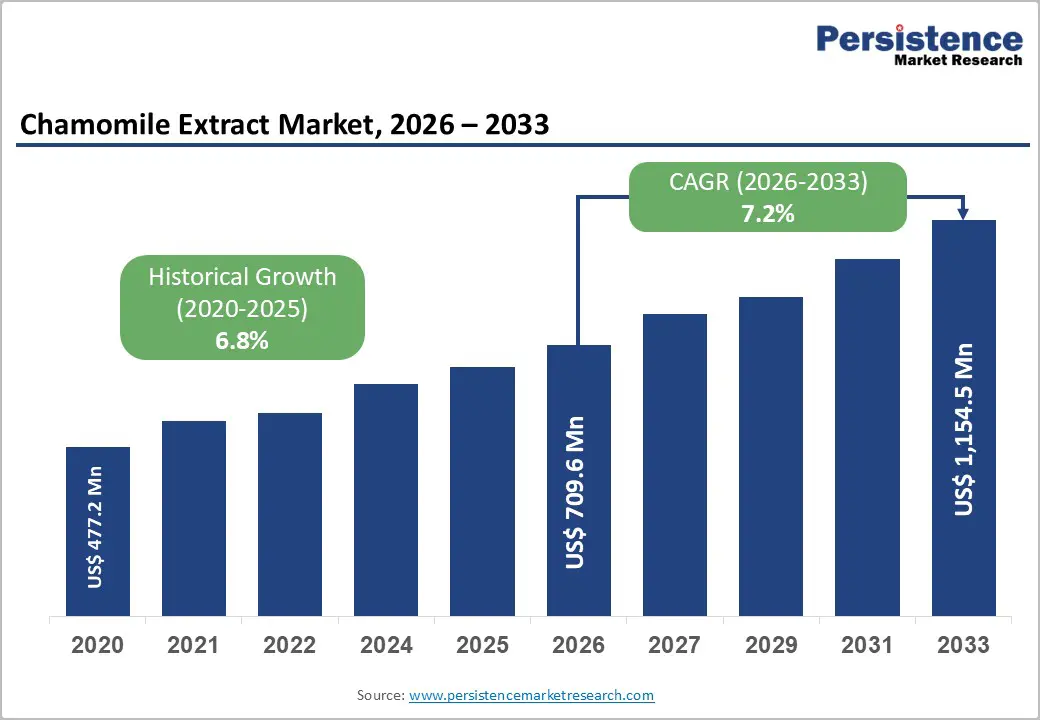
The global chamomile extract market size is likely to be valued at US$709.6 million in 2026, and is expected to reach US$1,154.5 million by 2033, growing at a CAGR of 7.2% during the forecast period from 2026 to 2033, driven by the increasing prevalence of natural ingredient demand in functional foods, rising consumer preference for herbal wellness products, and growing applications in premium cosmetics and pharmaceuticals.
Rising demand for high-quality, especially organic, chamomile extract in dietary supplements and personal care is driving market growth. Advances in solvent-free extraction and standardized active compounds ensure better consistency and clean-label appeal. Chamomile's recognized calming, anti-inflammatory, and skin-soothing benefits are key drivers in the growing health and beauty sectors.
Key Industry Highlights:
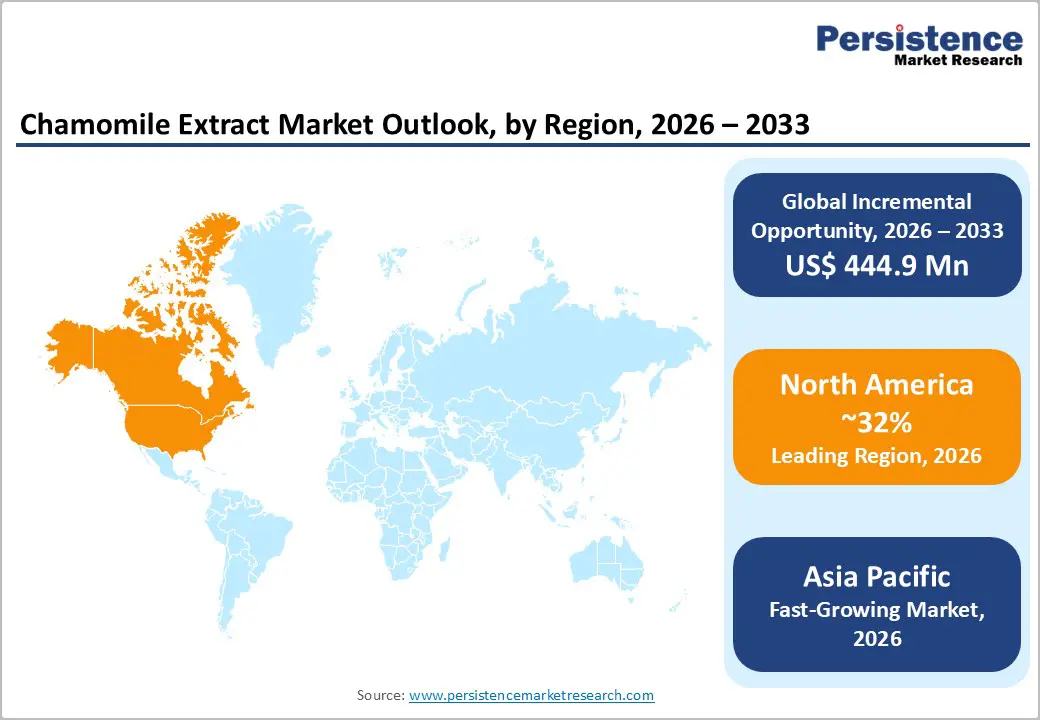
- Leading Region: North America, anticipated to account for a 32% market share in 2026, driven by high consumer demand for natural flavors and herbal ingredients in food, beverages, and nutraceuticals.
- Fastest-growing Region: Asia Pacific, fueled by rising middle-class health awareness, rapid expansion of modern retail, and growing investments in local chamomile brands in China and India.
- Dominant Source Type: Conventional, to hold approximately 62% of the market share, as it remains the core volume driver in mass retail.
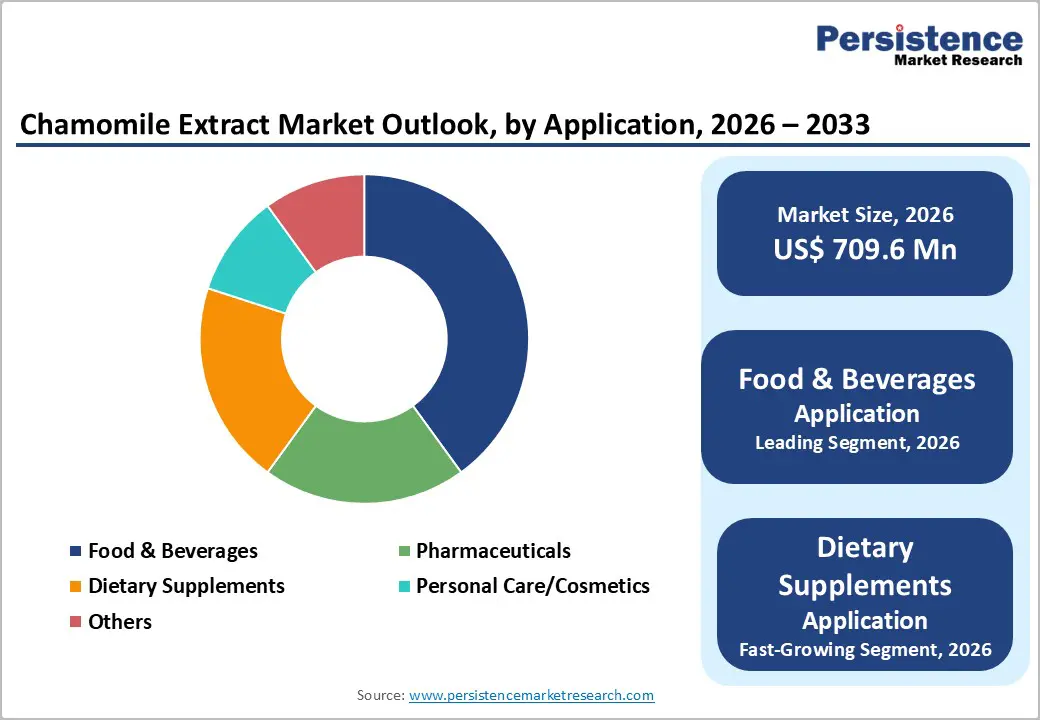
- Leading Application: Food & Beverages, contributing nearly 35% of the market revenue, due to aromatic enhancement needs.
- Leading End-user: Tea, contributing nearly 30% of the market revenue, due to traditional and wellness-driven consumption.
| Key Insights | Details |
|---|---|
|
Chamomile Extract Market Size (2026E) |
US$709.6 Mn |
|
Market Value Forecast (2033F) |
US$1,154.5 Mn |
|
Projected Growth (CAGR 2026 to 2033) |
7.2% |
|
Historical Market Growth (CAGR 2020 to 2025) |
6.8% |
Market Factors – Growth, Barriers, and Opportunity Analysis
Rising Demand for Natural Flavors and Herbal Ingredients
Consumer demand for clean, minimally processed products is driving the increasing popularity of natural flavors and herbal ingredients. Today's consumers are highly conscious of ingredient lists, actively avoiding artificial additives and favoring natural options for their perceived safety, quality, and authenticity. Ingredients from fruits, spices, flowers, and herbs are gaining traction for their genuine taste and health benefits.
Popular herbal ingredients such as ginger, turmeric, mint, and basil are especially valued for their distinctive flavors and functional properties, including digestive support and antioxidants. This combination of flavor enhancement and wellness positioning has made natural and herbal ingredients central to product innovation.
In the U.S., products labeled as “natural,” which often include natural flavors, accounted for 16.3% of total retail food expenditures and 16.9% of unit sales in 2018, reflecting significant market penetration. Dairy products showed the highest frequency of natural labels, with 27.7% of retail spending on such products.
Beyond health, evolving lifestyle trends and sustainability awareness are further driving demand. Exposure to diverse global cuisines is expanding consumer palates, while a growing focus on ethically sourced ingredients and sustainable practices boosts preference for natural herbs and flavors over synthetic alternatives. Manufacturers are responding by reformulating products with botanical extracts and natural flavors to meet consumer expectations and maintain competitiveness.
High Extraction Costs and Raw Material Supply Volatility
The shift toward natural flavors and herbal ingredients has introduced significant production and supply-chain challenges, primarily due to high extraction costs and raw material supply volatility.
Unlike synthetic compounds, natural flavor molecules must be extracted from plant, fruit, or botanical sources through multiple steps, including harvesting, cleaning, drying, extraction, and purification. Each step requires specialized equipment, energy, and skilled labor, making extraction systems more expensive than chemical synthesis. Additionally, the complexity of natural matrices and the need to preserve delicate compounds increase costs.
Inefficiency in yield further drives up expenses. Many flavorful or functional compounds occur in low concentrations within raw materials. For instance, essential oils and volatile aromatic compounds often make up only a fraction of a percent of the biomass.
To produce a small amount of extract, companies must process large volumes of raw material, increasing both variable and fixed costs, such as energy, solvents, and facility maintenance. These costs are ultimately passed downstream, leading to higher prices for finished products.
Raw material supply volatility adds another layer of complexity. Natural sources are subject to seasonal, climatic, and agricultural risks such as droughts, floods, pests, and disease. Trade disruptions and local labor shortages can further contribute to supply instability, forcing sourcing companies to compete for limited stock at higher costs.
Developments in Sustainable Cultivation and Functional Ingredient Fortification
As consumer interest in healthier, environmentally responsible products grows, two interconnected trends, sustainable cultivation and functional ingredient fortification, are reshaping the production and use of natural flavors and herbal components. Sustainable cultivation focuses on agricultural practices that enhance ecosystem health while producing high-quality botanical raw materials.
Techniques like cover cropping, reduced tillage, integrated pest management, and precise water use promote soil health and biodiversity, reducing environmental degradation and increasing crop resilience. This ensures consistent supply quality, essential for industries relying on plant-derived flavors and botanicals. Agroforestry systems, where herbs and flavor plants are grown alongside trees, further improve soil carbon sequestration and reduce erosion, creating optimal growing conditions.
Functional ingredient fortification is gaining traction, with products intentionally enhanced by bioactive compounds, vitamins, minerals, and herb-based extracts that offer health benefits. Natural flavors now carry added functional properties such as antioxidants, anti-inflammatory compounds, and digestive support.
This trend blends culinary and wellness priorities, with consumers seeking products that are both flavorful and health-promoting. To preserve these functional benefits, manufacturers are investing in stabilization technologies, such as microencapsulation and controlled-release formulations, ensuring that delicate botanicals retain their potency during processing and storage. This dual focus on sustainability and functional enrichment is reshaping product innovation in the food and personal care sectors.
Category-wise Analysis
Application Insights
Food and beverages are expected to lead the chamomile extract market, accounting for 35% of the market share in 2026. This category aligns closely with growing consumer preferences for natural, health-oriented ingredients. Chamomile’s mild floral taste and calming qualities make it an ideal addition to a wide range of products, including teas, functional drinks, flavored waters, cereals, snacks, and wellness beverages. As consumers increasingly seek products that support both taste and wellbeing, manufacturers are incorporating chamomile extract to cater to health-conscious buyers.
Chamomile is particularly attractive for products targeting stress relief and digestive health, two key themes in modern food and beverage innovation. Its reputation for digestive support and relaxation further enhances its appeal. The category’s dominance is also driven by broad distribution channels, from supermarkets to online retailers, ensuring widespread access.
For example, The Boston Beer Company’s TeaPot brand launched a Blueberry Chamomile Iced Tea, combining real chamomile tea with natural flavors for a ready-to-drink beverage that aligns with relaxation and lifestyle trends beyond traditional teas.
Dietary supplements represent the fastest-growing segment, driven by consumers seeking targeted, convenient wellness solutions. Unlike traditional tea or beverages, supplements such as capsules, tablets, powders, and tinctures offer chamomile’s bioactive compounds in precise, measurable doses.
This appeals to those focused on specific health outcomes such as stress relief, sleep support, and digestive comfort, where dosage consistency is essential. Products, including BulkSupplements.com Chamomile Extract Capsules, provide a convenient, dose-controlled option for consumers seeking the benefits of chamomile without the time commitment of preparing tea. This reflects the growing preference for practical, on-the-go wellness solutions.
End-user Insights
Chamomile tea is expected to dominate the market, contributing nearly 30% of revenue in 2026. This is due to its long-standing status as a natural, widely accepted format for consuming chamomile. Across cultures, chamomile tea is celebrated for its soothing properties, offering relaxation and digestive comfort.
Whether consumed as a pure herbal infusion or blended with other botanicals, chamomile extract in tea provides the familiar sensory experience that consumers expect, while catering to modern preferences for wellness-oriented beverages. Tea products, available in a variety of formats such as hot or cold, loose-leaf or bagged, are sold across numerous retail channels, from grocery stores and cafés to online specialty marketplaces, making them easily accessible.
The versatility of chamomile tea encourages innovation, with brands introducing new flavor blends and functional variations. For example, Organic India’s Tulsi Honey Chamomile tea combines chamomile with tulsi (holy basil) and honey, offering a soothing, caffeine-free herbal tea with wellness associations and high-quality, natural ingredients.
In contrast, the cosmetics sector represents the fastest-growing end-user for chamomile extract. Beauty and personal care brands are increasingly incorporating natural, multi-functional botanicals to meet consumer demand for effective, gentle ingredients. Chamomile’s soothing compounds, such as apigenin and bisabolol, are highly valued for calming irritated skin, reducing redness, and supporting sensitive skin formulations.
Chamomile extract is increasingly used in skincare products, including moisturizers, serums, shampoos, conditioners, and eye creams, replacing synthetic additives with plant-based alternatives. Brands such as Aroma Treasures, with their chamomile-infused lotion, are capitalizing on chamomile’s reputation in the clean beauty movement, appealing to consumers seeking authenticity, transparency, and nature-based ingredients.
Regional Insights
North America Chamomile Extract Market Trends
North America is projected to account for nearly 32% of the chamomile extract market in 2026, which is rooted in a combination of consumer behavior, industry structure, and regulatory environments that together support both demand and supply for botanical ingredients. At the consumer level, there is a long-standing cultural affinity in the U.S. and Canada for herbal wellness products, particularly teas, supplements, and personal care goods that emphasize natural and calming properties.
Chamomile, with its historic association with relaxation and digestive comfort, fits squarely into this mindset. The region’s consumers especially younger and health-oriented demographics tend to seek products free from synthetic additives and are more willing to pay premiums for botanically derived ingredients.
The structure of the North American food and beverage industry also supports chamomile’s prominence. Retailers and manufacturers in this region are often early adopters of functional ingredients, integrating chamomile extract not only in traditional tea formats but also in ready-to-drink beverages, fortified snacks, and dietary supplements.
These product categories benefit from strong distribution networks, from large supermarket chains to growing direct-to-consumer platforms. The combination of broad availability and strong marketing around wellness benefits amplifies chamomile’s market presence.
In cosmetics and personal care, North American brands frequently lead in “clean beauty” innovation, where natural botanicals such as chamomile extract are used to soothe sensitive skin and add therapeutic positioning. The popularity of such products in North America fuels additional demand, often outpacing that seen in regions with more conservative beauty trends.
Europe Chamomile Extract Market Trends
The European market for chamomile extract is shaped by a blend of consumer wellness priorities, traditional herbal use, regulatory standards, and industry diversification. Chamomile has deep roots in European herbal traditions, valued for its calming, digestive, and skin-soothing properties.
This cultural heritage provides a strong demand base for chamomile extract, which is now gaining momentum due to modern health trends that favor natural alternatives to synthetic additives. The increasing integration of chamomile into functional foods and beverages beyond traditional teas is particularly noteworthy. Consumers are increasingly looking for beverages and snacks that offer both taste and health benefits, and chamomile’s gentle flavor and wellness associations make it ideal for herbal blends, infused waters, and relaxation-focused drink formulations. Regional food brands are experimenting with chamomile-forward products targeting niche markets focused on stress relief and digestive comfort.
In the personal care and cosmetics sectors, European brands are tapping into chamomile’s soothing and anti-inflammatory properties. The natural and organic beauty movements in countries, including Germany, France, and the Nordic region, are strong, with consumers seeking botanical ingredients that are ethically sourced and minimally processed.
Chamomile is commonly used in skincare products for sensitive skin, anti-redness treatments, and calming balms. Sustainable sourcing and traceability are highly valued by both European consumers and regulators, prompting suppliers to adopt environmentally conscious cultivation practices that ensure consistent quality.
Asia Pacific Chamomile Extract Market Trends
Asia Pacific is set to become the fastest-growing market for chamomile extract by 2026, driven by key consumer, economic, and industry trends. Rapid urbanization and rising disposable incomes in countries such as China, India, Indonesia, and Vietnam are shifting consumption toward health-conscious products that align with modern lifestyles.
The region’s long-standing use of traditional herbs, especially in India, China, and Southeast Asia, provides familiarity with botanicals such as chamomile. Growth is being fueled by the transition from traditional herbal teas to more diverse uses, such as in beverages, dietary supplements, and cosmeceuticals.
In the food and beverage sector, younger consumers are embracing functional drinks that offer relaxation, digestive comfort, and stress relief, benefits commonly linked to chamomile. International brands are also introducing chamomile-infused products to cater to middle-class consumers seeking both taste and wellness benefits, broadening chamomile’s appeal beyond herbal teas into lifestyle segments.
The dietary supplement market is expanding rapidly, with chamomile extract finding its place in formulations for sleep support, anxiety relief, and digestive health, which are key concerns in high-stress urban environments. In personal care and cosmetics, the global “clean beauty” trend is driving demand for natural, plant-based ingredients. Chamomile’s soothing and anti-inflammatory properties make it popular in skincare and haircare products targeting sensitive skin and irritation reduction.
Competitive Landscape
The global chamomile extract market features competition between established herbal extract leaders and emerging clean-label suppliers. In North America and Europe, Arjuna Natural Extracts Ltd and Martin Bauer Group lead through strong R&D, distribution networks, and brand partnerships, bolstered by innovative organic and standardized programs.
In Asia Pacific, Changsha Vigorous-Tech Co., Ltd. advances with localized solutions, enhancing accessibility. Organic delivery boosts clean-label appeal, cuts synthetic risks, and enables mass integrations across brands. Strategic partnerships, collaborations, and acquisitions merge expertise, expand portfolios, and speed commercialization. Premium formulations solve efficacy issues, aiding penetration in high-end supplements and cosmetics.
Key Industry Developments
- In January 2025, ORGANIC INDIA, a global leader in organic herbal wellness solutions, announced the launch of a new Single-Origin Tea line with Purely Chamomile, which was highlighted by the prestigious Regenerative Organic Certification®, a gold standard promoting biodiversity, healthier soils, animal welfare, and worker well-being. The chamomile was grown on regenerative small family farms and was crafted using a single ingredient, Regenerative Organic Certified® chamomile flower to deliver a classic, unblended flavor profile suited to chamomile connoisseurs.
Companies Covered in Chamomile Extract Market
- Arjuna Natural Extracts Ltd
- New Zealand Extracts Ltd
- Kemin Industries
- The Pharmaceutical Plant Company
- Afriplex
- Crown Iron Works Company
- Changsha Vigorous-Tech Co., Ltd.
- Gehrliche
- Ampak Company, Inc.
- Nutra Canada
- Martin Bauer Group
- Essenchem Plant Extract Co., Ltd.
- Hunan Goldliloo Pharmaceutical Co., Ltd.
Frequently Asked Questions
The global chamomile extract market is projected to reach US$709.6 million in 2026.
The chamomile extract market is primarily driven by the increasing demand for natural flavors and herbal ingredients in food, beverages, and nutraceuticals.
The chamomile extract market is poised to witness a CAGR of 7.2% from 2026 to 2033.
Advancements in extraction technologies and growing applications in non-alcoholic beverages, digestive supplements, and natural cosmetics are the key opportunities.
Arjuna Natural Extracts Ltd, Martin Bauer Group, Kemin Industries, The Pharmaceutical Plant Company, and Afriplex are the key players.


