




- Nutraceuticals & Functional Foods
- Anhydrous Caffeine Market
Anhydrous Caffeine Market Size, Share, Growth, and Regional Forecast, 2025 - 2032
Anhydrous Caffeine Market by Form (Powdered Anhydrous Caffeine, Granular Anhydrous Caffeine), Category (Natural Anhydrous Caffeine, Synthetic Anhydrous Caffeine), Source, Application, and Regional Analysis from 2025 - 2032

Anhydrous Caffeine Market Share and Trends Analysis
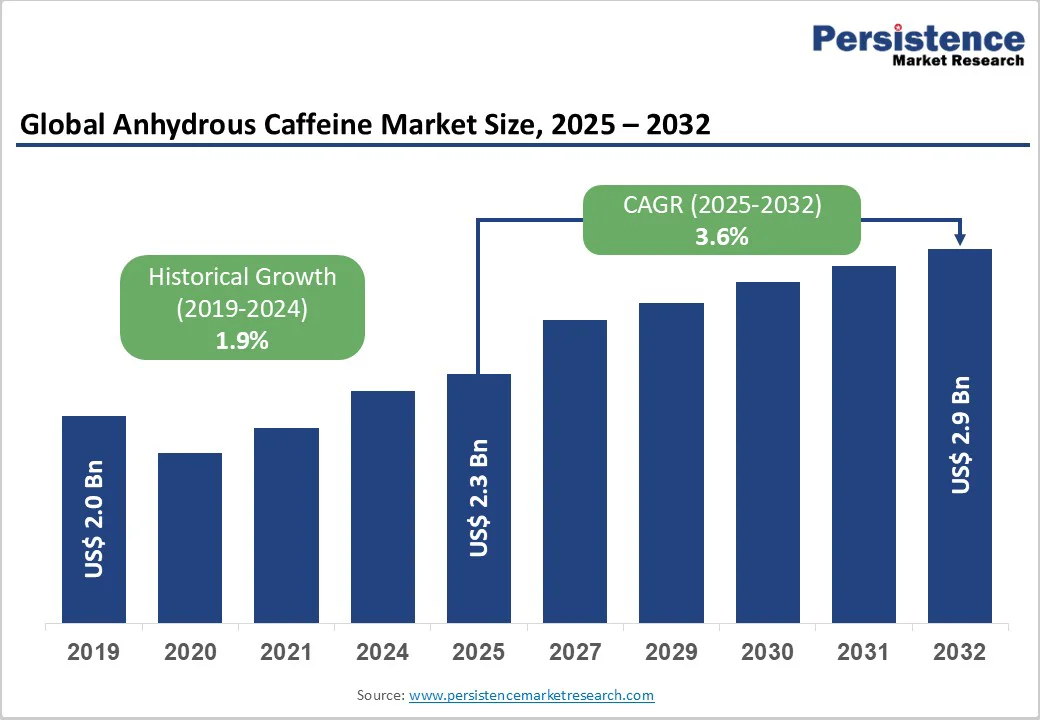
The global anhydrous caffeine market size is likely to value US$2.3 billion in 2025 and is projected to reach US$2.9 billion at a CAGR of 3.6% during the forecast period from 2025 to 2032.
The rising use in energy drinks, dietary supplements, and pharmaceutical formulations has encouraged the market growth. Dehydrated form of caffeine offers high purity, rapid absorption, and easy blending across food, beverage, and wellness applications. Growing consumer preference for alertness-enhancing and performance-boosting products, coupled with the expanding sports nutrition and clean-label movement, fuels market growth. Pharmaceutical and cosmetic industries increasingly adopt anhydrous caffeine for pain relief and anti-fatigue applications.
Key Industry Highlights:
- Anhydrous caffeine is a vital additive in energy drinks, RTD coffees, and performance beverages due to its quick stimulant effect.
- Sports nutrition supplements now widely incorporate anhydrous caffeine for its ability to improve focus, stamina, and endurance.
- The powdered form dominates due to its high solubility, easy blending, and wide applicability across functional beverages, sports nutrition, dietary supplements, and pharmaceuticals.
- Innovations in microencapsulation and sustained-release formulation are enhancing caffeine stability, taste masking, and absorption profiles.
| Key Insights | Details |
|---|---|
|
Anhydrous Caffeine Market Size (2025E) |
US$2.3 Bn |
|
Market Value Forecast (2032F) |
US$2.9 Bn |
|
Projected Growth (CAGR 2025 to 2032) |
3.6% |
|
Historical Market Growth (CAGR 2019 to 2024) |
1.9% |
Market Dynamics
Driver - Rising Popularity of Pre-Workout and Sports Supplements
The growing popularity of ketogenic and low-carb diets is a significant driver for anhydrous caffeine demand worldwide. Consumers following these diets seek alternatives to wheat-based flours that are both nutritious and low in carbohydrates. Almond flour fits perfectly into this trend, offering high protein, healthy fats, and a naturally low glycemic index, making it ideal for managing blood sugar and supporting weight loss goals. Its ability to deliver a rich texture and nutty flavor in baked goods enhances its appeal in keto-friendly bread, cookies, and pancakes. Additionally, food manufacturers are leveraging anhydrous caffeine in innovative product launches to cater to health-conscious consumers, further strengthening its role as a cornerstone ingredient in the expanding keto and low-carb market.
Restraints - Environmental Impact of Chemical Synthesis
The environmental impact of synthetic anhydrous caffeine production is becoming a significant market restraint, as traditional synthesis relies on solvent-heavy chemical reactions involving urea and chloroacetic acid. These processes generate substantial chemical waste, require high energy input, and often release volatile organic compounds (VOCs) into the environment. Growing global emphasis on carbon neutrality and sustainable manufacturing has intensified scrutiny from both regulators and eco-conscious consumers. Manufacturers now face pressure to adopt green chemistry practices, such as enzymatic synthesis, solvent recovery, and bio-based extraction methods. Transitioning toward cleaner, low-emission production technologies is increasingly viewed as essential for long-term competitiveness and compliance.
Opportunity - Caffeine-Infused Skincare and Cosmetics
Caffeine-infused skincare represents an emerging high-value niche for anhydrous caffeine manufacturers, bridging beauty and wellness markets. Its proven ability to stimulate microcirculation, tighten skin, and reduce under-eye puffiness makes it an attractive active ingredient in anti-fatigue, anti-aging, and firming formulations. Anhydrous caffeine, with its stable, water-free structure, enhances formulation flexibility and shelf life in premium cosmetics. Brands are leveraging this ingredient in eye serums, face masks, and body contouring creams to appeal to consumers seeking visible, instant results. Additionally, the ingredient’s antioxidant and lipolytic properties support claims of improved skin texture and reduced cellulite. As the cosmeceutical segment expands, caffeine-based skincare offers a science-backed, multifunctional, and marketable differentiator aligned with wellness and clean-beauty trends.
Category-wise Analysis
By Nature Insights
Powdered anhydrous caffeine dominates the market by form due to its versatility, solubility, and superior formulation compatibility across beverages, supplements, and pharmaceuticals. Its fine particle size ensures uniform dispersion, faster absorption, and consistent dosing, crucial for performance-driven products like energy drinks and pre-workout blends. The powdered form is also cost-efficient to transport and process, with longer shelf stability than liquid or granular variants. Manufacturers prefer it for ease of blending, encapsulation, and tableting, supporting large-scale automated production. Additionally, its adaptability to both synthetic and natural sourcing strengthens supply flexibility, making powdered anhydrous caffeine the preferred and most commercially viable format worldwide.
By Application Insights
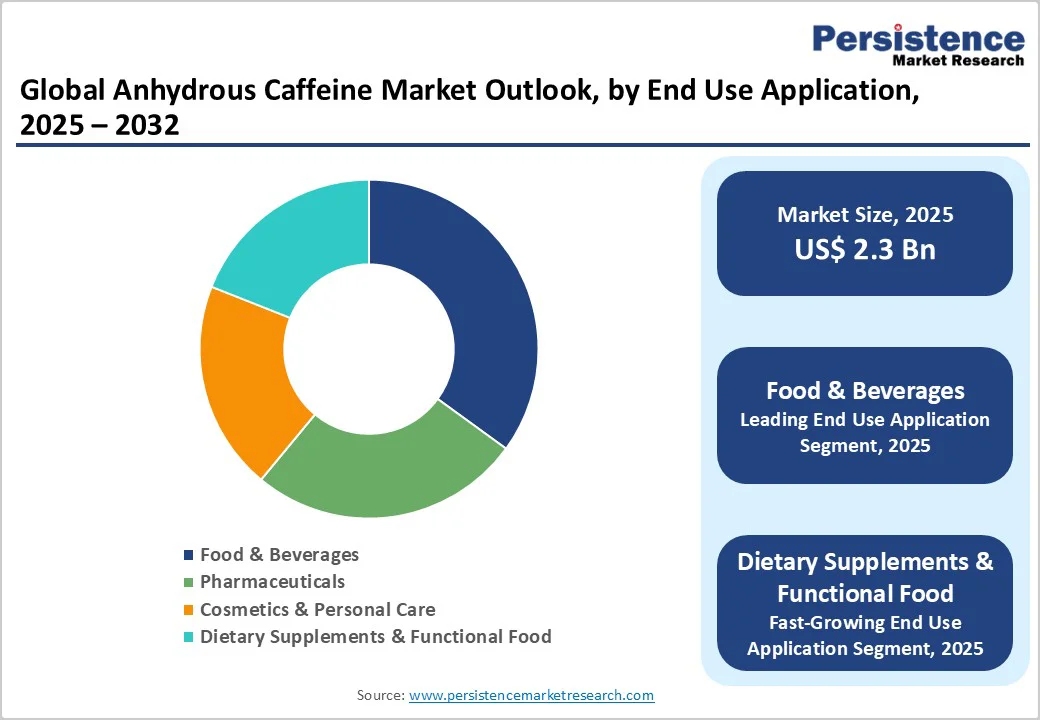
Synthetic sources dominate the global anhydrous caffeine market because they offer high purity, cost efficiency, and supply reliability unattainable through natural extraction. Chemical synthesis enables mass-scale production with precise quality control, meeting the stringent consistency standards required by the beverage, supplement, and pharmaceutical industries. Unlike natural sources such as coffee or tea, synthetic caffeine is not subject to crop variability or seasonal constraints, ensuring stable pricing and availability year-round. Its neutral taste profile, ease of formulation, and longer shelf life make it ideal for processed products, cementing its position as the most preferred and commercially sustainable source in the global market.
Region-wise Insights
North America Anhydrous Caffeine Trends
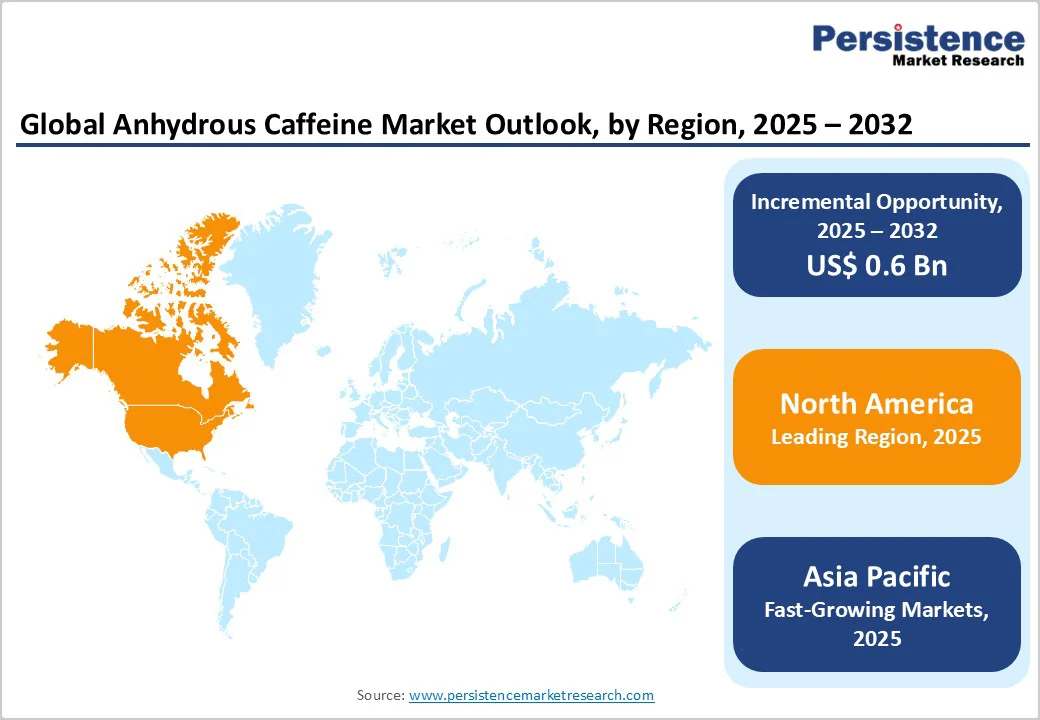
North America, particularly the United States, dominates the global anhydrous caffeine market due to its high consumption of energy drinks, dietary supplements, and functional beverages. The region’s fast-paced lifestyle, coupled with increasing awareness of mental focus and athletic performance, drives strong caffeine demand. Major beverage brands and nutraceutical companies in the U.S. actively incorporate anhydrous caffeine for consistent potency and rapid absorption. Additionally, growing interest in clean-label and plant-derived formulations, combined with robust R&D and regulatory clarity from the FDA, supports innovation. The thriving sports nutrition industry and expanding e-commerce distribution further reinforce North America’s market leadership.
Asia Pacific Anhydrous Caffeine Market Trends
The Asia Pacific region is emerging as the fastest-growing market for anhydrous caffeine, driven by rapid urbanization, expanding middle-class populations, and rising health awareness. Countries like China, India, Japan, and South Korea are witnessing surging demand for energy drinks, instant coffee, dietary supplements, and sports nutrition products. Increasing youth consumption of caffeine-based beverages and the growing fitness culture are major catalysts. Moreover, the rise of local nutraceutical manufacturers and greater retail penetration of international brands are fueling market expansion. Supportive government initiatives promoting wellness and functional foods further strengthen Asia Pacific’s position as a key growth frontier in the global market.
Competitive Landscape
The anhydrous caffeine market exhibits moderate consolidation, characterized by competition among global ingredient manufacturers and nutraceutical formulators. Companies are focusing on high-purity production, regulatory compliance, and quality assurance to serve expanding food, beverage, and supplement industries. Innovation in synthetic synthesis methods, clean-label formulations, and sustainable sourcing remains a key differentiator. Strategic initiatives such as product diversification, R&D collaborations, and regional capacity expansion are strengthening market positions.
Key Industry Developments:
- In February 2025, the Drugs Controller General of India (DCGI) issued an important regulatory update regarding certain Fixed Dose Combinations (FDCs) that had been approved for manufacturing and sale in India before 1988 without proper approval from the Central Licensing Authority. These FDCs, including Paracetamol IP 500mg + Phenylephrine Hydrochloride IP 10mg + Caffeine Anhydrous IP 32mg tablets and Caffeine Anhydrous IP + Paracetamol IP + Phenylephrine Hydrochloride IP + Chlorpheniramine Maleate IP, had been under review to ensure their safety and effectiveness.
Companies Covered in Anhydrous Caffeine Market
- CSPC Pharmaceutical Group Limited
- BASF SE
- Aarti Industries Limited
- Cambridge Commodities Limited
- Central Drug House (P) Ltd.
- LobaChemie Pvt. Ltd.
- Spectrum Laboratory Products, Inc.
- FOODCHEM
- Kudos Chemie Limited
- Stabilimento Farmaceutico Cav. G. Testa Srl
- Fooding Group Limited
- Other
Frequently Asked Questions
The global anhydrous caffeine market is projected to be valued at US$2.3 Bn in 2025.
The global anhydrous caffeine market is driven by multiple factors, primarily the growing demand for energy-boosting products across beverages, dietary supplements, and pharmaceuticals.
The global anhydrous caffeine market is poised to witness a CAGR of 3.6% between 2025 and 2032.
Key opportunities in the global anhydrous caffeine market include the rapid expansion of functional beverages and energy supplements, as consumers seek natural and performance-enhancing ingredients.
BASF SE, Aarti Industries Limited, Cambridge Commodities Limited, CSPC Pharmaceutical Group Limited, and others


