




- Chemicals and Materials
- Aldehyde-Free Disinfectants Market
Aldehyde-Free Disinfectants Market Size, Share, and Growth Forecast 2026-2033
Aldehyde-Free Disinfectants Market by Product Type (Surface Disinfectants, Instrument Disinfectants, Skin Disinfectants, Others), by Form (Liquid, Wipes, Sprays, Others), by End Use Industry (Hospital & Clinics, Pharmaceutical & Biotechnology, Food & Beverage, Household, Others), by Regional Analysis, 2026-2033

Aldehyde-Free Disinfectants Market Size and Trend Analysis
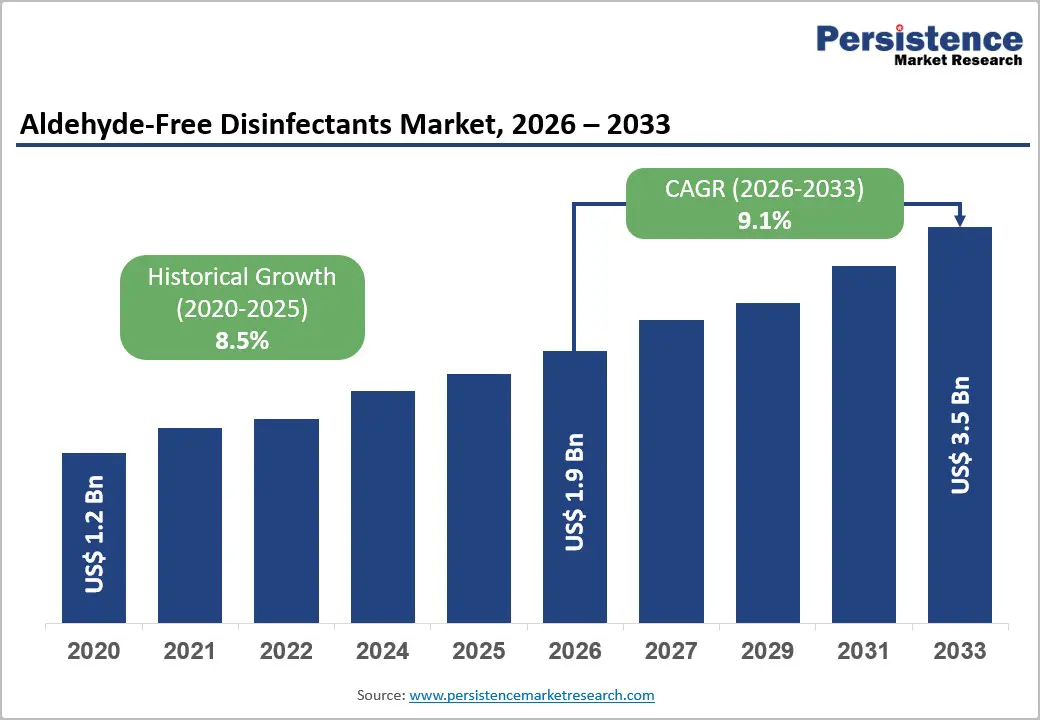
The global aldehyde-free disinfectants market size is likely to be valued at US$ 1.9 Billion in 2026 and is expected to reach US$ 3.5 Billion by 2033, growing at a CAGR of 9.1% during the forecast period from 2026 and 2033.
This rapid growth is driven by strict regulatory restrictions on formaldehyde and other aldehyde-based disinfectants in developed regions, alongside rising healthcare-associated infection (HAI) prevention requirements. According to the CDC, about 1 in 31 hospital patients contracts at least one HAI daily, fueling demand for validated aldehyde-free solutions. Increasing awareness of occupational hazards and post-pandemic hygiene practices further supports adoption across healthcare, food, pharmaceutical, and residential sectors.
Key Market Highlights
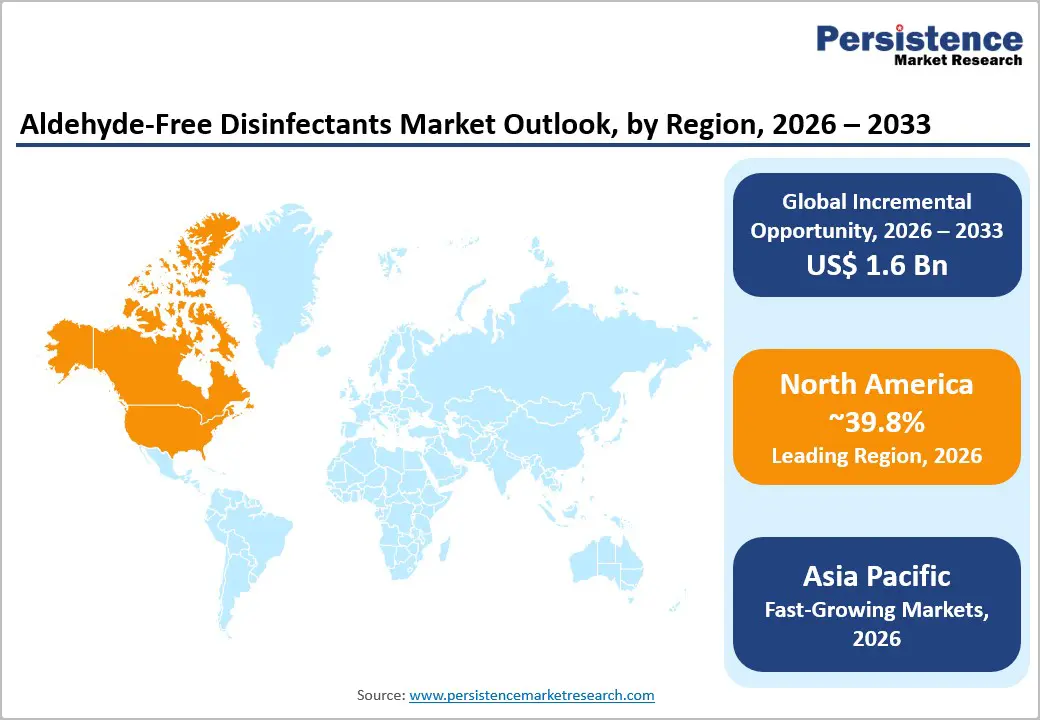
- Leading Region: North America leads the aldehyde-free disinfectants market with ~39.8% share, driven by strict regulations, strong infection-prevention systems, and high healthcare spending.
- Fastest-Growing Region: Asia Pacific is expanding fastest, holding ~32% share and accelerating with healthcare expansion, pharmaceutical growth, and rising hygiene awareness.
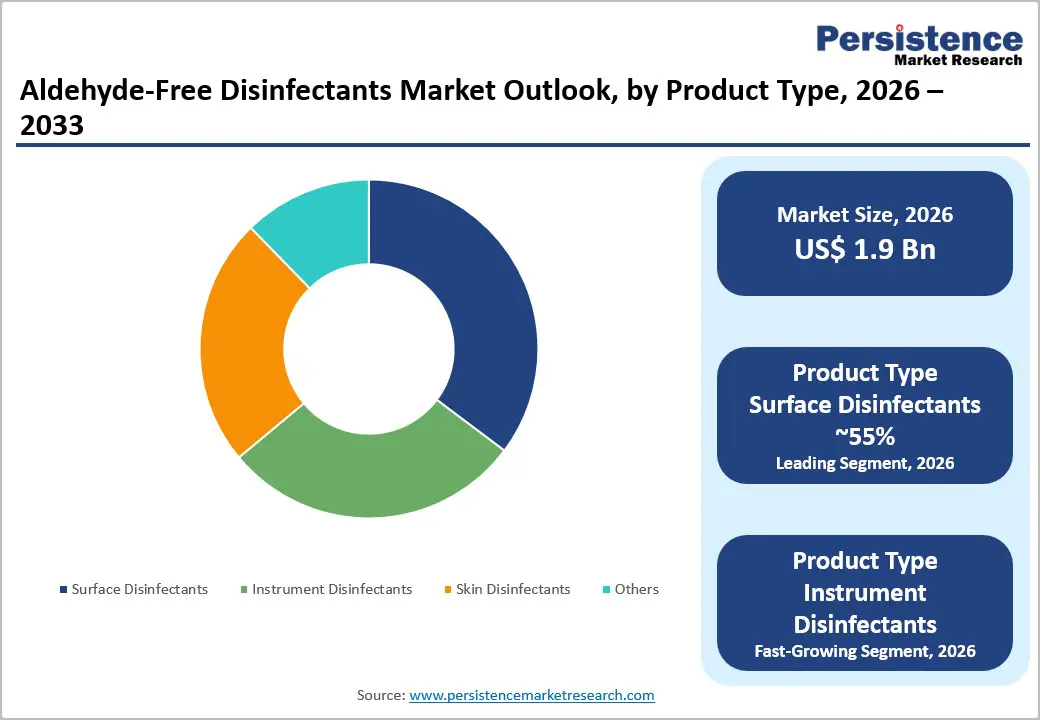
- Leading Product Category: Surface disinfectants dominate the market with ~55% share, supported by hospital high-touch surface cleaning and regulatory infection-control standards.
- Fastest-Growing Product Technology: Hydrogen peroxide and peracetic acid formulations are the fastest-growing technologies, expanding rapidly on the back of regulatory validation and superior antimicrobial efficacy.
- Key Market Opportunity: Enzyme-based, bio-based, and biodegradable disinfectants present major growth opportunities, driven by sustainability mandates and regulatory pressure on toxic chemicals.
| Key Insights | Details |
|---|---|
| Aldehyde-Free Disinfectants Market Size (2026E) | US$ 1.9 Billion |
| Market Value Forecast (2033F) | US$ 3.5 Billion |
| Projected Growth CAGR(2026-2033) | 9.1% |
| Historical Market Growth (2020-2025) | 8.5% |
Market Dynamics
Market Growth Drivers
Escalating Regulatory Restrictions on Aldehyde-Based Formulations
The European Union’s Biocidal Products Regulation (BPR) and the Globally Harmonized System (GHS) have significantly tightened restrictions on formaldehyde and glutaraldehyde disinfectants. In Germany, formaldehyde is approved only for limited uses under strict exposure limits, while the U.S. EPA restricts aldehyde-containing products under List N protocols. These regulations have compelled manufacturers to shift toward hydrogen peroxide, quaternary ammonium, and peracetic acid alternatives, driving demand for aldehyde-free disinfectants globally.
Healthcare providers, pharmaceutical companies, and institutional buyers must comply with these mandates, which will create sustained market growth. Compliance timelines and product reformulations enforced by authorities ensure continuous procurement of validated aldehyde-free disinfectants. North America, Europe, and Asia Pacific markets have particularly benefited, as regulatory enforcement accelerates adoption across hospitals, laboratories, and industrial hygiene applications.
Rising Healthcare-Associated Infection Prevention Imperatives
Healthcare-associated infections pose serious clinical and economic challenges worldwide. The CDC reports that approximately 1 in 31 hospital patients experiences at least one HAI, affecting over 1 million patients annually in the U.S. alone. These infections increase morbidity, mortality, and healthcare costs, prompting hospitals to adopt rigorous infection control protocols and high-efficacy disinfection practices to safeguard patients.
Regulatory frameworks, including the Joint Commission’s National Patient Safety Goals and CMS penalties for preventable HAIs, incentivize institutions to implement comprehensive surface and equipment disinfection programs. This has accelerated the adoption of aldehyde-free disinfectants in critical care units, surgical suites, patient isolation rooms, and medical equipment decontamination, generating high procurement volumes and supporting consistent market growth across global healthcare settings.
Market Restraints
Chemical Toxicity Concerns and Occupational Health Risks
Occupational exposure to traditional aldehyde-based disinfectants can cause respiratory irritation, allergic dermatitis, mucosal sensitization, and potential long-term health complications for healthcare workers, cleaning staff, and facility personnel. In France alone, ANSES reports over 185,000 workers across healthcare, pathology, funeral services, and chemical manufacturing face formaldehyde exposure, highlighting widespread occupational health concerns.
Regulatory scrutiny has increased, driving higher compliance costs, mandatory product reformulations, and substantial capital expenditures for manufacturers. Smaller companies often struggle to meet these requirements due to limited resources, restricting their ability to compete. These challenges create barriers to entry, particularly in price-sensitive markets, and slow the adoption of traditional disinfectants while emphasizing the need for safer aldehyde-free alternatives.
Environmental Persistence and Sustainability Concerns
Synthetic disinfectant residues can accumulate in municipal water systems, wastewater treatment plants, and aquatic environments, raising ecological concerns. While quaternary ammonium compounds (QACs) are effective aldehyde-free alternatives, they exhibit environmental persistence and potential bioaccumulation, prompting the European Commission to conduct toxicity and environmental fate evaluations.
Sustainability mandates, such as the EU Green Chemistry Initiative, have encouraged the development of biodegradable, plant-based, and enzyme-derived disinfectants. However, these formulations require significant R&D investment and extended development timelines. Consequently, environmentally sensitive applications face slower adoption rates, and economically constrained end-users may hesitate to transition from conventional aldehyde-free disinfectants, limiting market expansion in certain regions.
Market Opportunities
Rapid Expansion of Hydrogen Peroxide and Peracetic Acid Technologies
The FDA’s 2024 recognition of vaporized hydrogen peroxide as an Established Category A sterilization process under ISO Standard 22441:2022 creates a major growth opportunity for manufacturers of advanced hydrogen peroxide-based disinfection systems. Research by the NIH and international institutions confirms the broad-spectrum efficacy of peracetic acid and hydrogen peroxide against antibiotic-resistant bacteria, multidrug-resistant fungi, and emerging viruses, enhancing market credibility and adoption.
Healthcare facilities, pharmaceutical producers, and medical device sterilization centers are increasingly implementing these validated technologies to meet strict regulatory sterilization standards. Strong demand in the global surface disinfectant market, underscores growth potential for manufacturers developing hydrogen peroxide and oxidizing agent formulations. Innovation in these systems supports sustained commercial opportunities through 2033.
Emerging Demand for Enzyme-Based and Bio-Based Disinfectant Solutions
Regulatory pressures, sustainability commitments, and consumer preference for non-toxic products have driven innovation in enzyme-derived and plant-based disinfectants. Enzyme-based formulations with proteolytic and lipolytic enzymes show high efficacy against biofilm-forming pathogens while biodegrading rapidly, addressing both environmental and occupational health concerns.
The Asia Pacific region, with over 500 million middle-class consumers and tightening environmental regulations in countries like India, China, Vietnam, Thailand, and Indonesia, demonstrates strong receptivity to eco-friendly disinfectants. Investments in healthcare infrastructure, alongside pharmaceutical and biotechnology sector growth, are fueling demand for biodegradable, non-toxic aldehyde-free formulations. Manufacturers developing proprietary enzyme-based products with multi-jurisdiction regulatory approvals are positioned to capture significant market share in this expanding opportunity segment.
Category-wise Insights
Product Type Analysis
Surface disinfectants dominate the aldehyde-free disinfectants market, accounting for approximately 55% of total market share. This segment’s leadership is driven by widespread adoption in healthcare facilities for high-touch surfaces such as bed rails, infusion pumps, bedside tables, and electronic medical equipment. CDC infection control guidelines emphasize environmental surface disinfection to prevent transmission of MRSA, C. difficile, vancomycin-resistant Enterococci, and respiratory viruses. Food processing, pharmaceutical cleanrooms, and hospitality establishments further strengthen surface disinfectant adoption.
Disinfectant wipes and sprays are the fastest-growing product types. Ready-to-use wipes provide convenience, single-use packaging, and reduced cross-contamination, while sprays enable rapid application in various institutional and household settings. Post-pandemic hygiene awareness and increasing infection control consciousness have accelerated adoption, especially in healthcare, commercial, hospitality, and residential sectors, driving robust growth across these convenient, on-the-go product forms.
Form Analysis
Liquid formulations lead the form category, representing roughly 48% of the aldehyde-free disinfectant market. Liquids offer versatility, cost-efficiency, and flexibility, suitable for manual sprays, automated fogging, Clean-in-Place systems, and electrostatic spraying widely used in healthcare and industrial facilities. Dilutable concentrates allow end-users to optimize antimicrobial efficacy while managing costs across diverse applications, reinforcing the dominance of liquid disinfectants in professional and institutional environments.
Wipes and sprays are the fastest-growing forms globally. Their convenience, portability, and ready-to-use format make them ideal for on-the-go hygiene, reducing infection risks and occupational exposure. Growing consumer preference for quick, accessible cleaning solutions, combined with heightened institutional infection control measures, has fueled rapid adoption across hospitals, commercial facilities, hospitality establishments, and residential consumers, accelerating growth in these practical product forms.
End Use Industry Analysis
Hospitals and clinics dominate the end-use segment, accounting for approximately 48% of the market. Acute care hospitals and specialty medical centers utilize aldehyde-free disinfectants, including quaternary ammonium, hydrogen peroxide, and peracetic acid formulations, to comply with Joint Commission standards, CMS reporting, and CDC infection prevention guidelines. Systematic environmental hygiene programs in these facilities drive high procurement volumes and establish healthcare settings as the primary market for professional-grade disinfectants.
The pharmaceutical and biotechnology sector is the fastest-growing end-use segment. Expansion of biologics manufacturing, cell and gene therapy facilities, and stringent cleanroom contamination control requirements are increasing the demand for validated aldehyde-free disinfectants. Food and beverage processing enterprises and household consumers are also accelerating adoption, driven by regulatory compliance, health awareness, and environmental sustainability considerations, supporting rapid growth in institutional and residential applications.
Regional Insights
North America Aldehyde-Free Disinfectants Trends
North America leads the global aldehyde-free disinfectants market, accounting for approximately 39.8% of total market share. Market dominance is driven by strict regulatory frameworks, high healthcare expenditure, and mature infection prevention infrastructure. Programs like the FDA’s Antimicrobial Stewardship and state-level initiatives such as New York’s Green Cleaning Law encourage replacement of traditional aldehyde-based products with safer alternatives. Healthcare spending of around 18% of GDP supports large institutional budgets for premium disinfectant formulations and automated application technologies.
Leading manufacturers, including Ecolab Inc., 3M Company, STERIS Corporation, and The Clorox Company, maintain dominant positions through R&D investments, strategic healthcare partnerships, and proprietary formulations. The region’s advanced healthcare systems, strong infection prevention culture, and regulatory enforcement ensure sustained adoption of aldehyde-free disinfectants, securing continued regional market leadership through 2033.
Europe Aldehyde-Free Disinfectants Trends
Europe is the second-largest regional market, experiencing steady growth at an estimated CAGR of 9.4% through 2033. Stringent regulatory requirements, including the EU Biocidal Products Regulation (BPR) administered by ECHA, mandate hazard assessment and formal approval of all active substances prior to commercialization. Countries such as Germany, France, the U.K., and Spain have collectively approved over 2,100 biocidal product registrations, reflecting rigorous regulatory evaluation and market maturity.
The European Circular Economy Action Plan and sustainability initiatives have incentivized manufacturers to develop biodegradable, low-toxicity formulations. Hospitals and research institutions have systematically transitioned from aldehyde-based to hydrogen peroxide and quaternary ammonium formulations to meet occupational safety and environmental directives. Validation studies conducted by universities and teaching hospitals further support widespread institutional adoption, harmonizing regulatory compliance and promoting safe, effective disinfection practices across the region.
Asia Pacific Aldehyde-Free Disinfectants Trends
Asia Pacific is emerging as the fastest-growing regional market, accounting for approximately 32% of the global aldehyde-free disinfectants market. Projected CAGR of 9–10.5% through 2033 is driven by rapid healthcare infrastructure expansion, increasing pharmaceutical and biotechnology production, and rising infection prevention awareness in countries such as China and India. Government initiatives like Make in India and Atmanirbhar Bharat Abhiyaan have fostered domestic manufacturing and supply chain capabilities, enhancing market accessibility and competitive pricing.
Southeast Asian nations including Vietnam, Thailand, Indonesia, and the Philippines are enforcing stricter environmental regulations limiting aldehyde use, accelerating adoption of safer alternatives. Developed markets such as Japan, South Korea, and Australia are investing in state-of-the-art diagnostic and treatment facilities, driving demand for premium aldehyde-free disinfectants integrated with automated application and contamination monitoring systems. Institutional adoption in hospitals, research centers, and CMOs fuels sustained growth across the region.
Competitive Landscape
The aldehyde-free disinfectants market is moderately consolidated, with larger multinational players benefiting from strong distribution networks, regulatory expertise, and sustained R&D investments. These manufacturers focus on developing advanced hydrogen peroxide, peracetic acid, and quaternary ammonium formulations while integrating sustainability, safety, and performance validation into product design.
Smaller regional producers increasingly compete through cost-effective manufacturing, localized distribution, and faster regulatory approvals. Continuous innovation remains critical, with companies allocating significant budgets toward clinical validation, compatibility with automated disinfection systems, and environmentally responsible formulations. Regulatory compliance, proven antimicrobial efficacy, and occupational safety credentials serve as key differentiators shaping long-term competitive positioning.
Key Market Developments
- In January 2024, The U.S. Food and Drug Administration formally recognized vaporized hydrogen peroxide as an Established Category A sterilization process based on ISO Standard 22441:2022, enabling accelerated regulatory pathways for manufacturers developing advanced disinfection technologies.
- In August 2024, Ecolab Inc. acquired Ovivo's Electronics Ultrapure Water Business to enhance ultrapure water production capabilities and digital water quality monitoring technologies, integrating infection prevention chemistry with water safety solutions.
- In November 2024, Ecolab Inc. completed the acquisition of Barclay Water Management for water safety and digital monitoring capabilities, providing an integrated disinfection chemistry platform combined with real-time contamination detection and predictive analytics technologies for healthcare and pharmaceutical facilities.
Companies Covered in Aldehyde-Free Disinfectants Market
- Ecolab Inc.
- 3M Company
- Reckitt Benckiser Group plc
- The Clorox Company
- Procter & Gamble
- Diversey Inc.
- STERIS Corporation
- Metrex Research LLC
- Cantel Medical Corporation
- GOJO Industries Inc.
- Kimberly-Clark Corporation
- PAUL HARTMANN AG
- Medline Industries Inc.
- Acuro Organics Ltd.
- B. Braun Melsungen AG
- Stepan Company
- Contec Inc.
- Decon Labs Inc.
Frequently Asked Questions
The global aldehyde-free disinfectants market is expected to reach US$ 3.5 Billion by 2033, expanding from US$ 1.9 Billion in 2026 at a remarkable 9.1% compound annual growth rate.
Growth is driven by HAIs, stricter compliance standards, worker safety concerns, and mandated adoption of validated aldehyde-free disinfectants in hospitals and pharma facilities.
Disinfectant wipes and sprays are the fastest-growing forms, expanding at ~9–12.9% CAGR due to convenience and reduced cross-contamination.
North America leads the market with ~39.8% share, supported by strict regulation, high healthcare spending, and mature infection-prevention systems.
Largest opportunity lies in enzyme-based, biodegradable and hydrogen-peroxide systems, digital validation tools, and expanding healthcare capacity in Asia Pacific.
Leading global manufacturers include Ecolab Inc., 3M Company, Reckitt Benckiser Group plc, The Clorox Company, and Procter & Gamble.


