




- Medical Devices
- Ventilator Test Systems Market
Ventilator Test Systems Market Size, Share, Growth, and Regional Forecast, 2026 - 2033
Ventilator Test Systems Market by Ventilator Type (Critical Care Ventilators, Neonatal Ventilators, Transport & Portable Ventilators), by Product Type (Desktop / Benchtop, Portable), by End-user, and Regional Analysis from 2026 - 2033

Ventilator Test Systems Market Share and Trends Analysis
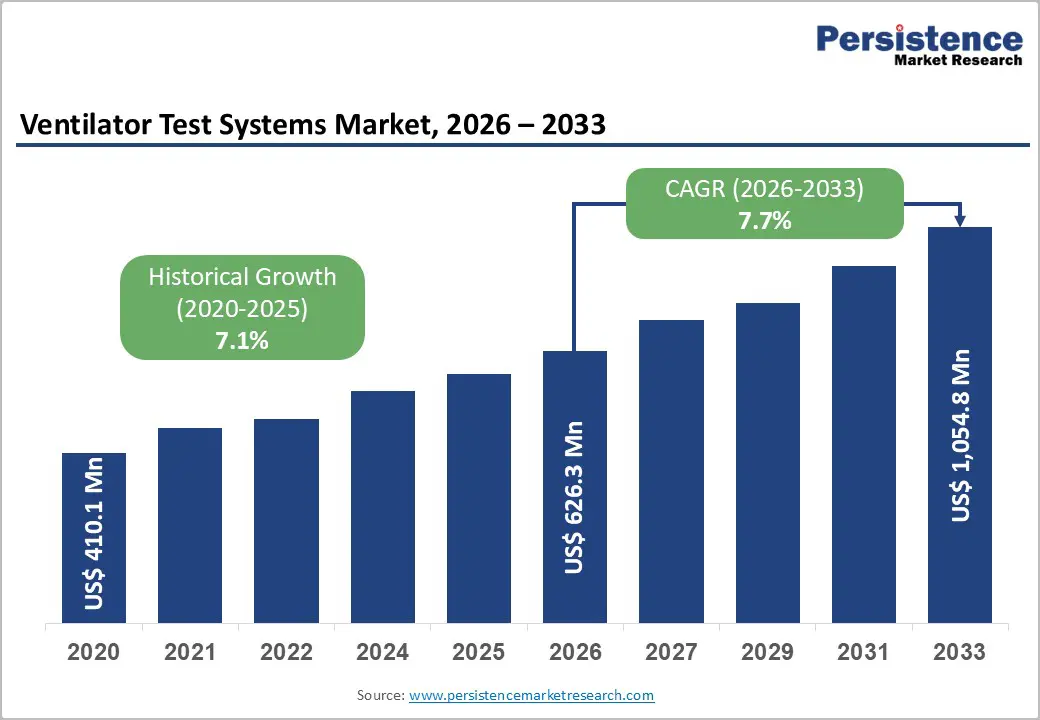
The global ventilator test systems market size is estimated to grow from US$626.3 million in 2026 to US$1,054.8 million by 2033 at a CAGR of 7.7% during the forecast period from 2026 to 2033. expanding steadily as hospitals, emergency services, and home-care providers prioritize accurate respiratory device performance.
These systems simulate lung conditions and measure key parameters such as flow, pressure, volume, and oxygen concentration to ensure ventilator safety and compliance with international standards. Rising ICU admissions, increasing use of transport and home ventilators, and stricter regulatory requirements are driving market adoption. Technological advancements, including portable testers and multifunctional analyzers, further enhance demand.
Key Industry Highlights
- Growing global awareness of ventilator performance has pushed hospitals to invest in advanced test systems that ensure precise airflow, pressure, and oxygen delivery.
- Post-pandemic healthcare upgrades have accelerated procurement of ventilator test tools as hospitals adopt structured maintenance protocols.
- Expansion of home-care respiratory support for chronic conditions like COPD and neuromuscular disorders is creating a new testing ecosystem.
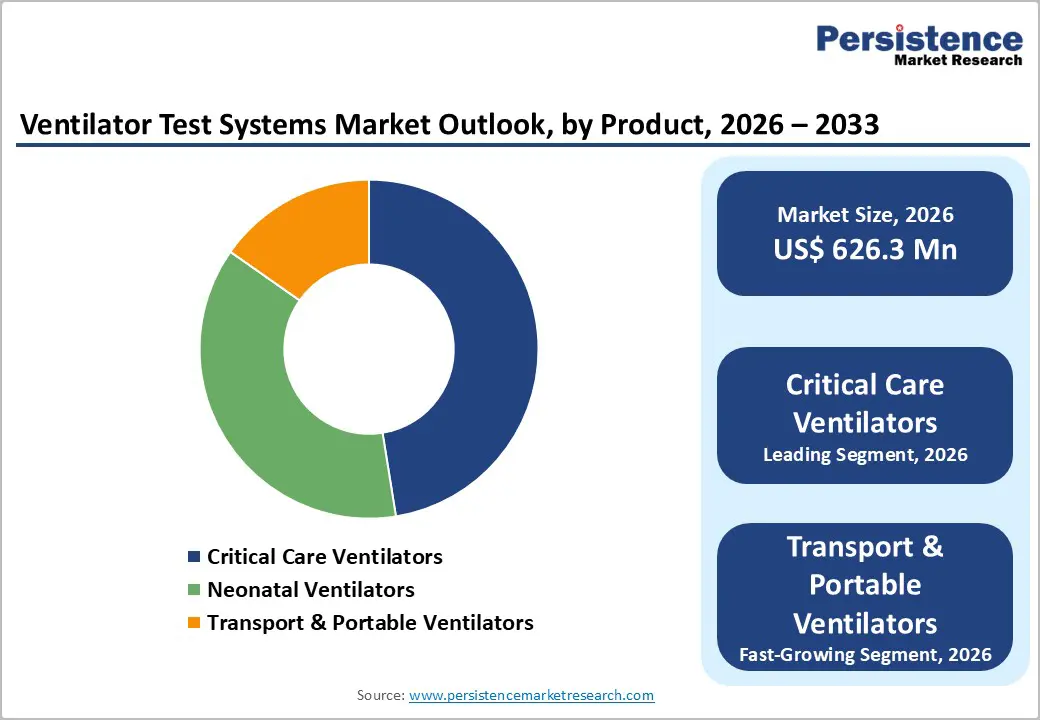
- Leading Ventilator Type: Critical care ventilators lead the market because they are essential for ICU settings, support a wide range of ventilation modes, and are used for the sickest patients requiring continuous, high-precision respiratory support.
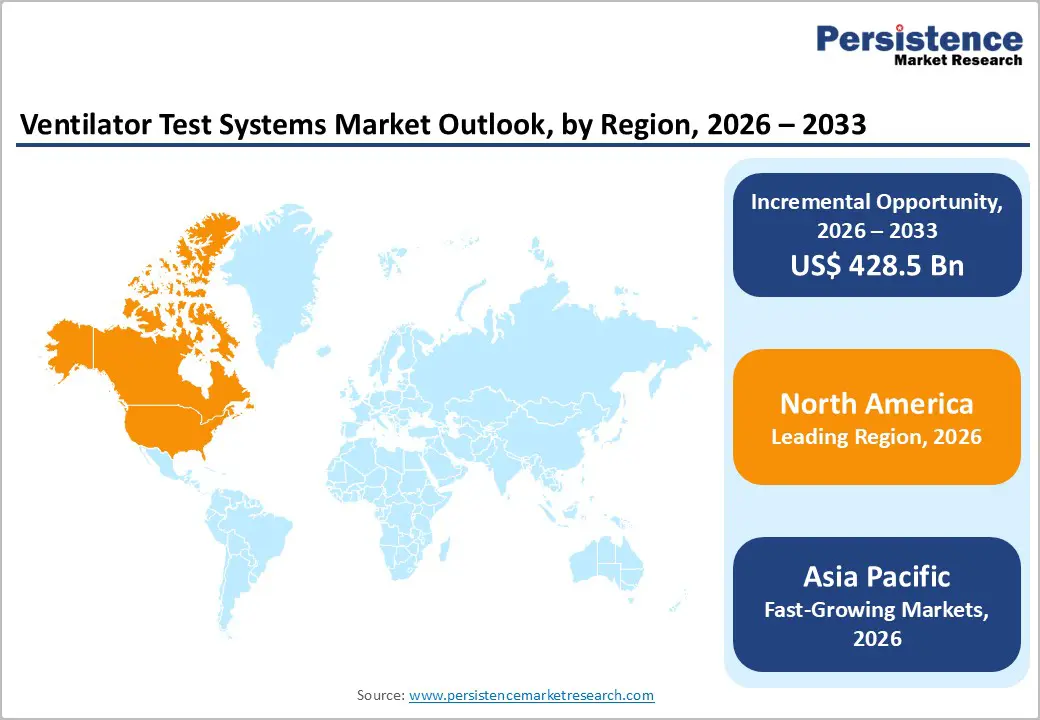
- Leading Region: North America leads the Ventilator Test Systems Market due to its strong healthcare infrastructure, high adoption of advanced ICU technologies, strict regulatory compliance (FDA, ISO), and a large installed base of ventilators requiring routine calibration.
| Key Insights | Details |
|---|---|
|
Ventilator Test Systems Market Size (2026E) |
US$626.3 Mn |
|
Market Value Forecast (2033F) |
US$1,054.8 Mn |
|
Projected Growth (CAGR 2026 to 2033) |
7.7% |
|
Historical Market Growth (CAGR 2020 to 2024) |
7.1% |
Market Dynamics
Driver - NICU Expansion and Neonatal Safety Standards
NICU expansion worldwide is creating a significant push for highly specialized ventilator test systems designed for neonatal use. Premature and critically ill newborns require extremely precise ventilation, where even minor deviations in flow or pressure can lead to complications. As hospitals add more neonatal beds and invest in advanced micro-ventilators, the need for ultra-sensitive testing equipment becomes essential. These analyzers must detect micro-leaks, verify minimal tidal volumes, ensure accurate oxygen delivery, and validate delicate pressure settings suited for fragile lungs. Regulatory bodies are also tightening standards for neonatal ventilation safety, prompting healthcare facilities to adopt dedicated neonatal test systems rather than relying on general ventilator analyzers. This shift significantly accelerates demand in the neonatal testing segment.
Restraints - High Maintenance & Recalibration Costs
High maintenance and recalibration costs significantly restrain the adoption of ventilator test systems, especially in cost-sensitive hospitals. These analyzers require routine servicing, sensor replacements, software updates, and certified recalibration to maintain accuracy—often performed only at authorized centers, which increases downtime and expenses. For many facilities, especially in developing regions, these recurring operational costs can exceed the initial purchase price over the device’s lifecycle. Budget-tight hospitals often delay recalibration schedules, compromising ventilator accuracy and compliance but avoiding immediate financial burden. Additionally, the lack of local service centers forces institutions to ship devices abroad, further increasing turnaround time and cost. This cumulative financial load discourages regular use and slows broader market penetration.
Opportunity - Advanced Technologies and Emphasis on Regenerative Medicine
The integration of ventilator test systems with hospital IoT infrastructure presents a powerful growth opportunity as healthcare moves toward smarter, interconnected device ecosystems. By linking test systems to centralized IoT platforms, hospitals can continuously track ventilator performance, receive automated malfunction alerts, and access real-time device health dashboards. This connectivity enables predictive maintenance, reduces unexpected downtime, and ensures every ventilator meets compliance standards without manual intervention. IoT-enabled test systems can also support automated calibration logs, improve traceability for audits, and allow multi-site hospitals to manage large ventilator fleets remotely. This creates a transformative shift toward proactive respiratory equipment management.
Category-wise Analysis
By Ventilator Type Insights
Critical care ventilators account for the highest market share because they are indispensable in intensive care units, where patients with severe respiratory failure or complex medical conditions require continuous, precise ventilatory support. These ventilators offer multiple advanced modes, high accuracy in airflow and pressure delivery, and integration with hospital monitoring systems, making them more sophisticated than neonatal or transport ventilators. Their critical role in patient survival drives hospitals to invest heavily in both the devices and associated test systems for regular calibration and performance verification. The high purchase cost, extensive usage, and regulatory requirements further reinforce their dominance in the ventilator test systems market.
By End-user Insights
Hospitals and clinics account for the largest share of the Ventilator Test Systems Market because they operate the highest number of ventilators, particularly in ICUs, emergency wards, and specialized respiratory units. Frequent testing, calibration, and compliance with stringent regulatory standards make hospitals the primary consumers of advanced ventilator test systems. Home care, ASCs, and emergency medical services, while growing, have smaller ventilator fleets and lower testing frequency, resulting in a smaller market share compared to hospitals and clinics.
Region-wise Insights
North America Equine Veterinary Therapeutics Trends
North America leads equine veterinary therapeutics due to its extensive horse population and a strong equestrian culture encompassing racing, breeding, and recreational riding. The United States, in particular, invests heavily in horse health, with advanced veterinary hospitals, specialized equine clinics, and trained veterinary professionals. High awareness of preventive care, increasing use of vaccines, regenerative therapies, and sophisticated diagnostics drive demand. Owners’ willingness to invest in cutting-edge treatments, coupled with well-established veterinary education and research institutions, ensures rapid adoption of new therapeutics. This combination makes the region the global leader in equine health care innovation.
Asia Pacific Ventilator Test Systems Market Trends
The Asia-Pacific ventilator test systems market is rapidly emerging due to increasing healthcare infrastructure investments, rising ICU capacity, and growing awareness of respiratory device maintenance. Countries like India, China, Japan, and Australia are expanding hospital networks and adopting advanced ventilators, driving demand for reliable test systems. The COVID-19 pandemic accelerated ventilator deployment, highlighting the need for regular calibration and performance verification. Rising government spending on healthcare, expanding biomedical engineering services, and a growing focus on home-care and transport ventilators further support market growth. Technological adoption and affordable local solutions are key growth enablers in this region.
Market Competitive Landscape
The ventilator test systems market is highly competitive, driven by continuous innovation in multifunctional and portable testing solutions. Key differentiators include accuracy, ease of use, digital reporting, IoT connectivity, and the ability to simulate diverse patient scenarios. Manufacturers compete by enhancing device reliability, integrating advanced analytics, and offering customizable solutions for hospitals, home care, and transport ventilators. Regional players focus on cost-effective systems for emerging markets, while established regions emphasize high-precision, compliance-driven products.
Key Industry Developments:
- In April 2024, WEINMANN Emergency, a leading provider of ventilation solutions for emergency medical services, announced new features for the MEDUVENT Standard. These functions were made available immediately and were officially showcased at the prestigious RETTmobil trade fair in May 2024.
Companies Covered in Ventilator Test Systems Market
- TSI Inc.
- Fortive Corporation
- USCOM Ltd.
- Seward Electronic Ltd.
- Datrend Systems Inc.
- IngMar Medical
- Michigan Instruments, Inc.
- SunMed LLC
- Philips North America LLC
- Magnamed Tecnologia Medica S.A.
- Instrumentation Industries, Inc.
- Fluke Biomedical
- IMT Analytics AG
- Others
Frequently Asked Questions
The global ventilator test systems market is projected to be valued at US$626.3 Mn in 2026.
Increasing demand for ventilators, especially in critical care units, fuels the need for reliable testing and calibration systems to ensure patient safety.
The global market is poised to witness a CAGR of 7.7% between 2026 and 2033.
Automated reporting, digital logs, and compliance tracking for hospitals and multi-site facilities.
TSI Inc., Fortive Corporation, USCOM Ltd., Seaward Electronic Ltd., and others.


