




- Medical Devices
- Alginate Dressings Market
Alginate Dressings Market Size, Share, and Growth Forecast 2026 - 2033
Alginate Dressings Market by Alginate Dressing (Antimicrobial Alginate Dressings, Non-Antimicrobial Alginate Dressings), by Indication (Chronic Ulcers, Non-Healing Surgical Wounds), by End User (Hospitals, Specialty Clinics, Home Healthcare), by Regional Analysis, 2026-2033

Alginate Dressings Market Size and Trend Analysis
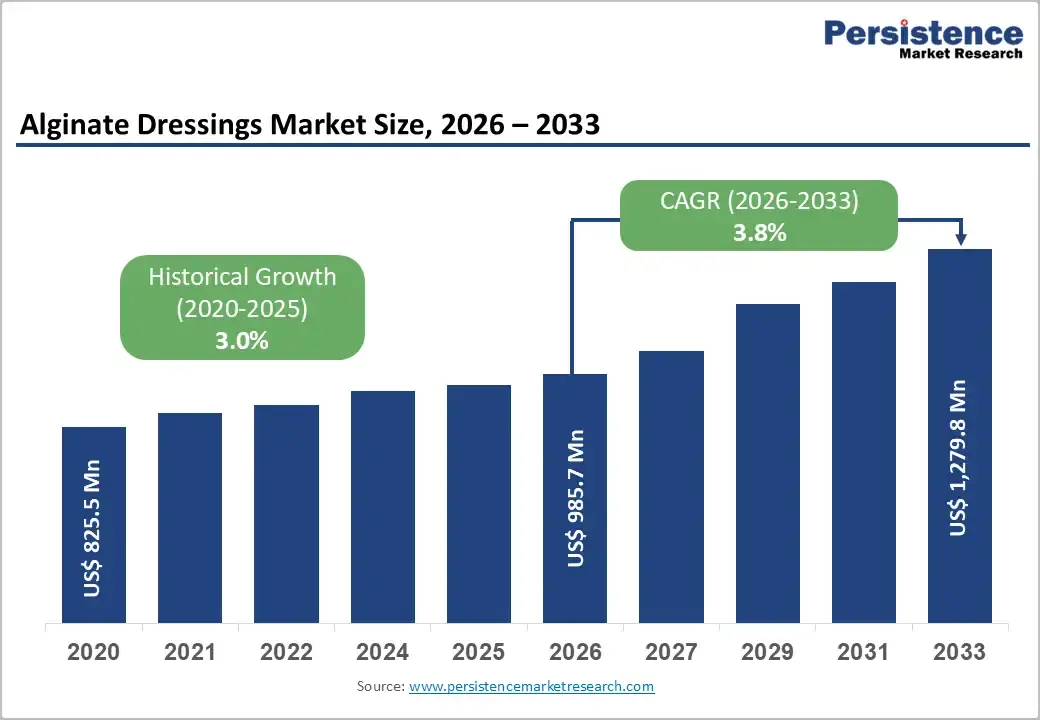
The global alginate dressings market size is expected to be valued at US$ 985.7 million in 2026 and projected to reach US$ 1,279.8 million by 2033, growing at a CAGR of 3.8% between 2026 and 2033.
Market expansion is primarily driven by the rising prevalence of chronic wounds, increasing surgical volumes, and the growing elderly population vulnerable to delayed wound healing. According to data published by the World Health Organization, chronic wounds affect over 2% of the global population, with diabetic foot ulcers alone impacting nearly 18% of diabetic patients during their lifetime. Alginate dressings are increasingly preferred due to their high absorbency, biocompatibility, and ability to maintain a moist wound environment, making them suitable for exudative wounds. Additionally, the growing shift toward advanced wound care solutions across hospitals and home healthcare settings further supports sustained demand growth.
Key Market highlights
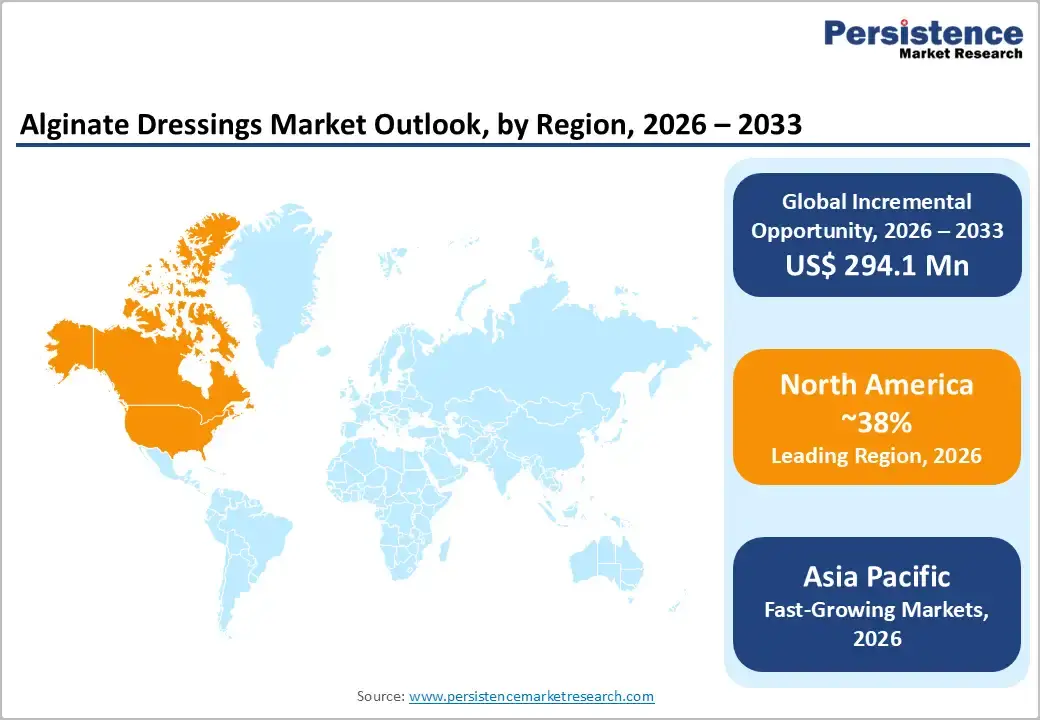
- North America remains the largest regional market for alginate dressings, supported by advanced healthcare infrastructure, high chronic wound prevalence, favourable reimbursement policies, and strong adoption of advanced wound care products in hospitals and home healthcare settings.
- Asia Pacific is expected to be the fastest-growing region, driven by rising diabetes incidence, increasing surgical volumes, expanding hospital infrastructure, and improving access to modern wound care solutions across China, India, Japan, and Southeast Asia.
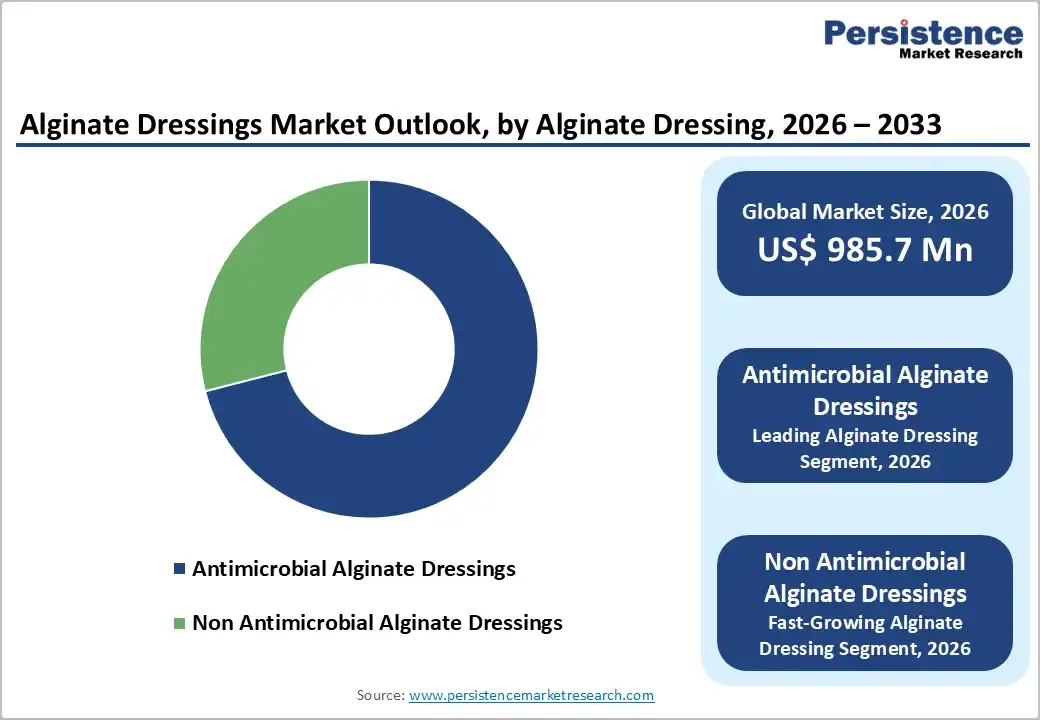
- Non-antimicrobial alginate dressings hold the largest market share due to wide availability, cost-effectiveness, and routine use in managing moderately exuding wounds in both acute and chronic care settings.
- Antimicrobial alginate dressings represent the fastest-growing segment, fueled by increasing infection control focus, rising adoption of silver-based products, and continuous innovation in bioactive wound care technologies.
| Key Insights | Details |
|---|---|
| Alginate Dressings Market Size (2026E) | US$ 985.7 million |
| Market Value Forecast (2033F) | US$ 1,279.8 million |
| Projected Growth CAGR (2026-2033) | 3.8% |
| Historical Market Growth (2020-2025) | 3.0% |
Market Dynamics
Driver- Rising Burden of Chronic and Complex Wounds
The increasing incidence of chronic wounds is a major driver for the alginate dressings market. Conditions such as diabetic foot ulcers, venous leg ulcers, and pressure ulcers are rising due to the global increase in diabetes, obesity, and aging populations. The International Diabetes Federation reports that over 537 million adults living with diabetes globally, significantly increasing the risk of chronic wound development. Alginate dressings offer superior fluid absorption and gel-forming properties, reducing infection risk and promoting faster healing. Their effectiveness in managing heavily exuding wounds has led to widespread adoption across hospitals and specialty clinics, reinforcing long-term market demand.
Expansion of Surgical Procedures and Trauma Care
The growing volume of surgical interventions and trauma cases globally has strengthened demand for advanced wound care products. According to OECD Health Statistics, surgical procedures have increased steadily due to rising access to healthcare services and minimally invasive techniques. Alginate dressings are commonly used in post-surgical wound management and traumatic injuries due to their hemostatic properties and reduced need for frequent dressing changes. This improves patient comfort while lowering overall treatment costs. As healthcare systems increasingly emphasize faster recovery and reduced hospital stays, alginate dressings continue to gain traction in acute and post-operative care.
Restraint- High Cost and Limited Reimbursement Coverage
The alginate dressings market faces a key restraint due to their higher cost compared to conventional wound care options such as gauze, cotton dressings, and basic bandages. In cost-sensitive healthcare systems, particularly across low- and middle-income countries, hospitals and clinics often prioritize low-cost consumables over advanced wound care solutions, even when clinical benefits are evident. Public healthcare facilities with fixed budgets tend to limit the use of alginate dressings to severe or chronic wounds, restricting broader adoption. Additionally, inconsistent or absent reimbursement policies for advanced wound care products further reduce uptake, especially in government hospitals and community care settings.
Another challenge lies in budget limitations within home healthcare and smaller medical institutions. Many providers struggle to justify the recurring costs of advanced dressings for long-term wound management, particularly for elderly or chronic patients requiring frequent dressing changes. Limited awareness among caregivers regarding the long-term cost savings from faster healing also contributes to slower adoption. As a result, pricing pressures and reimbursement gaps continue to hinder penetration rates in developing and price-sensitive markets.
Opportunity- Innovation in Antimicrobial and Bioactive Alginate Dressings
Technological innovation presents a significant growth opportunity for the alginate dressings market, particularly through the development of antimicrobial and bioactive formulations. Integration of agents such as silver, iodine, honey, and zinc into alginate dressings enhances infection control while maintaining optimal moisture balance for wound healing. These advanced products are increasingly favored for managing chronic, infected, and non-healing wounds, including diabetic foot ulcers and pressure ulcers. Rising hospital emphasis on preventing healthcare-associated infections further supports demand for antimicrobial alginate dressings.
Additionally, ongoing research into bioactive alginate dressings that promote cell regeneration, angiogenesis, and faster tissue repair is expanding clinical applications. Manufacturers investing in R&D to improve absorbency, biodegradability, and patient comfort can achieve strong product differentiation. Growing awareness of advanced wound care benefits, coupled with aging populations and rising chronic disease prevalence, supports long-term demand. These innovations enable companies to command premium pricing, strengthen clinical adoption, and unlock new revenue streams across hospital, outpatient, and homecare settings.
Category-wise Insights
Alginate Dressing Analysis
Non-antimicrobial alginate dressings dominated the market in 2025, primarily due to their widespread availability, established clinical use, and relatively low cost. These dressings are commonly utilized for managing moderately to heavily exuding wounds in hospitals and outpatient settings, making them a preferred first-line option in routine wound care. Many manufacturers offer non-antimicrobial variants at competitive prices, which supports high adoption in cost-sensitive healthcare systems, particularly in developing regions. Their effectiveness in maintaining a moist wound environment and ease of use have further reinforced their strong market position. However, as wound care practices evolve, reliance on non-antimicrobial alginate dressings is gradually expected to decline.
In contrast, antimicrobial alginate dressings are projected to register the fastest CAGR during the forecast period, driven by increasing awareness of infection control and supportive clinical evidence. Product innovations and regulatory approvals have strengthened this segment’s growth trajectory. For example, the FDA clearance of silver alginate dressings has improved accessibility in developed markets. The incorporation of silver ions provides sustained antibacterial action, making these dressings especially suitable for infected and heavily exuding wounds. Clinical studies highlight faster healing and reduced infection risks, encouraging adoption across hospitals and specialized wound care centers, thereby accelerating segment expansion.
End User Analysis
Hospitals accounted for the largest share of the alginate dressings market in 2025, supported by rising patient admissions, growing surgical volumes, and a high prevalence of acute and chronic wounds. A significant proportion of hospital beds are occupied by patients requiring wound management, including post-surgical cases, trauma injuries, and pressure ulcers. Alginate dressings are widely used in hospital settings for surgical incisions and high-exudate wounds due to their superior absorbency and hemostatic properties. The increasing number of surgical procedures globally further strengthens demand, as post-operative wound care often necessitates advanced dressings to reduce complications and promote faster healing.
Home healthcare is expected to witness the fastest growth during the forecast period, driven by a shift toward personalized and cost-effective care outside hospital environments. Patients increasingly prefer home-based wound management to avoid prolonged hospital stays, especially following surgeries that require extended recovery. This trend is strongly supported by the rapidly growing geriatric population, which is more prone to chronic wounds such as diabetic foot ulcers and venous leg ulcers. Older patients often find hospital stays physically and financially burdensome, making home care a preferred option. Rising healthcare costs and improved availability of home healthcare services are further boosting demand for alginate dressings in this segment.
Regional Insights
North America Alginate Dressings Market Trends and Insights
North America led the global alginate dressings market in 2026 with an estimated 38% share, supported by a well-developed healthcare infrastructure and widespread adoption of advanced wound care products. The U.S. accounts for most of the regional demand due to a high prevalence of chronic conditions such as diabetes, obesity, and vascular disorders that increase the incidence of complex and non-healing wounds. Favourable reimbursement policies for advanced wound care, particularly in hospital and outpatient settings, further encourage the use of alginate dressings over conventional options. Strong awareness among clinicians regarding evidence-based wound management practices also supports consistent demand.
In addition, stringent regulatory oversight by the U.S. Food and Drug Administration promotes product quality, safety, and innovation, encouraging manufacturers to introduce improved alginate-based solutions. The growing shift toward outpatient surgeries and shorter hospital stays has increased reliance on effective post-operative wound management products. Expanding home healthcare services, driven by an aging population and cost-containment strategies, are further supporting sustained market growth across the region.
Asia Pacific Alginate Dressings Market Trends and Insights
Asia Pacific represents the fastest-growing regional market for alginate dressings, driven by rising healthcare expenditure and rapid expansion of hospital infrastructure. Countries such as China, India, and Japan are witnessing a growing burden of chronic diseases, particularly diabetes, which significantly increases the incidence of ulcers and long-term wounds. In parallel, increasing surgical volumes associated with trauma care, cardiovascular procedures, and general surgeries are fuelling demand for advanced wound dressings across both public and private healthcare facilities.
Improving access to healthcare services and gradual adoption of modern wound care practices are strengthening market penetration in the region. Local manufacturing capabilities are expanding, enabling cost-effective production and improved availability of alginate dressings, especially in price-sensitive markets. Government initiatives aimed at strengthening healthcare systems and increasing insurance coverage are also enhancing patient access to advanced wound care products. As awareness among healthcare professionals improves and home healthcare services expand, demand for alginate dressings in Asia Pacific is expected to accelerate steadily over the forecast period.
Competitive Landscape
Market Structure Analysis
The alginate dressings market is moderately consolidated, with multinational medical device companies holding strong positions due to extensive global distribution networks and established brand presence. Leading players emphasize continuous product innovation, particularly through antimicrobial and bioactive alginate formulations, to enhance clinical outcomes and differentiation. Expansion into home healthcare and outpatient settings is a key strategic focus, supported by growing demand for chronic wound management. Companies actively pursue partnerships and supply agreements with hospitals, clinics, and long-term care facilities to strengthen market reach. Ongoing investments in research and development, along with strict regulatory compliance, remain critical factors shaping competitive advantage.
Key Market Developments
- March 2024, Smith & Nephew Plc expanded its advanced wound care portfolio with enhanced alginate-based dressings targeting chronic ulcer management.
Companies Covered in Alginate Dressings Market
- 3M Company
- Smith & Nephew Plc
- Cardinal Health
- PAUL HARTMANN AG
- ConvaTec Group Plc
- Coloplast A/S
- BSN medical GmbH
- B. Braun Melsungen AG
- Mölnlycke Health Care
- Others
Frequently Asked Questions
The global market is expected to reach US$ 985.7 million in 2026.
Rising prevalence of chronic wounds and increasing surgical procedures drive demand.
North America leads with 38% share in 2025.
Expansion of home healthcare and aging populations offers strong growth potential.
3M Company, Smith & Nephew Plc, Cardinal Health, PAUL HARTMANN AG, ConvaTec Group Plc are among the top players in the maarket.


