




- Nutraceuticals & Functional Foods
- Valerian Root Extract Market
Valerian Root Extract Market Size, Share, and Growth Forecast, 2026 - 2033
Valerian Root Extract Market by Grade (Food Grade, Pharmaceutical Grade, Industrial Grade), Extraction Method (Solvent Extraction, Steam Distillation, Supercritical CO2 Extraction), Application (Food Supplements, Medications, Cosmetics, Others), and Regional Analysis for 2026 - 2033

Valerian Root Extract Market Share and Trends Analysis
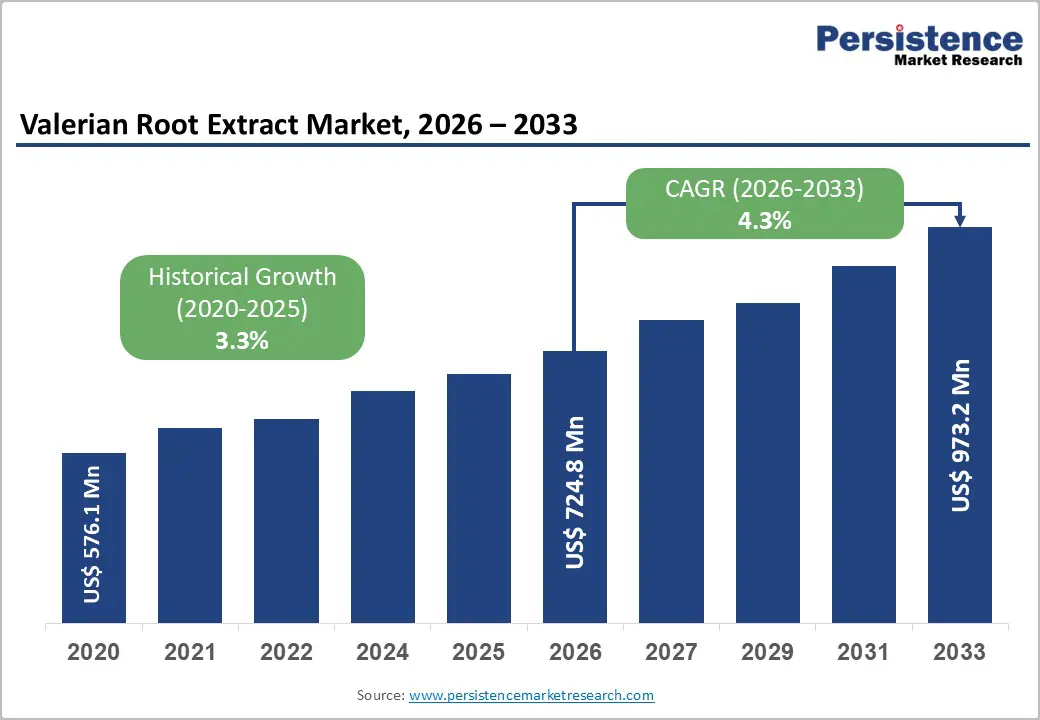
The global valerian root extract market size is likely to be valued at US$ 724.8 million in 2026, and is projected to reach US$ 973.2 million by 2033, growing at a CAGR of 4.3% during the forecast period 2026−2033. Market growth is primarily driven by rising awareness of natural sleep aids and stress-relief alternatives among adults globally, which has accelerated clinical adoption in integrative healthcare. Increasing prevalence of sleep disorders, anxiety, and stress-related conditions has created sustained demand for herbal formulations, supporting consistent market expansion. Advancements in extraction technologies, such as supercritical CO2 and solvent-based methods, have improved product purity and bioavailability, facilitating broader acceptance in pharmaceutical and nutraceutical applications.
Regulatory frameworks in developed regions have begun to recognize standardized herbal extracts, enhancing market confidence and ensuring product safety. Integration of digital health platforms and telemedicine enables wider patient access to herbal supplements, creating scalable commercial channels. Urbanization trends, combined with rising disposable income, have further contributed to adoption of preventive and alternative therapies, reinforcing market momentum.
Key Industry Highlights
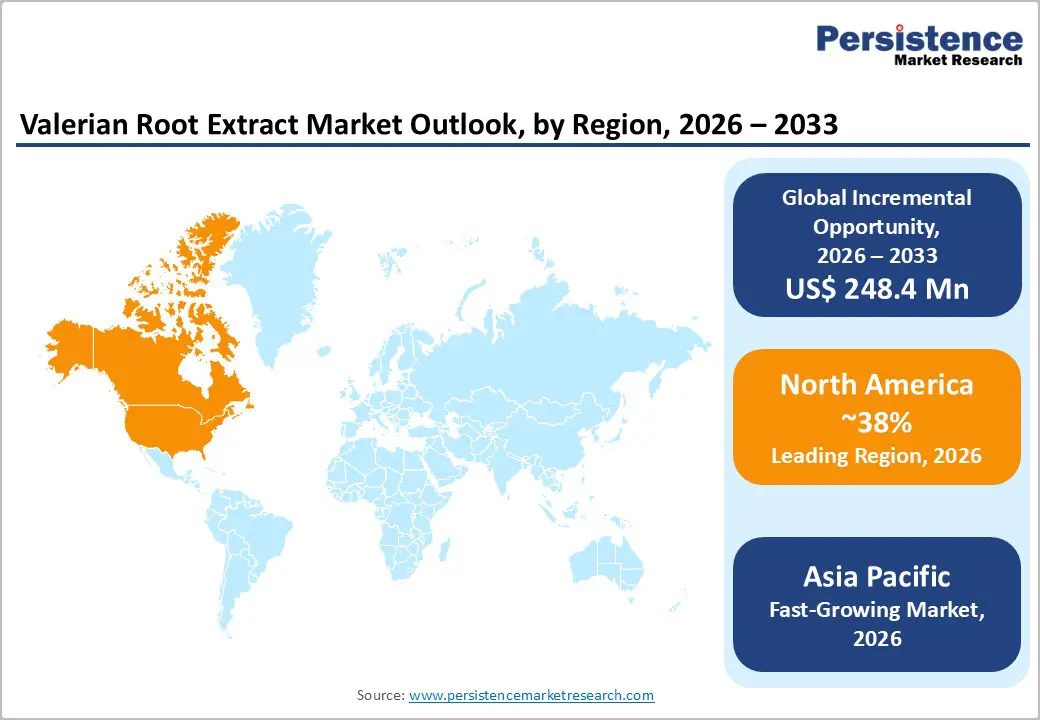
- Dominant & Fastest-growing Regional Market: North America is expected to lead market share, supported by regulatory clarity and digital distribution, while Asia Pacific is set to be the fastest-growing market through 2033 due to rising health awareness and favorable policy initiatives.
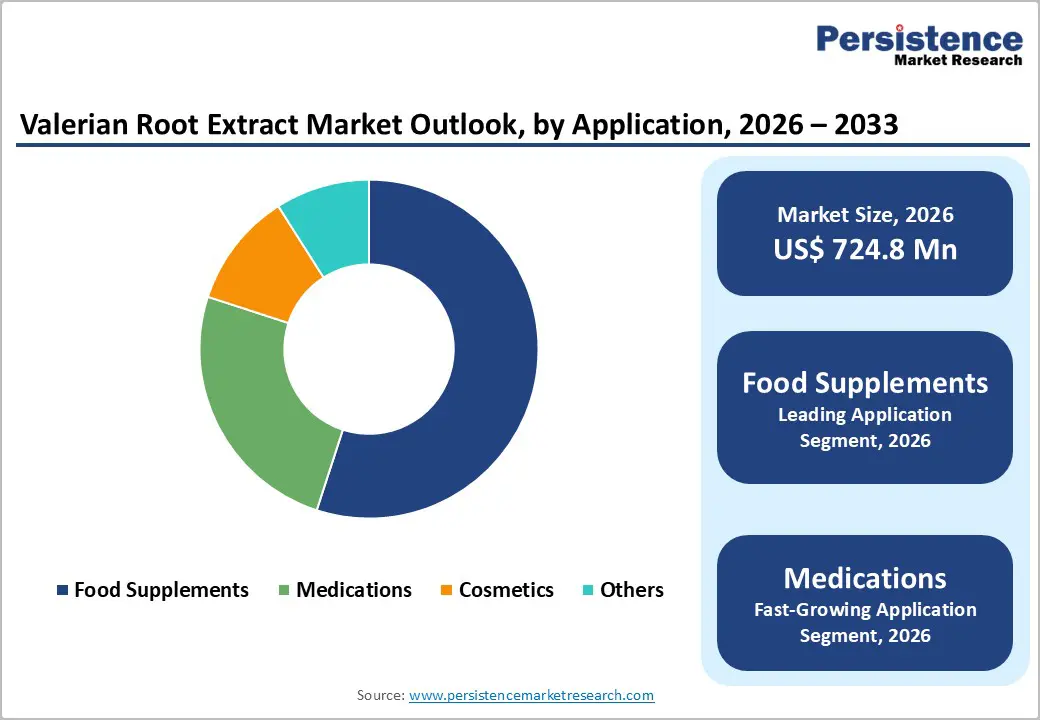
- Leading Application: Food supplements are projected to hold a dominant position in 2026, driven by high consumer acceptance and integration into preventive health routines.
- Fastest-growing Application: Medications are slated to grow the fastest from 2026 to 2033, fueled by clinical adoption and digital health integration.
- Leading and Fastest-growing Grade: Food grade is forecasted to lead market share in 2026, while pharmaceutical grade is projected to be the fastest-growing through 2033, owing to standardized bioactive content.
| Key Insights | Details |
|---|---|
|
Valerian Root Extract Market Size (2026E) |
US$ 724.8 Mn |
|
Market Value Forecast (2033F) |
US$ 973.2 Mn |
|
Projected Growth (CAGR 2026 to 2033) |
4.3% |
|
Historical Market Growth (CAGR 2020 to 2025) |
3.9% |
Market Factors - Growth, Barriers, and Opportunity Analysis
Growing Demand for Natural Sleep and Relaxation Solutions
Persistent short sleep duration and widespread sleep difficulties among the U.S. population drive demand for natural sleep and relaxation solutions. Data from the U.S. Centers for Disease Control and Prevention (CDC) indicate that in 2022, 30% to 46% of adults reported sleeping fewer than seven hours per night in national surveys. Inadequate sleep increases the risk of chronic diseases, impairs cognitive performance, and reduces overall quality of life. Awareness of these health risks encourages individuals to explore non-prescription approaches that support restorative sleep, positioning plant-based and herbal solutions as preferred alternatives for self-managed wellness routines.
Rising concerns regarding side effects associated with conventional sleep medications strengthen consumer preference for natural interventions. Plant-based and herbal solutions are perceived as safer and compatible with holistic wellness practices. Public health messaging promotes preventive care and emphasizes lifestyle optimization to maintain mental and physical health. Adoption of natural sleep solutions aligns with broader trends in stress management, relaxation, and daily wellness. Consumers increasingly prioritize products that integrate seamlessly into health-conscious lifestyles while offering perceived benefits for sleep quality, relaxation, and overall wellbeing, creating sustained demand.
Rising Health and Wellness Awareness
Increasing health and wellness awareness among consumers is driving demand for natural health solutions. Public health campaigns and educational initiatives highlight the risks associated with sedentary lifestyles, poor nutrition, and unmanaged stress, prompting interest in products perceived as supportive of overall health. This shift toward proactive health management influences purchasing decisions, with greater emphasis on preventive care and holistic approaches. Consumer focus is moving from symptom treatment to maintaining long-term wellbeing, creating demand for alternatives aligned with broader wellness objectives and encouraging adoption of products that integrate into everyday health routines.
Consumers are placing higher value on natural, clean, and minimally processed ingredients within health regimens. Botanical and plant-derived solutions are perceived as fitting wellness-oriented lifestyles, reinforcing trust in non-synthetic options. Wellness communities and digital platforms amplify information on healthy living practices, promoting integration of natural interventions into daily routines. Healthcare professionals increasingly acknowledge the role of lifestyle factors in long-term health outcomes, influencing recommendations for supportive therapies. This cultural momentum toward health optimization strengthens consumer willingness to adopt natural alternatives that align with preventive care principles and holistic health practices across diverse demographic segments.
Lack of Standardization in Product Quality
Variability in extraction methods and raw material sources creates challenges in ensuring consistent product quality. Soil composition, climate conditions, and cultivation practices influence the concentration of active compounds, resulting in fluctuations in potency. Differences in manufacturing standards among producers affect purity, efficacy, and safety. Consumers and healthcare providers face difficulty assessing reliability, reducing confidence in botanical solutions. Regulatory guidance emphasizes quality control, yet inconsistent adherence across supplier limits assurance of standardized formulations. Quality discrepancies increase the risk of adverse reactions and diminish perceived value, constraining adoption and acceptance of natural alternatives in wellness and healthcare markets.
Analytical testing and certification practices remain inconsistent across regions and companies, contributing to uncertainty in ingredient authenticity and concentration. Supply chain complexity, including sourcing from multiple farms or countries, further complicates quality management. Processing, storage, and packaging practices can degrade active constituents, affecting effectiveness and shelf life. Growing consumer demand for transparency and consistent product performance highlights gaps in quality assurance. Absence of uniform standards restricts integration into professional healthcare recommendations and slows market growth, emphasizing the critical need for standardized quality protocols across production and distribution channels.
Competition from Other Herbal and Synthetic Alternatives
The presence of multiple herbal and synthetic solutions creates significant pressure on market growth. Consumers can choose from a broad array of sleep aids, relaxation supplements, and stress-relief products, each with different onset times, mechanisms of action, and perceived effectiveness. Established pharmaceuticals offer rapid and measurable results, while botanicals such as chamomile, passionflower, and lavender present natural alternatives. Product differentiation and brand recognition heavily influence consumer decision-making, reducing visibility for lesser-known options. Retailers and distributors often prioritize products with higher demand or proven efficacy, increasing competitive pressure and limiting market share for smaller or new entrants in the sector.
Price sensitivity and accessibility further affect consumer preferences, as cost-effective alternatives attract larger segments. Regulatory approval and clinical validation associated with synthetic solutions create perceived credibility advantages over botanical options. Marketing campaigns, social media, and digital promotions enhance awareness and loyalty for competitive products, challenging adoption of alternatives. Supply chain efficiency, innovative formulations, and distribution reach strengthen competitive positioning, restricting opportunities for new entrants. The extensive range of alternatives necessitates differentiation through quality, efficacy, and brand trust to sustain presence in a highly competitive landscape.
Product Innovation and New Delivery Formats
Innovation in product formulation and delivery formats offers significant opportunities by addressing consumer demand for convenience, personalization, and lifestyle integration. Federal health data indicate that dietary supplements are widely used among U.S. adults, with a majority reporting consumption within a 30-day period, reflecting sustained interest in supportive health products. Diverse formats such as chewables, liquid sprays, sachets, or sustained-release tablets improve ease of use, dosing accuracy, and perceived effectiveness. Tailoring products to different preferences enhances accessibility and engagement, supporting adoption across age groups and routines. Such innovations enable differentiation in a competitive wellness and supplement landscape.
Consumer interest emphasizes personalized wellness experiences and products that fit into busy daily routines. Innovations improving bioavailability, taste, or targeted functionality strengthen product appeal and brand loyalty. Delivery formats that meet sensory or situational preferences, including fast-dissolve tablets for travel or flavor-enhanced gums, increase convenience and usability. Integration with digital tools for guidance, dosing, or wellness tracking enhances consumer interaction. These approaches expand adoption among health-conscious segments seeking efficient, reliable, and tailored natural health solutions. Product innovation and versatile delivery methods thus create pathways for growth and wider market penetration.
Clean-Label and Organic Positioning
Consumer preference for simple, transparent ingredient lists and certified organic products aligns with federal initiatives supporting organic agriculture. In 2025, the U.S. Department of Agriculture (USDA)’s National Agricultural Statistics Service conducted the Organic Survey of all certified organic farms and operations across the 50 states, reflecting the scale of organic production and its influence on consumer markets. Consumers associate the USDA Organic seal with strict standards that limit synthetic inputs, emphasize ecological practices, and ensure product integrity. Government emphasis on certification strengthens trust, making clean-label and organic positioning a key differentiator that appeals to health-conscious buyers seeking minimal processing, transparency, and verified quality in wellness products.
Retailers and foodservice sectors increasingly respond to consumer demand for products with traceable origins, minimal additives, and organic certification supported by federal standards. USDA organic certification requires adherence to rigorous production, handling, and processing protocols, reinforcing consumer confidence in product safety and environmental responsibility. Marketing offerings that meet these criteria elevates perceived value and aligns brand positioning with wellness, sustainability, and ethical sourcing trends. Consumers show willingness to pay a premium for products with recognized clean-label attributes and organic certification, expanding access into mainstream and premium channels while supporting trust in federally endorsed quality standards.
Category-wise Analysis
Grade Insights
Food grade is poised to lead with a forecasted 45% of the valerian root extract market revenue share in 2026, owing to broad acceptance in nutraceuticals, dietary supplements, and functional foods. Its regulatory recognition for human consumption ensures accessibility across retail and clinical channels, creating a stable distribution ecosystem. Food-grade extracts are widely incorporated into teas, capsules, and liquid supplements, aligning with preventive health trends and consumer preference for natural remedies. High-quality standards and standardized bioactive concentrations support clinical credibility, encouraging healthcare providers to recommend formulations. Consumer trust in verified food-grade extracts enhances repeat usage, driving consistent market revenue and supporting expansion strategies.
Pharmaceutical grade is anticipated to be the fastest-growing segment between 2026 and 2033, fueled by rising incorporation into prescription and over-the-counter medications targeting sleep disorders and anxiety. Stringent quality control and higher bioavailability allow integration into clinical protocols, increasing adoption in integrative therapy models. Pharmaceutical-grade formulations support precise dosing, facilitating prescriber confidence and patient adherence. The growing focus on evidence-based herbal therapeutics, combined with regulatory recognition for medicinal applications, accelerates adoption across hospitals, clinics, and digital healthcare platforms. Innovation in formulation technologies, including capsules and liquid extracts, further enhances market penetration and supports commercial scalability in developed and emerging markets.
Application Insights
Food Supplements are expected to hold a dominant position, accounting for an anticipated 55% of the valerian root extract market share in 2026, driven by high consumer acceptance and integration into daily wellness routines. The segment benefits from broad retail availability, including pharmacies, supermarkets, and e-commerce channels. Clinically validated sleep and stress-relief benefits enhance prescriber recommendations, while standardized formulations ensure dosing consistency and patient adherence. Cost-effective production, coupled with high scalability, supports widespread commercial deployment, making food supplements a primary revenue contributor across global markets.
Medications are forecasted to be the fastest-growing application segment between 2026 and 2033, boosted by increasing clinical integration of valerian root extract into prescription and over-the-counter therapies for insomnia and anxiety disorders. Pharmaceutical-grade extracts, supported by standardized bioactive content and clinical research, enable adoption within hospitals, clinics, and digital healthcare platforms. Growth is reinforced by provider endorsements, technological integration in digital health channels, and preventive care programs emphasizing natural therapeutics. Expansion into emerging markets with rising healthcare infrastructure further accelerates uptake and revenue potential for the medication segment.
Regional Insights
North America Valerian Root Extract Market Trends
North America is expected to dominate with an estimated 38% of the valerian root extract market value in 2026, reflecting mature consumer behavior, advanced retail infrastructure, and widespread adoption of dietary supplements in the United States and Canada. High awareness of preventive healthcare and preference for natural alternatives supports strong demand for plant-based products. Established distribution networks across pharmacies, specialty health stores, and e-commerce platforms ensure wide accessibility. Clear regulatory frameworks for dietary supplements, along with standardized labeling requirements, increase consumer confidence in safety and efficacy. Integration of botanical solutions into daily wellness routines sustains consistent market penetration and revenue generation.
Strong investment in research and development in the United States and Canada strengthens market leadership, focusing on formulation stability, bioavailability, and innovative delivery formats. Preference for certified quality, traceable ingredients, and transparent sourcing increases willingness to pay, boosting market value. Digital marketing campaigns and health-focused promotions enhance product visibility and adoption. Collaborations with wellness experts, healthcare professionals, and influencers amplify awareness, positioning botanical solutions as part of daily lifestyle and stress management practices. Mature consumer demand, efficient supply chains, regulatory alignment, and innovation combine to maintain dominance in these countries.
Europe Valerian Root Extract Market Trends
Europe is positioned as a significant market for valerian root extract, driven by high consumer awareness of herbal and natural health solutions in Germany and France. Strong healthcare literacy and acceptance of complementary and alternative medicine encourage adoption of botanical extracts. Mature retail infrastructure, including pharmacies, specialty stores, and online platforms, ensures wide product availability. Regulatory frameworks under national and European Union authorities emphasize quality, safety, and labeling compliance, supporting consumer trust. Rising interest in preventive healthcare, stress management, and sleep quality fuels consistent demand among adults seeking non-pharmaceutical solutions, integrating botanical products into daily wellness routines and lifestyle-focused health practices.
Innovation in product formulation and delivery supports expansion in Germany and France. Capsules, teas, and liquid extracts cater to diverse consumer preferences and usage occasions. Strategic marketing through digital campaigns and collaborations with wellness professionals increases product visibility and engagement. Consumers value transparent ingredient sourcing, organic certification, and clean-label claims, enhancing trust and willingness to pay premium prices. Healthcare providers increasingly recommend herbal supplements as part of lifestyle management, encouraging adoption. Regulatory alignment, mature distribution networks, and evolving consumer preferences collectively strengthen market penetration, supporting competitive positioning and sustained demand across retail and online channels.
Asia Pacific Valerian Root Extract Market Trends
Asia Pacific is forecasted to be the fastest-growing market for valerian root extract between 2026 and 2033, stimulated by rising middle-class demand for wellness solutions in China and India. Urbanization and increasing disposable income are driving consumer spending toward preventive health and stress-management products. Traditional familiarity with herbal medicine supports acceptance of botanical extracts, facilitating integration into daily routines. Expansion of supermarkets, pharmacy chains, and e-commerce platforms improves accessibility. Local production scale-ups reduce costs, enhancing competitiveness compared with imports. These factors collectively increase adoption across diverse consumer segments seeking affordable, effective, and culturally aligned wellness solutions.
Digital health education and expanding healthcare infrastructure in China and India are boosting awareness of natural health products. Online consultation platforms integrated with product recommendations create seamless access and encourage informed purchasing. Partnerships between domestic suppliers and global brands improve supply chain reliability, product quality, and formulation innovation. Regulatory clarity for herbal supplements aligns with national health priorities, ensuring compliance and consumer confidence. Tailored product offerings that reflect cultural preferences and lifestyle habits attract younger, health-conscious demographics.
Competitive Landscape
The global valerian root extract market shows a moderately fragmented structure, with several multinational and regional players holding significant influence. Key companies such as Glanbia Nutritionals, Naturex, and Sabinsa Corporation are estimated to capture 35% of total market revenue in 2026. Smaller specialty herbal extract manufacturers and regional suppliers contribute to competitive diversity. Market dynamics focus on product quality, clinical validation, and brand recognition, supporting differentiation through unique extraction processes, formulation approaches, and targeted distribution strategies.
Other prominent participants, including Euromed, Indena, Hunan Nutramax, SupHerb Extracts, and Martin Bauer Group, strengthen competitive intensity by offering standardized botanical extracts for nutraceutical and pharmaceutical applications. Moderate market concentration allows new entrants to target niche segments effectively. Technological innovations, strategic partnerships, and expansion into underserved geographic areas present opportunities for differentiation and market share capture, supporting growth in a diverse and evolving industry landscape.
Key Industry Developments
- In July 2025, Caraway Tea unveiled its new “Leaf-to-Lab” approach that involves integrating traditional botanicals such as valerian root with scientific validation, supporting the growing demand for functional, clean-label herbal formulations targeting sleep and stress management.
- In June 2025, Yu Sleep introduced a plant-based sleep supplement featuring valerian root extract as a natural aid to support restful sleep and relaxation.
- In May 2025, OmniActive Health Technologies launched its high-potency valerian root extract ingredient Sleeproot in select European markets as part of a broader sleep, stress, and mood nutraceutical portfolio expansion.
Companies Covered in Valerian Root Extract Market
- Glanbia Nutritionals
- Naturex
- Sabinsa Corporation
- Euromed S.A.
- Indena S.p.A.
- Hunan Nutramax Inc.
- SupHerb Extracts Co., Ltd.
- Martin Bauer Group
- Phytopharm UK Ltd.
- Finzelberg GmbH & Co. KG
- Kalsec Inc.
- Raintree Nutrition
- Taiyo International, Inc.
- Alpinia Extracts Pvt. Ltd.
- Starwest Botanicals
Frequently Asked Questions
The global valerian root extract market is projected to reach US$ 724.8 million in 2026.
Rising consumer preference for natural sleep aids, stress relief, and holistic wellness solutions is driving the market.
The market is poised to witness a CAGR of 4.3% from 2026 to 2033.
Surging demand for natural sleep and relaxation solutions amid hectic lifestyles is driving the market.
Some of the key market players include Glanbia Nutritionals, Naturex, Sabinsa Corporation, Euromed, Indena, Hunan Nutramax, SupHerb Extracts, Martin Bauer Group.


