




- Pharmaceuticals
- St. John’s Wort Extract Market
St. John’s Wort Extract Market Size, Share, and Growth Forecast 2026 - 2033
St. John’s Wort Extract Market by Form (Liquid Extracts, Powder, Capsules/Tablets), by Nature (Organic, Conventional), by Distribution Channel, by End Use, by Regional Analysis, 2026 - 2033

St. John’s Wort Extract Market Size and Trend Analysis
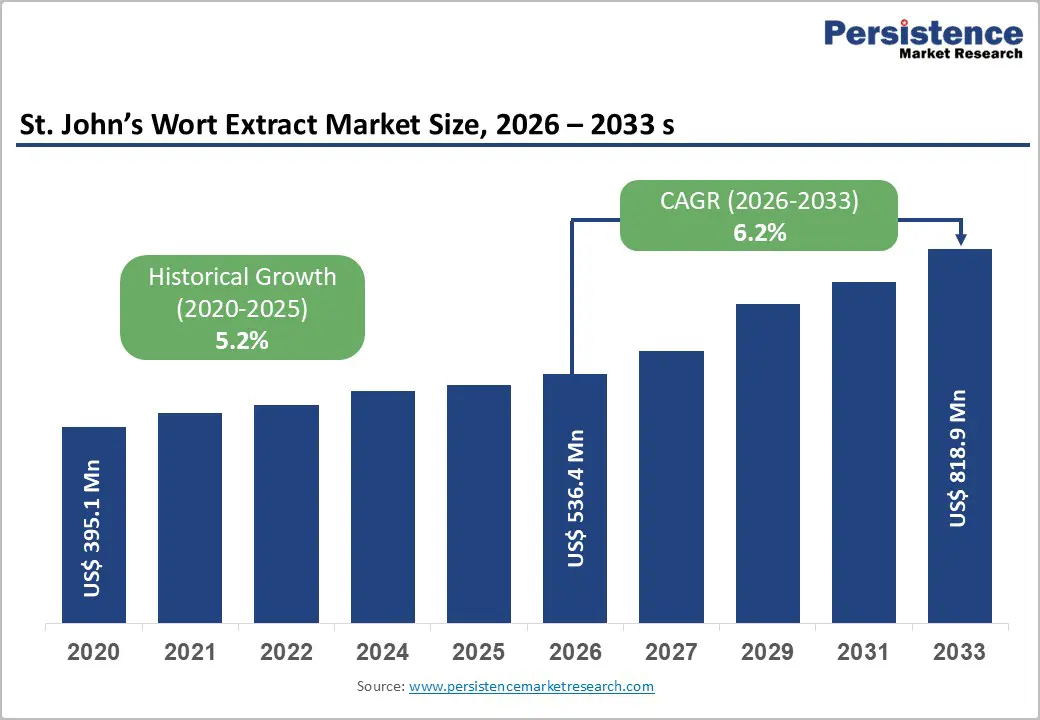
The global St. John’s wort extract market size is expected to be valued at US$ 536.4 million in 2026 and projected to reach US$ 818.9 million by 2033, growing at a CAGR of 6.2% between 2026 and 2033. Growth is primarily driven by rising awareness of mental health disorders and increasing consumer preference for plant-based remedies to manage mild-to-moderate depression and anxiety.
Major public health agencies estimate that depression affects about 280 million people globally and approximately 5% of all adults, which creates a large addressable base for evidence-backed herbal interventions. Fact sheets from NCCIH, Mayo Clinic, and the European Medicines Agency (EMA) recognize St. John’s wort (Hypericum perforatum L.) as a widely used herbal product for depressive symptoms, reinforcing its clinical legitimacy and underpinning long-term demand.
Key Industry Highlights:
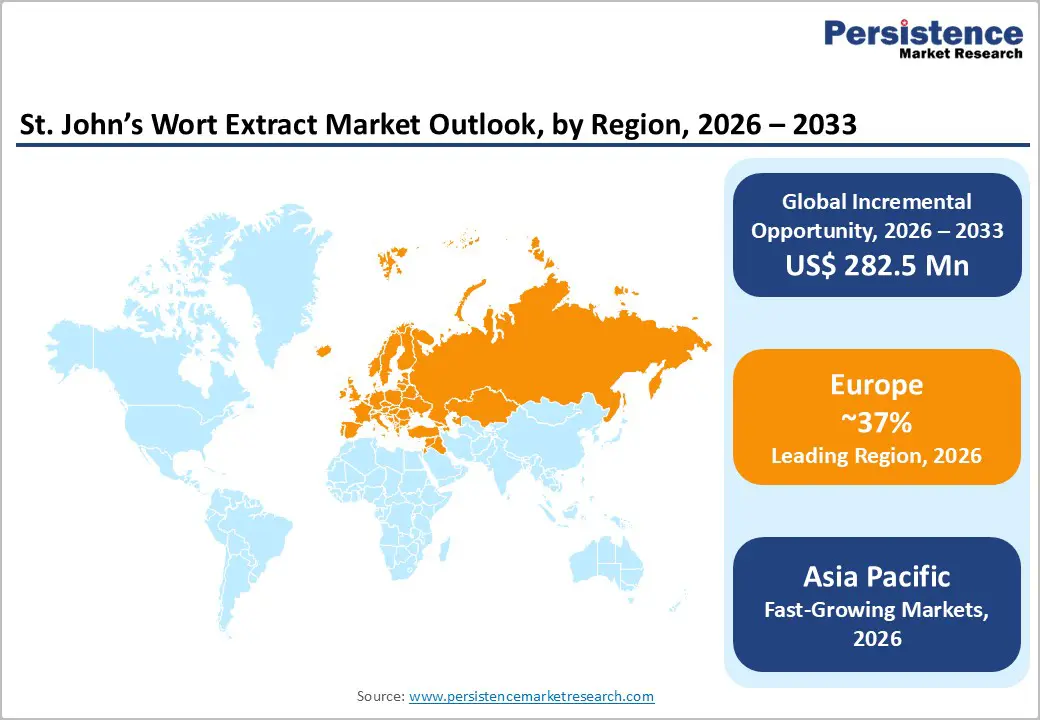
- Europe leads the St. John’s Wort extract market with about 37% share in 2025, supported by EMA-recognized herbal medicines and established therapeutic use.
- Asia Pacific is the fastest-growing region due to increasing mental health awareness, strong herbal traditions, and expanding botanical extraction industries across China, India, Japan, and ASEAN.
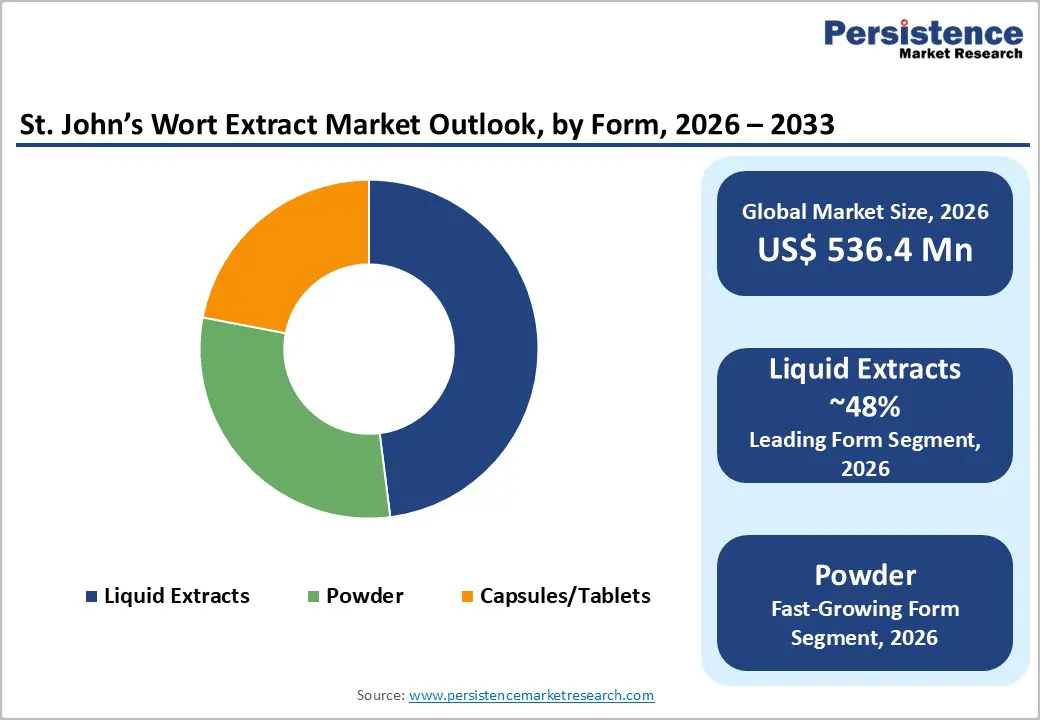
- By form, liquid extracts dominate with roughly 48% share in 2025, driven by widespread pharmacopoeial use, naturopathic practices, and preference for fast-acting tinctures.
- Capsules and tablets remain key growth drivers in herbal supplements, while powders and functional beverage applications create additional opportunities for mood-support product innovation.
- Major opportunity exists in premium organic extracts with USDA or EU Organic certification, supported by advanced extraction technologies and clinically validated positioning.
| Key Insights | Details |
|---|---|
|
St. John’s Wort Extract Size (2026E) |
US$ 536.4 million |
|
Market Value Forecast (2033F) |
US$ 818.9 million |
|
Projected Growth CAGR (2026-2033) |
6.2% |
|
Historical Market Growth (2020-2025) |
5.2% |
Market Dynamics
Drivers - Rising burden of depression and demand for natural mood-support solutions
A key driver of the St. John’s Wort Extract Market is the growing global burden of depressive disorders and the parallel shift toward natural or complementary therapies. The World Health Organization (WHO) estimates that depression affects around 280 million people worldwide and about five percent of all adults, with higher prevalence in women and older adults. Clinical and review articles summarized by NCCIH and NCBI/StatPearls indicate that standardized St. John’s wort extracts can be as effective as some conventional antidepressants in cases of mild-to-moderate depression, while often presenting a different side-effect profile. As consumers increasingly seek non-prescription, botanical options for mood and stress management, this evidence base supports wider adoption of St. John’s wort extracts in over-the-counter supplements, herbal medicines, and integrative healthcare protocols, thereby positively influencing market growth.
Expanding the herbal and botanical supplements category globally
The broader herbal and botanical supplements segment continues to outpace the overall dietary supplements market, providing a strong macro tailwind for St. John’s wort extracts. Industry analyses and trade publications drawing on data from the American Botanical Council (ABC) and leading retail analytics firms show that U.S. herbal supplement sales exceeded US$ 12 billion in 2022, with continued recovery and growth beyond 2023, even after a pandemic-driven surge. Herbal and botanical products now account for roughly 19% of the total dietary supplements market in some key regions, with significant consumer interest in mood, stress, and sleep formulations. This structural growth in herbal supplements, combined with St. John’s wort's strong positioning as a mood-support ingredient, underpins rising demand from nutraceutical brands, private-label brands, and pharmacy chains worldwide.
Restraints - Safety concerns and drug–herb interactions
Despite its benefits, St. John’s wort faces significant safety-related headwinds that constrain broader adoption, particularly in clinical practice. Fact sheets from NCCIH, Mayo Clinic, and GovInfo highlight that St. John’s wort can interact with a wide range of prescription medicines, including antidepressants, oral contraceptives, anticoagulants, immunosuppressants, and antiretrovirals by inducing cytochrome P450 enzymes and P-glycoprotein transporters. These interactions can reduce the effectiveness of life-saving drugs or increase the risk of serotonin syndrome when combined with serotonergic agents. As a result, regulators and professional bodies issue strong cautions and contraindications, and many physicians remain cautious about recommending St. John’s wort, dampening its penetration in mainstream medical settings.
Opportunities - Premiumization through organic and sustainably sourced extracts
There is a growing opportunity in positioning St. John’s wort extracts as organic, sustainably sourced, and traceable, in line with broader shifts in the herbs and spices market. Data from USDA-linked analyses and industry associations, such as the American Spice Trade Association (ASTA), indicate that organic herbs and spices have grown faster than their conventional counterparts in recent years, driven by consumer concerns about pesticide residues and environmental impact. The organic food and herb segments in major markets have posted CAGRs of mid-single to high-single digits, outpacing many conventional categories. Producers of St. John’s wort who secure USDA Organic or EU Organic certification, invest in fair-trade sourcing, and communicate the carbon and biodiversity benefits can command price premiums and access high-value channels, such as natural food retailers and specialty e-commerce platforms, especially in Europe and North America.
Category-wise Analysis
Form Insights
Within the form segment, liquid extracts are identified as the leading segment, accounting for an estimated 48% share of the St. John’s wort extract market in 2025. This dominance is consistent with the long tradition of using tinctures and liquid preparations for Hypericum perforatum, which are well documented in pharmacopoeias and clinical practice references. Liquid extracts allow flexible dosing and are commonly used by naturopathic practitioners and herbalists, especially in Europe, where St. John’s wort has a long history of prescription use for mild depressive episodes. In addition, consumers seeking a faster onset for mood support often prefer liquids because they can be absorbed more rapidly than some solid oral forms. While capsules and tablets remain important for convenience, the entrenched position of liquid formulations in both traditional and integrative medicine channels helps sustain Liquid Extracts' leading share of the global market.
Nature Insights
In the Nature category, conventional St. John’s wort extracts currently represent the leading share of the market, supported by more mature cultivation networks and lower production costs than a fully certified organic supply. Much of the Hypericum perforatum used industrially is cultivated in European and some Asian regions under conventional good agricultural and collection practices, providing consistent raw material that meets pharmacopoeial standards for active constituents such as hypericin and hyperforin. EMA and HMPC monographs describe well-established medicinal use for conventional dry extracts with specific drug-extract ratios and ethanol or methanol solvent systems, which continue to form the backbone of registered herbal medicinal products in Europe. Although organic extracts are growing quickly due to heightened consumer interest in residue-free botanicals, the installed base of conventional formulations in pharmaceuticals and many nutraceutical brands keeps the Conventional segment ahead in 2025.
End-user Insights
By end user, the pharmaceutical segment leads, reflecting St. John’s wort's extensive history as a registered herbal medicinal product for mild-to-moderate depressive episodes in Europe and other regions. EMA and HMPC documents recognize the well-established medicinal use of specific Hypericum perforatum dry extracts, with defined indication statements, posology, and safety profiles, enabling their marketing as over-the-counter or prescription medicines in several European countries. These pharmaceutical-grade products require strict adherence to quality standards and clinical evidence, which anchors substantial demand from pharmacies and physicians who integrate St. John’s wort into treatment pathways for selected patients. While nutraceutical, cosmetics, and food & beverage uses of St. John’s wort are expanding, especially in the form of dietary supplements and topical preparations, the depth of regulatory recognition and clinical usage ensures that the pharmaceutical segment remains the dominant end-user category in 2025.
Regional Insights
Europe St. John’s Wort Extract Market Trends and Insights
Europe is the leading regional market, accounting for an estimated 37% share of global St. John’s wort extract revenues in 2026, supported by a unique history of integrating herbal medicinal products into mainstream healthcare. Countries such as Germany, the UK, France, and Spain have long used St. John’s wort preparations as part of physician-supervised treatment for mild-to-moderate depression, with products registered under national or EU-wide procedures as well-established or traditional herbal medicinal products. The EMA and its Committee on Herbal Medicinal Products (HMPC) provide harmonized monographs that define indications, quality parameters, and risk-management measures for Hypericum perforatum, facilitating cross-country alignment of product standards.
In Germany, St. John’s wort has historically ranked among the most frequently prescribed herbal antidepressant agents, with multiple branded formulations available in pharmacies and reimbursed under certain conditions. The U.K. and France follow a more cautious approach, but still allow over-the-counter or pharmacy-only products with clearly defined contraindications and interaction warnings. In Spain and other Southern European countries, cultivation and extraction facilities support both domestic and export demand, feeding into pharmaceutical and nutraceutical supply chains. As EMA continues to refine and update Hypericum monographs, and as pharmacovigilance data accumulate, Europe is expected to maintain its leadership position while gradually adopting more harmonized labeling and risk-communication practices across member states.
North America St. John’s Wort Extract Market Trends and Insights
In North America, the United States is the key market for St. John’s wort extracts, with the ingredient primarily regulated as a dietary supplement under the Dietary Supplement Health and Education Act (DSHEA). Fact sheets from NCCIH and Mayo Clinic underscore widespread consumer interest in using St. John’s wort for depressive symptoms, while simultaneously emphasizing the need for medical supervision due to interaction risks. Broader herbal supplement market data from the American Botanical Council (ABC) show that U.S. retail sales of herbal supplements have consistently exceeded US$ 10 billion annually, reaching more than US$ 12 billion in 2022 and rebounding further in 2023–2024, which provides a favorable context for St. John’s wort–containing products.
Innovation in North America is concentrated on combining St. John’s wort with other botanicals in mood, stress, and sleep formulations, often in capsule, tablet, or gummy formats. Large dietary supplement brands, specialty natural retailers, and online platforms promote these products as part of holistic mental wellness regimens, aligning with survey data showing rising consumer interest in botanical solutions for stress, anxiety, and insomnia. However, the FDA’s emphasis on safety communications, including warning letters about unsubstantiated antidepressant claims, encourages companies to position St. John’s wort primarily as a support for “mood balance” or “emotional well-being” rather than as a treatment for clinical depression. This regulatory environment shapes labeling, marketing language, and healthcare professional engagement across the region.
Asia Pacific St. John’s Wort Extract Market Trends and Insights
The Asia Pacific region is the fastest-growing market for St. John’s wort extracts, propelled by expanding herbal supplement consumption, increasing mental health awareness, and strong manufacturing capabilities in key countries such as China, India, and Japan. Broader herbal supplement market reports indicate that Asia hosts a rapidly growing demand for plant-based dietary supplements, driven by urbanization, rising disposable incomes, and a strong tradition of herbal medicine. China’s botanical extract industry, for example, supplies a significant share of global nutraceutical ingredients, while India’s Ayurveda sector and Japan’s Kampo tradition create fertile ground for the adoption of Western herbs like Hypericum perforatum alongside indigenous botanicals.
Manufacturing advantages in the Asia Pacific include cost-competitive cultivation and extraction, established export infrastructure for herbal ingredients, and growing adherence to international quality standards such as GMP and pharmacopeial monographs. As regional regulators in markets like China, India, and ASEAN refine their frameworks for traditional and complementary medicines, there is scope for St. John’s wort to be incorporated more formally into approved product lists, especially for mood and sleep support categories. The combination of rising mental health burden, favorable demographics, and export-oriented botanical industries underpins Asia Pacific’s status as the fastest-growing regional market through 2033.
Competitive Landscape
The St. John’s Wort Extract Market features a moderately fragmented competitive landscape with a mix of botanical extract manufacturers, nutraceutical companies, and herbal supplement brands. Leading players such as Bio-Botanica Inc., Indena S.p.A., Martin Bauer Group, Gaia Herbs, and NOW Foods compete through product quality, standardized extract formulations, and strong distribution networks. Companies increasingly invest in advanced extraction technologies, organic certifications, and clinical validation to strengthen market positioning. Strategic partnerships, vertical integration in botanical sourcing, and expansion into nutraceutical, pharmaceutical, and cosmetic applications are key competitive strategies.
Key Developments:
- In February 2026, Himalaya Wellness Company launched a nationwide stress awareness campaign in India featuring a 10-question self-assessment stress test. The initiative engaged over 65,000 participants, highlighting stress patterns across demographics while promoting early awareness and natural stress-management approaches, supporting interest in herbal solutions such as Hypericum perforatum extracts.
- In July 2025, a scoping review analysing 209 clinical trials reported that St. John’s Wort supplements demonstrated effectiveness comparable to prescription antidepressants, with some studies showing superior outcomes, while other supplements, such as probiotics, saffron, and vitamin D, also showed stronger results than placebo in managing depressive symptoms.
- In December 2024, a review study published in the journal Pharmaceuticals analyzed multiple clinical and experimental studies and confirmed that Hypericum perforatum extracts show significant therapeutic potential for depressive disorders due to their modulation of neurotransmitters and anti-inflammatory activity.
Companies Covered in St. John’s Wort Extract Market
- Bio-Botanica Inc.
- FLAVEX Naturextrakte GmbH
- Natural Factors Inc.
- Sigma-Aldrich Co. LLC.
- Maypro Industries
- Indena S.p.A.
- Herb Pharm
- Carrubba Inc
- Bristol Botanicals Limited
- The Good Scents Company
- Hawaii Pharm LLC
- NOW Foods
- Solgar Inc.
- Rexall Sundown, Inc
- Others
Frequently Asked Questions
The global St. John’s wort extract market is expected to reach approximately US$ 536.4 Mn in 2026.
Rising global depression prevalence and increasing consumer preference for natural, plant-based remedies to manage mild to moderate depressive symptoms drive demand.
Europe leads the market, supported by strong herbal medicine adoption, regulatory recognition of botanical therapies, and widespread clinical use for mild depression.
Developing organic, sustainably sourced extracts with advanced extraction technologies enables premium nutraceutical, pharmaceutical, and functional food product positioning.
Key companies include Bio-Botanica, FLAVEX Naturextrakte, Natural Factors, Indena, Herb Pharm, and other botanical extract manufacturers and nutraceutical brands.


