




- Specialty & Fine Chemicals
- Sodium Cocoyl Taurate Market
Sodium Cocoyl Taurate Market Size, Share and Growth Forecast, 2026 - 2033
Sodium Cocoyl Taurate Market by Form (Powder, Liquid), Application (Household detergents, Industrial cleaning agents, Personal care products, Textile), and Regional Analysis for 2026 - 2033

Sodium Cocoyl Taurate Market Size and Trends Analysis
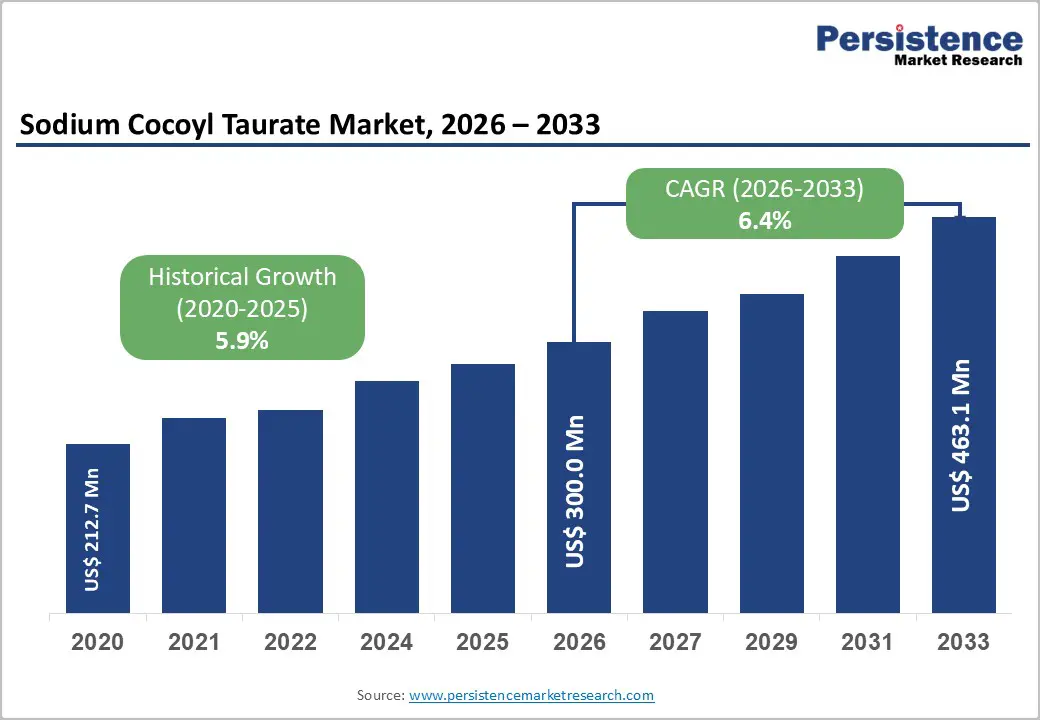
The global sodium cocoyl taurate market size is likely to be valued at US$300 million in 2026 and is projected to reach US$463.1 million by 2033, growing at a CAGR of 6.4% during the forecast period from 2026 to 2033, driven by rising demand for mild surfactants, growing adoption of sulfate-free personal care products, and increasing consumption of premium cleansing formulations.
Greater consumer awareness of skin sensitivity and regulatory efforts to limit harsh cleansing agents are accelerating the use of sodium cocoyl taurate in shampoos, facial cleansers, body washes, and specialty detergents. Additionally, advancements in formulation technologies and investments in sustainable ingredients continue to support market growth.
Key Industry Highlights
- Dominant Form Segment: Powder sodium cocoyl taurate is expected to lead with approximately 58% market share in 2026, while the liquid form is projected to be the fastest-growing segment through 2033, driven by increasing demand for premium liquid personal care formulations.
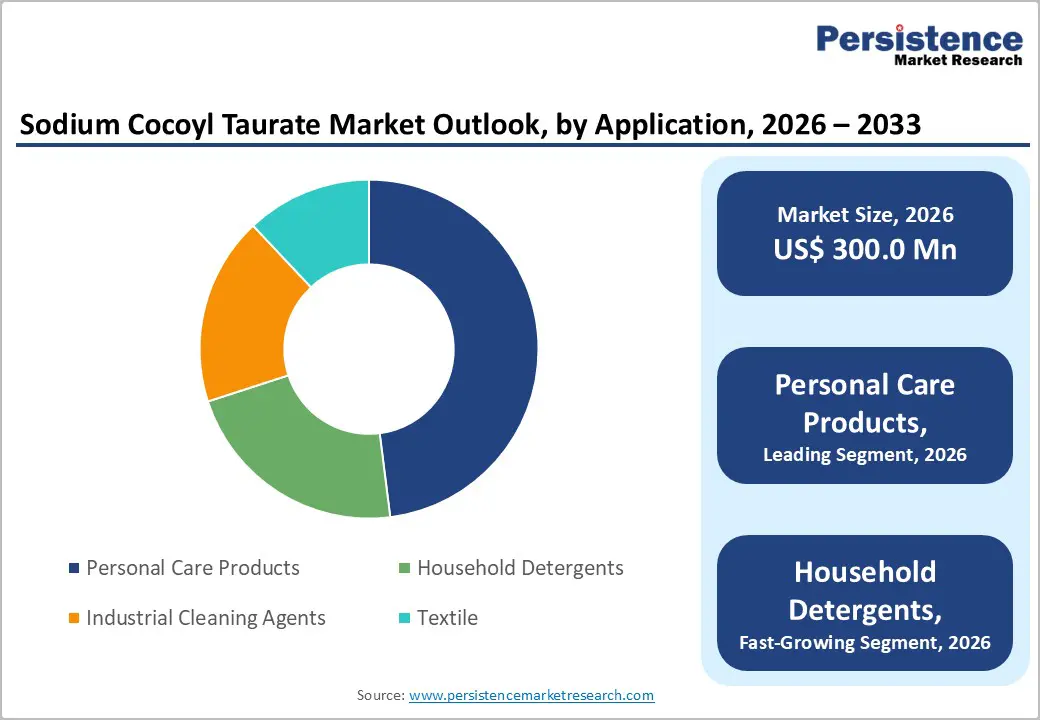
- Leading Application: Personal care products are anticipated to account for around 48% of market revenue in 2026, while household detergents are likely to be the fastest-growing application segment during 2026 - 2033, supported by rising adoption of sustainable cleaning products.
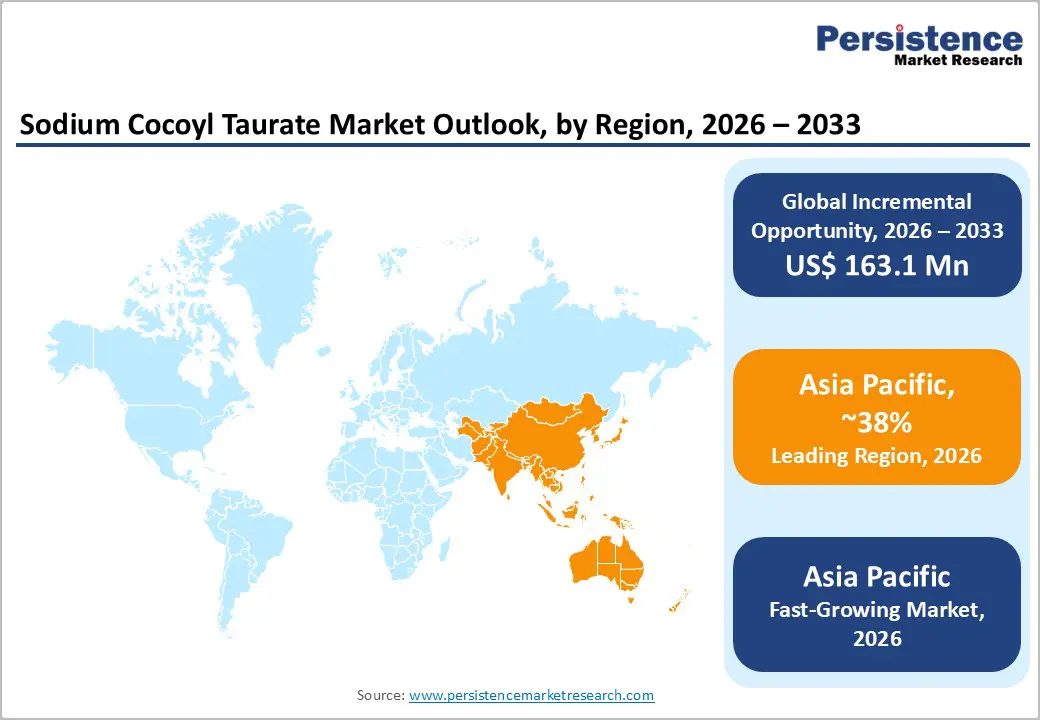
- Regional Leadership: Asia Pacific is poised to dominate with an estimated 38% share in 2026 and remain the fastest-growing regional market through 2033, supported by strong manufacturing capabilities and expanding consumer demand.
- Competitive Environment: Competitive activity is centered on sustainable surfactant innovation, capacity expansions, and formulation advancements, strengthening long-term market growth prospects.
DRO Analysis
Driver - Growing Demand for Sulfate-Free and Mild Surfactant-Based Personal Care Products
The primary driver of the sodium cocoyl taurate market is the growing demand for sulfate-free and skin-friendly personal care products. According to the Personal Care Products Council (PCPC), the U.S. personal care products industry contributes more than US$300 billion annually to the economy, while global beauty and personal care sales continue to expand due to increasing consumer spending on premium skincare and haircare products. Industry sources report the rising preference for products formulated without sulfates and other harsh ingredients.
Sodium cocoyl taurate is widely used in facial cleansers, shampoos, body washes, and baby care products because it provides effective cleansing and rich foam with lower irritation potential than traditional sulfate-based surfactants. Growing awareness of sensitive skin concerns and the expansion of clean-label beauty trends are accelerating demand for mild surfactants, bio-based surfactants, and premium personal care ingredients.
Restraint - Volatility in Coconut-Derived Raw Material Supply and Production Costs
Fluctuating availability and pricing of coconut-derived feedstocks remain a key challenge for the market. According to the Food and Agriculture Organization (FAO), more than 70% of global coconut production is concentrated in Asia Pacific countries such as Indonesia, the Philippines, and India, making supply chains vulnerable to climate-related disruptions and agricultural uncertainties.
Variations in coconut oil prices, along with rising transportation and energy costs, directly affect production economics for sodium cocoyl taurate manufacturers. Since the ingredient is generally more expensive than conventional surfactants, cost volatility can reduce competitiveness in price-sensitive applications such as household detergents and industrial cleaners. Specialized production processes and strict quality requirements further increase operational costs and create barriers for smaller producers.
Opportunity - Expansion of Sustainable and Green Cleaning Formulations
The increasing adoption of sustainable cleaning products presents a major opportunity for market participants. According to the United Nations Environment Programme (UNEP) and European sustainability initiatives, governments and industries are actively promoting biodegradable and environmentally responsible chemical ingredients. Consumer demand for eco-friendly household and personal care products is also rising across North America, Europe, and Asia Pacific.
Sodium Cocoyl Taurate's plant-derived origin, biodegradability, and mild environmental profile position it favorably within this trend. Leading consumer goods companies are investing in green cleaning products, natural surfactants, and sustainable formulations to meet evolving regulatory and consumer expectations. Growing disposable incomes and hygiene awareness in emerging economies further expand the addressable market, creating long-term opportunities for ingredient manufacturers and formulators.
Category-wise Analysis
Form Insights
Powder sodium cocoyl taurate is expected to account for approximately 58% of global market revenue in 2026, making it the dominant form segment. Its leadership is supported by longer shelf life, lower logistics costs, and suitability for solid cleansing products. The segment has gained momentum from the rapid expansion of waterless beauty products, with industry reports indicating that solid-format personal care products are growing faster than conventional formats as brands seek to reduce packaging waste and water usage throughout the product lifecycle.
The liquid segment is projected to be the fastest-growing form through 2033, driven by rising demand for premium shampoos, facial cleansers, and body washes. Growth is supported by the continued expansion of the global liquid skincare and haircare market, which accounts for the majority of new personal care product launches worldwide. The growing preference for multifunctional, sulfate-free liquid formulations among urban consumers is further accelerating adoption, particularly in Asia Pacific and North America.
Application Insights
Personal care products are anticipated to account for approximately 48% of total market revenue in 2026, making them the largest application segment. Sodium cocoyl taurate is widely used in premium skincare, baby care, and haircare products for its mild cleansing properties. The segment benefits from the strong growth of the global beauty and personal care industry, which surpassed US$600 billion in annual sales according to industry associations, alongside rising consumer demand for sensitive-skin and sulfate-free formulations.
Household detergents are expected to record the fastest growth during 2026 - 2033, supported by increasing demand for environmentally responsible cleaning products. According to the United Nations Environment Programme (UNEP), consumer preference for sustainable household products has increased significantly over the past decade, prompting major cleaning brands to expand biodegradable product portfolios. This shift is creating new opportunities for mild surfactants such as Sodium Cocoyl Taurate in premium laundry and dishwashing applications.
Regional Analysis
North America Sodium Cocoyl Taurate Market Trends
North America is expected to account for approximately 29% of the global sodium cocoyl taurate market in 2026, supported by strong demand for premium personal care formulations and high consumer awareness of ingredient safety. The region is likely to witness sustained adoption of mild surfactants in skincare, facial cleansing, baby care, and haircare applications as brands continue to prioritize sulfate-free and dermatologist-tested products. Growing investment in advanced formulation technologies is also anticipated to support market expansion.
U.S. Sodium Cocoyl Taurate Market Trends
The U.S. is estimated to contribute nearly 78% of North America's market revenue in 2026, making it the region's largest consumer. Demand is expected to remain concentrated in premium skincare, facial cleansers, and sulfate-free haircare products, reflecting increasing consumer focus on skin barrier protection and clean-label ingredients. Continued product reformulations and innovation by major beauty brands are likely to strengthen sodium cocoyl taurate consumption over the forecast period.
Canada Sodium Cocoyl Taurate Market Trends
Canada is projected to account for approximately 22% of the regional market in 2026 and is anticipated to emerge as one of the fastest-growing country markets in North America. Growth is expected to be supported by rising demand for environmentally responsible personal care and household cleaning products. Increasing consumer preference for biodegradable and naturally derived ingredients is likely to encourage broader adoption of mild surfactants across multiple end-use categories.
Europe Sodium Cocoyl Taurate Market Trends
Europe is projected to hold approximately 26% of global market revenue in 2026, supported by stringent environmental standards and increasing demand for sustainable cosmetic ingredients. Regional growth is expected to be driven by the expanding use of biodegradable surfactants and growing consumer preference for responsibly sourced personal care products. The region is also likely to benefit from ongoing investments in green chemistry and sustainable formulation development.
Germany Sodium Cocoyl Taurate Market Trends
Germany is estimated to account for nearly 26% of the European market, supported by its advanced specialty chemicals sector and strong demand for premium personal care products. The country is expected to maintain leadership due to increasing adoption of environmentally compliant formulations and growing incorporation of mild surfactants in skincare and haircare applications. Continued focus on sustainable manufacturing practices is likely to further support market demand.
U.K. Sodium Cocoyl Taurate Market Trends
The U.K. is projected to represent approximately 19% of regional revenue in 2026 and is expected to record robust growth throughout the forecast period. Demand is likely to be driven by expanding consumer interest in vegan, cruelty-free, and sulfate-free beauty products. The increasing presence of independent beauty brands and the continued growth of online beauty retail channels are anticipated to create favorable conditions for Sodium Cocoyl Taurate adoption.
Asia Pacific Sodium Cocoyl Taurate Market Trends
Asia Pacific is anticipated to account for approximately 38% of global market revenue in 2026, making it the largest regional market. Growth is expected to be supported by rising personal care consumption, increasing hygiene awareness, and expanding middle-class populations across developing economies. The region is also likely to benefit from its strong manufacturing base and proximity to coconut-derived raw materials used in surfactant production.
China Sodium Cocoyl Taurate Market Trends
China is estimated to contribute approximately 36% of the Asia Pacific market in 2026, supported by its large consumer base and rapidly evolving beauty and personal care industry. Demand is expected to remain strong for premium skincare products, facial cleansers, and specialized cosmetic formulations as consumers increasingly prioritize product quality and skin health. Continued growth of domestic beauty brands and digital commerce platforms is likely to further stimulate market expansion.
India Sodium Cocoyl Taurate Market Trends
India is projected to account for nearly 18% of regional market revenue in 2026 and is expected to be among the fastest-growing country markets during the forecast period. Growth is likely to be driven by increasing urbanization, rising spending on personal hygiene products, and expanding demand for sulfate-free shampoos, face washes, and baby care formulations. Ongoing penetration of premium personal care brands into tier-2 and tier-3 cities is anticipated to create additional growth opportunities.
Competitive Landscape
The global sodium cocoyl taurate market exhibits a moderately fragmented structure, with leading manufacturers such as BASF SE, Stepan Company, Clariant AG, and Galaxy Surfactants collectively accounting for a significant share of global revenue. These companies leverage strong relationships with personal care brands, extensive formulation expertise, and global distribution networks. They continue to invest in sustainable raw material sourcing, specialty surfactant innovation, and capacity expansions to strengthen their positions in the growing sulfate-free personal care market.
Companies such as Ajinomoto Co., Inc., Innospec Inc., and Colonial Chemical focus on high-performance mild surfactants and niche application areas. Barriers to entry remain relatively high due to stringent cosmetic regulations, technical manufacturing requirements, and raw material sourcing complexities. Market consolidation is expected to increase gradually as established players expand through strategic partnerships, product innovation, and geographic expansion, while growing demand for sustainable and clean-label ingredients continues to reshape competitive dynamics.
Key Industry Developments:
- In April 2026, Clariant AG launched Hostapon™ CT Solid, a salt-free Sodium Methyl Cocoyl Taurate surfactant with 90% active content for premium shampoos, facial cleansers, and body washes, expanding its taurate surfactant portfolio.
- In September 2025, BASF SE supplied its first biomass-balanced DMAPA to Galaxy Surfactants, supporting lower-carbon surfactant manufacturing and advancing sustainable personal care ingredient production.
Companies Covered in Sodium Cocoyl Taurate Market
- BASF SE
- Clariant AG
- Galaxy Surfactants Ltd.
- Innospec Inc.
- Taiwan NJC Corporation
- Ajinomoto Co., Inc.
- Colonial Chemical Inc.
- Kao Corporation
- Croda International Plc
- Solvay SA
- Lubrizol Corporation
- Evonik Industries AG
- Huntsman Corporation
- Oxiteno SA
Frequently Asked Questions
The global sodium cocoyl taurate market is projected to reach US$300 million in 2026.
Growing demand for sulfate-free personal care products and mild surfactants drives market growth.
The sodium cocoyl taurate market is expected to grow at a CAGR of 6.4% from 2026 to 2033.
Manufacturers can capitalize on rising demand for sustainable cleaning products and bio-based surfactants.
Personal care products lead the market due to widespread use in skincare, haircare, and baby care formulations.
BASF SE, Stepan Company, Clariant AG, Galaxy Surfactants Ltd., and Innospec Inc. are key market participants.


