




- Home Care & Utilities
- Removable Wallpaper Market
Removable Wallpaper Market Size, Share, and Growth Forecast, 2026 - 2033
Removable Wallpaper Market by Product Type (Vinyl, Fabric, Paper, Grasscloth, Textile, Metallic, Cork), Application (Residential, Commercial, Hospitality), Chemical Type (Polyethylene (PE), Polyvinyl Chloride (PVC)), and Regional Analysis for 2026-2033

Removable Wallpaper Market Share and Trends Analysis
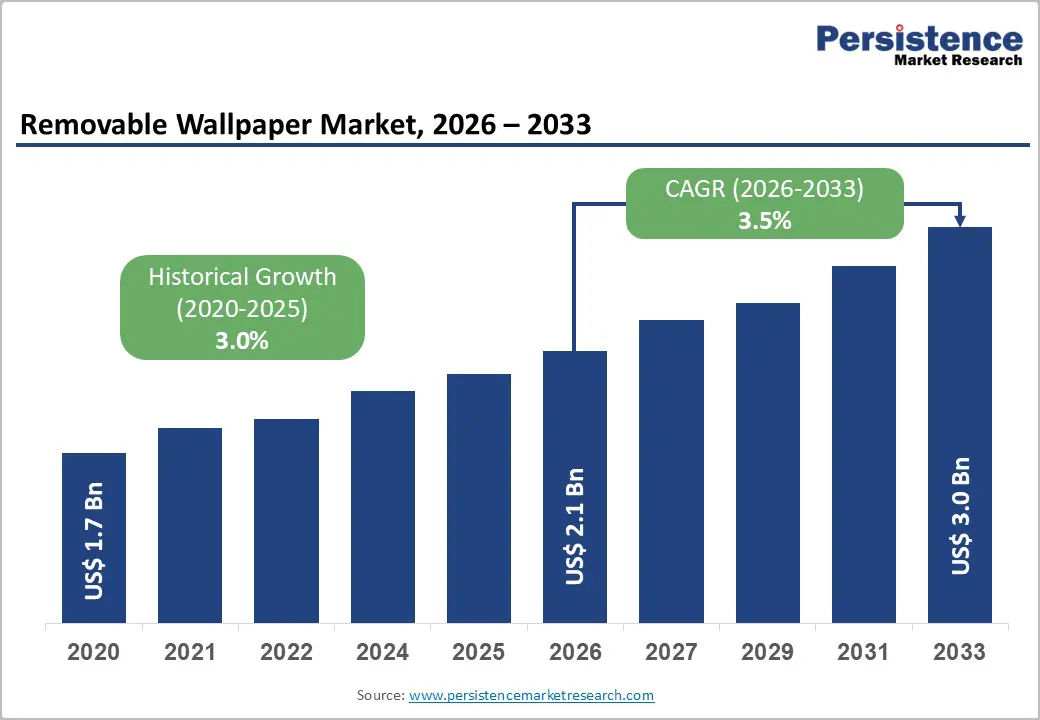
The global removable wallpaper market size is likely to be valued at US$ 1.7 billion in 2026, and is projected to reach US$ 3.0 billion by 2033, growing at a CAGR of 3.5% during the forecast period 2026−2033.
Growth in the removable wallpaper market is primarily fueled by a structural shift in consumer lifestyle preferences toward do-it-yourself (DIY) home renovation, a growing renter population that requires non-permanent decor solutions, and continuous product innovation in substrate materials and print technology. The demand for peel-and-stick wallpaper solutions has accelerated notably among urban millennials and Gen Z consumers, driven by shorter lease cycles and rising customization expectations.
Key Industry Highlights
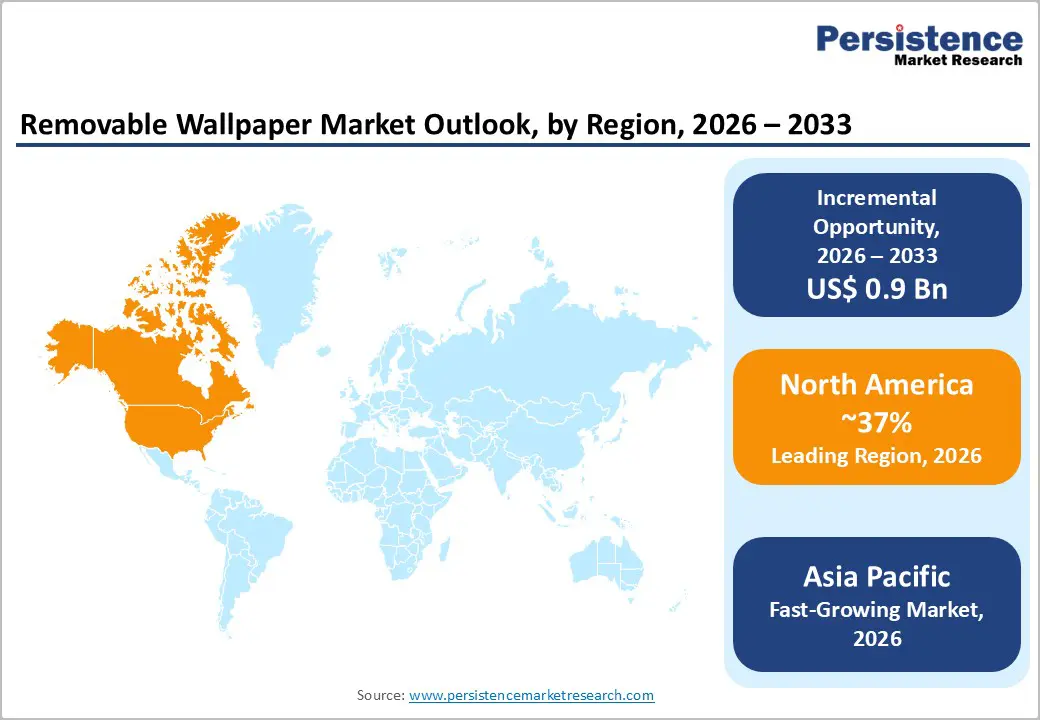
- Dominant Region: North America is expected to command about 37% market share in 2026, owing to a high concentration of renters who seek non-damaging decor solutions.
- Fastest-growing Market: The Asia Pacific market is set to be the fastest-growing from 2026 to 2033, due to massive urbanization and dense apartment living.
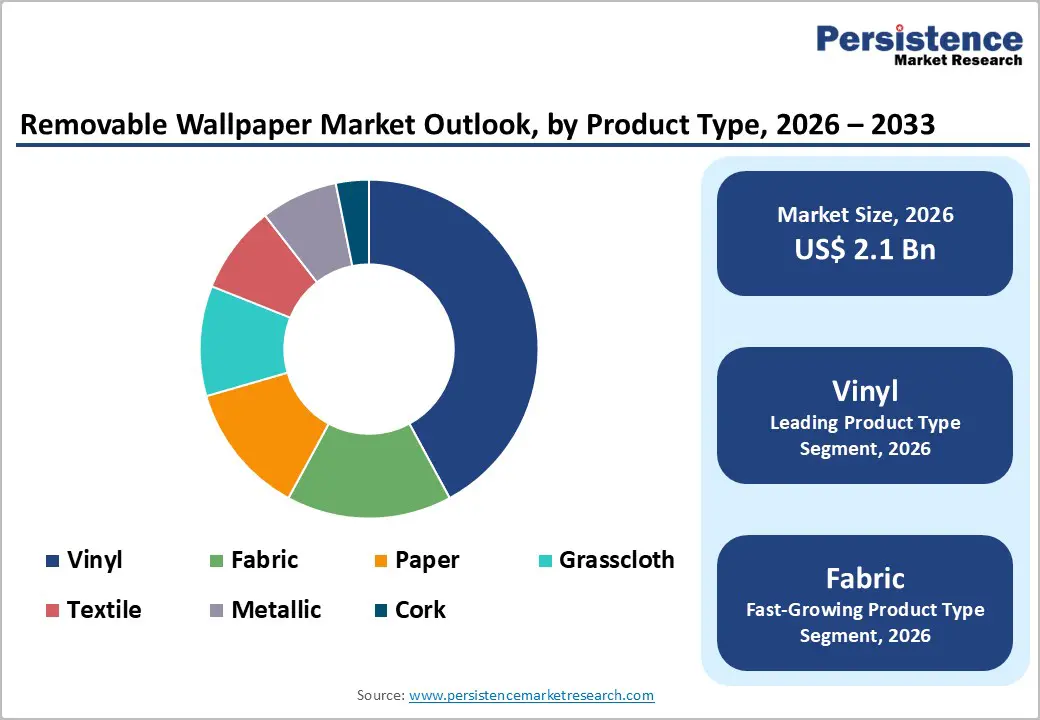
- Leading & Fastest-growing Product Type: Vinyl currently is slated to lead with around 55% revenue share in 2026, while fabric is likely to be the fastest-growing segment during the 2026-2033 forecast period.
- Leading & Fastest-growing Application: Residential applications are expected to hold roughly 66% revenue share in 2026, whereas commercial applications are poised to grow the fastest through 2033.
| Key Insights | Details |
|---|---|
| Removable Wallpaper Market Size (2026E) | US$ 1.7 Bn |
| Market Value Forecast (2033F) | US$ 3.0 Bn |
| Projected Growth (CAGR 2026 to 2033) | 3.5% |
| Historical Market Growth (CAGR 2020 to 2025) | 3% |
Market Factors – Growth, Barriers, and Opportunity Analysis
DIY Home Improvement Culture and Digital Media Influence
Social media platforms such as Pinterest, Instagram, and TikTok fuel the expansion of the global DIY home improvement market. These platforms inspire users with creative home decor ideas that encourage quick room makeovers. Content creators showcase simple transformation projects, which draw in audiences seeking affordable and renter-friendly options. Removable wallpaper stands out in this environment because it requires no special tools or skills for installation. Users apply it directly to walls and remove it without damage, making it ideal for frequent style changes. This accessibility attracts younger homeowners and tenants who prioritize flexibility in their living spaces.
The digital content cycle on these platforms continuously exposes removable wallpaper to new audiences worldwide. Influencers demonstrate real-time applications, which spark interest among viewers exploring personalization trends. E-commerce sites integrate seamlessly with social feeds, enabling instant purchases after watching tutorials. Google Trends data confirms sustained search growth for peel-and-stick varieties, signaling organic demand that platforms amplify through algorithms. In the future, this momentum is likely to integrate advanced features such as smart designs or sustainable materials, further embedding the product in DIY culture. Brands that partner with creators will capture emerging cohorts, ensuring long-term relevance as consumers demand versatile decor solutions.
Technological Innovation in Adhesive Chemistry and Print Quality
Pressure-sensitive adhesive (PSA) technology advances elevate product performance in essential ways. These improvements allow clean removal from various surfaces without damaging walls or leaving residue. Manufacturers apply stronger yet removable bonds that stick firmly during use. They ensure easy peeling after extended periods. This reliability expands usage to diverse wall types, such as textured drywall or painted concrete. Users gain confidence in applying wallpaper in high-traffic areas. The technology prevents common issues that plague traditional adhesives. It supports frequent style updates without repair costs. Brands integrate these adhesives into peel-and-stick formats for instant appeal. Wide-format digital inkjet printing transforms design possibilities with high-resolution outputs. Printers produce sharp, vibrant patterns at affordable production scales.
This capability matches photographic quality for custom motifs. Creators deliver intricate details that captivate consumers. Water-activated and fabric-based options emerge alongside eco-solvent inks. These formulations broaden applications beyond homes into offices and hotels. Commercial spaces adopt durable prints for temporary branding. Hospitality venues refresh interiors seasonally with minimal disruption. These innovations are well-positioned to merge with sustainable substrates, creating versatile products for evolving needs. Manufacturers can gain a competitive edge through superior aesthetics and functionality, while end-users can enjoy premium finishes that endure daily wear.
Limited Durability and Wear Resistance
Removable wallpaper faces a key growth barrier due to its limited durability and resistance to everyday wear. Temporary designs prioritize easy removal, which often compromises strength compared to permanent options. Users notice fading when sunlight hits the surface directly. Frequent handling during repositioning causes edges to lift or peel prematurely. Cleaning efforts with mild solutions lead to color loss over time. These issues reduce overall lifespan in busy environments. Consumers hesitate to choose the product for demanding spaces. They prefer solutions that withstand daily use without frequent replacement. Manufacturers grapple with this core trade-off in material selection. High-traffic zones, such as family rooms or office lobbies, amplify these concerns. Dirt accumulation and accidental scratches accelerate degradation.
Commercial buyers demand robustness for branding displays that last for several seasons. Residential users in rental properties value flexibility but seek longer performance before reapplication. Ongoing research targets hybrid adhesives that bond securely yet release cleanly. Developers test reinforced substrates to boost tensile strength without sacrificing removability. Future formulations will incorporate UV inhibitors for sustained vibrancy. Innovations such as antimicrobial coatings will address hygiene needs in public areas. Brands that bridge the gap between convenience and endurance will unlock broader adoption across sectors.
Premium Pricing Relative to Traditional Wallpaper Alternatives
Removable wallpaper carries a notable price premium compared to traditional paste-the-wall or pre-pasted alternatives. Consumers pay more upfront for the convenience of self-adhesive backing and damage-free removal. Basic materials drive up production expenses, as manufacturers incorporate specialized PSA. Retailers position the product as a premium choice for quick transformations. Shoppers in budget-conscious regions view this markup as a deterrent. They opt for cheaper paints or basic coverings instead. Emerging economies face added pressure from fluctuating raw material supplies. Households prioritize essentials over decorative upgrades. This perception limits widespread adoption among cost-aware buyers.
Value-driven customers focus on total ownership expenses rather than initial outlays. Traditional options require hiring installers, which adds labor fees and potential repairs. Removable versions eliminate these extras through simple application. Yet, mental barriers persist in low-income areas where disposable funds remain tight. E-commerce platforms exacerbate the issue by highlighting luxury designs at elevated rates. Brands counter this by introducing entry-level lines with simplified patterns. Future scaling of production will lower unit costs through efficient manufacturing. Economies of scale enable competitive pricing without quality loss. Developers need to explore affordable substrates that maintain performance standards, extending discounts during seasonal promotions to attract trial users.
Commercial and Hospitality Segment Adoption
The hospitality industry offers a major untapped potential for removable wallpaper, especially in boutique hotels, co-working spaces, and event venues. Operators seek affordable ways to update interiors quickly without major disruptions. They favor products that install easily and remove cleanly to suit seasonal themes or client needs. Managers refresh lobbies and guest rooms frequently to maintain fresh appeal. Removable options fit perfectly with these demands, as teams apply designs in hours rather than days. Owners avoid costly downtime from traditional renovations. Custom prints align with brand identities, such as vibrant patterns for trendy cafes or sleek motifs for upscale lounges. This versatility attracts businesses focused on dynamic environments. Commercial-grade versions address specific challenges in high-use settings.
Manufacturers can develop enhanced durability to withstand heavy foot traffic and frequent touch. Fire-retardant treatments meet safety standards for public areas, ensuring compliance with building codes. Tailored branding options allow venues to showcase logos or promotions directly on walls. These features justify higher pricing compared to home-use products, as buyer’s value reliability and performance. Partnerships with designers need to be leveraged to expand offerings for pop-up events and temporary exhibits. Innovators also need to prioritize scalable production to serve growing chains, elevating removable wallpaper from a niche tool to an essential asset.
Sustainable and Eco-Certified Product Innovation
Consumers and regulators push for eco-friendly interior products with growing urgency. This demand prompts manufacturers to adopt sustainable practices across production chains. Brands prioritize materials that minimize environmental harm, such as recycled substrates and plant-derived fibers. They eliminate harmful chemicals to protect indoor air quality. Certification bodies such as OEKO-TEX (Öko-Tex Standard 100) and Greenguard Gold verify these efforts through rigorous testing. Forest Stewardship Council (FSC) labels confirm responsible sourcing from managed forests. Companies gain trust by displaying these credentials prominently on packaging and websites. Shoppers actively seek verified options to align purchases with personal values.
European Union (EU) Ecodesign rules tighten standards progressively, favoring early adopters. Producers develop water-based adhesives and low-volatile organic compound (VOC)-free inks to comply. These innovations reduce emissions during manufacturing and use. Water-based systems simplify cleanup and disposal for end-users. Firms position certified lines as premium offerings in competitive markets. They educate buyers through campaigns that highlight lifecycle benefits, from raw inputs to end-of-life recycling. This approach appeals to conscious demographics and meets regulatory demands, enabling businesses to secure loyalty and higher margins through authentic sustainability.
Category-wise Analysis
Product Type Insights
Vinyl is poised to dominate in 2026, commanding approximately 55% of the removable wallpaper market revenue share, due to its superior print quality, dimensional stability, repositionability, and compatibility across diverse wall surfaces such as textured drywall or glossy paint, outperforming paper or fabric options. Advanced formulations resist bubbling and shrinking during application. Users reposition panels multiple times without adhesive loss or tearing. Moisture resistance and clean removal cement its residential leadership, especially in high-humidity areas such as kitchens and bathrooms. Homeowners apply it confidently over sinks or near showers, avoiding mold risks common with paper. Easy peel-off also prevents surface damage during moves, appealing to renters and frequent renovators.
Fabric is likely to be the fastest-growing segment during the 2026-2033 forecast period, fueled by enhanced acoustic dampening from its inherent thickness and textured weave. Sound waves are absorbed effectively into fibers, reducing echoes in large areas. Open-plan homes benefit as families create quieter zones without permanent fixtures. Home offices gain focus-friendly environments for remote work calls. Offices and commercial spaces adopt fabric panels for noise control in collaborative layouts. Designers favor its premium tactile appeal, such as soft weaves or subtle patterns, for multifunctional decor. Users touch and feel the material, elevating sensory experiences. Multifaceted use spans walls and dividers, drawing architects to innovative applications. These qualities propel fabric's rapid expansion across modern interiors.
Application Insights
Residential applications are anticipated to capture an estimated 66% of the removable wallpaper market share in 2026. Indoor residential settings, bedrooms, living rooms, and accent walls emerge as primary installation sites for removable wallpaper. Users transform these spaces quickly to match personal styles or seasonal themes. Accent walls create focal points with bold patterns, while bedrooms gain serene atmospheres through subtle designs. Renters drive the majority of demand due to the product's reversibility, which allows damage-free removal toward the end of the lease period. Homeowners are adopting it increasingly as a low-commitment refresh option, especially in children's rooms where tastes shift often.
Commercial applications are expected to be the fastest-growing segment over the 2026-2033 forecast period. Institutional buyers prioritize durability, fire-rating compliance, and custom branding over repositionability in commercial settings. They select products that endure heavy use and meet strict safety codes for public areas. Facility managers install robust panels in lobbies and conference rooms to maintain professional appearances. Post-pandemic redesigns fuel this growth, as businesses adapt interiors for new realities. Experiential retail spaces use vibrant graphics to engage customers and drive sales. Corporate offices reconfigure layouts for hybrid work, incorporating flexible partitions and branded zones. These shifts create distinct demand patterns from residential uses, with operators refreshing aesthetics seasonally without construction delays, boosting appeal in dynamic environments.
Regional Insights
North America Removable Wallpaper Market Trends
North America is set to command a significant portion of the removable wallpaper market share at approximately 37% in 2026. The United States drives this dominance through its high concentration of renters who seek non-damaging decor solutions. Strong DIY retail networks, such as Home Depot and Lowe's, stock diverse options and support hands-on projects. Cultural influences, including shows on Home Network (HGTV) and social media tutorials, embed home improvement habits deeply into daily life. Consumers embrace quick updates that align with fast-changing tastes. Millennials transition from renting to owning homes, carrying familiarity with peel-and-stick products into permanent residences.
Online interior design services proliferate, offering virtual previews and direct purchases that simplify decisions. California Air Resources Board (CARB) VOC rules and Consumer Product Safety Commission (CPSC) labeling standards push manufacturers toward low-emission formulas. These requirements elevate quality while prompting innovation in safer adhesives. Canada adds steady growth, as urban centers such as Toronto, Vancouver, and Montreal feature dense apartment populations with renter-heavy demographics. Businesses focus investments on premium features, direct-to-consumer (D2C) e-commerce platforms, and on-demand printing facilities. Brands such as Tempaper, RoomMates, and Spoonflower compete alongside store brands in a balanced field. Regional players enhance customization to meet demands for personalized aesthetics.
Europe Removable Wallpaper Market Trends
Europe is anticipated to secure the second-largest position in the global market for removable wallpapers. Germany leads national markets with its substantial renter population, which generates steady demand for non-permanent decor. The United Kingdom thrives on a vibrant DIY culture supported by retailers such as Wickes and B&Q, alongside expanding independent design stores. France draws strength from deep-rooted interior design traditions and consumer appreciation for elegant wall treatments. Spain emerges rapidly through urban rental expansion in cities such as Barcelona and Madrid, where young apartment residents embrace flexible styling options. EU Ecodesign and Construction Products Regulation (CPR) standards unify performance and labeling requirements across countries. These rules favor large producers with efficient cross-border supply chains.
Established wallpaper firms, such as Grandeco and A.S. Création, adapt traditional lines to removable formats. Digital-first brands target e-commerce channels to reach tech-savvy buyers. The EU Circular Economy Action Plan promotes recyclable materials and bio-based innovations, rewarding sustainable pioneers. Operators invest in low-waste production to align with these priorities. In the future, harmonized regulations will streamline compliance, enabling seamless market access. Companies prioritize premium, design-focused products to capture discerning audiences. They blend heritage craftsmanship with modern adhesives for superior appeal. This blend positions Europe as a hub for quality-driven growth. Brands that innovate responsibly will gain first-mover edges amid tightening environmental mandates.
Asia Pacific Removable Wallpaper Market Trends
Asia Pacific is anticipated to emerge as the fastest-growing market for removable wallpapers. China powers this surge through massive urbanization and dense apartment living, which demands space-saving decor solutions. E-commerce giants such as JD.com (Jingdong), Taobao, and Tmall accelerate access by delivering products directly to urban consumers. Manufacturers leverage local production strengths to create affordable options that suit high-rise lifestyles. Japan contributes with discerning quality standards and compact homes ideal for intricate patterns. Residents refresh interiors regularly to reflect seasonal or personal shifts, embedding the product in cultural routines. India unlocks vast potential as awareness spreads among its expanding middle class. Urban dwellers adopt flexible wall coverings to personalize rentals amid booming city growth.
The ASEAN bloc benefits from youth populations and social media influences. Platforms expose users to global trends, sparking demand for trendy, easy-install designs. Regional factories cut costs through efficient scales, enabling competitive prices that broaden reach. Businesses invest in platform-specific branding and local partnerships to tailor aesthetics, such as vibrant motifs for tropical climates. Maturing logistics are likely to integrate smart features such as app-linked previews. Pioneers adapt to diverse tastes, from minimalist Japanese styles to bold Indian prints. This agility positions Asia Pacific for outsized gains. Companies secure loyalty by blending affordability with cultural relevance, transforming emerging needs into sustained revenue streams across dynamic markets.
Competitive Landscape
The global removable wallpaper market structure is moderately fragmented, dominated by leading players such as Tempaper & Co., RoomMates Décor, Spoonflower Inc., Graham & Brown, and Brewster Home Fashions. These players collectively capture 35-40% of the market share. No single company dominates the removable wallpaper market. Specialty brands focus exclusively on peel-and-stick innovations, while established wallpaper manufacturers extend traditional lines into removable formats.
Independent and digital-native designers proliferate, offering unique patterns through online platforms. Private-label programs from retailers such as Target, Amazon, and IKEA are gaining traction, especially in affordable segments. These in-house options are positioned well to capture value-conscious shoppers with accessible pricing and wide distribution. This fragmented landscape fosters competition through customization and rapid trend adaptation, preventing consolidation while driving product variety.
Key Industry Developments
- In November 2025, Drew and Jonathan Scott of HGTV launched peel-and-stick wallpaper under their Scott Living brand in collaboration with Lowe's, offering dozens of easy-to-apply, removable designs such as tropical motifs and textured 3D patterns that renters can reposition or peel off without residue.
- In October 2025, Tempaper & Co. returned to High Point Market with three new peel-and-stick wallpaper launches, including the "Of the Earth" collection in collaboration with California design studio Pure Salt Interiors, featuring coastal-inspired patterns such as Poppies, Textured Check, and Bursa Stripe with subtle textures and earthy motifs.
- In October 2025, Graham & Brown launched its New Eden collection, featuring ~20 PVC-free removable wallpaper designs. These products were produced with 100% renewable energy and achieved carbon-neutral certification, highlighting product innovation and sustainability in the peel-and-stick segment.
Companies Covered in Removable Wallpaper Market
- Tempaper & Co.
- RoomMates Decor
- Spoonflower Inc.
- Graham & Brown
- Brewster Home Fashions
- A.S. Création Tapeten AG
- Grandeco Wallfashion Group
- Norwall Wallcoverings
- KOMAR Products GmbH & Co. KG
- Urban Walls
- Chasing Paper
- ONDECOR LLC
- Milton & King
- Murals Wallpaper
- Photowall
Frequently Asked Questions
The global removable wallpaper market is projected to reach US$ 2.1 billion in 2026.
The market is driven by DIY home improvement trends, urbanization, and renter demand for flexible décor.
The market is poised to witness a CAGR of 3.5% from 2026 to 2033.
Major opportunities lie in commercial hospitality expansions, sustainable certifications, and escalating urbanization across Asia Pacific.
Tempaper & Co., RoomMates Décor, Spoonflower Inc., Graham & Brown, and Brewster Home Fashions are some of the key players in the market.


