




- Nutraceuticals & Functional Foods
- Propolis Market
Propolis Market Size, Share, and Growth Forecast, 2026 - 2033
Propolis Market by Product Type (Capsules, Tablets, Liquids, Creams, Others), Category (Conventional, Organic), Distribution Channel (Supermarkets/Hypermarkets, Pharmacies and Drugstores, Online Retail Stores, Others), and Regional Analysis for 2026 - 2033

Propolis Market Size and Trends Analysis
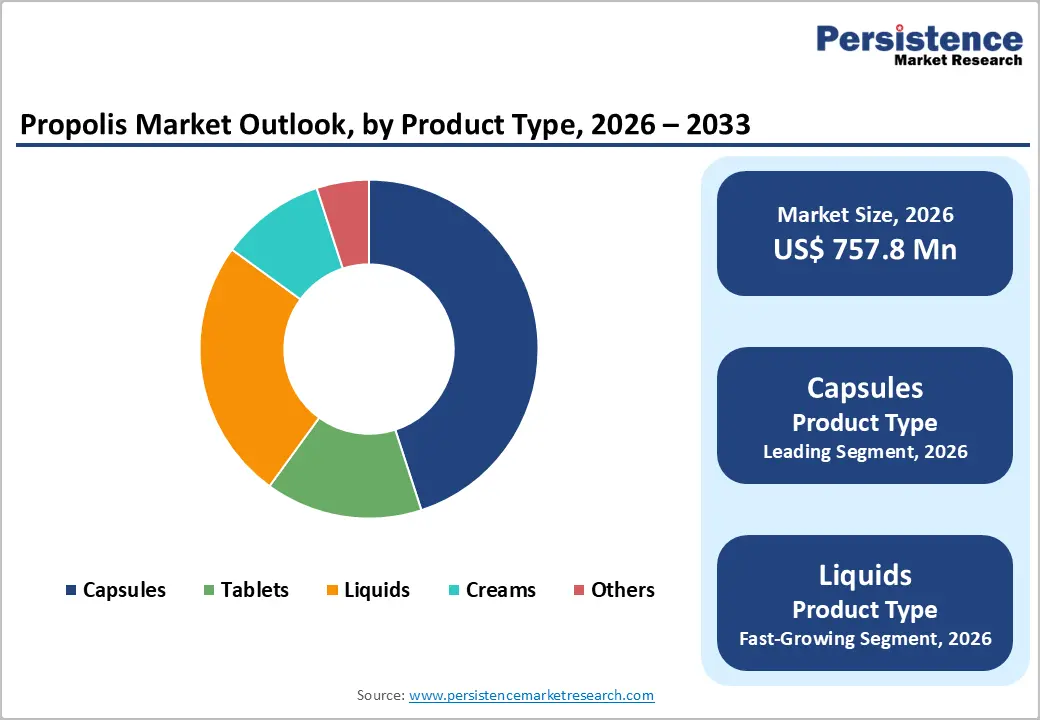
The global propolis market size is likely to be valued at US$757.8 million in 2026, and is expected to reach US$1,066.3 million by 2033, growing at a CAGR of 5.0% during the forecast period from 2026 to 2033, driven by rising consumer awareness of natural health products, increasing demand for immune-support supplements, and expanding applications in skincare and oral care. Increasing preference for organic and natural propolis products with proven antioxidant and anti-inflammatory benefits remains a major driver of propolis market growth.
Key Industry Highlights:
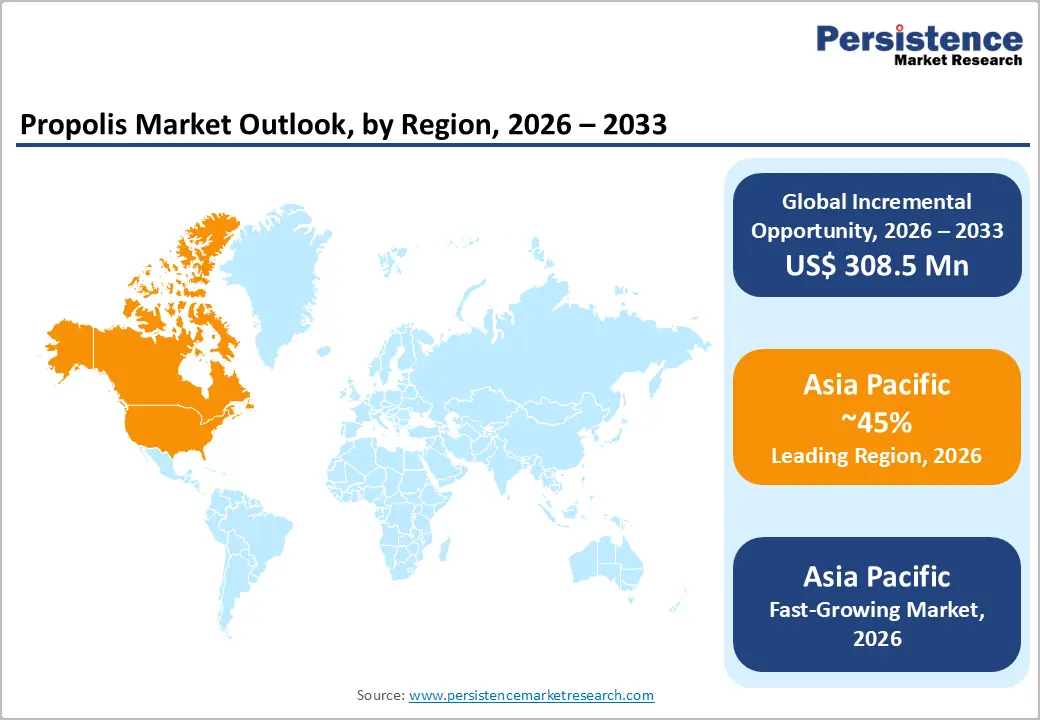
- Leading Region: Asia Pacific is set to capture 45% of revenue in 2026, driven by rising health awareness and demand for natural, immunity-boosting propolis products.
- Fastest-growing Region: North America is set to grow fastest, driven by demand for natural, plant-based, and immune-supporting propolis products.
- Dominant Product Type: Capsules, expected to hold 45% of the market in 2026, dominate due to convenience, precise dosing, and broad adoption in conventional and organic propolis products.
- Leading Category: Conventional propolis, projected to hold over 65% of the market in 2026, leads due to wider availability and lower cost.
| Key Insights | Details |
|---|---|
| Propolis Market Size (2026E) | US$757.8 Mn |
| Market Value Forecast (2033F) | US$1,066.3 Mn |
| Projected Growth CAGR (2026 - 2033) | 5.0% |
| Historical Market Growth (2020 - 2025) | 4.1% |

DRO Analysis
Driver- Growing Consumer Health & Wellness Awareness
Increasing attention to personal health and overall wellness is driving demand for functional and natural products that support immunity, energy, and preventive care. Consumers are becoming more proactive about maintaining their health, seeking solutions that enhance well-being rather than simply addressing illnesses. This behavioral shift has created a strong market for natural ingredients such as propolis, which is valued for its antioxidant, antimicrobial, anti-inflammatory, and immune-supporting properties.
People are integrating propolis into daily routines through dietary supplements, functional foods, beverages, and personal care products to boost overall wellness. The trend toward preventive healthcare encourages consistent use of such products, as consumers aim to strengthen immunity, improve resilience to infections, and support long-term health outcomes. Health-conscious individuals are also more likely to research product composition and prioritize clean-label, chemical-free, and sustainably sourced options. This heightened health awareness motivates manufacturers to develop high-quality, standardized propolis formulations in versatile delivery formats, including capsules, liquids, sprays, and lozenges. Brands are investing in consumer education, highlighting the benefits of propolis for immunity, skin health, and general wellness.
Shift Toward Natural & Organic Products
Consumers are increasingly prioritizing health, wellness, and environmental sustainability, driving a strong preference for natural and organic products across food, supplements, and personal care categories. Natural and organic offerings are perceived as safer, chemical-free, and environmentally responsible, appealing to individuals who are concerned about long-term health and the impact of synthetic additives. In the propolis market, this trend has led to higher demand for organically sourced extracts, which are free from pesticides, GMOs, and artificial preservatives.
Organic propolis aligns with consumer expectations for clean-label products, combining natural therapeutic benefits with ethical and sustainable sourcing practices. The appeal of organic formulations extends to dietary supplements, functional foods, beverages, and personal care products, where consumers seek ingredients that deliver measurable health benefits while minimizing exposure to synthetic chemicals. This consumer-driven shift encourages manufacturers to innovate, expand organic product lines, and emphasize transparency in sourcing and production methods. It also motivates investment in certifications, sustainable beekeeping practices, and standardized extraction techniques to ensure consistent quality.
Restraint- Raw Material Supply Constraints
Propolis production is inherently dependent on bee activity and the availability of specific plant resins, making the supply of raw material vulnerable to environmental and ecological factors. Seasonal variations, climate changes, and habitat loss can significantly impact bee populations and foraging patterns, resulting in fluctuations in propolis yield. Geographic differences in plant species influence the chemical composition and quality of the propolis harvested, creating challenges in maintaining consistency across batches.
The labor-intensive process of collecting propolis from hives further limits large-scale production, as careful extraction is required to avoid harming bee colonies. Limited availability can drive up production costs, especially for high-quality or organically certified propolis, which requires sustainable and traceable sourcing. These factors can lead to supply bottlenecks and affect the ability of manufacturers to meet growing consumer demand, particularly in supplements, functional foods, and personal care products.
Limited Clinical Evidence & Scientific Validation
Despite its long history of traditional use, propolis faces challenges in achieving widespread acceptance due to the lack of extensive clinical evidence and scientific validation. While numerous studies suggest potential health benefits such as immune support, antimicrobial activity, and antioxidant properties, most research has been conducted on small sample sizes, in vitro models, or animal studies. This limited clinical data makes it difficult for healthcare professionals, regulatory authorities, and cautious consumers to fully endorse propolis-based products for therapeutic purposes.
The variability in propolis composition, influenced by geographic origin, plant sources, and bee species, further complicates standardization and consistency in research outcomes. Demonstrating uniform efficacy across different products is challenging, impacting consumer confidence and broader market adoption. For manufacturers, this creates hurdles in making clear health claims or positioning products for clinical applications.
Opportunity- Rising Demand for Natural & Functional Ingredients
The global propolis market is increasingly driven by rising demand for natural and functional ingredients, as consumers prioritize health, wellness, and clean-label products. People are becoming more conscious of the potential side effects of synthetic additives and chemicals, leading to a strong preference for naturally sourced ingredients in dietary supplements, functional foods, beverages, and personal care products. Propolis, with its antioxidant, antibacterial, antiviral, and anti-inflammatory properties, fits well into this growing trend, offering both preventive and supportive health benefits.
Functional foods and beverages enriched with propolis are gaining popularity as they provide added health advantages beyond basic nutrition, such as immune support, improved digestive health, and enhanced overall vitality. Similarly, in the personal care sector, propolis is incorporated into skincare, oral care, and hair care products to leverage its natural therapeutic properties, offering solutions that address inflammation, microbial protection, and skin regeneration. Consumers are increasingly seeking products that deliver measurable health benefits while remaining eco-friendly, organic, and sustainably sourced. This shift is encouraging manufacturers to innovate with high-quality extracts, standardized formulations, and versatile delivery formats such as capsules, liquids, and functional beverages.
Expansion in the Cosmetic & Personal Care Segment
The propolis market is experiencing notable growth in the cosmetic and personal care segment, driven by rising consumer interest in natural, multifunctional ingredients. Propolis is valued for its antioxidant, antibacterial, and anti-inflammatory properties, making it highly suitable for skincare, oral care, and hair care applications. In skincare, it is commonly incorporated into creams, serums, masks, and lotions to help soothe irritation, reduce inflammation, and protect against environmental stressors. Its natural antimicrobial properties also make it an effective ingredient in oral care products such as toothpaste, mouthwash, and lozenges, promoting oral hygiene and gum health.
In hair care, propolis is used in shampoos, conditioners, and scalp treatments to support scalp health, reduce dandruff, and strengthen hair follicles. Consumer demand for clean-label and chemical-free products has further fueled its adoption, as propolis aligns with the trend toward natural and sustainable personal care solutions. Brands are innovating by combining propolis with other botanical extracts and vitamins to enhance efficacy and appeal to health-conscious consumers. E-commerce and specialty retail channels have played a significant role in promoting propolis-based cosmetic products, making them more accessible and educating consumers about their benefits.
Category-wise Analysis
Product Type Insights
Capsules are anticipated to dominate, accounting 45% of the market share in 2026, due to their convenience, ease of consumption, and precise dosing, which ensures consistent intake of active ingredients for daily supplementation. Capsules are preferred by consumers seeking simple, portable, and reliable formats for immune support, general wellness, and preventive healthcare. Their versatility allows incorporation into both conventional and organic propolis products, enhancing adoption across diverse consumer groups. Nutricost Bee Propolis Capsules provide a high-strength propolis supplement in convenient capsule form. These capsules are favored for their precise dosing, portability, and ease of use, making them an ideal choice for daily propolis intake compared to liquid or spray formats.
Liquids represent the fastest-growing segment, driven by their rapid absorption and versatile applications. Liquids allow the active compounds in propolis to enter the bloodstream more quickly than capsules or lozenges, making them ideal for consumers seeking immediate health benefits. Additionally, liquid formulations can be easily incorporated into beverages, functional foods, or used topically in skincare and oral care products, expanding their utility. Nature's Answer Propolis Extract Alcohol-Free 1 fl. oz. is a highly rated liquid propolis formulation that offers rapid absorption and versatile applications. These liquid tinctures are popular because the propolis can quickly enter the body and be conveniently added to beverages or used topically, providing greater flexibility than traditional capsules or tablets.
Category Insights
Conventional is projected to dominate with over 65% of share in 2026, fueled by its wider availability and relatively lower price compared to organic or specialty variants. Conventional propolis is easier to source and process, allowing manufacturers to offer cost-effective products that appeal to a broad consumer base. Its affordability makes it the preferred choice in dietary supplements, functional foods, and personal care products, particularly in regions with price-sensitive consumers. NOW Foods’ Propolis 1500 Capsules are a widely available, cost-effective conventional bee propolis supplement. Sourced from active beehives, these capsules provide a straightforward extract that appeals to mainstream consumers looking for affordable immune support.
Organic is likely to be the fastest-growing category, driven by increasing consumer demand for clean-label, chemical-free, and naturally sourced products. Health-conscious buyers are willing to pay a premium for certified organic propolis, perceiving it as safer, more sustainable, and environmentally friendly compared to conventional alternatives. This growth is particularly evident in dietary supplements, functional foods, and personal care products, where organic certification adds credibility and trust. Arkopharma’s Arkocaps Organic Propolis 40 Capsules are crafted from certified organic propolis extract, free from synthetic pesticides and GMOs, making them an attractive choice for consumers seeking clean-label, chemical-free wellness supplements.
Regional Insights
North America Propolis Market Trends
North America is likely to be the fastest-growing region, propelled by increasing consumer interest in natural remedies, preventive healthcare, and immune support. The U.S. and Canada dominate the region, with a strong emphasis on health-conscious lifestyles and dietary supplementation. Consumers are increasingly seeking plant-based, organic, and functional ingredients, making propolis a preferred choice for natural wellness products.
The dietary supplement segment is a major driver, with propolis incorporated into capsules, tablets, lozenges, and liquid extracts to support immunity, respiratory health, and general wellness. The personal care and cosmetics sector is embracing propolis for its antioxidant, antibacterial, and anti-inflammatory properties, finding applications in skincare, oral care, and hair care products. Innovative delivery formats, including sprays, infused beverages, and functional foods, are gaining popularity among consumers looking for convenient, everyday wellness solutions. E-commerce platforms and online retail channels are expanding the market reach, enabling small and medium brands to educate consumers about propolis benefits and drive adoption. The trend toward preventive healthcare, coupled with rising disposable incomes and increased awareness of natural alternatives to synthetic products, is encouraging regular use of propolis-based offerings.
Europe Propolis Market Trends
Europe market is experiencing steady growth, driven by increasing consumer awareness of natural health solutions and preventive healthcare. Consumers are showing a strong preference for organic and plant-based products, creating demand for high-quality propolis in dietary supplements, functional foods, and beverages. Countries such as Germany, France, the UK, and Italy are leading the market, with a growing focus on immunity support, wellness, and holistic health.
In Europe, the cosmetics and personal care sector is a major contributor to propolis demand. Its antioxidant, anti-inflammatory, and antibacterial properties make it a preferred ingredient in skincare, oral care, and hair care formulations. Innovative product formats such as lozenges, sprays, capsules, creams, and fortified beverages are gaining traction, catering to the lifestyle needs of modern consumers. Retail expansion, particularly through e-commerce, pharmacies, and specialty stores, is enhancing accessibility and consumer education, allowing brands to communicate the benefits of propolis effectively. The trend toward preventive and holistic health solutions is encouraging regular consumption of propolis-based products.
Asia Pacific Propolis Market Trends
Asia Pacific is projected to dominate, capturing the 45% of revenue in 2026, powered by rising health awareness and increasing consumer preference for natural and functional products. Countries such as China, Japan, India, and South Korea are emerging as key markets due to the growing demand for immunity-boosting supplements, natural remedies, and cosmetic products. Consumers in these regions are increasingly shifting from synthetic to organic and plant-based ingredients, fueling demand for high-quality propolis extracts.
E-commerce and online retail channels are playing a pivotal role in expanding market reach, enabling small and medium enterprises to connect with a larger audience and educate consumers about the benefits of propolis. Product innovation is shaping market trends, with companies introducing varied delivery formats such as capsules, sprays, lozenges, and functional beverages tailored to modern lifestyles. In the cosmetic and personal care segment, propolis is gaining traction for its antioxidant, anti-inflammatory, and antibacterial properties, finding application in skincare, oral care, and hair care products. The trend towards preventive healthcare is further driving consumer adoption, as more individuals focus on maintaining wellness and enhancing immunity naturally.
Competitive Landscape
The global propolis market is highly competitive, with key players striving to differentiate themselves through product quality, organic certifications, and innovative delivery formats. Leading companies such as Comvita Ltd, Apiary Polenecter, Apis Flora Industrial e Comercial Ltda, NOW Foods, Herb Pharm LLC, and Uniflora Nutraceutica Ltda are emphasizing standardized, high-potency propolis extracts to ensure consistent efficacy and meet growing consumer expectations. These players are also expanding their organic and natural product portfolios to cater to the rising demand for clean-label, health-focused products.
Strong brand positioning in the health and wellness segment, combined with robust distribution strategies through pharmacies, specialty stores, and e-commerce platforms, enables wider market reach and customer accessibility. Companies are investing in consumer education initiatives to build awareness and trust regarding the natural health benefits of propolis. Continuous innovation in formulation, such as lozenges, sprays, capsules, and functional beverages, further strengthens their competitive advantage in this rapidly evolving market.
Key Industry Developments:
- In December 2025, Life Extension launched Bee Immune Propolis Capsules, providing standardized propolis extract to support respiratory and immune health, and reported a 31% reduction in seasonal respiratory discomfort in clinical trials.
- In April 2025, The Wedderspoon Organic Group gained recognition for its Propolis and Manuka Honey Throat Sprays, winning the 2025 Remedies Health & Beauty Essentials Award. Launched in 2025, the award highlighted Taste for Life magazine’s top selections for cosmetics and personal care products that promote wellness and a healthy glow.
Companies Covered in Propolis Market
- Comvita Ltd
- Apiary Polenecter
- Apis Flora Industrial e Comercial Ltda
- NOW Foods
- Herb Pharm LLC
- Uniflora Nutraceutica Ltda
- YS Organic Bee Farms
- Sunyata Produtos Alternativos Ltda
- Wax Green
- INW Manufacturing, LLC
- Bio-Botanica Inc.
- SBS Scientific Bio Solutions
- Natura Nectar LLC
Frequently Asked Questions
The global propolis market is projected to reach US$757.8 million in 2026.
Consumers’ focus on health, wellness, and sustainability is driving strong demand for natural and organic, pesticide- and GMO-free propolis products.
The propolis market is poised to witness a CAGR of 5.0% from 2026 to 2033.
Rising consumer demand for natural, clean-label products is driving growth in the propolis market due to its health-promoting and functional properties.
Key players in the propolis market include leading natural supplement manufacturers with strong beekeeping and extraction expertise.


