


- Executive Summary
- North America Plant Based Milk Market Snapshot, 2025 and 2032
- Market Opportunity Assessment, 2025 - 2032, US$ Mn
- Key Market Trends
- Future Market Projections
- Premium Market Insights
- Industry Developments and Key Market Events
- PMR Analysis and Recommendations
- Market Overview
- Market Scope and Definition
- Market Dynamics
- Drivers
- Restraints
- Opportunity
- Key Trends
- COVID-19 Impact Analysis
- Forecast Factors - Relevance and Impact
- Value Added Insights
- Regulatory Landscape
- Value Chain Analysis
- PESTLE Analysis
- Porter’s Five Force Analysis
- Consumer Behavior Analysis
- Price Analysis, 2024A
- Key Factors Impacting Product Prices
- Pricing Analysis, By Product
- North America Plant Based Milk Market Outlook
- North America Plant Based Milk Market Outlook: Product
- Introduction / Key Findings
- Historical Market Size (US$ Mn) Analysis, By Product, 2019 - 2024
- Market Size (US$ Mn) Analysis and Forecast, By Product, 2025 - 2032
- Almond Milk
- Soy Milk
- Oat Milk
- Coconut Milk
- Rice Milk
- Cashew Milk
- Others
- Market Attractiveness Analysis: Product
- North America Plant Based Milk Market Outlook: Formulation
- Introduction / Key Findings
- Historical Market Size (US$ Mn) Analysis, By Formulation, 2019 - 2024
- Market Size (US$ Mn) Analysis and Forecast, By Formulation, 2025 - 2032
- Sweetened
- Unsweetened
- Market Attractiveness Analysis: Formulation
- North America Plant Based Milk Market Outlook: Packaging Type
- Introduction / Key Findings
- Historical Market Size (US$ Mn) Analysis, By Packaging Type, 2019 - 2024
- Market Size (US$ Mn) Analysis and Forecast, By Packaging Type, 2025 - 2032
- Cartons
- Bottles
- Pouches
- Others
- Market Attractiveness Analysis: Packaging Type
- North America Plant Based Milk Market Outlook: Distribution Channel
- Introduction / Key Findings
- Historical Market Size (US$ Mn) Analysis, By Distribution Channel, 2019 - 2024
- Market Size (US$ Mn) Analysis and Forecast, By Distribution Channel, 2025 - 2032
- Supermarkets/Hypermarkets
- Online Retail
- Convenience Stores
- Specialty Stores
- Others
- Market Attractiveness Analysis: Distribution Channel
- North America Plant Based Milk Market Outlook: Product
- North America Plant Based Milk Market Outlook: Country
- Key Highlights
- Historical Market Size (US$ Mn) Analysis, By Country, 2019 - 2024
- Market Size (US$ Mn) Analysis and Forecast, By Country, 2025 - 2032
- U.S.
- Canada
- Market Attractiveness Analysis: Country
- U.S. Plant Based Milk Market Outlook
- Historical Market Size (US$ Bn) Analysis, By Market, 2019-2024
- By Product
- By Formulation
- By Packaging Type
- By Distribution Channel
- Market Size (US$ Bn) Analysis and Forecast, By Product, 2025-2032
- Almond Milk
- Soy Milk
- Oat Milk
- Coconut Milk
- Rice Milk
- Others
- Market Size (US$ Bn) Analysis and Forecast, By Formulation, 2025-2032
- Sweetened
- Unsweetened
- Market Size (US$ Bn) Analysis and Forecast, By Packaging Type, 2025-2032
- Cartons
- Bottles
- Pouches
- Others
- Market Size (US$ Bn) Analysis and Forecast, By Distribution Channel, 2025-2032
- Supermarkets/Hypermarkets
- Online Retail
- Convenience Stores
- Specialty Stores
- Others
- Market Attractiveness Analysis
- Historical Market Size (US$ Bn) Analysis, By Market, 2019-2024
- Canada Plant Based Milk Market Outlook
- Historical Market Size (US$ Bn) Analysis, By Market, 2019-2024
- By Product
- By Formulation
- By Packaging Type
- By Distribution Channel
- Market Size (US$ Bn) Analysis and Forecast, By Product, 2025-2032
- Almond Milk
- Soy Milk
- Oat Milk
- Coconut Milk
- Rice Milk
- Others
- Market Size (US$ Bn) Analysis and Forecast, By Formulation, 2025-2032
- Sweetened
- Unsweetened
- Market Size (US$ Bn) Analysis and Forecast, By Packaging Type, 2025-2032
- Cartons
- Bottles
- Pouches
- Others
- Market Size (US$ Bn) Analysis and Forecast, By Distribution Channel, 2025-2032
- Supermarkets/Hypermarkets
- Online Retail
- Convenience Stores
- Specialty Stores
- Others
- Market Attractiveness Analysis
- Historical Market Size (US$ Bn) Analysis, By Market, 2019-2024
- Competition Landscape
- Market Share Analysis, 2024
- Market Structure
- Competition Intensity Mapping By Market
- Competition Dashboard
- Company Profiles (Details - Overview, Financials, Strategy, Recent Developments)
- Nestlé Overview
- Segments and Products
- Key Financials
- Market Developments
- Market Strategy
- Oatly
- So Delicious
- Ripple Foods
- Califia Farms
- Mooala
- Danone
- Forager Project
- Earth’s Own
- Eden Foods
- Daiya Foods
- MalkOrganics
- Elmhurst Milked Direct LLC
- Milkadamia
- Pacific Foods
- Others
- Nestlé Overview
- Appendix
- Research Methodology
- Research Assumptions
- Acronyms and Abbreviations


- Processed Food
- North America Plant Based Milk Market
North America Plant Based Milk Market Size, Share, Growth, and Regional Forecast for 2025 - 2032
North America Plant Based Milk Market by Product (Almond Milk, Soy Milk, Oat Milk, Coconut Milk, Rice Milk, Others), Formulation (Sweetened, Unsweetened), Packaging Type (Cartons, Bottles, Pouches, Others), Sales Channel (Supermarkets/Hypermarkets, Online Retail, Convenience Stores, Others) and Region for 2025 - 2032
North America Plant-based Milk Market Share and Trends Analysis
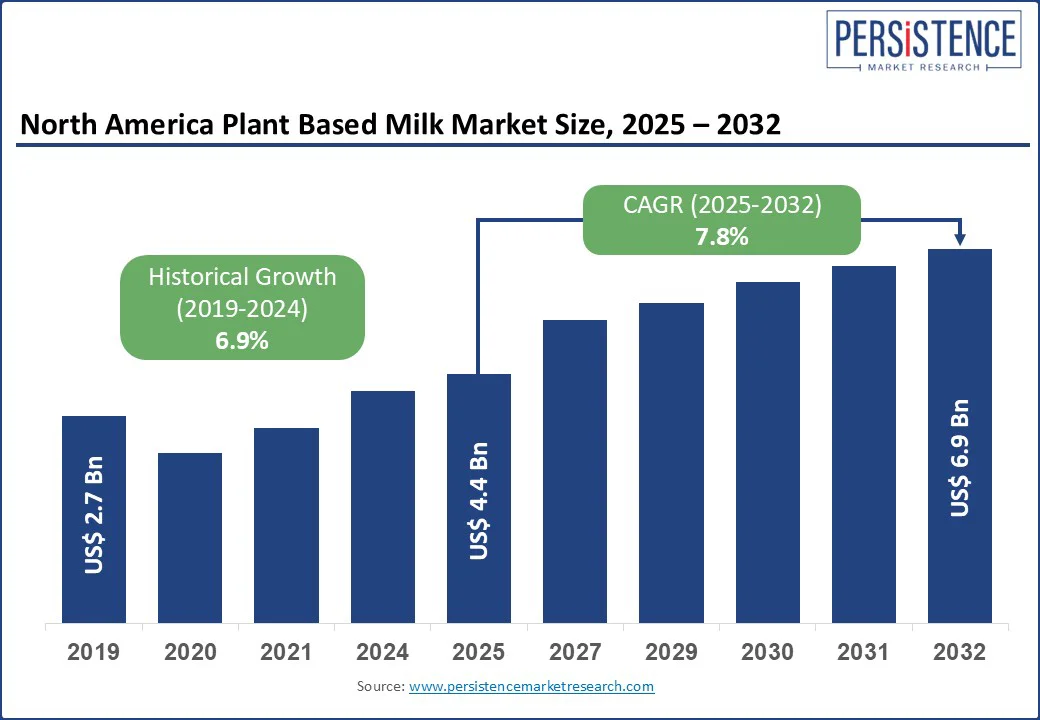
The North America plant-based milk market size is expected to increase from US$4.4 billion in 2025 to US$6.9 billion by 2032. It is projected to witness a CAGR of 7.8% from 2025 to 2032. The North America plant-based milk market has witnessed significant growth driven by rising lactose intolerance, growing vegan and flexitarian populations, and increasing health and sustainability awareness. Consumers are increasingly opting for alternatives like almond, oat, and soy milk due to their perceived health benefits and lower environmental impact. With expanding product variety and retail availability, plant-based milk is steadily transitioning from a niche to a mainstream category across the U.S. and Canada.
Key Industry Highlights:
- Consumers increasingly opt for plant-based milk due to its perceived health benefits, especially among those seeking vegan milk alternatives.
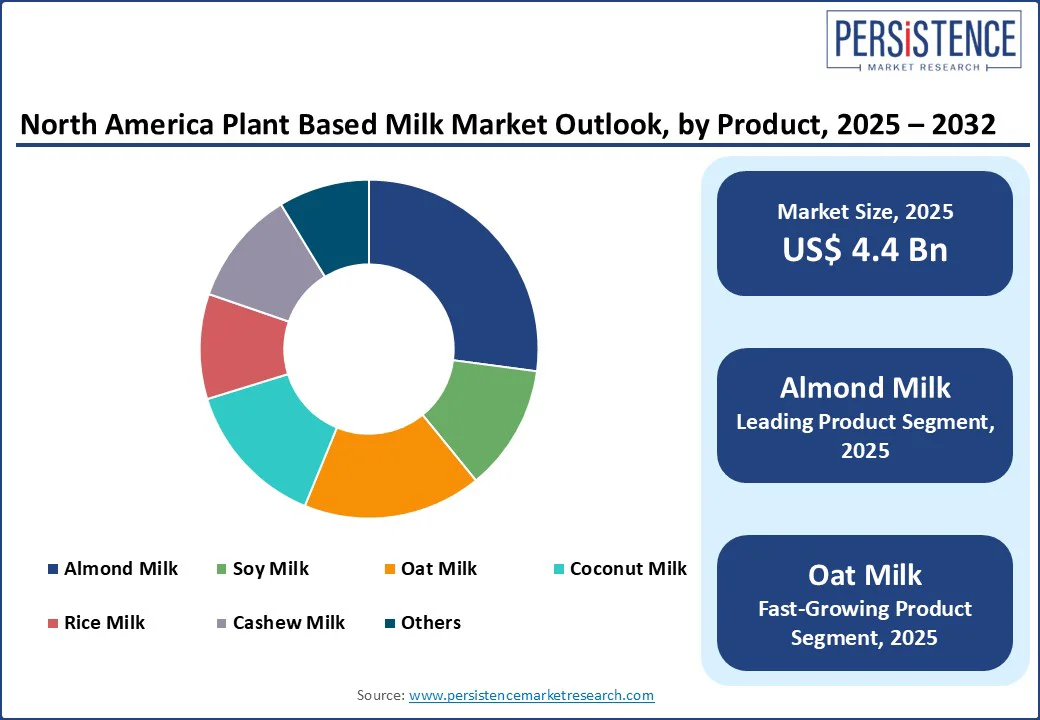
- Almond milk holds over 42% share, driven by early adoption, brand familiarity, and wide availability across North America’s plant-based milk category.
- With over 36% of Americans experiencing lactose malabsorption, the shift from dairy to lactose-free beverages is accelerating.
- Cartons lead the plant-based milk packaging segment in North America, accounting for 59.5% of sales due to their convenience, shelf stability, and recyclability.
- Health-conscious consumers prefer unsweetened plant-based milk and organic non-dairy milk with clean labels and fewer additives.
- Supermarkets and hypermarkets dominate distribution with 41.3% share, making them the primary retail channel for plant-based milk purchases in North America.
- Plant-based beverage startups are leveraging direct-to-consumer (D2C) models to deliver niche, premium, and customized milk substitutes.
|
Market Attribute |
Key Insights |
|
North America Plant Based Milk Market Size (2025E) |
US$ 4.4 Bn |
|
Market Value Forecast (2032F) |
US$ 6.9 Bn |
|
Projected Growth (CAGR 2025 to 2032) |
7.8% |
|
Historical Market Growth (CAGR 2019 to 2024) |
6.9% |
Market Dynamics
Drivers - Increasing Cases of Lactose Intolerance and Dairy Allergies Prompt Consumers to Adopt Plant-Based Milk Alternatives
The growing prevalence of lactose intolerance and dairy protein sensitivity is significantly reshaping the North American milk market. Health-conscious consumers are turning to non-dairy beverages like almond, soy, and oat milk, which offer lactose-free, easily digestible alternatives. Sales of lactose-free and plant-based milk alternatives have risen sharply in recent years, reflecting a strong consumer shift away from traditional dairy.
Leading alt milk brands are innovating to meet shifting preferences; for instance, Mooala launched its Organic Barista Blend Oatmilk in August 2024, offering a clean-label, barista-style oat milk free from gums and artificial additives, catering to health-conscious and specialty coffee consumers alike. As traditional dairy responds with enzyme-treated products, plant-based milk brands differentiate through fortified, clean-label formulations. These milk substitutes are expanding shelf space in supermarkets, health food stores, and online retail, addressing both health-driven and eco-conscious buyers in the mainstream market.
Restraints - Premium Pricing, Sensory Limitations, and Allergen Risks Restrain Broader Adoption
Despite rising demand for dairy alternatives, plant-based milk adoption in North America faces several restraints. Premium pricing remains one of the key barriers most plant-based options cost 30–50% more than conventional dairy milk. This price gap makes them less accessible to budget-conscious households, especially in the high-inflation times . Additionally, many plant-based milks struggle to match the sensory attributes of dairy products. Issues such as watery texture, lack of creaminess, or an off-putting aftertaste can deter repeat purchases, particularly among flexitarians who compare directly with traditional milk.
Another significant restraint is allergen exposure. Popular bases such as almonds, soy, and cashews are among the top food allergens, limiting their reach among sensitive or at-risk consumers. Moreover, deep-rooted cultural and dietary preferences for dairy in several North American households continue to slow the shift. These combined factors limit mainstream penetration, despite the growing appeal of vegan, clean-label, and sustainable lifestyles.
Opportunity - Expanding Flavored Oat Milk Product Lines Targeting Baristas and Café Chains Can Unlock Strong Revenue in the Foodservice Segment
With over 40,000 coffee shops across the U.S. and a strong consumer base among Millennials and Gen Z over one-third of people aged 18 to 29 report recently visiting a coffee shop there is increasing demand for creamy, froth-friendly, and clean-label dairy alternatives. Flavored oat milk variants such as vanilla, mocha, and sweet cream enhance the coffee experience, appealing to health-conscious and vegan consumers seeking taste variety alongside functional benefits.
In February 2024, Oatly launched new coffee-focused oatmilk creamers, including Vanilla, Mocha, and Sweet & Creamy flavors, appealing to both retailers and cafés. These offerings cater to the growing consumer preference for vegan milk alternatives, lactose-free milk, and non-dairy beverages with clean-label, froth-friendly formulations. Strategic partnerships with cafés and coffee chains allow brands to strengthen visibility, boost adoption, and unlock premium revenue potential in the thriving North American plant-based milk and alternative dairy market.
Category Wise Insights
Product Insights
Almond milk remains the dominant product type within North America’s plant-based milk segment, supported by early market entry, broad brand availability, and ongoing innovation. Major brands such as Silk, Almond Breeze, and Califia Farms have cultivated strong consumer loyalty through extensive retail presence across supermarkets, health food stores, and online channels. This dominance is further reinforced by product innovations focusing on clean-label and simple ingredient formulations
In July 2025, MALK Organics launched a shelf-stable Vanilla Almond Milk made with only four ingredients and no gums or fillers, catering to the growing demand for natural and healthy non-dairy milk alternatives. Almond milk’s mild flavor, low-calorie profile, and versatility continue to attract lactose-intolerant and flexitarian consumers, solidifying its position as the preferred milk substitute in the U.S. and Canada.
Formulation Insights
Unsweetened plant-based milk formulations are increasingly preferred by health-focused consumers, especially among keto, diabetic, and clean-label buyers who avoid added sugars and artificial ingredients. Brands are responding with simple, nutrient-fortified options across almond milk, oat milk, and soy milk, catering to those seeking natural, low-carb, and functional beverages.
In May 2025, Califia Farms launched an Unsweetened Vanilla Almond Milk featuring no added sugars and clean-label certification, now widely available in major North American supermarkets and online stores. This aligns with the growing shift toward non-dairy milk alternatives that support specific dietary needs. The trend strengthens the role of unsweetened dairy-free milk as a go-to choice in wellness-focused and specialty retail segments, driving innovation and expanding market penetration.
Country Insights and Trends
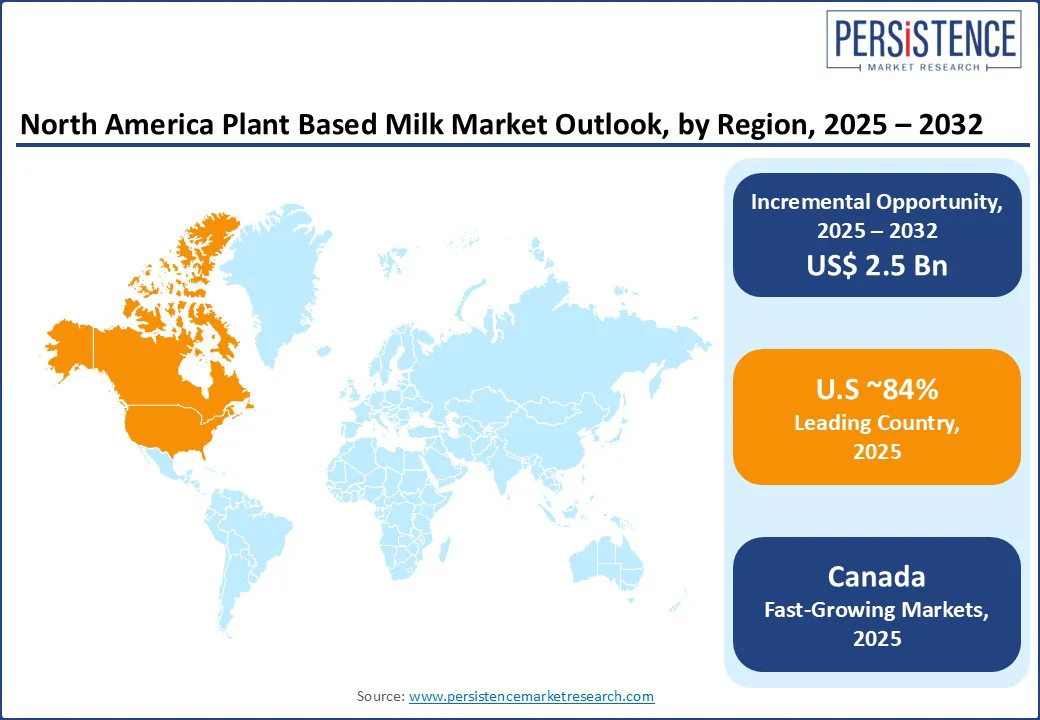
U.S Plant-Based Milk Market Trends
The U.S. plant-based milk market is experiencing rapid growth as more consumers shift toward healthier and more sustainable lifestyles. Increasing awareness of lactose intolerance and dairy allergies, coupled with the rising popularity of vegan, flexitarian, and keto diets, is driving demand for dairy-free milk alternatives. Consumers today are seeking plant-based options that offer clean-label ingredients, nutritional benefits, and better environmental impact. This trend is expanding the appeal of almond, oat, soy, and other plant-based milks beyond niche markets, making them an essential part of everyday diets across the country.
In October 2024, Edenesque, launched its debut line of plant-based milks, including unsweetened oat milk, barista blend oat milk, and barista blend pistachio milk. The unsweetened oat milk offers 5 grams of protein per serving and less than 1 gram of sugar. These innovative products reflect the growing consumer demand for clean-label, nutrient-rich, and flavorful plant-based milk options across the U.S. market.
Canada Plant Based Milk Market Trends
In Canada, growing health awareness and government nutrition guidelines encourage consumers to choose organic and clean-label plant-based milks. The Canadian Food Inspection Agency (CFIA) regulates organic certifications, ensuring strict standards that many buyers trust when selecting almond, oat, or hemp milk products. Public health campaigns emphasize reducing additives and processed ingredients, boosting demand for natural, minimally processed dairy alternatives.
In May 2024, Lactalis Canada, a subsidiary of the French dairy giant Lactalis, launched "Enjoy!", a new line of high-protein, unsweetened plant-based beverages. Each 250 mL serving contains 8 grams of pea protein and boasts a creamy texture suitable for frothing. The products are non-GMO, gluten-free, and free from artificial colors, preservatives, or flavors. With such innovations and consumer focus on health and sustainability, the Canadian plant-based milk market is poised for continued growth and diversification.
Competitive Landscape
The North America plant-based milk market is highly dynamic and increasingly crowded, with both legacy dairy brands and emerging plant-based startups competing for shelf space. Product innovation, especially around taste, texture, and nutritional content, has become a key differentiator. Brands are leveraging clean-label claims, protein fortification, and sustainable sourcing to appeal to evolving consumer preferences.
Private-label offerings and diversified product lines are also intensifying competition, especially in supermarket and online channels. In response, players are expanding into barista-friendly formulations, organic-certified options, and functional variants tailored to niche dietary needs such as keto or diabetic diets, signaling a shift toward hyper-targeted consumer strategies.
Key Industry Developments:
- In February 2025, Milkadamia introduced its innovative “Flat Pack” oat milk sheet at Natural Products Expo West. This ultra-concentrated oat milk format reduces packaging by 94% and weight by 85%, aligning with consumer demand for sustainable, clean-label plant-based milk solutions.
- In January 2025, SunOpta began distributing its Dream Oatmilk Barista, specially formulated for coffee applications, to over 6,700 foodservice outlets across North America. This barista-style oat milk caters to café chains switching to non-dairy milk alternatives, reinforcing oat milk’s popularity in barista and coffee channels.
- In August 2024, NIÚKE introduced the first quinoa plant milk at America’s Food & Beverage Show, offering a superfood alternative rich in protein, magnesium, iron, and low glycemic index.
Companies Covered in North America Plant Based Milk Market
- Nestlé
- Oatly
- So Delicious
- Ripple Foods
- Califia Farms
- Mooala
- Danone
- Forager Project
- Earth’s Own
- Eden Foods
- Daiya Foods
- MalkOrganics
- Elmhurst Milked Direct LLC
- Milkadamia
- Pacific Foods
Frequently Asked Questions
The North America plant-based milk market is projected to value at 4.4 bn in 2025.
The North America plant-based milk market is driven by the increasing cases of lactose intolerance and dairy allergies.
The North America plant-based milk market is poised to witness a CAGR of 7.8% between 2025 and 2032
Expanding flavored oat milk product lines targeting baristas and café chains can unlock strong revenue in the foodservice segment.
Major players in the North America plant-based milk market include Nestlé, Oatly, So Delicious, Ripple Foods, Califia Farms, and others.


