




- Medical Devices
- Flash Glucose Monitoring System Market
Flash Glucose Monitoring System Market Size, Share, and Growth Forecast, 2026 - 2033
Flash Glucose Monitoring System Market by Technology (Sensor-Based and Non-Sensor-Based), Modality (Implantable and Wearable), Distribution Channel (Hospital Pharmacies, Retail Pharmacies, Online Pharmacies, and Home Care Setting), and Regional Analysis for 2026 - 2033

Flash Glucose Monitoring System Market Share and Trends Analysis
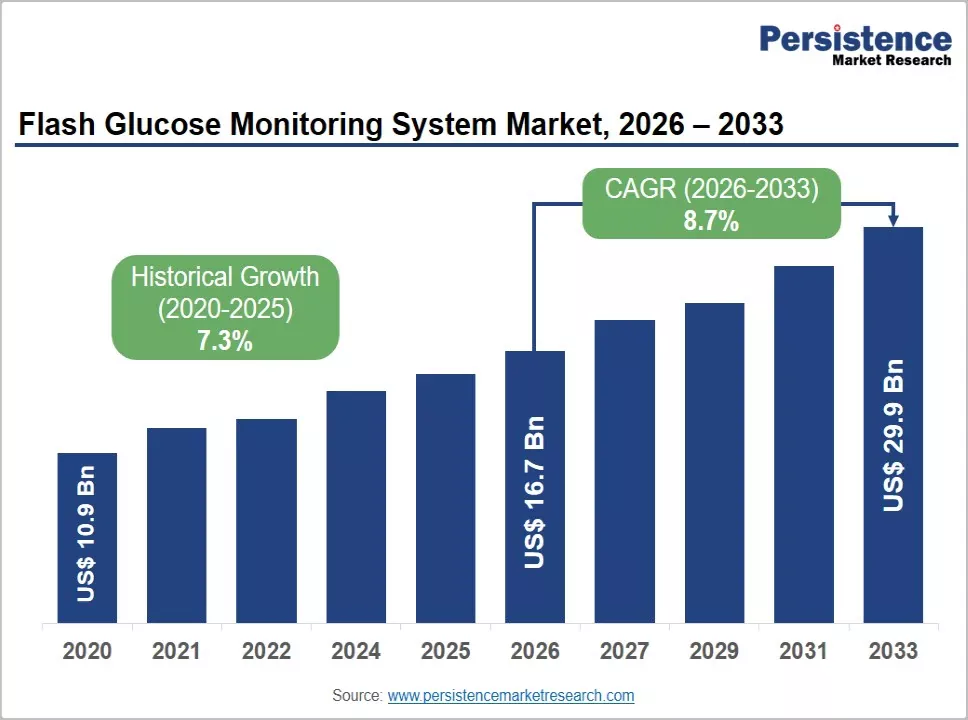
The global flash glucose monitoring system market size is likely to be valued at US$16.7 billion in 2026, and is estimated to reach US$29.9 billion by 2033, growing at a CAGR of 8.7% during the forecast period from 2026 to 2033, driven by rising prevalence of diabetes, expanding insurance coverage for continuous and flash glucose monitoring, and the arrival of over-the-counter sensors across developed and emerging economies.
The market has been experiencing solid growth, supported by the shift away from fingerstick testing, although supply constraints and reimbursement gaps limited uptake in some regions. However, the forecast period anticipates robust acceleration as manufacturers improve sensor accuracy, wear time, and smartphone and insulin pump integration.
Key Industry Highlights:
- Dominant Technology: Sensor based systems are set to command around 78% of the revenue share in 2026 and are likely to grow the fastest at 9.1% CAGR through 2033, as factory-calibrated sensors replace routine fingerstick testing.
- Leading Modality: Wearable devices are expected to lead with 86% in 2026, while implantable systems are likely to be the fastest-growing at about 11.5% CAGR during 2026 - 2033, reflecting longer sensor life and fewer replacements.
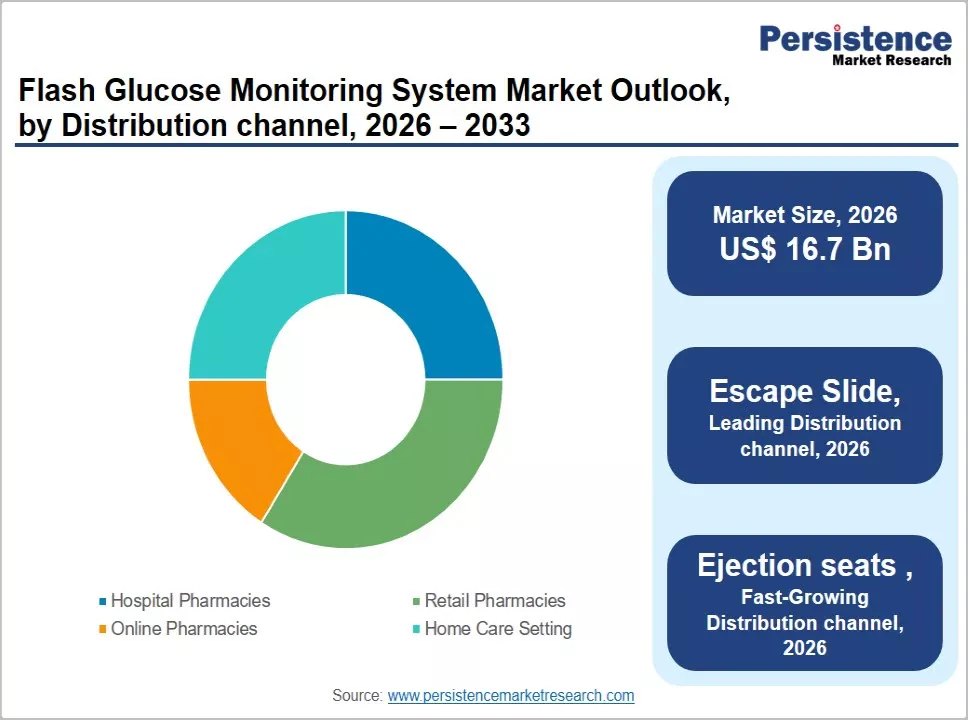
- Dominant Distribution Channel: Retail pharmacies are anticipated to lead with an estimated 46% share in 2026, while online pharmacies are slated to represent the fastest-growing channel at 12% CAGR from 2026 to 2033.
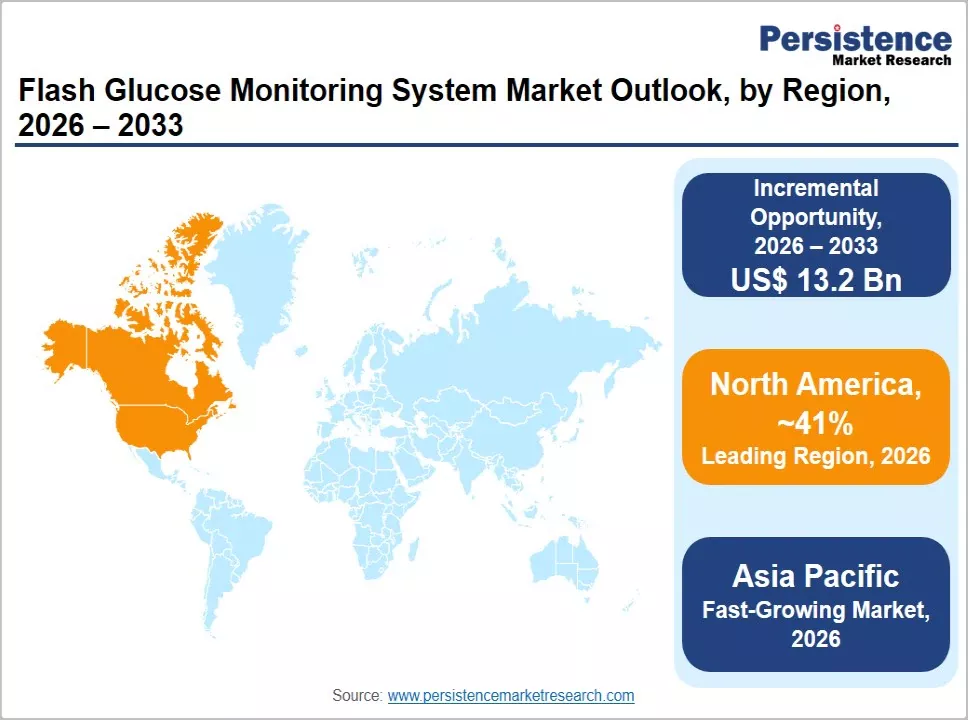
- Regional Leadership: North America is poised to dominate with an estimated 41% share in 2026, while Asia Pacific is expected to register the fastest growth at 10.5% CAGR through 2033, led by China and India.
- Competitive Environment: Competitive dynamics include over-the-counter product launches, longer-wear sensors, integration with automated insulin delivery systems, and rising competition from Asian manufacturers.
- June 2024: Abbott received U.S. FDA clearance for its over-the-counter Lingo and Libre Rio biosensors, expanding access to glucose monitoring for adults who do not use insulin and supporting wellness-focused and type 2 diabetes use cases.
DRO Analysis
Driver: Rising Diabetes Prevalence and Shift Away from Fingerstick Testing as Primary Growth Catalyst
Rising diabetes prevalence is the leading force driving the flash glucose monitoring system market growth, as more than half a billion adults worldwide live with the condition and require frequent glucose assessment. Flash glucose monitoring offers a painless, convenient alternative to fingerstick testing, allowing users to scan a sensor with a reader or smartphone to view real-time glucose readings, trends, and alerts. Clinical evidence linking continuous or flash monitoring with improved time in range and lower HbA1c has encouraged guideline bodies and payers to widen eligibility from type 1 diabetes to insulin-treated and, increasingly, non-insulin type 2 diabetes. Coverage expansion in the U.S., Europe, and parts of Asia has therefore broadened the addressable population significantly.
Product innovation is adding further momentum. Newer sensors offer longer wear time, smaller form factors, improved accuracy, and optional alarms, with some systems now lasting up to 15 days or more. Integration with insulin pumps, smart pens, and automated insulin delivery algorithms transforms glucose data into actionable therapy adjustments. Over-the-counter launches, such as Abbott's Lingo and Libre Rio and Dexcom's Stelo introduced in 2024, are opening a wellness and prediabetes audience, while connected apps and AI-based analytics provide coaching and risk insights. This convergence of clinical need, reimbursement progress, and digital health integration ensures sustained growth in the flash glucose monitoring system market in the coming years.
Restraints: High Cost, Reimbursement Gaps, and Sensor Accuracy and Safety Concerns
Cost and reimbursement challenges remain major restraints for the flash glucose monitoring system market. Sensors are disposable and must be replaced every one to two weeks, creating recurring expenses that are difficult for uninsured or underinsured patients to sustain, especially in low- and middle-income countries. Coverage criteria vary widely between payers and countries, with some restricting eligibility to insulin users or requiring documentation of frequent testing, which slows adoption among people with type 2 diabetes. Pharmacy and device-benefit pathways also complicate access and increase administrative burden for clinicians and patients.
Quality and safety considerations add further complexity. Skin irritation, adhesive failures, signal loss, and measurement lag during rapid glucose changes can undermine user confidence, and product corrections affect brand trust. In November 2025, Abbott issued a correction notice for certain FreeStyle Libre 3 sensor lots after reports of inaccurately low glucose readings, a reminder of the scrutiny regulators and clinicians place on accuracy. Data privacy, cybersecurity of connected apps, and digital literacy among older patients are additional hurdles. These factors collectively restrain faster adoption despite clinical benefits, highlighting the need for affordable pricing, rigorous quality control, and supportive reimbursement frameworks.
Opportunities: Over-the-Counter Access and Expanding Diabetes Care in Emerging Markets
Emerging economies are propelling the market, as rising diabetes prevalence, improving healthcare infrastructure, and growing middle-class spending create strong demand for modern glucose monitoring. India, China, and Southeast Asia have some of the largest diabetic populations globally, and manufacturers are introducing locally priced sensors, partnering with distributors, and expanding e-commerce channels to reach patients beyond major cities. Domestic Asian suppliers, including Sinocare and Yuwell, are scaling production and offering lower-cost alternatives, which widens competition and access.
Over-the-counter availability is creating additional opportunities in prediabetes management, weight management, and sports and wellness, as consumers seek real-time insight into how food, exercise, and sleep affect glucose. Integration with digital therapeutics, telehealth, and employer wellness programs allows providers to bundle sensors with coaching services and recurring subscriptions. Governments and payers are also exploring population screening and chronic disease management initiatives that include glucose monitoring. Consequently, emerging markets are expected to increase their share of the global flash glucose monitoring system market substantially, creating opportunities in localized manufacturing, clinician training, and technology partnerships.
Category-wise Analysis
Technology Insights
Sensor based flash glucose monitoring systems are expected to lead, holding about 78% of the flash glucose monitoring system market revenue share in 2026. These systems use a small filament inserted under the skin to measure glucose in interstitial fluid, and most newer versions are factory calibrated, eliminating the need for routine fingerstick calibration. Their advantages include continuous data, trend arrows, and, in many models, optional alerts for high and low glucose. Reimbursement expansion, physician familiarity, and strong brand ecosystems keep this segment at the center of the market, supported by regular launches of longer-wear and more accurate sensors.
Sensor based technology is also likely to be the fastest-growing, accounting for 9.1% CAGR during the 2026 - 2033 period, as manufacturers extend wear duration, reduce sensor size, and improve accuracy across the glycemic range. Integration with insulin pumps and automated insulin delivery platforms increases clinical value, while smartphone-native readers lower hardware costs. Non-sensor based approaches, including reader-dependent or less advanced monitoring solutions, remain relevant in cost-sensitive markets and for patients with limited access to connected devices. However, their growth is expected to remain modest as sensor prices decline and local suppliers expand affordable offerings.
Modality Insights
Wearable devices are expected to dominate the modality segment, capturing about 86% of the revenue share in 2026. They are applied to the upper arm or abdomen, offering simple self-application, discreet profiles, and compatibility with smartphones and readers. Replacement every 10 to 15 days has become routine for many users, and mass-market adoption has been supported by easier insertion systems and reduced cost per day compared with earlier generations. Wearables also benefit from wide retail availability and the growth of over-the-counter and wellness-oriented products that use similar form factors.
Implantable systems are likely to be the fastest-growing modality, expected to showcase an approximate 11.5% CAGR through 2033. A leading example is Senseonics' Eversense 365, which received U.S. FDA approval in September 2024 for a sensor that remains in place for a full year, reducing the burden of frequent replacement. Implantable sensors require a minor in-office procedure for insertion and removal, which limits scalability, but they offer advantages in terms of fewer adhesive issues, on-body vibration alerts through transmitters, and consistent performance. Growing interest from clinicians and users who value convenience and discretion is supporting expansion, particularly in the U.S. and Europe.
Distribution Channel Insights
Retail pharmacies are poised to lead with an estimated 46% share in 2026, as they provide convenient access to sensors, readers, and consumables with prescription fulfillment and pharmacist support. Insurance pharmacy benefit coverage in the U.S. and national reimbursement schemes in Europe have strengthened this channel, and pharmacies increasingly offer onboarding, refills, and automatic delivery programs. The launch of over-the-counter sensors in drugstore chains is expected to broaden foot traffic and impulse purchases, while established supply agreements with manufacturers ensure steady availability.
Online pharmacies are likely to be the fastest-growing channel, showcasing an approximate 12% CAGR through 2033. Subscription ordering, home delivery, price transparency, and digital prescription workflows suit chronic disease users who require regular sensor replacement. Direct-to-consumer websites operated by manufacturers are also growing, particularly for wellness products. Hospital pharmacies remain important for initial prescribing, training, and inpatient use, whereas the home care setting is expanding as remote monitoring programs, telehealth follow-up, and aging populations encourage patients and caregivers to manage glucose outside clinical facilities.
Regional Insights
North America Flash Glucose Monitoring System Market Trends
North America is predicted to command an estimated 41% of the flash glucose monitoring system market share in 2026. The U.S. provides the regional growth anchor, with Medicare and commercial insurers covering glucose monitoring for a wide range of insulin-treated patients, and an active ecosystem of manufacturers, digital health firms, and insulin pump makers. FDA clearances for over-the-counter sensors in 2024 and longer-wear systems, such as the 15-day Dexcom G7 cleared in 2025, are widening the user base. Product corrections, such as Abbott's November 2025 notice for some Libre 3 sensor lots, underline the importance of quality assurance in the market.
Canada's provincial programs are gradually broadening coverage for flash and continuous monitoring, while Mexico offers exciting emerging opportunities, supported by high diabetes prevalence and growing private healthcare spending. The North America market is characterized by intense competitive dynamics, with established leaders such as Abbott and Dexcom competing with Medtronic and Senseonics on accuracy, wear time, integration, and pricing, while digital health companies add coaching and analytics layers.
Europe Flash Glucose Monitoring System Market Trends
Europe is likely to hold 28% of the global market share in 2026. Germany, the U.K., France, Italy, and Spain provide substantial demand, supported by national reimbursement schemes that cover flash glucose monitoring for insulin-treated patients and, in some countries, a broader type 2 population. Clinical guidelines emphasizing time in range and the push for digital diabetes care are accelerating adoption, while Roche's introduction of its Accu-Chek SmartGuide system adds new competition in the region.
The Europe market is characterized by strong regulatory oversight under the EU Medical Device Regulation, centralized health technology assessments, and gradual adoption of automated insulin delivery systems that rely on sensor data. Eastern European countries such as Poland, Czech Republic, and Romania represent emerging opportunity zones, with expanding reimbursement and increasing awareness driving uptake of modern glucose monitoring.
Asia Pacific Flash Glucose Monitoring System Market Trends
Asia Pacific is anticipated to be the fastest-growing region, projected to achieve a 10.5% CAGR through 2033 from an estimated 22% share in 2026. China provides the dominant regional growth engine, with a large diabetic population, increasing reimbursement at the provincial level, and domestic manufacturers such as Sinocare and Yuwell introducing affordable sensors. Japan and South Korea add demand through advanced healthcare systems and strong local players such as i-SENS.
India is expected to offer the most dynamic growth opportunities, given its very large diabetic and prediabetic population, expanding e-commerce pharmacies, and rising awareness of glucose monitoring among urban consumers. The India market is attracting aggressive vendor competition from both multinational corporations and emerging domestic providers, with pricing and distribution partnerships influencing adoption. Southeast Asia and Australia are also experiencing accelerated deployment, driven by rising chronic disease burden and expanding digital health ecosystems.
Competitive Landscape
The global flash glucose monitoring system market structure is moderately consolidated, with the top vendors, including Abbott, Dexcom, Medtronic, and Roche, controlling a significant share of the revenue. These established players leverage extensive clinical evidence, strong reimbursement relationships, and integrated ecosystems that connect sensors, apps, and insulin delivery devices. They are also known to invest heavily in R&D to maintain technological leadership in accuracy, wear time, miniaturization, and AI-based decision support.
Meanwhile, regional and niche competitors such as Senseonics, Sinocare, i-SENS, and Medtrum are focusing on specialized segments and geographic strongholds. Barriers such as regulatory approvals, clinical validation, and manufacturing scale limit new entrants, but over-the-counter pathways and cost-competitive Asian suppliers are intensifying competition. Market consolidation is expected to increase gradually as global leaders acquire smaller vendors or form partnerships to expand geographically and technologically, while digital health companies continue collaborating on software and data services.
Key Industry Developments:
- In November 2025, Abbott issued a correction notice for certain FreeStyle Libre 3 and Libre 3 Plus sensor lots following reports of incorrect low glucose readings. The company advised users to check whether their sensors were affected and replace them if required, a development that has heightened industry focus on manufacturing quality control and accuracy monitoring.
- In April 2025, Dexcom received the U.S. FDA clearance for the Dexcom G7 15 Day continuous glucose monitoring system, which offers the longest wear time among its sensors. The extended duration reduces sensor changes, lowers waste, and improves convenience, and it is expected to strengthen the company's position in the type 1 and type 2 diabetes markets.
- In September 2024, Senseonics received U.S. FDA approval for Eversense 365, an implantable continuous glucose monitoring system with a sensor life of one year. The system reduces the frequency of sensor replacement compared with wearable alternatives and highlights growing innovation in the implantable modality, with potential benefits for patient adherence and long-term cost.
Companies Covered in Flash Glucose Monitoring System Market
- Abbott Laboratories
- Dexcom, Inc.
- Medtronic plc
- F. Hoffmann-La Roche Ltd.
- Senseonics Holdings, Inc.
- Sinocare Inc.
- i-SENS, Inc.
- Medtrum Technologies Inc.
- Yuwell Medical
- Ascensia Diabetes Care Holdings AG
- Biolinq Inc.
Frequently Asked Questions
The global flash glucose monitoring system market is projected to reach US$16.7 billion in 2026.
Rising diabetes prevalence, expanding insurance coverage for glucose monitoring, and the arrival of over-the-counter sensors are driving the market.
The glucose monitoring system market is poised to witness a CAGR of 8.7% from 2026 to 2033.
Over-the-counter access, wellness and prediabetes use cases, and expanding diabetes care in emerging markets are key market opportunities.
Abbott Laboratories, Dexcom, Inc., Medtronic plc, and F. Hoffmann-La Roche Ltd. are some of the key players in the market.


