




- Healthcare Services
- Coronary Artery Bypass Graft Market
Coronary Artery Bypass Graft Market Size, Share, Growth, and Regional Forecast, 2026 to 2033
Coronary Artery Bypass Graft Market by Procedure (Off-pump, On-pump, and Minimally Invasive Direct CABG (MIDCAB)), by Surgical Procedure (Single CABG Surgery, Double CABG Surgery, Triple CABG Surgery, and Quadruple CABG Surgery) End-user (Hospitals, Cardiology Clinics, Research Institutes, and Others), and Regional Analysis from 2026 to 2033

Coronary Artery Bypass Graft Market Share and Trend Analysis
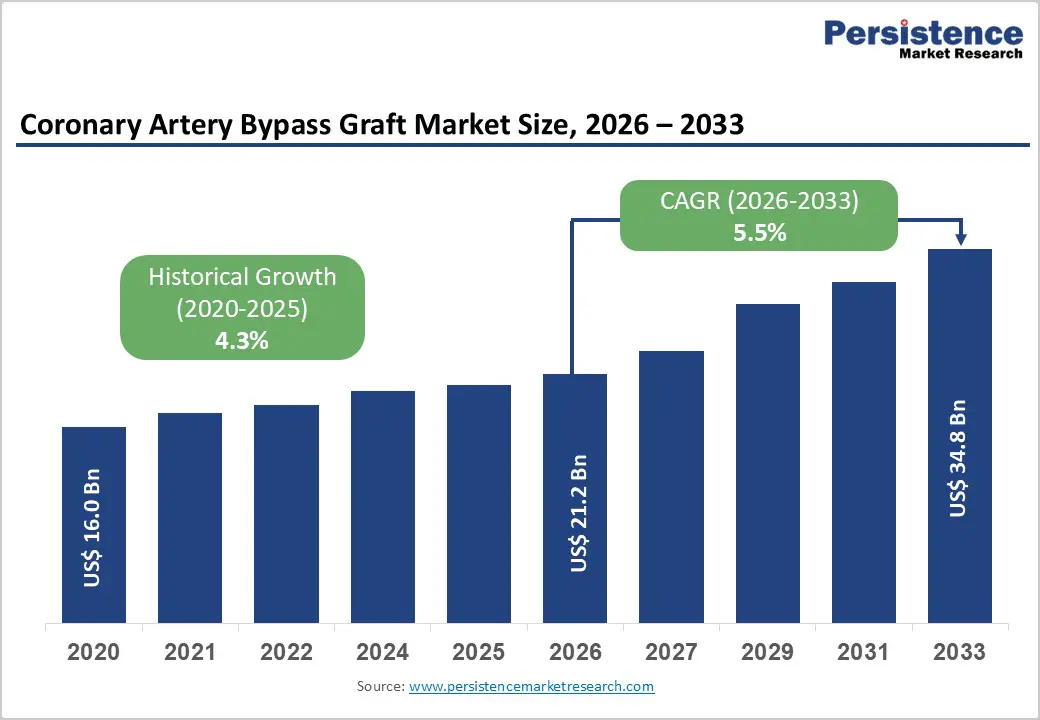
The global coronary artery bypass graft market size is estimated to grow from US$ 21.2 billion in 2026 to US$ 34.8 billion by 2033. The market is projected to record a CAGR of 5.5% during the forecast period from 2026 to 2033.
Increasing incidence of cardiovascular disorders worldwide is significantly driving the demand for surgical revascularization procedures aimed at restoring adequate blood flow to the heart. Coronary artery bypass graft surgery continues to be widely recommended for patients with severe or multi-vessel coronary artery disease, where interventional procedures such as angioplasty may not provide long-term effectiveness. Advancements in cardiothoracic surgical technologies, including improved cardiopulmonary bypass systems, precision surgical instruments, and durable vascular graft materials, are enhancing procedural safety and clinical outcomes.
Hospitals and specialized cardiac centers are increasingly integrating advanced imaging guidance, hybrid operating rooms, and robotic-assisted surgical platforms to improve surgical accuracy and patient recovery. Rising awareness of early cardiac diagnosis and expanding cardiovascular screening programs are enabling physicians to identify high-risk patients earlier, contributing to increased surgical intervention rates. In parallel, healthcare systems across emerging economies are strengthening cardiac care infrastructure and expanding access to specialized surgical services. Continuous clinical research focused on improving graft durability and reducing postoperative complications is also reinforcing physician confidence, supporting steady global demand for coronary artery bypass graft procedures.
Key Industry Highlights:
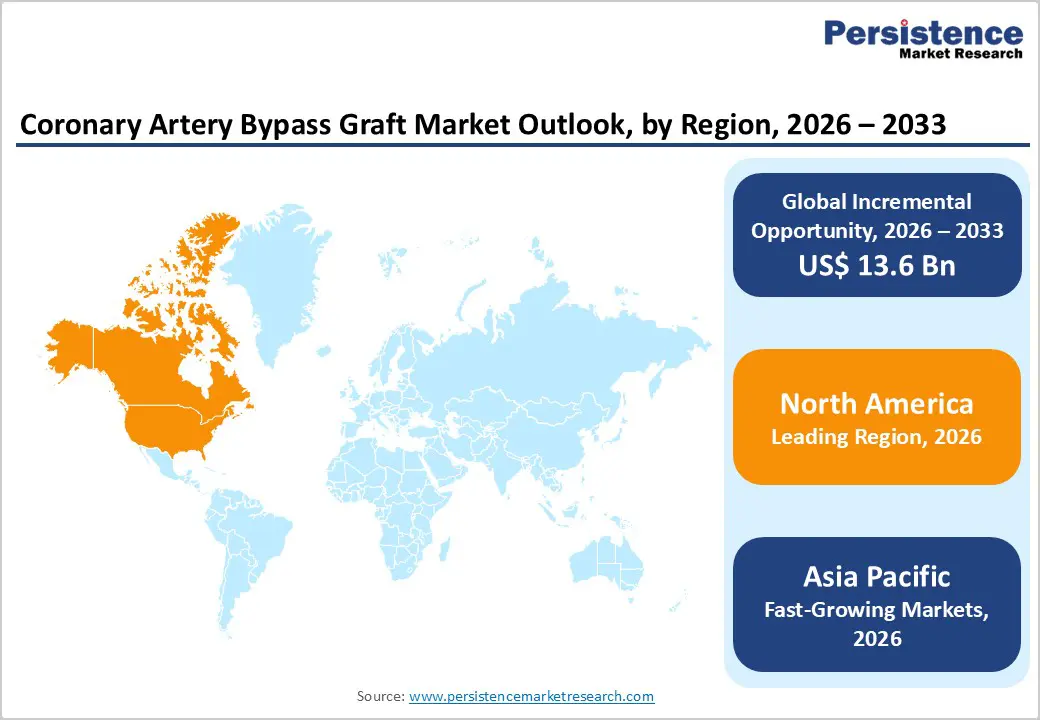
- Leading Region: North America holds 46.7% of the global market, supported by a strong network of cardiac surgery centers, advanced healthcare infrastructure, high cardiovascular disease diagnosis rates, and early adoption of innovative surgical technologies.
- Fastest-Growing Region: Asia Pacific is registering the fastest expansion due to improving cardiac care infrastructure, increasing healthcare investment, rising cardiovascular disease prevalence, and growing availability of specialized cardiothoracic surgeons.
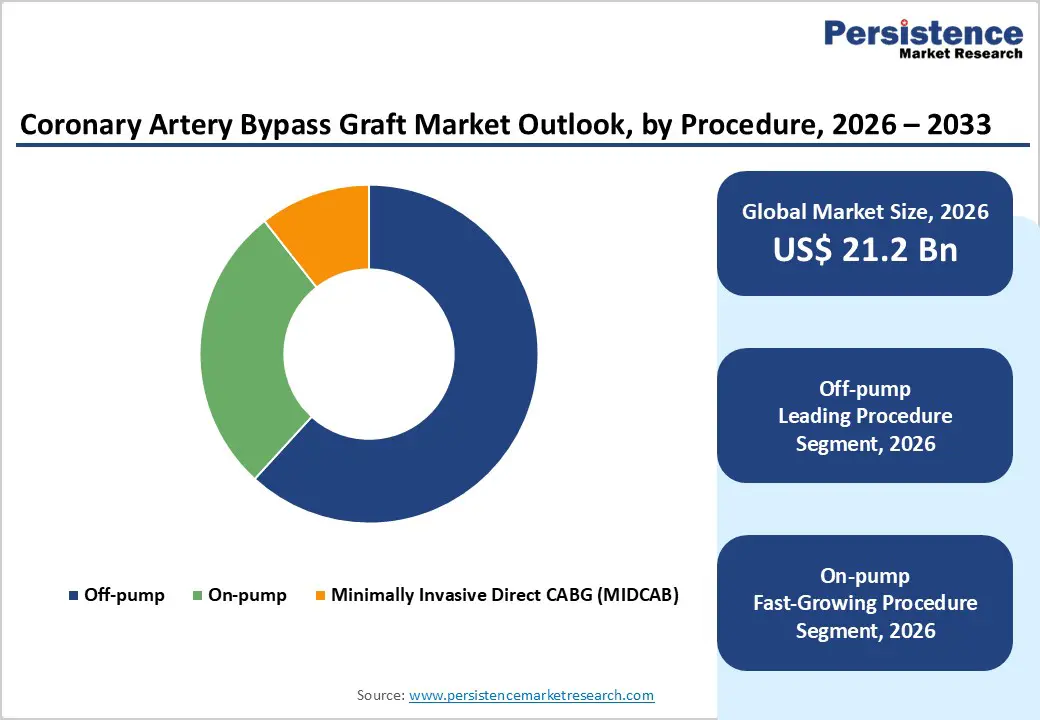
- Leading Procedure Segment: On-pump CABG represents the largest procedural segment as it allows surgeons to perform complex bypass surgeries with greater precision by stabilizing cardiac activity through cardiopulmonary bypass support.
- Fastest-Growing Procedure Segment: Off-pump CABG is gaining significant traction as surgeons increasingly adopt beating-heart techniques that help reduce complications, minimize blood transfusion requirements, and shorten recovery duration.
- Leading Surgical Procedure Segment: Triple CABG surgery accounts for the highest procedure share due to the rising incidence of multi-vessel coronary artery disease requiring comprehensive surgical revascularization.
- Fastest-Growing Surgical Procedure Segment: Double CABG surgery is witnessing accelerated growth as more patients present with moderate multi-artery blockage that requires timely surgical intervention before disease progression.
| Key Insights | Details |
|---|---|
| Coronary Artery Bypass Graft Market Size (2026E) | US$ 21.2 Bn |
| Market Value Forecast (2033F) | US$ 34.8 Bn |
| Projected Growth (CAGR 2026 to 2033) | 5.5% |
| Historical Market Growth (CAGR 2020 to 2025) | 4.3% |
Market Dynamics
Driver - Rising Burden of Coronary Artery Disease and Advancements in Cardiac Surgical Technologies
The global increase in cardiovascular disorders is significantly accelerating demand for surgical revascularization procedures. Coronary artery disease remains one of the leading causes of mortality worldwide, driven by aging populations, sedentary lifestyles, obesity, diabetes, and hypertension. As the prevalence of multi-vessel arterial blockage rises, physicians increasingly rely on coronary artery bypass surgery to restore blood flow and prevent life-threatening cardiac events. CABG procedures are widely recommended for patients with complex coronary lesions where angioplasty or stenting may not deliver durable outcomes. At the same time, continuous advancements in cardiothoracic surgical technologies are improving procedural success and patient recovery. Innovations in cardiopulmonary bypass systems, high-precision surgical instruments, and arterial graft materials have enhanced surgical control and graft longevity. Hybrid operating rooms and intraoperative imaging technologies now enable surgeons to perform more accurate and efficient bypass procedures.
Additionally, improvements in anesthetic management, post-operative monitoring, and cardiac intensive care infrastructure have significantly reduced procedural risks. Governments and healthcare providers are also investing in expanding cardiac surgery capacity to address the growing burden of cardiovascular disease. Together, these clinical and technological developments are strengthening confidence among physicians and patients, supporting sustained global demand for coronary artery bypass graft procedures.
Restraints - High Procedure Costs and Availability of Alternative Revascularization Techniques
Despite its clinical effectiveness, several economic and procedural factors continue to moderate the widespread adoption of coronary artery bypass graft surgery. One of the most significant challenges is the high cost associated with the procedure, which includes advanced surgical equipment, cardiopulmonary bypass systems, specialized surgical teams, and extended hospitalization for post-operative recovery. In many healthcare systems, particularly in developing regions, limited reimbursement coverage and financial constraints can restrict patient access to complex cardiac surgeries. Additionally, CABG procedures involve longer recovery periods compared with less invasive interventions, which can influence treatment decisions for certain patient populations.
The growing use of percutaneous coronary interventions (PCI), including angioplasty and drug-eluting stents, has also emerged as a competitive alternative for treating coronary artery blockages. Interventional cardiology techniques often offer shorter hospital stays and faster recovery times, making them attractive options for selected cases. Furthermore, CABG surgery requires highly trained cardiothoracic surgeons and well-equipped cardiac centers, resources that may not be readily available in smaller hospitals or rural healthcare systems. Variations in surgical expertise and post-operative care quality can also affect clinical outcomes. These structural limitations collectively pose barriers to broader procedural adoption despite the proven long-term benefits of surgical coronary revascularization.
Opportunity - Expansion of Minimally Invasive and Robotic-Assisted Cardiac Surgery
Technological innovation in cardiac surgery is creating substantial opportunities for the evolution of coronary artery bypass procedures. Increasing interest in minimally invasive cardiac surgery techniques is transforming the traditional surgical landscape by reducing incision size, surgical trauma, and recovery time. Approaches such as minimally invasive direct coronary artery bypass (MIDCAB) and robotic-assisted bypass surgery allow surgeons to perform complex procedures with enhanced visualization and precision while minimizing disruption to surrounding tissues. These advancements are particularly appealing to patients seeking faster recovery and reduced postoperative discomfort. Robotic platforms and advanced endoscopic instruments are also improving the ability of surgeons to perform graft placement through smaller thoracic openings, expanding the range of patients eligible for less invasive procedures.
Additionally, ongoing research into improved vascular graft materials and bioengineered conduits may enhance long-term graft durability and reduce complications. Emerging healthcare markets present further opportunities as governments invest in modernizing cardiovascular treatment infrastructure and expanding specialized cardiac centers. Growing awareness of preventive cardiac care and early diagnosis is also increasing the number of patients undergoing timely surgical intervention. As surgical robotics, imaging guidance, and precision instruments continue to evolve, the next generation of coronary bypass procedures is expected to become safer, more efficient, and widely accessible across global healthcare systems.
Category-wise Analysis
By Procedure, On-pump CABG Leads Due to Surgical Precision and Ability to Manage Complex Multi-Vessel Disease
The on-pump coronary artery bypass graft (CABG) segment is projected to remain the dominant procedural approach in 2026, representing 61.8% of total market revenue. Its leadership stems from the use of cardiopulmonary bypass systems that temporarily assume cardiac and pulmonary function, allowing surgeons to operate on a motionless heart with enhanced visibility and precision. This technique remains the preferred option for patients presenting with extensive coronary artery disease, multiple arterial blockages, or complex anatomical conditions. Hospitals continue to rely on on-pump procedures because they provide controlled hemodynamic stability during surgery, reducing the likelihood of incomplete grafting. Advances in perfusion technology, improved oxygenators, and safer extracorporeal circulation systems have significantly enhanced procedural safety and patient outcomes. Furthermore, cardiac surgery centers increasingly integrate advanced imaging and intraoperative monitoring technologies that support accurate graft placement and long-term vessel patency. As cardiovascular disease prevalence continues rising globally, the demand for reliable and standardized surgical approaches ensures sustained dominance of the on-pump CABG segment across major cardiac care facilities.
By Surgical Procedure, Triple CABG Surgery Dominates as Multi-Vessel Coronary Artery Disease Becomes More Prevalent
The triple CABG surgery segment is expected to remain the largest procedural category in 2026, capturing 39.4% of the global market. This leadership reflects the growing incidence of multi-vessel coronary artery disease, particularly among aging populations and individuals with diabetes, hypertension, and obesity. Triple bypass surgery enables surgeons to restore blood flow to three obstructed coronary arteries in a single operation, making it a common intervention for patients with advanced atherosclerotic disease. Cardiologists frequently recommend this approach when multiple critical arteries exhibit reduced perfusion that cannot be effectively managed with angioplasty or stent placement. Improvements in surgical instruments, vascular graft materials, and post-operative monitoring technologies have significantly increased the success rate of these complex operations. Additionally, clinical guidelines increasingly emphasize complete revascularization in patients with extensive coronary blockage to reduce the risk of recurrent cardiac events. As healthcare systems prioritize long-term cardiovascular outcomes and reduction of repeat interventions, triple CABG procedures continue to represent the most clinically comprehensive and frequently performed bypass surgery worldwide.
By End-user, Hospitals Lead the Market Due to Advanced Cardiac Surgery Infrastructure and High Procedure Volumes
Hospitals are anticipated to account for 64.3% of the coronary artery bypass graft market in 2026, maintaining their position as the primary care setting for complex cardiac surgery. Their dominance is supported by the availability of specialized cardiac operating rooms, cardiopulmonary bypass equipment, and multidisciplinary teams comprising cardiologists, anesthesiologists, perfusionists, and cardiac surgeons. CABG procedures require sophisticated monitoring systems and intensive post-operative care, including cardiac intensive care units and continuous hemodynamic observation, which are typically available only in hospital environments. Large tertiary hospitals and academic medical centers also manage high patient inflow involving acute coronary syndromes and advanced coronary artery disease cases that require immediate surgical intervention. In addition, hospitals increasingly integrate robotic surgical systems, hybrid operating rooms, and advanced diagnostic imaging to support complex cardiovascular procedures. Collaborations with clinical research organizations and cardiac institutes further strengthen procedural expertise and innovation. As cardiovascular disease continues to place pressure on healthcare systems worldwide, hospitals remain central to delivering high-volume, high-complexity coronary bypass surgeries.
Region-wise Insights
North America Coronary Artery Bypass Graft Market Trends
North America is projected to maintain its leadership position in the coronary artery bypass graft market in 2026, representing 46.7% of global market value. The region benefits from a highly developed cardiovascular care ecosystem, characterized by advanced surgical infrastructure, experienced cardiac surgeons, and strong adoption of innovative surgical technologies. The United States remains the largest contributor due to the high prevalence of coronary artery disease, which continues to be a leading cause of mortality. Lifestyle-related risk factors such as obesity, hypertension, and diabetes significantly contribute to the demand for coronary revascularization procedures. Additionally, the presence of major medical device manufacturers and extensive physician training programs promotes rapid adoption of advanced bypass technologies, including improved vascular grafts, minimally invasive surgical instruments, and robotic-assisted systems.
Hospitals across the region also benefit from strong reimbursement frameworks for cardiovascular procedures, which support widespread patient access to surgical treatments. Continuous investment in cardiac research, clinical trials evaluating long-term graft patency, and the integration of hybrid cardiac operating rooms further strengthen North America’s position as the most technologically advanced and procedurally mature coronary bypass surgery market globally.
Europe Coronary Artery Bypass Graft Market Trends
Europe represents a mature yet steadily expanding market for coronary artery bypass graft procedures, supported by robust public healthcare systems and well-established cardiac surgery programs. Countries such as Germany, France, the United Kingdom, and Italy serve as major procedural hubs due to their strong network of tertiary care hospitals and specialized cardiac centers. Clinical practice across Europe emphasizes evidence-based treatment pathways, ensuring CABG surgery is recommended primarily for patients with severe multi-vessel coronary artery disease or complex arterial blockage, where interventional cardiology procedures may be insufficient. Aging demographics across the region are significantly increasing the incidence of cardiovascular disease, which in turn sustains demand for surgical revascularization.
European healthcare providers are also early adopters of advanced surgical technologies, including improved arterial grafting techniques and minimally invasive cardiac surgery approaches designed to enhance recovery outcomes. Academic hospitals and cardiovascular research institutes actively participate in multicenter trials investigating improved graft durability and long-term survival outcomes following bypass surgery. Combined with strong regulatory oversight and high surgical standards, Europe maintains a stable position within the global CABG landscape while continuing to advance clinical innovation.
Asia Pacific Coronary Artery Bypass Graft Market Trends
Asia Pacific is anticipated to emerge as the fastest-growing regional market, recording a CAGR of approximately 7.4% between 2026 and 2033. Rapid expansion of healthcare infrastructure across China, India, and Southeast Asia is significantly improving access to advanced cardiovascular treatments, including coronary bypass surgery. Rising urbanization and lifestyle changes have led to a noticeable increase in cardiovascular risk factors such as sedentary behavior, unhealthy diets, and tobacco consumption, contributing to a growing patient population requiring coronary revascularization procedures. Governments across the region are investing heavily in modernizing cardiac care facilities and expanding specialized cardiac surgery units within public hospitals.
In addition, the region is witnessing a steady increase in trained cardiothoracic surgeons and improved access to advanced surgical equipment. The affordability of surgical procedures in several Asian countries has also positioned the region as a major destination for medical tourism, particularly for patients seeking high-quality yet cost-effective cardiac surgery. As awareness of cardiovascular health improves and diagnostic screening becomes more accessible, Asia Pacific is expected to play a critical role in shaping the future growth trajectory of the global coronary artery bypass graft market.
Competitive Landscape
The global coronary artery bypass graft market is highly competitive, with strong participation from Medtronic, Terumo Corporation, Getinge AB, W. L. Gore & Associates, Inc., B. Braun SE, and Abbott Laboratories. These players leverage strong cardiovascular surgery networks, physician training programs, and innovation in cardiopulmonary bypass systems, vascular graft technologies, surgical instruments, and advanced perfusion solutions to support complex cardiac procedures.
Growing prevalence of coronary artery disease and increasing demand for advanced cardiac surgical interventions are accelerating innovation, with manufacturers focusing on minimally invasive CABG technologies, improved graft materials, surgical precision tools, and expansion across emerging healthcare systems to improve procedural efficiency and long-term patient outcomes.
Key Industry Developments:
- In October 2025, Cleveland Clinic signed an agreement with DASI Simulations to jointly develop next-generation AI-driven predictive modeling solutions aimed at improving the treatment of structural heart diseases. As part of the collaboration, Cleveland Clinic will also implement DASI’s existing technology to assist in procedural planning and therapy optimization for patients undergoing transcatheter aortic valve replacement (TAVR).
- In July 2025, Xeltis, a developer of regenerative vascular implants, reported encouraging preliminary clinical results for XABG, its coronary artery bypass graft conduit designed to support the natural formation of living blood vessels. The early data indicated favorable safety outcomes and strong graft patency in patients suffering from multi-vessel atherosclerotic coronary artery disease.
- In April 2025, AMT Medical B.V., a clinical-stage medical technology company, announced the successful completion of a $25 million Series B funding round led by Bender Analytical Holding B.V. (BAH). The investment round also included new participants Invest-NL and the European Innovation Council (EIC), alongside existing investors Oost NL and several angel investors. The funding will support the continued development of the ELANA® Heart Bypass System, an innovative minimally invasive technology intended to provide an alternative to conventional open-heart bypass surgery and advance toward robot-assisted keyhole procedures compatible with leading surgical robotic platforms.
Companies Covered in Coronary Artery Bypass Graft Market
- Medtronic
- Terumo Corporation
- Getinge AB
- W. L. Gore & Associates, Inc.
- B. Braun SE
- Abbott Laboratories
- LivaNova PLC
- Transonic Systems Inc.
- Edwards Lifesciences Corporation
- Vascular Graft Solutions Ltd.
- Boston Scientific Corporation
- Artivion, Inc.
- Cook Group Incorporated
- BIOTRONIK SE & Co. KG
- Teleflex Incorporated
- Others
Frequently Asked Questions
The global coronary artery bypass graft market is projected to be valued at US$ 21.2 Bn in 2026.
Rising prevalence of coronary artery disease and increasing adoption of advanced cardiac surgical techniques are driving the global coronary artery bypass graft market.
The global coronary artery bypass graft market is poised to witness a CAGR of 5.5% between 2026 and 2033.
Growing adoption of minimally invasive and robotic-assisted CABG procedures along with expanding cardiac surgery infrastructure in emerging economies creates significant market opportunities.
Medtronic, Terumo Corporation, Getinge AB, W. L. Gore & Associates, Inc., B. Braun SE, and Abbott Laboratories are some of the key players in the coronary artery bypass graft market.


