




- Nutraceuticals & Functional Foods
- Carotenoid Market
Carotenoid Market Size, Share, Growth, and Regional Forecast, 2026 - 2033
Carotenoid Market by Product Type (Beta-Carotene, Astaxanthin, Lutein, Lycopene, Zeaxanthin, Canthaxanthin, and Others), Source (Natural and Synthetic), by Formulation (Powder, Beadlet, Oil Suspension, and Emulsion) End-user (Food & Beverages, Dietary Supplements, Animal Feed, Pharmaceuticals, and Personal Care & Cosmetics), and Regional Analysis from 2026 - 2033

Carotenoid Market Share and Trend Analysis
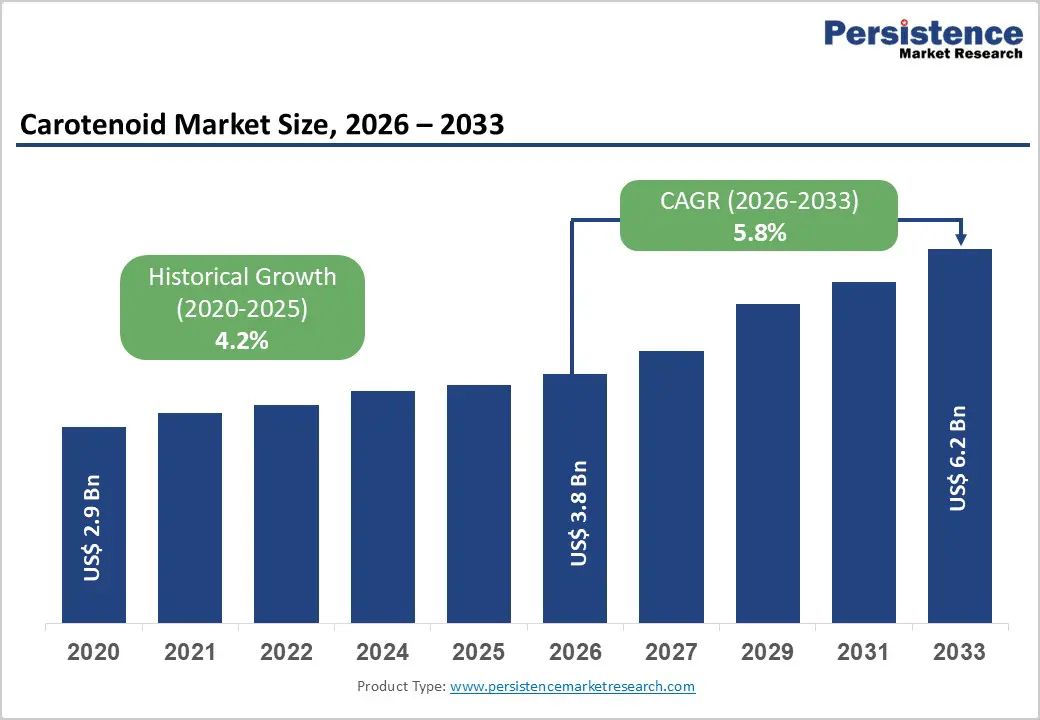
The global carotenoid market size is estimated to grow from US$ 3.8 billion in 2026 to US$ 6.2 billion by 2033. The market is projected to grow at a CAGR of 5.8% from 2026 to 2033. Growing awareness of the nutritional and functional benefits of natural pigments is steadily increasing the use of carotenoids across the food, nutraceutical, and personal care industries. These compounds are widely recognized for providing vibrant yellow, orange, and red coloration while also delivering antioxidant and health-supporting properties. Food manufacturers incorporate carotenoids such as beta-carotene, lutein, and lycopene into beverages, dairy products, sauces, and packaged foods to enhance visual appeal and support clean-label product positioning. In addition, nutraceutical companies increasingly use carotenoid ingredients in supplements formulated for eye health, immune support, and overall wellness.
Rapid expansion of functional foods and fortified beverages is further strengthening ingredient demand. Technological advancements in microalgae cultivation, plant extraction, and microencapsulation techniques have improved pigment stability and bioavailability, allowing manufacturers to integrate carotenoids more effectively into diverse product formulations. At the same time, expanding global distribution networks and modern food-processing infrastructure are supporting higher production volumes of carotenoid ingredients. Collaboration between ingredient developers and food manufacturers is also accelerating the development of customized carotenoid formulations optimized for specific applications such as beverages, dietary supplements, and cosmetic products. As consumer interest in natural ingredients and preventive health continues to grow, carotenoids are expected to remain a key component of innovation across several consumer goods industries.
Key Industry Highlights:
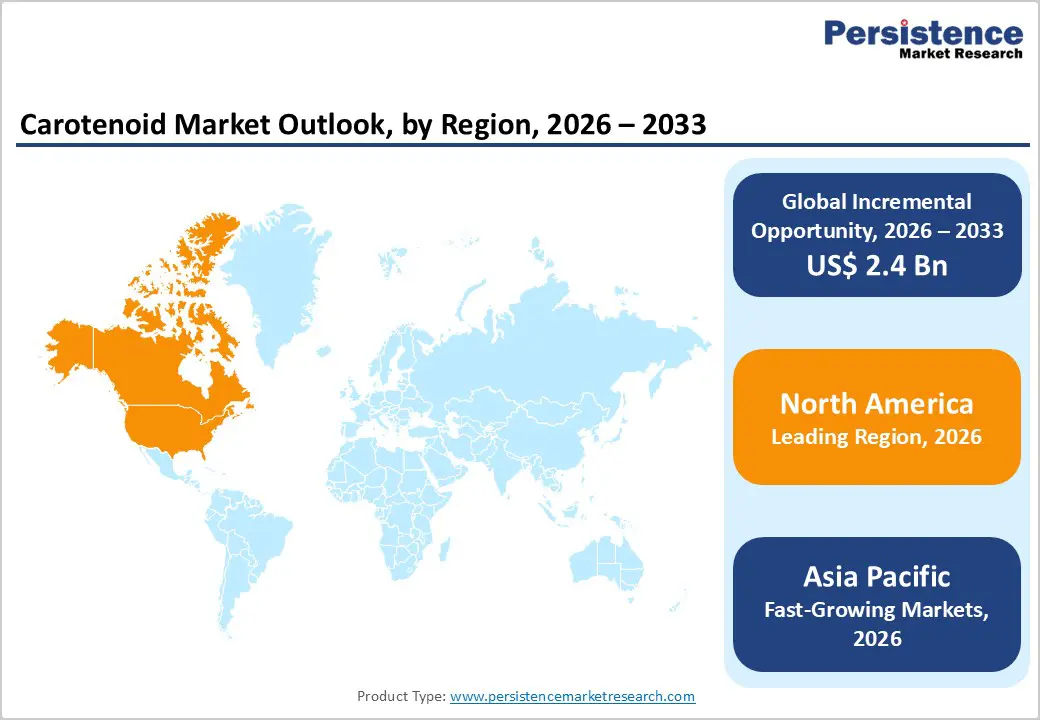
- Leading Region: North America accounts for the largest share at 46.7%, supported by a strong nutraceutical industry, widespread use of carotenoids in functional foods and dietary supplements, advanced biotechnology research, and the presence of major ingredient manufacturers investing in pigment innovation and large-scale production capabilities.
- Fastest-Growing Region: Asia Pacific is expanding rapidly due to rising health awareness, increased consumption of fortified beverages and nutritional supplements, rapid growth in the food processing industry, and expanding demand for natural ingredients across emerging economies.
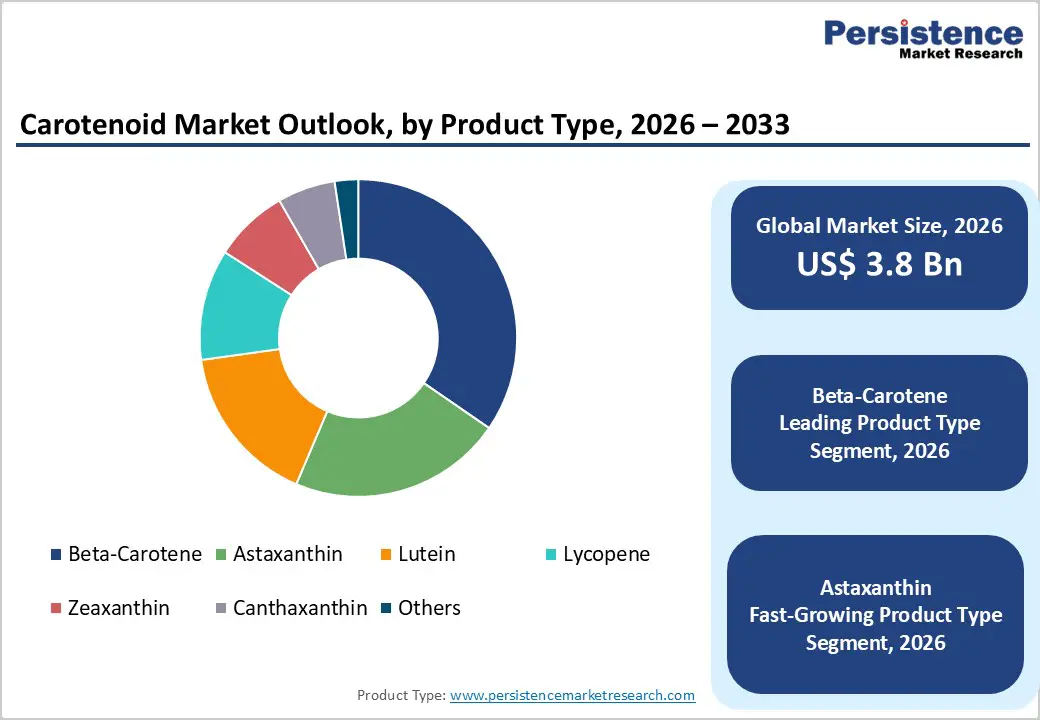
- Leading Product Type Segment: Beta-Carotene dominates the market with a 56.8% share, driven by its broad use as a natural colorant and vitamin-A precursor in beverages, dairy products, baked goods, and nutritional supplements, where color stability and nutritional value are important.
- Fastest-Growing Product Type Segment: Astaxanthin is witnessing accelerated growth as nutraceutical and functional food manufacturers increasingly incorporate this high-value antioxidant into supplements, sports nutrition products, and premium health formulations.
- Leading Application Segment: Food & Beverages leads with a 38.9% share, supported by strong global demand for natural pigments in juices, dairy beverages, sauces, bakery products, and processed foods where visual appeal and clean-label positioning are essential.
- Fastest-Growing Application Segment: Dietary Supplements is expanding quickly as health-conscious consumers increasingly adopt carotenoid-based formulations targeting eye health, immunity support, and antioxidant protection.
|
Key Insights |
Details |
|
Carotenoid Market Size (2026E) |
US$ 3.8 Bn |
|
Market Value Forecast (2033F) |
US$ 6.2 Bn |
|
Projected Growth (CAGR 2026 to 2033) |
5.8% |
|
Historical Market Growth (CAGR 2020 to 2025) |
4.2 % |
Market Dynamics
Driver - Growing Demand for Natural Colorants and Antioxidant-Rich Ingredients in Food and Nutritional Products
Rising consumer preference for naturally derived ingredients is significantly strengthening demand for carotenoids across the global food, nutraceutical, and personal care industries. These pigments are widely used to provide vibrant yellow, orange, and red hues in beverages, dairy products, sauces, confectionery, and processed foods while also offering antioxidant benefits. As consumers increasingly seek clean-label products free from synthetic additives, food manufacturers are replacing artificial colorants with plant-based carotenoids derived from sources such as algae, tomatoes, carrots, and marigold flowers. In addition to visual enhancement, carotenoids provide functional health benefits, including immune support, eye health, and cellular protection against oxidative stress. This dual functionality makes them highly attractive for fortified foods and dietary supplements.
Nutraceutical companies are expanding their product portfolios to include beta-carotene, lutein, lycopene, and astaxanthin to address rising demand for preventive healthcare solutions. Beverage manufacturers are also incorporating carotenoid ingredients into functional drinks and plant-based products to improve nutritional positioning and product differentiation. Technological improvements in microencapsulation, emulsification, and extraction processes have further enhanced pigment stability, bioavailability, and formulation compatibility. These developments allow producers to maintain consistent color intensity and nutritional performance in complex food systems. As consumer awareness of natural health ingredients continues to expand worldwide, carotenoids are increasingly recognized as valuable multifunctional compounds that enhance both the aesthetic appeal and nutritional value of modern food products.
Restraints - High Production Costs and Supply Constraints for Natural Carotenoid Sources
The production and commercialization of carotenoids face several operational and economic challenges. Natural carotenoid extraction depends heavily on agricultural crops and biological sources such as algae, fruits, and vegetables. Variations in crop yields, seasonal availability, and environmental conditions can significantly influence raw material supply and pricing. For example, carotenoids extracted from tomatoes, marigold flowers, or microalgae require specialized cultivation, harvesting, and processing techniques, which increase production costs compared with synthetic alternatives. Maintaining consistent pigment concentration and purity levels also requires advanced extraction technologies and strict quality control procedures. These requirements can raise operational expenses and limit scalability for some producers.
Additionally, carotenoids are sensitive to environmental factors, including light exposure, oxygen, and high temperatures, which may affect pigment stability during storage and food processing. Manufacturers must therefore invest in protective formulation methods such as encapsulation and specialized packaging to preserve product performance. Another challenge arises from regulatory compliance and approval processes governing food additives and nutritional ingredients across different regions. Each market may impose unique safety standards, labeling requirements, and permissible dosage limits for carotenoid use in food, supplements, and cosmetics. Navigating these regulatory variations can increase administrative complexity and slow product launches. Together, these supply-chain, technical, and regulatory challenges create barriers that may restrict the rapid expansion of carotenoid production in certain global markets.
Opportunity - Expanding Applications in Functional Foods, Nutraceuticals, and Sustainable Biotechnology Production
Increasing global interest in preventive healthcare and functional nutrition is creating strong opportunities for carotenoid manufacturers across multiple industries. Consumers are actively seeking foods and supplements that deliver health benefits beyond basic nutrition, particularly products supporting vision health, immune function, cardiovascular wellness, and skin protection. Carotenoids such as lutein, zeaxanthin, lycopene, and astaxanthin are widely recognized for their antioxidant properties and their potential to protect cells from oxidative damage. As a result, nutraceutical companies are increasingly incorporating these compounds into capsules, soft gels, powders, and fortified beverages targeting health-conscious consumers.
Functional food producers are also introducing carotenoid-enriched dairy products, breakfast cereals, snack bars, and plant-based foods designed to deliver both nutritional and visual benefits. Another promising opportunity lies in biotechnology innovations that enable the sustainable production of carotenoids through microalgae cultivation and fermentation technologies. These methods allow manufacturers to produce high-purity natural pigments with improved scalability while reducing dependence on seasonal agricultural sources. Advances in biotechnology also support the development of new carotenoid variants with enhanced bioavailability and functional properties. Additionally, growing demand for natural ingredients in cosmetics and skincare formulations is opening new commercial avenues, as carotenoids are increasingly used in anti-aging and antioxidant skincare products. With rising consumer awareness of health, sustainability, and natural ingredients, carotenoids are well-positioned to become key components in next-generation functional products.
Category-wise Analysis
By Product Type Insights
Beta-Carotene is expected to remain the largest product category within the global carotenoid market in 2026, accounting for 34.6% of total revenue. The segment’s prominence is linked to its dual functional value as both a natural colorant and a nutritional compound associated with vitamin-A activity. Food and beverage manufacturers widely incorporate beta-carotene into products such as juices, dairy beverages, margarine, baked goods, and confectionery to deliver appealing yellow-to-orange shades while enhancing nutritional perception. Beyond coloration, the ingredient’s antioxidant properties support its increasing use in dietary supplements and functional foods aimed at promoting immune health and vision support. In the nutraceutical sector, beta-carotene remains a preferred formulation component because of its stability and compatibility with capsule, tablet, and powder supplement formats. Technological improvements in microencapsulation and emulsification have further enhanced product stability, enabling manufacturers to maintain color consistency and bioavailability during processing and storage. As consumer interest in plant-derived nutrients continues rising globally, beta-carotene maintains a strong position as a versatile carotenoid ingredient serving both nutritional and aesthetic functions across multiple end-use industries.
By Source Insights
The synthetic carotenoids segment is projected to hold the largest market share in 2026, contributing 58.7% of total revenue. Industrial producers favor synthetic production methods because they enable consistent pigment concentration, controlled quality standards, and cost-efficient manufacturing at scale. Synthetic carotenoids are widely used in food coloring, animal nutrition, and dietary supplement formulations, where precise dosage levels and uniform color intensity are essential. In the animal feed sector, compounds such as synthetic astaxanthin and canthaxanthin are widely used to enhance pigmentation in aquaculture species and poultry products, improving product appearance and commercial value. Food processors also benefit from synthetic carotenoids’ strong stability under varying temperature, light exposure, and processing conditions, which ensures consistent color performance in beverages, processed foods, and dairy products. Moreover, pharmaceutical and nutraceutical manufacturers rely on synthetic variants to achieve standardized potency in large-volume supplement production. Continuous improvements in chemical synthesis technologies and quality control systems have further strengthened the reliability of synthetic carotenoid supply chains, allowing manufacturers to support growing global demand across multiple industrial applications.
By Application Insights
The food & beverages segment is expected to be the largest application category in 2026, accounting for 38.9% of total global carotenoid revenue. Carotenoids play a critical role in enhancing the visual attractiveness and perceived nutritional value of packaged food products. Beverage producers frequently incorporate these pigments into fruit drinks, dairy beverages, flavored waters, and energy drinks to create vibrant color profiles that attract consumer attention on retail shelves. In the food sector, carotenoids are widely used in margarine, sauces, baked goods, breakfast cereals, and snack products to provide natural color tones ranging from yellow and orange to red. Additionally, growing consumer awareness of the health benefits of antioxidants and plant-derived nutrients is encouraging food manufacturers to integrate carotenoid ingredients into functional and fortified food formulations. The rise of clean-label product development strategies has also accelerated the shift toward naturally derived pigments such as beta-carotene, lutein, and lycopene. As global packaged food production continues expanding, carotenoids remain essential ingredients for improving product aesthetics while simultaneously supporting nutritional marketing claims.
Regional Insights
North America Carotenoid Market Trends
North America is projected to account for 46.7% of the global carotenoid market value in 2026, making it the largest regional contributor, with the United States representing the majority of demand. The region’s dominance is closely associated with its mature nutraceutical, food processing, and dietary supplement industries that extensively utilize carotenoid ingredients. Functional beverages, fortified dairy products, and nutritional supplements increasingly incorporate compounds such as beta-carotene, lutein, and astaxanthin to support health-focused product positioning. Strong consumer awareness regarding antioxidants and eye-health nutrients has significantly boosted demand for carotenoid-enriched dietary supplements across the United States and Canada. In addition, large animal nutrition and aquaculture industries rely on carotenoid additives to improve pigmentation and nutritional value in poultry, salmon, and shrimp production.
North America also benefits from an advanced biotechnology ecosystem supporting research into algae-based and fermentation-derived carotenoids, which are gaining traction as sustainable alternatives. Leading ingredient manufacturers maintain extensive research and innovation facilities across the region dedicated to improving extraction technologies, bioavailability, and formulation performance. Combined with strong purchasing power, established regulatory frameworks, and a highly developed food manufacturing sector, these factors continue to reinforce North America’s leadership in the global carotenoid industry.
Europe Carotenoid Market Trends
Europe represents a mature yet innovation-driven market for carotenoid ingredients, supported by strong demand from the food, nutraceutical, and cosmetics sectors. Countries including Germany, France, the United Kingdom, Italy, and Spain serve as key consumption centers due to their advanced food processing and dietary supplement industries. Carotenoids such as lutein, lycopene, and beta-carotene are widely incorporated into functional foods, beverages, and nutritional formulations designed to promote eye health, immune support, and antioxidant protection. European consumers demonstrate a strong preference for natural and plant-derived ingredients, which has encouraged manufacturers to expand production of carotenoids derived from algae, tomatoes, marigold flowers, and other botanical sources.
Regulatory oversight from European food safety authorities has further strengthened quality assurance and ingredient traceability across the region. In addition, the cosmetics industry across France, Germany, and Italy increasingly uses carotenoids in skincare formulations for their antioxidant properties and support of skin health. Ongoing investments in biotechnology, microalgae cultivation, and advanced extraction technologies continue to support product innovation. These factors collectively position Europe as a stable and technologically advanced market for carotenoid ingredients.
Asia Pacific Carotenoid Market Trends
Asia Pacific is anticipated to be the fastest-growing regional market, expanding at a CAGR of approximately 7.9% between 2026 and 2033. Rapid urbanization, rising disposable income, and evolving dietary patterns are significantly increasing demand for functional foods, fortified beverages, and nutritional supplements throughout the region. Major economies, including China, India, Japan, and South Korea, are witnessing the rapid expansion of food processing industries and health-oriented product categories that frequently incorporate carotenoid ingredients. Beverage manufacturers increasingly use beta-carotene and lycopene to enhance the color and nutritional appeal of fruit drinks, flavored dairy products, and plant-based beverages.
The region’s growing aquaculture and poultry industries also rely heavily on carotenoid feed additives to improve pigmentation and overall product quality in seafood and eggs. Additionally, expanding nutraceutical manufacturing capacity in countries such as India and China is driving higher consumption of carotenoid-based supplements for eye health, immunity, and anti-aging benefits. Government initiatives promoting domestic biotechnology development and microalgae cultivation are further strengthening local capabilities for carotenoid production. With its large consumer population and rapidly evolving health-conscious food sector, Asia Pacific continues to emerge as the most dynamic growth hub for the global carotenoid market.
Competitive Landscape
The global carotenoid market is highly competitive, with strong participation from dsm-firmenich AG, Allied Biotech Corporation, Sensient Colors LLC, BioExtract Private Limited, Cyanotech Corporation, and Kemin Industries, Inc.. These companies leverage advanced carotenoid extraction technologies, large-scale pigment production capabilities, and global ingredient distribution networks to strengthen their market presence while improving color stability, bioavailability, and antioxidant functionality across food, feed, nutraceutical, and cosmetic applications. Rising demand for natural colorants and clean-label ingredients is accelerating product innovation. Manufacturers are expanding production capacity, improving cultivation and extraction processes, ensuring regulatory compliance, and forming strategic collaborations while increasing R&D investments to develop high-purity natural carotenoids.
Key Industry Developments:
- In January 2026, researchers in South Dakota developed a method to produce natural food colorants from microbes as regulatory pressure increases on synthetic dyes. The study highlighted that microbial carotenoids can be produced more rapidly while offering antioxidant health benefits and potential applications across food products, animal feed formulations, and cosmetic ingredients.
- In June 2025, dsm-firmenich AG expanded its distribution partnership for vitamins and carotenoids with Brenntag. The expanded collaboration strengthens regional supply capabilities and improves access to high-quality nutritional ingredients for food, beverage, and dietary supplement manufacturers. The agreement also aims to enhance product availability through Brenntag’s extensive distribution network while supporting growing demand for functional nutrition ingredients.
Companies Covered in Carotenoid Market
- dsm-firmenich AG
- Allied Biotech Corporation
- Sensient Colors LLC
- BioExtract Private Limited
- Cyanotech Corporation
- Kemin Industries, Inc.
- BASF SE
- Döhler GmbH
- Divi's Laboratories Limited
- Lycored Limited
- Zhejiang NHU Co., Ltd.
- Givaudan SA
- Archer-Daniels-Midland Company
- Zhejiang Medicine Co., Ltd.
- Chenguang Biotech Group Co., Ltd.
- Others
Frequently Asked Questions
The global carotenoid market is projected to be valued at US$ 3.8 Bn in 2026.
Rising consumer demand for natural antioxidants, clean-label food colorants, and dietary supplements, along with increasing health awareness and expanding food, nutraceutical, and animal feed applications, drives the global carotenoid market.
The global carotenoid market is poised to witness a CAGR of 5.8% between 2026 and 2033.
Key opportunities lie in the growing demand for natural ingredients and fortified foods in emerging markets such as Asia-Pacific and Latin America, along with expanding applications in functional foods, supplements, and cosmetics.
dsm-firmenich AG, Allied Biotech Corporation, Sensient Colors LLC, BioExtract Private Limited, Cyanotech Corporation, and Kemin Industries, Inc., are some of the key players in the carotenoid market.


