




- Specialty & Fine Chemicals
- Baicalin Market
Baicalin Market Size, Share, and Growth Forecast, 2026 - 2033
Baicalin Market by Grade (Reagent Grade, Pharmaceutical Grade, Food Grade), Application (Food & Supplements, Pharmaceuticals, Cosmetics, Others), Form (Powder, Liquid), and Regional Analysis for 2026 - 2033

Baicalin Market Share and Trends Analysis
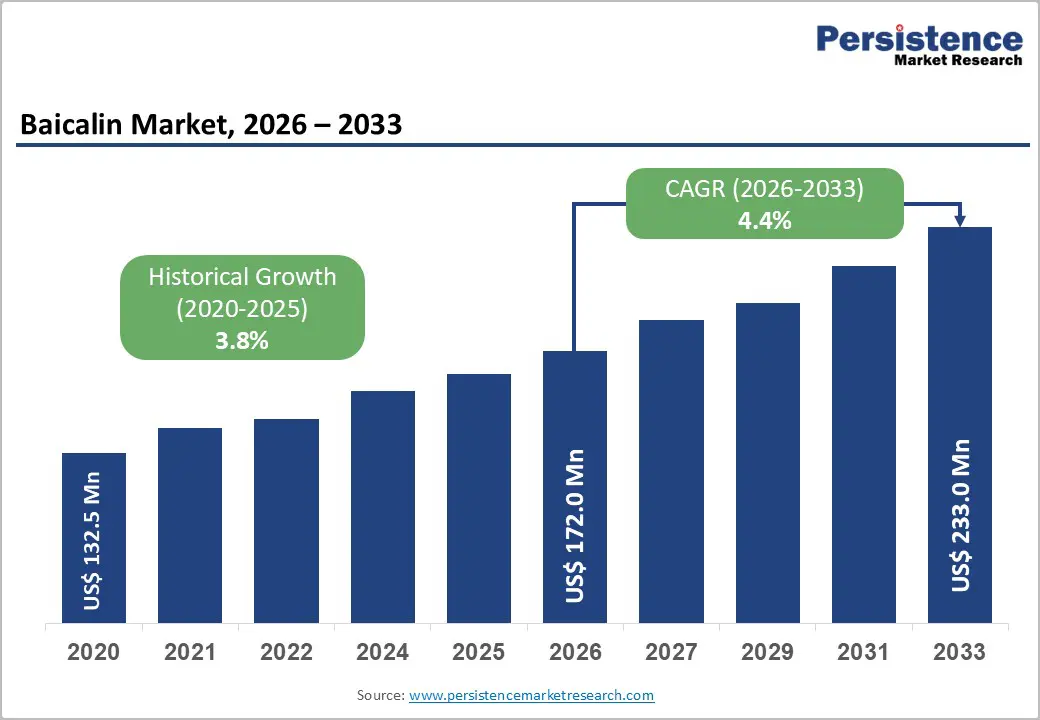
The global baicalin market size is likely to be valued at US$ 172.0 million in 2026, and is projected to reach US$ 233.0 million by 2033, growing at a CAGR of 4.4% during the forecast period 2026 - 2033.
The global surge in nutraceutical and functional food consumption, rapid pharmaceutical pipeline activity in oncology and metabolic disease indications, and expanding usage in dermatological and cosmetic formulations. Baicalin, a flavone glycoside sourced from the roots of Scutellaria baicalensis (Chinese skullcap), plays a key role in traditional Chinese medicine. It delivers anti-inflammatory, antioxidant, antiviral, and anticancer benefits through interactions with multiple biological pathways. Extracted and purified from the plant, baicalin is processed into specific grades and forms tailored for pharmaceutical, nutraceutical, or cosmetic applications. This versatility supports its expanding use in therapeutics and wellness products.
Key Industry Highlights
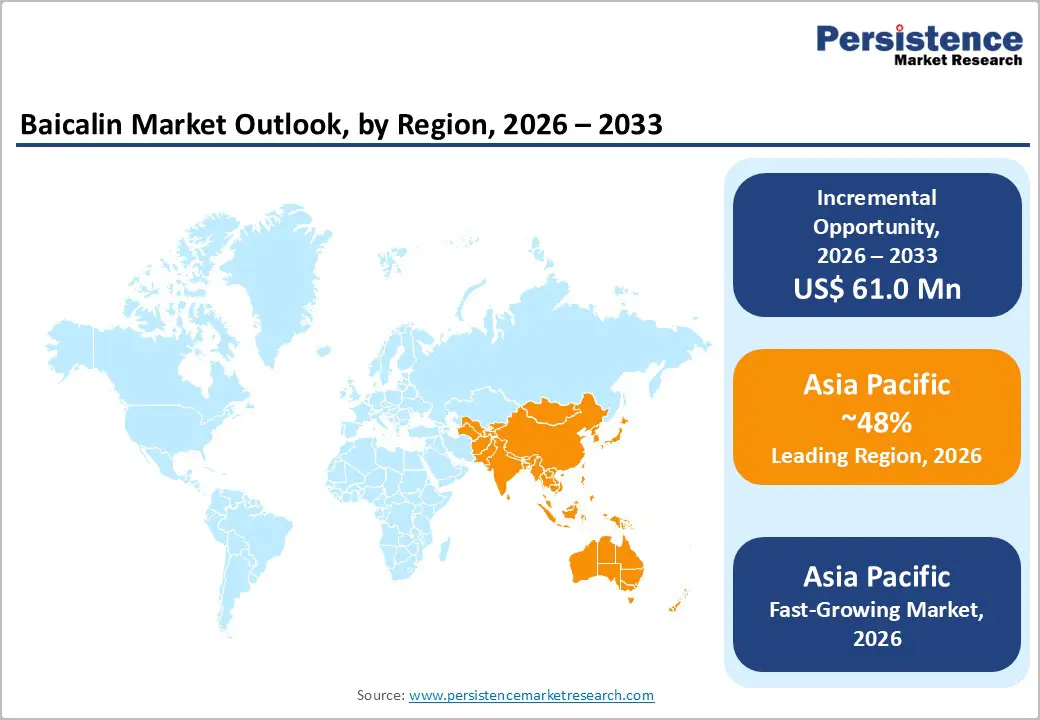
- Dominant Region & Fastest-growing Region: Asia Pacific is likely to the dominant as well as the fastest-growing market through 2033, holding roughly 48% market share in 2026, due to its historical and cultural linkage to traditional Chinese medicine.
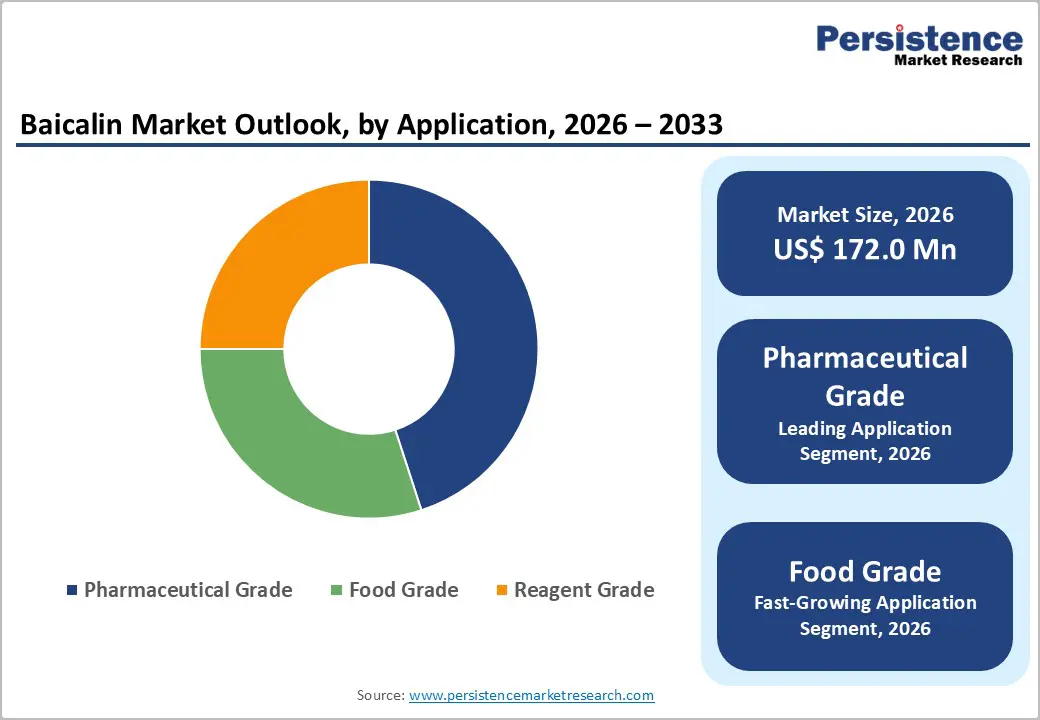
- Leading & Fastest-growing Grade: Pharmaceutical grade is set to lead with approximately 45% revenue share in 2026, and food grade is slated to be the fastest-growing from 2026 to 2033.
- Leading & Fastest-growing Form: Powder is expected to capture approximately 65% revenue share in 2026, with liquid registering the highest 2026-2033 CAGR.
- Key Driver: Baicalin is gaining traction as a premium active for anti-aging and skin brightening in cosmetics, as it inhibits tyrosinase activity to curb melanin production.
| Key Insights | Details |
|---|---|
| Baicalin Market Size (2026E) | US$ 172.0 Mn |
| Market Value Forecast (2033F) | US$ 233.0 Mn |
| Projected Growth (CAGR 2026 to 2033) | 4.4% |
| Historical Market Growth (CAGR 2020 to 2025) | 3.8% |
Market Factors - Growth, Barriers, and Opportunity Analysis
Rising Demand for Plant-Based Nutraceutical and Botanical Supplements
The global nutraceutical market is expanding and is increasing demand for high purity botanical compounds such as baicalin. Consumers in North America, Europe, and the Asia Pacific region are preferring plant-derived ingredients that support preventive health and clean-label product positioning. Nutraceutical manufacturers are incorporating these compounds into functional foods and dietary supplements to meet rising expectations for evidence based wellness solutions. Baicalin is attracting attention because it regulates nuclear factor kappa B (NF kB) inflammatory pathways and neutralizes reactive oxygen species (ROS), which supports immune modulation and cellular protection. Major supplement brands such as NOW Foods and Jarrow Formulas are expanding product portfolios that include Baicalin as a bioactive ingredient.
Product diversification is increasing stock-keeping units (SKUs) and strengthening procurement demand for high-grade baicalin extracts. Producers are securing stable supply contracts, particularly for pharmaceutical-grade materials with a purity exceeding 98 percent. Manufacturers are integrating baicalin into formulations for immune resilience and healthy aging, which is strengthening long-term demand across nutraceutical applications. Suppliers are scaling extraction capacity and adopting sustainable sourcing from Scutellaria baicalensis roots to support supply stability. Companies that prioritize quality certification, traceable sourcing, and improved bioavailability are strengthening competitive positioning as buyers place greater emphasis on ingredient transparency and clinical credibility.
Proliferating Use in Personal Care and Dermocosmetics
Baicalin is gaining adoption as a premium botanical active in cosmetic formulations focused on anti-aging and skin brightening. The compound inhibits tyrosinase activity, reducing melanin synthesis and supporting a more even skin tone. It also protects skin cells from ultraviolet A (UVA)-induced apoptosis, which improves resilience against environmental stressors. Cosmetic laboratories in South Korea, Japan, France, and the United States are incorporating baicalin into high-value skincare products. Global brands such as L'Oreal and Shiseido are using baicalin derivatives in formulations designed to address pigmentation, pollution exposure, and uneven complexion. Clean beauty preferences are strengthening this trend as consumers increasingly select plant-derived ingredients instead of synthetic brightening agents.
Cosmetic applications are expanding baicalin demand beyond pharmaceutical and nutraceutical uses. Premium skincare portfolios are generating stable procurement volumes for botanical extract suppliers. Manufacturers are improving delivery performance through technologies such as liposomal encapsulation that enhance bioavailability and ingredient stability. Partnerships with botanical extraction specialists ensure consistent purity from Scutellaria baicalensis root sources. South Korean research centers are advancing derivative innovation that influences global cosmetic product development. Japanese companies are focusing on formulations with textures suited for sensitive skin, while European and U.S. brands are emphasizing clinical validation to support marketing claims. This positioning is enabling higher retail pricing while strengthening appeal among environmentally conscious consumers.
Complex Extraction Processes and Supply Chain Concentration
Baicalin production relies heavily on the cultivation of Scutellaria baicalensis, which is concentrated in Chinese provinces such as Shanxi, Shaanxi, and Shandong. These regions are supplying most of the raw material used in global extraction processes. Climate disruptions such as droughts and floods are affecting crop yields, while agricultural policy adjustments and export regulations are influencing international availability. This geographic concentration is creating supply risk for manufacturers. Producers are exploring additional cultivation zones such as Inner Mongolia to diversify sourcing and improve resilience. Sustainable farming methods and drought-tolerant plant varieties are supporting stable production. Precision agriculture tools are also improving crop monitoring and yield management, which strengthens long-term supply reliability.
Baicalin extraction typically uses solvent-based processes that require Good Manufacturing Practices (GMP) compliant facilities. High capital requirements for specialized infrastructure are limiting market entry for new producers. Supply disruptions in major growing regions are causing price fluctuations as buyers compete for limited raw materials. Manufacturers are responding by securing long-term procurement agreements with certified agricultural suppliers. Advanced purification technologies are increasing the extraction efficiency from available roots. Some companies are adopting vertical integration models that link cultivation, extraction, and formulation to maintain quality control. Partnerships between emerging producers and established extraction specialists are also supporting technology transfer and operational scale. These sourcing strategies are stabilizing supply while improving processing efficiency through optimized ethanol water extraction methods.
Regulatory Complexity across Jurisdictions
Baicalin faces varying regulatory classifications across major markets, which increases compliance costs and slows product launches. In the European Union (EU), Baicalin products often require approval under Regulation (EU) 2015/2283 for novel foods before companies can market them as dietary supplements. In the U.S., the Food and Drug Administration (FDA) applies strict requirements for botanical New Dietary Ingredients (NDIs), which require extensive safety and documentation. These procedures require specialized regulatory expertise and structured submission strategies. Large manufacturers allocate dedicated regulatory teams to manage approvals, while smaller companies often struggle with the administrative and financial burden. Companies are preparing harmonized regulatory dossiers across jurisdictions to simplify future product registrations and accelerate commercialization.
Differences among regulatory systems are limiting global alignment and extending time to market for baicalin-based products. Prolonged approval timelines are increasing operational costs and complicating production planning for manufacturers. New market entrants face high barriers because regulatory preparation requires early investment in quality documentation and clinical validation. Companies are addressing this challenge by building standardized quality data packages and engaging regional regulatory consultants to support market access. Several emerging economies are adopting hybrid regulatory frameworks that combine elements of U.S. and EU oversight. Investors are favoring companies that demonstrate consistent regulatory compliance, as strong governance reduces approval risks and improves long-term commercial stability.
Combination Therapeutics and Synergistic Formulation Research
Baicalin shows enhanced bioactivity when combined with botanical compounds such as quercetin, berberine, and baicalein. These synergistic combinations are improving therapeutic performance across applications related to metabolic syndrome and neuroinflammation. Nutraceutical manufacturers are developing multi-ingredient formulations that target complex health conditions through complementary biochemical mechanisms. Research and development (R&D) teams are conducting bioavailability studies to confirm improved absorption and metabolic activity. Companies are protecting innovation through patented delivery systems and proprietary blend formulations. Clinical validation is strengthening regulatory submissions and reinforcing consumer trust through transparent labeling and evidence-based claims.
Firms investing in proprietary botanical blends are strengthening differentiation within the highly competitive dietary supplement market. Clinically supported combinations are enabling premium pricing because brands can demonstrate measurable health benefits. Manufacturers are collaborating with contract research organizations (CROs) to validate efficacy and optimize ingredient ratios. Consumer demand is shifting toward integrated wellness solutions that address multiple physiological pathways simultaneously. As a result, companies are launching targeted education campaigns to explain the value of synergistic plant compounds. Supply chains are expanding standardized extract production to meet rising formulation demand, while private label manufacturers are incorporating baicalin-based blends into broader product portfolios.
Bioavailability Enhancement Technologies
Native baicalin has limited oral bioavailability, limiting absorption and reducing therapeutic efficacy. Researchers are addressing this limitation through advanced delivery technologies that improve systemic availability. Approaches such as liposomal encapsulation, nanoemulsion systems, and polymer-based carriers are increasing plasma concentration and enhancing pharmacological performance. Pharmaceutical developers are applying these methods to expand the use of baicalin across multiple therapeutic indications. Nutraceutical manufacturers are also incorporating these delivery platforms to improve gastrointestinal uptake and formulation stability. Research teams are optimizing particle size and carrier matrices to maximize absorption, while pharmacokinetic studies are confirming stronger bioavailability profiles.
Manufacturers are strengthening capabilities through vertical integration that links extraction, purification, and encapsulation processes within a single production framework. Partnerships with specialized drug delivery companies are accelerating the adoption of advanced formulation technologies. This strategy allows producers to target premium product segments rather than compete solely as raw-material suppliers. Nutraceutical brands are commanding higher margins by demonstrating improved absorption and clinical performance. Pharmaceutical development pipelines are also advancing baicalin candidates toward formal clinical validation. Investments in R&D and scalable manufacturing infrastructure are supporting the rapid commercialization of nano-enabled botanical formulations across global health markets.
Category-wise Analysis
Grade Insights
Pharmaceutical is likely to holding the largest share of the grade and is expected to generate about 45% of the total baicalin market revenue in 2026. This grade meets strict regulatory standards required for pharmaceutical formulations and regulated health supplements. High-purity baicalin is providing verified therapeutic activity such as anti-inflammatory, antimicrobial, and antioxidant effects. Drug developers and supplement manufacturers are incorporating the compound into formulations that address multiple health conditions. Consistent quality and regulatory compliance are supporting strong adoption across pharmaceutical supply chains. As a result, pharmaceutical grade material is maintaining premium positioning due to its validated safety profile and reliable clinical performance.
Food grade baicalin is anticipated to register the fastest growth during the 2026-2033 forecast period. This grade is used as a functional ingredient in food and beverage applications that focus on preventive health benefits. Manufacturers are incorporating food grade extracts into products such as functional drinks, fortified foods, and dietary supplements while meeting safety standards for general consumption. The compound contributes antioxidant activity that helps reduce oxidative stress. Demand is rising as health conscious consumers are seeking plant derived ingredients that support daily wellness. Brands are strengthening clean label positioning and expanding distribution through digital retail platforms, which is accelerating adoption across the functional nutrition market.
Form Insights
Baicalin powder is poised to dominate in 2026, capturing approximately 65% of the market revenue share. Manufacturers favor this format because it supports flexible use across pharmaceutical and nutraceutical formulations. Powder integrates easily into capsules, tablets, and powdered dietary supplements while allowing precise dosage control. Pharmaceutical developers rely on this property to maintain consistent therapeutic performance. Nutraceutical brands value the long shelf stability and reliable storage characteristics of powdered extracts. The format also simplifies transportation and bulk handling, which helps maintain product integrity and supports efficient supply chain management.
Liquid baicalin is projected to record the fastest growth between 2026 and 2033. Cosmetic and personal care manufacturers are incorporating liquid extracts into products such as serums, creams, and lotions where direct topical delivery improves ingredient absorption. The compound exhibits anti-inflammatory and antioxidant activity, supporting treatments for pigmentation imbalance and environmental skin stress. Beverage companies are also using liquid extracts in functional drinks designed for immune and wellness support. This format accelerates formulation development because it blends easily across cosmetic, nutritional, and beverage applications, thereby expanding baicalin adoption across multiple consumer health categories.
Regional Insights
Asia Pacific Baicalin Market Trends
At an estimated 48%, Asia Pacific is expected to lead the baicalin market share in 2026. The regional market stands to gain from the long standing use of Scutellaria baicalensis in traditional medicine systems, which supports strong demand for baicalin-based formulations. China maintains large cultivation zones that supply most of the raw material used in global extraction. Japan is integrating Baicalin derivatives into modern healthcare and nutraceutical products that meet international quality requirements. Regional manufacturers often control processing from cultivation through extraction, which improves supply reliability and quality assurance.
Government programs across Asia Pacific are promoting research on herbal medicines and botanical pharmaceuticals. Pharmaceutical companies are producing standardized baicalin active pharmaceutical ingredients (APIs) that comply with global regulatory benchmarks. Nutraceutical firms are also developing formulations tailored to regional consumer preferences for preventive health solutions. Cultural acceptance of plant-based therapies is strengthening product adoption across dietary supplements, pharmaceuticals, and functional foods. These factors are positioning Asia Pacific as both the largest and fastest expanding regional market for baicalin.
Europe Baicalin Market Trends
Europe maintains a strong position in the global market for baicalin through well-established herbal medicine regulatory frameworks. Germany is leading regional demand by applying guidance from Commission E and standards from the European Scientific Cooperative on Phytotherapy (ESCOP). The United Kingdom is managing post Brexit oversight through the Medicines and Healthcare products Regulatory Agency (MHRA). France and Spain are promoting phytotherapy through pharmacist guided treatment within healthcare systems. Manufacturers are standardizing Baicalin extracts to comply with the Traditional Herbal Medicinal Products Directive (THMPD), while the EU Novel Food Regulation is governing dietary supplement applications that require extensive safety documentation. Cosmetic producers are also using Baicalin in formulations that comply with EU Cosmetics Regulation 1223/2009.
European skincare companies are incorporating baicalin into products that target anti-aging, pollution protection, and skin brightening. German research organizations are advancing botanical active development to support clinical validation. French luxury cosmetic brands are using standardized plant extracts to enhance the performance of their premium products. Contract manufacturing organizations (CMOs) across the region are expanding botanical extraction and processing capacity to meet growing demand. Facilities in the Netherlands are upgrading purification technologies to ensure consistent product quality. Nutraceutical manufacturers are exploring dual use formulations that combine cosmetic and supplement applications, while research institutions are evaluating advanced delivery systems to improve baicalin bioavailability.
North America Baicalin Market Trends
The market for baicalin in North America is poised to experience robust growth through 2033, as consumers increasingly prefer botanical health products over synthetic alternatives. The United States is leading regional adoption across dietary supplements and emerging pharmaceutical applications. Canada is also incorporating baicalin into preventive health and wellness formulations. Advanced healthcare infrastructure and active research programs are supporting clinical validation of baicalin’s anti-inflammatory mechanisms. Nutraceutical companies are launching targeted products for immune support and metabolic health. Pharmaceutical researchers are evaluating additional therapeutic applications, including oncology related pathways. Retail and specialty wellness stores are expanding shelf presence for baicalin-based supplements to meet rising consumer interest in plant derived health solutions.
Industry participants are investing heavily in R&D to explore new applications in healthcare and cosmetic sectors. Contract manufacturing organizations are scaling botanical extraction capacity to support brand owners and supplement companies. Regulatory specialists are navigating FDA requirements to facilitate product approvals and market entry. E-commerce platforms are expanding distribution and increasing access to nutraceutical products among health conscious consumers. Clinical nutrition experts are recommending standardized baicalin extracts as part of preventive wellness strategies. Investment groups are supporting vertically integrated production models that strengthen supply chain reliability, while cosmetic formulators are introducing baicalin derivatives in skincare products focused on antioxidant and skin brightening benefits.
Competitive Landscape
The global baicalin market structure is moderately fragmented, with key producers such as Xi'an Greena Biotech, Sabinsa Corporation, Naturalin Bio-Resources, Zhejiang NHU, and Xi'an Sost Biotech collectively holding about 35% to 40% of total market share. The competitive landscape includes international botanical ingredient companies and regional extraction specialists that serve pharmaceutical, nutraceutical, and cosmetic manufacturers. These firms are competing through product quality, standardized extract production, and consistent supply of Scutellaria baicalensis-derived raw materials.
Leading suppliers maintain strong procurement networks and advanced extraction capabilities to ensure reliable ingredient availability. Many producers operate vertically integrated models that link cultivation, extraction, purification, and formulation processes. This structure strengthens quality control while improving cost efficiency across production stages. Companies are also investing in R&D and forming strategic partnerships to expand technological capabilities and serve a broader range of applications across global health and wellness markets.
Key Industry Developments
- In February 2026, a study led by Peking University, and published in National Science Review, showed that baicalin alleviates liver fibrosis by binding directly to Signal Transducer and Activator of Transcription 3 (STAT3). This interaction disrupts STAT3 association with Janus kinase 2 (JAK2), suppresses stellate cell activation, and reduces fibrotic signaling in experimental models, highlighting baicalin’s potential as a therapeutic candidate for liver fibrosis treatment.
- In May 2025, researchers from Shandong University of Traditional Chinese Medicine demonstrated that baicalin treatment in human neuronal-like NT2-N cells enhanced neurite outgrowth, neuronal plasticity, and mitochondrial function while reducing inflammation via pathways such as glutamatergic synapse modulation and oxidative phosphorylation upregulation.
Companies Covered in Baicalin Market
- Xi'an Greena Biotech Co., Ltd.
- Sabinsa Corporation
- Naturalin Bio-Resources Co., Ltd.
- Shaanxi Huike Botanical Development
- Zhejiang NHU Co., Ltd.
- Xi'an Sost Biotech Co., Ltd.
- Nutra Green Biotechnology Co.
- Arjuna Natural Extracts
- Alchem International
- Xian Lyphar Biotech Co., Ltd.
- Herbs4you / Botanical Innovations
- Plantex Ltd.
- Refine Biology
- Yangling Ciyuan Biotech Co.
Frequently Asked Questions
The global baicalin market is projected to reach US$ 233.0 million in 2026.
The market is driven by the rising demand for natural anti-inflammatory antioxidants in nutraceuticals, pharmaceuticals, and cosmetics.
The market is poised to witness a CAGR of 4.4% from 2026 to 2033.
Major opportunities lie in nutraceutical synergies, cosmetics expansion, and bioavailability innovations that can unlock premium, high-margin applications globally.
Greena Biotech Co., Ltd., Sabinsa Corporation, Naturalin Bio-Resources Co., Ltd., Zhejiang NHU Co., Ltd. and Xi'an Sost Biotech Co., Ltd. are some of the key players in the market.


