




- Food Ingredients & Additives
- Cellulose Gel Market
Cellulose Gel Market Size, Trends, Share, and Growth Forecast 2026-2033
Cellulose Gel Market by Source (Wood, Non-Wood), Grade (Food Grade, Pharmaceutical Grade, Industrial Grade), End-user (Food & Beverages, Pharmaceuticals, Personal Care & Cosmetics, Industrial Applications), and Regional Analysis 2026 - 2033

Cellulose Gel Market Share and Trends Analysis
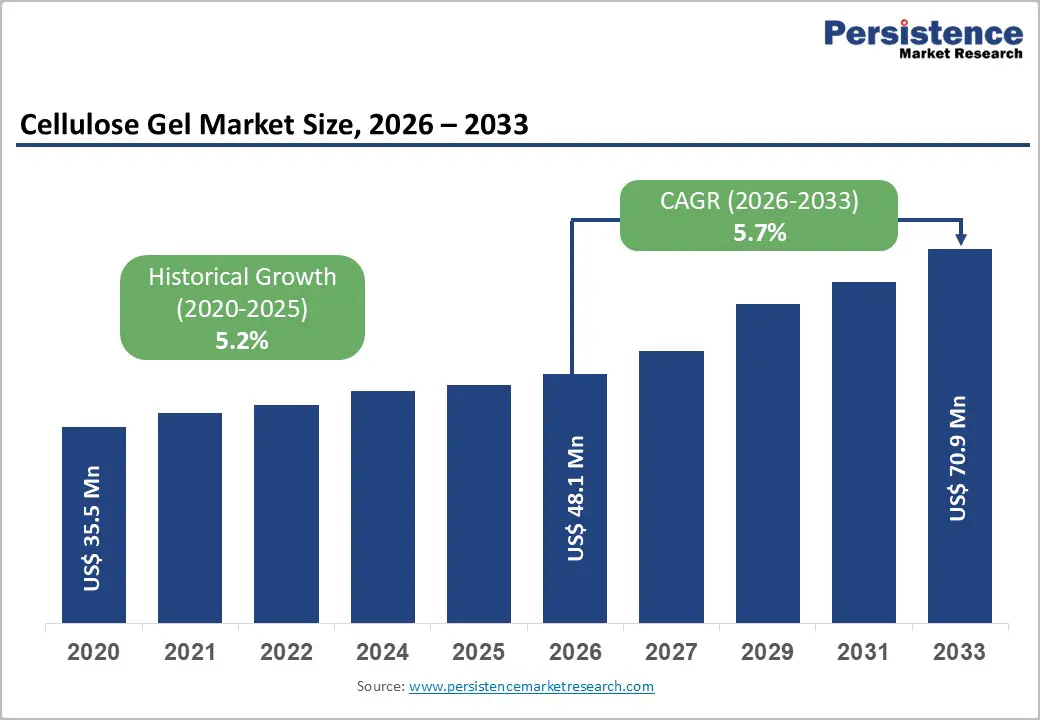
The global cellulose gel market size is expected at US$ 48.1 million in 2026 and projected to reach US$ 70.9 million by 2033, growing at a CAGR of 5.7% between 2026 and 2033. The global market for cellulose gel is undergoing consistent expansion, majorly driven by surging demand for plant-based stabilizers and clean-label ingredients across the global food and pharmaceutical industries.
This growth is fundamentally supported by a structural shift in consumer purchasing behavior, in which a heightened focus on dietary fiber and natural excipients is replacing synthetic alternatives. Furthermore, advances in micro-fractionation and chemical-free processing technologies are enabling manufacturers to produce higher-purity grades for specialized medical and nutraceutical applications.
Key Industry Highlights:
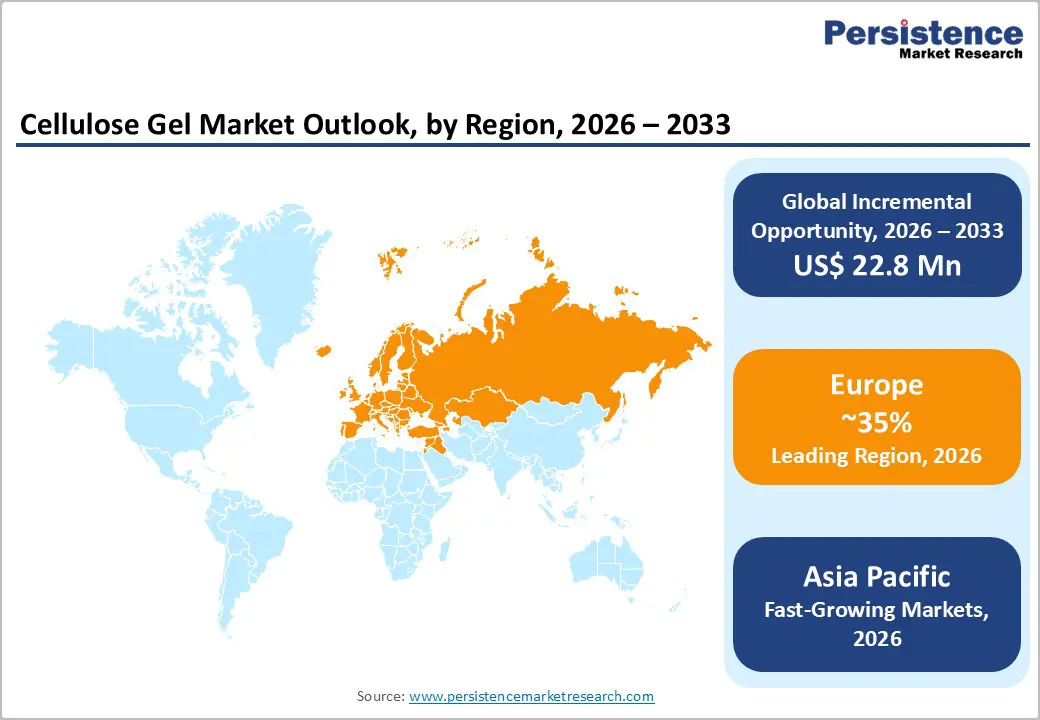
- Leading Region: Europe, holding ~35% market share, supported by strict EFSA regulations, strong clean-label adoption, advanced pharmaceutical excipient standards, and early integration of circular economy initiatives using sustainable cellulose sources.
- Fastest-Growing Region: Asia Pacific, driven by rapid expansion of pharmaceutical manufacturing, rising packaged food consumption, government-backed biochemicals programs in China and India, and cost-competitive large-scale cellulose gel production capacity.
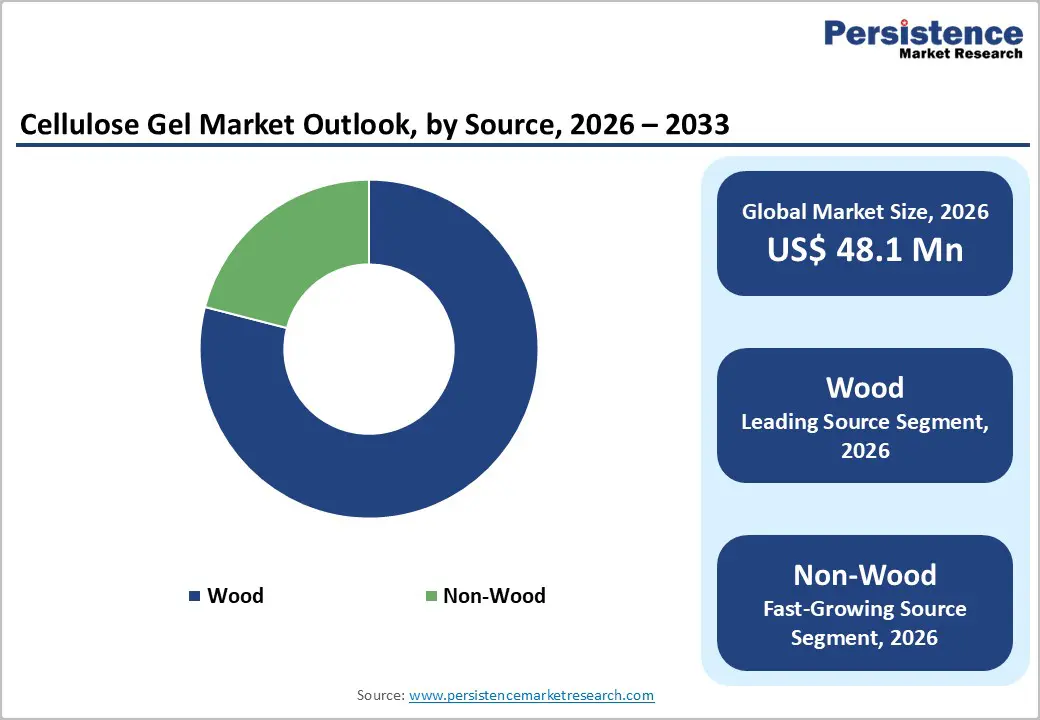
- Fastest-Growing Source Segment: Non-Wood Cellulose Gel, propelled by sustainability mandates, circular bio-economy initiatives, and the valorization of agricultural residues such as bagasse, corn cobs, and citrus waste.
- Leading Grade Segment: Food Grade Cellulose Gel, driven by its widespread use as a fat replacer, stabilizer, and texture enhancer in dairy alternatives, bakery, sauces, and convenience foods aligned with fiber-enriched diets.
- Major Opportunity Area: Development of sustainable non-wood cellulose gel using agricultural waste streams, enabling ESG compliance, reduced carbon footprint, and alignment with EU Green Deal and circular economy targets.
- Key Developments: In October 2025, Ashland appointed Tilley Distribution as its exclusive U.S. distributor for food and beverage ingredients, strengthening domestic penetration. In March 2025, Asahi Kasei received the Okochi Memorial Prize for its Ceolus™ UF Microcrystalline Cellulose grade, recognizing innovation in excipient performance.
| Key Insights | Details |
|---|---|
| Cellulose Gel Market Size (2026E) | US$ 48.1 Mn |
| Market Value Forecast (2033F) | US$ 70.9 Mn |
| Projected Growth (CAGR 2026 to 2033) | 5.7% |
| Historical Market Growth (CAGR 2020 to 2025) | 5.2% |
Market Dynamics
Driver - Rising Adoption of Low-Fat and High-Fiber Dietary Formulations
The primary catalyst for the cellulose gel market is the radical shift in global dietary patterns toward functional foods that offer satiety without caloric density. As a refined form of insoluble fiber, Cellulose Gel (often referred to as Microcrystalline Cellulose or MCC) is uniquely positioned as a superior fat replacer and texture modifier. According to the World Health Organization (WHO), the global prevalence of obesity has nearly tripled since 1975, prompting health-conscious consumers and regulatory bodies to prioritize calorie reduction. Food manufacturers are increasingly integrating Cellulose Gel into dairy alternatives, bakery products, and processed meats to mimic the mouthfeel of fats while significantly increasing the total dietary fiber content. Data from organizations such as the International Food Information Council (IFIC) suggest that more than 50% of consumers actively seek products with added fiber, providing a sustained tailwind for market expansion in the retail food sector.
Restraints - Fluctuations in Raw Material Availability and Pricing Volatility
A major barrier to the seamless growth of the Cellulose Gel market is the inherent instability in the supply chain of high-quality wood pulp and cotton linters. The market is heavily dependent on the forestry and textile industries for its primary feedstock, making it vulnerable to climate-related disruptions, environmental regulations, and geopolitical trade tensions. The Food and Agriculture Organization (FAO) has noted that increasing restrictions on logging and the shift toward sustainable forest management (under bodies such as the Forest Stewardship Council, or FSC) have reduced the availability of specialized pulp used for Cellulose Gel production. When raw material costs spike, as seen during global logistics crises, manufacturers often face reduced margins or are forced to pass costs onto end-users. This volatility can lead some industrial manufacturers to seek synthetic or cheaper plant-based hydrocolloids, such as guar gum or xanthan gum, which can act as substitutes in less sensitive applications.
Opportunity - Development of Sustainable Non-Wood Sources and Circular Bio-Economy Initiatives
The industry is standing on the cusp of a major transformation as it looks toward Non-Wood sources to secure future growth. This opportunity is fueled by the global push for sustainability and the need to reduce the environmental footprint of traditional wood-based logging. Research on the extraction of cellulose gel from agricultural residues such as corn cobs, sugar cane bagasse, citrus peels, and pineapple waste is gaining significant momentum. According to research published in the Journal of Cleaner Production, utilizing these waste streams not only reduces the landfill burden but also provides a more cost-effective and localized supply of raw materials. For market participants such as Roquette Frères and Sigachi Industries, investing in these green technologies enables them to market their products as "ultra-sustainable," thereby appealing to the growing demographic of environmentally conscious consumers and meeting the EU Green Deal objectives for a circular economy.
Category-wise Analysis
Source Insights
The Wood segment currently holds the dominant position in the market, accounting for 79% of the market in 2025. This leadership is primarily attributed to the mature and highly optimized supply chain for wood-derived cellulose pulp, particularly from softwood and hardwood species. Wood provides a high concentration of alpha-cellulose, which is essential for the acid hydrolysis process used to create high-purity Microcrystalline Cellulose. Large-scale operations in North America and Scandinavia have perfected the extraction methods, ensuring a consistent supply of a uniform product that meets the stringent requirements of the United States Pharmacopeia (USP). However, while Wood leads in volume, the Non-Wood segment is emerging as the fastest-growing source. This shift is driven by the urgent need to preserve biodiversity and the increasing economic viability of processing agricultural by-products, which offer a lower carbon footprint and reduce dependence on traditional forestry.
Grade Insights
The food-grade segment is the leading segment, accounting for 42% of the market in 2025. This dominance is underpinned by the universal application of Cellulose Gel across the sprawling global food and beverage industry. It is extensively used in ice creams to prevent ice crystal formation, in sauces as a stabilizer, and in bakery items to retain moisture and improve shelf life. The demand is further amplified by the growth of the global convenience food market, where stabilizers are crucial for maintaining product integrity during transport. Conversely, the Pharmaceutical Grade segment is the fastest-growing. The acceleration in this grade is linked to the rapid expansion of the global nutraceutical market and the increasing complexity of modern pharmaceutical formulations. As drug manufacturers move toward high-speed tableting and specialized oral disintegration technologies, demand for high-performance, ultra-pure Cellulose Gel that ensures rapid disintegration and drug release is increasing rapidly.
Regional Insights
North America Cellulose Gel Market Trends and Insights
North America remains a cornerstone of the global cellulose gel market, characterized by a highly advanced food processing sector and a world-leading pharmaceutical ecosystem. The United States is the primary engine of growth in this region, where the Food and Drug Administration (FDA)'s long-standing GRAS (Generally Recognized as Safe) designation for cellulose has fostered a stable environment for innovation.
Key trends in this region include the rapid adoption of cellulose gel in the booming plant-based meat and dairy alternative markets. As consumers in the U.S. and Canada shift away from animal proteins, manufacturers are using cellulose-based systems to deliver the structural integrity and juiciness required for vegan burger patties. Additionally, the region benefits from a robust R&D landscape, where companies like IFF and Ashland are pioneering new ways to integrate cellulose with other hydrocolloids to create "synergistic blends" that offer superior performance at lower concentrations.
Europe Cellulose Gel Market Trends and Insights
Europe is the leading regional market, commanding a 35% market share in 2025. The region’s dominance is built upon a sophisticated regulatory framework and a strong emphasis on clean-label and sustainable food production. Countries such as Germany, France, and the U.K. are at the forefront of the move away from synthetic food additives, driven by the European Food Safety Authority (EFSA)'s strict guidelines and consumer pressure for transparency.
The European market is also characterized by high standards for pharmaceutical excipients, with the European Pharmacopoeia (Ph. Eur.) setting global quality benchmarks. The region’s commitment to the Circular Economy Action Plan is significantly boosting interest in Non-Wood cellulose sources, with numerous pilot projects focused on extracting high-value cellulose from agricultural waste. Furthermore, the presence of industry leaders like Roquette Frères and Lamberti S.p.A. ensures that Europe remains a hub for technical expertise and market leadership in high-purity cellulose applications.
Asia Pacific Cellulose Gel Market Trends and Insights
Asia Pacific is likely to register the fastest growth, fueled by explosive industrialization and the expansion of the middle-class population in China, India, and the ASEAN countries. The region is quickly becoming a global manufacturing hub for cellulose gel, benefiting from lower labor costs and abundant raw material sources. China’s Ministry of Industry and Information Technology (MIIT) has been encouraging the development of high-tech biochemicals, leading to a surge in domestic production capacity. In India, the government's "Make in India" initiative and the expansion of the pharmaceutical sector, often called the "pharmacy of the world," are creating massive domestic demand for binders and disintegrants. The rising consumption of packaged snacks and nutritional beverages among younger consumers in Southeast Asia is also driving growth in the food-grade segment. As manufacturing technologies in the region catch up with Western standards, companies like Sigachi Industries and Kima Chemical are increasingly exporting their products to global markets, further solidifying the region's influence.
Competitive Landscape
The global cellulose gel market is characterized by a moderate level of consolidation, with a few Tier-1 companies holding a significant portion of the total market value. These leaders, including IFF, Ashland, and Asahi Kasei, maintain their dominance through extensive patent portfolios, integrated raw material supply chains, and global distribution networks. Key differentiators in the market include the ability to produce high-functionality grades that offer specific benefits, such as "low-dusting" powders or "high-viscosity" gels.
The market is also witnessing a trend toward solution selling, where companies offer technical formulation support to food and pharma brands to help them transition from synthetic ingredients. Emerging business models are increasingly focused on vertical integration and sustainability partnerships, as seen in recent collaborations between cellulose producers and forestry management firms to ensure ESG (Environmental, Social, and Governance) compliance. While the top players dominate high-purity segments, smaller regional players are thriving in the industrial and construction-grade markets by offering competitive pricing and localized supply.
Key Developments:
- In October 2025, Ashland appointed Tilley Distribution as its exclusive distribution partner for food and beverage ingredients in the United States, strengthening its domestic market reach.
- In March 2025, Asahi Kasei Receives Prestigious Okochi Memorial Prize for its Microcrystalline Cellulose (MCC) Ceolus™ UF Grade
- In March 2025, IFF Pharma Solutions highlighted its advanced excipient technologies at CPHI Japan 2025, reinforcing its focus on innovation in pharmaceutical formulation solutions.
Companies Covered in Cellulose Gel Market
- IFF
- Ashland
- DOW
- Lamberti S.p.A.
- Roquette Frères
- Asahi Kasei Corporation
- Kima Chemical Co., Ltd.
- Celotech Chemical Co., Ltd.
- Sigachi Industries
- Shin-Etsu Chemical Co., Ltd.
- Ataman Chemicals
- Others
Frequently Asked Questions
The global cellulose gel market is expected to be valued at approximately US$ 48.1 million in 2026, following a period of steady growth supported by the recovery of global supply chains and rising demand for plant-based stabilizers.
The demand is primarily driven by two factors: the escalating consumer preference for clean-label and high-fiber food products, and the increasing reliance on cellulose-based binders in the pharmaceutical industry for high-speed tablet manufacturing.
Asia Pacific is projected to be the fastest-growing region. This is due to the rapid expansion of the food processing and pharmaceutical industries in China and India, combined with increasing urbanization and health awareness.
The most significant opportunity lies in the development of non-wood cellulose sources, such as agricultural waste. This allows companies to align with circular economy goals, reduce raw material costs, and target eco-conscious consumers.
The market features prominent global players such as IFF, Ashland, Asahi Kasei Corporation, Roquette Frères, and Sigachi Industries, who are focused on innovation, sustainable sourcing, and expanding their production capacities.


