




- Food Ingredients & Additives
- Sage Herb Market
Sage Herb Market Size, Share, and Growth Forecast, 2026 – 2033
Sage Herb Market by Form (Dried, Fresh, Extracts, Powder) Application (Food & Beverages, Pharmaceutical & Nutraceuticals, Personal care & Cosmetics) Distribution Channel (Online Stores, Supermarkets, Specialty Stores), and Regional Analysis for 2026 – 2033

Sage Herb Market Size and Trends Analysis
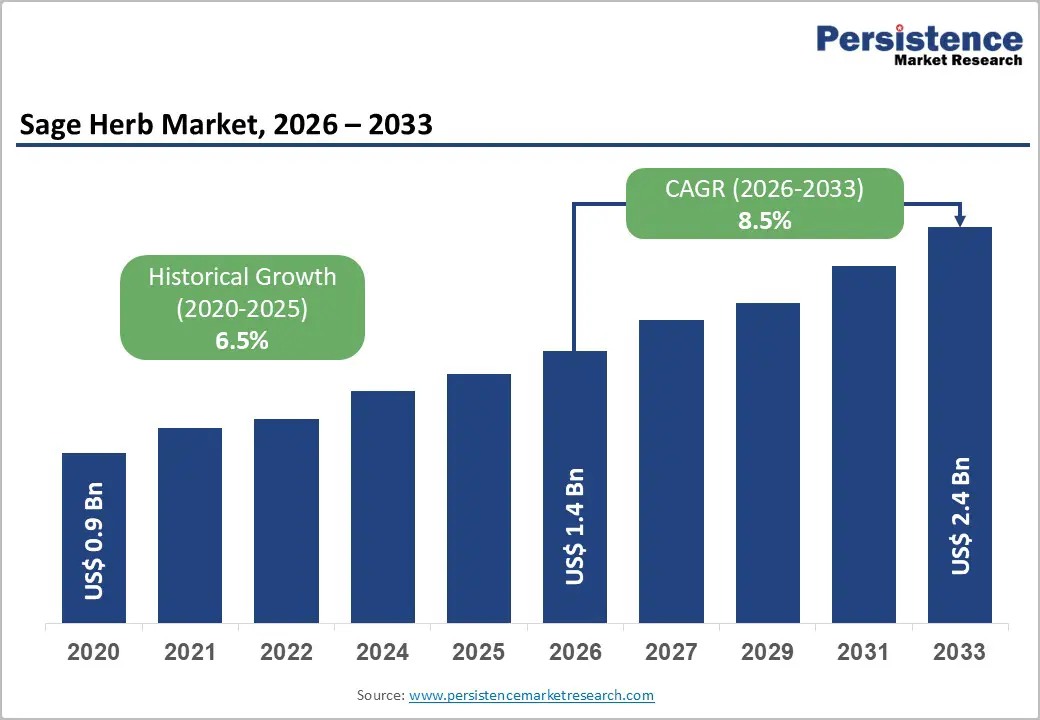
The global sage herb market size is likely to be valued at US$1.4 billion in 2026 and is expected to reach US$2.4 billion by 2033, growing at a CAGR of 8.5% during the forecast period from 2026 to 2033.
This robust expansion is underpinned by accelerating consumer preference for plant-based therapeutics, mounting clinical evidence validating sage's medicinal efficacy, and deepening penetration of herbal ingredients across the cosmetics and nutraceutical industries. The growing integration of sage in dietary supplements, essential oils, and herbal extracts, along with technological improvements in extraction and sustainable cultivation practices. Rising awareness of sage’s antioxidant, anti-inflammatory, and cognitive health benefits is increasing its adoption in preventive healthcare and functional food formulations.
Key Industry Highlights:
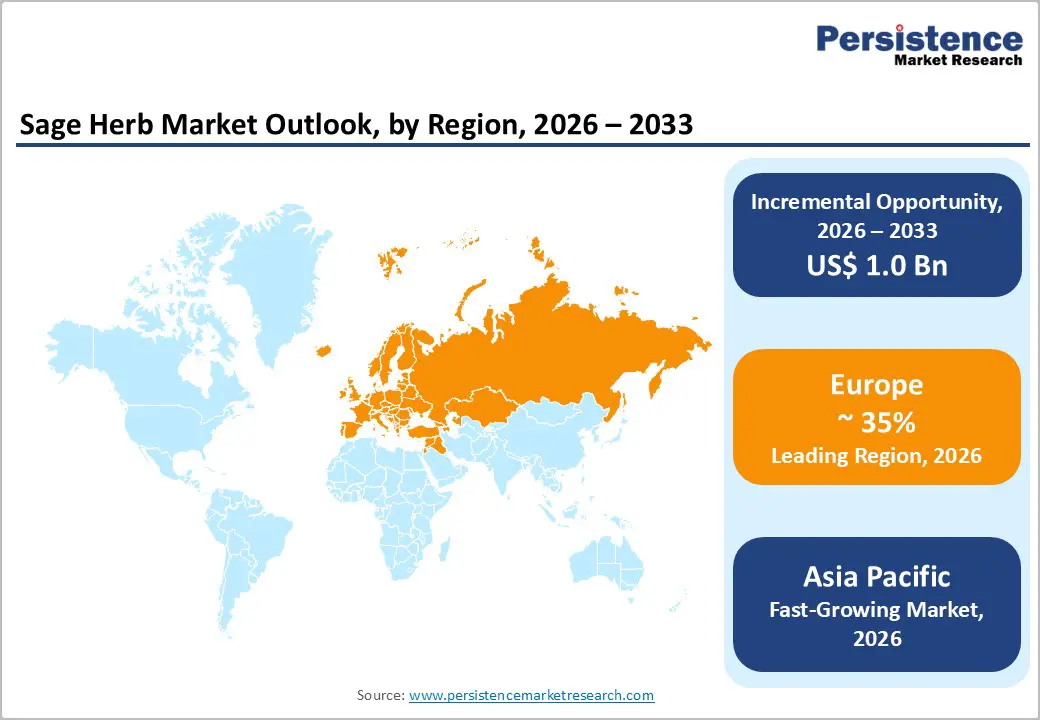
- Leading Region: Europe is anticipated to be the leading region, accounting for a market share of 35% in 2026, driven by strong traditional culinary usage, high demand for organic herbal products, and a well-established nutraceutical and natural cosmetics industry.
- Fastest-growing Region: Asia Pacific is likely to be the fastest-growing region, supported by rising health awareness, which is shaping consumption patterns.
- Leading Form: Dried sage is projected to represent the leading formulation in 2026, accounting for 45% of the revenue share, due to its long shelf life, cost-effectiveness, and widespread use in culinary and food processing applications.
- Leading Application: Food & beverages is anticipated to be the leading application, accounting for over 50% of the revenue share in 2026, supported by the extensive use of sage as a culinary herb, flavoring agent, and ingredient in processed and traditional foods.
- Key Opportunity: The key market opportunity lies in the accelerating demand for premium organic and functional herbal products, as consumers increasingly seek plant-based wellness, clean-label nutrition, and natural therapeutic ingredients across food, nutraceutical, and personal care industries.
DRO Analysis
Driver - Rising Demand for Herbal and Natural Health Products
The herbal supplement industry is expanding steadily, with sage gaining attention for its role in digestive balance, cognitive function, and antimicrobial support. According to the World Health Organization (WHO), approximately 80% of the world's population relies on some form of traditional medicine, including herbal remedies, for their primary healthcare needs.
Sage is widely recognized for its antioxidant, anti-inflammatory, and cognitive health benefits, making it a preferred ingredient in preventive healthcare. Growing interest in clean-label and organic products across the food, nutraceutical, and cosmetic industries is strengthening sage consumption, especially in developed markets with high wellness awareness and evolving health-conscious lifestyles.
Expansion of herbal medicine adoption in both developed and emerging economies is driving the market. Consumers are increasingly integrating sage-based products for digestion, immunity, and mental wellness support. Pharmaceutical and nutraceutical companies are incorporating sage extracts into capsules, teas, and wellness formulations. The influence of traditional medicine systems such as Ayurveda and European herbal therapy is also increasing in acceptance.
Restraint - Climatic Vulnerability and Agricultural Supply Constraints
Its dependence on specific climatic conditions makes cultivation highly vulnerable to environmental fluctuations. Sage requires well-drained soil, moderate temperatures, and controlled irrigation, and any deviation due to drought, excessive rainfall, or temperature extremes can significantly impact yield quality and quantity. Climate change has increased unpredictability in agricultural output, affecting supply consistency.
Supply chain inefficiencies and limited organized cultivation practices create challenges in meeting growing demand. Seasonal harvesting cycles and regional concentration of production in certain areas increase dependency risks. Post-harvest losses due to improper drying and storage techniques also affect product quality. Organic certification requirements and regulatory standards add complexity and cost for producers.
Opportunity - Premiumization and Organic Sage Segment Expansion
Consumers are increasingly willing to pay higher prices for high-quality, sustainably sourced, and chemical-free herbal ingredients. This trend is driving manufacturers to invest in organic farming practices, traceability systems, and eco-friendly cultivation methods. Organic sage is gaining strong traction in nutraceuticals, cosmetics, and gourmet food industries, where product purity and authenticity are major purchasing factors.
The expansion of clean-label and wellness-focused consumption trends is accelerating demand for premium sage-based formulations. Companies are innovating with high-potency extracts, essential oils, and functional blends targeting stress relief, immunity, and cognitive health. The growing penetration of e-commerce and specialty herbal stores is improving accessibility to premium products worldwide.
Increasing consumer preference for sustainable and ethically sourced ingredients is encouraging brands to strengthen organic supply chains. Strategic partnerships between herbal ingredient suppliers and wellness brands are also supporting innovation and premium product commercialization.
Category-wise Analysis
Form Insights
Dried sage is expected to lead accounting for 45% of revenue in 2026. Its extended shelf life, easy storage, and widespread utilization across the food processing and culinary industries. Food manufacturers and restaurants extensively prefer dried sage because it maintains flavor stability and offers cost-efficient bulk handling compared to fresh herbs. A notable example includes McCormick & Company, which offers dried sage products for seasoning and packaged food applications.
Sage extract is likely to represent the fastest-growing segment, supported by rising demand for concentrated herbal ingredients in nutraceuticals, pharmaceuticals, and premium cosmetic formulations. Cosmetic manufacturers are also incorporating sage extract into anti-aging skincare, scalp care, and natural personal care products because of its therapeutic and antimicrobial properties. For instance, Gaia Herbs, which utilizes concentrated herbal extracts in wellness supplements and botanical formulations.
Application Insights
Food & beverages are projected to lead the market, capturing around 50% of the revenue share in 2026, supported by the extensive use of sage as a culinary herb, seasoning ingredient, and natural flavor enhancer. Rising consumer demand for natural flavoring agents over synthetic additives is also supporting strong adoption in packaged food products. For example, The Spice House, which offers culinary sage products for seasoning and gourmet cooking applications.
Pharmaceutical & nutraceuticals are likely to be the fastest-growing applications due to increasing consumer preference for herbal healthcare products, preventive wellness solutions, and plant-based dietary supplements. Sage contains bioactive compounds associated with antioxidant, antimicrobial, cognitive health, and anti-inflammatory benefits, making it highly attractive for modern nutraceutical formulations. A notable example includes Herb Pharm, which develops sage-based herbal extracts and wellness formulations.
Distribution Channel Insights
Supermarkets are expected to lead the sage herb market, accounting for 42% share in 2026. Strong consumer accessibility, extensive product visibility, and the availability of multiple herbal and seasoning brands under one retail platform. Consumers widely prefer supermarkets for purchasing dried herbs, spice blends, and wellness products because of convenient product comparison, promotional discounts, and immediate product availability. A notable example includes McCormick & Company, whose sage seasoning products are widely distributed through supermarket and hypermarket retail networks.
Online stores are likely to represent the fastest-growing segment, supported by increasing consumer demand for convenient access to herbal and organic products. Consumers are increasingly purchasing sage-based supplements, dried herbs, extracts, and essential oils through online platforms due to broader product variety, doorstep delivery, and easy price comparison. For instance, it markets organic sage herbs and botanical products extensively through online retail platforms and direct e-commerce channels.
Regional Insights
North America Sage Herb Market Trends
North America is likely to be a significant market for sage herb in 2026, reinforced by strong demand from the food service industry and the herbal supplement retail segment, along with expanding use in aromatherapy and personal care applications. Restaurants and wellness retailers are increasing product adoption, while beauty and fragrance brands are integrating sage into formulations, supporting broader market expansion and diversified end-use demand.
U.S. Sage Herb Market Trends
The U.S. dominates the regional market, driven by the world's most mature botanical supplement ecosystem. The presence of major players such as McCormick & Company and Bio Botanica is strengthening vertical integration and innovation pipelines. Clean-label reformulations and rising private-label herbal products are accelerating retail penetration. Strategic acquisitions in botanical extracts and expansion of contract manufacturing capabilities are improving supply security and enabling premium product launches.
Canada Sage Herb Market Trends
Canada is a significant market for sage herb, supported by strong regulatory clarity and growing organic certification adoption. Companies are expanding partnerships with local growers to ensure traceable supply chains. Increased investments in plant-based nutraceuticals and herbal wellness brands are shaping demand. Retail expansion through health-focused chains and e-commerce platforms is improving accessibility.
Europe Sage Herb Market Trends
Europe is anticipated to be the leading region, accounting for a market share of 35% in 2026, due to rising demand for organic and sustainably sourced herbal ingredients. Consumers are increasingly seeking certified organic spices and herbs, particularly in food, personal care, and wellness applications. European retailers and manufacturers are emphasizing traceability, eco-friendly packaging, and botanical authenticity to meet evolving regulatory and consumer expectations.
U.K. Sage Herb Market Trends
The U.K. is a significant market for sage herb, supported by increasing consumer preference for organic, clean-label, and plant-based food ingredients. Rising awareness regarding herbal wellness and natural nutrition is encouraging the use of sage in culinary applications, herbal teas, seasonings, and dietary supplements.
Germany Sage Herb Market Trends
Germany dominates the regional market due to its advanced phytopharmaceutical industry and strong herbal medicine culture. Companies such as Döhler GmbH are investing in botanical extraction technologies and functional ingredient innovation. Regulatory frameworks are supporting standardized formulations, which are enhancing consumer trust.
Asia Pacific Sage Herb Market Trends
The Asia Pacific region is likely to be the fastest-growing region in the sage herb in 2026, driven by rising consumer preference for herbal wellness products, natural food ingredients, and plant-based healthcare solutions. The rapid expansion of nutraceutical and herbal medicine industries across the region is significantly supporting sage consumption in dietary supplements, herbal teas, and wellness formulations. The growing integration of traditional medicine systems such as Ayurveda, Traditional Chinese Medicine (TCM), and Kampo with modern nutraceutical and pharmaceutical applications.
China Sage Herb Market Trends
China dominates the regional market, supported by increasing exposure to European culinary traditions through travel, digital media, and restaurant chains. This combination is driving demand for sage across both therapeutic applications and culinary uses, as consumers are adopting it for health benefits alongside its growing presence in modern cooking practices.
India Sage Herb Market Trends
India is a significant market for sage herb. Due to rising consumer preference for herbal wellness products, clean-label food ingredients, and plant-based healthcare solutions. Increasing awareness regarding preventive healthcare and natural remedies is accelerating the adoption of herbal ingredients across the food, nutraceutical, and personal care industries.
Competitive Landscape
The global sage herb market exhibits a moderately fragmented structure, driven by the presence of multinational spice manufacturers, botanical ingredient suppliers, organic herb companies, and nutraceutical brands competing across culinary, wellness, and personal care applications. Rising consumer preference for organic herbs, clean-label ingredients, and plant-based wellness products is encouraging companies to strengthen sustainable sourcing capabilities and expand premium herbal portfolios.
With key leaders, including McCormick & Company, Frontier Co-op, Mountain Rose Herbs, Gaia Herbs, and Starwest Botanicals, the market is witnessing increasing focus on product innovation and premiumization strategies. These players compete through organic certification, sustainable sourcing, diversified product portfolios, clinical research support, and expansion of direct-to-consumer distribution channels.
Key Industry Developments:
- In May 2025, Rocket Farms launched a new “Organic Living Herbs” line that keeps culinary herbs such as basil, cilantro, rosemary, and sage alive in their root ball, housed in recyclable packaging to maximize freshness and shelf life.
Companies Covered in Sage Herb Market
- Frontier Co-op
- Mountain Rose Herbs
- Starwest Botanicals
- McCormick and Company Inc
- The Spice House
- Simply Organic
- Indus Organics
- Herb Pharm
- Gaia Herbs
Frequently Asked Questions
The sage herb market is projected to reach US$1.4 billion in 2026.
The sage herb market is driven by the strong demand for natural health and wellness solutions, along with the rising use of sage in functional foods, dietary supplements, and clean-label cosmetics.
The sage herb market is expected to grow at a CAGR of 8.5% from 2026 to 2033.
Key opportunities lie in expanding into emerging markets and niche applications such as sage‑based supplements, aromatherapy, and herbal skincare offers high‑growth potential.
Frontier Co-op, Mountain Rose Herbs, Starwest Botanicals, and McCormick and Company Inc. are the leading players.


