




- Home Care & Utilities
- Tiki Torches Market
Tiki Torches Market
Tiki Torches Market Torch Type (Gas/Oil Tiki Torches, Electric Tiki Torches, Solar-powered Tiki Torches), Material Type (Glass, Metal, Plastic, Aluminum, Stainless Steel, Wood/Bamboo, Ceramic, Others), Size (Under 30 Inches, 31-50 Inches, 51-70 Inches, 71-90 Inches), Sales Channel (Specialty Stores, Home Centers, Multi-brand Stores, Furniture Stores, Mass Merchandise, e-Commerce), and Regional Analysis 2026-2033

MARKET OVERVIEW
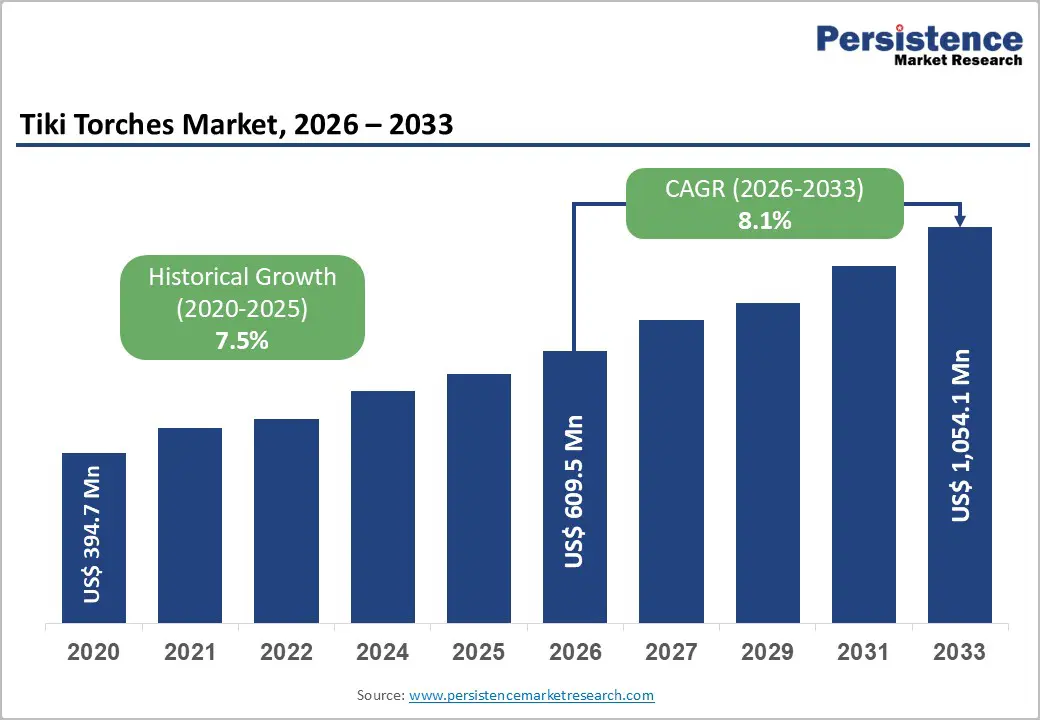
The global Tiki Torches Market size is anticipated to reach US$609.5 Million in 2026 and is projected to expand to US$1,054.1 Million by 2033, growing at a CAGR of 8.1% between 2026 and 2033. This sustained expansion reflects increasing consumer investment in outdoor living spaces, heightened demand for aesthetic ambiance products, and growing prevalence of residential entertaining activities.
The market trajectory shows consistent momentum as consumer preferences shift toward experiential outdoor environments. Rising disposable incomes across developed and emerging economies, coupled with urbanization trends, create substantial expansion opportunities within premium outdoor décor segments.
Key Highlights Summary
- Gas/Oil Tiki Torches command 62% market dominance while Solar-powered Torches demonstrate the fastest growth at 11.9% CAGR through 2033, reflecting strong renewable energy adoption trends.
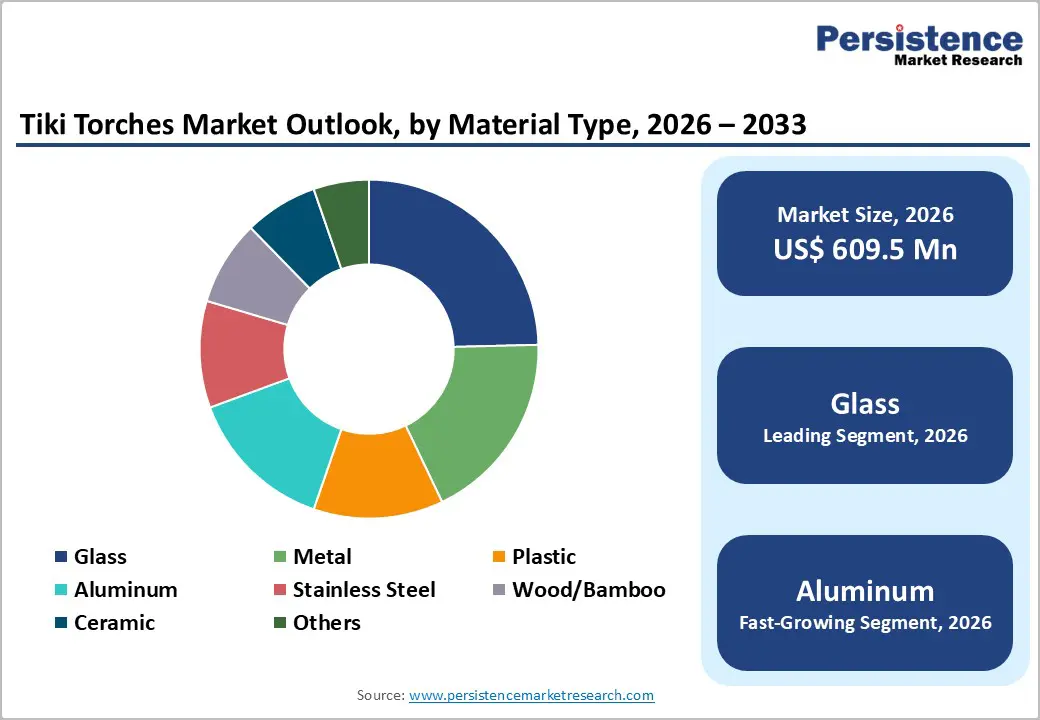
- Glass Material dominates at 25% market share while Aluminum demonstrates the fastest growth at 10.1% CAGR, reflecting consumer preference for durability and environmental sustainability.
- Standard-sized 31-50 inch torches lead with 37% market share, while 71-90 inch oversized category grows at 9.7% CAGR capturing premium market segments.
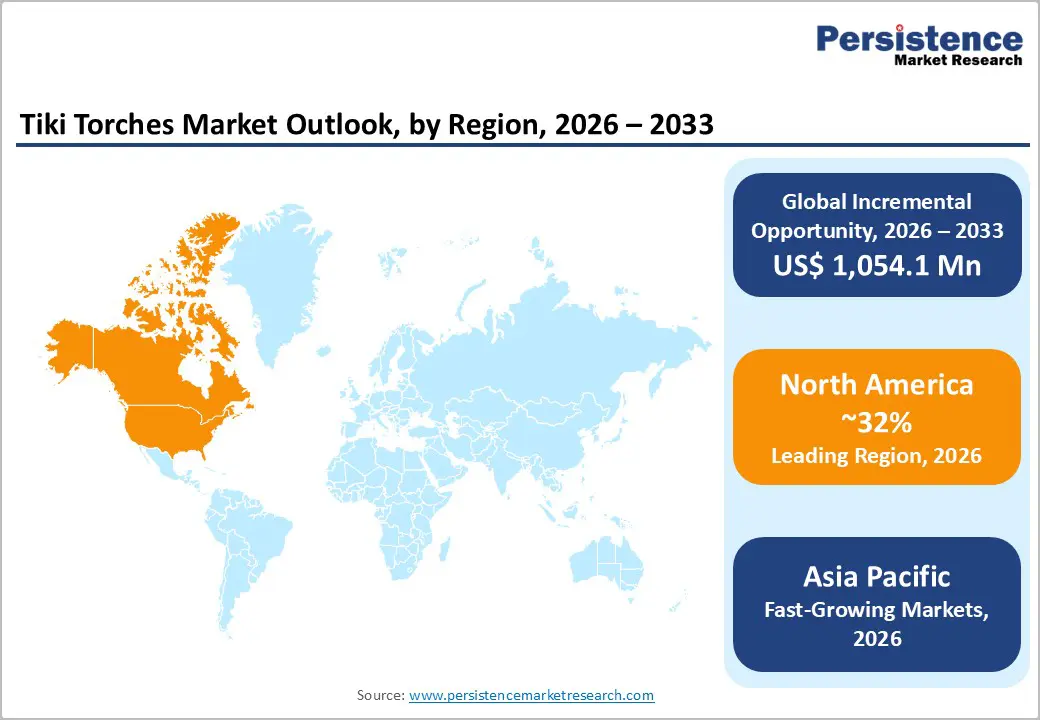
- North America holds a significant 32% market share, while Asia Pacific grows at 9.1% CAGR, and Europe maintains 7.2% CAGR, establishing a regional diversification opportunity.
- E-commerce channels expand at 11.9% CAGR, and specialty retail maintains 27% market share, demonstrating omnichannel retail transformation and direct-to-consumer distribution growth.
| Key Insights | Details |
|---|---|
| Tiki Torches Market Size (2026E) | US$ 609.5 million |
| Market Value Forecast (2033F) | US$ 1,054.1 million |
| Projected Growth CAGR (2026-2033) | 8.1% |
| Historical Market Growth (2020-2025) | 7.5% |
MARKET DYNAMICS ANALYSIS
Market Drivers
Accelerating Outdoor Living Space Investment and Consumer Entertainment Trends
Consumer investment in outdoor residential spaces shows strong growth, reflecting lifestyle shifts and evolving entertainment preferences. According to the National Association of Home Builders, nearly 76% of homeowners allocate meaningful budgets toward outdoor upgrades and enhancements. Outdoor entertaining has moved from occasional gatherings to routine lifestyle activity, especially among affluent demographics. Tiki torches play dual roles as ambiance enhancers and functional lighting within refined outdoor settings. Rising spending on patios, decks, and landscaping directly supports higher tiki torch adoption. The outdoor living market expanded at roughly 5.8% CAGR during 2020–2025, generating sustained demand for decorative lighting. Premium outdoor spaces increasingly feature tiki torches as signature design elements, enabling brand differentiation, value perception enhancement, and consistent adoption acceleration across residential segments.
Technological Advancement in Solar and Electric Tiki Torch Solutions
Innovation in renewable energy and electric lighting technologies is reshaping tiki torch offerings and market dynamics. Modern solar-powered torches integrate advanced photovoltaic cells, LED illumination, and sophisticated battery management, delivering extended operation and brighter performance. Electric tiki torches now feature flame-effect simulations, providing authentic ambiance without fuel reliance. Solar variants have reached cost parity with gas/oil models, eliminating recurring fuel and maintenance costs. Extended battery life enables 8–12 hours of continuous use per daily charge, enhancing utility and appeal. Rechargeable lithium-ion systems reduce operational expenses while supporting environmental sustainability. These advancements justify premium pricing, expand the addressable market toward eco-conscious and tech-savvy consumers, and smart home connectivity options offer differentiation in high-end segments.
Market Restraints
Raw Material Cost Volatility and Supply Chain Disruption Challenges
Tiki torch manufacturing depends heavily on multiple commodity materials including aluminum, stainless steel, glass, and specialty polymers subject to significant price fluctuations. Global aluminum prices experienced volatility ranging from $1,900-$3,200 per metric ton during the 2020-2025 period, directly impacting production economics and retail pricing. Supply chain disruptions including semiconductor shortages affecting electronic components and transportation logistics constraints periodically elevate manufacturing costs and extend production timelines. Raw material availability constraints particularly affecting specialty glass and premium metals create production bottlenecks. Manufacturers face declining profit margins when commodity cost increases exceed acceptable retail price adjustment thresholds, particularly within price-sensitive market segments.
Seasonal Demand Fluctuations and Inventory Management Complexity
Tiki torch demand exhibits pronounced seasonality patterns concentrated within warmer months and holiday entertainment periods, creating significant inventory management challenges. Approximately 65-70% of annual sales volume concentrates within March-October timeframe, leaving winter months characterized by substantially depressed demand. Retailers maintain significant inventory carrying costs during off-season periods while managing obsolescence risks for seasonal products. Demand forecasting challenges arising from weather pattern variability and consumer preference shifts create inventory optimization difficulties. Manufacturer production planning complexity increases due to seasonal demand volatility, potentially constraining capacity utilization and operational efficiency during peak seasons.
Market Opportunities
Product Innovation and Multi-Functional Design Integration Opportunities
Market expansion potential exists within multi-functional tiki torch designs incorporating additional capabilities including integrated insect repellent systems, heating elements, and Bluetooth speaker functionality. Consumer willingness to pay premium pricing for innovative multi-functional products creates substantial margin enhancement opportunities. Modular tiki torch designs enabling customization options including interchangeable fuel sources, adjustable height mechanisms, and personalized aesthetic elements address diverse consumer preferences. Advanced materials including weather-resistant composites and self-cleaning coatings create opportunities for premium product positioning and extended product lifespan. Market analysis indicates multi-functional product segment could command 15-25% price premiums while capturing growing segment share among affluent consumer demographics.
Direct-to-Consumer and Online Retail Channel Expansion
E-commerce distribution channels demonstrate exceptional growth momentum within outdoor décor categories, with online sales volumes increasing at 11.9% CAGR substantially exceeding traditional retail channels. Direct-to-consumer business models enable manufacturers to capture increased profit margins while building direct brand relationships with end consumers. Subscription-based seasonal rental models for premium tiki torch products create recurring revenue opportunities and enhanced customer lifetime value. Social media marketing effectiveness within outdoor entertaining and home improvement categories creates substantial digital marketing opportunities driving e-commerce traffic growth. Market analysis suggests e-commerce channel expansion could represent US$80-120 million incremental market opportunity by 2033, driving substantial channel mix transformation.
SEGMENTATION ANALYSIS
Torch Type Analysis
Gas and oil fueled tiki torches command a dominant market position, holding approximately 62% market share in 2026. These traditional products remain preferred for authentic ambiance, reliable flame illumination, and freedom from electronic or battery dependence. Strong consumer familiarity, operational simplicity, and proven durability reinforce leadership. Demand remains concentrated among traditional oriented households and hospitality venues including restaurants and resort properties. Established distribution networks, authentic flame aesthetics, fuel efficiency improvements, and enhanced burner designs strengthen appeal among cost conscious buyers.
Solar powered tiki torches represent the fastest growing segment, projected to expand at an 11.9% CAGR through 2033. Eliminating fuel costs, lowering maintenance requirements, and advancing photovoltaic efficiency and LED brightness, these solutions attract environmentally conscious consumers seeking sustainable, zero emission, energy independent outdoor lighting with long term cost advantages.
Material Type Analysis
Glass based tiki torch designs command approximately 25% market share, reflecting strong consumer preference for aesthetic appeal, light transmission performance, and perceived premium positioning. Glass construction enables sophisticated decorative designs, artistic customization, and transparent illumination effects that enhance outdoor ambiance. Demand is concentrated among affluent consumers and high end residential properties emphasizing visual sophistication. However, durability concerns including breakage risk and higher maintenance needs limit broader adoption. Glass torches sustain position through enduring aesthetic value and premium brand differentiation globally.
Aluminum tiki torch construction represents the fastest growing material category with projected 10.1% CAGR through 2033. Lightweight structure, corrosion resistance, recyclability, and cost effectiveness deliver clear advantages. Manufacturing flexibility enables diverse designs and customization. Durability advantages over wood, lower maintenance than stainless steel, and recyclable properties attract eco conscious
Size Analysis
Tiki torches in the 31–50 inch height range command approximately 37% market share, reflecting an optimal balance between visual prominence, portability, and spatial integration within residential environments. This size accommodates deck edges, garden perimeters, and patio layouts without excessive visual dominance. Consumers perceive 31–50 inch torches as aesthetically appropriate and functionally effective for homes, driving sustained leadership. Standard sized torches retain dominance through proven acceptance, versatile placement flexibility, and ongoing decorative design innovation across diverse residential landscaping contexts globally markets.
Tiki torches in the 71–90 inch range represent the fastest growing size segment, projected at 9.7% CAGR through 2033. Oversized designs command premium pricing from higher material usage and dramatic visual impact. Demand rises from hospitality venues, resorts, and consumers investing in statement driven outdoor entertainment spaces worldwide today increasingly.
Sales Channel Analysis
Specialty outdoor retailers and garden centers command approximately 27% market share within tiki torch distribution channels, reflecting consumer preference for expert guidance and curated selection. These retailers provide detailed product information, installation recommendations, and complementary outdoor décor solutions, creating superior customer experiences. Established relationships with affluent demographics and strong brand positioning in outdoor living categories support leadership. Specialty channels sustain dominance through personalized service, curated assortments, design consultation integration, and landscape professional referral networks reinforcing premium positioning globally across markets.
E-commerce distribution channels represent the fastest-growing sales segment with projected 11.9% CAGR through 2033. Growth reflects shifting purchasing behavior, convenient home delivery, and wider assortments. Digital marketing, reviews, and price transparency drive traffic. The channel is projected to expand rapidly, creating a significant global incremental opportunity.
REGIONAL MARKET INSIGHTS
North America Market Analysis
North America commands approximately 32% of global market share with established consumer demand for outdoor entertaining products and strong residential real estate activity. United States market leadership reflects substantial disposable income levels, high homeownership rates, and strong preference for outdoor entertainment and leisure activities. Canadian market demonstrates comparable demand patterns driven by shorter seasonal outdoor entertaining windows creating concentrated purchasing activity. Regulatory environment emphasizes product safety standards and emissions limitations for fuel-based products, particularly within California and other environmentally-regulated jurisdictions. Major innovation ecosystems including California and Florida drive product development focused on sustainable alternatives and premium design offerings. Investment trends indicate sustained venture capital and private equity interest in outdoor décor innovation and direct-to-consumer distribution channels. North American market exhibits strong growth trajectory with established consumer segments demonstrating sustained purchasing power and investment capacity. Premium product positioning and direct-to-consumer channel emphasis drive margin enhancement and brand differentiation strategies.
Europe Market Analysis
Europe demonstrates considerable market significance with steady CAGR of 7.2% through 2033, reflecting mature market conditions and established consumer preferences. Germany, United Kingdom, France, and Spain represent primary regional growth centers with distinct regulatory and consumer preference patterns. European Union sustainability directives including Ecodesign Directive and Extended Producer Responsibility regulations substantially influence product development strategies and competitive positioning. Premium market positioning emphasizing design sophistication, environmental sustainability, and quality construction characterizes European consumer preferences. Regulatory harmonization across EU markets creates standardized compliance pathways facilitating multinational distribution strategies. Major manufacturers including Italian and Scandinavian brands maintain significant market presence supported by strong design heritage and sustainability credentials. European consumer preferences emphasize product longevity, aesthetic sophistication, and environmental credentials supporting premium positioning strategies. Market maturity characteristics limit growth velocity while establishing opportunities for value-added product differentiation and premium market segment expansion.
Asia Pacific Regional Analysis
Asia Pacific region demonstrates accelerated growth dynamics with CAGR of 9.1% through 2033, outpacing mature market growth rates and establishing as emerging high-potential region. China, Japan, and India drive substantial market expansion reflecting rapid urbanization, rising disposable incomes, and increasing consumer investment in residential outdoor spaces. Regional manufacturing ecosystem advantages including low production costs and established supply chains create competitive pricing opportunities. Increasing prevalence of residential outdoor entertaining among affluent Asian demographics drives demand for premium tiki torch products. India's expanding middle-class population and rising real estate development activity create substantial long-term market opportunities. Asia Pacific market demonstrates exceptional growth momentum driven by rising urbanization, expanding middle-class demographics, and increasing consumer investment in outdoor residential amenities. Manufacturing ecosystem advantages enable competitive pricing supporting rapid market penetration and volume expansion.
COMPETITIVE LANDSCAPE
Strategic Developments
- In March 2024, Tiki Brand introduced comprehensive solar-powered torch collection featuring advanced LED flame simulation technology and extended battery operational capabilities. Strategic significance reflects competitive commitment to sustainable product development and premium market segment capture emphasizing renewable energy alternatives.
- In January 2025, Solo Stove introduced revolutionary smokeless tiki torch technology incorporating advanced combustion efficiency and smoke reduction capabilities. Product innovation significance establishes new product performance category and competitive differentiation mechanisms enhancing consumer appeal among performance-focused demographics.
Business Strategies
Market leaders adopt differentiated strategies aligned with positioning and target segments. Tiki Brand focuses on heritage, innovation, and premium integration. Asian manufacturers leverage cost leadership for emerging markets. Direct-to-consumer brands prioritize vertical integration and digital marketing, while home improvement retailers emphasize private labels. Themes highlight sustainability, design innovation, and consumer engagement.
Companies Covered in Tiki Torches Market
- Tiki Brand
- Solo Stove
- Wayfair
- Home Depot
- Lowe’s Companies
- Plow & Hearth
- Ace Hardware
- Tropicana Trading
- Real Living Outdoor
- Sunnydaze Décor
- Cast Innovations
- Outdoor Décor International
- Seasonal Décor Manufacturing
- Global Imports Trading
- Premium Outdoor Living
Frequently Asked Questions
The global market reached US$609.5 million in 2026 and is projected to expand to US$1,054.1 million by 2033, representing steady growth potential across residential outdoor entertainment segments.
Key growth drivers include rising homeowner investment in outdoor spaces (76% budget allocation), technological advances in solar/electric tiki torches achieving cost parity, and growing environmental awareness boosting adoption of sustainable alternatives.
The market projects 8.1% CAGR between 2026-2033, demonstrating consistent expansion momentum globally.
Primary opportunities include emerging market expansion in Asia Pacific, multi-functional product innovation commanding premium pricing, and e-commerce channel growth driving incremental opportunities through direct-to-consumer distribution.
Market leaders include Tiki Brand, Solo Stove, Wayfair, Home Depot, and Lowe's Companies alongside specialized manufacturers including Plow & Hearth, Sunnydaze Décor, and emerging e-commerce brands capturing diverse market segments through differentiated product positioning and distribution strategies.


