




- Nutraceuticals & Functional Foods
- Tamarind Extract Market
Tamarind Extract Market Size, Share, and Growth Forecast, 2026 - 2033
Tamarind Extract Market by Source Type (Organic Tamarind Extract, Conventional Tamarind Extract), Application (Food & Beverages, Cosmetics & Personal Care, Pharmaceuticals, Animal Feed), End-User (Food Manufacturers, Cosmetic Manufacturers, Pharmaceutical Companies, Healthcare Sector, Research Institutions), and Regional Analysis for 2026 - 2033

Tamarind Extract Market Share and Trends Analysis
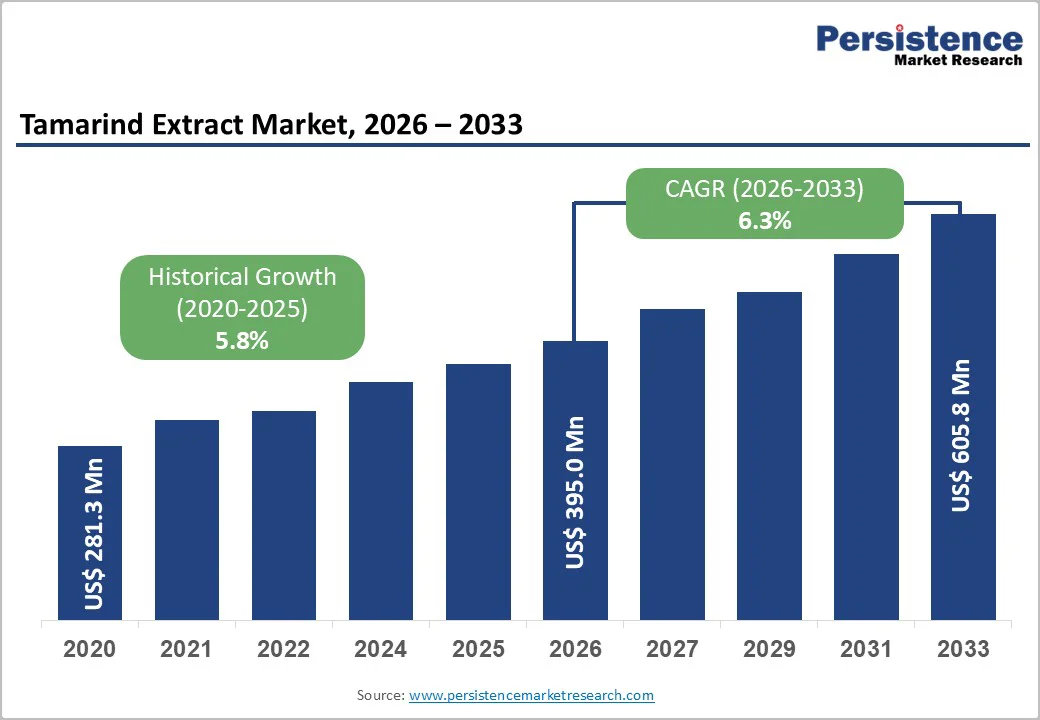
The global tamarind extract market size is likely to be valued at US$ 395.0 million in 2026, and is projected to reach US$ 605.8 million by 2033, growing at a CAGR of 6.3% during the forecast period 2026−2033.
Market expansion reflects rising demand for plant-based functional ingredients, increased utilization in processed food formulations, and growing adoption across pharmaceutical and personal care applications. Structural shifts toward natural acidulants and botanical actives strengthen long-term demand visibility. Emerging economies contribute incremental volume growth, while regulatory support for clean-label ingredients enhances penetration across regulated end-use sectors.
Key Industry Highlights
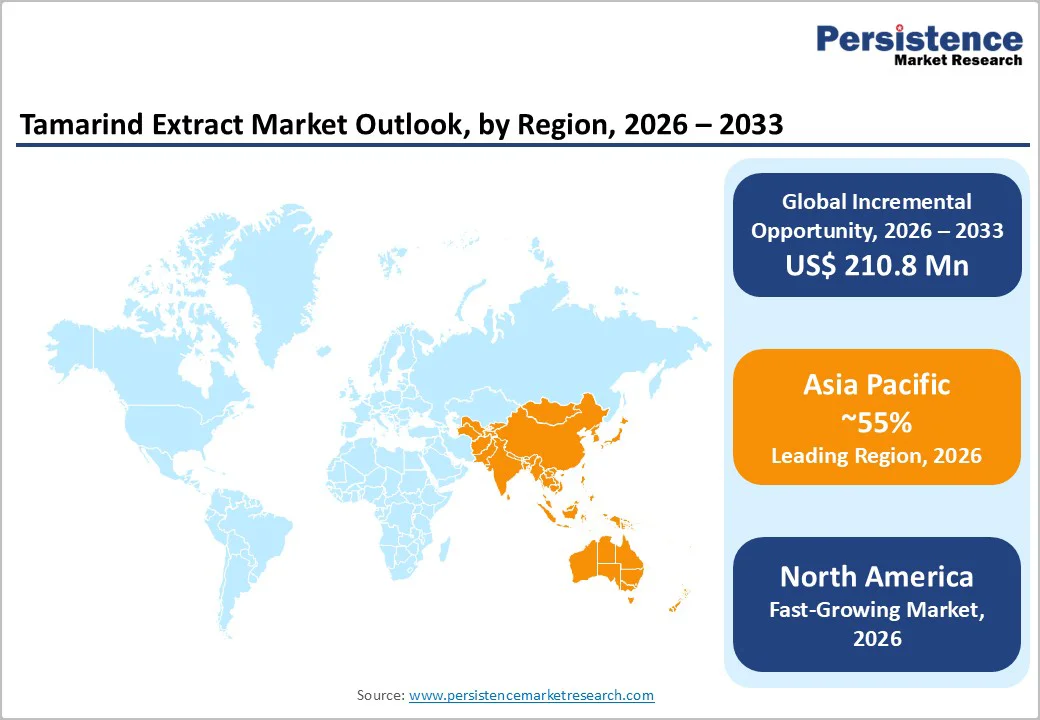
- Dominant Region: Asia Pacific is expected to lead in 2026 with about 55% share, driven by large-scale cultivation and cost-efficient production.
- Fastest-growing Regional Market: North America is projected to emerge as the fastest-growing market between 2026 and 2033, propelled by rising adoption of plant-based, clean-label, and functional ingredients.
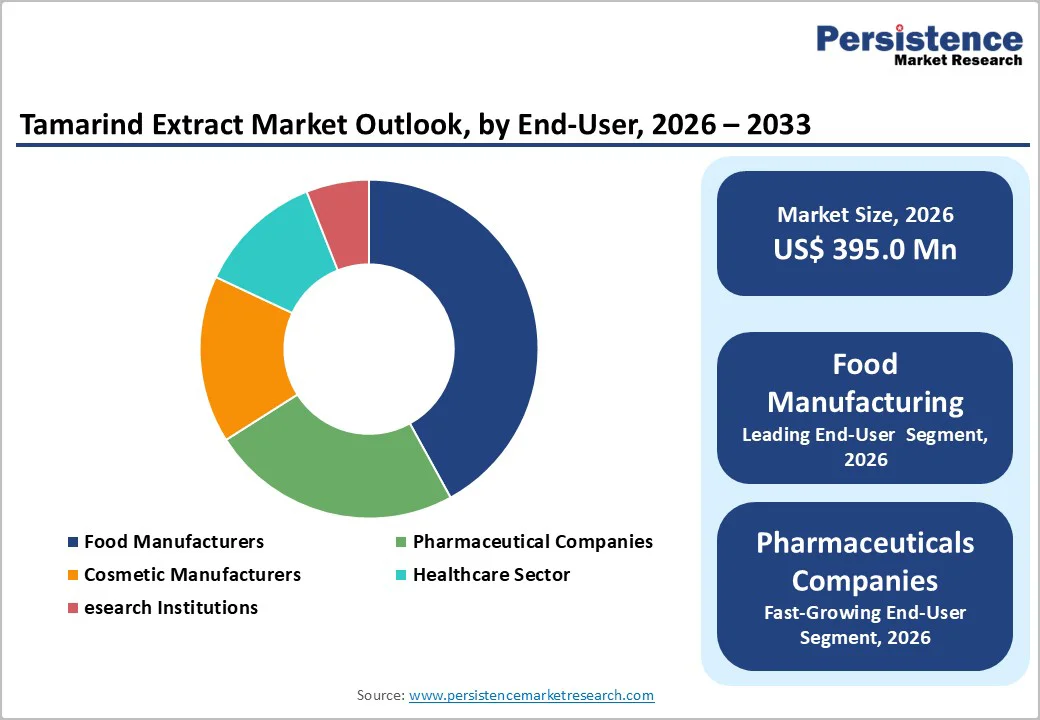
- Leading End-User: Food manufacturing is set to command about 42% revenue share in 2026, owing to its heavy reliance on high-volume processing and the consistent use of natural extracts for flavor enhancement.
- Fastest-growing End-User: Pharmaceutical companies are expected to record the fastest growth between 2026 and 2033, supported by the rising integration of botanical extracts into dietary supplements and preventive healthcare formulations.
| Key Insights | Details |
|---|---|
|
Tamarind Extract Market Size (2026E) |
US$ 395.0 Mn |
|
Market Value Forecast (2033F) |
US$ 605.8 Mn |
|
Projected Growth (CAGR 2026 to 2033) |
6.3% |
|
Historical Market Growth (CAGR 2020 to 2025) |
5.8% |
Market Factors - Growth, Barriers, and Opportunity Analysis
Rising Demand for Natural and Clean-Label Ingredients
The discernible shift toward natural and clean-label ingredients reflects a concerted evolution in formulation priorities and consumer evaluation standards. Shoppers increasingly associate plant-based extracts with transparency, safety, and functional credibility, driving manufacturers to move away from synthetic additives toward recognizable botanical inputs. Tamarind extract aligns with this direction through its natural acidity, flavor-enhancing capability, and functional versatility across food, beverage, and wellness formulations. Its origin from a familiar fruit supports label simplicity, ingredient traceability, and authentic brand narratives, strengthening acceptance across premium and mass-market products.
Clean-label strategies also shape procurement and sourcing decisions across global value chains. Manufacturers prioritize ingredients that align with regulatory expectations and rising scrutiny around artificial preservatives and chemical additives. Tamarind extract supports these objectives while enabling product differentiation in sauces, beverages, confectionery, and nutraceutical formulations. This demand environment encourages long-term supplier relationships, investment in consistent extraction quality, and expanded application development.
Stringent Regulatory Hurdles for Health Claims
Stringent regulatory hurdles for health claims act as a major restraint due to the strict validation standards applied by food and health authorities worldwide. Regulators demand clear, reproducible scientific substantiation linking bioactive compounds to specific physiological benefits. Botanical extracts often show variability in composition arising from differences in sourcing, cultivation conditions, and extraction processes, which complicates the creation of consistent clinical evidence. This inconsistency limits the ability of manufacturers to make precise structure–function or disease-risk reduction claims, reducing product differentiation in regulated channels such as functional foods, nutraceuticals, and therapeutic formulations.
Regulatory evidence highlights the challenge. For example, the European Food Safety Authority (EFSA) has approved fewer than 20% of submitted botanical health claims since the introduction of its health claims framework, underscoring the high rejection rate for plant-based ingredients. This environment increases compliance costs, extends approval timelines, and elevates legal risk for companies seeking to position products on health benefits. Business decisions shift toward markets with flexible claim structures or non-health positioning, which limits innovation pipelines and reduces incentives for large-scale investment in advanced clinical validation.
Emerging Demand in Organic Variants
Rising preference for clean-label and transparently sourced ingredients positions organic variants as a strong growth lever within this sector. Buyers across food, nutraceutical, and personal care segments prioritize ingredient integrity, traceability, and compliance with organic standards to align with evolving consumer values. Organic extracts support premium positioning, justify higher price points, and strengthen brand credibility. Regulatory encouragement for natural inputs and reduced chemical residues further elevates procurement interest. Procurement teams increasingly evaluate sustainability credentials alongside functional performance, creating favorable conditions for suppliers with certified organic portfolios and stable sourcing networks.
Shifts in downstream product formulation strategies reinforce this opportunity. Product developers focus on simplified ingredient lists, plant-based formulations, and wellness-oriented claims that resonate with health-conscious consumers. Organic inputs enable differentiation in competitive categories such as functional beverages, dietary supplements, and herbal remedies. Retailers and private-label brands actively expand organic offerings to capture margin growth and consumer loyalty. Supply chain investments in organic cultivation, certification, and processing infrastructure strengthen long-term availability and quality consistency.
Category-wise Analysis
Source Type Insights
Conventional extract is likely to be the leading segment with a projected 68% of revenue share in 2026, due to its cost efficiency, large-scale availability, and established supply chains that support consistent sourcing and processing. Food and beverage manufacturers favor this variant for high-volume formulations where pricing stability and operational scalability remain priorities. Broad regulatory acceptance and widespread adoption across sauces, beverages, and processed foods reinforce volume leadership. Strong integration with existing procurement frameworks further strengthens its dominance and sustained demand outlook.
Organic tamarind extract is expected to witness the fastest growth between 2026 and 2033, as premiumization strategies, clean-label positioning, and rising preference for certified organic inputs influence purchasing decisions. Expanding use in nutraceuticals and personal care products supports higher value realization. Investment in traceable sourcing, certification compliance, and sustainable farming practices enhances supplier credibility. Retail expansion of organic product lines and brand differentiation strategies continue to accelerate adoption and revenue growth potential.
Application Insights
The food & beverages is poised to lead with a forecasted nearly 45% of the tamarind extract market revenue share in 2026, owing to its extensive use across sauces, beverages, confectionery, and ready-to-eat meals. Tamarind extract functions as a natural flavor enhancer and acidity regulator, providing formulation flexibility and sensory consistency across cuisines. High-volume production, widespread culinary adoption, and alignment with clean-label preferences reinforce demand. Strong penetration in processed and packaged foods sustains its revenue leadership, making this application segment the primary contributor to market consumption and value in 2026.
Pharmaceuticals is anticipated to be the fastest-growing segment between 2026 and 2033, fueled by a growing focus on plant-based therapeutics, clinical validation of functional benefits, and rising adoption of herbal medicines. Expansion in preventive healthcare and metabolic support applications supports wider utilization. Investments in research, formulation innovation, and dosage standardization strengthen product reliability and efficacy. Increasing integration into nutraceuticals, digestive health solutions, and adjunct therapies positions this segment as a high-growth driver within the broader market.
End-User Insights
The food manufacturing sector is slated to hold a dominant position, with an anticipated 42% of total end-user consumption in 2026, driven by high-volume food processing, export-oriented production, and the widespread use of tamarind extract as a natural flavor enhancer and acidity regulator. Industrial-scale operations benefit from consistent supply, operational efficiency, and formulation versatility, reinforcing the segment’s leadership. Strong adoption across sauces, beverages, confectionery, and ready-to-eat meals ensures steady demand and positions food manufacturers as the primary revenue contributor within the end-user landscape.
The pharmaceutical companies segment is forecasted to be the fastest-growing between 2026 and 2033, boosted by increasing integration of botanical extracts into regulated therapeutics, dietary supplements, and preventive healthcare products. Clinical validation of functional benefits enhances adoption among formulators and healthcare providers. Expansion of herbal medicine portfolios, growing consumer preference for plant-based therapies, and investments in extraction standardization and dosage reliability support accelerated growth.
Regional Insights
North America Tamarind Extract Market Trends
North America is forecasted to be the fastest-growing regional market for tamarind extract between 2026 and 2033, stimulated by increasing consumer demand for plant-based ingredients, natural flavors, and clean-label products across food, beverage, and nutraceutical sectors. Improving health consciousness and a focus on functional and preventive nutrition have driven the adoption of botanical extracts in dietary supplements and fortified foods. Advanced processing technologies, well-regulated quality standards, and strong research and development capabilities enable high-purity and standardized tamarind extracts for specialized applications.
Premiumization trends drive demand for high-quality, standardized extracts, while manufacturers leverage traceable supply chains and certified sourcing to ensure authenticity and safety. Expanding applications in digestive health, weight management, and metabolic support enhance product value and adoption. Collaborations between ingredient suppliers and food, beverage, and pharmaceutical companies accelerate product development and responsiveness.
Europe Tamarind Extract Market Trends
Europe is poised to emerge as a high-value market for tamarind extract through 2033, driven by the increasing demand for natural, plant-based ingredients across food, beverage, nutraceutical, and personal care sectors across the region. Rising consumer focus on health, wellness, and clean-label products is pushing manufacturers to adopt high-purity, standardized extracts that deliver consistent flavor, acidity control, and functional benefits. Key applications such as functional beverages, dietary supplements, sauces, and ready-to-eat foods require reliable quality, traceability, and safety compliance.
Government initiatives and regulatory frameworks continue to reinforce market growth by promoting safe, transparent, and sustainable ingredient sourcing. Manufacturers respond to evolving consumer preferences by integrating organic and traceable tamarind extracts into premium product lines. Rising interest in digestive health, antioxidant-rich formulations, and metabolic support products increases adoption across multiple end-use segments. Companies focusing on sustainable cultivation practices, certification compliance, and supply chain transparency gain competitive advantage.
Asia Pacific Tamarind Extract Market Trends
Asia Pacific is expected to dominate with an estimated 55% of the tamarind extract market share in 2026, reflecting a strategic position as both a leading producer and consumer of tamarind-based products. The region’s dominance arises from the highly efficient cultivation zones in India, Thailand, and Indonesia, which offer favorable climatic conditions, fertile soils, and low labor costs, enabling large-scale, cost-competitive production. Established processing infrastructure, including extraction facilities and cold chain logistics, ensures consistent quality and supply for domestic and international markets. Integration of tamarind extract in culinary traditions, ready-to-eat foods, and local beverage formulations reinforces stable demand.
Key drivers of sustained dominance include the balance between scale, product versatility, and premiumization trends. Manufacturers leverage proximity to raw material sources to reduce lead times and costs while serving both conventional and organic extract segments. Rising demand from food processing clusters, traditional medicine applications, and export-oriented nutraceutical industries enhances value capture. Focus on traceability, quality certifications, and sustainable cultivation practices ensures compliance with international standards and strengthens competitiveness in high-value markets.
Competitive Landscape
The global tamarind extract market structure exhibits moderate fragmentation, where the top five participants collectively control an estimated 40% of the total revenue. Leading multinational processors such as Synthite Industries, Kancor Ingredients, Mane Group, Dohler Group, and Naturex operate alongside numerous regional suppliers, creating a balanced ecosystem that merges global reach with local expertise. Market dynamics reward suppliers who deliver consistent product quality, maintain comprehensive certification portfolios, and ensure reliable supply chains to serve diverse end-use segments such as food, beverage, nutraceutical, and personal care applications. Buyers should evaluate partners based on their ability to provide batch-to-batch uniformity, third-party audit documentation, and flexible logistics that align with production schedules while adhering to Good Manufacturing Practices (GMP).
Competitive positioning in this market hinges on differentiation through operational excellence and value-added services. Companies prioritize traceable sourcing, standardized extraction protocols, and sustainable cultivation practices to build trust with manufacturers and end consumers. Innovation in application-specific formulations and responsiveness to evolving regulatory standards enhances supplier credibility and creates switching costs for customers. Procurement teams gain advantage by selecting vendors who invest in farmer training programs, maintain in-house laboratories for quality verification, and offer technical support for formulation optimization, thereby reducing development cycles and ensuring compliance across multiple jurisdictions.
Key Industry Developments
- In July 2025, Wixon unveiled new guava and tamarind flavor systems at the IFT FIRST expo in Chicago, offering bold, exotic sweet-and-tart profiles for use in both sweet and savory food and beverage applications.
- In June 2025, Tylenol expanded into the wellness segment by launching a turmeric- and tamarind-based supplement line aimed at supporting joint health and mobility.
- In March 2025, IIT Guwahati researchers identified Bacillus subtilis SMP-2 in Assamese Panitenga, a traditional food made by fermenting mustard seeds with mangosteen, tamarind, or lime juice extracts. The bacterial strain can be used in producing eco-friendly biosurfactants for oil recovery, bioremediation, and cosmetics.
Companies Covered in Tamarind Extract Market
- Synthite Group
- MartinBauer
- Indena S.p.A.
- Nexira
- Arjuna Natural
- Kalsec Inc.
- Botanic Healthcare.
- Sabinsa Corporation
- Sophix Natural
Frequently Asked Questions
The global tamarind extract market is projected to reach US$ 395.0 million in 2026.
Rising demand for natural flavoring agents, clean-label ingredients, and plant-based functional extracts across food, beverage, nutraceutical, and pharmaceutical applications drives the tamarind extract market.
The market is poised to witness a CAGR of 6.3% from 2026 to 2033.
Key market opportunities include expanding use of tamarind extract in functional foods, nutraceuticals, and clean-label formulations, along with growing demand for organic, traceable, and value-added botanical ingredients.
Some of the key market players include Synthite Group, MartinBauer, Indena S.p.A., Nexira, and Arjuna Natural.


