




- Food Ingredients & Additives
- Sunflower Seeds Market
Sunflower Seeds Market Size, Share, Growth, and Regional Forecast, 2026 to 2033
Sunflower Seeds Market by Product Type (Oilseed, Confectionery / Non-Oilseed), Nature (Organic, Conventional), End-user (Edible Oil Production, Snack Foods, Bakery & Confectionery, Animal Feed, Cosmetics & Personal Care, Others), and Regional Analysis, 2026 - 2033

Sunflower Seeds Market Share and Trends Analysis
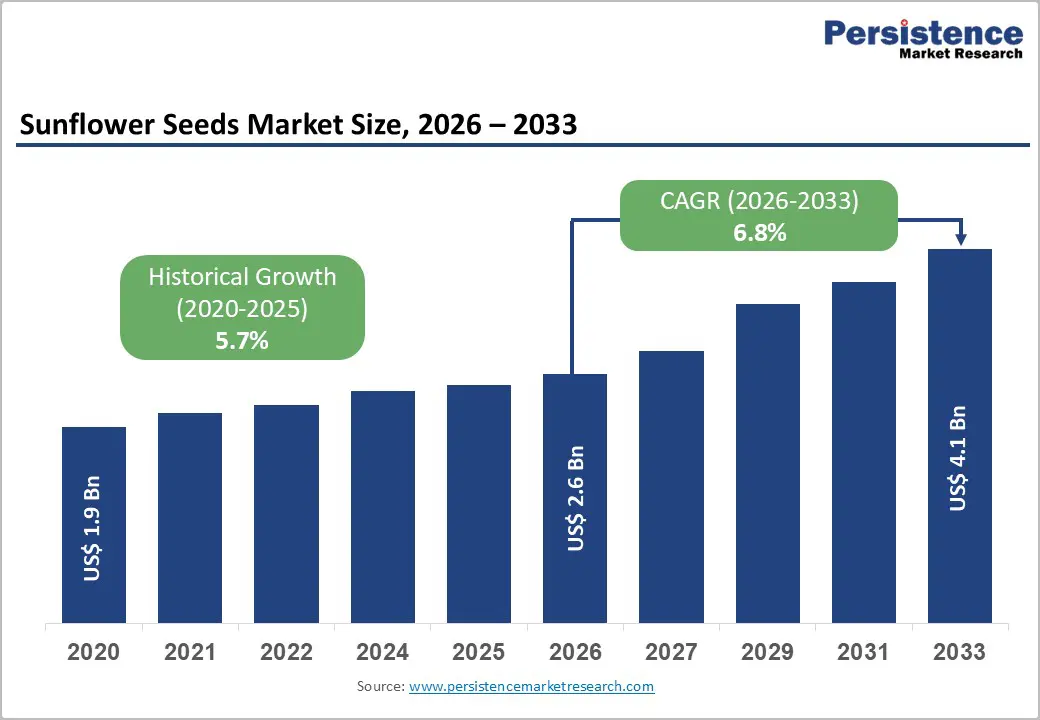
The global sunflower seeds market size is expected to be valued at US$ 2.6 billion in 2026 and projected to reach US$ 4.1 billion by 2033, growing at a CAGR of 6.8% between 2026 and 2033.
The market expansion is primarily driven by the surging global demand for healthy, plant-based protein sources and the widespread transition toward heart-healthy cooking oils. As consumers become more proactive about managing cardiovascular health, the preference for sunflower oil high in unsaturated fats and Vitamin E has intensified. Furthermore, the snack industry is witnessing a revolutionary shift where nutrient-dense seeds are replacing traditional calorie-heavy snacks, creating a sustainable growth trajectory for both oilseed and confectionery varieties globally.
Key Industry Highlights
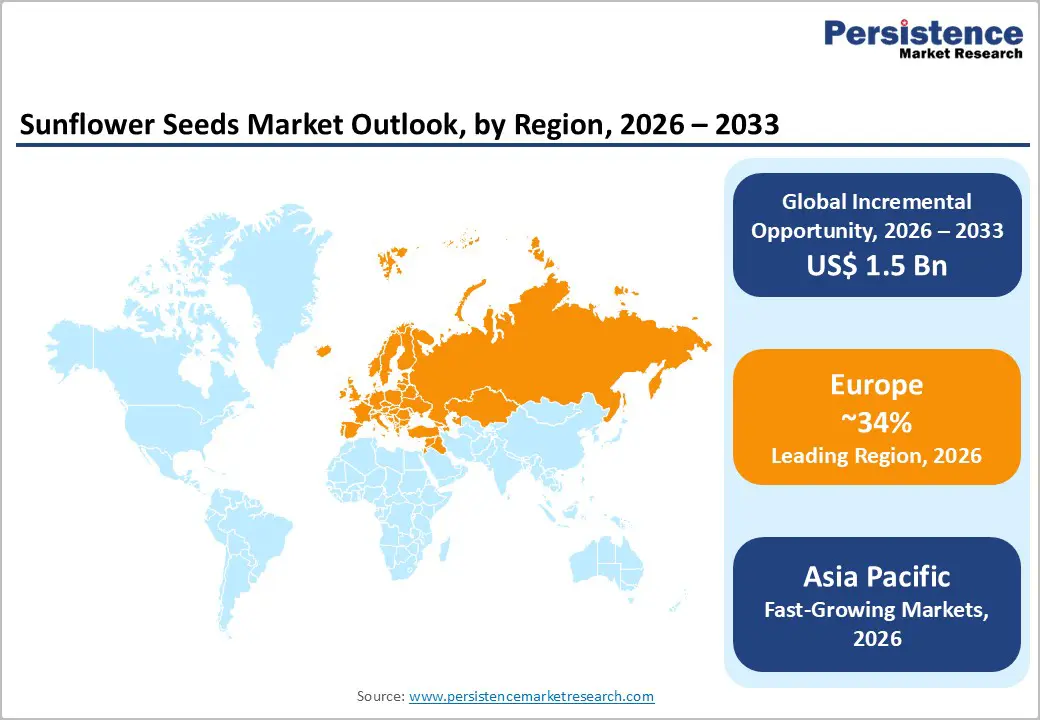
- Leading Region: Europe, holding 34% market share, supported by strong production capacity in Eastern Europe, high sunflower oil consumption in Western Europe, and regulatory alignment across the European Union, ensuring quality and trade stability.
- Fastest-Growing Region: Asia Pacific, driven by rapid urbanization, expanding middle-class populations in China and India, rising edible oil imports, and modernization of retail and packaged snack distribution networks.
- Fastest-Growing Product Type Segment: Confectionery / Non-Oilseed segment, fueled by increasing demand for roasted, flavored, and ready-to-eat sunflower kernels aligned with healthy snacking and on-the-go nutrition trends.
- Growth Indicators: Growing consumer inclination toward plant-based nutrition and healthy snacking, strengthening demand for nutrient-dense, protein-rich, and minimally processed seed-based food products across retail shelves globally.
- Opportunity: Flavor and format innovation in the consumer snack segment, with premium packaging, bold seasoning profiles, portion-controlled formats, and direct-to-consumer strategies enhancing brand differentiation.
- Key Developments: In October 2025, the Russian government extended export duties on sunflower seeds and derived products to protect domestic processors. In June 2025, Türkiye announced a reduced-duty import quota for 1.0 million metric tons of sunflower seed and/or 400,000 metric tons of crude sunflower oil for January-May 2026.
| Key Insights | Details |
|---|---|
| Global Sunflower Seeds Market Size (2026E) | US$ 2.6 Bn |
| Market Value Forecast (2033F) | US$ 4.1 Bn |
| Projected Growth (CAGR 2026 to 2033) | 6.8% |
| Historical Market Growth (CAGR 2020 to 2025) | 5.7% |
Market Dynamics
Driver - Growing Consumer Inclination Toward Plant-Based Nutrition and Healthy Snacking
Dietary preferences are undergoing a structural shift as consumers actively integrate plant-based proteins and nutrient-dense snacks into daily routines. Sunflower seeds are gaining prominence due to their rich content of healthy fats, plant protein, fiber, vitamin E, and essential minerals. As awareness around heart health and clean eating intensifies, these seeds are increasingly perceived as a natural alternative to highly processed snack options. Their versatility across roasted, flavored, and ready-to-eat formats further strengthens mainstream adoption.
Beyond direct snacking, sunflower seeds are widely incorporated into bakery items, breakfast cereals, and nutrition bars, aligning with the broader functional food movement. Rising vegan and flexitarian lifestyles are amplifying demand for plant-derived ingredients that offer both nutritional value and convenience. This evolving consumption pattern is reinforcing sustained growth momentum within the global sunflower seeds market, particularly in value-added and packaged snack segments.
Restraints - Volatility in Global Supply Chains and Geopolitical Disruptions
Heavy reliance on a concentrated group of producing nations exposes the global sunflower seeds market to recurring supply instability. Weather fluctuations, export restrictions, trade sanctions, and regional conflicts can significantly disrupt planting cycles, harvesting volumes, and international shipment flows. Since several key exporters account for a substantial share of global sunflower seed and oil trade, any geopolitical tension directly impacts price volatility and procurement strategies for processors worldwide. Freight rate fluctuations and port congestion further intensify cost pressures across the value chain. For edible oil refiners and snack manufacturers operating on tight margins, unpredictable raw material availability complicates long-term contracting and inventory planning. These structural vulnerabilities continue to restrain consistent market expansion despite steady underlying demand.
Opportunity - Flavor and format innovation in the consumer snack segment
Intensifying innovation across the broader snack industry is creating competitive pressure for traditional sunflower seed offerings. Consumers are increasingly drawn to novel textures, bold global flavors, and convenient on-the-go packaging formats introduced by emerging protein snacks, seed blends, and functional bars. Compared to highly diversified snack portfolios, plain or lightly seasoned sunflower seeds can appear limited in variety, potentially constraining repeat purchases among younger demographics seeking constant novelty.
Packaging evolution also raises expectations for resealable pouches, portion-control packs, and premium branding. Producers that fail to invest in differentiated flavor profiles or value-added formats may struggle to maintain shelf visibility. As snack aisles become more crowded with plant-based alternatives, sunflower seed manufacturers must continually enhance taste experiences and packaging to prevent substitution for more aggressively marketed snack options.
Category-wise Analysis
Product Type Insights
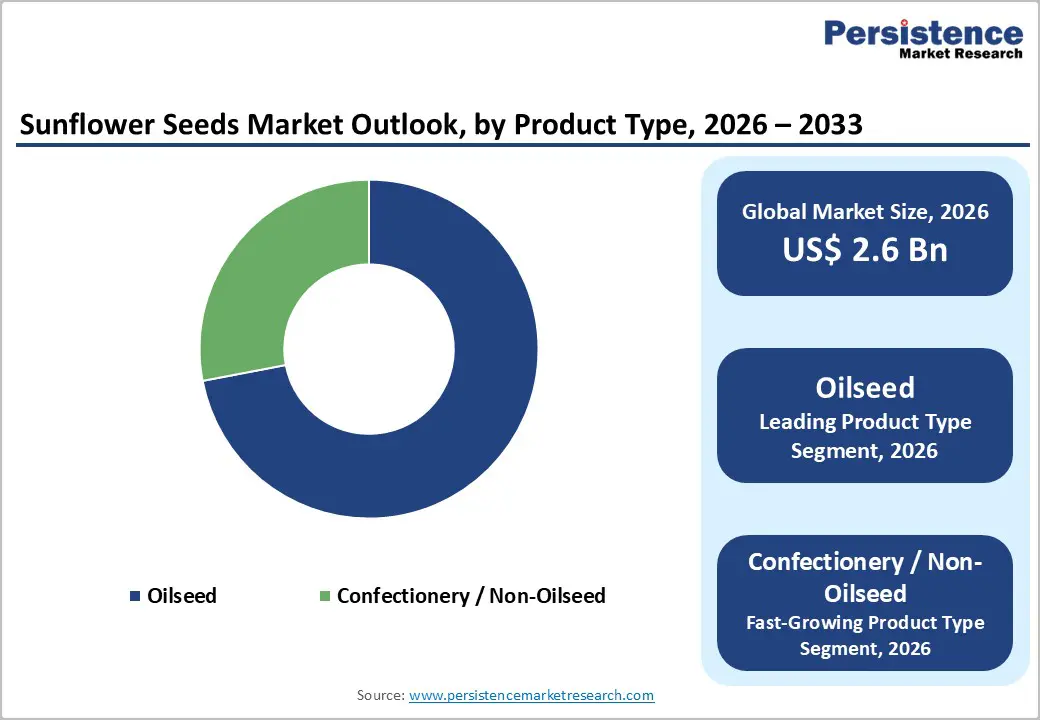
The Oilseed segment is the dominant force in the market, capturing a significant 72% market share in 2025. This dominance is attributed to the massive scale of the global edible oil industry, in which sunflower oil ranks as the fourth most-consumed vegetable oil. The efficiency of oilseed varieties in producing high-quality fats for industrial cooking and food manufacturing makes them indispensable. Furthermore, the Confectionery / Non-Oilseed segment is the fastest-growing segment through 2033. This is fueled by the rising popularity of on-the-go nutrition. As more consumers adopt seeds as a protein-rich snack, the demand for de-hulled, roasted, and flavored kernels is surging, particularly in developed markets where healthy snacking is a well-established lifestyle choice.
Nature Insights
The conventional segment currently holds the leading market share due to its established supply chain and cost-effectiveness for mass-market oil production. However, the Organic segment is experiencing the fastest growth as consumer awareness regarding chemical residues increases. Authentic data from the Research Institute of Organic Agriculture (FiBL) suggests that the land dedicated to organic oilseed farming is expanding to meet this demand. The Organic segment's growth is particularly visible in the Snack Foods and Bakery & Confectionery sectors, where premium positioning is a key strategy for brands. As more retailers like Whole Foods Market expand their plant-based aisles, organic sunflower seeds are transitioning from niche products to mainstream essentials.
Regional Insights
Europe Sunflower Seeds Market Trends and Insights
Europe emerges as the leading region in the global market, accounting for a 34% share in 2025. The region’s dominance is anchored by the massive production capacities of Eastern European nations and the high consumption rates of sunflower oil in Western Europe. Countries like Germany, France, and Spain have a deeply ingrained culture of using sunflower-derived products in both culinary and industrial applications. The European Commission supports the sector through various agricultural subsidies and strict quality standards, ensuring that European sunflower seeds remain competitive on a global scale.
Furthermore, the region is a hub for innovation in the Bakery & Confectionery sector. European consumers are increasingly seeking artisanal breads and snacks that incorporate seeds for added texture and nutrition. Regulatory harmonization across the European Union has also facilitated easy cross-border trade, stabilizing the supply for major manufacturers. The presence of key industry associations such as FEDIOL ensures that regional market dynamics are well-regulated and focused on sustainable growth and food safety.
Asia Pacific Sunflower Seeds Market Trends and Insights
Asia Pacific is the fastest-growing segment for sunflower seeds, with the highest projected CAGR from 2026 to 2033. This growth is primarily fueled by the rapid urbanization and changing dietary habits in China, India, and ASEAN countries. As the middle class grows, there is a marked shift from traditional oils to healthier alternatives, such as sunflower oil. The Ministry of Agriculture in China and the Solvent Extractors' Association of India have noted an uptick in sunflower oil imports to meet domestic demand, which currently exceeds local production.
In addition to oil, the snack market in the Asia Pacific is undergoing a transformation. In China, sunflower seeds are a traditional social snack, and modern packaging and branding are revitalizing this segment for younger generations. In India, the entry of international brands and the growth of local players like Safal Seeds & Biotech Ltd. are making processed seeds more accessible. The region's manufacturing advantages and the expansion of modern retail chains are making it a critical growth engine for the global sunflower seed industry.
Competitive Landscape
The global sunflower seeds market features a blend of consolidated and fragmented structures. The Oilseed processing and seed technology segments are highly consolidated, dominated by global giants such as Corteva, ADM, and CHS Inc. These companies utilize their extensive R&D capabilities to develop high-oleic and climate-resilient seed varieties, maintaining a strong competitive edge. On the other hand, the Confectionery and Snack Foods segment is more fragmented, with numerous regional players and niche brands like Chinook Seedery and GIANT Snacks Inc. competing through flavor innovation and unique branding. Key strategies among market leaders include strategic partnerships with local farmers, investment in crushing facilities, and expanding Direct-to-Consumer (D2C) channels. There is also an emerging trend of vertical integration, where companies control everything from seed genetics to the final branded oil or snack product to ensure quality and traceability.
Key Developments:
- In October 2025, the Russian government extended export duties on sunflower seeds and derived products, reinforcing its strategy to prioritize domestic processing and protect local crushing margins.
- In June 2025, Türkiye announced plans to open a reduced-duty import quota covering 1.0 million metric tons of sunflower seed and/or 400,000 metric tons of crude sunflower oil for the period January to May 2026.
Companies Covered in Sunflower Seeds Market
- Corteva
- Conagra Brands
- ADM
- Safal Seeds & Biotech Ltd.
- CHS Inc.
- Chinook Seedery
- GIANT Snacks Inc.
- Sunsweet Growers
- ProV Foods Private Limited
- Shiloh Farms
- Others
Frequently Asked Questions
The global sunflower seeds market is projected to be valued at US$ 2.6 Bn in 2026.
Growing Consumer Inclination Toward Plant-Based Nutrition and Healthy Snacking is a major factor driving global Sunflower Seeds market.
The Global Sunflower Seeds market is poised to witness a CAGR of 6.8% between 2026 and 2033.
Flavor and format innovation in the consumer snack segment represents a significant market opportunity for companies in the Sunflower Seeds market.
Major players in the Global Sunflower Seeds market include Corteva, Conagra Brands, ADM, Safal Seeds & Biotech Ltd., CHS Inc., and others.


