




- Biotechnology
- Packed Bed Bioreactors Market
Packed Bed Bioreactors Market Size, Share, and Growth Forecast, 2026 - 2033
Packed Bed Bioreactors Market by Type of Packed Bed Bioreactors (Continuous Packed Bed Bioreactors, Others), Application (Biofuel Production, Pharmaceuticals Manufacturing, Others), End-user Industry, and Regional Analysis for 2026 – 2033

Packed Bed Bioreactors Market Size and Trends Analysis
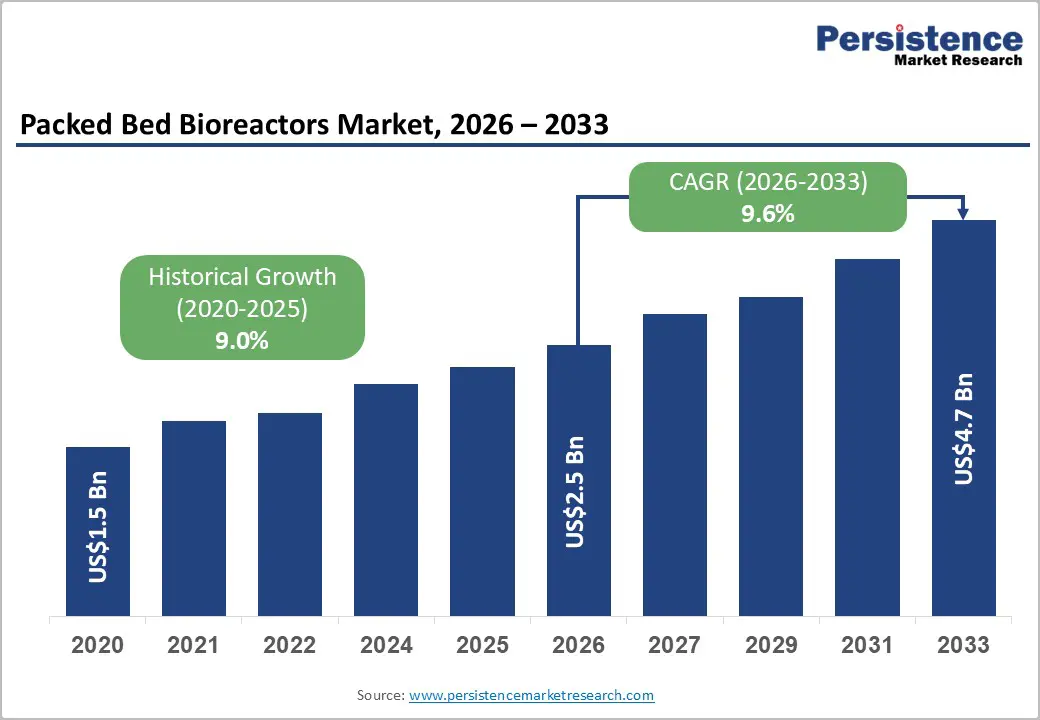
The global packed bed bioreactors market size is likely to be valued at US$2.5 billion in 2026, and is expected to reach US$4.7 billion by 2033, growing at a CAGR of 9.6% during the forecast period from 2026 to 2033, driven by increasing demand for efficient, high-density cell culture systems in biologics manufacturing, rising adoption in biofuel and bioremediation applications, growing need for sustainable wastewater treatment solutions, and expanding use in food & beverage fermentation processes.
Increasing recognition of packed-bed bioreactors as scalable, cost-effective platforms for continuous bioprocessing in emerging biologics, green chemistry, and circular bioeconomy markets remains a major driver of market growth.
Key Industry Highlights:
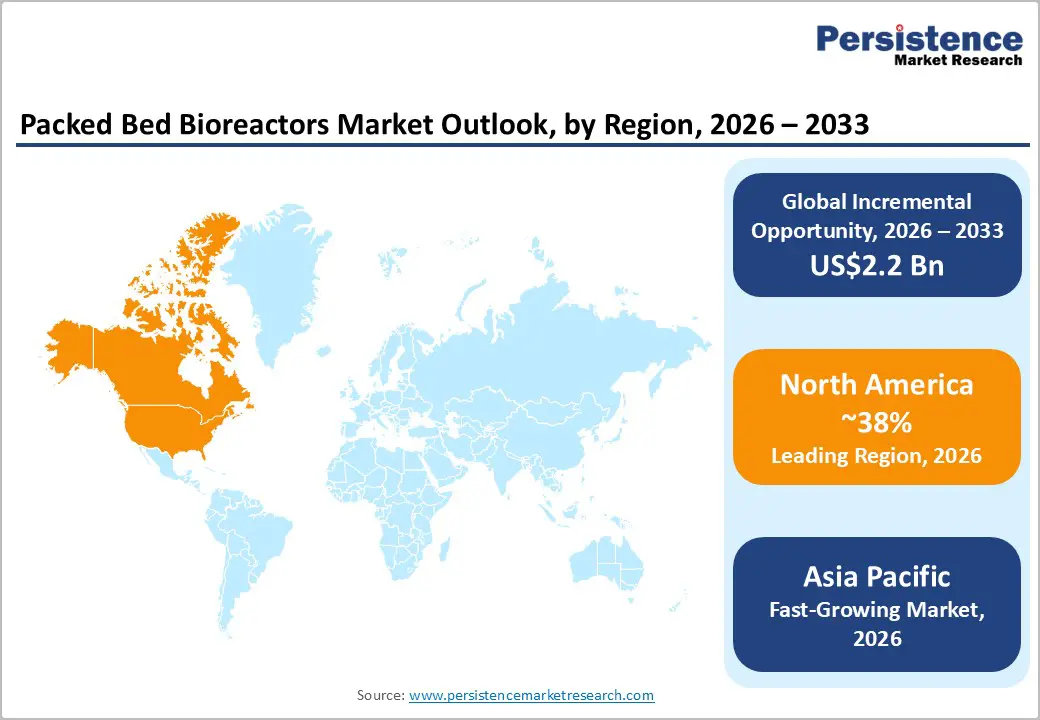
- Leading Region: North America, anticipated to account for a 38% market share in 2026, driven by advanced biopharma infrastructure, high biologics output, and strong demand in the U.S.
- Fastest-growing Region: Asia Pacific, fueled by rapid biopharma capacity expansion, increasing biofuel initiatives, and growing wastewater treatment investments in China and India.
- Dominant Type: Continuous packed bed bioreactors, to hold approximately 52% of the market share, as they remain the preferred choice for high-productivity applications.
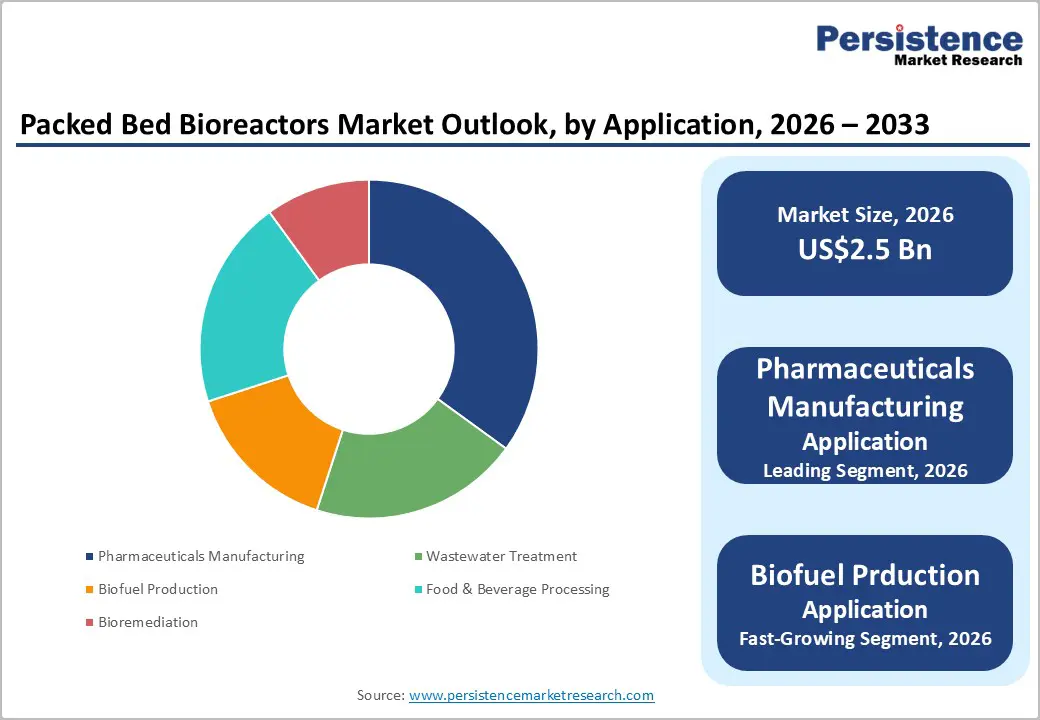
- Leading Application: Pharmaceuticals manufacturing, to contribute nearly 48% of the market revenue, due to dominant use in biologics production.
| Key Insights | Details |
|---|---|
| Packed Bed Bioreactors Market Size (2026E) | US$2.5 Bn |
| Market Value Forecast (2033F) | US$4.7 Bn |
| Projected Growth CAGR (2026-2033) | 9.6% |
| Historical Market Growth (2020-2025) | 9.0% |
Market Factors – Growth, Barriers, and Opportunity Analysis
Growth Analysis – Biologics Manufacturing Expansion and Continuous Processing Adoption
The biologics manufacturing landscape is undergoing a significant transformation, driven by increasing demand for complex therapies such as monoclonal antibodies, cell and gene therapies, and vaccines. Companies are expanding production capabilities by building new facilities and upgrading existing plants to meet global therapeutic needs. This expansion emphasizes modular, flexible manufacturing setups that can accommodate multiple product types while reducing downtime and capital costs.
Continuous processing is gaining traction as an alternative to traditional batch production. Unlike batch methods, continuous systems allow for the uninterrupted flow of raw materials through bioreactors and downstream purification steps, improving efficiency, consistency, and yield. The approach also reduces the footprint of manufacturing facilities, lowers operational costs, and enhances scalability for rapid response to market demand or public health emergencies. Several pharmaceutical companies are adopting hybrid models, integrating both batch and continuous operations to balance flexibility with efficiency. Advanced automation, real-time monitoring, and process analytical technologies support these systems by ensuring product quality and regulatory compliance.
Biofuel and Wastewater Treatment Applications
The growing emphasis on sustainability and resource efficiency has driven innovation in both energy and environmental sectors. Biofuels are increasingly being developed as renewable alternatives to fossil fuels, offering lower greenhouse gas emissions and reducing reliance on non-renewable energy sources. Advances in biotechnology and chemical engineering have enabled the production of bioethanol, biodiesel, and advanced biofuels from diverse feedstocks, including agricultural residues, algae, and industrial waste. These fuels not only provide cleaner energy but also create opportunities for circular economy practices by converting waste into value-added products.
Wastewater treatment has become a critical focus for both environmental protection and resource recovery. Modern treatment systems employ biological, chemical, and physical processes to remove contaminants while recovering nutrients and energy. Microbial and enzymatic technologies allow for more efficient degradation of organic pollutants, while integrated systems can generate biogas and other energy carriers from sewage sludge. This approach reduces the environmental footprint of urban and industrial wastewater, conserves water resources, and supports sustainable energy production.
Barrier Analysis – High Initial Capital Cost and Complex Scale-Up
Establishing advanced manufacturing or bioprocessing facilities often requires substantial upfront investment, including specialized equipment, cleanroom infrastructure, and automation systems. These high initial costs can pose significant financial barriers, particularly for small and mid-sized companies attempting to enter competitive markets. In addition to capital requirements, scaling up processes from laboratory or pilot scale to full production introduces considerable technical complexity.
Small variations in parameters such as temperature, pH, mixing rates, or nutrient supply can lead to inconsistent yields or product quality at larger volumes. Achieving reproducibility and maintaining regulatory compliance during scale-up demands sophisticated process control, extensive testing, and often iterative optimization. Integration of new equipment and continuous processing technologies adds layers of operational and engineering challenges.
Regulatory and Validation Challenges
Navigating regulatory requirements is a critical hurdle for industries producing complex biologics, pharmaceuticals, or high-value chemicals. Companies must comply with stringent guidelines from agencies such as the FDA, EMA, or other national authorities, covering every stage from process design to product release. This involves comprehensive documentation, risk assessments, and adherence to Good Manufacturing Practices (GMP), which can be time-consuming and costly.
Validation of manufacturing processes adds another layer of complexity. Each unit operation, whether upstream bioreactors, downstream purification, or formulation, must be rigorously tested to demonstrate consistent performance and product quality. Equipment, analytical methods, and cleaning procedures all require qualification and re-validation whenever processes change.
Opportunity Analysis – Growth in Continuous Bioprocessing and Single-Use Packed Bed Systems
Biomanufacturing is increasingly shifting toward more flexible, efficient, and cost-effective methods to meet rising demand for biologics and advanced therapies. Continuous bioprocessing has emerged as a key approach, enabling uninterrupted production of proteins, vaccines, and cell-based therapies. By maintaining a steady flow of cells and nutrients through bioreactors, this method reduces downtime, improves product consistency, and maximizes yield per unit of equipment. Continuous processes also allow real-time monitoring and control, helping manufacturers maintain high-quality standards while scaling operations efficiently. Single-use packed bed systems are gaining traction as an alternative to traditional stainless-steel bioreactors.
These systems utilize pre-packed resins and disposable columns, minimizing cross-contamination risks and eliminating the need for extensive cleaning and sterilization between batches. Their modular design supports rapid deployment, easier scale-up, and flexibility to switch between multiple products, making them particularly suitable for multi-product facilities or smaller batch sizes. The combination of continuous bioprocessing with single-use packed bed technology is transforming production paradigms, reducing capital expenditures, shortening development timelines, and enhancing adaptability. This convergence allows manufacturers to respond faster to market demand, improve sustainability through reduced water and energy use, and maintain consistent product quality across scales, ultimately supporting more resilient and efficient biomanufacturing operations.
Developments in Biofuel/Bioremediation Sectors
Recent advancements in sustainable energy and environmental management have accelerated innovation in biofuel production and bioremediation technologies. In the biofuel sector, researchers and companies are focusing on next-generation feedstocks such as algae, agricultural residues, and industrial waste streams to produce ethanol, biodiesel, and advanced biofuels. These feedstocks not only reduce competition with food crops but also enhance carbon capture and utilization, contributing to lower greenhouse gas emissions. Improvements in enzymatic hydrolysis, microbial fermentation, and catalytic conversion have increased efficiency and yield, making biofuels more commercially viable while supporting circular economy practices.
Bioremediation technologies are evolving to address soil, water, and industrial waste contamination. Microbial consortia, genetically engineered bacteria, and enzymatic treatments are being deployed to degrade hydrocarbons, heavy metals, and other pollutants efficiently. Integrated approaches now combine pollutant removal with energy recovery, such as generating biogas from contaminated sludge, creating both environmental and economic benefits. The intersection of these sectors allows for synergistic solutions, where waste from one process can serve as feedstock for another, optimizing resource utilization.
Category-wise Analysis
Type of Packed Bed Bioreactors Insights
Continuous packed bed bioreactors are anticipated to dominate the market, accounting for 52% of the market share in 2026. Their dominance is driven by their efficiency, scalability, and consistent product quality. Unlike traditional batch systems, these bioreactors allow an uninterrupted flow of nutrients and cells, reducing downtime and increasing overall productivity. Their design ensures higher surface area for cell attachment, leading to improved yield and stable operation over extended periods.
Continuous packed bed systems integrate well with single-use technologies, minimizing contamination risks and cleaning requirements. WuXi Biologics has adopted continuous bioprocessing technologies, including continuous perfusion and intensified continuous platforms, to modernize its biologics manufacturing operations. The company’s WuXiUP™ continuous processing platform integrates intensified perfusion culture with continuous harvest and downstream capture, enabling higher productivity and consistent quality compared with traditional fed batch methods.
Fed-batch packed bed bioreactors represent the fastest-growing type, due to their balance of high productivity and operational flexibility. In this system, nutrients are periodically added while the product is continuously retained, allowing cells to maintain optimal growth and metabolism over extended periods. This approach enables higher product concentrations compared with traditional batch processes while reducing the risk of nutrient depletion or by-product accumulation.
Pall Corporation's iCELLis® bioreactor platform, which has been employed in adherent cell culture processes for producing viral vectors and recombinant proteins. These fixed bed systems provide a high surface area for cells and support scalable operations from bench to manufacturing scales, often used with fed batch nutrient feeding strategies to maintain optimal growth and productivity.
Application Insights
Pharmaceutical manufacturing is expected to dominate the market, contributing nearly 48% of revenue in 2026, driven by the growing demand for complex therapies, including biologics, vaccines, and specialty drugs. Companies are investing in advanced production technologies, such as continuous processing, single-use systems, and automation, to improve efficiency, reduce contamination risks, and ensure consistent product quality. The sector’s dominance is supported by regulatory emphasis on high standards, driving adoption of sophisticated manufacturing practices.
AstraZeneca announced a US$2 billion investment to expand its biologics manufacturing facilities in Maryland, USA. This expansion will nearly double its production capacity for existing medicines and support new rare disease treatments, reflecting the strategic emphasis on advanced drug manufacturing and domestic supply security.
Biofuel production represents the fastest-growing application, fueled by the urgent need for sustainable energy alternatives and reduced greenhouse gas emissions. Advances in technology now allow biofuels to be produced from diverse feedstocks, including agricultural residues, algae, and industrial waste, minimizing competition with food crops. Process innovations such as enzymatic conversion, microbial fermentation, and catalytic upgrading have increased yields and lowered production costs.
Biofuels support circular economy practices by converting waste into energy while providing renewable transportation fuels. Modi Biotech Pvt Ltd, an Indian biofuel producer that significantly expanded its ethanol production capacity from 130 KLD to 310 KLD with a Rs 100 crore investment to meet rising fuel demand. This expansion enables the company to supply larger ethanol volumes to Oil Marketing Companies under India’s ethanol blending drive, highlighting the rapid growth in biofuel output to support cleaner energy goals.
Regional Insights
North America Packed Bed Bioreactors Market Trends
North America is projected to dominate, accounting for nearly 38% of the share in 2026, and is gaining traction across bioprocessing and pharmaceutical manufacturing due to its efficiency, scalability, and adaptability to modern production demands. These systems provide high surface area for cell attachment, enabling robust growth of adherent cells used in producing viral vectors, gene therapies, and specialty biologics. Their design supports intensified cultivation with lower shear stress, which improves product yields and quality compared with traditional stirred tank reactors.
Manufacturers are also integrating packed bed systems with single use technologies, reducing cleaning requirements and contamination risks, and enabling faster changeovers between production runs. This flexibility is especially valuable for contract development and manufacturing organizations (CDMOs) and smaller biotech firms working with multiple products or limited batch sizes. Continuous and fed batch operating modes in packed bed reactors further enhance productivity while maintaining consistent control over critical process parameters, helping facilities meet both quality and cost targets. Regional drivers include strong investments in biopharmaceutical infrastructure, supportive regulatory frameworks for advanced biologics, and a skilled workforce experienced in bioprocess innovation.
Europe Packed Bed Bioreactors Market Trends
In Europe, packed bed bioreactors are gaining significant traction as manufacturers modernize bioprocessing to meet rising demand for complex biologics, vaccines, and advanced therapies. These systems are valued for their ability to provide a high surface area for cell attachment, which is particularly advantageous for adherent cell cultures used in viral vector and gene therapy production. By supporting both fed batch and continuous processing modes, packed bed bioreactors help improve product yields and consistency while optimizing resource use and reducing operational costs.
European biomanufacturers are also increasingly adopting single use packed bed systems to simplify operations, minimize contamination risks, and eliminate the need for extensive cleaning and sterilization. This flexibility is especially beneficial for multi product facilities and contract manufacturing organizations (CMOs) that handle diverse pipelines and frequent product changeovers. Drivers of this trend include well established biopharmaceutical hubs in countries, including Germany, France, the U.K., and Switzerland, strong research ecosystems, and supportive regulatory environments that encourage innovation in manufacturing technologies. Collaboration between industry and academia is fueling process optimization, automation, and digital monitoring, enhancing control over critical parameters in packed bed operations.
Asia Pacific Packed Bed Bioreactors Market Trends
Asia Pacific is likely to be the fastest-growing market for packed bed bioreactors in 2026. Rapid growth in biologics, vaccines, and cell based therapies has led manufacturers to adopt technologies that offer high productivity and operational flexibility. Packed bed systems provide a large surface area for cell growth, which is especially beneficial for adherent cells used in producing viral vectors, monoclonal antibodies, and specialized proteins. This helps producers achieve higher yields with efficient use of space and resources compared with traditional stirred tank reactors.
The region’s dynamic biotech landscape, driven by investments in biomanufacturing infrastructure in China, India, Japan, and South Korea, is supporting broader adoption of advanced reactor designs. Many manufacturers in these markets are integrating packed bed reactors with single use technology to reduce cleaning requirements, lower contamination risk, and enable rapid product changeovers. These advantages are especially valuable for contract development and manufacturing organizations (CDMOs) and smaller biotech firms with diverse pipelines. Regulatory encouragement for innovative manufacturing, collaborations with technology providers, and increasing expertise in process optimization are further fueling this trend.
Competitive Landscape
The global packed bed bioreactors market is marked by a dynamic interplay between long-established bioprocessing leaders and emerging specialists focused on single-use technologies. In North America and Europe, companies such as Sartorius Group, Cytiva, and Merck Group maintain market leadership through broad product portfolios, deep expertise in perfusion and continuous processing, and strong partnerships with biotech firms. These companies leverage innovations in single-use and continuous bioreactor programs to enhance operational efficiency, reduce contamination risks, and improve product consistency.
In the Asia Pacific region, local manufacturers are gaining traction by offering cost-effective packed bed systems that improve accessibility for small and mid-sized biotech firms and contract manufacturing organizations. Continuous packed bed bioreactor implementation is increasingly adopted to boost productivity, reduce batch variability, and enable scalable integration across multi-product facilities. Strategic approaches such as single-use technology acquisitions, perfusion collaborations, and regional capacity expansions are key to capturing growth opportunities in biologics, vaccines, and emerging biofuel production, positioning companies for long-term competitive advantage in this evolving market.
Key Industry Developments
- In March 2025, Cytiva expanded its Xcellerex X platform with 500 L and 2,000 L single-use bioreactors, boosting production capacity and efficiency. The addition helped lower costs, reduce risks, and accelerate the development of advanced therapeutics to key clinical milestones.
- In October 2024, Univercells Technologies by Donaldson launched the scale-X™ nexo bioreactor, a miniaturized fixed-bed system featuring a 0.5 m² growth surface. The new bioreactor was designed to support efficient cell culture process development across multiple modalities. Engineered for seamless scalability, the scale-X nexo reduced process development timelines and lowered costs for researchers and biopharma companies, enhancing efficiency in biologics and advanced therapy production.
- In August 2023, Sartorius and Repligen Corporation launched an integrated bioreactor system combining Repligen’s XCell® ATF upstream intensification technology with Sartorius’ Biostat STR® bioreactor. The system simplified, intensified the seed train, and N perfusion implementation for biopharmaceutical manufacturers. The Biostat STR® now features an embedded XCell® ATF hardware and software module with predefined control recipes and integrated Process Analytical Technology (PAT).
Companies Covered in Packed Bed Bioreactors Market
- Merck Group
- Cytiva
- Getinge
- Eppendorf AG
- Sartorius Group
- GE Healthcare
- PBS Biotech
- TAP Biosystems
- Mani Dharma Biotech
- Chemtrix
- CerCell,
- Pall Corporation
Frequently Asked Questions
The global packed bed bioreactors market is projected to reach US$2.5 billion in 2026.
Rising biologics demand and the shift toward continuous and single-use bioprocessing platforms are key drivers.
The packed bed bioreactors market is poised to witness a CAGR of 9.6% from 2026 to 2033.
Continuous bioprocessing and single-use packed bed systems and expansion in Asia Pacific and biofuel/bioremediation sectors are key opportunities.
Sartorius Group, Cytiva, Merck Group, Eppendorf AG, and PBS Biotech are the key players.


