




- Advanced Materials
- Lidding Films Market
Lidding Films Market Size, Share, and Growth Forecast 2026 - 2033
Lidding Films Market by Product Type (Dual Ovenable Lidding Films, Specialty Lidding Films, High Barrier Lidding Films, Breathable Lidding Films), Substrate (PE, PET(CPET, APET, RPET), PP, PVC, Paperboard, Others), Application (Cups, Trays, Cans & Bottles, Jars, Pouches), and Regional Analysis, 2026 - 2033

Lidding Films Market Size and Trend Analysis
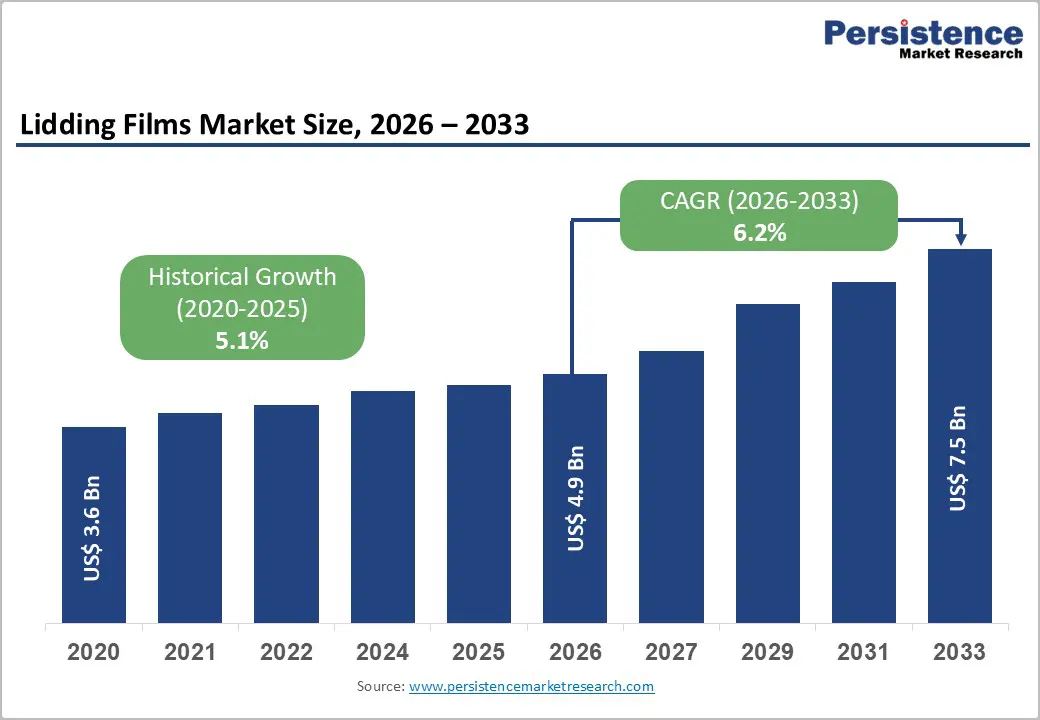
The global Lidding Films Market size is expected to be valued at US$ 4.9 billion in 2026 and projected to reach US$ 7.5 billion by 2033, growing at a CAGR of 6.2% between 2026 and 2033.
Growth is driven by rising demand for ready-to-eat and chilled food formats, where lidding films enable extended shelf life, secure sealing, and compatibility with microwave and dual-oven applications. Increasing consumption of packaged meals, dairy portions, and fresh proteins continues to strengthen demand. Simultaneously, evolving regulatory frameworks and sustainability mandates are accelerating the shift toward recyclable, mono-material films, supporting innovation, adoption, and long-term market expansion globally.
Key Industry Highlights:
- Leading Region: North America leads with a 32% share in 2025, driven by strong demand for ready-to-eat foods and advanced packaging infrastructure.
- Fastest Growing Region: Asia Pacific holds a 30% share in 2025 and is the fastest growing, supported by urbanization and rising packaged food consumption.
- Leading Category: High Barrier Lidding Films dominate with a 38% share in 2025 due to superior protection and shelf-life extension.
- Fastest Growing Category: Trays lead with a 35% share in 2025 and remain a key growth category driven by ready meal demand.
- Key Opportunity: Rising demand for recyclable, high-barrier, and anti-fog films presents strong growth opportunities in sustainable packaging.
| Key Insights | Details |
|---|---|
|
Lidding Films Market Size (2026E) |
US$ 4.9 billion |
|
Market Value Forecast (2033F) |
US$ 7.5 billion |
|
Projected Growth CAGR (2026–2033) |
6.2% |
|
Historical Market Growth (2020–2025) |
5.1% |
Market Dynamics
Drivers - Rising Demand for Convenient Ready-to-Eat Food Packaging
A key driver of the lidding films market is the growing demand for ready-to-eat and chilled food formats requiring secure, high-performance packaging. Urban consumption trends show increasing reliance on time-saving meal solutions, with sealed trays, cups, and pouches gaining traction. High barrier and breathable lidding films play a critical role in preserving freshness, particularly for dairy, meat, seafood, and prepared meals.
Food safety regulations from authorities such as the U.S. Food and Drug Administration and European Food Safety Authority further strengthen adoption by enforcing strict standards for hygiene and barrier performance. This has accelerated the shift toward multi-layer structures using PE, PP, and PET, transforming lidding films into advanced packaging solutions that enhance shelf life and reduce spoilage.
Stringent Sustainability Regulations Driving Recyclable Lidding Film Adoption
Tightening global sustainability regulations are significantly influencing innovation and adoption of lidding film materials. Policies such as the EU Packaging and Packaging Waste Regulation and national Extended Producer Responsibility frameworks are encouraging the transition toward recyclable, mono-material films. Polyolefin-based structures, such as PE and PP, are increasingly preferred due to their compatibility with existing recycling systems.
At the same time, consumer awareness around sustainable packaging continues to rise, with a strong preference for recyclable and environmentally friendly solutions. This is pushing manufacturers to invest in post-consumer recycled materials, bio-based films, and compostable alternatives. Such advancements not only reduce environmental impact but also expand market opportunities for next-generation lidding film technologies.
Restraints - Volatility in Polymer Prices Impacting Lidding Film Production Costs
A major restraint in the lidding films market is the volatility in prices of key polymers such as PE, PP, and PET, driven by fluctuations in crude oil and petrochemical supply chains. Frequent price swings put pressure on manufacturers' margins, particularly in high-volume, cost-sensitive applications such as dairy cups and meat trays, where packaging budgets remain tightly controlled.
In addition, global trade policies and tariff changes can disrupt regional supply-demand balance, leading to temporary shortages or cost spikes. Such uncertainty discourages investment in premium and high-barrier films, especially in emerging markets, thereby slowing the adoption of advanced and sustainable lidding solutions.
Regulatory Compliance and Technical Constraints Limiting Innovation Adoption
Strict and evolving regulations for food contact materials pose a significant challenge for lidding film manufacturers. Approval processes involving migration testing and compliance documentation often extend product development timelines, increasing costs and delaying the introduction of innovative materials such as recyclable or bio-based films.
Technical limitations also restrict rapid adoption, as new materials must align with existing sealing equipment and performance standards. Issues such as higher sealing temperatures or reduced clarity in alternative films can require equipment upgrades, making manufacturers cautious and slowing the transition toward advanced, sustainable lidding technologies.
Opportunities - E-Commerce Growth Driving Demand for High-Performance Lidding Films
The rapid expansion of e-commerce food delivery and online grocery platforms is creating strong demand for high-performance lidding films. These applications require durable, leak-proof, and temperature-resistant solutions for trays and cups used in chilled and frozen deliveries. Peelable and high-barrier films are increasingly preferred to maintain product integrity during transit and during extended cold-chain storage.
At the same time, rising chilled food e-commerce sales are driving demand for anti-fog and oxygen-barrier lidding films that enhance visibility and shelf life. Manufacturers offering recyclable, mono-material solutions with strong barrier performance are well positioned to capture this high-growth, value-driven segment of the lidding films market.
Rising Demand for Sustainable and Plant-Based Food Packaging Solutions
The growing popularity of protein-rich and plant-based food products presents a significant opportunity for lidding film manufacturers. These products require advanced packaging solutions that preserve freshness, texture, and safety, making high-barrier and specialty peelable lidding films essential for applications such as ready meals and dairy alternatives.
Simultaneously, sustainability-focused regulations and food waste reduction initiatives are encouraging the adoption of efficient packaging technologies. Lidding films that extend shelf life while supporting recyclability and reducing environmental impact are gaining traction, creating strong growth potential for innovative, next-generation materials aligned with circular-economy goals.
Category-wise Analysis
Product Type Insights
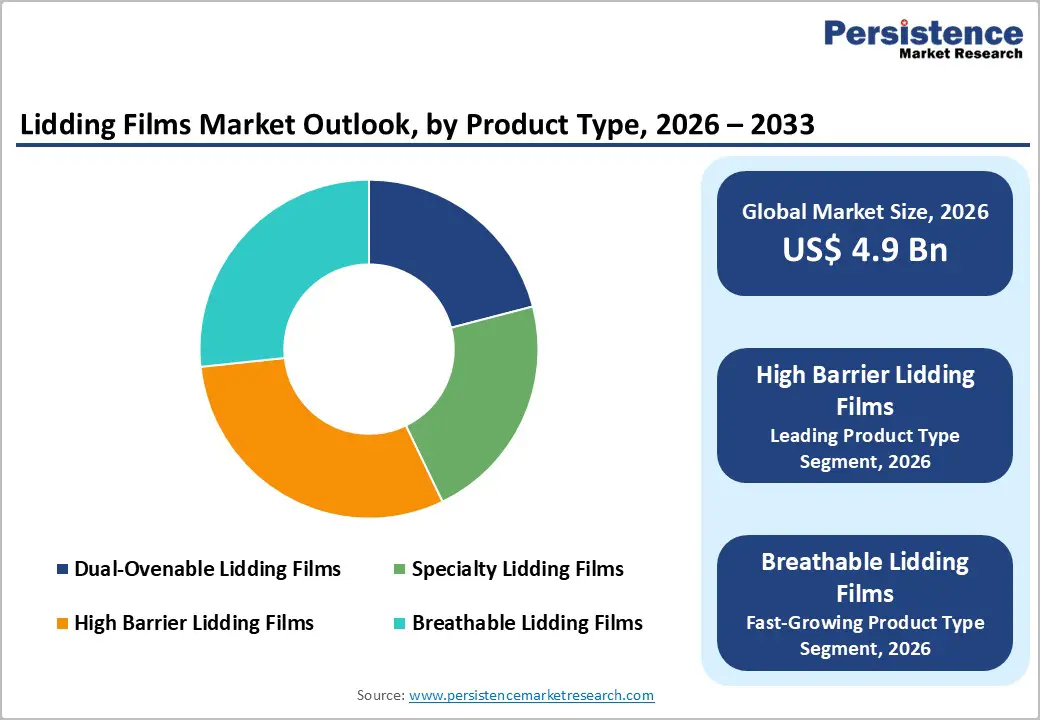
High barrier lidding films lead the product type segment, accounting for 38% of the global lidding films market in 2025. Their dominance is driven by superior oxygen and moisture barrier properties essential for preserving meat, seafood, dairy, and ready meals. These films significantly reduce spoilage and extend shelf life, while also supporting modified atmosphere packaging and meeting stringent food safety and sustainability requirements.
Breathable and specialty lidding films are emerging as the fastest-growing categories, driven by increasing demand for fresh produce and convenience foods. These films enable controlled gas exchange and enhanced visibility, making them ideal for applications requiring freshness retention without compromising product quality or consumer appeal.
Substrate Insights
PET (CPET, APET, RPET) dominates the substrate segment, holding an estimated 42% share of the lidding films market in 2025. Its leadership is attributed to high clarity, strong barrier performance, and compatibility with thermoformed trays used in ready meals and chilled packaging. Additionally, PET aligns well with recycling infrastructure, supporting regulatory compliance and sustainability goals.
Polyolefin-based substrates such as PE and PP are the fastest-growing segment, driven by the shift toward recyclable mono-material structures. Their flexibility, cost efficiency, and compatibility with circular economy initiatives make them increasingly attractive, especially as manufacturers innovate to improve sealing performance and expand application versatility.
Application Insights
Trays represent the leading application segment, capturing around 35% of the lidding films market in 2025. This dominance is supported by their extensive use in packaging meat, poultry, seafood, and ready meals, where secure sealing, barrier protection, and compatibility with heating processes are essential. High consumption volumes across retail and foodservice further reinforce their strong market position.
Cups and pouches are emerging as the fastest-growing applications, fueled by rising demand for single-serve dairy products, beverages, and on-the-go food formats. These segments benefit from evolving consumer preferences for convenience, portion control, and portable packaging, driving increased adoption of innovative lidding film solutions.
Regional Insights
North America Lidding Films Market Trends and Insights
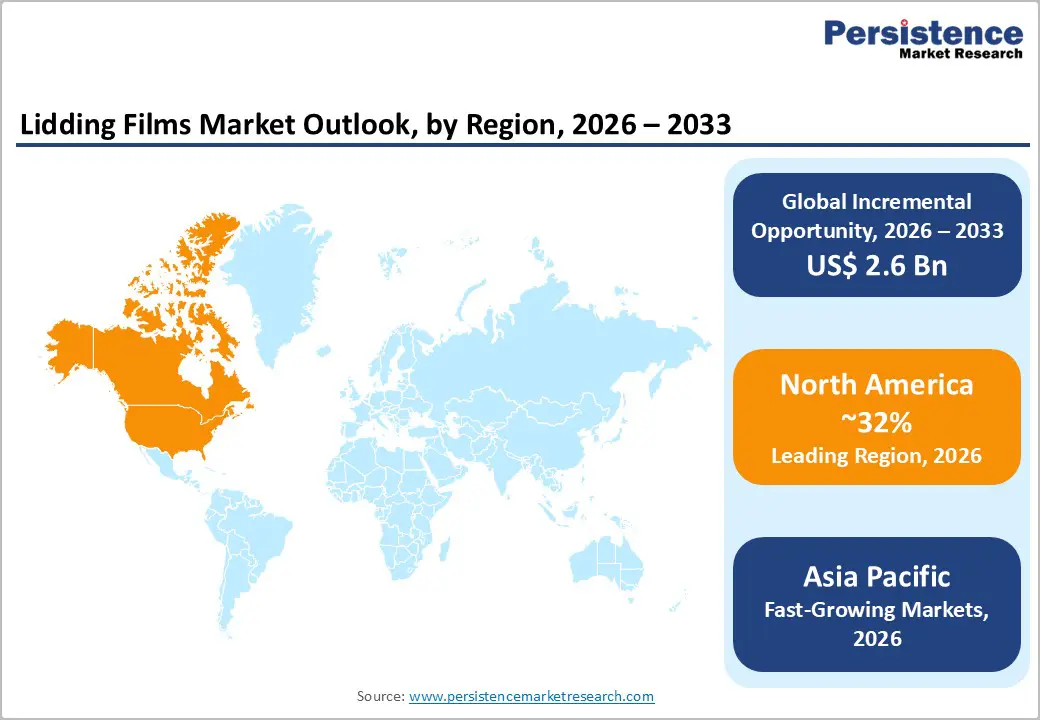
North America leads the lidding films market, accounting for approximately 32% of global share in 2025, driven primarily by the United States. The region benefits from a mature, ready-to-eat and chilled food sector, strong regulatory oversight, and advanced retail and e-commerce infrastructure. High adoption of barrier, peelable, and recyclable lidding films across dairy, meat, and prepared meals further strengthens its dominant position.
The region is also witnessing steady growth supported by innovation in sustainable packaging solutions. Increasing focus on reducing food waste and single-use plastics is encouraging the adoption of mono-material and PCR-based lidding films. Additionally, collaborations between research institutions and packaging companies are accelerating the development of advanced, eco-friendly lidding technologies.
Europe Lidding Films Market Trends and Insights
Europe represents a technologically advanced lidding films market, supported by strong regulatory frameworks and a well-established food processing industry. Countries such as Germany, France, and the United Kingdom are leading adopters of recyclable and mono-material lidding films, driven by stringent sustainability mandates and circular economy initiatives across the region.
The market is expected to grow at a CAGR of around 5.5%–6.5% during the forecast period, fueled by innovation in high-barrier and anti-fog lidding solutions. Advancements in recyclable materials with improved clarity and performance, along with increasing incorporation of PCR content, are positioning Europe as a key hub for sustainable and high-performance lidding film technologies.
Asia Pacific Lidding Films Market Trends and Insights
Asia Pacific holds a significant share of the global lidding films market, accounting for approximately 30% in 2025, with strong contributions from China, India, Japan, and Southeast Asia. Rapid urbanization, rising disposable incomes, and expanding retail and e-commerce sectors are driving demand for packaged and ready-to-eat foods, boosting the adoption of lidding film solutions across applications.
The region is the fastest-growing market, supported by increasing investments in food processing and packaging infrastructure. Government regulations promoting sustainable packaging and reduced plastic waste are accelerating the shift toward recyclable and lightweight lidding films. Combined with large-scale manufacturing capabilities, the Asia Pacific continues to emerge as a major growth engine for the global market.
Competitive Landscape
The global lidding films market is moderately consolidated, with a limited number of large multinational players holding significant production capacity, while numerous regional converters cater to localized and niche packaging needs. The competitive environment is shaped by strong emphasis on product performance, regulatory compliance, and the ability to meet evolving sustainability requirements across food packaging applications.
Market participants are increasingly prioritizing innovation and geographic expansion to strengthen their positions. Key strategies include the development of recyclable mono-material films, incorporation of recycled content, and advancements in high-barrier and anti-fog technologies. Companies are also expanding manufacturing capabilities in high-growth regions to align with rising demand, while forming long-term partnerships with food brands and focusing on value-driven, performance-based offerings rather than competing solely on cost.
Key Developments:
- In March 2025, Amcor plc introduced mono PE-based high barrier lidding films for thermoformed meat and protein trays, targeting European retailers with EFSA-compliant migration profiles and recyclability, aligning with EU PPWR requirements and sustainability-focused packaging initiatives.
- In July 2024, Sealed Air Corporation expanded its portfolio with CPET-based dual ovenable lidding films for chilled ready meals and frozen-to-oven formats, combining strong barrier protection with microwave and oven compatibility, enabling streamlined logistics and improved product safety.
- In November 2023, Berry Global Group, Inc. increased RPET-based lidding film capacity in Europe, targeting 50%+ PCR content grades, supporting circular economy goals and retailer-driven demand for recycled content in dairy and ready meal packaging applications.
Companies Covered in Lidding Films Market
- Amcor plc
- Berry Global Group, Inc.
- Sealed Air Corporation
- Mondi plc
- Coveris Holdings S.A.
- Huhtamäki Oyj
- Constantia Flexibles Group GmbH
- Winpak Ltd.
- Uflex Limited
- Sonoco Products Company
- Cosmo Films Ltd.
- ProAmpac LLC
- Plastopil Hazorea Company Ltd.
- Schur Flexibles Group
- LINPAC Packaging Limited
Frequently Asked Questions
The global Lidding Films Market is estimated to reach US$ 4.9 billion in 2026, expanding to US$ 7.5 billion by 2033 at a CAGR of 6.2%.
Rising demand for ready-to-eat and chilled foods, growth of e-commerce and cold chain delivery, and stricter sustainability regulations drive lidding film demand.
North America leads with a 32% share in 2025, driven by a mature food packaging ecosystem, strong regulatory standards, and advanced retail and e-commerce infrastructure.
A key opportunity lies in recyclable, high barrier, and anti-fog films for e-commerce food delivery and plant-based protein packaging, supporting shelf life and sustainability goals.
Key players include Amcor plc, Sealed Air Corporation, Berry Global Inc., Mondi Group, Coveris, ProAmpac, Constantia Flexibles, and DuPont.


