




- Processed Food
- Canned Sardine Market
Canned Sardine Market Size, Share, Growth, and Regional Forecast, 2026 - 2033
Canned Sardine Market by Product Type (Whole Sardines, Sardine Fillets, Boneless & Skinless Sardines, Smoked Sardines), Packaging Medium (Oil, Brine/Water, Tomato Sauce, Mustard Sauce, Others), Nature (Organic, Conventional), Sales Channel (Supermarkets/Hypermarkets, Convenience Stores, Specialty Stores, Online Retail, Others), and Regional Analysis for 2026 - 2033

Canned Sardine Market Size & Trends Analysis
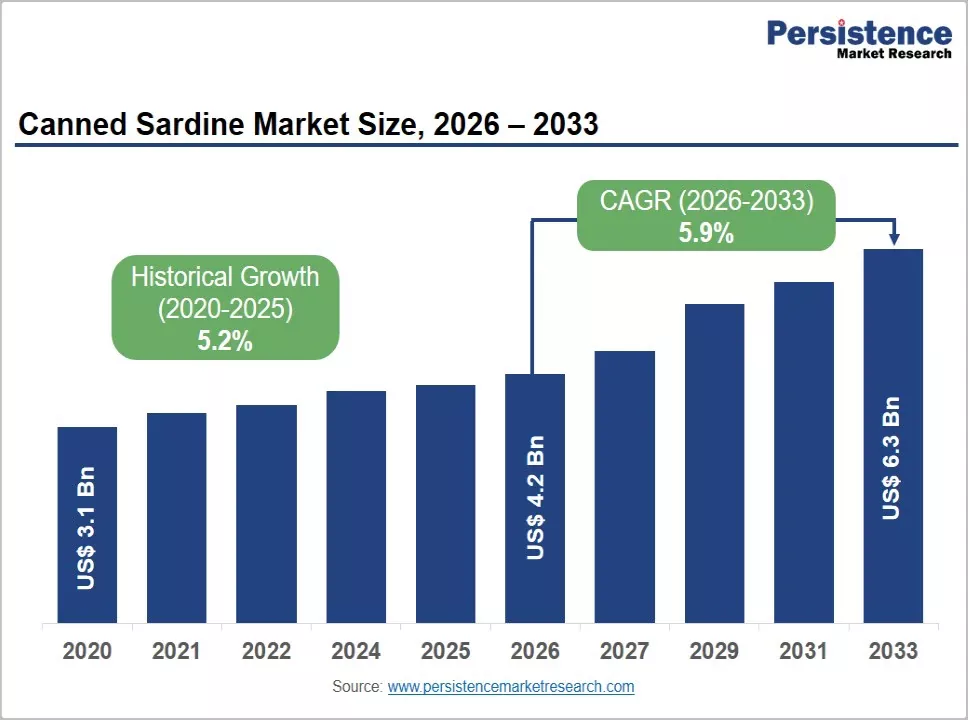
The global canned sardine market is expected to be valued at US$ 4.2 billion in 2026 and is projected to reach US$ 6.3 billion by 2033, growing at a CAGR of 5.9% between 2026 and 2033.
The market is primarily driven by rising consumer demand for affordable, nutritious, and shelf-stable seafood products. Canned sardines have gained widespread acceptance due to their high protein content, omega-3 fatty acids, calcium richness, and long shelf life. Growing preference for convenient ready-to-eat meals, increasing health awareness, and expanding retail distribution networks are supporting category growth worldwide.
Manufacturers are introducing flavored variants, premium oil-packed products, and sustainably sourced offerings to appeal to evolving consumer preferences. Sustainability certifications and traceable sourcing practices are becoming increasingly important purchasing considerations. As consumers seek convenient nutrition without compromising quality, the demand for canned sardines continues to rise worldwide.
Key Industry Highlights
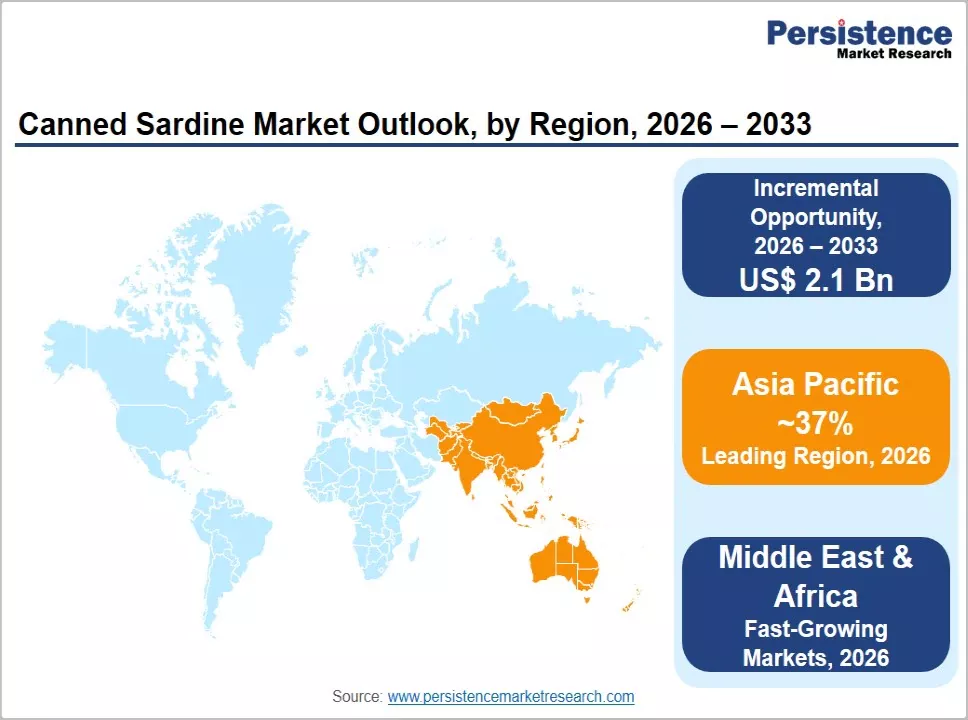
- Leading Region: Europe is expected to lead the market by holding around 44% share in 2026, supported by strong seafood consumption traditions, established processing industries, premium product demand, and extensive retail distribution networks.
- Fastest-Growing Region: Asia Pacific represents the fastest-growing market, projected to expand at a 6.5% CAGR through 2033, supported by urbanization, population growth, rising disposable incomes, and increasing demand for affordable protein-rich food products.
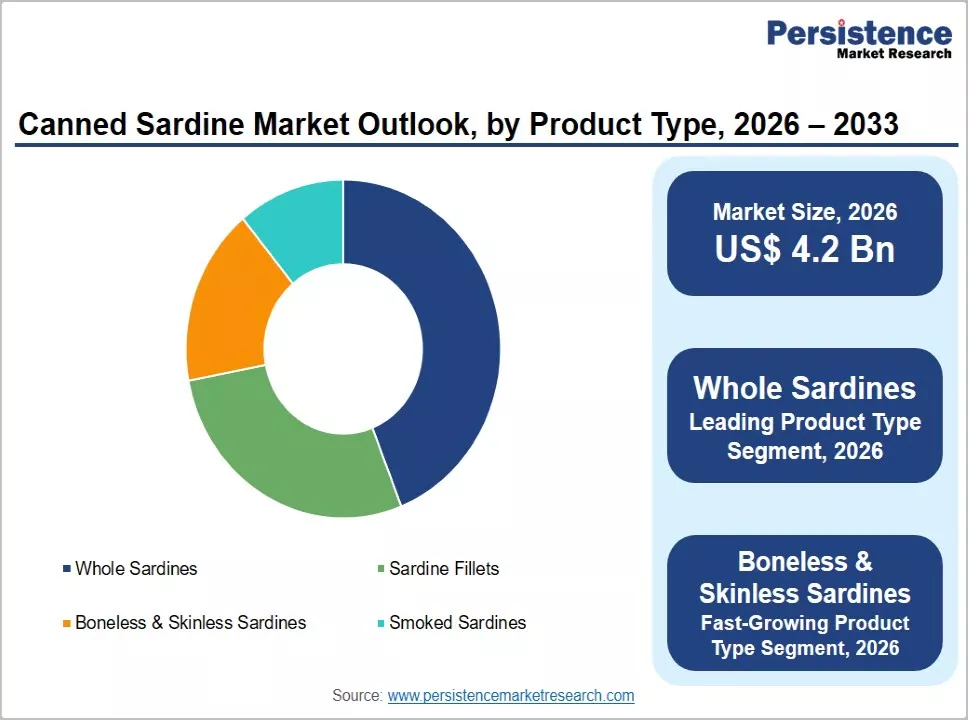
- Leading Segment: Whole sardines represent the leading product type segment, accounting for around 44% market share in 2026, supported by strong consumer preference for traditional products, nutritional integrity, and broad culinary versatility.
- Fastest-Growing Segment: Organic is expected to be the fastest-growing nature category, expanding at an 8.3% CAGR during the forecast period, driven by increasing demand for clean-label, sustainably sourced, and premium seafood products.
- Market Driver: Rising global demand for convenient ready-to-eat meal solutions is increasing consumption of canned sardines among busy urban households seeking nutritious and affordable food options.
- Market Opportunity: Expansion of sustainable and certified seafood portfolios is creating significant growth opportunities as consumers increasingly prioritize responsible sourcing, traceability, and environmental stewardship.
Market Dynamics
Driver - Growing Global Demand for Convenient Ready-To-Eat Meal Solutions
The canned sardine market is primarily driven by increasing consumer demand for convenient, affordable, and ready-to-eat food products. Modern lifestyles, busy work schedules, and rising urbanization are encouraging consumers to seek nutritious meal solutions requiring minimal preparation. Canned sardines offer a combination of convenience, long shelf life, portability, and nutritional value, making them attractive across diverse demographic groups. Rich in protein, omega-3 fatty acids, calcium, and essential vitamins, canned sardines align with growing interest in nutrient-dense foods.
Expanding retail availability and product diversification through flavored variants and convenient packaging formats are further supporting adoption. The category's affordability compared to fresh seafood also continues to strengthen global consumption patterns.
Restraint - Stringent Fisheries Regulations Limiting Harvesting Activities
The canned sardine industry faces challenges from increasingly stringent fishery management regulations designed to ensure sustainable marine resource utilization. Governments and regulatory bodies frequently impose fishing quotas, seasonal restrictions, vessel limitations, and catch monitoring requirements to prevent overfishing. While these measures support long-term ecosystem health, they can constrain raw material availability for processors.
Producers also encounter higher procurement costs due to supply limitations and increased compliance requirements. In addition, changes in marine ecosystems, environmental pressures, and fluctuating fish populations can further affect harvesting volumes, creating uncertainty across the supply chain and influencing overall market growth prospects.
Opportunity - Expansion of Sustainable and Certified Seafood Product Portfolios
Growing consumer awareness regarding environmental responsibility and sustainable sourcing is creating significant opportunities within the market. Buyers increasingly prefer seafood products carrying sustainability certifications and traceability assurances, reflecting rising concerns about marine conservation and responsible fishing practices. Manufacturers are responding by investing in certified fisheries, transparent sourcing programs, and eco-friendly packaging solutions.
Sustainable product positioning not only strengthens consumer trust but also enables premium pricing opportunities in established markets. Retailers and foodservice operators are likewise prioritizing responsibly sourced seafood products to meet corporate sustainability objectives. As sustainability becomes a key purchase criterion, certified canned sardines are expected to gain substantial market traction.
Category-wise Analysis
Product Type Insights
Whole sardines are likely to be the leading product type segment, holding around 44% share of the canned sardine market in 2026. Their leadership is driven by strong consumer preference for traditional canned sardine products that retain the fish's natural structure, flavor, and nutritional integrity. Whole sardines are widely perceived as less processed and richer in naturally occurring nutrients, including omega-3 fatty acids and calcium derived from edible bones.
The segment also benefits from widespread availability across major retail channels and strong acceptance in Mediterranean, European, and Asian markets. Manufacturers continue introducing premium whole sardine offerings packed in olive oil, specialty sauces, and gourmet formulations. Their affordability and versatility in meal preparation further support enduring global demand.
Boneless & skinless sardines represent the fastest-growing product type segment, driven by rising consumer preference for convenient, ready-to-eat seafood products with easier consumption. Growing demand for clean, portion-controlled formats, combined with increasing adoption among consumers seeking convenient meal solutions, is encouraging manufacturers to expand boneless and skinless sardine offerings across retail channels.
Nature Insights
Organic is the fastest-growing nature category, expected to grow at an 8.3% CAGR during the forecast period. Growing consumer preference for clean-label foods, environmentally responsible sourcing, and premium seafood products is driving segment expansion. Organic certifications provide assurance regarding production standards, ingredient quality, and sustainability practices, attracting health-conscious and environmentally aware consumers.
Manufacturers are increasingly incorporating organic oils, natural seasonings, and certified sourcing practices into product portfolios to enhance market appeal. Premium retailers and specialty food channels are also expanding organic seafood offerings to address evolving demand patterns. Rising willingness to pay for transparency and quality continues supporting robust growth opportunities within the segment.
Regional Analysis
Europe Canned Sardine Market Trends and Insights
Europe is anticipated to lead the global canned sardine market while capturing around 44% share in 2026. The region’s leadership is supported by strong seafood consumption traditions and well-established processing industries. Countries such as Spain, Portugal, France, and Italy maintain high per capita consumption and significant manufacturing capabilities. Premiumization trends are driving growth of olive oil-packed, gourmet, and sustainably sourced sardine products.
Consumers increasingly value product origin, quality certifications, and authentic regional heritage. Retailers continue expanding premium seafood assortments, while exports from major producing nations strengthen the region's global market position. Robust distribution infrastructure further supports market growth and product availability across the region.
U.K. Canned Sardine Market Insights
The U.K. canned sardine market is experiencing steady growth as consumers increasingly seek affordable and nutritious seafood products. Health-conscious purchasing behavior is supporting demand due to sardines' high omega-3, protein, and micronutrient content. Sustainability considerations also play a growing role in purchasing decisions, encouraging demand for responsibly sourced and certified products. Retailers continue expanding private-label and premium seafood ranges to cater to diverse consumer preferences. Convenience remains a key purchase driver, particularly among busy urban households seeking ready-to-eat meal solutions. Product innovation and expanding online grocery availability continue enhancing market accessibility.
Germany Canned Sardine Market Insights
Germany's market benefits from growing demand for protein-rich convenience foods and healthy seafood alternatives. Consumers increasingly prioritize nutritional value, ingredient transparency, and sustainable sourcing when selecting food products. The market is witnessing growth in premium sardines packed in olive oil, organic formulations, and gourmet flavor combinations.
Modern retail and discount supermarket channels continue driving product accessibility across the country. Sustainability certifications and environmentally responsible packaging have become important competitive differentiators. Ongoing consumer interest in balanced diets and seafood-based nutrition is expected to support long-term market development.
Spain Canned Sardine Market Insights
Spain is emerging as a significant market within Europe, supported by strong seafood traditions and a highly developed canning industry. Consumers demonstrate strong preference for premium sardines preserved in olive oil and regional specialty preparations. Export-oriented manufacturers continue investing in product quality, processing technologies, and sustainable fishing practices to strengthen competitiveness. Gourmet canned seafood has gained popularity both domestically and internationally, supporting value growth within the sector. Long-standing culinary traditions combined with growing global demand for Mediterranean food products continue reinforcing Spain's prominent role in the global market.
Asia Pacific Canned Sardine Market Trends and Insights
Asia Pacific canned sardine market is expected to grow at a CAGR of 6.5% during the forecast period. Rising urbanization, population growth, and increasing demand for affordable protein sources are key factors driving market expansion. Consumers across several Asian countries view canned sardines as a practical and cost-effective seafood option suitable for everyday consumption. Manufacturers are introducing region-specific flavors and packaging formats tailored to local preferences. Growth in organized retail, e-commerce platforms, and modern food distribution systems is enhancing product accessibility. Additionally, expanding middle-class populations and rising interest in nutritious ready-to-eat foods are expected to support continued regional market growth.
Japan Canned Sardine Market Insights
Japan's canned sardine market is supported by strong seafood consumption culture and consumer appreciation for nutrient-rich fish products. Manufacturers emphasize quality, freshness, and premium packaging to meet sophisticated consumer expectations. Demand is growing for value-added canned sardines featuring distinctive seasonings, regional flavors, and functional nutritional benefits. Convenience, long shelf life, and suitability for emergency food storage further contribute to product popularity. Retailers continue introducing premium and specialty canned fish selections, while health-conscious consumers increasingly recognize sardines as an important source of omega-3 fatty acids and dietary protein.
China Canned Sardine Market Insights
China's market is driven by rising disposable incomes, urbanization, and growing awareness of seafood nutrition. Consumers increasingly seek convenient protein sources that combine affordability with health benefits. The market is benefiting from improvements in domestic processing capabilities, distribution networks, and retail infrastructure. E-commerce has emerged as an important channel, improving accessibility to both domestic and imported canned seafood products. Premium seafood offerings and flavored sardine variants are gaining traction among younger urban consumers. Continued growth in packaged food consumption is expected to strengthen opportunities in the market throughout the forecast period.
Competitive Landscape
The global canned sardine market is characterized by competition among multinational seafood companies, regional processors, private-label manufacturers, and specialty seafood brands. Competitive strategies are increasingly centered on product quality, sustainable sourcing, packaging innovation, and premium product differentiation. Companies are expanding portfolios through flavored sardines, organic offerings, olive oil-packed varieties, and certified sustainable products.
Investment in advanced canning technologies and supply-chain efficiency remains a key priority for maintaining product quality and profitability. Strategic partnerships with retailers, distributors, and fisheries help strengthen market presence. As consumer demand increasingly shifts toward nutritious, convenient, and responsibly sourced seafood, innovation and sustainability continue shaping competitive dynamics across the industry.
Key Industry Developments:
- In August 2026, Mega Sardines expanded its U.S. distribution through Kroger and affiliated supermarket banners, targeting around 2,750 stores and strengthening the Filipino brand’s presence in mainstream U.S. retail.
- In December 2025, Hebei Erican Enterprise Ltd. launched its 125g Canned Sardines in Vegetable Oil, targeting overseas bulk buyers across retail, catering, food distribution, and private-label channels, with reported monthly capacity exceeding 100,000 cases.
Companies Covered in Canned Sardine Market
- Diageo plc
- Thai Union Group PCL
- Century Pacific Food, Inc.
- Dongwon Industries Co., Ltd.
- Austevoll Seafood ASA
- Maruha Nichiro Corporation
- Nissui
- Oceana Group Limited
- Sea Harvest Group Limited
- Bumble Bee Foods, LLC
- Conservas Garavilla, S.L.U.
- Conservas Ramírez, S.L.
- Crown Prince, Inc.
- Mega Prime Foods Inc.
- Others
Frequently Asked Questions
The global market is expected to be valued at US$ 4.2 billion in 2026 and is projected to reach US$ 6.3 billion by 2033, expanding at a 5.9% CAGR.
The market growth is being driven by the rising demand for convenient, nutritious, and ready-to-eat seafood products, as consumers increasingly seek affordable meal solutions that combine long shelf life with high protein and omega-3 content.
Europe is likely to lead the market by holding around 44% share in 2026.
The growing emphasis on sustainably sourced and certified seafood products presents a significant opportunity for manufacturers to strengthen brand value, address environmental concerns, and meet evolving consumer expectations regarding responsible sourcing.
Key players operating in the market include Thai Union Group PCL, Century Pacific Food, Inc., Dongwon Industries Co., Ltd., Austevoll Seafood ASA, and Maruha Nichiro Corporation, along with several other prominent seafood processors and packaged fish product manufacturers.


