




- Processed Food
- Asia Pacific Millet Noodles Market
Asia Pacific Millet Noodles Market Size, Share, Growth, and Regional Forecast, 2026 to 2033
Asia Pacific Millet Noodles Market by Product (Instant Millet Noodles, Dried Millet Noodles, Fresh Millet Noodles, and Frozen Millet Noodles), by Millet Type (Finger Millet (Ragi) Noodles, Foxtail Millet Noodles, Pearl Millet (Bajra) Noodles, Sorghum (Jowar) Noodles, and Multi-Millet Blend Noodles), by Distribution Channel, and Country Analysis from 2026 to 2033

Asia Pacific Millet Noodles Market Share and Trend Analysis
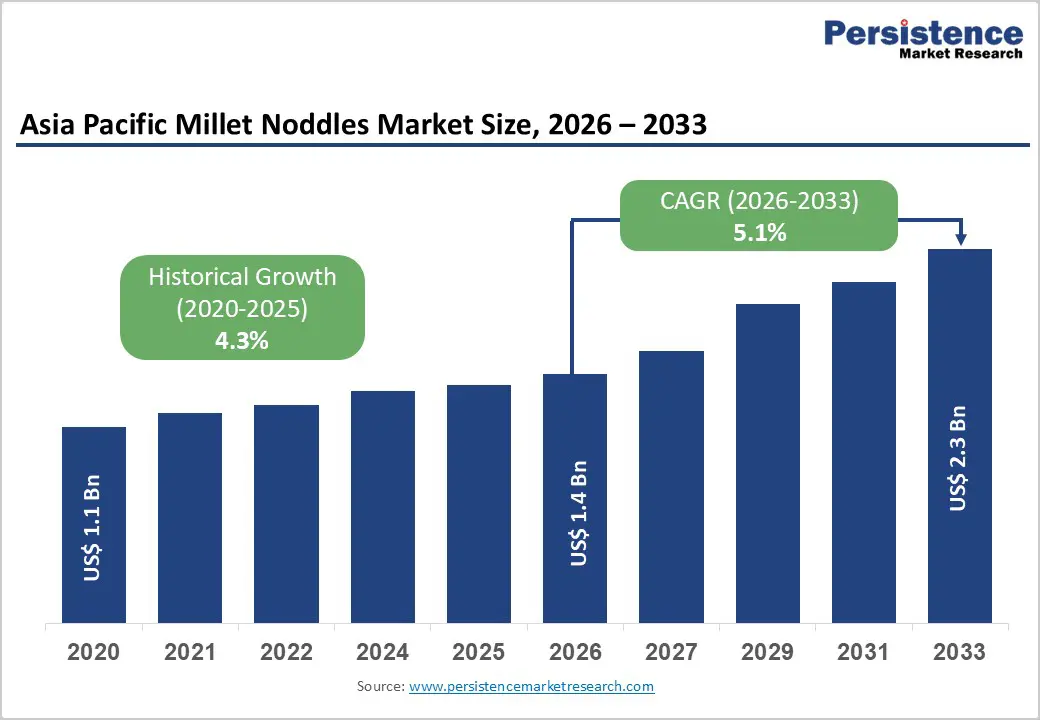
The Asia Pacific millet noodles market size is estimated to grow from US$ 1.4 billion in 2026 to US$ 2.3 billion by 2033. The market is projected to grow at a CAGR of 5.1% from 2026 to 2033.
The growing interest in nutritious convenience foods and traditional grain-based diets is steadily boosting demand for millet noodles across Asia Pacific. Consumers are increasingly exploring alternatives to refined wheat noodles as awareness of whole grains, balanced nutrition, and functional foods expands. Millets such as finger millet, sorghum, and pearl millet are gaining renewed attention due to their naturally high fiber, mineral content, and gluten-free properties. As a result, millet noodles are emerging as a practical way to combine traditional grains with modern ready-to-cook meal formats.
Key Industry Highlights
- Leading Product Segment: Dried millet noodles dominate the market due to their extended shelf life, convenient storage, and suitability for large-scale retail distribution, making them a preferred choice among households and food retailers.
- Fastest-Growing Product Segment: Instant millet noodles are growing fastest as busy urban consumers increasingly demand quick meal solutions that combine convenience with healthier whole-grain ingredients.
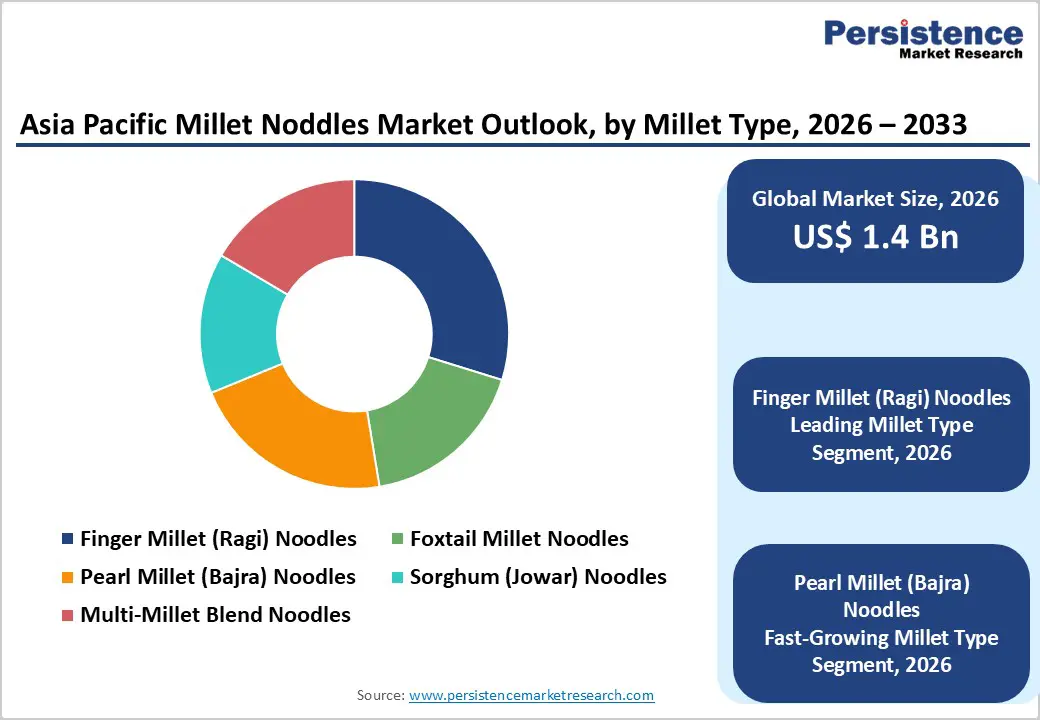
- Leading Millet Type Segment: Finger millet (ragi) noodles hold a 29.8% revenue share, supported by their high calcium and fiber content, along with strong cultural familiarity across several Asian food traditions.
- Fastest-Growing Millet Type Segment: Pearl Millet (Bajra) noodles are emerging as the fastest-growing category due to increasing awareness of their high iron and fiber content, expanding product availability, and rising demand for nutritious traditional grain-based foods among health-conscious consumers.
- Leading Distribution Channel Segment: Supermarkets and hypermarkets hold 46.2% of the market, supported by high customer traffic, extensive product assortments, and effective in-store product visibility.
- Fastest-Growing Distribution Channel Segment: Online retail and e-commerce channels are expanding rapidly as consumers increasingly purchase specialty health foods and grain-based products through digital grocery platforms.
| Key Insights | Details |
|---|---|
| Asia Pacific Millet Noodles Market Size (2026E) | US$ 1.4 Bn |
| Market Value Forecast (2033F) | US$ 2.3 Bn |
| Projected Growth (CAGR 2026 to 2033) | 5.1 % |
| Historical Market Growth (CAGR 2020 to 2025) | 4.3 % |
Market Dynamics
Driver - Increasing Consumer Preference for Nutritious Whole-Grain and Traditional Grain Foods
The growing focus on preventive healthcare and balanced diets is significantly increasing the consumption of whole-grain food products across the Asia Pacific. Consumers are gradually replacing highly refined carbohydrates with nutrient-rich grains that offer higher fiber, minerals, and plant-based nutrients. Millets, including finger millet, sorghum, and pearl millet, have gained attention for their natural gluten-free composition and strong nutritional profile, including calcium, iron, antioxidants, and slow-digesting carbohydrates. As lifestyle-related conditions such as obesity, diabetes, and cardiovascular diseases become more common, households are actively searching for healthier alternatives to conventional wheat or rice-based foods. Millet noodles provide a convenient solution by combining the traditional nutritional benefits of millets with the ease of preparing instant or ready-to-cook meals. Government initiatives promoting millet cultivation and consumption in several Asian countries have also strengthened consumer awareness of its health benefits.
Food manufacturers are increasingly introducing millet-based noodle variants with improved texture, appealing flavors, and attractive packaging to attract urban consumers. In addition, the rapid growth of health-focused retail sections in supermarkets and online grocery platforms has increased product visibility. As awareness of functional foods and balanced nutrition continues to grow, millet-based convenience products, such as noodles, are gaining traction among both young professionals and health-conscious families, driving consistent category expansion.
Restraints - Limited Processing Infrastructure and Higher Production Costs Compared to Wheat Noodles
Despite growing interest in millet-based foods, several structural barriers continue to hinder the rapid commercialization of millet noodles. Processing millets into noodle-friendly flour requires specialized milling and extrusion technologies to achieve appropriate texture, elasticity, and cooking performance. Unlike wheat, millets do not naturally contain gluten, which means manufacturers must invest in formulation adjustments and advanced processing methods to maintain noodle structure. These technological requirements increase production costs, especially for smaller manufacturers lacking access to large-scale processing facilities. Raw material availability can also fluctuate due to seasonal production cycles and fragmented farming systems across many Asian countries.
Farmers often prioritize staple crops such as rice and wheat because of stable procurement policies, leaving millet supplies comparatively limited. Higher input costs and smaller production volumes consequently raise retail prices for millet noodle products. Price sensitivity among consumers in developing economies remains another barrier, as many households continue to choose conventional wheat noodles that are more affordable and widely available. In addition, limited awareness in some markets of millets' culinary versatility slows consumer adoption. Distribution inefficiencies in rural and semi-urban regions further restrict accessibility. Until processing infrastructure expands and supply chains become more streamlined, these operational and pricing challenges will continue to influence the pace of market penetration.
Opportunity - Product Innovation and Expansion of Functional Grain-Based Convenience Foods
The evolution of health-oriented food innovation across the Asia Pacific region is creating substantial opportunities for millet-based noodle products. Modern consumers increasingly seek convenient meals that provide both nutrition and functional health benefits, encouraging food manufacturers to explore alternative grain ingredients. Millets offer a strong foundation for developing value-added products due to their naturally high fiber content, micronutrient density, and low glycemic characteristics. Companies are experimenting with multi-millet noodle blends that combine different grains to enhance flavor, balance nutrition, and improve texture. These innovations appeal particularly to urban consumers who prefer healthier convenience foods but still require quick meal preparation solutions.
The expansion of gluten-free and plant-based dietary trends also creates favorable conditions for millet noodles to gain wider acceptance in both domestic and export markets. E-commerce grocery platforms are enabling emerging brands to reach health-conscious consumers without relying solely on traditional retail networks. In addition, improvements in food processing technology, such as advanced extrusion methods and moisture-controlled packaging, are improving product shelf life and cooking performance. Collaborative initiatives between agricultural cooperatives, food processors, and retail companies are helping ensure more stable millet supply chains. As awareness of ancient grains and sustainable agriculture continues to grow, millet noodles are well-positioned to benefit from innovation in functional foods and from expanding consumer interest in nutritious convenience products.
Category-wise Analysis
By Millet Type Insigjts
Finger millet (ragi) noodles are projected to remain the most prominent millet-based noodle category in the Asia Pacific millet noodles market in 2026, accounting for 29.8% of total revenue share. The popularity of ragi stems from its rich nutritional profile, particularly its high levels of calcium, iron, and dietary fiber, which align with growing consumer interest in nutrient-dense staple foods. In countries such as India and parts of Southeast Asia, ragi has traditionally been used in porridges, flatbreads, and snacks, making it easier to incorporate into modern convenience foods like noodles. Food manufacturers are increasingly developing ragi-based noodle products to target health-conscious consumers seeking alternatives to refined wheat noodles. Its mild flavor and compatibility with multi-grain blends make it suitable for a wide range of ready-to-cook formulations. In addition, government initiatives promoting millet consumption and growing demand for gluten-free foods are strengthening product adoption. Improved milling and extrusion technologies have further enhanced the texture and cooking stability of ragi noodles, allowing producers to scale commercial production while maintaining nutritional integrity.
By Distribution Channel Insights
Supermarkets and hypermarkets are projected to hold 46.2% revenue share in the Asia Pacific millet noodles market by 2026, supported by their ability to provide extensive product assortments and convenient one-stop shopping experiences. Organized retail chains offer dedicated health-food sections where millet-based products are displayed alongside other whole-grain and gluten-free alternatives, allowing consumers to easily compare brands and nutritional attributes. The high customer traffic in large retail outlets increases exposure for emerging millet noodle brands and encourages impulse purchases through promotional campaigns and in-store sampling. Competitive pricing strategies and bundled product offers also help drive higher purchase volumes. For manufacturers and suppliers, partnerships with hypermarket chains provide consistent sales volumes and efficient inventory turnover. Rapid expansion of organized retail networks in developing economies across the Asia Pacific further strengthens this distribution channel. While online grocery platforms are gaining traction among urban consumers, physical retail stores continue to play a dominant role in staple food purchasing by offering trust, product inspection, and immediate availability.
Regional Insights
India Millet Noodles Market Trends
India is expected to remain the most influential contributor to the Asia Pacific millet noodles market in 2026, driven by strong domestic millet production and increasing government initiatives encouraging millet consumption. The country has historically cultivated a wide range of millets such as finger millet, pearl millet, and sorghum, making them widely available as raw materials for food manufacturers. Growing awareness regarding the nutritional benefits of millets, particularly their high fiber, mineral, and antioxidant content, has encouraged consumers to incorporate millet-based foods into daily diets. As a result, millet noodles have emerged as a convenient alternative to conventional wheat noodles for urban households seeking healthier meal options.
Food companies are launching innovative ready-to-cook products made with ragi, jowar, and multi-millet blends to meet this demand. The rising popularity of wellness-focused diets, coupled with increasing interest in traditional grains, continues to strengthen market expansion. Supermarkets, e-commerce platforms, and specialty organic stores are also expanding their millet-based product portfolios, ensuring wider product accessibility. Additionally, India’s emphasis on promoting millets through national nutrition programs and agricultural policies supports consistent supply chains and encourages food processors to develop value-added millet noodle products for both domestic and export markets.
China Millet Noodles Market Trends
China’s millet noodles market is anticipated to experience steady development in 2026, supported by rising interest in functional foods and growing consumer awareness of traditional grains. Millets have historically been part of northern Chinese diets, where they were commonly used in porridges and grain-based dishes. In recent years, modern food companies have begun reintroducing these grains in convenient packaged formats such as noodles, snacks, and ready meals. Health-conscious consumers in major urban centers are increasingly seeking alternatives to refined carbohydrate products, driving demand for nutrient-rich grains like millet. Food manufacturers are responding by launching innovative noodle products incorporating multi-grain blends and whole-grain flours that align with nutritional wellness trends. The expansion of organized retail and e-commerce grocery platforms has further improved access to specialty grain products.
Additionally, China’s growing middle-class population is prioritizing quality and functional nutrition, encouraging greater adoption of millet-based foods. Improved food processing technologies and packaging innovations have also enhanced product shelf life and texture, enabling millet noodles to compete more effectively with traditional wheat-based varieties. Collectively, these factors support the country’s gradual but consistent growth trajectory within the regional millet noodles market.
Competitive Landscape
The Asia Pacific millet noodles market is highly competitive, with strong participation from Slurrp Farm, Zibo Lvshuang Food Co., Ltd., Millet Bank, Ancient Golden Mill, Thanu Shri Food Products, and Millet Amma. These players leverage diversified sourcing networks, millet processing capabilities, strong retail presence, and expanding e-commerce distribution while continuously innovating in product formulations, flavor variants, and packaging to meet growing demand for healthier noodle alternatives.
Increasing health awareness, rising adoption of gluten-free and nutrient-rich grains, and government promotion of millets are accelerating market growth. Manufacturers are focusing on clean-label formulations, improved product texture, longer shelf life, and expanding distribution across supermarkets, online platforms, and health food stores
Key Industry Developments:
- In November 2024, Ramoji Group announced the launch of a millet-based product range under the Sabala brand. In the initial phase, the company introduced 45 products and variants, including regional-style khichdi, millet cookies, health bars, snacks, and millet noodles, expanding the millet-based food category in India.
- In November 2023, Nestlé India introduced a range of new products featuring millets as a core ingredient, aiming to enhance consumer awareness and acceptance through familiar food formats while supporting the Indian government’s International Year of Millets initiative.
Companies Covered in Asia Pacific Millet Noodles Market
- Slurrp Farm
- Zibo Lvshuang Food Co., Ltd.
- Millet Bank
- Ancient Golden Mill
- Thanu Shri Food Products
- Millet Amma
- Tenali Double Horse
- Shanghai Xin Chen Da Industrial
- Sabala Millets
- Bliss Tree
- Senseful Foods
- Nalam Food Product
- Field to Feed Export
- Veg India Exports
- Sankalpam Trading LLP
- Others
Frequently Asked Questions
The Asia Pacific millet noodles market is projected to be valued at US$ 1.4 Bn in 2026.
Growing consumer demand for nutritious, gluten-free, and traditional grain-based foods, along with government promotion of millet consumption and rising health awareness, is driving the Asia Pacific millet noodles market.
The Asia Pacific millet noodles market is poised to witness a CAGR of 5.1%between 2026 and 2033.
Expanding health-focused food innovation, product launches using multi-millet formulations, and increasing online retail penetration for functional foods present key growth opportunities in the Asia Pacific millet noodles market.
Farm, Zibo Lvshuang Food Co., Ltd., Millet Bank, Ancient Golden Mill, Thanu Shri Food Products, and Millet Amma are some of the key players in the Asia Pacific millet noodles market.


