




- Processed Food
- Vegan Sweet Potato Fries Market
Vegan Sweet Potato Fries Market Size, Share, and Growth Forecast, 2026 - 2033
Vegan Sweet Potato Fries Product Type Product Type (Frozen, Fresh, Baked, Fried, Others), Flavor (Regular, Spicy, Herbed, Sweet & Cinnamon-Spiced, Curly), End-User (Household, Food Service Industry, Quick-Service Restaurants (QSRs), Cafes & Bars), and Regional Analysis for 2026 - 2033

Vegan Sweet Potato Fries Market Share and Trends Analysis
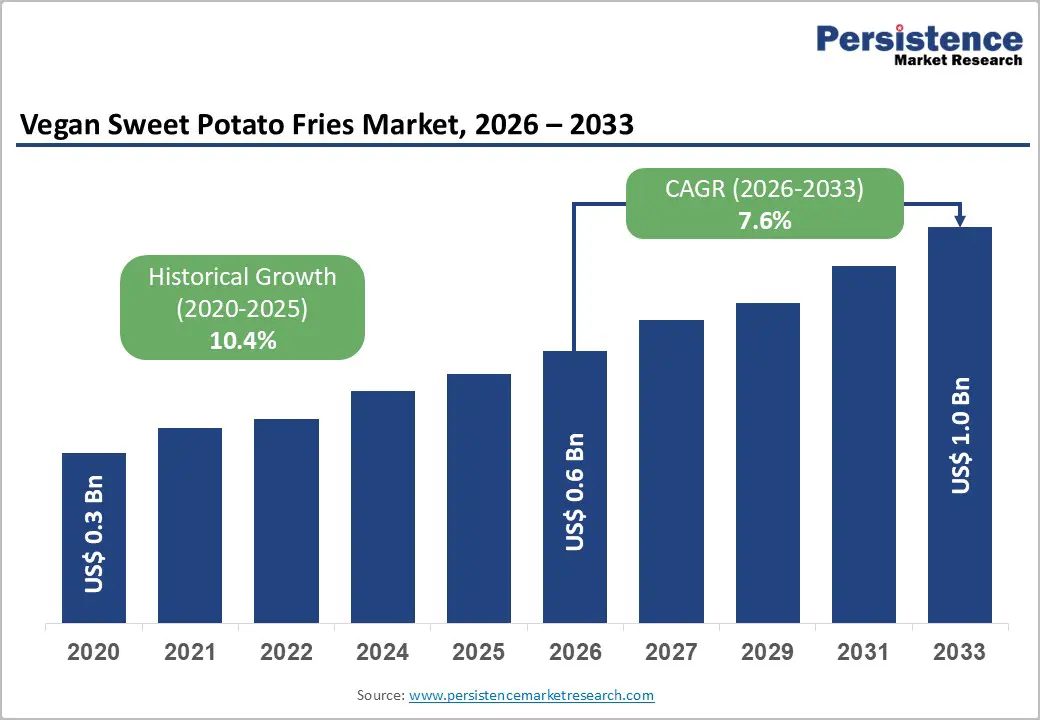
The global vegan sweet potato fries market size is likely to be valued at US$ 0.6 billion in 2026, and is projected to reach US$ 1.0 billion by 2033, growing at a CAGR of 7.6% during the forecast period 2026−2033. Growth outlook remains positive, driven by a dietary shift toward plant-based food consumption and expansion of quick-service dining formats. Urbanization and a rising working population increase demand for convenient, ready-to-cook vegan food products, supporting category expansion.
Health awareness initiatives led by organizations such as the World Health Organization (WHO) and national dietary agencies influence preference toward nutrient-rich alternatives, positioning sweet potato fries as a healthier substitute to conventional potato products. Technological advancements in processing, freezing, and oil-free baking improve consistency, shelf life, and nutrition. Retail modernization, digital commerce growth, food service expansion, improved cold chain infrastructure, and supportive regulations further strengthen market development.
Key Industry Highlights
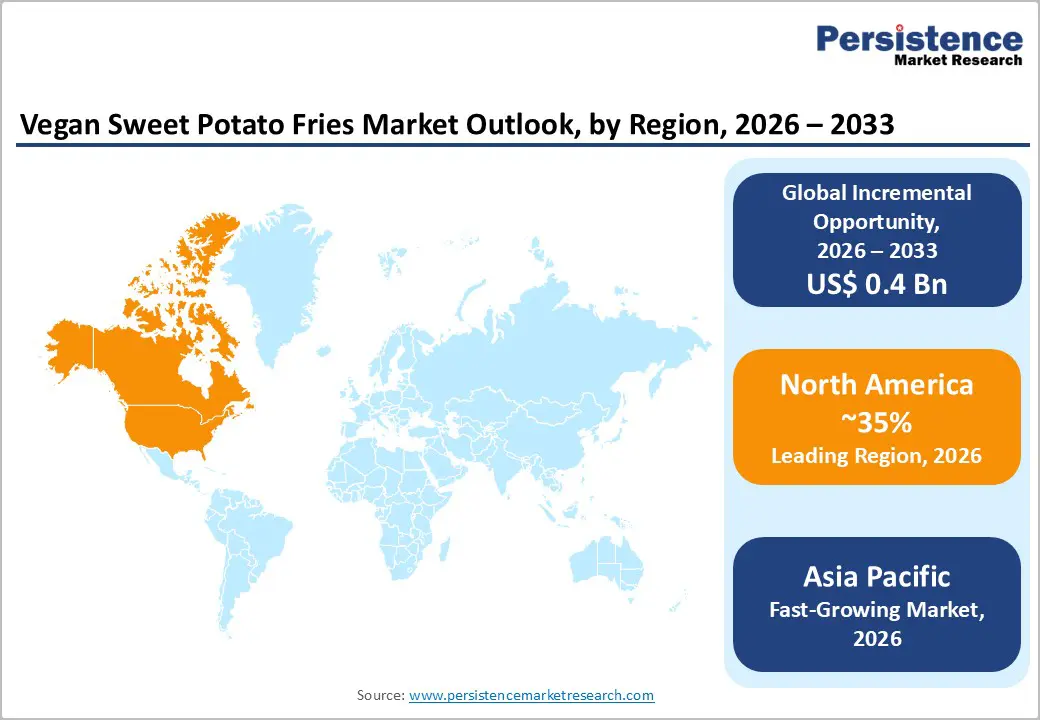
- Dominant Region: North America is expected to lead with an estimated 35% market share in 2026, supported by strong demand for vegan foods and beverages across United States and Canada.
- Fastest-growing Regional Market: Asia Pacific is forecasted to be the fastest-growing market during 2026–2033, driven by urbanization, plant-based demand, and convenience trends.
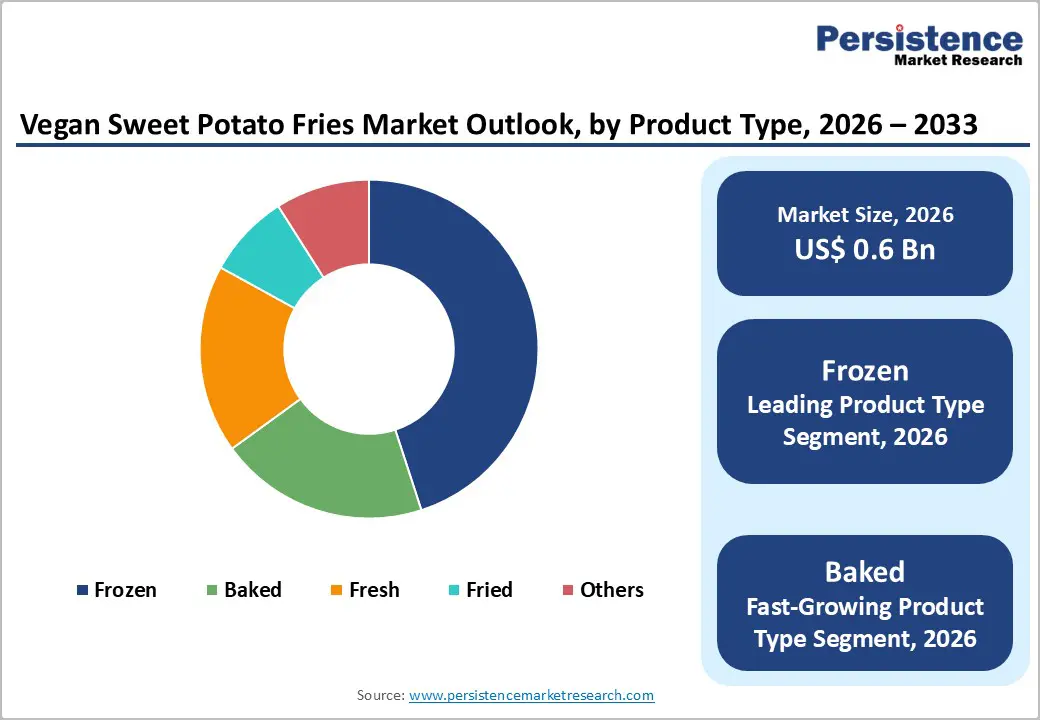
- Leading Product Type: Frozen sweet potato fries are anticipated to secure around 45% revenue share in 2026, fueled by their convenience and longer shelf life.
- Fastest-growing Product Type: Baked sweet potato fries are expected to be the fastest-growing segment during 2026–2033, driven by a rapidly increasing preference for low-fat foods.
| Key Insights | Details |
|---|---|
|
Vegan Sweet Potato Fries Market Size (2026E) |
US$ 0.6 Bn |
|
Market Value Forecast (2033F) |
US$ 1.0 Bn |
|
Projected Growth (CAGR 2026 to 2033) |
7.6% |
|
Historical Market Growth (CAGR 2020 to 2025) |
10.4% |
DRO Analysis
Growing Health Consciousness among Consumers
Heightened focus on preventive nutrition and lifestyle management is reshaping food selection patterns, with consumers prioritizing products aligned with wellness goals. Diet-related conditions such as obesity, cardiovascular disorders, and metabolic syndromes are encouraging a shift toward foods perceived as nutrient-dense and minimally processed. Sweet potato–based offerings align with these expectations through natural sweetness, fiber content, and vitamin density, particularly vitamin A. Public health campaigns reinforce this behavioral shift, as evidenced by data from the WHO indicating that 43% of adults aged 18 years and above were overweight globally updated in 2025, strengthening demand for healthier food alternatives and supporting transition toward plant-based snack consumption patterns globally.
Preference for clean-label, plant-derived, and functional food products further supports adoption, reflecting scrutiny of ingredient transparency and cooking methods. Traditional fried snacks face perception challenges linked to high fat content and processing intensity, while baked or air-fried plant-based variants gain traction within health-focused consumption patterns. Urban consumers and working professionals demonstrate increased reliance on convenient food solutions that maintain perceived nutritional value, reinforcing demand for ready-to-cook options with balanced profiles. Food service operators and retailers respond through menu engineering and product assortment strategies centered on wellness positioning, integrating plant-based formats into mainstream consumption channels and reinforcing demand across retail and institutional food service environments.
Expansion of Convenience Food Consumption
Expansion of convenience-oriented food consumption reflects structural shifts in urban lifestyles, where time scarcity and dual-income households influence purchasing behavior toward quick meal solutions. Ready-to-cook and frozen formats align with demand for minimal preparation and consistent quality, enabling seamless integration into daily routines. In 2025, the share of employed persons in urban areas continued to rise, as reflected in datasets from the International Labour Organization (ILO), indicating sustained time constraints across working populations. This trend supports increased reliance on convenient, pre-prepared food formats that reduce cooking time while maintaining standardized taste, texture, and portion consistency across consumption occasions.
Retail transformation and foodservice integration strengthen this driver through expanded shelf presence and menu inclusion across supermarkets, digital commerce platforms, and quick-service outlets. Standardized processing, portion control, and extended shelf stability improve operational efficiency and reduce preparation complexity for foodservice operators. Consumer preference shifts toward flexible eating occasions, including snacking and light meals, reinforce demand for portable and easy-to-prepare products. Alignment with plant-based dietary patterns enhances product positioning within modern consumption frameworks shaped by accessibility, time optimization, and evolving retail infrastructure across developed and emerging economies.
Challenges in Maintaining Taste and Texture
Consistency in sensory quality remains a critical barrier in vegan sweet potato fries production, driven by the intrinsic composition of sweet potatoes. High moisture content and natural sugar levels lead to rapid caramelization during frying or baking, resulting in uneven browning and softness rather than the desired crisp exterior. Variability in crop quality across regions further intensifies inconsistency in texture and flavor outcomes. Absence of animal-derived stabilizers and coatings limits structural integrity during processing, reducing the ability to achieve uniform crispiness.
Processing constraints and formulation limitations further restrict optimization of texture and taste profiles. Oil-free baking and air-frying technologies, widely adopted to align with health-focused positioning, often produce less desirable mouthfeel compared to deep-frying methods. Freezing and reheating cycles impact cell structure, leading to sogginess and reduced firmness during consumption. Clean-label requirements restrict the use of synthetic additives that could enhance crunch and stability. Foodservice operators face operational inconsistencies during preparation, affecting final product quality.
Intense Competition from Alternative Snacks
A wide spectrum of plant-based and conventional snack options competes for the same consumer base, creating significant pressure on demand for vegan sweet potato fries. Baked vegetable chips, protein-based crisps, air-popped snacks, and traditional potato fries offer varied taste profiles, pricing tiers, and convenience formats. Strong brand presence and extensive shelf space allocation for these alternatives limit visibility for newer or niche offerings. Price sensitivity in mass markets shifts purchasing behavior toward lower-cost substitutes, especially in developing regions. Limited product differentiation in flavor, texture, and format reduces switching barriers, leading consumers to explore competing snack categories with greater familiarity and promotional exposure.
Rapid innovation cycles across the broader snack industry intensify competitive dynamics, with frequent product launches featuring functional ingredients, fortified nutrition, and clean-label positioning. Established snack manufacturers leverage scale, distribution networks, and marketing investments to capture consumer attention across retail and foodservice channels. Private label offerings further intensify pricing pressure, narrowing margins for premium vegan products. Convenience-driven consumption patterns favor widely available, ready-to-eat alternatives over products requiring preparation. Retailers prioritize high-turnover products, influencing shelf placement and inventory decisions, which constrains market penetration and limits consistent consumer engagement for vegan sweet potato fries.
Proliferation of Quick-Service Restaurants in Urban Centers
Quick-service dining formats create a high-frequency consumption environment aligned with evolving urban lifestyles and time-constrained routines. Standardized menus and rapid service models support seamless integration of plant-based side items into existing offerings. Menu flexibility enables operators to introduce vegan alternatives without major operational changes. A 2025 estimate from the United States Department of Agriculture indicates foodservice spending reached about US$ 1.52 trillion in 2024, reflecting sustained consumer shift toward away-from-home eating patterns that continue into 2025. Strong foot traffic and repeat purchases increase product visibility and trial rates across diverse consumer segments.
Menu innovation strategies within quick-service outlets prioritize healthier positioning and product differentiation. Plant-based side dishes align with demand for lighter, nutrient-focused options in fast dining settings. Operational scalability supports consistent preparation, portion control, and cost management. Digital ordering systems and delivery platforms expand access and drive incremental sales volumes. Franchise-based expansion accelerates geographic penetration, including emerging urban clusters. Strategic bundling with burgers, wraps, and beverages increases average order value and encourages cross-category adoption. Consumer perception of balanced indulgence strengthens demand within structured meal combinations offered across standardized quick-service platforms.
Development of Functional and Fortified Variants
Functional and fortified variants create strategic value through alignment with evolving nutrition standards and micronutrient intake gaps. Public health agencies emphasize nutrient-dense food consumption, shaping product development priorities. WHO guidance states that, as of 2026, a minimum intake of 400 grams of fruits and vegetables per day supports improved health outcomes. This benchmark drives demand for products enriched with vitamins, minerals, and fiber. Sweet potato formats offer a natural base for fortification with antioxidants and plant-based nutrients. Clean-label positioning and added functional benefits enhance consumer perception, supporting premium pricing strategies and differentiation in competitive retail environments.
Commercial momentum strengthens through integration of value-added nutrition with convenience-oriented formats. Fortification enables positioning within functional snacking and preventive nutrition segments, aligning with rising focus on immunity and long-term wellness. Food service operators benefit from menu innovation that combines indulgence with perceived health value. Processing technologies support incorporation of plant proteins, probiotics, and micronutrients without compromising texture or shelf stability. Retail channels prioritize differentiated offerings with clear health claims, improving visibility and turnover. Regulatory support for nutrient enrichment and sustainable food systems reinforces adoption, while evolving dietary patterns increase acceptance of functional, plant-based alternatives across diverse consumer groups.
Category-wise Analysis
Product Type Insights
Frozen fries are anticipated to secure around 45% of the vegan sweet potato fries market revenue share in 2026, reflecting strong demand for convenience-oriented food solutions. Frozen variants offer extended shelf life and consistent quality, making them suitable for both household consumption and food service operations. Advanced freezing technologies preserve texture and nutritional value, improving consumer acceptance. Retail chains prioritize frozen products due to ease of storage and reduced spoilage risk. Food service providers prefer frozen formats due to standardized portion control and preparation efficiency. Availability across supermarkets and online platforms enhances accessibility. Continuous improvements in cold chain infrastructure strengthen distribution capabilities.
Baked sweet potato fries is expected to be the fastest-growing segment during the 2026-2033 forecast period, propelled by rising preference for low-fat and minimally processed food products. Health-conscious consumers increasingly seek alternatives to deep-fried foods, driving adoption of baked variants. Regulatory emphasis on reducing trans fats and promoting healthier cooking methods supports this trend. Manufacturers invest in advanced baking technologies to improve texture and taste, addressing historical limitations. Retailers expand shelf space for healthier snack options, increasing visibility. Food service operators integrate baked variants into menus to cater to evolving dietary preferences.
End-User Insights
Food service industry is likely to be the leading segment with a projected 50% of the vegan sweet potato fries market share in 2026 due to strong institutional demand and menu diversification strategies. Restaurants and cafés integrate vegan options to cater to health-conscious consumers. Standardized procurement systems support uniform taste and portion control across outlets. Bulk purchasing models improve cost management and inventory planning. Consistent demand from dine-in and takeaway formats sustains high-volume utilization. Menu engineering strategies prioritize side dishes with strong margins. Collaboration with distributors strengthens supply continuity. Training protocols ensure preparation consistency across locations.
Quick-service restaurants (QSRs) are anticipated to be the fastest-growing segment from 2026 to 2033, fueled by rapid expansion of franchise networks and increasing consumer preference for convenient dining options. Digital ordering platforms and delivery services enhance accessibility. Growth of app-based ecosystems supports higher order frequency. Menu innovation aligns with plant-based consumption trends. Standardized cooking processes enable rapid service and uniform quality. Franchise scalability supports expansion across urban and semi-urban regions. Competitive pricing strategies attract value-focused consumers. Integration of combo meals increases product visibility. Operational models emphasize speed, consistency, and cost control.
Regional Insights
North America Vegan Sweet Potato Fries Market Trends
North America is expected to lead with an estimated 35% of the vegan sweet potato fries market share in 2026, supported by high institutional demand and mature plant-based consumption patterns across United States and Canada. Strong penetration of organized food service chains drives consistent volume offtake, with standardized menus incorporating plant-based side options. Advanced cold chain infrastructure ensures reliable distribution and minimal product loss. Large-scale processing facilities apply automation and precision freezing to maintain uniform quality. Retail consolidation improves shelf visibility and accelerates turnover through data-driven merchandising. Private-label expansion strengthens price competitiveness while maintaining stable margins across major retail formats.
High digital maturity and logistics efficiency reinforce category leadership in United States and Canada. E-commerce grocery platforms enable targeted promotions and demand forecasting optimization. Data analytics integration supports inventory planning and reduces stockouts during peak demand cycles. Continuous innovation in fortified variants and low-oil processing enhances product differentiation. Food service operators prioritize high-margin side offerings, supporting consistent inclusion in menus. Marketing strategies emphasize health positioning and sustainability credentials, strengthening brand value. Regulatory frameworks promote transparent labeling and traceability, improving consumer confidence. Investment in contract farming and sustainable sourcing ensures stable raw material availability and uninterrupted production cycles.
Europe Vegan Sweet Potato Fries Market Trends
Europe demonstrates stable expansion supported by regulatory alignment with sustainable food systems and strong consumer preference for plant-based diets. Germany and United Kingdom show high adoption driven by established vegan populations and advanced retail ecosystems. Stringent food labeling standards enhance transparency and consumer confidence in clean-label products. Demand for organic and minimally processed foods supports premium positioning. Food service operators emphasize menu diversification through plant-based offerings. Agricultural policies encourage sustainable crop cultivation, supporting steady raw material availability and consistent supply across processing and retail channels.
Retail innovation and private-label expansion strengthen category penetration across France, Italy, and Netherlands. Supermarket chains prioritize shelf space for plant-based frozen products, improving visibility and accessibility. E-commerce grocery platforms support direct-to-consumer distribution and targeted promotions. Processing advancements enhance product consistency and shelf life, supporting cross-border trade efficiency. Food service channels integrate premium side options to improve margins and attract health-conscious consumers. Government initiatives promoting reduced meat consumption and carbon footprint reduction influence purchasing behavior and strengthen demand.
Asia Pacific Vegan Sweet Potato Fries Market Trends
Asia Pacific is forecasted to be the fastest-growing market for vegan sweet potato fries between 2026 and 2033, stimulated by rapid urban expansion, shifting dietary preferences toward plant-based food consumption, and rising demand for convenient meal solutions. China and India show strong growth supported by large consumer bases and expanding food service networks. Japan demonstrates demand influenced by premiumization and health-focused consumption. South Korea reflects growth driven by innovation in quick-service dining formats. Localization strategies improve product acceptance across varied consumer groups.
Digital infrastructure and retail transformation accelerate market expansion across multiple economies. China benefits from advanced e-commerce ecosystems and high mobile usage. India shows rising adoption through expanding delivery platforms and urban demand. Japan supports growth through efficient supply chains and quality-focused retail systems. South Korea leverages technology-driven food service models. Cold chain development improves distribution efficiency. Domestic manufacturing supports cost competitiveness. Regulatory focus on sustainable agriculture and nutrition diversification strengthens long-term growth potential.
Competitive Landscape
The global vegan sweet potato fries market exhibits a moderately fragmented structure, with presence of global food manufacturers and regional processors. Leading players collectively account for a significant share, supported by strong distribution networks and brand recognition. Competitive positioning focuses on product innovation, pricing strategies, and geographic expansion. McCain Foods Limited and Lamb Weston Holdings leverage integrated supply chains, while Aviko B.V. and Farm Frites International B.V. strengthen food service partnerships.
Strategic competition reflects focus on operational efficiency, cost control, and regional expansion. Large players invest in automation and advanced freezing technologies to improve scalability and maintain margins. Expansion into emerging markets supports volume growth through localized distribution. Partnerships with quick service restaurants ensure steady demand. Regional processors compete through flexible pricing and localized offerings. Innovation emphasizes clean-label ingredients and fortified variants, aligning with evolving consumer preferences and supporting sustained competitive positioning.
Key Industry Developments
- In September 2025, Folkland Foods announced the launch of organic French fries, targeting clean-label demand with simple ingredients and nationwide retail distribution.
- In July 2025, Roots Farm Fresh launched crispy potato tots, crispy potato wedges, and sweet potato crinkle-cut fries, the world’s only organic, seed oil-free frozen fries, targeting health-conscious consumers seeking alternatives to conventional cooking oils.
- In January 2025, Blue Tribe Foods launched sweet potato fries, introducing a plant-based snack positioned for health benefits and natural ingredients.
Companies Covered in Vegan Sweet Potato Fries Market
- McCain Foods Limited
- Lamb Weston Holdings Inc.
- Aviko B.V.
- Farm Frites International B.V.
- Conagra Brands Inc.
- The Kraft Heinz Company
- General Mills Inc.
- Simplot Food Group
- Alexia Foods
- Green Giant
- Ardo NV
- Iceland Foods Ltd.
Frequently Asked Questions
The global vegan sweet potato fries market is projected to reach US$ 0.6 billion in 2026.
Rising adoption of plant-based diets, increasing health awareness, and growing demand for convenient ready-to-cook food products are driving the market.
The market is poised to witness a CAGR of 7.6% from 2026 to 2033.
Expansion in food service channels, growth of e-commerce distribution, and development of functional and fortified plant-based variants present key market opportunities.
Some of the key market players include McCain Foods Limited, Lamb Weston Holdings, Aviko B.V., Farm Frites International B.V., and Conagra Brands.


