




- Processed Food
- Puffed Food Market
Puffed Food Market Size, Share, and Growth Forecast, 2026 – 2033
Puffed Food Market by Product Type (Wheat, Rice, Corn, Sorghum, Ragi), Application (Bakery Industry, Snacks Industry), and Regional Analysis for 2026 – 2033

Puffed Food Market Size and Trends Analysis
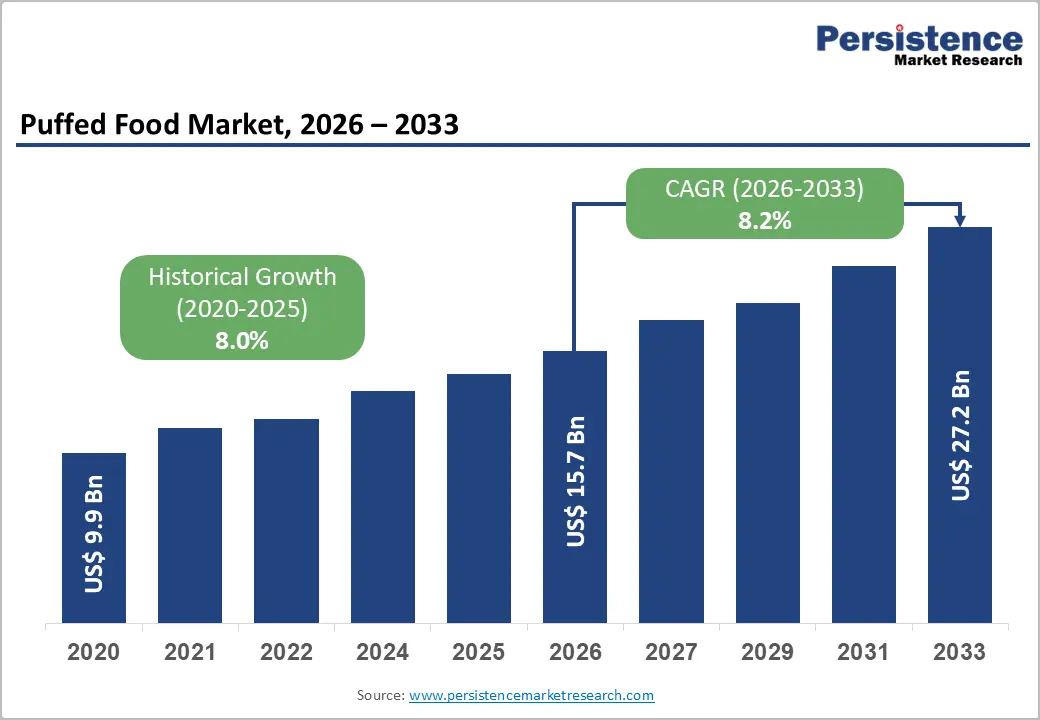
The global puffed food market size is likely to be valued at US$15.7 billion in 2026 and is expected to reach US$27.2 billion by 2033, growing at a CAGR of 8.2% during the forecast period from 2026 to 2033, driven by increasing demand for convenient, ready-to-eat, and healthier snack alternatives.
According to the U.S. Food and Drug Administration, puffed food products fall under processed cereal and snack foods and must comply with 21 CFR regulations for labeling, ingredient disclosure, and nutrition information standards. The FDA also enforces “gluten-free” labeling standards (2025) requiring less than 20 ppm gluten, supporting demand for gluten-free puffed snacks made from rice, corn, and millet-based grains. Market growth is driven by rising demand for convenient, low-fat, and easy-to-digest snacks, supported by advancements in extrusion and puffing technologies that enhance texture, shelf life, and nutrient retention.
Key Industry Highlights:
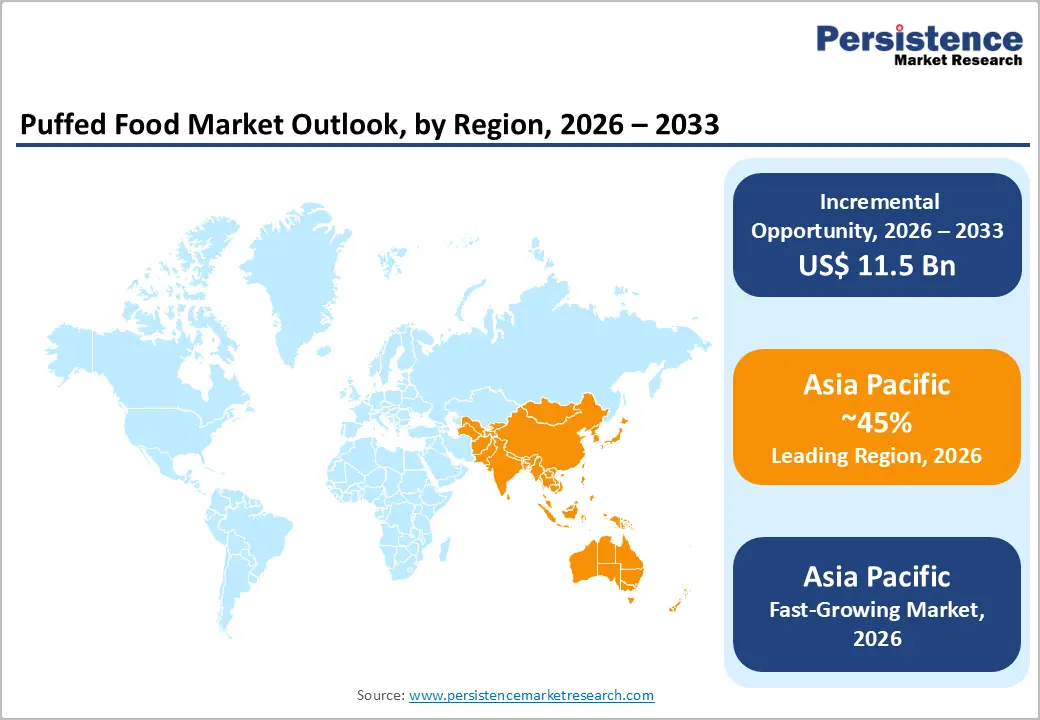
- Leading Region: Asia Pacific is anticipated to be the leading region, accounting for a market share of 45% in 2026, driven by urbanization, rising incomes, and traditional grain-based snack consumption.
- Fastest-growing Region: North America is likely to be the fastest-growing region, supported by advanced retail networks, innovation in healthy snack formulations, and regulatory standards set by the U.S. Food and Drug Administration.
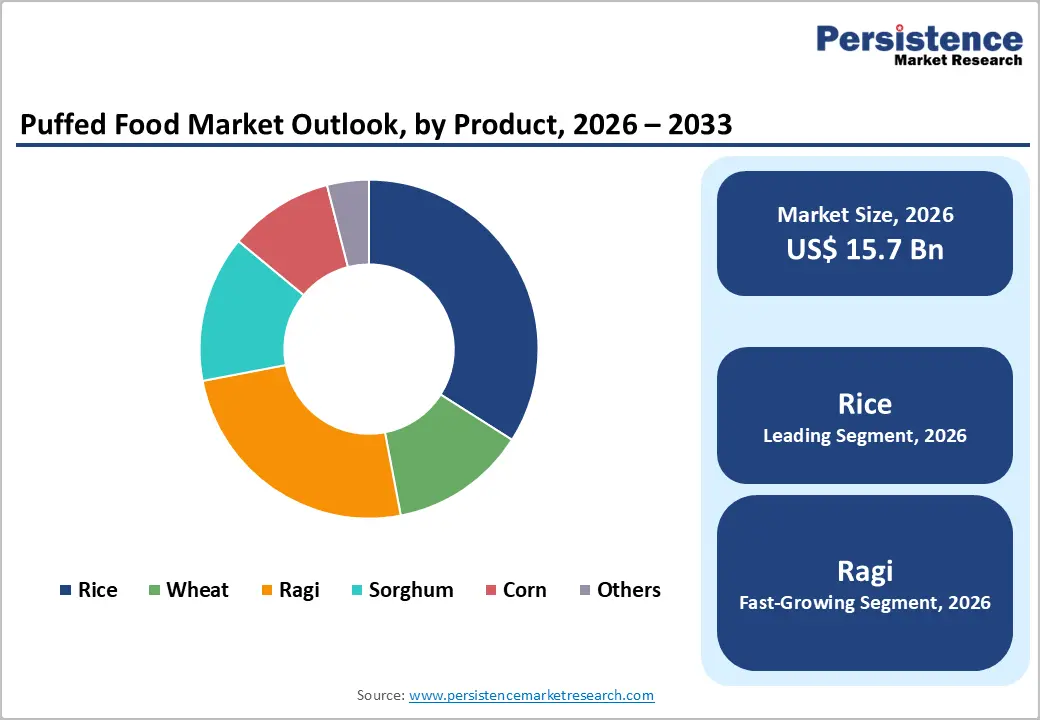
- Leading Product Type: Rice is projected to represent the leading product type in 2026, accounting for 40% of the revenue share, driven by its wide availability, gluten-free nature, and strong use in puffed snack applications.
- Leading Application: The snacks industry is anticipated to be the leading application, accounting for over 70% of the revenue share in 2026, supported by strong demand for ready-to-eat puffed products.
- Key Opportunity: The strongest opportunity in the puffed food market lies in the rapid expansion of clean-label and millet-based functional snacks, as health-conscious consumers increasingly seek nutritious, gluten-free, and sustainably produced ready-to-eat food products.
DRO Analysis
Driver - Rising Demand for Healthy and Convenient Snacking Options
Urban lifestyles, busy work schedules, and growing awareness of diet-related health issues are encouraging consumers to shift from fried snacks to low-fat, air-puffed alternatives. Products made from rice, corn, wheat, and millets are gaining traction due to their light texture, easy digestibility, and perceived health benefits. Rising demand for gluten-free and fortified snacks is supporting category expansion.
Retail growth, e-commerce penetration, and on-the-go consumption habits are accelerating product accessibility and increasing overall market adoption across regions. Manufacturers are innovating to meet health-focused consumer expectations by introducing baked, multigrain, and protein-enriched puffed snacks.
Clean-label trends and reduced oil content formulations are enhancing product appeal among health-conscious buyers. Increasing government focus on nutrition awareness and dietary guidelines is also supporting the shift toward healthier snack alternatives. Functional ingredients such as fiber, vitamins, and ancient grains such as ragi are being widely incorporated.
Restraint - Consumer Perception and Taste Fatigue
Many consumers associate puffed products with being overly processed or lacking nutritional density compared to whole foods. Despite improvements in formulation, concerns over artificial additives, sodium content, and long shelf-life ingredients continue to limit premium acceptance. Frequent consumption of similar flavors such as salted corn or rice puffs leads to reduced consumer excitement, impacting repeat purchase behavior and slowing category penetration in highly competitive snack markets.
Taste fatigue remains a critical challenge as consumers increasingly seek novel and indulgent snacking experiences. The limited differentiation in texture and flavor across many puffed products reduces long-term engagement. Although companies are introducing innovative variants such as spicy, cheese, and herb-infused options, maintaining sustained consumer interest is difficult. Health-conscious consumers also compare puffed snacks with fresh or minimally processed alternatives, creating additional barriers.
Opportunity - Sustainability and Clean-Label Innovations
Consumers are increasingly prioritizing products made with natural ingredients, minimal processing, and transparent labeling. This trend is encouraging manufacturers to adopt non-GMO grains, whole grains, and environmentally responsible sourcing practices. Puffed foods made from millets, sorghum, and ragi are gaining attention due to their low environmental footprint and nutritional benefits.
Sustainable packaging solutions and reduced food waste production methods are enhancing brand value and supporting long-term market expansion. Clean-label innovation is driving product differentiation and premiumization within the category. Manufacturers are reformulating puffed snacks to eliminate artificial preservatives, colors, and flavors while enhancing nutritional content through fortification with proteins, fibers, and micronutrients.
Increasing regulatory emphasis on food transparency and consumer demand for free-from claims are accelerating this transition. Companies investing in eco-friendly production technologies and plant-based ingredient sourcing are gaining a competitive advantage. Stricter food regulations and clean-label requirements are pushing manufacturers to improve ingredient transparency and reduce artificial additives in puffed food products.
Category-wise Analysis
Product Type Insights
Rice is expected to lead the puffed food market, accounting for approximately 40% of revenue in 2026, driven by its widespread availability, neutral taste, light texture, and strong cultural acceptance in puffed formats across regions. It is extensively used in both snacks and bakery applications, particularly in rice cakes, rice puffs, and extruded snack products. High consumer familiarity and cost-effectiveness also support large-scale production and consumption. For example, rice puffs and rice cakes are widely consumed as low-calorie snack alternatives in both developed and emerging markets.
Ragi is likely to represent the fastest-growing segment, supported by its high nutritional value, including calcium, fiber, and antioxidants, and rising demand for ancient grains. Consumers are actively shifting toward nutrient-dense, traditional grains, increasing ragi-based puffed product innovation. For instance, ragi-based puffed breakfast cereals and snack puffs are gaining popularity among health-conscious urban consumers seeking diabetic-friendly and high-fiber diets.
Application Insights
The snacks industry is projected to lead the market, capturing around 70% of the revenue share in 2026, supported by strong demand for ready-to-eat, convenient, and portable snack options. Puffed products such as corn puffs, rice puffs, and extruded snacks are widely consumed due to their light texture, affordability, and flavor variety. Consumers prefer puffed snacks as quick-energy foods suitable for on-the-go consumption. A notable example includes flavored corn puffs and cheese-coated rice puffs, which are highly popular in retail supermarkets and online snack platforms.
The bakery industry is likely to be the fastest-growing application, driven by the integration of puffed grains into breads, cookies, protein bars, and bakery fillings. This growth is supported by rising demand for clean-label, functional, and low-density baked goods with improved texture and nutritional enhancement. Health-conscious consumers and premium bakery brands are increasingly adopting puffed ingredients to innovate formulations. For instance, puffed rice is widely used in energy bars and breakfast cereals to improve crunchiness and nutritional value.
Regional Insights
North America Puffed Food Market Trends
North America is likely to be the fastest-growing region in the puffed food industry in 2026, driven by rising demand for healthier snacking alternatives, clean-label products, and low-fat convenience foods. Consumers are increasingly shifting toward baked and air-puffed snacks made from corn, rice, and multigrain ingredients. A notable example includes PepsiCo, which has expanded its healthier snack portfolio through baked and low-sodium puffed snack variants.
U.S. Puffed Food Market Trends
The U.S. dominates the regional market, driven by strong demand for protein-rich, gluten-free, and low-calorie snacks. Recent FDA-aligned labeling transparency initiatives are encouraging manufacturers to improve product formulation and nutritional disclosure. Growth in e-commerce snack subscriptions and convenience retail formats is increasing accessibility.
Canada Puffed Food Market Trends
Canada is a significant market for puffed food, supported by increasing health awareness and demand for natural, minimally processed snacks. The government's focus on healthier eating guidelines is influencing product development toward low-sugar and low-fat puffed foods. Canadian consumers show a strong preference for whole-grain and gluten-free puffed products. Retail expansion and growing penetration of premium organic snack brands are driving sales.
Europe Puffed Food Market Trends
Europe is likely to be a significant market for puffed food, due to strong demand for clean-label, organic, and low-calorie snack products. Consumers are increasingly focused on health, sustainability, and reduced artificial ingredients in processed foods. Advanced food processing technologies and strict EU food safety regulations are encouraging innovation in healthier puffed snack formats. For instance, Nestlé S.A., which has expanded its better-for-you snack portfolio across Europe, focusing on whole grains, reduced sugar content, and fortified puffed snack products aligned with regional health standards.
U.K. Puffed Food Market Trends
The U.K. is a significant market for puffed food, supported by rising health consciousness and demand for low-fat, convenient snacks. Consumers are shifting from traditional fried snacks to baked and air-puffed alternatives. Supermarkets and online grocery platforms are promoting healthier snack categories, increasing product visibility. Sugar reduction policies and public health campaigns are influencing product innovation. There is strong growth in gluten-free and high-protein puffed snacks among younger consumers.
Germany Puffed Food Market Trends
Germany dominates the regional market, driven by strong demand for organic, high-fiber, and functional snacks. Consumers prefer clean-label products with minimal processing and sustainable sourcing. The country’s strict food safety and labeling regulations are encouraging manufacturers to reformulate puffed snacks with natural ingredients. Retail chains are expanding shelf space for healthy snack alternatives, especially rice and multigrain puffs.
Asia Pacific Puffed Food Market Trends
The Asia Pacific region is anticipated to be the leading region, accounting for a market share of 45% in 2026, driven by strong demand for traditional grain-based snacks, rising disposable incomes, and urbanization. Consumers are increasingly adopting convenient snack formats made from rice, corn, millet, and wheat. The region benefits from abundant raw material availability and strong cultural acceptance of puffed foods. For example, ITC Limited has expanded its packaged snack portfolio, including puffed and extruded products.
China Puffed Food Market Trends
China dominates the regional market, driven by rapid urbanization, busy lifestyles, and increasing demand for ready-to-eat snacks. Consumers are shifting toward healthier alternatives such as baked and low-oil puffed snacks. E-commerce platforms and modern retail channels are significantly driving product availability. Rising health awareness is encouraging demand for whole-grain and fortified puffed products. Domestic manufacturers are innovating with spicy, savory, and localized flavors.
India Puffed Food Market Trends
India is a significant market for puffed food, supported by the rising popularity of millet-based snacks such as ragi and sorghum puffs, supported by government initiatives promoting millets. Increasing health awareness and demand for affordable, nutritious snacks are fueling growth. The rapid expansion of retail and online grocery platforms is improving accessibility. Domestic FMCG companies are launching innovative puffed snack variants with regional flavors.
Competitive Landscape
The global puffed food market exhibits a moderately fragmented structure, driven by rising demand for healthier snacking, clean-label products, and strong competition between multinational FMCG companies and regional snack manufacturers. Increasing preference for low-fat, gluten-free, and ready-to-eat puffed snacks is pushing companies to invest in product innovation, flavor diversification, and advanced extrusion technologies.
Major leaders include PepsiCo, Inc., The Kellogg Company, The Kraft Heinz Company, Wise Foods, Inc., and Wyandot, Inc., which compete through strong brand portfolios and large-scale distribution networks. These players compete through continuous product innovation, expansion of healthier puffed snack variants, and aggressive marketing strategies targeting health-conscious and younger consumers.
Key Industry Developments:
- In October 2025, Kellogg Company announced the launch of a new breakfast cereal called Cocoa Loops, a chocolate-flavored spin on its classic loop-style cereal lineup. The product features real cocoa and whole grain ingredients, targeting consumers seeking indulgent yet convenient breakfast options.
- In September 2025, PepsiCo India marked the 25th anniversary of Kurkure by launching a new millet-based product called Kurkure Jowar Puffs, expanding its portfolio into the growing health-focused snacking segment. The product was introduced as a baked (not fried) puffed snack made from jowar (sorghum), aligning with India’s increasing demand for nutritious, traditional grain-based snacks.
Companies Covered in Puffed Food Market
- PepsiCo
- Kellogg Company
- Nurture Inc.
- Rude Health
- Nestlé S.A
- Conagra Brands Inc
- The Kraft Heinz Company
- ITC Limited
Frequently Asked Questions
The global puffed food market is projected to reach US$15.7 billion in 2026.
The puffed food market is driven by rising consumer demand for convenient, low-fat, ready-to-eat, and healthier snack alternatives with innovative flavors and clean-label ingredients.
The puffed food market is expected to grow at a CAGR of 8.2% from 2026 to 2033.
Key market opportunities in the puffed food market lie in clean-label innovation, millet- and ancient grain-based products, sustainable packaging, and growing demand for functional and protein-enriched snacks.
PepsiCo, Kellogg Company, Nurture Inc 5. Rude Health and Nestlé S.A are the leading players.


