




- Pharmaceuticals
- Panic Disorders Market
Panic Disorders Market Size, Share, and Growth Forecast, 2026 - 2033
Panic Disorders Market by Disorder Type (Agoraphobia, Social Anxiety Disorder (SAD), Others), Drug Class (Benzodiazepines (BZD), Serotonin-Norepinephrine Reuptake Inhibitor (SNRI), Others), Treatment, End-user, and Regional Analysis for 2026 – 2033

Panic Disorders Market Size and Trends Analysis
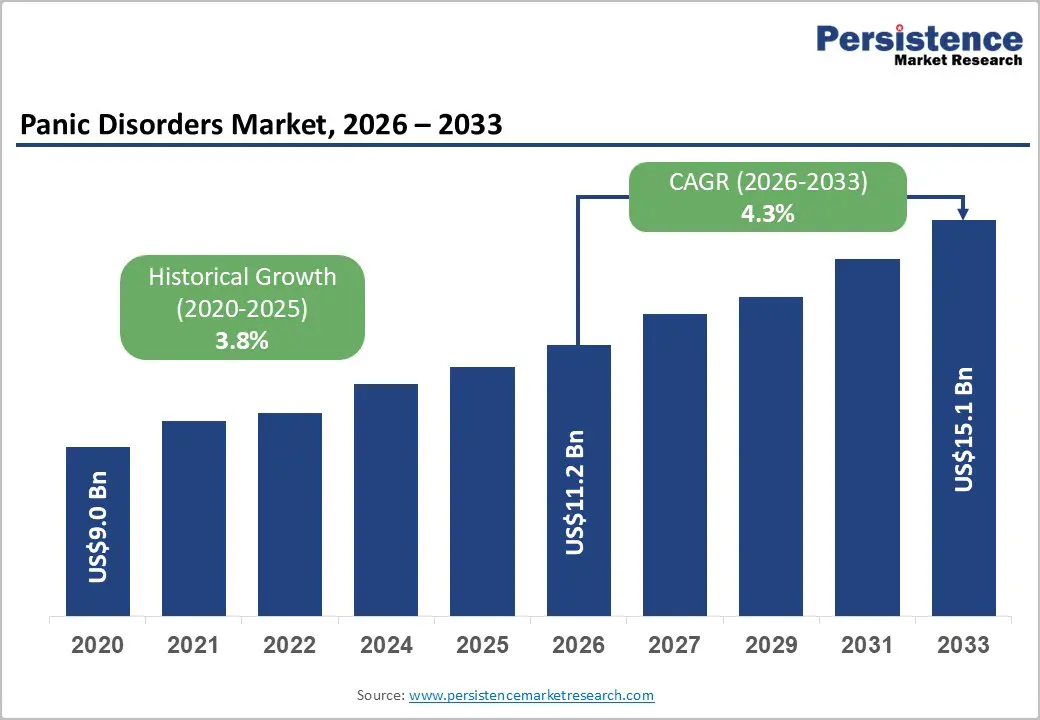
The global panic disorders market size is likely to be valued at US$11.2 billion in 2026, and is expected to reach US$15.1 billion by 2033, growing at a CAGR of 4.3% during the forecast period from 2026 to 2033, driven by increasing prevalence of panic disorder and comorbid anxiety conditions, rising awareness and reduced stigma around mental health treatment, growing demand for rapid-onset anxiolytics and long-term maintenance therapies, and expanding access to mental healthcare services in emerging economies.
Increasing recognition of panic disorders treatment as essential for reducing disability, improving quality of life, and preventing suicide risk in emerging mental wellness, workplace mental health, and telepsychiatry markets remains a major driver of market growth.
Key Industry Highlights:
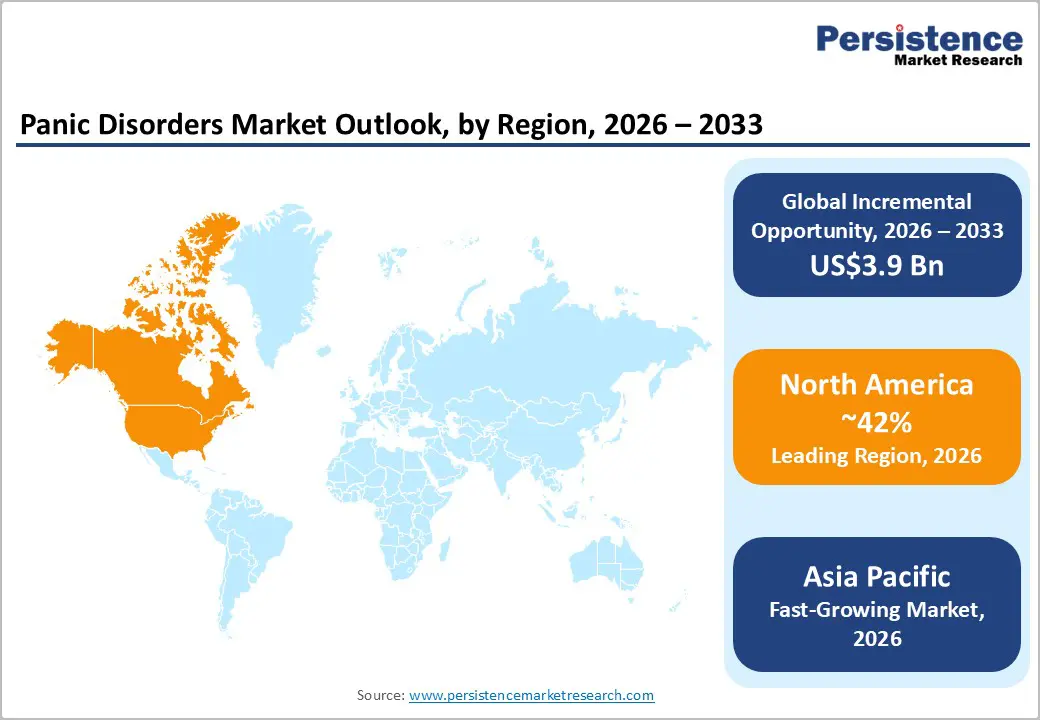
- Leading Region: North America, anticipated to account for a 42% market share in 2026, driven by high diagnosis rates, strong mental health reimbursement, and demand in the U.S.
- Fastest-growing Region: Asia Pacific, fueled by rising mental health awareness, increasing private psychiatry clinics, and growing treatment-seeking in India and China.
- Dominant Disorder Type: Generalized anxiety disorder is projected to lead the panic disorders market with 38% share in 2026, due to its high prevalence, chronic nature, and need for long-term treatment.
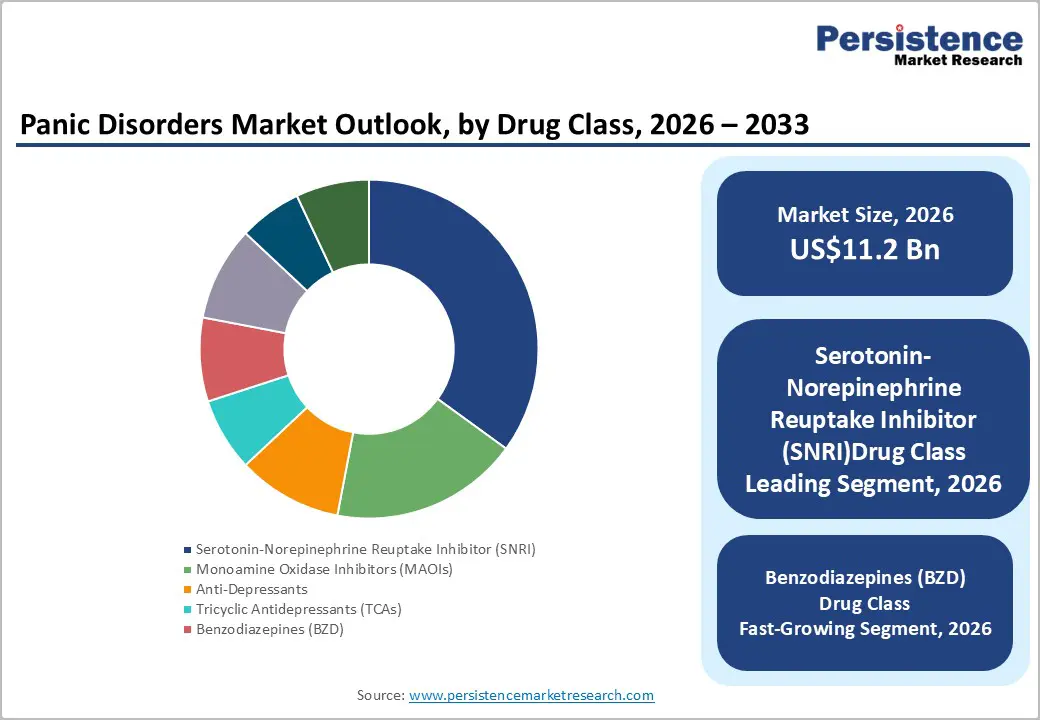
- Leading Drug Class: Serotonin-norepinephrine reuptake inhibitors are expected to dominate, with ~35% revenue share in 2026, owing to their dual neurotransmitter action, strong efficacy, and suitability for long-term anxiety management.
| Key Insights | Details |
|---|---|
| Panic Disorders Market Size (2026E) | US$11.2 Bn |
| Market Value Forecast (2033F) | US$15.1 Bn |
| Projected Growth CAGR (2026-2033) | 4.3% |
| Historical Market Growth (2020-2025) | 3.8% |
DRO Analysis
Driver Analysis – Rising Mental Health Awareness and Long COVID Comorbidity
Panic disorders remain a significant part of the broader mental health landscape as awareness of psychological well being increases globally. According to the U.S. Centers for Disease Control and Prevention (CDC), symptoms of anxiety a category closely related to panic disorder were reported by about 12.1% of adults aged ≥18 years as regular feelings of worry or nervousness in the most recent National Health Interview Survey estimates, up from pre pandemic baselines for anxiety and depression symptoms reported in 2019 historically around 8.1% for anxiety and 6.5% for depression underscoring rising mental health needs across populations.
CDC Household Pulse Survey data showed that at several points during the COVID 19 pandemic, more than 40% of U.S. adults reported symptoms of an anxiety or depressive disorder, with unmet mental healthcare needs also increasing as pandemic stresses continued. These trends reflect growing recognition and reporting of anxiety related conditions, including panic disorders, as public understanding and screening improve. Long COVID further compounds mental health burdens, with the CDC acknowledging that post COVID symptoms can persist for months or years and sometimes result in disability, affecting quality of life and mental resilience.
Telepsychiatry and Digital Therapeutics Integration
The Government of India has embedded telepsychiatry and digital therapeutic tools into its public mental health framework to widen access and modernize care delivery. As part of the National Mental Health Programme (NMHP), the National Tele Mental Health Programme (NTMHP), also known as Tele MANAS, was announced in the Union Budget 2022 23 and is being implemented under the Ministry of Health and Family Welfare to provide 24×7, toll free tele mental health services across all states and union territories.
The objective is to complement traditional in person care with digital modalities, including counselling, integrated medical and psychosocial interventions, video consultations with specialists, e prescriptions, follow ups, and linkage to in person services, thereby reducing barriers to care, especially in underserved and remote areas. Users can access these services via helpline numbers such as 14416/1800 89 14416 in multiple Indian languages. This digital rollout is supported by broader national health digitization efforts such as the Ayushman Bharat Digital Mission (ABDM), which aims to create interoperable digital health records and a unified health information ecosystem to enhance continuity of care and facilitate tele enabled services.
Restraint Analysis – Stigma and Diagnostic Delay
Social stigma remains a major barrier to the timely identification and diagnosis of panic disorders, particularly in low- and middle-income settings. Misconceptions, fear of discrimination, and cultural beliefs often discourage individuals from acknowledging symptoms or seeking professional help. Evidence shows that nearly one-third of young people in India demonstrate poor understanding and negative attitudes toward mental illness, which directly affects help-seeking behavior and early recognition of symptoms.
Stigma operates at multiple levels: personal, social, and institutional, leading individuals to hide symptoms or delay disclosure, which prevents early clinical evaluation and prolongs untreated illness. Diagnostic delays are further amplified by systemic gaps and limited awareness. Estimates indicate that over 80% of individuals with mental illness in India do not receive timely or appropriate treatment, highlighting a substantial treatment gap linked to stigma and low mental health literacy.
Side-effect Burden and Medication Non-adherence
Adverse effects associated with pharmacological treatment of panic and anxiety disorders play a critical role in shaping patient adherence. Common side effects such as drowsiness, weight changes, restlessness, and cognitive disturbances can reduce tolerability and discourage continued use. Evidence indicates that over 86.19% of patients on psychiatric medications report at least one side effect, and these experiences are strongly linked with lower adherence rates. In addition, studies show that medication-related discomfort or fear of adverse reactions contributes to declining adherence over time, with some estimates suggesting adherence can fall to below 50% within six months in mental health treatment settings.
Non-adherence remains a persistent challenge in managing panic disorders, as inconsistent medication use leads to symptom relapse and reduced treatment effectiveness. Across chronic conditions, it is estimated that around 50% of patients do not take medications as prescribed, highlighting the scale of the issue.
Opportunity Analysis – Growth in Digital Therapeutics and Personalized Pharmacogenomics
Advancements in software-based interventions and precision medicine are reshaping the management of panic and anxiety disorders by enabling more targeted and accessible care. Digital therapeutics (DTx) are defined as evidence-based software interventions used to prevent, manage, or treat medical conditions, often through behavioral modification and continuous monitoring. These tools are increasingly used alongside pharmacological therapies to improve adherence, deliver cognitive behavioral therapy remotely, and provide real-time symptom tracking. Government-backed digital health initiatives, including large-scale digital infrastructure programs, are accelerating adoption by integrating telehealth platforms, electronic health records, and app-based therapeutic solutions. This integration enhances patient engagement, expands access in underserved regions, and supports continuous care beyond traditional clinical settings.
Pharmacogenomics is enabling highly personalized treatment approaches by linking genetic variability to drug response. Research shows that genetic differences significantly influence drug efficacy and toxicity, making individualized therapy essential for optimizing outcomes and reducing adverse reactions. By using genomic data, clinicians can select the most effective medications and dosages for each patient, shifting away from trial-and-error prescribing. The combination of digital therapeutics with pharmacogenomic insights allows for data-driven, adaptive treatment strategies, particularly valuable in psychiatric care where response variability is high.
Expansion of Policies for Mental Health
Government policies are increasingly prioritizing mental health as a core component of public health systems, creating a supportive environment for improved diagnosis and treatment of panic disorders. In India, the Mental Healthcare Act, 2017, guarantees the right to access affordable and quality mental healthcare services, while decriminalizing suicide and emphasizing patient rights and dignity. The National Mental Health Programme focuses on integrating mental health services into primary healthcare, improving infrastructure, and expanding human resources. These policy frameworks aim to reduce treatment gaps, promote early identification of anxiety-related conditions, and ensure wider availability of essential psychotropic medications.
Globally, similar policy advancements are strengthening mental healthcare delivery systems. The World Health Organization has encouraged countries to adopt comprehensive mental health action plans, leading to increased funding, awareness campaigns, and service expansion. Many governments are also incorporating digital health strategies and insurance reforms to improve accessibility and affordability of mental health services. Such policy-driven efforts are expected to enhance screening, reduce stigma, and support long-term management of panic disorders, thereby creating favorable conditions for market growth through improved healthcare access and structured treatment pathways.
Category-wise Analysis
Disorder Type Insights
Generalized anxiety disorder (GAD) is expected to hold a leading share within the broader anxiety disorders treatment market, accounting for approximately 38% of revenue in 2026. This dominance is attributed to its high prevalence, chronic course, and the need for sustained management through pharmacological therapy and psychotherapy. GAD is characterized by persistent and excessive worry that affects daily functioning, often requiring long-term treatment strategies. Its widespread occurrence across different age groups, along with frequent comorbidity with other anxiety and mood disorders, continues to drive consistent demand for effective therapies.
The extensive use of Cymbalta, developed by Eli Lilly and Company, further supports this trend. The drug has received approval from the U.S. Food and Drug Administration (FDA) for both acute and maintenance treatment of GAD, underscoring the chronic nature of the condition and the importance of long-term therapeutic management.
Post-traumatic stress disorder (PTSD) is expected to be the fastest-growing disorder segment, driven by rising exposure to traumatic events such as accidents, violence, and global crises. It is characterized by persistent anxiety, flashbacks, and heightened stress responses, often requiring long-term therapeutic management. Increasing awareness, improved diagnostic capabilities, and broader access to mental health services are contributing to a higher number of reported cases.
The growing demand for PTSD treatment is also driving continued research and development efforts by companies such as Otsuka Pharmaceutical Co., Ltd., and H. Lundbeck A/S. In 2024, the companies submitted a supplemental New Drug Application to the U.S. FDA for brexpiprazole (Rexulti) in combination with sertraline for the treatment of PTSD. This application was supported by multiple clinical trials, in which the combination therapy demonstrated statistically significant reductions in PTSD symptoms across Phase II and Phase III studies.
Drug Class Insights
Serotonin-norepinephrine reuptake inhibitors (SNRIs) are expected to dominate the market, contributing nearly 35% of revenue in 2026, propelled by their dual mechanism of action, which increases both serotonin and norepinephrine levels to effectively regulate mood and anxiety. This balanced neurotransmitter modulation makes them particularly effective in managing panic and generalized anxiety symptoms. SNRIs are widely prescribed because of their proven efficacy, relatively favorable safety profile, and suitability for long-term treatment.
Cymbalta (duloxetine), developed by Eli Lilly and Company, is a well-established SNRI that has received U.S. FDA approval for generalized anxiety disorder (GAD) and other conditions, demonstrating its broad clinical utility.
Benzodiazepines (BZD) represent the fastest-growing drug class, fueled by the rapid onset of action and effectiveness in acute anxiety relief. These medications enhance the effect of gamma-aminobutyric acid (GABA), producing a calming effect within a short duration, making them highly useful during panic attacks and severe anxiety episodes. Their widespread clinical use in emergency and short-term settings supports increasing demand.
Xanax (alprazolam), a widely used benzodiazepine originally developed by Pfizer Inc., is approved by the U.S. FDA for the treatment of panic disorder and anxiety, and is commonly prescribed for rapid relief of acute panic symptoms due to its fast onset of action.
Regional Insights
North America Panic Disorders Market Trends
North America is projected to lead, with 42% share in 2026, driven by high awareness, strong healthcare infrastructure, and widespread diagnosis rates. According to the National Institute of Mental Health, about 2.7% of U.S. adults experience panic disorder annually, while nearly 19.1% of adults have some form of anxiety disorder each year, indicating a large patient pool requiring ongoing management. The Centers for Disease Control and Prevention reports that around 1 in 5 U.S. adults have been diagnosed with an anxiety disorder, reflecting strong screening and diagnosis trends.
The increasing integration of mental health into primary care and digital platforms, improving accessibility and continuity of care. High healthcare spending and insurance coverage for mental health services further support treatment uptake. There is also growing adoption of telehealth, digital therapeutics, and combination treatment approaches involving medication and psychotherapy.
Europe Panic Disorders Market Trends
Market growth in Europe is shaped by strong public healthcare systems, increasing mental health awareness, and supportive policy frameworks. According to the World Health Organization, in Europe, mental health conditions affect nearly one in six people in the region, highlighting a substantial patient base requiring continuous care. Many European countries have integrated mental health services into primary care, improving early diagnosis and access to treatment for anxiety-related conditions, including panic disorders. Government-backed initiatives and national mental health strategies are also expanding service availability and reducing stigma, encouraging more individuals to seek timely support.
The market is also supported by the growing adoption of community-based care and digital mental health solutions. Telepsychiatry services and online therapy platforms are increasingly used to address workforce shortages and improve accessibility, particularly in rural areas. Reimbursement policies across several countries support psychotherapy and pharmacological treatments, driving consistent treatment uptake. There is also a rising emphasis on preventive care, workplace mental health programs, and early intervention strategies.
Asia Pacific Panic Disorders Market Trends
Asia Pacific is likely to be the fastest-growing region, fueled by rising mental health awareness, urbanization, and increasing stress-related conditions. According to the World Health Organization, mental health disorders account for a significant share of the disease burden in this region, yet treatment gaps remain substantial, particularly in low- and middle-income countries. Rapid lifestyle changes, work-related stress, and social pressures are contributing to a higher incidence of anxiety and panic-related conditions, driving demand for diagnosis and treatment services.
The expansion of government-led mental health initiatives and digital health programs. Countries such as India, China, and Australia are strengthening mental healthcare infrastructure through national programs, integration with primary care, and tele-mental health services. The adoption of mobile health platforms and telepsychiatry is improving access in rural and underserved areas. Increasing healthcare expenditure, growing private sector involvement, and rising acceptance of mental health treatment are supporting market growth.
Competitive Landscape
The global panic disorders market is characterized by a mix of large pharmaceutical companies and specialized therapy providers competing across regions. In North America and Europe, major players such as Pfizer, Novartis, and AstraZeneca maintain a strong presence through well-established portfolios of SSRIs, beta-blockers, and other anxiolytic medications, supported by extensive clinical data and strong relationships with hospitals and healthcare systems. These companies also benefit from structured treatment protocols and integration with rehabilitation and mental health support programs, improving patient outcomes.
In Asia Pacific, the market is more fragmented, with regional generic manufacturers and private clinics playing a key role in expanding access through cost-effective treatment options. This improves affordability and availability, particularly in emerging economies. Advancements in drug delivery and combination therapies are enhancing symptom control and reducing disease burden. Companies are increasingly focusing on clinical trials, treatment guidelines, and regional partnerships to strengthen market presence, improve accessibility, and drive better long-term outcomes.
Key Industry Developments
- In May 2025, researchers from the Norwegian University of Science and Technology published a study in BMC Psychiatry evaluating the long-term effectiveness of the Bergen 4-Day Treatment (B4DT) for patients with panic disorder, with or without agoraphobia. The study demonstrated sustained improvements in panic disorder symptoms, depression, and generalized anxiety, highlighting B4DT's potential as an effective treatment option.
- In March 2025, Dartmouth researchers conducted the first-ever clinical trial of a generative AI-powered therapy chatbot, Therabot, for mental health treatment. The study found that Therabot resulted in significant improvements in participants' symptoms, marking a promising development in AI-driven mental health interventions.
- In September 2024, Big Health announced that the U.S. Food and Drug Administration (FDA) granted clearance to its prescription digital therapeutic, DaylightRx, for the treatment of generalized anxiety disorder (GAD). This marked the first FDA-cleared non-drug treatment for GAD, offering patients an alternative to traditional pharmacological therapies.
- In June 2024, Otsuka Pharmaceutical Co. Ltd. (Otsuka) and Lundbeck Pharmaceuticals LLC (Lundbeck) announced that the U.S. Food and Drug Administration (FDA) determined the supplemental New Drug Application (sNDA) for brexpiprazole, in combination with sertraline, for treating adults with post-traumatic stress disorder (PTSD), was sufficiently complete to allow a substantive review.
Companies Covered in Panic Disorders Market
- Teva Pharmaceutical Industries Ltd.
- Sun Pharmaceutical Industries Ltd.
- AstraZeneca
- Abbott
- Bristol-Myers Squibb Company
- Lilly USA, LLC
- F. Hoffmann-La Roche Ltd
- GSK plc
- Pfizer Inc.
- Shionogi & Co., Ltd.
- Sumitomo Pharma Co., Ltd.
- Boehringer Ingelheim International GmbH
- H. Lundbeck A/S
- Sanofi
- Neurocrine Biosciences, Inc.
Frequently Asked Questions
The global panic disorders market is projected to reach US$11.2 billion in 2026.
Increasing mental health awareness and the neuropsychiatric impact of Long COVID are driving higher diagnosis and treatment demand for anxiety and panic disorders.
The panic disorders market is poised to witness a CAGR of 4.3% from 2026 to 2033.
Rising adoption of digital therapeutics alongside pharmacogenomics is enabling more personalized, data-driven treatment for anxiety and panic disorders.
Pfizer, Novartis, AstraZeneca, Merck, and Sanofi are the key players.


