




- Pharmaceuticals
- Narcotic Analgesics Market
Narcotic Analgesics Market Size, Share, Growth, and Regional Forecast, 2026 to 2033
Global Narcotic Analgesics Market by Product (Pentazocine, Oxymorphone, Morphine, Hydromorphone, and Others), by Application (Anesthesia Support, Pain Management, Cough Suppression, and Diarrhea Management), by Distribution Channel (Hospital Pharmacies, Retail Pharmacies, and Online Pharmacies), and Regional Analysis from 2026 to 2033

Narcotic Analgesics Market Size and Share Analysis
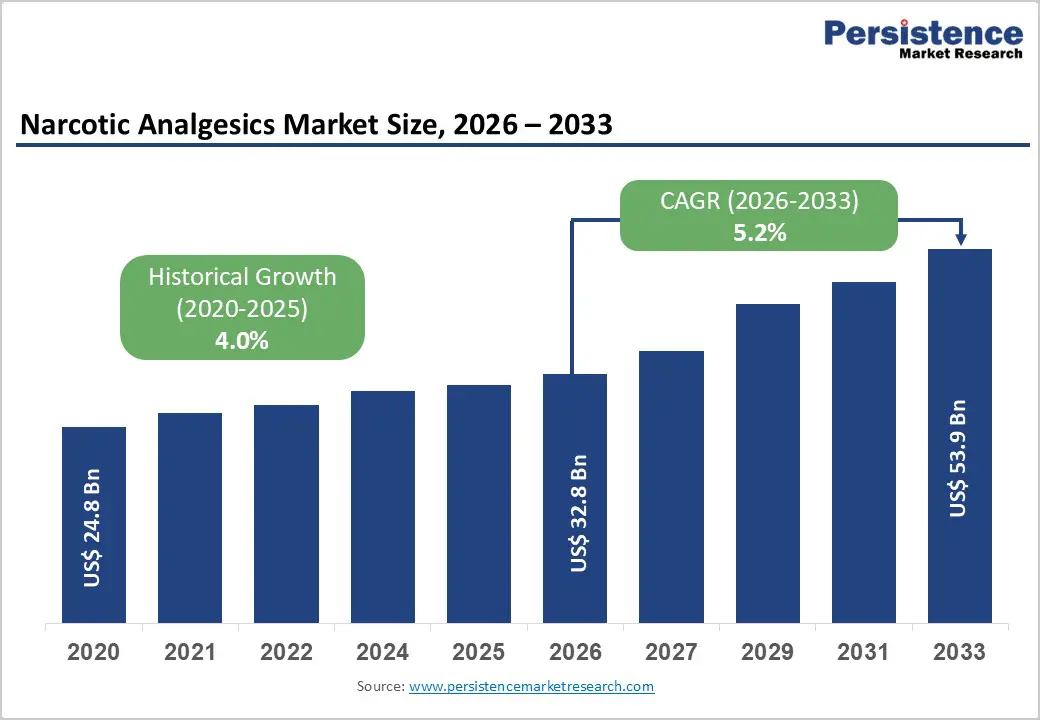
The global narcotic analgesics market size is estimated to grow from US$ 32.8 Bn in 2026 to US$ 53.9 Bn by 2033. The market is projected to record a CAGR of 5.2% from 2026 to 2033.
Global demand for narcotic analgesics is rising steadily, driven by the increasing prevalence of acute and chronic pain associated with cancer, trauma, surgical procedures, musculoskeletal disorders, neurological conditions, and end-stage diseases. The growing burden of chronic illnesses such as cancer, arthritis, spinal disorders, and postoperative complications is significantly increasing the need for effective pain management solutions.
Rising survival rates among oncology and critically ill patients, coupled with aging populations, are expanding the duration and frequency of pain management requirements, thereby supporting sustained utilization of narcotic analgesics. Expanding access to hospital-based, emergency, and ambulatory care settings, along with improved pain assessment practices, is reinforcing prescription volumes. Increased adoption of multimodal pain management protocols continues to position narcotic analgesics as essential therapies when non-opioid options are insufficient.
Technological advancements in controlled-release formulations, abuse-deterrent designs, and precision dosing are improving safety and therapeutic outcomes. Growing healthcare investments in tertiary hospitals, surgical care infrastructure, oncology services, and emergency medicine are further accelerating global adoption. Concurrently, continued clinical emphasis on rapid pain relief, functional recovery, and improved quality of life is reinforcing long-term market expansion across both developed and emerging regions.
Key Industry Highlights
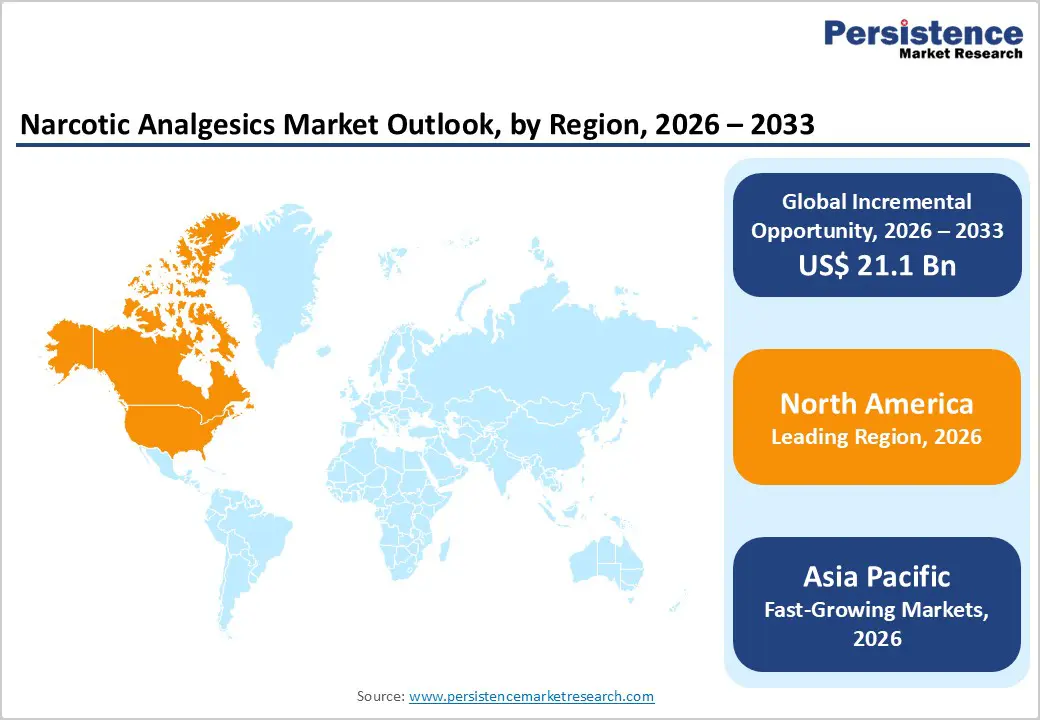
- Leading Region: North America holds the largest market share at 47.7%, supported by advanced healthcare infrastructure, high volumes of surgical and emergency care, strong access to prescription pain therapies, favorable reimbursement policies, and widespread adoption of regulated opioid prescribing practices.
- Fastest-Growing Region: Asia Pacific is expanding at the fastest pace due to a large patient pool affected by chronic pain, rising cancer and trauma cases, rapid development of healthcare infrastructure, increasing hospital admissions, and improved access to regulated pain management therapies.
- Leading Product Segment: Pentazocine dominates the market owing to its broad clinical utility, cost-effectiveness, favorable safety profile compared to stronger opioids, and widespread use in moderate to severe pain management across hospital and outpatient settings.
- Fastest-Growing Product Segment: Oxymorphone is witnessing rapid growth as its use expands in acute pain, postoperative care, and emergency settings where potent and fast-acting analgesia is required.
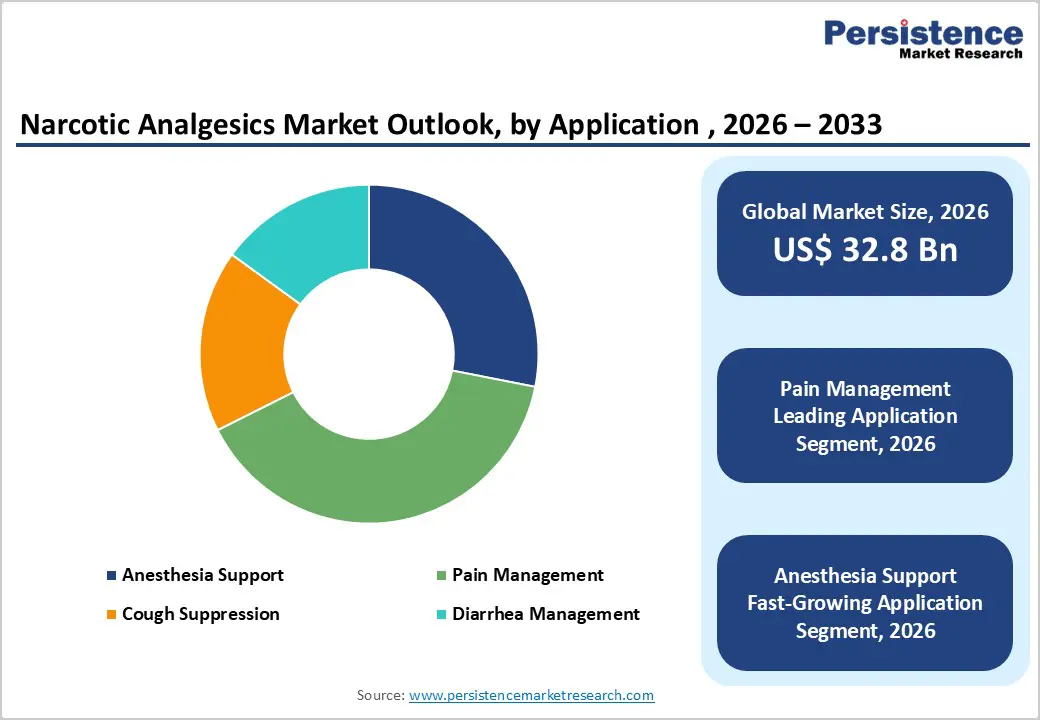
- Leading Application Segment: Pain management is the largest application segment, driven by extensive use in surgical recovery, trauma care, oncology, and chronic disease management across inpatient and outpatient settings.
- Fastest-Growing Application Segment: Anesthesia support is expanding rapidly as surgical volumes rise globally and opioid analgesics continue to play a critical role in perioperative and procedural pain control.
| Report Attribute | Details |
|---|---|
|
Narcotic Analgesics Market Size (2026E) |
US$ 32.8 Bn |
|
Market Value Forecast (2033F) |
US$ 53.9 Bn |
|
Projected Growth (CAGR 2026 to 2033) |
5.2% |
|
Historical Market Growth (CAGR 2020 to 2025) |
4.0% |
Market Dynamics
Driver – Rising Prevalence of Chronic Pain and Increasing Surgical Volumes Driving Market Growth
The rising global burden of chronic and acute pain conditions is a primary driver fueling the sustained growth of the narcotic analgesics market. The increasing prevalence of cancer, musculoskeletal disorders, traumatic injuries, postoperative pain, and degenerative neurological conditions has significantly expanded the patient population requiring effective pain control.
Aging populations, particularly in developed economies, are more susceptible to chronic pain associated with arthritis, osteoporosis, spinal disorders, and malignancies, further reinforcing demand for opioid-based analgesics. In parallel, the growing number of surgical procedures, including orthopedic, cardiovascular, oncological, and abdominal surgeries, continues to drive short-term and perioperative use of narcotic analgesics in hospital settings.
Emergency care and trauma management also rely heavily on fast-acting opioid analgesics to stabilize patients and manage severe pain. Advances in pain management protocols and improved clinician awareness of appropriate opioid use have supported continued prescribing under controlled conditions.
Additionally, the availability of multiple formulations, including injectables, oral tablets, and extended-release products, enhances clinical flexibility across care settings. Despite regulatory oversight, narcotic analgesics remain indispensable for moderate to severe pain where non-opioid therapies are insufficient. Collectively, rising disease burden, increasing procedural volumes, and the essential clinical role of opioids in pain management are driving steady expansion of the global narcotic analgesics market.
Restraints – Stringent Regulatory Controls and Safety Concerns Limiting Market Expansion
Stringent regulatory frameworks and growing concerns related to opioid misuse and dependence represent key restraints for the global narcotic analgesics market. Governments and health authorities worldwide have implemented strict prescribing guidelines, controlled substance scheduling, and prescription monitoring programs to mitigate opioid abuse and diversion. While these measures are critical for public health, they can limit prescribing flexibility and reduce overall market growth, particularly in outpatient and chronic pain settings. Heightened scrutiny from regulators and payers has also increased compliance burdens for manufacturers, distributors, and healthcare providers.
Safety concerns related to addiction, tolerance, respiratory depression, and overdose further constrain market adoption, especially for long-term use. Physicians may adopt a more cautious approach, favoring non-opioid alternatives or limiting the duration and dosage of narcotic analgesics. In some regions, negative public perception and litigation risks associated with opioid products have also discouraged aggressive market expansion. Additionally, disparities in healthcare access and uneven availability of trained pain specialists in low- and middle-income countries restrict appropriate opioid utilization. Limited reimbursement coverage and cost-containment pressures within public healthcare systems may further constrain access to branded or advanced formulations. These regulatory, clinical, and societal challenges collectively restrain broader growth of the narcotic analgesics market despite persistent medical need.
Opportunity – Innovation in Abuse-Deterrent Formulations and Expansion in Emerging Markets Creating New Growth Pathways
Ongoing innovation in formulation technologies and expanding access to pain management in emerging economies present significant growth opportunities for the narcotic analgesics market. Development of abuse-deterrent formulations (ADFs), extended-release products, and combination therapies is enabling safer opioid use while addressing regulatory and clinical concerns. These innovations reduce the risk of tampering, misuse, and accidental overdose, improving acceptance among regulators, physicians, and payers. Growing emphasis on personalized pain management and controlled dosing strategies further supports the adoption of advanced narcotic analgesic products.
Emerging markets in Asia Pacific, Latin America, and parts of the Middle East and Africa offer substantial untapped potential due to rising healthcare expenditure, expanding hospital infrastructure, and increasing awareness of pain management. As access to surgical care, oncology services, and trauma treatment improves, demand for effective analgesics is expected to rise.
Government-led healthcare reforms, expansion of insurance coverage, and investments in clinician training are improving access to regulated opioid therapies in these regions. Additionally, the growth of hospital and retail pharmacy networks is strengthening distribution reach. Manufacturers that focus on cost-effective formulations, regulatory compliance, and education-driven market entry strategies are well-positioned to capitalize on long-term opportunities within the global narcotic analgesics market.
Category-wise Analysis
By Product, Pentazocine Leads Owing to Broad Clinical Utility and Cost Accessibility
The pentazocine segment is projected to lead the global narcotic analgesics market in 2026, accounting for a revenue share of 28.4%. Segment leadership is supported by pentazocine’s balanced analgesic efficacy, comparatively lower abuse potential versus stronger opioids, and favorable cost profile, making it widely adopted across hospital and outpatient settings. Pentazocine is commonly used for moderate to severe pain management, perioperative pain control, and emergency care, particularly in regions with stringent opioid regulations. Its availability in injectable formulations further strengthens demand in acute care environments where rapid analgesic onset is required.
High physician familiarity, established prescribing practices, and inclusion in hospital formularies contribute to consistent utilization. Additionally, pentazocine’s suitability for short-term pain relief without prolonged dependence risk supports its preference in trauma care and post-procedural pain management. While other potent opioids remain critical for severe pain, pentazocine continues to generate strong revenue due to its clinical versatility and economic accessibility.
By Application, Pain Management Emerges as the Primary Demand Driver
The pain management segment is projected to dominate the global narcotic analgesics market in 2026, accounting for 39.5% of revenue. This dominance is primarily driven by the rising global burden of acute and chronic pain associated with surgical procedures, trauma, cancer, musculoskeletal disorders, and neurological conditions. Narcotic analgesics remain essential for managing moderate to severe pain where non-opioid therapies are insufficient.
Emergency departments, postoperative care units, oncology wards, and intensive care settings rely heavily on opioid analgesics for rapid and effective pain control. Increasing volumes of surgical interventions, particularly orthopedic, cardiovascular, and abdominal procedures, are sustaining consistent demand. Additionally, aging populations with a higher incidence of degenerative diseases and cancer-related pain continue to expand the patient pool. Advances in pain management protocols emphasizing individualized dosing and controlled administration further reinforce the central role of narcotic analgesics in clinical pain control strategies.
By Distribution Channel, Retail Pharmacies Maintain Dominance Due to High Procedure Volumes
The retail pharmacies segment is projected to dominate the global narcotic analgesics market in 2026, accounting for 45.0% of revenue. Retail pharmacies serve as the primary point of access for patients receiving prescribed opioid analgesics for chronic pain, post-surgical recovery, and long-term disease management. High outpatient prescription volumes, particularly for cancer pain, musculoskeletal disorders, and post-discharge care, significantly support segment dominance.
Retail channels benefit from broad geographic presence, streamlined prescription fulfillment, and established relationships with healthcare providers. In many regions, structured prescription-monitoring programs and controlled-dispensing protocols further integrate retail pharmacies into opioid-management frameworks. While hospitals remain critical for acute administration, the continuation of therapy typically shifts to retail settings, reinforcing recurring demand. Expanding pharmacy networks, improving supply chain efficiency, and integrating electronic prescribing systems continue to strengthen retail pharmacies' role in the distribution of narcotic analgesics.
Region-wise Insights
North America Narcotic Analgesics Market Trends
North America is expected to dominate the global narcotic analgesics market with a value share of 47.6% in 2026, led primarily by the United States. The region benefits from a highly developed healthcare system, advanced pain management infrastructure, and strong availability of prescription opioid therapies. High prevalence of chronic pain conditions, cancer-related pain, postoperative pain, and trauma cases continues to drive demand for narcotic analgesics across hospital and outpatient settings. Despite strict regulatory oversight and prescription monitoring programs, opioids remain integral to clinical pain management when appropriately prescribed.
The region also demonstrates strong adoption of extended-release and abuse-deterrent formulations, supporting safer long-term use. Favorable reimbursement coverage for pain management therapies and widespread clinician awareness further facilitate market stability. The presence of major pharmaceutical manufacturers, robust pharmacovigilance systems, and ongoing investments in pain research reinforce North America’s leadership. Additionally, high healthcare spending and early adoption of updated pain management guidelines contribute to sustained market maturity and controlled growth.
Europe Narcotic Analgesics Market Trends
The European narcotic analgesics market is expected to grow steadily, supported by structured healthcare systems and a strong emphasis on regulated, evidence-based pain management. Countries including Germany, the United Kingdom, France, Italy, and the Nordic region are key contributors due to high hospital density and well-established oncology and surgical care services. The rising incidence of cancer, orthopedic disorders, postoperative pain, and age-related chronic conditions is sustaining demand for narcotic analgesics.
European healthcare systems prioritize cautious opioid prescribing, favoring controlled dosing, hospital-led initiation, and close patient monitoring. Government-funded healthcare coverage ensures broad patient access to essential pain therapies while maintaining strict regulatory oversight. Increasing adoption of standardized pain assessment protocols and multidisciplinary pain management approaches further supports appropriate opioid use. Harmonized regulatory frameworks across the region facilitate market access for approved formulations. Continued investment in hospital modernization and palliative care services is expected to support long-term market growth across Europe.
Asia Pacific Narcotic Analgesics Market Trends
The Asia Pacific narcotic analgesics market is expected to register the fastest growth, with a CAGR of approximately 7.1% between 2026 and 2033, driven by expanding healthcare infrastructure and a rapidly growing patient population. Countries such as China, India, Japan, South Korea, and Australia are experiencing rising incidence of cancer, trauma, surgical procedures, and chronic pain conditions, increasing demand for effective pain relief therapies. Improved disease diagnosis, expanding access to hospital care, and rising awareness of pain management are contributing to higher opioid utilization under regulated settings.
Governments across the region are investing in healthcare reforms, insurance expansion, and hospital capacity development, improving patient access to prescription analgesics. Increasing clinician training in pain management and gradual alignment with international prescribing guidelines are supporting market expansion. Partnerships between regional manufacturers and global pharmaceutical companies are also enhancing product availability, positioning the Asia Pacific as the fastest-growing regional market.
Market Competitive Landscape
The global narcotic analgesics market is highly competitive, with key players such as Pfizer Inc., Teva Pharmaceutical Industries Ltd., Johnson & Johnson, Sanofi S.A., and Novartis AG leveraging broad opioid product portfolios, strong regulatory expertise, and well-established global manufacturing and distribution networks to strengthen their market positions. These companies focus on expanding therapeutic applications in pain management and anesthesia, improving formulation safety profiles, enhancing dosing control, and supporting clinical efficacy to ensure physician acceptance and regulatory compliance.
Competition is further intensified by continuous investments in product innovation, including abuse-deterrent and extended-release formulations, physician education initiatives, hospital partnerships, and strategic expansion across emerging markets. Ongoing advancements in formulation technologies, controlled-delivery mechanisms, pharmacovigilance practices, and prescription standardization are driving differentiation, supporting sustained market growth, and shaping the future evolution of the narcotic analgesics landscape.
Key Industry Developments:
- In January 2025, the U.S. Food and Drug Administration approved Journavx (suzetrigine) 50 mg oral tablets, a first-in-class non-opioid analgesic for the treatment of moderate to severe acute pain in adults. Journavx works by selectively targeting sodium channels involved in pain signaling within the peripheral nervous system, blocking pain transmission before signals reach the brain.
- In July 2024, Vertex Pharmaceuticals announced that the U.S. Food and Drug Administration accepted its New Drug Application for suzetrigine, an investigational oral NaV1.8-selective pain signal inhibitor for the treatment of moderate-to-severe acute pain. Suzetrigine has the potential to become the first new class of acute pain therapy introduced in more than two decades.
Companies Covered in Narcotic Analgesics Market
- Pfizer Inc.
- Teva Pharmaceutical Industries Ltd.
- Johnson & Johnson
- Sanofi S.A
- Novartis AG
- GSK
- AbbVie Inc
- AstraZeneca
- Boehringer Ingelheim
- Hikma Pharmaceuticals plc
- Sun Pharmaceutical Industries Ltd.
- Viatris Inc.
- Others
Frequently Asked Questions
The global narcotic analgesics market is projected to be valued at US$ 32.8 Bn in 2026.
The global narcotic analgesics market is driven by the rising prevalence of chronic pain and cancer, increasing surgical procedures, aging populations, and sustained demand for effective pain management in hospital and perioperative settings.
The global narcotic analgesics market is poised to witness a CAGR of 5.2% between 2026 and 2033.
Key opportunities lie in the development of abuse-deterrent and controlled-release formulations, expansion into emerging markets, growth of hospital and online pharmacy channels, and increasing use of narcotic analgesics in anesthesia and palliative care.
Pfizer Inc., Teva Pharmaceutical Industries Ltd., Johnson & Johnson, Sanofi S.A, and Novartis AG are some of the key players in the narcotic analgesics market.


