




- Nutraceuticals & Functional Foods
- Maqui Berry Market
Maqui Berry Market Size, Share, and Growth Forecast, 2026 - 2033
Maqui Berry Market by Nature (Organic, Conventional), Form (Fresh, Processed), End-user (Food & Beverages, Nutraceuticals, Personal Care), and Regional Analysis for 2026 - 2033

Maqui Berry Market Size and Trends Analysis
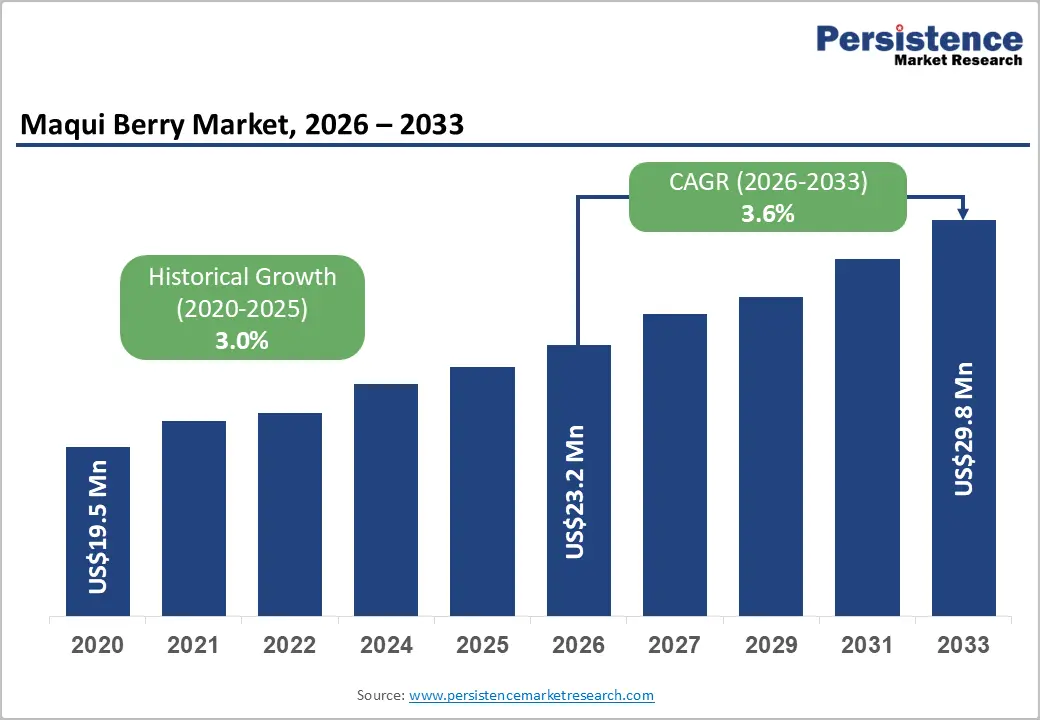
The global maqui berry market size is likely to be valued at US$23.2 million in 2026, and is expected to reach US$29.8 million by 2033, growing at a CAGR of 3.6% during the forecast period from 2026 to 2033, driven by the increasing prevalence of demand for antioxidant-rich superfoods, rising consumer awareness of maqui berry’s high ORAC value and anti-inflammatory properties, and growing inclusion of maqui in functional foods, nutraceuticals, and clean-label personal care products.
Growing demand for organic processed maqui berry (powder, extract, juice) in nutraceuticals and food & beverages is accelerating adoption across health-conscious consumers and manufacturers. Advances in freeze-drying, cold-pressing, and standardized anthocyanin extracts are further boosting uptake by offering better shelf stability, potency, and versatility. Increasing recognition of maqui berry as a powerful natural antioxidant source for immune support, skin health, and metabolic wellness in emerging superfood and preventive health markets remains a major driver of market growth.
Key Industry Highlights:
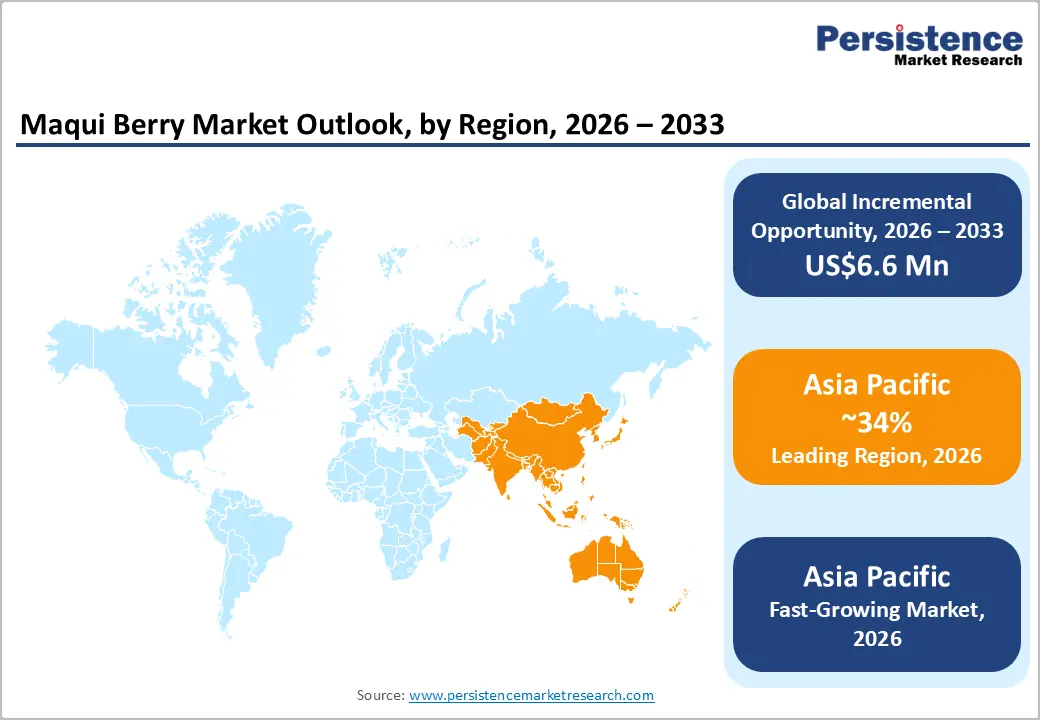
- Leading and Fastest-growing Region: Asia Pacific to dominate with 34% share in 2026, fueled by rising health & wellness spending, increasing functional food adoption, and growing clean beauty trends in China and India.
- Dominant Nature: Organic, to hold approximately 58% of the market share, as it remains the preferred choice for premium and health-focused consumers.
- Leading Form: Processed, contributing nearly 68% of the market revenue, due to convenience and higher shelf-life.
| Key Insights | Details |
|---|---|
| Maqui Berry Market Size (2026E) | US$23.2 Mn |
| Market Value Forecast (2033F) | US$29.8 Mn |
| Projected Growth CAGR (2026 - 2033) | 3.6% |
| Historical Market Growth (2020 - 2025) | 3.0% |
Market Factors - Growth, Barriers, and Opportunity Analysis
Growth Analysis - Rising Demand for Antioxidant-Rich Superfoods and Clean-Label Products
Consumption of foods rich in antioxidants has been linked with measurable increases in the body’s antioxidant capacity, supporting consumer interest in antioxidant-rich superfoods such as maqui berries as part of modern diets. U.S. Department of Agriculture (USDA) research shows that eating high-antioxidant fruits and vegetables can raise blood antioxidant power by between 13% and 25% when intake of such foods is increased, demonstrating a tangible health-related effect from dietary antioxidants. Government-reported food composition data also highlights that berries such as blueberries and cranberries rank among the highest in antioxidant capacity among common fruits, with values running into the thousands of Oxygen Radical Absorbance Capacity (ORAC) units per serving. These findings reinforce why consumers are switching toward foods perceived as providing protective nutrients beyond basic nutrition.
Growing clinical and nutritional awareness, national dietary guidance emphasizes variety and inclusion of fruits and vegetables for overall health, which supports demand for clean-label, nutrient-dense superfoods. Government nutritional materials recommend daily consumption of a range of antioxidant-rich produce to help achieve balanced dietary patterns, further elevating the appeal of products marketed on antioxidant and “clean-label” attributes.
Increasing Inclusion in Functional Beverages and Personal Care
Inclusion of maqui berry in functional beverages and personal care products is driving market growth as brands respond to evolving consumer preferences for natural, nutrient-dense ingredients that deliver perceived health and wellness benefits. Maqui berries are rich in anthocyanins and antioxidants, which are valued not only for their potential physiological effects when consumed but also for their appeal as clean, plant-based ingredients in beverage formulations. Beverage manufacturers are incorporating maqui powder and extracts into juices, smoothies, energy drinks, and wellness shots to enhance antioxidant profiles, differentiate products on the shelf, and tap into lifestyle trends centered on preventive health. These products appeal to consumers seeking hydration, immunity support, enhanced energy, and recovery benefits without artificial additives, aligning maqui’s nutrient narrative with functional beverage positioning.
Personal care and cosmetic brands are also exploring maqui berry’s natural compounds, marketing them for antioxidant protection, skin conditioning, and anti-aging properties in serums, creams, masks, and hair care products. The shift toward botanical and naturally derived ingredients in beauty routines supports maqui’s role as a value-added component that enhances product efficacy and consumer perception. This cross-category adoption expands market opportunities, enabling keypad formulations that blur traditional food-cosmetic boundaries, stimulate innovation, and justify premium pricing based on dual nutritional and topical benefits.
Barrier Analysis - Competition from Alternative Superfoods
Competition from alternative superfoods poses a significant restraint on the maqui berry market, as consumers have access to a wide variety of berries and nutrient-rich fruits that offer similar health benefits. Blueberries, acai, cranberries, and goji berries are already well-established in the functional foods, beverages, and supplements sectors, often with stronger brand recognition and lower costs. These alternatives also provide comparable antioxidant content, vitamins, and polyphenols, which can satisfy consumer demand for anti-inflammatory and immune-supporting properties without the premium pricing associated with maqui.
Retailers and food manufacturers may prioritize widely recognized berries due to their proven shelf-life, consistent supply, and consumer trust, making it harder for maqui-based products to gain market share. Functional beverage and personal care brands may opt for blends or substitutes that are easier to source and process. This competitive landscape requires maqui producers to emphasize unique nutritional advantages, sourcing stories, or innovative product formats to differentiate themselves effectively.
Regulatory and Labeling Hurdles
Regulatory and labeling hurdles restrict the growth of the maqui berry market because claims related to health benefits, antioxidants, or disease prevention must comply with strict food and dietary supplement regulations. Authorities such as the U.S. Food and Drug Administration (FDA) and the European Food Safety Authority (EFSA) require scientific evidence to substantiate any statements made on packaging or marketing materials. Without approved health claims, manufacturers cannot legally promote maqui berries as preventing or treating specific conditions, which limits their appeal to health-conscious consumers.
Differences in regulatory requirements across countries create additional complexity for exporters and global brands, requiring multiple compliance strategies. Labels must accurately reflect ingredient content, processing methods, and nutritional information, increasing operational costs. Small or new producers may struggle to meet these requirements, which can delay product launches or limit distribution channels. This regulatory landscape emphasizes careful documentation, testing, and verification, making compliance a critical factor for successful market participation.
Opportunity Analysis - Demand in Standardized Extracts and Functional Formats
Growing demand for standardized extracts and functional formats is driving expansion in the maqui berry market by aligning with consumer preferences for convenience, efficacy, and consistency. Standardized extracts provide controlled concentrations of active compounds, particularly anthocyanins and polyphenols, ensuring predictable antioxidant and anti-inflammatory effects. This reliability appeals to functional beverage manufacturers, dietary supplement producers, and personal care brands, who require consistent ingredient performance for product claims, formulation stability, and regulatory compliance. Consumers increasingly favor products with verified potency, allowing brands to differentiate offerings and justify premium pricing. Standardized extracts also extend shelf life compared with fresh berries, enabling broader distribution and reducing waste, which is crucial for a perishable superfood such as maqui.
Functional formats such as powders, capsules, ready-to-drink beverages, and fortified snacks enhance usability and integration into daily routines. These formats allow easy incorporation into smoothies, shakes, teas, and energy bars, supporting health-focused lifestyles. In personal care, maqui-based extracts are formulated into serums, creams, and masks, leveraging antioxidant properties for skin protection and anti-aging benefits. The combination of standardized extracts and versatile functional formats enables manufacturers to innovate across categories, cater to diverse consumer needs, and expand market penetration, reinforcing maqui berry’s role as a premium, multi-purpose superfood ingredient.
Growth in Personal Care and Cosmetic Applications
The growth of maqui berry in personal care and cosmetic applications is driven by its potent antioxidant and anti-inflammatory properties, which appeal to consumers seeking natural solutions for skin and hair health. Maqui berries are rich in anthocyanins and polyphenols, compounds that help neutralize free radicals, protect against oxidative stress, and reduce visible signs of aging such as wrinkles, fine lines, and dullness. Skincare brands incorporate maqui extracts into serums, creams, facial masks, and lotions to deliver these protective benefits while promoting skin hydration and resilience. The demand for plant-based and botanical ingredients has further strengthened maqui berry’s position as a natural alternative to synthetic additives, aligning with trends toward clean-label and eco-conscious personal care products.
In hair care, maqui extracts are added to shampoos, conditioners, and scalp treatments to support scalp health, improve shine, and reduce inflammation caused by environmental stressors. Functional formulations, such as concentrated extracts or standardized powders, ensure consistent potency and efficacy, making them suitable for both mass-market and premium cosmetic lines. The combination of scientifically recognized antioxidant activity, natural sourcing, and versatile application formats positions maqui berry as a valuable ingredient for cosmetic innovation, enabling brands to develop differentiated products that cater to the growing consumer preference for holistic, health-oriented beauty solutions.
Category-wise Analysis
Nature Insights
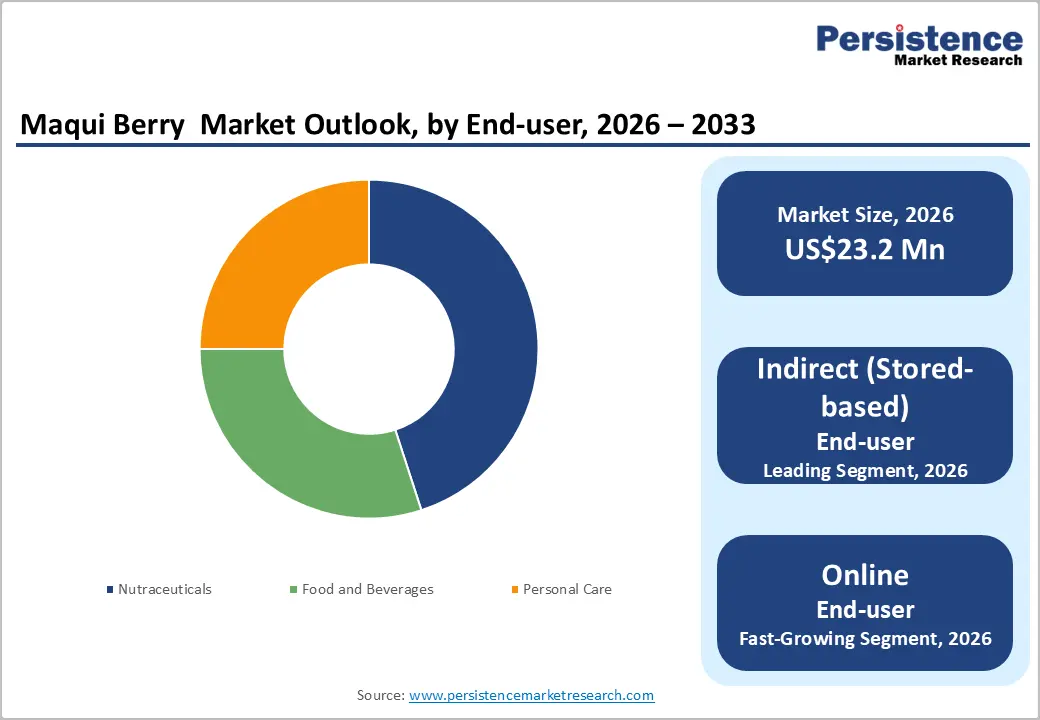
The organic segment is anticipated to dominate the market, accounting for approximately 58% of the market share in 2026. Its dominance is driven by reflecting growing consumer preference for natural, sustainably sourced products. Organic maqui berries are cultivated without synthetic pesticides or fertilizers, appealing to health-conscious consumers who prioritize clean-label and environmentally responsible options. This segment benefits from stronger perceived nutritional and antioxidant value, which enhances product differentiation in functional foods, beverages, and personal care items. Organic certification also allows brands to command premium pricing and access niche retail channels. Sunfood Superfoods’ Raw Organic Maqui Berry Powder, which is USDA Organic and Certified Organic by CCOF, ensuring the berries are grown and processed without synthetic pesticides or fertilizers a key attribute for organic consumer preferences.
The conventional segment represents the fastest-growing nature, due to its broader availability, lower production costs, and established supply chains. Conventional cultivation allows higher yields and more consistent annual production compared with organic methods, making products more affordable and accessible to a wider consumer base. Retailers and food manufacturers can source conventional maqui berries in larger quantities for functional beverages, supplements, and processed foods, supporting rapid market expansion. New Acai Amazonas Conventional Maquiberry Extract Powder is a conventional maqui berry ingredient used in food and supplement formulations. It is produced as a spray-dried extract powder from the pulp of maqui berries and marketed as a conventional superfruit ingredient for functional food products.
Form Insights
The processed segment is expected to dominate the market, contributing nearly 68% of revenue in 2026, fueled by convenience, longer shelf life, and versatility in food, beverage, and supplement applications. Processing into powders, extracts, capsules, or ready-to-drink formulations preserves antioxidant content and enables precise dosing, appealing to health-conscious consumers and manufacturers. Processed forms are easier to transport, store, and incorporate into functional products compared with fresh berries, which are highly perishable. Terrasoul Superfoods Organic Maqui Berry Powder. The product is a processed powdered form of maqui berries designed for easy use in smoothies, beverages, and nutritional applications. Powdered maqui retains key antioxidants and nutrients while offering extended shelf stability and convenient dosing, which supports wide adoption in functional foods and supplements.
The fresh segment represents the fastest-growing form, stimulated by increasing consumer preference for whole, minimally processed superfoods that retain maximum nutrient content. Fresh berries offer higher levels of natural antioxidants, vitamins, and polyphenols compared with processed powders or extracts, appealing to health-conscious consumers seeking immediate nutritional benefits. Retailers, farmers’ markets, and grocery chains are expanding the availability of fresh maqui berries in response to demand for functional fruits that can be consumed directly or added to smoothies, salads, and desserts. Bayas del Sur S.A., a producer that harvests wild maqui berries directly from Chilean forests and supplies them for juice concentrates and other fresh applications. The company’s operations focus on capturing the berries soon after harvest to preserve their natural flavor and nutrient profile, which supports demand for fresh fruit formats that retain high antioxidant content.
Regional Insights
North America Maqui Berry Market Trends
Growth of North America is driven by the region’s high superfood consumption, strong nutraceutical demand, and high public awareness of antioxidant benefits. Distribution systems in the U.S. and Canada provide extensive support for maqui berry programs, ensuring wide accessibility across organic, processed, and nutraceutical populations. Increasing demand for clean-label, convenient, and easy-to-incorporate forms is further accelerating adoption, as these formats improve product claims and reduce barriers associated with conventional fruits.
Innovation in maqui berry technology, including stable standardized extracts, improved freeze-dried delivery, and targeted functional enhancement, is attracting significant investment from both public and private sectors. Government initiatives and FDA campaigns continue to promote use against oxidative stress risks, wellness concerns, and emerging clean-label threats, creating sustained market demand. The growing focus on food & beverages grades and specialty uses, particularly for organic and others, is expanding the target applications for maqui berry.
Europe Maqui Berry Market Trends
Europe is driven by increasing awareness of superfruit benefits, strong regulatory systems, and government-led clean-label programs. Countries such as Germany, the U.K., France, and the Netherlands have well-established nutraceutical and food frameworks that support routine maqui berry use and encourage adoption of innovative organic delivery methods. These high-quality formulations are particularly appealing for nutraceutical populations, regulation-conscious manufacturers, and personal care users, improving potency and coverage rates.
Technological advancements in maqui berry development, such as enhanced anthocyanin standardization, application-targeted delivery, and improved processed grades, are further boosting market potential. European authorities are increasingly supporting research and trials for maqui against both routine and specialized needs, strengthening market confidence. The growing emphasis on convenient, sustainable options is aligned with the region’s focus on preventive oxidative stress and clean beauty. Public awareness campaigns and promotion drives are expanding reach in both nutraceuticals and food & beverages segments, while suppliers are investing in certified organic and novel variants to increase efficacy.
Asia Pacific Maqui Berry Market Trends
Asia Pacific is projected to dominate and be the fastest-growing, with over 34% market share in 2026, fueled by rising health & wellness awareness, increasing government initiatives, and expanding application programs across the region. Countries such as China, India, Japan, and South Korea are actively promoting maqui campaigns to address functional food growth and emerging beauty needs. Maqui berry is particularly attractive in these regions due to its cost-effective administration, ease of adoption, and suitability for large-scale nutraceuticals and food & beverages drives in both urban and semi-urban populations.
Technological advancements are supporting the development of stable, effective, and easy-to-incorporate maqui berry, which can withstand challenging formulation conditions and minimize potency loss dependence. These innovations are critical for reaching domestic manufacturers and improving overall functional coverage. Growing demand for organic, processed, and nutraceutical applications is contributing to market expansion. Public-private partnerships, increased wellness expenditure, and rising investment in maqui research and production capacity are further accelerating growth. The convenience of maqui delivery, combined with improved antioxidant delivery and reduced risk of oxidative stress, positions it as a preferred choice.
Competitive Landscape
The global maqui berry market is shaped by competition between established superfood brands and emerging clean-label specialists, driving innovation, product differentiation, and market expansion. In North America and Europe, Navitas Organics and Sunfood maintain leadership through strong brand recognition, extensive distribution networks, and premium positioning, supported by diverse offerings in organic and processed maqui formats. Their focus on high-quality, nutrient-rich products strengthens consumer trust and encourages adoption across functional foods, beverages, and personal care applications.
In the Asia Pacific region, regional players are expanding with cost-competitive conventional formulations, improving accessibility, and enabling entry into mass-market channels. The combination of organic and processed products enhances antioxidant claims, ensures quality consistency, and facilitates integration into a wide range of product lines, from beverages to supplements. Strategic partnerships, acquisitions, and collaborations further accelerate commercialization, expand product portfolios, and strengthen supply chains. Conventional offerings address price-sensitive markets, supporting broader penetration while maintaining profitability and market relevance across regions.
Key Industry Developments:
- In February 2025, the National Health Commission of China approved maqui berry anthocyanins as a new food raw material, permitting their use in general food products. Derived from the fruits of Aristotelia chilensis, a plant in the Elaeocarpaceae family, the anthocyanins were produced through water extraction, filtration, purification, concentration, and drying. Chinese regulators authorized their use in a wide range of products, including dairy and dairy-based products, beverages, jellies, cocoa and chocolate products, candies, frozen desserts, baked goods, and alcoholic beverages.
- In September 2024, Evonik launched two new products to meet demand for sustainable, natural actives in the beauty and personal care markets. The company introduced CapilAcid™, an active ingredient derived from maqui fruit, which acted as a comprehensive protector and powerful antioxidant for hair, and Oleobiota™, an active ingredient sourced sustainably from the Misiones rainforest for sebum-normalizing skin care. Both products originated from Novachem, which Evonik had acquired one year earlier and integrated into its Care Solutions business.
Companies Covered in Maqui Berry Market
- Sunfood
- Navitas Organics
- MNL Group
- Organic Wholefoods Limited
- SouthAM
- Terrasoul Superfoods
- HP Ingredients Corporation
- Mountain Rose Herbs
- Kiva
Frequently Asked Questions
The global maqui berry market is projected to reach US$23.2 million in 2026.
Powders, extracts, capsules, and ready-to-drink beverages enhance convenience, extend shelf life, and allow broader integration into foods, beverages, and personal care products.
The maqui berry market is poised to witness a CAGR of 3.6% from 2026 to 2033.
Maqui berry’s antioxidant and anti-inflammatory properties create opportunities in skincare, hair care, and anti-aging formulations, appealing to the clean-label and natural products trend.
Navitas Organics, Sunfood, Terrasoul Superfoods, MNL Group, and Kiva are the key players.


